Scottish Whisky

Dalmore 12 Year Old

Reviewed by: Nick

Dalmore 12

In the United Kingdom, something that is passionately loved by half the population while fervently hated by the other is known as being rather ‘Marmite’. In Australia nothing sits more squarely in the love/hate status than Collingwood Football Club. In the movie world, the title goes to Napoleon Dynamite. And in the whisky world, the ultimate love-it-or-hate-it drop could be none other than Dalmore.

For every whisky drinker shouting Dalmore’s merits from the rooftops, I have met another who just cannot fathom the appeal. Even the usually serene waters of Whisky Waffle are rocked by this divide. While we normally agree on most matters whisky related, I am partial to a drop of the stag-bedecked highland malt while m’colleague Ted couldn’t care less that their founder saved King Alexander III from a deer once upon a time (actually, scrap that, he loves the story, just doesn’t want to drink the 12 Year Old)

I rather like the 12 – although I wouldn’t regard it as an everyday whisky. To me, it calls to mind a reasonable cognac (on the rare occasion that I’ve had the chance to try that stuff). I find it distinctly grapey and full of tannins – which I like. However, I get the impression that these same characteristics are what turn Ted – and many others – off the stuff. So my theory is thus: Dalmore is a red wine drinkers whisky. While the Speysides exhibit typical Sauvignon Blanc or Pinot Grigio lightness and crispness – this dram is heavy, complex and extremely dry.

On the nose I get equal measures of ham and raspberry jam – surely a combination that could only be found by a whisky drinker. The palate is slightly yeasty with red grapes and ashy notes. The finish is medium in length and warmth, leaving you with flavours of oak and pastry.

While I could happily sip on this particular drop for an entire evening, I can utterly understand where the Dalmore sceptics are coming from. This is not a whisky for everyone. You’ll either love it or hate it. However, for all those haters out there, can I recommend trying the Cigar Malt Reserve before writing off Dalmore forever – now that is a proper whisky.

And even if you still don’t like it – you’ve got to admit – Dalmore bottles are beautiful.

Nick’s rating: ★★★

Ted’s rating: ★★

Glen Moray Port Cask Finish

Reviewed by: Nick

Glen Moray Port Cask

As an out and proud fan of Glen Moray distillery and a waffler known to be partial to a little port matured whisky, the Glen Moray Port Cask Finish sounded like the perfect dram for me. Combining the sweet elegant Speyside flavour with a rich wine-infused layer – what could possibly go wrong? As it turns out: quite a lot.

Upon its arrival at my door, I eagerly whipped the bottle out of its box and was greeted with the most peculiarly coloured whisky I had ever seen. I’ve observed variations of the (hilariously unintentionally poetic) “burnt crimson” theme before, but this whisky was – and there’s no more accurate description – orange. It was the kind of radioactive-peach hue normally reserved for fake tan. Alarm bells were ringing – but I didn’t want to fall into the trap of judging a book by its colour. There was only one thing to it – I had to try some.

After the first sniff it was clear that I was not trying a regular Speysider here. There was a lot of fruit – by which I mean a veritable orchard’s worth – and it was overripe, perhaps on the turn and ready for the compost heap. There were some bitter dark chocolate notes as well as equally bitter notes of wet grass. All in all, it was… shall we say memorable.

Surely the palate would be an improvement. And it was, albeit slightly. It was sweet and sticky with strong winey notes combining to form something reminiscent of strawberry jam. Don’t get me wrong, I love me some strawberry jam. Just this particular fruit spread was more Woolworths brand rather than homemade by my Grandma. The sweetness was more of a sugar syrup than a caramel and the vanilla more essence than extract. The finish started strongly with some nice blackberry flavours but descended into a rough spicy alcohol burn, surely a product of its youthful non-age statement nature.

Wow.

I did not love this whisky nearly as much as I expected. All things considered it was more than a little, well, rubbish. However, I can’t say I’m unhappy that I bought it. Scotland is hugely diverse in its drams and this is as far removed from an elegant Speyside drop as an Islay peat monster. Unfortunately in this case – the differences are not for the better.

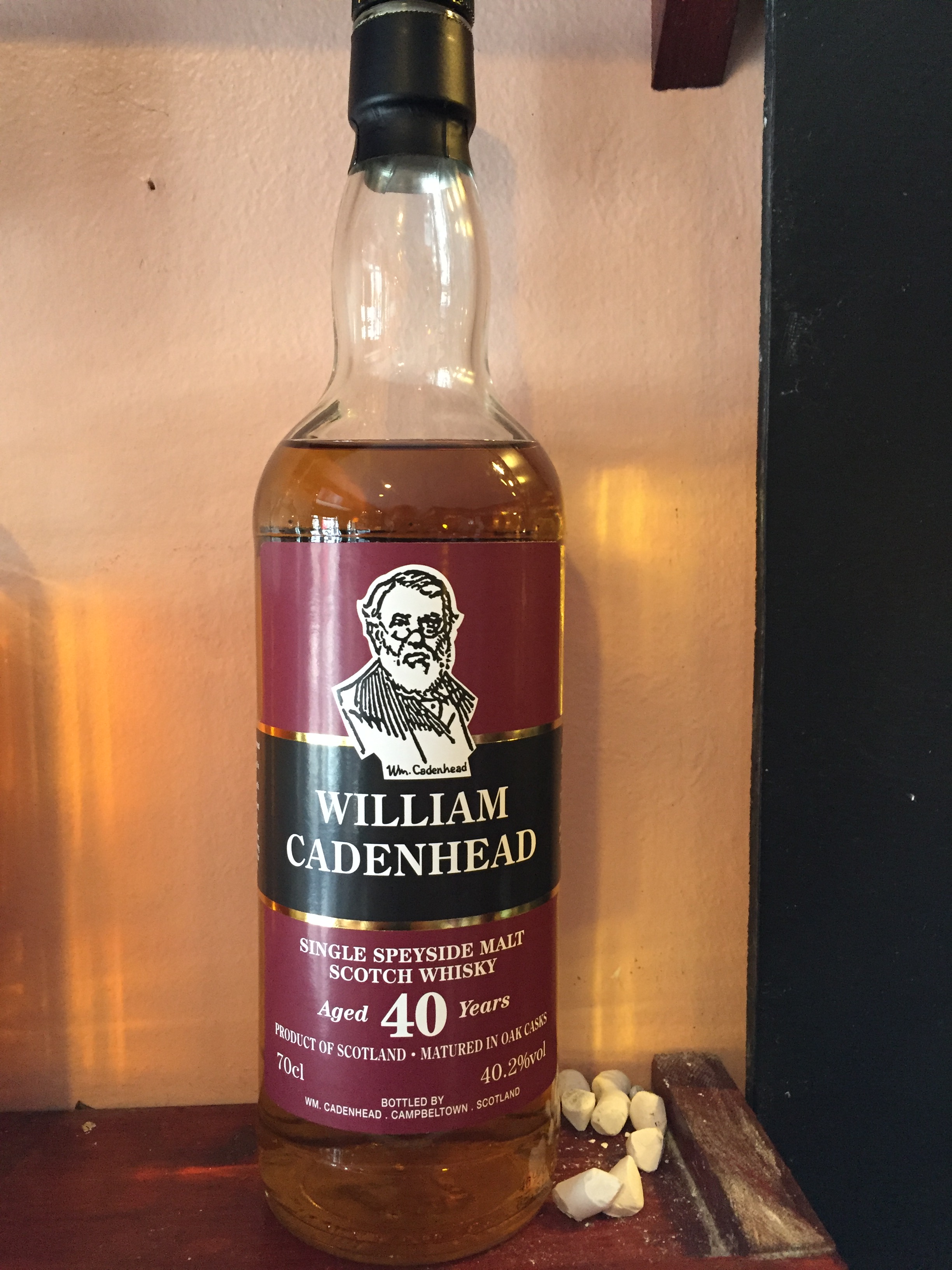
William Cadenhead Single Speyside Malt Scotch Whisky Aged 40 Years

Reviewed by: Ted

William Cadenheads 40 YO

The art of independent bottling is a fascinating one, taking the product of a distillery and aging it oneself in a new and interesting way. If performed successfully, the end product should hark back to it’s origins and yet metamorphose into something beguiling and delightful. A whisky butterfly if you will.

WM Cadenhead Ltd is Scotland’s oldest independent bottler, established in 1842. As such, they have had some time to perfect the art and their releases tend to command considerable respect.

The William Cadenhead Single Speyside Scotch Whisky that I was fortunate enough to try was a mere 40 years old! While the bottle did not reveal the origin of the spirit, I have been told that it allegedly contains spirit from Glenfarclas, a family-owned distillery steeped in tradition.

On the nose the William Cadenhead 40yo is like timber polished to the smoothness of glass using the finest vanilla and caramel scented beeswax.

In the mouth the spirit is what I imagine drinking satin would be like, rippling folds of cool smoothness sliding over the tongue and susurrating down the throat. The flavour is the lightest touch of honey, tree spices and dried fruits.

If you are ever fortunate enough to come across the William Cadenhead 40yo I would highly recommend taking the opportunity to try it. This is independent bottling at its most elegant.

★★★★★

Speyburn 10 Year Old

Reviewed by: Nick

Speyburn 10 year Old

It’s the very end of harvest season here in Tasmania. Fresh produce abounds, from potatoes to pears, onions to oranges, and asparagus to apples: our family-friend farmers’ pickings filling my kitchen with an alluring bouquet. The fresh fruit combines to remind me strongly of the scent of a dram I have recently acquired: the Speyburn 10 Year Old.

“Delicious” I hear you cry “a whisky with all amazing the flavours of harvest time! It must be good.” And it is. But it also isn’t. This is a whisky full of contradictions.

The contradictions start with the distillery itself. Translating literally as “River Spey”, Speyburn identifies as a highland whisky despite being found within a mile of such Speyside giants such as Glen Grant and The Glenrothes. It has received many modern awards, though it’s greatest accomplishment still seems to be being built in the year of Queen Victoria’s Diamond Jubilee. It also, commendably, bucks the NAS trend by releasing a 10 Year Old, a 25 Year Old… and nothing in between.

The harvest fruits are prevalent on the nose. Overripe red apples, peaches and lemons dominate proceedings in a way entirely unsubtle. It’s enjoyable but certainly citrus-heavy. The palate is sweet and malty, like children’s breakfast cereal. There is more lemon here, causing the whisky to veer dangerously towards dish-cleaner territory, though is stopped short by a bitter cooking apple note on the finish.

There are undeniably many enjoyable flavours in the Speyburn 10 Year Old. It’s well worth a try and certainly wonderful value – just don’t expect subtlety to be among its virtues. Rather than a sweet bite of an apple, it is more like the entire orchard has been emptied into your kitchen.

★★

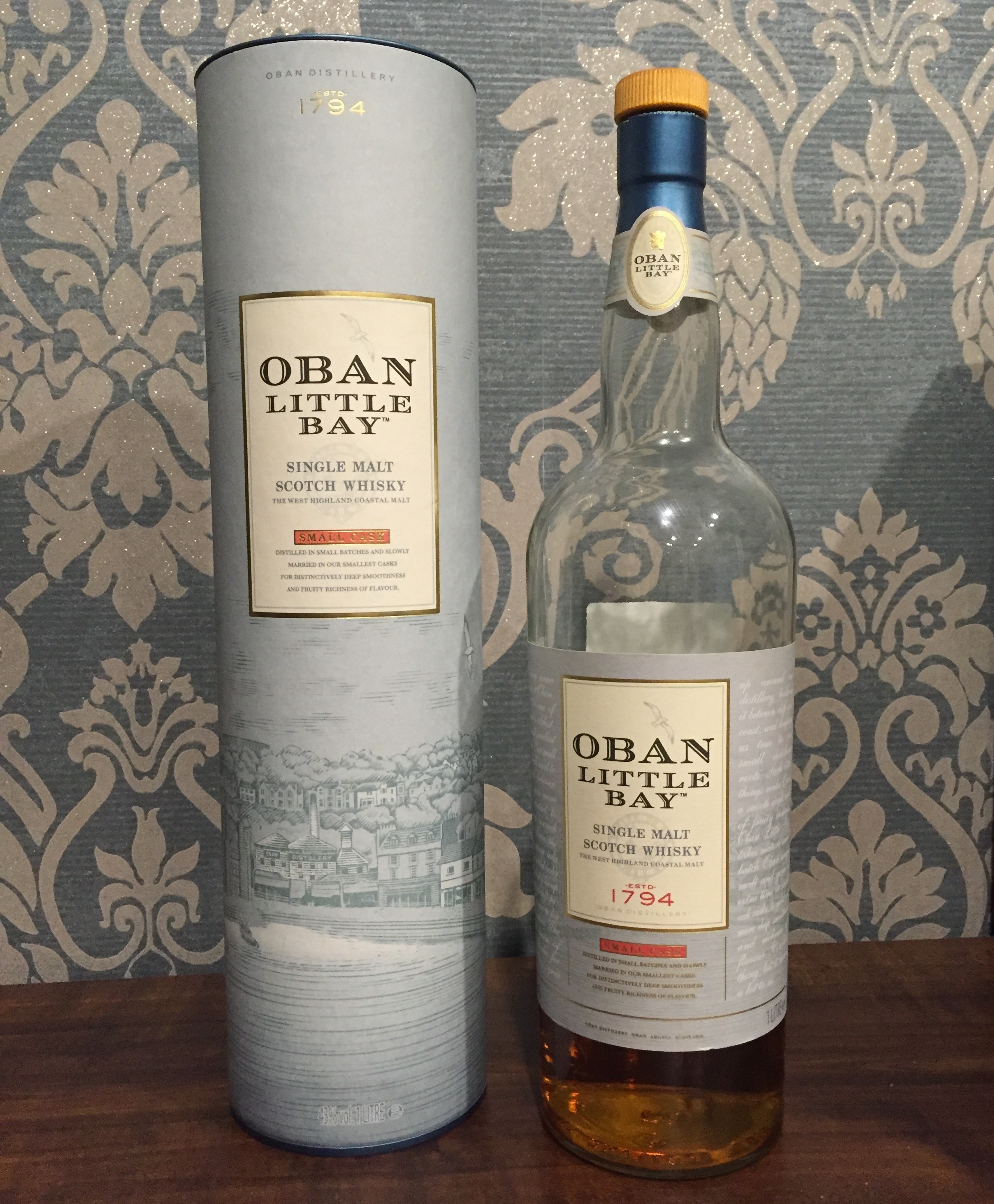
Oban Little Bay

Reviewed by: The Cynical Scot

Oban Little Bay WW

When you only have a little to say about a little dram, make sure the little says a lot. Oban Little Bay is a recent outpouring from a little town on the west coast of Scotland.

Oban claims its little spirit lives within the copper stills, where it rests between batches to help develop the experience. Little oak casks are the next little touch to smooth the draw and build the richness.

On the nose it spins and winks and jigs, while the taste is a warm clear heat; a dancing djinn on the warm moor. Though not smoky, it feels like fire.

This emissary from the little people doesn’t decide whether the spirit is of earth or fire or water, but being from Oban it dances between them all and lives in none. A real genie in a bottle.

★★★

How it compares:

The Little Bay has a youthful, flickery, salty warmth, whereas the 14yo is a sweeter, more complex and refined drop. Even though we would go for the 14yo, the Little Bay has its own magic touch.

Talisker Dark Storm

Reviewed by: Ted

Talisker Dark Storm

Thunder crashed and wind howled across Skye as the Taliskerians prepared to bottle their new whisky, a non-age statement barrelled in extra-heavily charred oak casks. Keith glanced at Nev and shouted over the noise “what do you reckon we should call this stuff?”

“Dunno… Sunny Skyes?”

“Nah, that’s the name of Mark Lochhead’s villa on Majorca. What do you reckon Taranis?”

Taranis, the Celtic god of thunder, had started working at the distillery after a bit of a slump in the smiting business and a failed attempt to break into Hollywood. After a moment’s pause, he reached into Nowhere and pulled out a bronze goblet covered in spoked wheel designs that made the world spin if looked at for too long.

Plunging the goblet into a barrel, he scooped up a god sized dram and breathed deeply of the captured spirit. Rich stewed fruits, heavy spices, grilling meats, chocolate, banana and curling sweet smoke rose up to meet him.

Planting his feet, Taranis took a mighty draw, amber liquid spilling down his braided moustaches. Sharp, crackling salt on burning driftwood burst across his tongue, followed by dark honey and cured meats. Over the top rolled curling smoke, like a forest fire seen on the horizon. The finish was bright, sharp and lingering, yet somehow contained it’s opposite, the void.

Keith and Nev looked at each other nervously. The brooding 8ft tall figure in its leathers and woad was a forbidding sight. Suddenly Taranis stirred, his eyes sparking with distant lightning, and spoke in a voice like far away thunder rolling across the hills:

“DARK STORM”

And so it was.

★★★

Dark Ted

How it compares

The Dark Storm is quite raw and robust compared to the 10yo, which is (slightly surprisingly) smoother and lighter. The Dark Storm makes big leaps and bounds over its other Talisker NAS stablemates, the Storm and the Skye. We’ve had the Storm and found it to be lacking in guts, a bit… bland, and from reports the Skye is even lighter. If you’re looking to try a NAS Talisker, the Dark Storm is definitely the way to go.

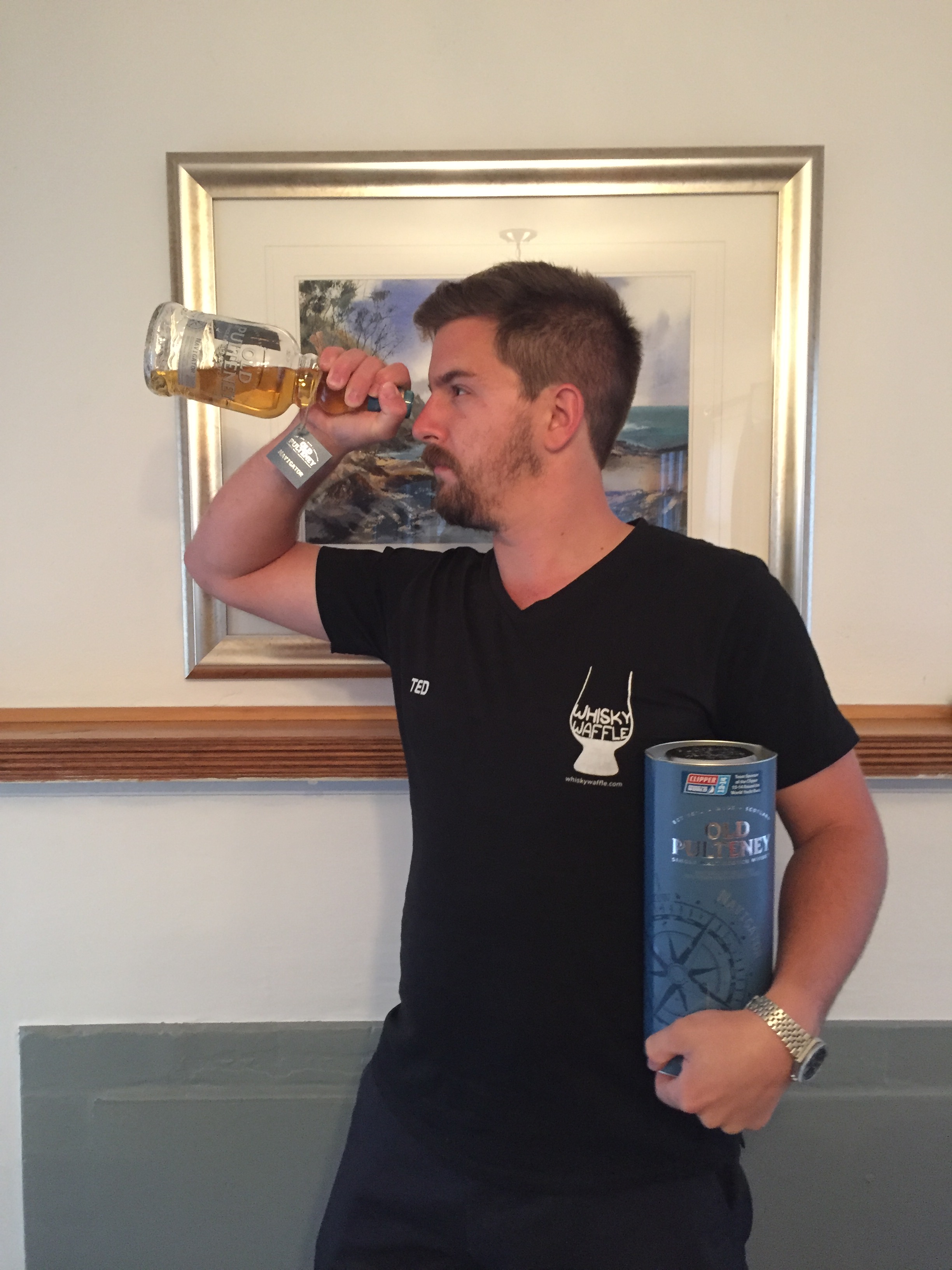
Old Pulteney Navigator

Reviewed by: Ted

Old Pulteney Navigator

It is no great surprise that Old Pulteney distillery takes inspiration from the sea, seeing as it resides on the rugged north coast of Scotland. In fact, Pulteneytown, the area of Wick from which the distillery takes its name, was a major player in the 19th century herring boom and harboured (ahem) a bustling harbour.

Old Pulteney isn’t just happy to let their love of the sea infuse their whisky, oh no. You know it’s a serious passion when you sponsor a vessel in the world’s longest round-the-world yacht race. The Clipper round-the-world race tests teams across a lazy 40000NM, demanding great effort from its participants.

To celebrate its maiden voyage in the ’13-’14 race, the aptly named ‘Old Pulteney’ clipper carried a special cargo on board, the first barrel of a new limited edition NAS whisky named the ‘Navigator’, crafted from a marriage of younger aged bourbon and sherry casks.

On the nose the Navigator tacks against bursts of chocolate and salted bacon before having its sails filled with malty biscuits, while oak decking creaks underneath.

Sharp, salty waves break over the palate, prickling across the back of the tongue. A juicy citrus burst through the middle keeps away the scurvy, followed by a warm trade wind that soars down the throat.

The Old Pulteney Navigator is a dram worthy of its nautical namesake. Its youth helps enhance its maritime nature, evoking the tempestuous seas that govern life along the north coast of Scotland. If you are a maritime whisky fan then the Navigator will definitely float your boat.

★★★

Ted the Navigator

How it compares:

The Navigator is the wild, ever-changing sea, whereas the 12yo is the calm, smooth safety of the harbour, welcoming the weary sailor home. Both have their own allure, but you don’t necessarily want to be tossed about in the old briny every day.

Auchentoshan Classic

Reviewed by: Nick

Auchentoshan Classic

If you’re fortunate enough to visit Glasgow (like me) and are somewhat interested in the odd dram (like me) then you simply must pay a visit to Auchentoshan Distillery (like me). The triple distilling Lowlands champions have been producing some lovely drops for a while now and a tour of the establishment that creates them is well worth it. The tour concludes, as all the best do, with a tasting – sampling Auchentoshan’s core range. The 12 Year Old is among those offered, as is the fantastic Three Wood. Up first, however, is the Auchentoshan Classic – a Non Age Statement whisky.

Upon my visit I got the impression that the staff were keen to skip past this one and get stuck into the 12 Year Old – as if they were saying, “but enough of this folly, time for some real whisky”. I mean, admittedly our trusty guide was right – the 12 blows the Classic out of the water. But there’s still something to say for the lowly old (young?) NAS bottle.

The Auchentoshan Classic is lighter in colour than other releases from the distillery and demonstrates very clearly its bourbon maturation. On the nose it is sweet, grassy and with a touch of honey. It is pleasant and summery. The palate is similarly sweet with notes of fruit-based confectionery. I also got the faintest hints of peanut butter, cloves and marmalade. The finish is short but strangely rather fitting for this gentle dram.

This is a feather-light whisky.  A Pinot Noir rather than a Shiraz. But every now and again, that’s alright. Especially if you’re on the distillery tour and the 12 Year Old is up next!

★★

Classic Nick

How it compares:

The 12 Year old is so much more vibrant than the Classic. They are both light and sweet, but the 12 Year old has depths to explore – whereas with the Classic what you see is what you get. The finish is similarly short with both drams – and while this is a disappointment in the 12, the abrupt finish seems to suit the Classic. Still, though, I think I’d rather have the Three Wood.

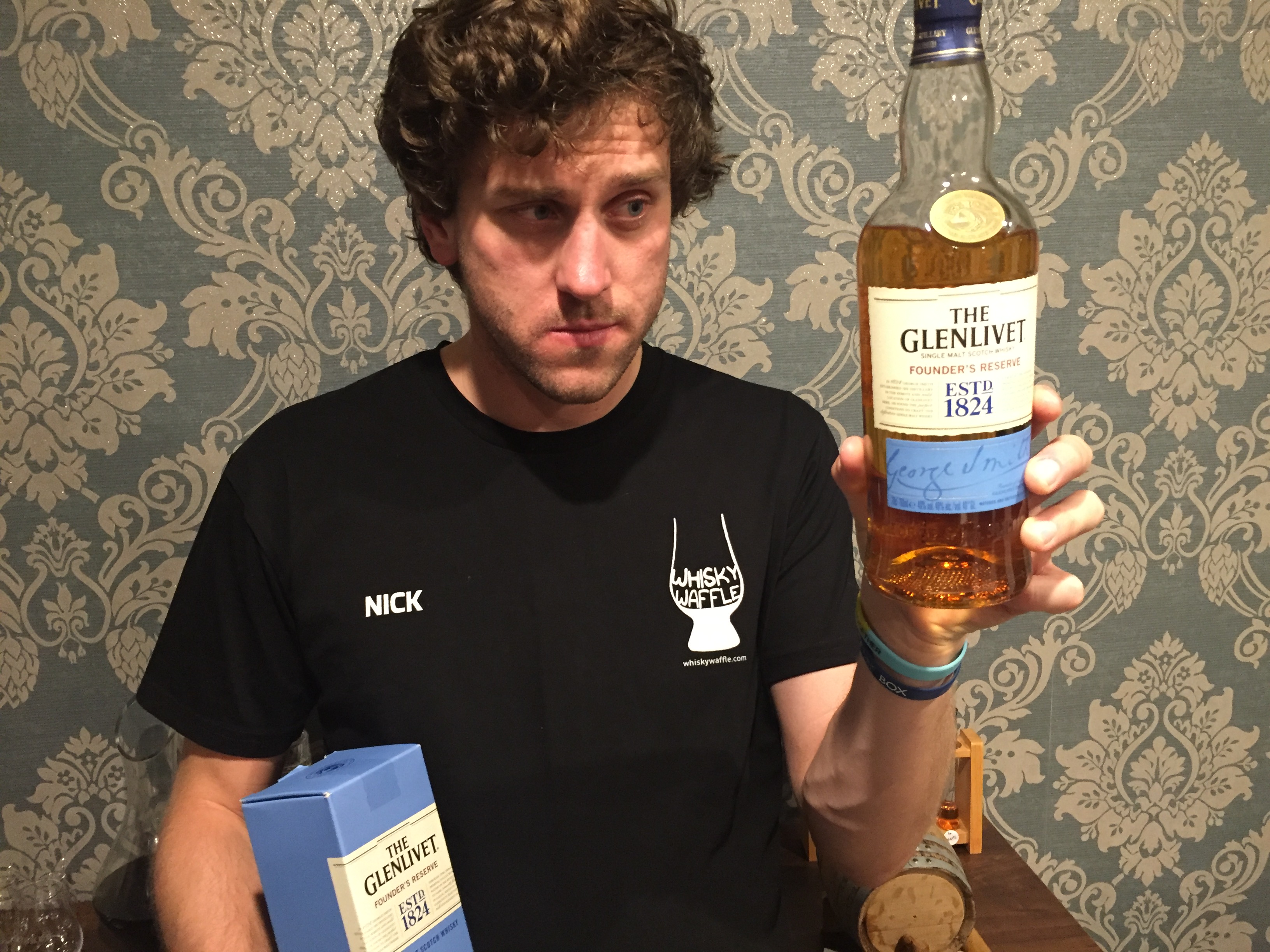
The Glenlivet Founders Reserve

Reviewed by: Nick

Founders Reserve n waffle

In 2015 we farewelled a Whisky Waffle favourite son, the Glenlivet 12. It was there to share the laughs when we held cards nights, to comfort us when we’d had a rough day at work and raised high when we rung in the New Year. Sadly Glenlivet, in their ultimate wisdom, have retired the 12 for the foreseeable future. But fear not – they have introduced a direct(ish) replacement! It comes in shiny blue packaging so it must be good, mustn’t it? Ladies and gentlemen, I present to you the Glenlivet Founders Reserve.

It would be so easy to do a straight comparison of the two whiskies, but I decided to sample the new kid on the block on its own to see how it stood up. It turns out ‘stood up’ was possibly the wrong analogy. Sat down maybe? Perhaps slouched…

On the nose, I found the Founders Reserve has plenty of caramel and some dry malty notes. An acceptable, if not auspicious start. So I took a sip. This turned out to be an error. There’s an unpleasant sweetness in there – a sugary, treacly flavour lacking in any complexity. It’s not bad per se, but there is a distinct manufactured, home-brand quality about it which is hard to enjoy. The finish is warm and spicy, almost tangy on the back of the tongue. Finally there is the merest hint of raisins, a cameo appearance that leaves you wishing there was more to be found.

I cannot say that the Founders Reserve is particularly offensive in its flavour. But I can (and do) claim that it is all a bit bland and inconsequential, bordering on boring, which disappoints me greatly. Glenlivet are truly great makers of Scottish whisky and it saddens me to think that a generation of whisky drinkers will discover the distillery via this disappointing bottle.

★★

Nick and the Glenlivet Founders Reserve

How it compares:

Without doubt there are similarities in flavour between the Founders Reserve and the 12 Year Old – they are both obvious Speysiders full of caramel and honey. But the 12 Year Old has so much more going on than the NAS bottle. There are subtle complexities to be found throughout the 12 which the Founders lacks. The Founders Reserve is the Coke Zero to the 12’s Coca-Cola.

Oban 14 Year Old

Reviewed by: Ted

Oban 14

Rather like the wild haggis (Haggis scotticus), Oban distillery is a curious wee beastie. Located on the craggy west coast of Scotland in the town of the same name, Oban is one of the oldest distilleries in the country, founded in 1794 on the site of an old brewery by brothers John and Hugh Stevenson. Interestingly however, despite its lengthy existence it has remained one of the smallest distilleries around, with only two pot stills in residence to make the good stuff.

Understandably, the limited production capacity has focused the Oban distillers, choosing to craft a few expressions rather than the seemingly endless releases pedalled by larger producers. Luckily this means that the Obanites have had plenty of time to refine and tinker with their creations.

Oban’s flagship dram is one that should pique the curiosity of any whisky fiend looking for something a little different. Eschewing usual ageing lengths, the Oban 14yo, part of Diageo’s “Classic Malts Selection”, exploits an interesting niche between youth and maturity, and it must be noted, at a price on par (at least in Australia) with many 12yo whiskies.

The character of the 14yo walks a fine line, balanced as it is between the highlands to the east and the islands to the west. A careful nosing reveals a light, sweet, dusty spirit with suggestions of damsons and green apples, giving it a sense of kinship with other highland drops such as Dalwhinnie.

The taste on the other hand speaks of its seaside home, beginning with a bright, slightly salty burst on the front of the palate, lifted by the 43% strength, followed by a hint of seaweed and coastal air. The mid palate smooths out and becomes much more rounded, with dried fruits, zest, spices and perhaps just the lightest hint of smoke. The finish is clean and doesn’t linger for too long.

Once you’ve knocked back a few sips of the 14yo it’s worth holding the glass up to the light and contemplating the colour, which should be a dark amber. The reason I make mention of this is that the 14yo is not aged in the sherry casks that the colour suggests, but rather ex-bourbon hogsheads.

The answer to this conundrum will cause some to shrug their shoulders unconcernedly and others to foam at the mouth in righteous indignation: caramel e150a. Why Oban chooses to use artificial colouring, while other premium distilleries go to great pains to point out that they keep their own products au naturale, is a secret known only to the Obanites. Whether or not it’s presence affects the flavour of the 14yo I will leave up to your own distinguished palates, fellow wafflers.

The small size of Oban definitely works in its favour, allowing it time to lovingly craft a quirky and interesting product that does not hurt the wallet too much. The 14yo is certainly a delightful and evocative drop; and unlike the pesky wild haggis, is relatively easy to track down for those curious to discover the ‘west highland’ flavour.

★★★