Reviews

Booker Noe’s Special Barrel Bourbon

Reviewed by: Ted

Booker Noe's

Ok people, tread carefully, we’re hunting a pretty dangerous lil’ beastie today and I wouldn’t like to see anyone lose a leg. It’s got a strong nose, a powerful kick and a bite worse than the biggest, meanest black bear you ever did see. What am I talking about? Why, Booker Noe’s Special Barrel Bourbon of course…. Look out! *crunch*

This big hitting bourbon takes it’s name from one of Kentucky’s most beloved sons, Booker Noe, grandson of the great Jim Beam himself. As master distiller at Jim Beam for many years, and a child of one of America’s greatest whiskey dynasties, Booker had an innate knowledge of the spirit he crafted. As a testament to his skill he selected barrels of special character to create an expression bearing his name and personal taste.

According to Booker’s note on the bottle label, his grandfather preferred his whiskey to be aged between 6-8yrs. My bottle, containing batch C04-A-28, hits that mark perfectly, being aged for 7yrs and 4months precisely. What really gives the Booker Noe its teeth is that fact that it’s bottled straight from the barrel. Therefore the bottle of dark, uncut Kentucky spirit sitting before me is a hefty 64.55% abv, or 129.1 proof in the American money.

I make no joke about the potency of this stuff, as it’s responsible for some of the few alcohol induced blank spots in my memory. Just to hammer the point home, our women folk are generally pretty indulgent and tolerant of our whisk(e)y drinking proclivities. Yet when the Booker comes out, or even if there’s vague hints of it, stern looks and muttering along the lines of ‘Oh God, you’re not drinking that stuff again are you? Remember what happened last time?’ occurs. Suffice to say, m’colleague and I have not been found in the best shape afterwards.

Yet, even after all that, there is something about the Booker Noe that keeps drawing us back. It’s the bold, gutsy, manly nature of it I think. Bourbon in the raw. The nose is solid, a big slab of dusty corn sweetness that drops down on you like a sack of, well, corn. Of course, because of the strength there’s an undertone of nail polish remover, but it blends well with the sweetness, only frying the occasional unsuspecting nose hair.

The taste is bold, taking a big, sharp, sweet, fruity swipe at your palate. The spirit fills the mouth, making your cheeks tingle and the blood rise. The finish is oaky and sour, and keeps you pinned down until it finishes punching you in the face.

Booker Noe’s Special Barrel bourbon is the American spirit at its brawniest. It’s creator was a larger-than-life figure and his bourbon certainly lives up to that legacy. Hunt the wild Kentucky beast if you dare, but be careful it doesn’t bite you too hard. But maybe it’s just like the note I stuck on the box says: “Because I like to live… dangerously.”

★★★

Glen Moray Port Cask Finish

Reviewed by: Nick

Glen Moray Port Cask

As an out and proud fan of Glen Moray distillery and a waffler known to be partial to a little port matured whisky, the Glen Moray Port Cask Finish sounded like the perfect dram for me. Combining the sweet elegant Speyside flavour with a rich wine-infused layer – what could possibly go wrong? As it turns out: quite a lot.

Upon its arrival at my door, I eagerly whipped the bottle out of its box and was greeted with the most peculiarly coloured whisky I had ever seen. I’ve observed variations of the (hilariously unintentionally poetic) “burnt crimson” theme before, but this whisky was – and there’s no more accurate description – orange. It was the kind of radioactive-peach hue normally reserved for fake tan. Alarm bells were ringing – but I didn’t want to fall into the trap of judging a book by its colour. There was only one thing to it – I had to try some.

After the first sniff it was clear that I was not trying a regular Speysider here. There was a lot of fruit – by which I mean a veritable orchard’s worth – and it was overripe, perhaps on the turn and ready for the compost heap. There were some bitter dark chocolate notes as well as equally bitter notes of wet grass. All in all, it was… shall we say memorable.

Surely the palate would be an improvement. And it was, albeit slightly. It was sweet and sticky with strong winey notes combining to form something reminiscent of strawberry jam. Don’t get me wrong, I love me some strawberry jam. Just this particular fruit spread was more Woolworths brand rather than homemade by my Grandma. The sweetness was more of a sugar syrup than a caramel and the vanilla more essence than extract. The finish started strongly with some nice blackberry flavours but descended into a rough spicy alcohol burn, surely a product of its youthful non-age statement nature.

Wow.

I did not love this whisky nearly as much as I expected. All things considered it was more than a little, well, rubbish. However, I can’t say I’m unhappy that I bought it. Scotland is hugely diverse in its drams and this is as far removed from an elegant Speyside drop as an Islay peat monster. Unfortunately in this case – the differences are not for the better.

Timboon Single Malt Whisky

Reviewed by: Nick and Ted

Timboon port front

Back in the early 1800’s Scottish whisky was forced, kicking and screaming, to go straight. Distillers were required to become legal or shut down, formally founding many of the grand old distilleries we see today. In comparison, Australia had to wait another 150 years for legalisation to occur, resulting in many heroic folkloric moonshiners keeping local spirits up.

One such rapscallion was Tom Delaney, a notorious bootleg distiller of the Timboon region of Victoria, who made a dram locally known as ‘Mountain Dew’. Fast forward 100 years and small scale distilling in Australia is now legal, and Tom’s legend has not been forgotten.

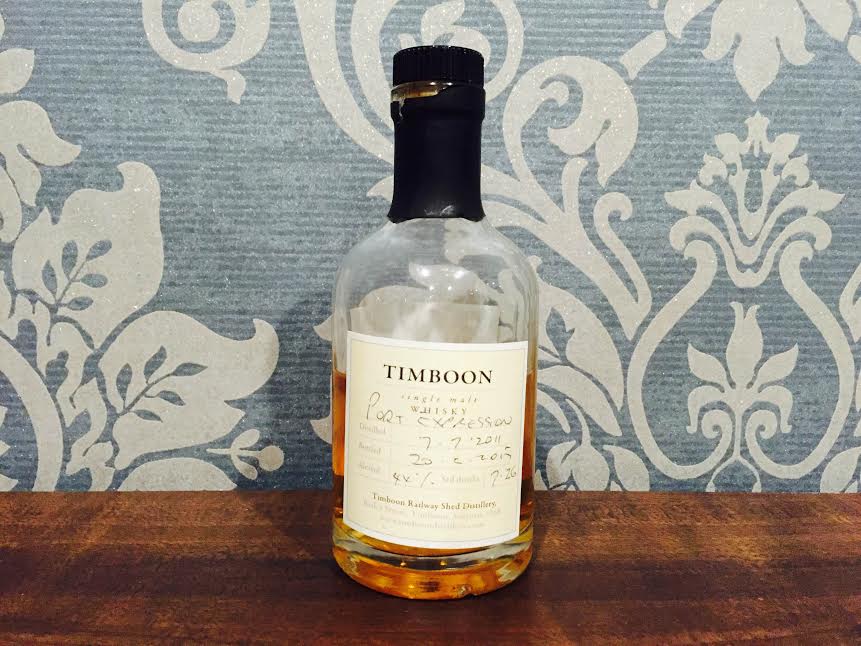
Based in an old railway shed, Timboon Distillery draws inspiration from the whisky making heritage of the region, creating a range of distilled products, chief amongst them being their Single Malt Whisky. Matured in small ex-port barrels, this young whisky is a distinctive Aussie drop.

On the nose the Single Malt has notes of vanilla and caramel, mixed with the more unusual flavours of blue heaven and mint-chocolate. Perhaps this is not so surprising, seeing as Timboon was founded by the owners of an ice cream company.

The minty flavour continues on the palate, along with polished timber, red currant and spiced plums. The mid-palate is smooth and then suddenly goes missing for a moment, before revealing a spicy, slightly metallic finish.

While this may not the most balanced whisky Australia has to offer, there are definitely some intriguing flavours to be found. We are sure that Tom would be proud to know that his distilling legacy lives on and look forward to future releases from Timboon Distillery.

★★


Limeburners Infinity Solera Cask

Reviewed by: Nick

Limeburners Infinity Solera

The thing about the Australian Whisky scene is that we are unquestionably small-fry. It is a quantifiable fact that we produce less whisky per annum than Glenfiddich sloshes from its barrels. Size, or rather lack thereof, is the overriding factor in most Aussie distilleries’ tendencies to release single barrel expressions – they simply don’t produce enough product to have an alternative. This is great if you happened to own an unopened bottle of HH525 Sullivans Cove in 2014. If you did, I hope your new private yacht is treating you well.

Single barrels are not as good however, when the aim of your whisky game is consistency of flavour. You know, that old chestnut of getting one bottle of your standard release to mildly resemble the taste of another one. The best way to achieve this is to blend (or more romantically, ‘marry’) a range of casks together – thus ironing out any ‘bumps’ in flavour. Even better still, is if you can use a Solera vat, which are only ever half empty (or full. Not sure which is the most optimistic phrasing in this case.)

With this groundbreaking new technology (invented c.1790), distilleries are suddenly able to better define their flavour and ensure that a bottle you buy this year is (pretty much) the same as the one you purchase at a later date.

One of the first distilleries in Australia to adopt the Solera technique is the wonderfully-named Great Southern Distilling Company based in Albany, Western Australia. They market their wares under the label ‘Limeburners’ and in their short history, have released some stellar drams.

While director/distiller Cameron Syme is a huge fan of the variety found in single barrel releases, he acknowledges the need for a consistent product and an entry level into the Limeburners range, resulting in the creation of the Limeburners Infinity. Cameron says that his distillery’s key commitment is “to make Australian whisky which can compete and hold its own at the highest international levels. Infinity is certainly capable of that.”

This particular release contains 8 year old whisky matured in several 500L South Australian port puncheons. The infinity name is appropriate, as the Solera system will always leave at least a teeny tiny fraction of these original whiskies in the mix.

Eager to support the distillery, I stumbled upon this bottle’s first release on Dan Murphys and promptly blew my savings for the week. So what exactly is the Infinity Solera Reserve like?

On the nose there are immediate traces of the port influence – ripe oranges dominate alongside zesty citrus and vanilla, bringing to mind cupcakes with lemon icing. The palate is complex – certainly not smooth, but well balanced with flavours of strawberry jam, honey and malt biscuits. In the finish I spotted hints of the bitter soapiness I sometimes detect in wine-matured whisky (yes, I know, this is port matured and therefore I sound crazy). However, this vague disagreeable note dissipates quickly and is replaced by an intriguing dryness which contrasts pleasantly with the initial flavours.

Usually I find it pretty counterintuitive adding water to my whisky, but in the case of this one, it takes on a whole new character with a splash of H20. Suddenly, large dollops of gooey caramel dominate the palate and the flavours morph from undeniably Australian to slightly Speysidey.

This whisky is a significant step for Australian whisky. Lack of consistency is one argument the Cynical Scot has always held over me in our heated whisky-fuelled debates about the validity of non-Scottish drams. It seems that, at least in Limeburners’ case, I will be able to return to the bottle shop in a year, in two years, or even in ten and get this same drop. Or alternatively, I could save my pennies and buy one of their delicious cask strengths…

★★★

William Cadenhead Single Speyside Malt Scotch Whisky Aged 40 Years

Reviewed by: Ted

William Cadenheads 40 YO

The art of independent bottling is a fascinating one, taking the product of a distillery and aging it oneself in a new and interesting way. If performed successfully, the end product should hark back to it’s origins and yet metamorphose into something beguiling and delightful. A whisky butterfly if you will.

WM Cadenhead Ltd is Scotland’s oldest independent bottler, established in 1842. As such, they have had some time to perfect the art and their releases tend to command considerable respect.

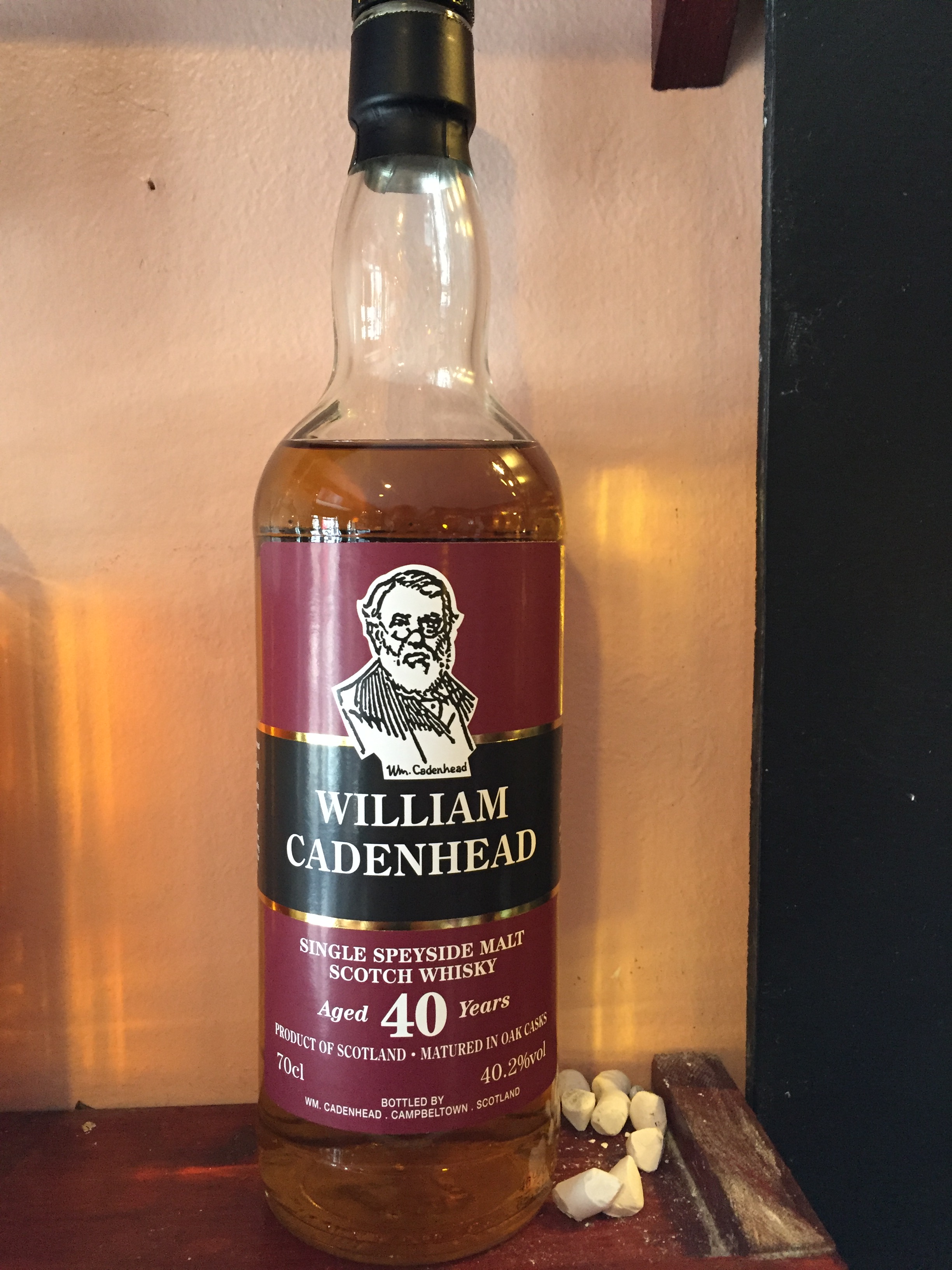
The William Cadenhead Single Speyside Scotch Whisky that I was fortunate enough to try was a mere 40 years old! While the bottle did not reveal the origin of the spirit, I have been told that it allegedly contains spirit from Glenfarclas, a family-owned distillery steeped in tradition.

On the nose the William Cadenhead 40yo is like timber polished to the smoothness of glass using the finest vanilla and caramel scented beeswax.

In the mouth the spirit is what I imagine drinking satin would be like, rippling folds of cool smoothness sliding over the tongue and susurrating down the throat. The flavour is the lightest touch of honey, tree spices and dried fruits.

If you are ever fortunate enough to come across the William Cadenhead 40yo I would highly recommend taking the opportunity to try it. This is independent bottling at its most elegant.

★★★★★

Speyburn 10 Year Old

Reviewed by: Nick

Speyburn 10 year Old

It’s the very end of harvest season here in Tasmania. Fresh produce abounds, from potatoes to pears, onions to oranges, and asparagus to apples: our family-friend farmers’ pickings filling my kitchen with an alluring bouquet. The fresh fruit combines to remind me strongly of the scent of a dram I have recently acquired: the Speyburn 10 Year Old.

“Delicious” I hear you cry “a whisky with all amazing the flavours of harvest time! It must be good.” And it is. But it also isn’t. This is a whisky full of contradictions.

The contradictions start with the distillery itself. Translating literally as “River Spey”, Speyburn identifies as a highland whisky despite being found within a mile of such Speyside giants such as Glen Grant and The Glenrothes. It has received many modern awards, though it’s greatest accomplishment still seems to be being built in the year of Queen Victoria’s Diamond Jubilee. It also, commendably, bucks the NAS trend by releasing a 10 Year Old, a 25 Year Old… and nothing in between.

The harvest fruits are prevalent on the nose. Overripe red apples, peaches and lemons dominate proceedings in a way entirely unsubtle. It’s enjoyable but certainly citrus-heavy. The palate is sweet and malty, like children’s breakfast cereal. There is more lemon here, causing the whisky to veer dangerously towards dish-cleaner territory, though is stopped short by a bitter cooking apple note on the finish.

There are undeniably many enjoyable flavours in the Speyburn 10 Year Old. It’s well worth a try and certainly wonderful value – just don’t expect subtlety to be among its virtues. Rather than a sweet bite of an apple, it is more like the entire orchard has been emptied into your kitchen.

★★

Oban Little Bay

Reviewed by: The Cynical Scot

Oban Little Bay WW

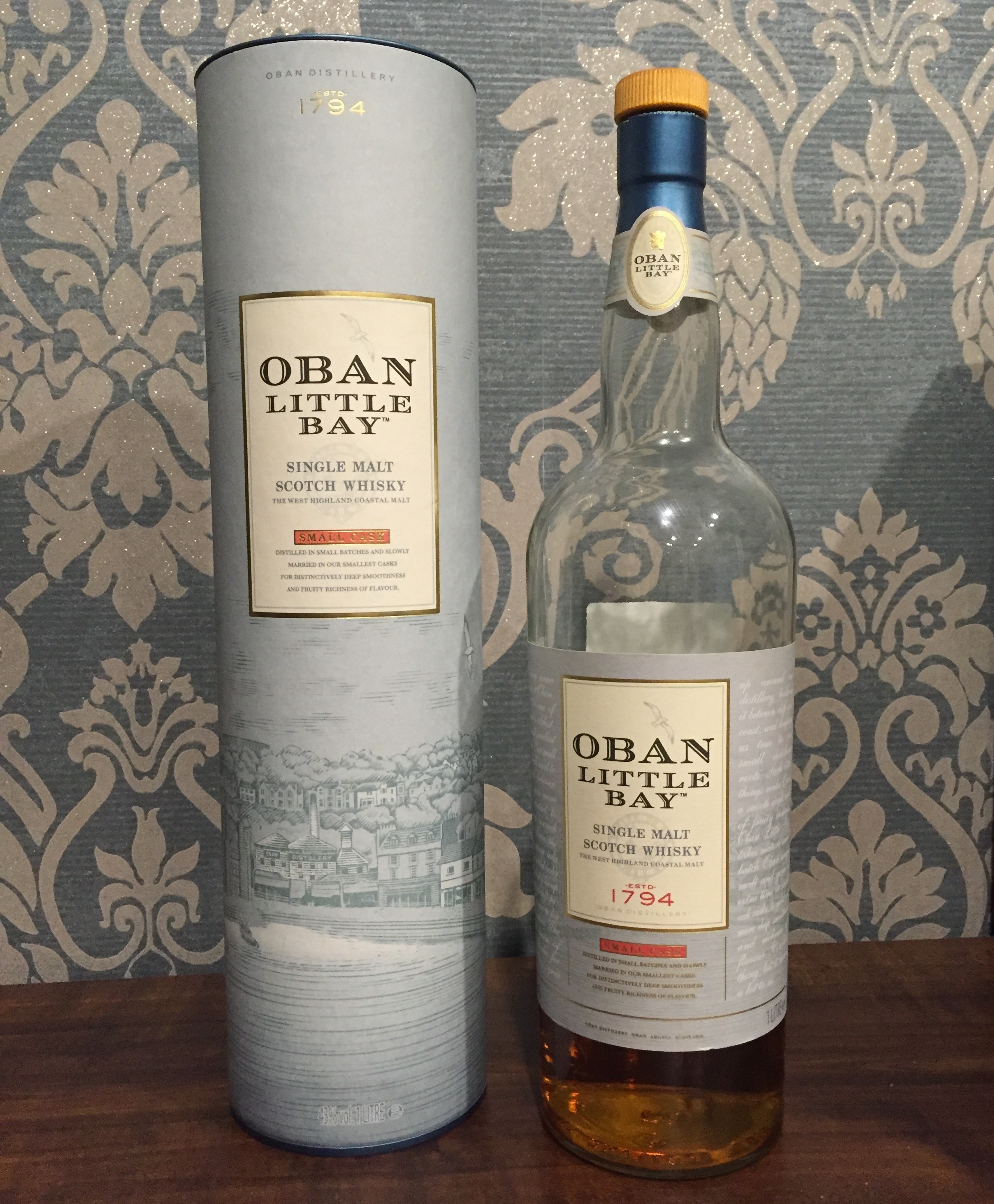
When you only have a little to say about a little dram, make sure the little says a lot. Oban Little Bay is a recent outpouring from a little town on the west coast of Scotland.

Oban claims its little spirit lives within the copper stills, where it rests between batches to help develop the experience. Little oak casks are the next little touch to smooth the draw and build the richness.

On the nose it spins and winks and jigs, while the taste is a warm clear heat; a dancing djinn on the warm moor. Though not smoky, it feels like fire.

This emissary from the little people doesn’t decide whether the spirit is of earth or fire or water, but being from Oban it dances between them all and lives in none. A real genie in a bottle.

★★★

How it compares:

The Little Bay has a youthful, flickery, salty warmth, whereas the 14yo is a sweeter, more complex and refined drop. Even though we would go for the 14yo, the Little Bay has its own magic touch.

Talisker Dark Storm

Reviewed by: Ted

Talisker Dark Storm

Thunder crashed and wind howled across Skye as the Taliskerians prepared to bottle their new whisky, a non-age statement barrelled in extra-heavily charred oak casks. Keith glanced at Nev and shouted over the noise “what do you reckon we should call this stuff?”

“Dunno… Sunny Skyes?”

“Nah, that’s the name of Mark Lochhead’s villa on Majorca. What do you reckon Taranis?”

Taranis, the Celtic god of thunder, had started working at the distillery after a bit of a slump in the smiting business and a failed attempt to break into Hollywood. After a moment’s pause, he reached into Nowhere and pulled out a bronze goblet covered in spoked wheel designs that made the world spin if looked at for too long.

Plunging the goblet into a barrel, he scooped up a god sized dram and breathed deeply of the captured spirit. Rich stewed fruits, heavy spices, grilling meats, chocolate, banana and curling sweet smoke rose up to meet him.

Planting his feet, Taranis took a mighty draw, amber liquid spilling down his braided moustaches. Sharp, crackling salt on burning driftwood burst across his tongue, followed by dark honey and cured meats. Over the top rolled curling smoke, like a forest fire seen on the horizon. The finish was bright, sharp and lingering, yet somehow contained it’s opposite, the void.

Keith and Nev looked at each other nervously. The brooding 8ft tall figure in its leathers and woad was a forbidding sight. Suddenly Taranis stirred, his eyes sparking with distant lightning, and spoke in a voice like far away thunder rolling across the hills:

“DARK STORM”

And so it was.

★★★

Dark Ted

How it compares

The Dark Storm is quite raw and robust compared to the 10yo, which is (slightly surprisingly) smoother and lighter. The Dark Storm makes big leaps and bounds over its other Talisker NAS stablemates, the Storm and the Skye. We’ve had the Storm and found it to be lacking in guts, a bit… bland, and from reports the Skye is even lighter. If you’re looking to try a NAS Talisker, the Dark Storm is definitely the way to go.

Old Pulteney Navigator

Reviewed by: Ted

Old Pulteney Navigator

It is no great surprise that Old Pulteney distillery takes inspiration from the sea, seeing as it resides on the rugged north coast of Scotland. In fact, Pulteneytown, the area of Wick from which the distillery takes its name, was a major player in the 19th century herring boom and harboured (ahem) a bustling harbour.

Old Pulteney isn’t just happy to let their love of the sea infuse their whisky, oh no. You know it’s a serious passion when you sponsor a vessel in the world’s longest round-the-world yacht race. The Clipper round-the-world race tests teams across a lazy 40000NM, demanding great effort from its participants.

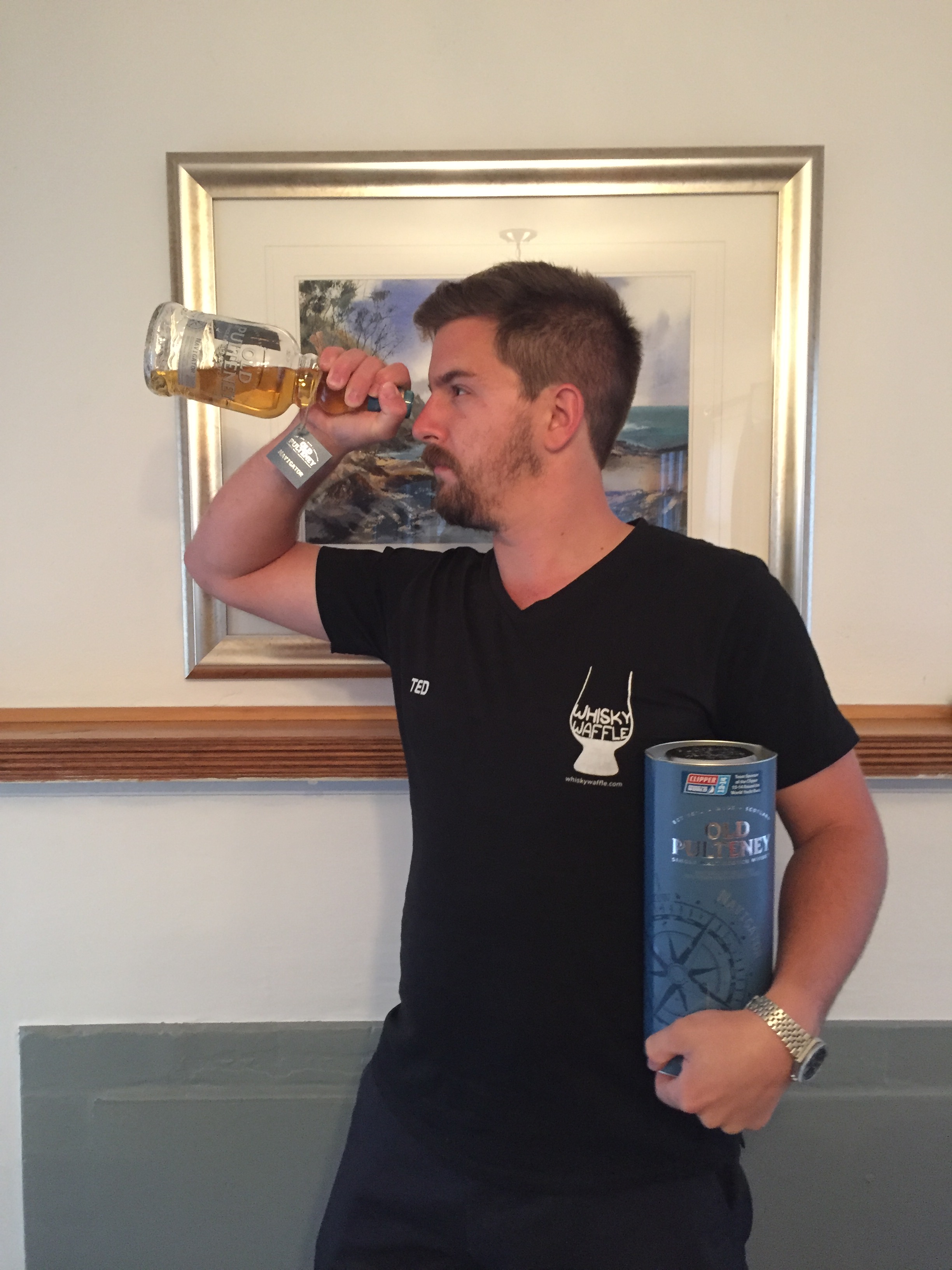
To celebrate its maiden voyage in the ’13-’14 race, the aptly named ‘Old Pulteney’ clipper carried a special cargo on board, the first barrel of a new limited edition NAS whisky named the ‘Navigator’, crafted from a marriage of younger aged bourbon and sherry casks.

On the nose the Navigator tacks against bursts of chocolate and salted bacon before having its sails filled with malty biscuits, while oak decking creaks underneath.

Sharp, salty waves break over the palate, prickling across the back of the tongue. A juicy citrus burst through the middle keeps away the scurvy, followed by a warm trade wind that soars down the throat.

The Old Pulteney Navigator is a dram worthy of its nautical namesake. Its youth helps enhance its maritime nature, evoking the tempestuous seas that govern life along the north coast of Scotland. If you are a maritime whisky fan then the Navigator will definitely float your boat.

★★★

Ted the Navigator

How it compares:

The Navigator is the wild, ever-changing sea, whereas the 12yo is the calm, smooth safety of the harbour, welcoming the weary sailor home. Both have their own allure, but you don’t necessarily want to be tossed about in the old briny every day.

Auchentoshan Classic

Reviewed by: Nick

Auchentoshan Classic

If you’re fortunate enough to visit Glasgow (like me) and are somewhat interested in the odd dram (like me) then you simply must pay a visit to Auchentoshan Distillery (like me). The triple distilling Lowlands champions have been producing some lovely drops for a while now and a tour of the establishment that creates them is well worth it. The tour concludes, as all the best do, with a tasting – sampling Auchentoshan’s core range. The 12 Year Old is among those offered, as is the fantastic Three Wood. Up first, however, is the Auchentoshan Classic – a Non Age Statement whisky.

Upon my visit I got the impression that the staff were keen to skip past this one and get stuck into the 12 Year Old – as if they were saying, “but enough of this folly, time for some real whisky”. I mean, admittedly our trusty guide was right – the 12 blows the Classic out of the water. But there’s still something to say for the lowly old (young?) NAS bottle.

The Auchentoshan Classic is lighter in colour than other releases from the distillery and demonstrates very clearly its bourbon maturation. On the nose it is sweet, grassy and with a touch of honey. It is pleasant and summery. The palate is similarly sweet with notes of fruit-based confectionery. I also got the faintest hints of peanut butter, cloves and marmalade. The finish is short but strangely rather fitting for this gentle dram.

This is a feather-light whisky.  A Pinot Noir rather than a Shiraz. But every now and again, that’s alright. Especially if you’re on the distillery tour and the 12 Year Old is up next!

★★

Classic Nick

How it compares:

The 12 Year old is so much more vibrant than the Classic. They are both light and sweet, but the 12 Year old has depths to explore – whereas with the Classic what you see is what you get. The finish is similarly short with both drams – and while this is a disappointment in the 12, the abrupt finish seems to suit the Classic. Still, though, I think I’d rather have the Three Wood.