Scottish Whisky

Cragganmore 12 Year Old

Reviewed by: Nick

Cragganmore 12 Year Old

Summer is a time for barbeques and dreams; it is a time for long evenings spent irreverently with friends. And, of course, it is a time for summer romances.

I met the Cragganmore 12 Year Old shortly before Christmas and knew, without being able to define why, that this was to be my summertime dram. It glistened, a deep gold on the shelf, almost calling to me with promises of what was to come. How could I resist?

The following weeks I enjoyed the gloriously sunny evenings with the Cragganmore by my side. We were thick as thieves, spending time at post-Christmas drinks, New Years Eve – even on the annual camping trip. All my whisky-drinking friends approved. There was no doubt, the Cragganmore was a worthy addition to our summer festivities. And the flavours? Extraordinary.

The nose of honey and butterscotch. The palate of vanilla and lemons. And the finish… Oh that delicate and yet spicy linger I feel I will never truly forget.

Inevitably, the sun began to set on a glorious January, and the contents of the Cragganmore dwindled. As with all summer flings, it ended all too suddenly. It was time to say farewell to this golden bottle. While it was a friendship only recently acquired, it seemed the bonds we had formed would last a lifetime. As we said our goodbyes, I thanked it for its companionship over such a memorable time. I can now only leave it in the hands of fate as to whether we meet again on another, seemingly endless, summer afternoon.

★★★

The Arran Malt Amarone Cask Finish

Reviewed by: Nick

Arran Amarone Cask

Traditionally, the world of Scottish whisky is very – well – traditional. When popping champagne for Ardbeg’s two hundredth year, we somewhat neglected the rather less impressive twentieth birthday of the Arran Distillery. But distilleries are only as good as the products they are currently creating, and there is a lot to like about the bottles presently leaving the Isle of Arran.

As well as a range of age statement whiskies they have a variety of cask finish expressions, and the one I happened to get my grubby little mitts on was finished in Amarone barrels. For the uneducated, which I will freely admit to being one of before buying the bottle, Amarone is a dry Italian red wine made from grapes such as Corvina, Rondinella and Molinara. Yup, me neither.

I’ve had an up and down relationship with wine-matured whiskies, though one aspect I universally love is their amazing colours. The Arran is no exception – this whisky is the coppery orange of traditional creaming soda. The nose is alluring, giving the impression of alcohol soaked fruits eaten at Christmas time. There are cherries and strawberries as well as honey and syrupy cola.

The palate is rich and spicy, aided immensely by the higher bottling strength of 50%. It is delightfully creamy with large dollops of toffee, oranges and Turkish delight. The finish is dry with notes of oak and dark chocolate, and is pleasingly long and warming.

While the Arran Malt does not boast the long history of many distilleries, this should not in any way be held against it. A glorious Scottish past does not always equal quality in the present. Just ask Rangers Football Club.

★★★★

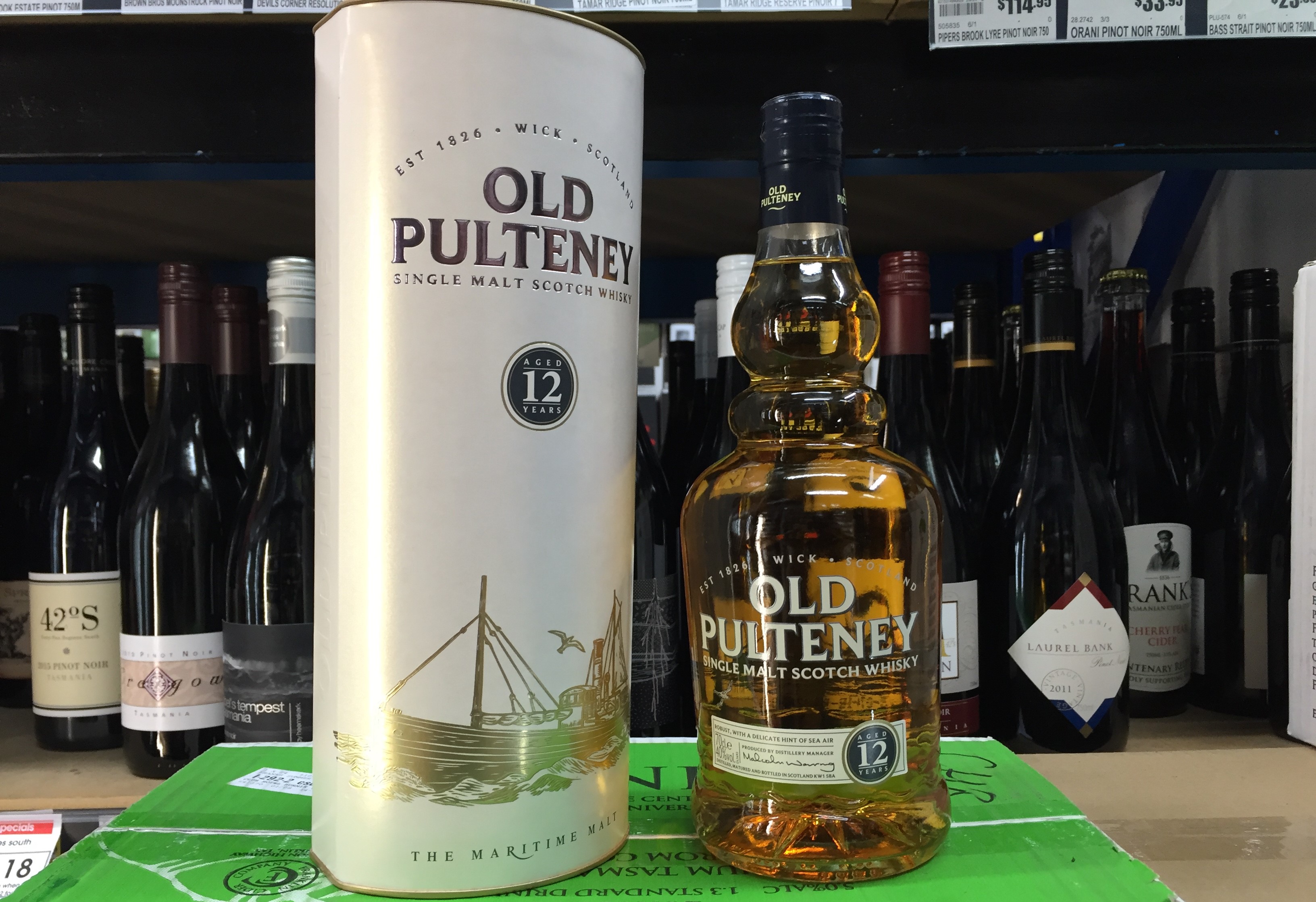
Old Pulteney 12 Year Old

Reviewed by: The Cynical Scot

Old Pultney 12 Year old Whisky Waffle

There are three places in the world where the merest mention of the name can take me back in heart and spirit. The first are the cliffs at Yesnaby on the mainland of Orkney. Here, the crash of the Atlantic is stalled by Earl Thorfinn’s walls and the salty air is scoured into the finest lines of the skin. The second is the Fairy Pools on the Isle of Skye, where I have swum in the ice clear waters and tasted the pure heart of the Cuillins. The third, and the subject of this review, is the bond store at the Old Pulteney distillery in Wick.

I found myself here on an overcast Saturday in 2013. It was the third distillery on a self-guided tour which was to take me around the best parts of Scotland. My true blue Australian friend (who insisted on referring to the drink as ‘OP’) and I didn’t know then that it would be one of only seven distilleries we would visit on that trip. By the time we arrived in Pulteney town, we already had the creeping realisation that most large scale whisky making operations are done along similar lines. Coupled to this, we had satisfied ourselves that whisky makers send their whisky all over the place. Since then we have regularly enjoyed our whisky without feeling the need to visit the place of origin.

The Old Pulteney distillery was built in 1826 in a town built to support the herring trade. With a lack of foresight uncommon in the Scottish, James Henderson’s lads built the roof too low for the still. When the brand new copper pot still arrived, the swan neck kept clanging off the rafters. Without any ado they applied a choice piece of Scottish logic to the problem and sliced off the top of it. Job done, the still was installed, the top sealed and a pipe bunged on the the side creating the unusual appearance you’ll see today. The bulge further down the giant copper kettle also gave them an idea of how to shape their bottles.

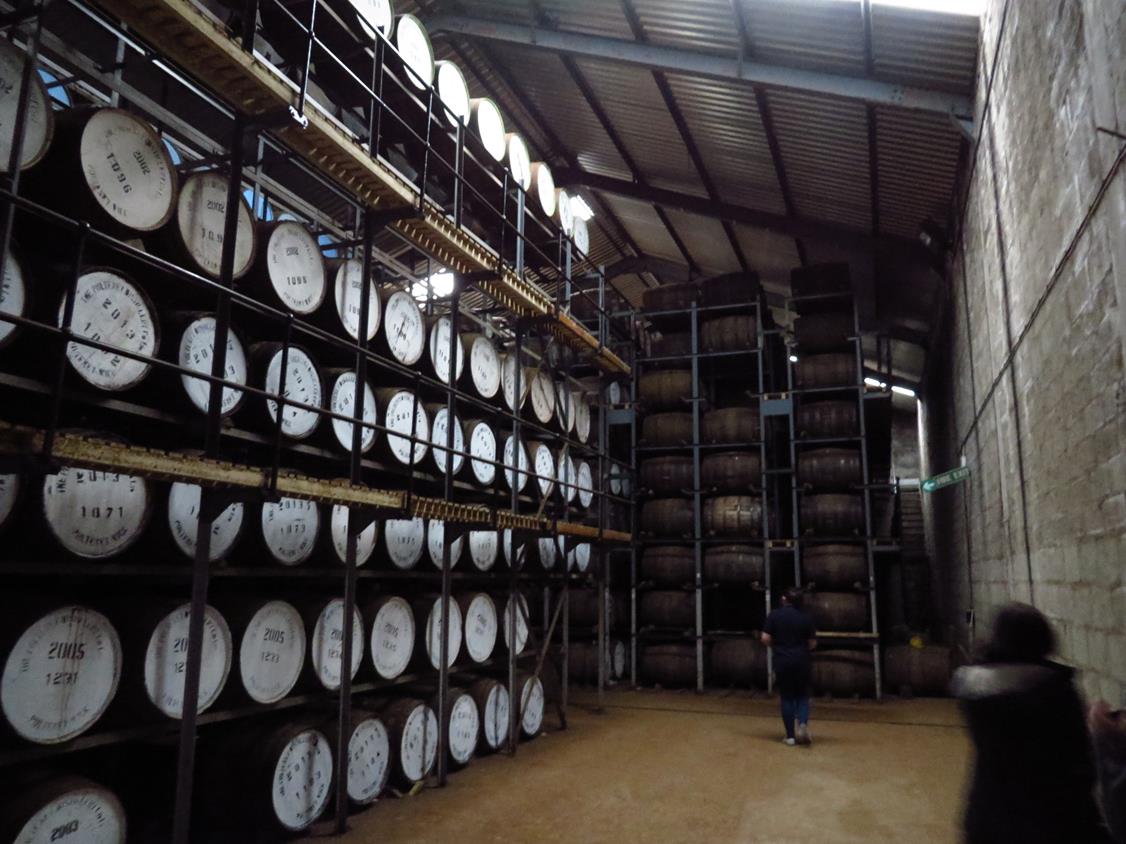
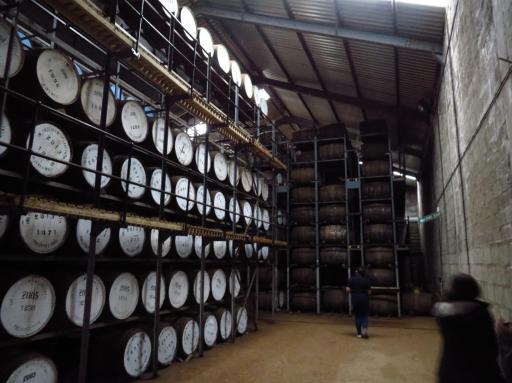
You’ll see all this and more on the tour, proving beyond doubt it is a whisky making process. After you’ve seen the unusual squat stills you’re taken out to the bond store. On the day we visited it started raining at this point. We made a dash towards the barrels, which in my mind were stacked six high (my photographic record shows only four), and the door was shut behind us. While we learned about the maturation process we avoided the tears of the angels and breathed in their share of the whisky; a fine ethereal vapour floating in the salty air. Yes, we all smelt that whisky, we all knew what we were doing and we yes, we all found questions to ask to keep us there longer.
IMG_0689 (Copy)

Old Pulteney has the taste of the sea in it too, they say. I can’t taste things like that, but Wick is not too far away from the places where the mighty Atlantic meets the moody North Sea and that can’t happen without seriously affecting a drink as emotional as whisky. The salt, they said, coats the barrels and works its way through the grain and into the final product. This may very well be the case. Salt for me is something I put on chips and any other food. It’s never been more complicated than that.

As for taste of Old Pulteney 12 year old, it’s a fine single malt, very fine. I find it harsh on the nose, easy on the draw and the burn is frank and satisfying. It has a rich stickling after taste like bronze coins falling over a weir and I’ll always like it because it’s the whisky I drink with my father.

I asked Dad why he drinks this particularly spirit. As a seasoned Famous Grouse drinker, it turned out his discernment was a result of him acquiring a bottle at no cost from an appreciative work colleague. His opinion of ‘Aye, it’s a nice one that’ is fair if not particularly detailed or nuanced. I confidently predict that he will continue to drink this brand so long as it remains at his personal initial price point.

For me it’s not what goes into a bond store it’s what comes out. That day in Wick an amateur whisky drinker went into the bond store. After delaying as long as I could, a happier, more philosophical and more content amateur whisky drinker came out. The OP lads do the same with their whisky. They wait and they wait and after twelve years a fine drink appears. I don’t know what makes this my homely stand-alone bottle of go-to, or why at times, when I can neither get to Yesnaby nor the Fairy pools of Skye, I can have a drop of Old Pulteney 12 year old and be at both at the same time. It’s a mystery I don’t want to think through too much and if I ever need to know, I can just ask my dad. He knows.

★★★★

The Glenlivet 18 Year Old

Reviewed by: Nick

Glenlivet 18

The banks of the river Spey in Scotland’s north east are fertile ground indeed. Nearly half of the country’s distilleries are located in this region which has come to be known, rather appropriately, as ‘Speyside’. Upon my criminally short drive through the area my head continuously moved side to side reading road signs pointing towards yet another famous distillery. It must have looked like I was watching a grand-slam final between Nadal and Djokovic! This abundance of whisky excellence could be found nowhere else on earth.

Speyside whiskies are known for being the smoothest, the richest, and the most elegant drams that Scotland has to offer, a reputation well deserved. Perhaps the best example of a Speyside malt is the Glenlivet 18 Year Old. It is one of the classiest single malts going around – and at a price that practically every other 18 year old whisky cannot come close to.

The whisky’s colour alone is enticing: a golden amber which glints in the sunlight. The nose is better: full of caramel, vanilla and orchard fruits. It is a pleasantly balanced aroma, not favouring one flavour over another. The palate is rich – full of flavour without being heavy. There is honey, oranges and malty biscuits, along with the faintest hint of sherry. The finish is light and not as sweet as the initial flavours suggest, with plenty of oak imparted from its 18 years in barrels.

There are literally thousands of whiskies made within a few miles of the river Spey. But if you were only able to try just one – then you could make a pretty strong case for this one.

★★★★


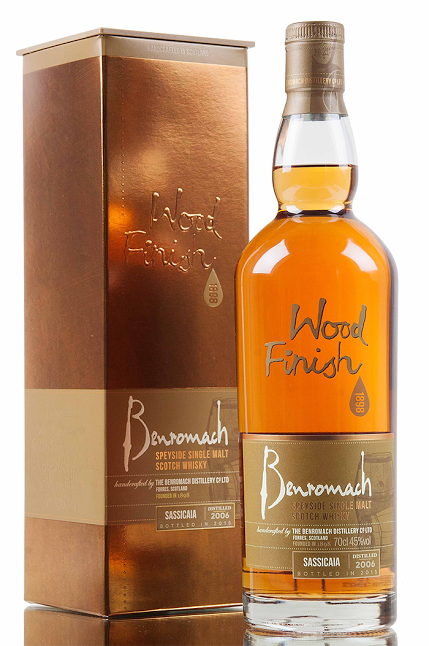
Benromach Sassacaia Wood Finish

Reviewed by: Richard

Benromach Sassacaia Wood FinishThis one was recommended to me by a friend who knows my fondness for sweeter whiskies… So first up – a little bit about the distillery:

Benromach is a Speyside distillery founded by Duncan McCallum and F.W. Brickman in 1898 and currently owned and run by Gordon and Macphail of Elgin. It is situated near Forres in Morayshire and is fed with spring water from the Chapelton Springs in the Romach Hills beside Forres.

And now – on with the review:

This has been matured in a Sassacaia barrel, so an introduction to the wood is in order!
Sassicaia is one of the most sought-after Cabernet Sauvignon wines in the world and made history recently, being the first single wine to be granted its own DOC (Denominazione di origine controllata – quality assurance label for Italian food products, especially Italian wine and cheese)
The Sassicaia estate is located at Bolgheri and lies in the Province of Livorno in Tuscany, Italy.

So, shut up, tell us about the whisky…

This is a 2006 distilled expression and bottled this year – there’s an older 2005 release, a 2004 release and a few older bottlings.
All I can find out is that it’s put in an ex bourbon barrel for around 7 years, and then put in a Sassacaia barrel for around 29 months – just over 2 years.
The colour is golden pink! Well lightly pink – if the sun hits it just right…

Nose: It’s got a real soft nose – dry toasted oak, vanilla, fruity, toffee, nutmeg, and that definitive wine note.
The nose is right up my alley – really sweet and bold, but not sickly…
Now to stick it in my mouth!

Palate: Cherries, raspberries & vanilla, spices, subtle smoke, malty toffee, and wine!
The palate is quite dry, which I find a lot with red wine finishes for some reason… tannic influence maybe? I find they make my mouth water a bit…

Finish: A medium-long finish with hints of fruit and another whiff of smoke.

This is a session whisky (if there’s such a thing) for sunny afternoon, sitting under a tree, in the shade, with some olives, sourdough, semidried tomatoes, cheese and some good friends…I’m amazed at the influence the wine has made, the light smoke and the fruit notes. I’ve tried the standard 10yo Benromach, which is one of my favourites – this is better, not by a lot, but still, better, and juicier…
A bloody fine whisky to add to any collection!

★★★

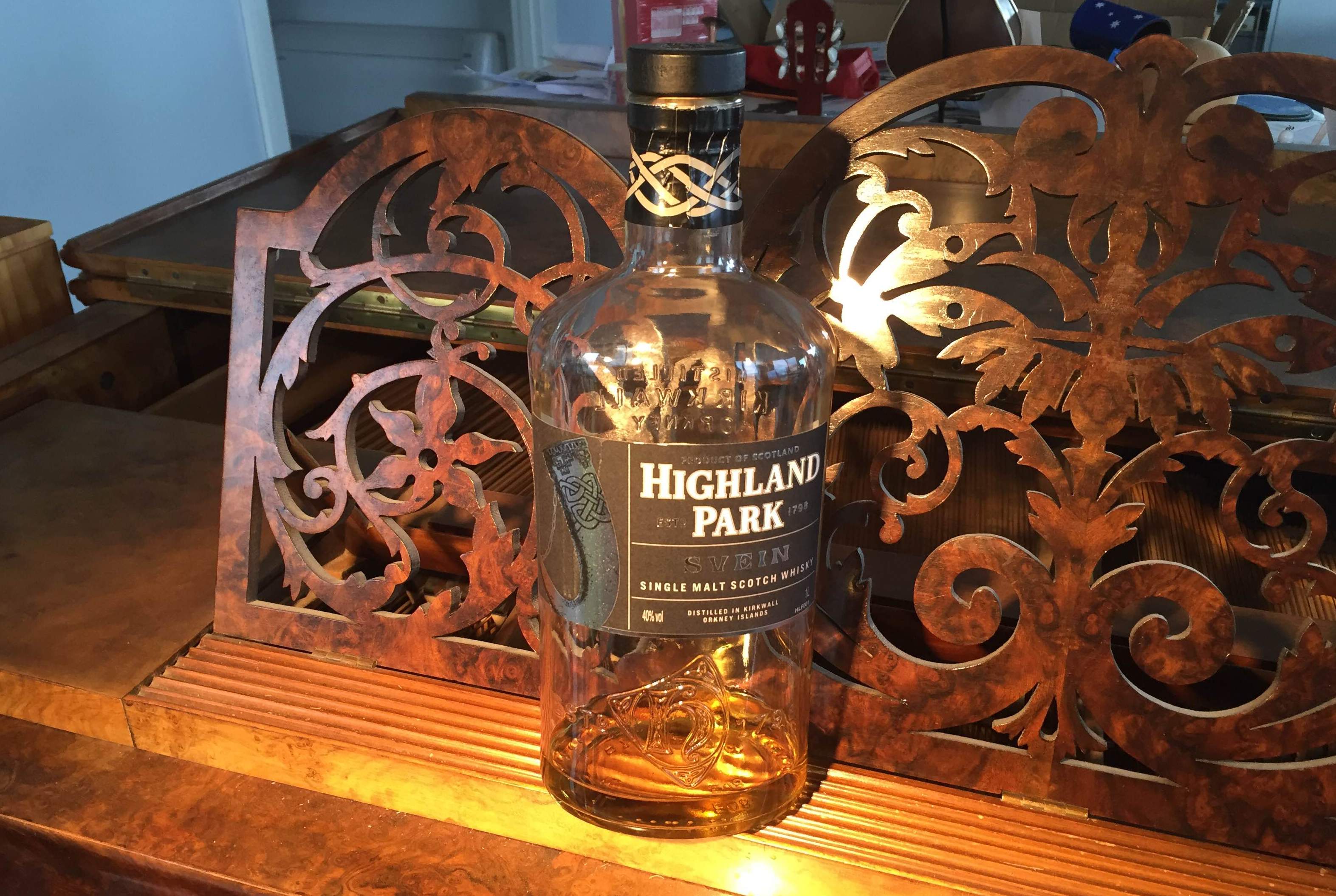
Highland Park Svein

Reviewed by: Nick

Highland Park Svein

Highland Park have one clear advantage when it comes to marketing their whisky: Vikings. Nothing can drum up some interest liked a horned hat on the front of your bottle! Of course, Highland Park can quite rightly look to the Norse raiders when branding their products, as the Orkney Islands where the distillery is located have a proud Viking heritage.

The details of their arrival in the ninth century are told in the Orkneyinga Saga, a historical narrative with more twists and family betrayals than the best soap opera. Among the characters were a series of ‘warriors’ immortalised forever in travel retail by Highland Park.

Svein Asleifsson is the legend behind the entry level of the range – which is perhaps unfair to a man dubbed the ‘Ultimate Viking’. Svein was a charismatic chieftain known for his generous and hospitable nature, and the folk at Highland Park have attempted to create a whisky that mirrors these traits. While I cannot claim this to be exactly the case (it doesn’t pour generous nips of itself into your glass!) it is certainly a very drinkable drop.

While there’s definitely some smoke in there, there’s less on the nose than you’d expect from a Highland Park dram. Instead there are ripe oranges, red apples and plenty of malt. The palate is lightly spicy, with oak, strawberries and… burnt toast? The finish is creamy, malty and slightly bitter. All up, it is a light whisky, threatening to be inconsequential but with just enough to enjoy.

Highland Park have created an interesting series here. While Svein doesn’t stand up when compared to the wonderful 12 Year Old expression, it certainly gives you a greater picture of the flavours captured by the Orcadian Distillery. Sadly I have not got to sample any of the other warriors to broaden my mind!

★★

Longrow Cabernet Sauvignon Cask

Reviewed by: Nick

Longrow Cab Sav

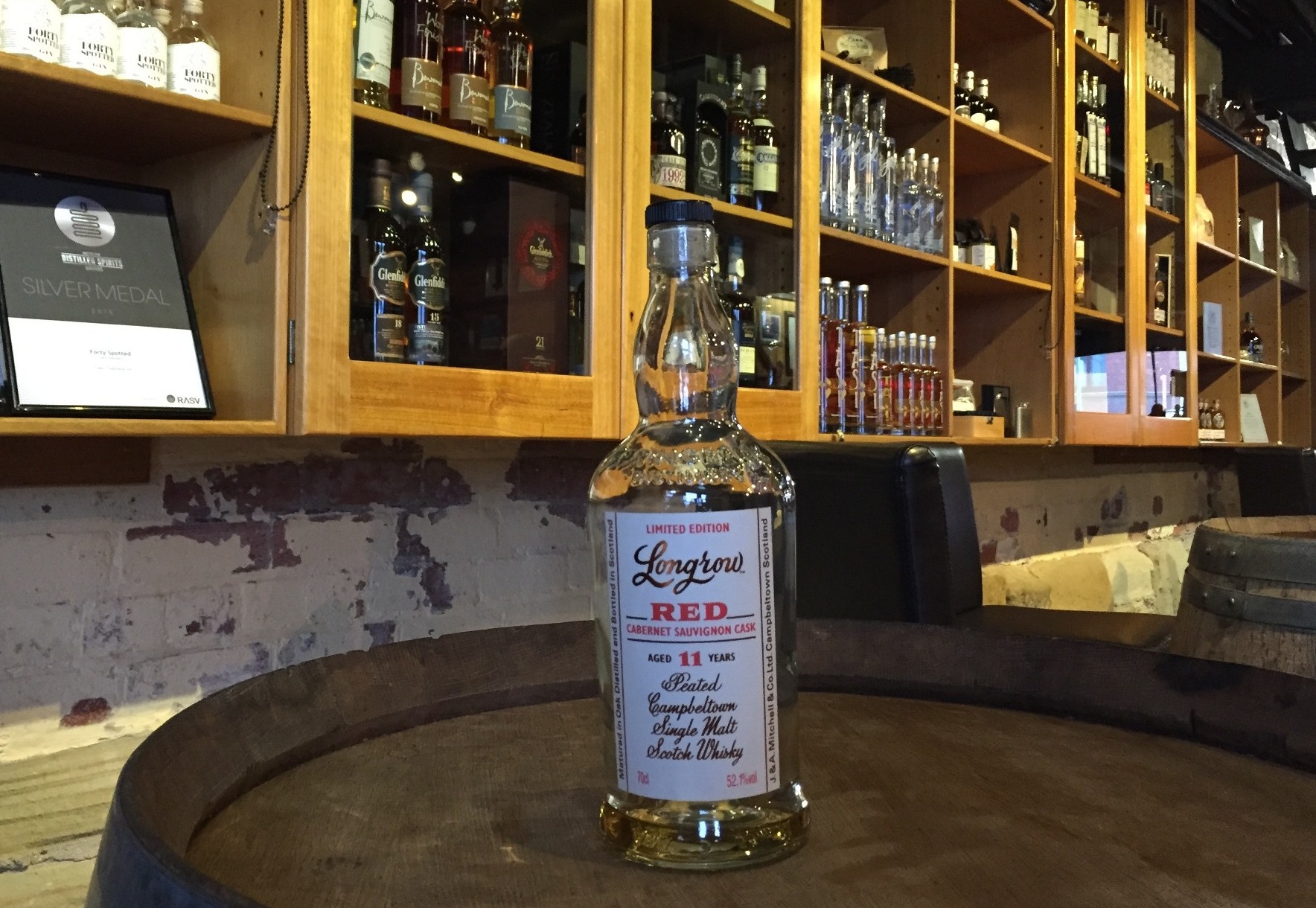
As the abundance of sherry barrels diminishes, whisky makers are forced to look elsewhere for maturation options. The obvious solution, of course, is using the barrels of another grape flavoured product – no, not hubba bubba bubblegum – wine. Wine cask maturation is being used by distillers worldwide: some as a novelty but others as a serious addition to their main range.

The wonderful whisky makers of Longrow are no strangers to experimentation. One of their more intriguing bottles is the Cabernet Sauvignon Cask – aged for seven years in refill bourbon hogs heads and a further four years in Cab Sav barrels sourced from my very favourite wine region: South Australia’s McLaren Vale.

Warning: this is not a beginners whisky. Nor is it an easy drinking whisky. Nor, I believe, could I describe it as a ‘nice’ whisky. But it sure is a fascinating one. On the nose I detected, well, heaps. Initially a gentle smoke, reminding you that yes, Longrow do peat their barley. Once the smoke clears notes of grapes, banana and burnt orange rind flow through. Over all, it is complex and delicious.

The palate is a bit of a shock. Initially it is sweet with fizzy sherbet complimenting the peat. The red grapes make a return, along with other fruit such as melons and apricots. And then the spirit transforms. The finish is long, though not necessarily because of the slightly higher percentage of alcohol. It’s a little… soapy? This is a tasting note I (and seemingly I alone) seem to find in many wine-matured whiskies. There are other, nicer elements: smoked ham, salt, fish, bonfire ash, general seaside senses. This whisky is from Campbelltown, after all!

In no way do I regret buying this whisky. There’s a lot to like and a lot to discuss. But I didn’t love it. And that’s ok.

★★

Blue Hanger 9th Release

Reviewed by: Nick and Ted

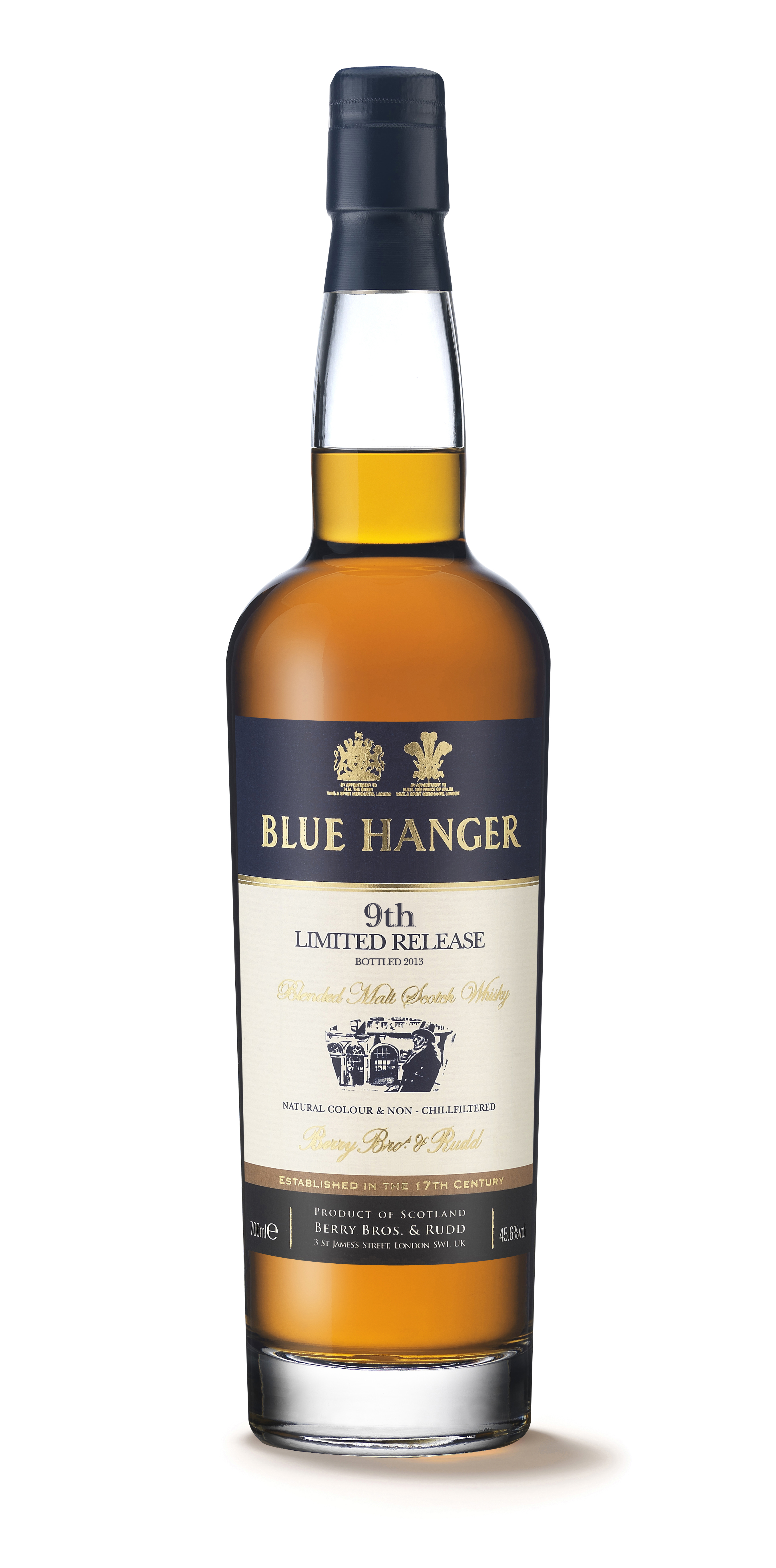
Blue Hanger 9th ReleaseAs a general rule we Whisky Waffle boys tend to be single malt snobs rather than blend bogans. As easy drinking as a blended Chivas 21yo is, we’d just as soon get to grips with a lively Balvenie 12yo single malt. However, one drop that we were lucky enough to try recently suggests that we just may not be drinking the right blends.

Berry Bros and Rudd, better known for their vintaged Glenrothes range, put out a yearly blended malt release called the Blue Hanger. The bottling is named after Lord William Hanger, who was famous for his habitual striking blue attire (just like the blue Power Ranger. Here’s to you Billy!). The original release was a blend of specially selected casks from the Glenlivet and Glengrant distilleries. Eventually stocks ran out (hence the emergence of the Founders Reserve…) and now in this, the 9th edition, Berry Bros and Rudd have combined (like Megazord) 17yo Clynelish and 18yo Glen Elgin with both 23yo and peated 7yo Bunnahabhain.

With such a pedigree it is no wonder the Blue Hanger claims to be the ‘collectors blended malt’. But is it worth adding to your own collection? Short answer: yes!

But of course, this is Whisky Waffle, and so we will also supply you with a long answer too. The nose is light and fruity, and we were able to find strawberry jam, dried apples, quince paste, cured meats and Chardonnay wine. It’s essentially happy hour in a bottle.

The taste is light but flavoursome. Under-ripe cherries, sherry and cola (NB: just a tasting note. No actual cola was brought anywhere near this baby. We’re not monsters you know) combine to sweetly dance across the tongue, followed by a gentle waft of cigar smoke. The finish is long, with the peat smoke slightly more prominent, and hints of pepper, burnt wood and gooey toffee apple.

If you served this to us blind (as in blindfolded, not blind drunk), we would be unlikely to pick it as a blend. The high quality aged single malt elements that make up the Blue Hanger work together with delicacy and harmony to make a very enjoyable dram; the smoky, salty Bunnahabhain giving depth to the high notes of the Clynelish and Glen Elgin. If you tend to think that blends are beneath you, then like us, you’ve probably just been drinking the wrong ones.

★★★★

Linkwood 20 Year Old Côte-Rôtie Finish

Reviewed by: Mooresy

Linkwood Cote Rotie

There are a lot of distilleries out there many people have never tried because all their wonderful product is being snapped up by the blenders. This is a remnant of a bygone era where single malt – especially single cask – was rough and dirty. Blenders swooped in to save the day by watering down the volatiles and mixing young and mature scotches together to smooth it all out. However single malt and single cask only taste bad if the distiller doesn’t know or care about what is going into the bottles at the end of the process. If it’s all about getting drunk, why would anyone go the extra distance for a fine product.

Fortunately, people are changing and the market is changing. Single malt is here to stay, and single cask releases are the bastion of exclusivity and discernibility. This has allowed some of the bigger whisky families to experiment every now and again with small amounts of their product and sometimes that creates a pretty special drop. The Linkwood Côte-Rôtie fits this bill for two reasons. First, it is a distillery owned by the global secret council of big whisky owners and is predominantly used in blends, including as a nice addition to Johnnie Walker’s vatted malt, which means there are specific flavours that are not usually separated and given their own podium. Second, it has been bottled independently by Gordon & MacPhail, so the final product has been selected by people whose primary expertise with whisky is casks and maturation. There is going to be something unique coming from that combination.

This one has also been finished in a very specific type of red wine cask giving it a rich and fruity smell with something very special coming from the grape influence. There are caramels and sugary honey but dominated by the smell of wine and vine mixed in with the actual wood itself, which I assume is European Oak unless the spice of the fruit is engaged in deception and subterfuge.

On drinking this whisky for the first time I thought this will be the one I tell everyone to try. And while I still will tell everyone to try it, on reflection I’m sure it’s not for everyone. Which brings me nicely to the point regarding the cask. The more whisky someone drinks, one of two things happens; either the person will get closer and closer to deciding the one whisky they want to drink at the expense of all the others – what I like to call “the wrong thing” – or they get more and more adventurous and inquisitive about different types and flavours. A batch of a well-known favourite finished in an unusual cask is a great way to see how important aging really is.

This one has spent two and a half years in its finishing cask, which is quite a long time in absolute terms. It is also well matured in general and you would expect a higher level of wood as a result. On the palate, the Côte-Rôtie has a lot of wood. I think that’s a good thing and that it really works for this particular drop. Those who like the simpler and sweeter whiskies will probably think this one has too much tannin, which is often the result of red wine finishes and long oak maturations. Surprisingly though it has not lost some of that underlying sweet complexity. The honey and caramel transfers through with some tart apple and cinnamon/nutmeg in the background.

A vino bomb is not for the immovable whisky drinker who has found the one flavour they want and doesn’t like anything else but, for the intrepid explorer who wants to backpack through the Rhone Valley and pop the bung on a nice red every couple of hours, sit back and quaff with a woody wonder.

★★★★

Eriskay

Reviewed by: Ted

Eriskay

Charles Edward Louis John Casimir Sylvester Severino Maria Stuart. While you may think that I am just reeling off random names in some whisky fuelled musing, they in fact all belong to one particular person. A rather famous one in Scottish history at that. Loyalists to the throne scathingly called him the ‘Young Pretender’, but his followers, and indeed most people today, knew him thus: Bonnie Prince Charlie.

Although born in Italy, 1720, Charlie was actually descended from British royalty, grandson of the deposed Stuart King James II and VII. From a young age Charlie knew it was his mission and divine right to reclaim the throne. In 1745 he made his move, sailing from France and landing with his companions, known as the ‘Seven Men of Moidart’, on the small Outer Hebridean island of Eriskay to begin the ‘Jacobite Uprising’ and sweep through his ancestral home of Scotland to raise support.

‘What has this got to do with anything?’ you may be wondering. Well, it just so happens that the subject of this review takes its name from the island where Charlie and his men landed: Eriskay. Eriskay, or ‘Eric’s Isle’ in old Norse, is a blended Scotch whisky made from ‘quality Highland and Lowland Whiskies’. While the whisky is certainly Scottish, a closer inspection reveals that it is in fact bottled in Australia for the Ron Rico Distilling Company for sale on the local market.

Some cheap blends make no bones about the fact, often sporting rather woeful labelling. The Eriskay is indeed a cheap blend, purchased in this case for only AUD$37, however it’s certainly a cut above its companions in its dress sense. Superficially it looks rather like the label of the Talisker, with serifed lettering and a rather nice map in the background. However, bonnie looks alone do not make the man, there must be substance also.

History records that the Jacobite rebellion was doomed to failure, lost through poor battle strategy and politics. Unfortunately the Eriskay is rather similar in this regard. The nose is light and flat, consisting of mostly shortbread, malt and a bit of caramel slice, sweet but fairly unfulfilling.

Surprisingly, on the mouth there is an instant hit of smokiness, but it crawls low like the fug after a battle. Unfortunately this is followed up by the dull tang of metal, filling the back of the mouth like a round of musket shot. The finish is sharp, bitter and lingering, much like the remainder of Charlie’s life after his cause was crushed.

The Eriskay is definitely a whisky that sits squarely within its price range. While it may attract you with the promise of its Bonnie face, it seems that the Loyalists were right, and the Eriskay is indeed a ‘Young Pretender’.

★★