distillery

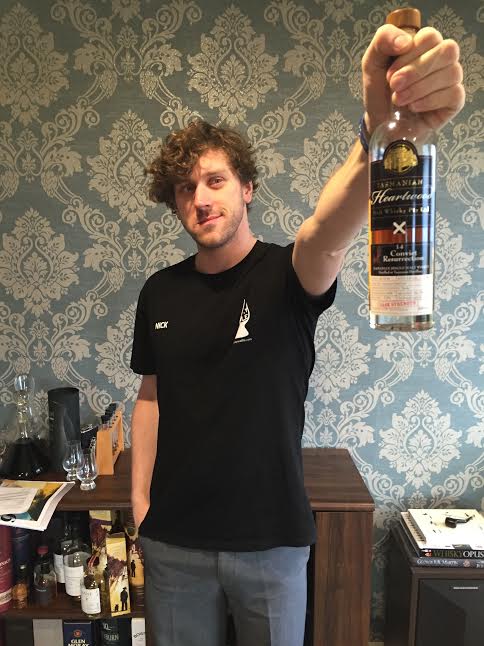
Heartwood Convict Resurrection

Reviewed by: Nick

Heartwood Convict Resurrection

In Scotland, independent bottling of whisky is commonplace. Companies such as Gordon & MacPhail, Berry Brothers & Rudd, Flora & Fauna – basically anything with an ‘&’ in it – run successful businesses and produce some fine drams. In Tassie, well, it’s a little rarer. While Trappers Hut and Tasmanian Independent Bottlers are coming along nicely, there’s one name leading the way: Heartwood.

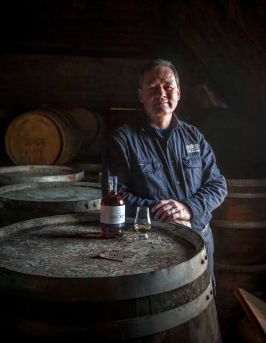
Heartwood was created by Tasmania’s own mad scientist of whisky, Tim Duckett, whom I imagine spends his days bent over a steaming cauldron of luminous Tasmanian whisky, stirring it with a wooden oar and chanting “double double toil and trouble”.

If you’ve ever come across a bottle of Heartwood, you’ll attest that it was unquestionably a memorable drop. There’s certainly a lot to remember, from the wonderful designs on the labels to the distinctive names: ‘Vat Out of Hell’, ‘Release the beast’ and ‘Any Port in a Storm’ to name a few. However, the most memorable aspect of any Heartwood bottling – by far – is the strength. The ABV of all releases ranges from percentages in the mid 60s to percentages in the mid 70s. That’s right – mid 70s!!!

The bottle I decided to purchase sits at an eye watering 72% and is called the ‘Convict Resurrection’, part of a series of convict-inspired bottlings referring to Tasmania’s original function as a penal colony. The whisky comes from Sullivans Cove barrel HH0239, which was an American oak ex-port cask. And boy, is it something.

Every aspect of this whisky is massive. The nose hits you like a boxing glove wielded by Sugar Ray Leonard, teeming with creamy fruit flavours like plum jam spread on rich brie. As is to be expected, the palate also packs a punch – taking a sip is like wrestling a crocodile – and yet there are so many flavours to be found: raisins, nutmeg, pinecones and blackberries – perhaps with the thorns still attached!

The finish is the most surprising element of the whole dram as it is incredibly smooth. It seems to evaporate at the back of your throat, leaving the most glorious lingering warmth with notes of jam and honey.

If you ever see a nip of Heartwood available anywhere – don’t think – just buy it. Sure, it’ll be pricey, but only 200 or so of each bottle is made and once they’re gone, they’re actually gone. Heartwood fans don’t buy the stuff to leave it sitting on a shelf.

Seriously, try it if you can. I promise it will be memorable – in the best possible way.

★★★★★

Heartwood n Nick

Tasmanian whisky: One state. Three ingredients. Unlimited flavour.

#TasWhiskyWeek

Whisky Waffle celebrate Tasmanian whisky

Posted by: Nick and Ted

Tasmanian whisky: One state. Three ingredients. Unlimited flavour.
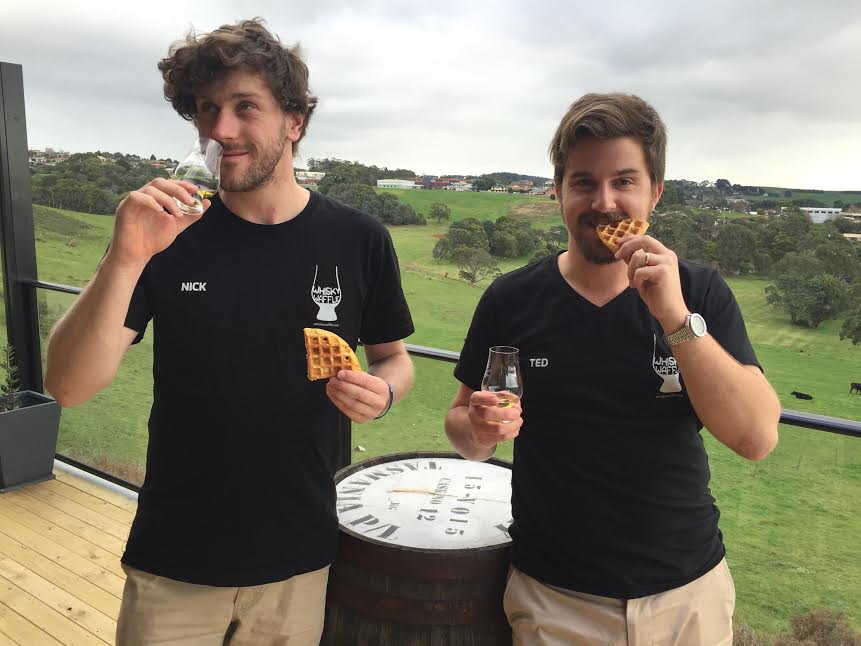
Wafflers with waffles

Whisky Waffle are thrilled to help kick off the inaugural Tasmanian Whisky Week, an event we are sure will capture the hearts and minds of the whisky loving public. Throughout the week we will be showcasing a different Tasmanian drop each day and exploring the huge variety of flavours on offer in our small state.

From Hobart to Burnie, the week will be a celebration of the history, the people and of course, the amazing whisky itself. But what is it exactly that makes Tasmanian whisky worth celebrating? To answer that, we asked the people who know best, the folk working in and contributing to the whisky industry in our home state.

We turned first to the (designated) drivers and organisers of Tas Whisky Week, the beautiful Jane Overeem and the beautifully bearded Brett Steel:

Jane Overeem

Jane Overeem

Jane Overeem, Overeem brand ambassador and coordinator of Tas Whisky Week:
The authenticity, love and passion behind every brand – which results in amazing quality products!

Brett Steel, Drink Tas founder and coordinator of Tas Whisky Week:
The stories and the people! Whisky is being made all over the country now, but Tasmania is and always will be the homeland of Australian whisky. When Bill Lark got the laws changed in 1992 it ignited something in many of the island folk. Whisky production with the old-world techniques is a passionate affair and a patience game. I think Tasmanians value both of these elements; we are in no rush. Great whisky can’t be hurried, and where others may be focusing on scale and technology, I think the execution of Tasmanian whisky-craft is down to the pioneers in Tasmania who were hungry enough to make it happen in the first instance, and generous enough to teach others their technique. And because of that drive, that’s why Tasmania produces exceptional whisky, time and time again. I hope Tasmanian Whisky Week becomes a celebration of their story.

Next we spoke to the head distillers from two of Tasmania’s most influential distilleries, Lark and Hellyers Road, about their aspirations to be the next James Bond… and about whisky:

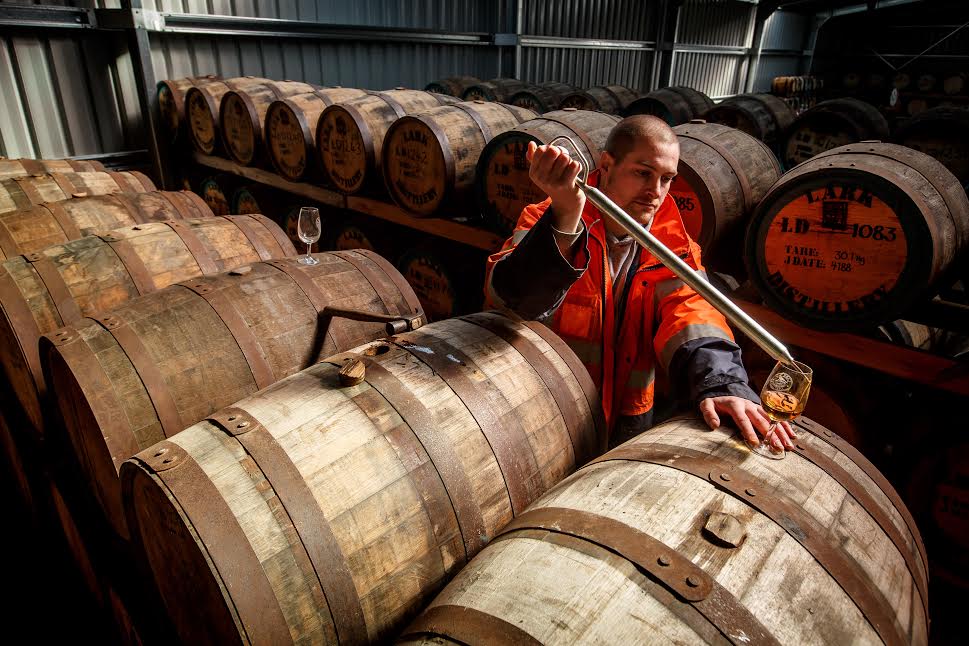
Chris from Lark

Chris Thomson

Chris Thomson, Lark head distiller:
Ask anyone who works in the industry and you will always come back to the people. Tasmanian whisky is built on an incredible brother and sisterhood where we are all just celebrating whisky, enjoying it with friends and family and trying to make each dram better.  As an industry we help each other out and share in each other’s success, usually with a whisky in hand! The thing I love about Tasmania’s distilleries is we are all just small enough that you might see this relationship in action. So what is it that makes Tasmanian whisky worth celebrating? It’s the same thing that makes whisky worth celebrating; the great people you meet over a dram.

Mark Littler

Mark Littler

Mark Littler, Hellyers Road head distiller:
Tasmanian whisky has come so far in such a short period of time and to be having our single malts recognised and distributed globally is certainly something to celebrate!

Tasmania’s down-to-earth whisky alchemist, champion sand sculptor and 2015 Bill Lark Award recipient provided some sage advice about our local industry’s lo-fi nature:

Pete Bignell

Peter Bignell

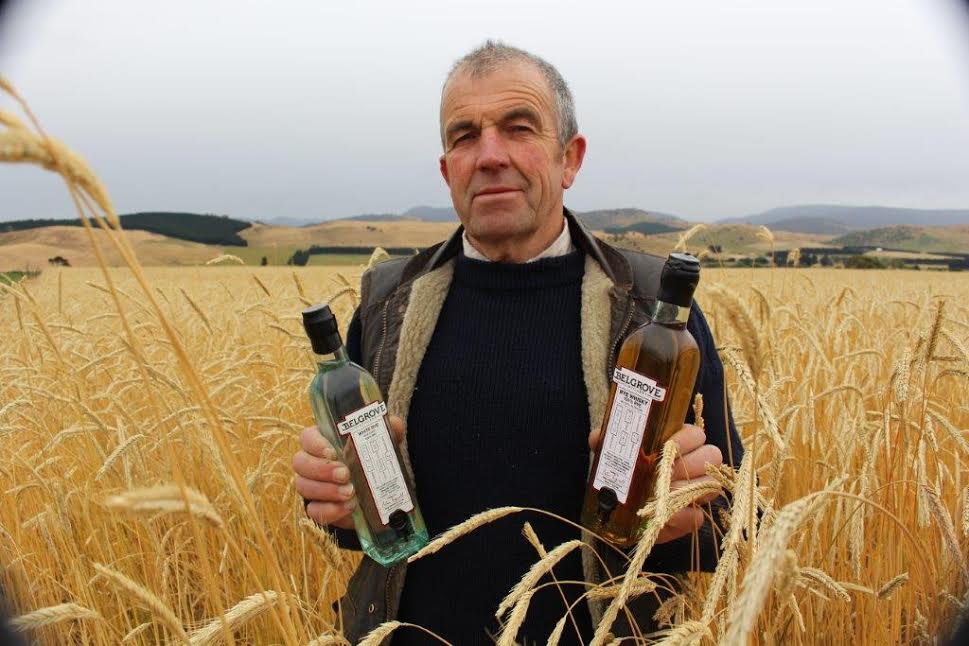
Peter Bignell, Belgrove head distiller and whisky alchemist:
It is all hand made in small batches. We don’t rely on computers to tell us when to make the ‘cuts’; it is all done by nose and taste. If it doesn’t smell or taste right then it does not go into a barrel – or come out of the barrel. We all use alembic pot stills that are inefficient at separating alcohol from the vapours in the still, but we exploit that inefficiency to bring exciting flavours along with the alcohol. It is all about flavour, not volume.

Two of Tassie’s newest members to the family got straight to the point about what goes into making a good Tasmanian whisky… literally:

Chris Condon, Launceston Distillery head distiller:
It’s a little bit of Tassie in a glass. Local grain and water, crafted into full flavoured whiskies by passionate people.
Damien Mackey by Paul County

Damien Mackey (photo by Paul County)

Damien Mackey, Shene Estate head distiller:
Tasmanian Whisky is a perfect storm: world-class barley and water, an ideal climate, time-tested methodology, passionate people and the steady hand of an intrepid leader, Bill Lark.’

Fifth Beatle and third Waffler, Alex ‘Moorsey’ Moores gave us a Braveheart-esque speech on the merits of the Tassie drop:

Alex Moores, founder of Dramatic Drams and Whisky Waffle guest reviewer:

Tasmanian whisky is all about the craft. Nowhere else did any anyone have the bravery and foresight to do something so momentous on such a small scale. You don’t do that because you want to take people’s money. You do it because you think those people are missing out on something truly great. Every detail matters to Tasmanian whisky distillers. Other distilleries in the world are built to even out the crinkles in their product; make a lot and hide its imperfections. Tasmanian whisky finds beauty in the chaos of variation; it makes something delicious, then breaks the mould and does it all over again.

Finally, the co-presidents of the Tasmanian Whisky Appreciation Society gave us vastly different (but equally accurate) responses about why Tasmanian whisky is worth celebrating:

Richard

Richard Stewart

Richard Stewart, TWAS co-president and Whisky Waffle guest reviewer:
In my opinion – the people! I mean everyone knows Tassie is the best place on earth, and everyone knows we’re blessed with the perfect climate, soil, water, animals, peat, foliage, moss, sunlight, ecosystem, etc etc  for growing grain, distilling, and aging whisky.

But to do any of this you have to have the right people – smart people, friendly people and a welcoming and supportive community behind them. People not afraid to step outside the box, take big risks, do unimaginable, amazing and sometimes weird things with water, yeast, grain and wood. And these people have placed their trust and faith in us, the locals, and given their all, asked us what we think – what they can do to improve and change what works and what doesn’t.

I think Tasmanian whisky is worth celebrating because it’s a nexus of harmony – perfect ingredients, perfect location, perfect people and a perfect community supporting all of this. Everyone in Tassie should be proud of the distillers, distilleries and the whisky produced, but the fact that the Tassie community is helping as well means we’re all a part of one big whisky family…  now that’s worth celebrating!

Tim

Tim Duckett

Tim Duckett, Heartwood founder, TWAS co-president and whisky palaeontologist :
You answered your own question. The whisky is ‘Tasmanian’.

We would like to thank everyone in our extended Tasmanian whisky family for embracing us (and putting up with us) and sharing their passion and wisdom with us. We are privileged to be a part of this celebration and wish it all the success in the world. Tasmania, keep on waffling.

Lads

Nick and Ted. Wafflers at large.

Tasmanian whisky: One state. Three ingredients. Unlimited flavour.

#TasWhiskyWeek

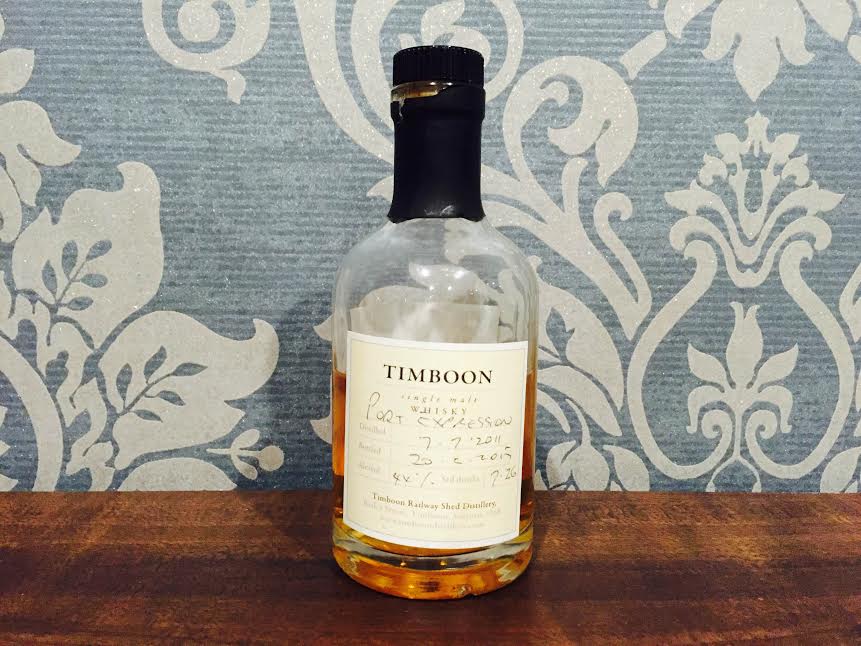
Timboon Single Malt Whisky

Reviewed by: Nick and Ted

Timboon port front

Back in the early 1800’s Scottish whisky was forced, kicking and screaming, to go straight. Distillers were required to become legal or shut down, formally founding many of the grand old distilleries we see today. In comparison, Australia had to wait another 150 years for legalisation to occur, resulting in many heroic folkloric moonshiners keeping local spirits up.

One such rapscallion was Tom Delaney, a notorious bootleg distiller of the Timboon region of Victoria, who made a dram locally known as ‘Mountain Dew’. Fast forward 100 years and small scale distilling in Australia is now legal, and Tom’s legend has not been forgotten.

Based in an old railway shed, Timboon Distillery draws inspiration from the whisky making heritage of the region, creating a range of distilled products, chief amongst them being their Single Malt Whisky. Matured in small ex-port barrels, this young whisky is a distinctive Aussie drop.

On the nose the Single Malt has notes of vanilla and caramel, mixed with the more unusual flavours of blue heaven and mint-chocolate. Perhaps this is not so surprising, seeing as Timboon was founded by the owners of an ice cream company.

The minty flavour continues on the palate, along with polished timber, red currant and spiced plums. The mid-palate is smooth and then suddenly goes missing for a moment, before revealing a spicy, slightly metallic finish.

While this may not the most balanced whisky Australia has to offer, there are definitely some intriguing flavours to be found. We are sure that Tom would be proud to know that his distilling legacy lives on and look forward to future releases from Timboon Distillery.

★★


Speyburn 10 Year Old

Reviewed by: Nick

Speyburn 10 year Old

It’s the very end of harvest season here in Tasmania. Fresh produce abounds, from potatoes to pears, onions to oranges, and asparagus to apples: our family-friend farmers’ pickings filling my kitchen with an alluring bouquet. The fresh fruit combines to remind me strongly of the scent of a dram I have recently acquired: the Speyburn 10 Year Old.

“Delicious” I hear you cry “a whisky with all amazing the flavours of harvest time! It must be good.” And it is. But it also isn’t. This is a whisky full of contradictions.

The contradictions start with the distillery itself. Translating literally as “River Spey”, Speyburn identifies as a highland whisky despite being found within a mile of such Speyside giants such as Glen Grant and The Glenrothes. It has received many modern awards, though it’s greatest accomplishment still seems to be being built in the year of Queen Victoria’s Diamond Jubilee. It also, commendably, bucks the NAS trend by releasing a 10 Year Old, a 25 Year Old… and nothing in between.

The harvest fruits are prevalent on the nose. Overripe red apples, peaches and lemons dominate proceedings in a way entirely unsubtle. It’s enjoyable but certainly citrus-heavy. The palate is sweet and malty, like children’s breakfast cereal. There is more lemon here, causing the whisky to veer dangerously towards dish-cleaner territory, though is stopped short by a bitter cooking apple note on the finish.

There are undeniably many enjoyable flavours in the Speyburn 10 Year Old. It’s well worth a try and certainly wonderful value – just don’t expect subtlety to be among its virtues. Rather than a sweet bite of an apple, it is more like the entire orchard has been emptied into your kitchen.

★★

The day my head exploded in a cloud of smoke: a whisky memory

Posted by: Ted

Ted in armchair

As I sit here in a comfy wingback Chesterfield armchair in the lounge at Lagavulin distillery on Islay, I reflect that this represents the culmination of a very significant journey for me. My being here now was (in part) sparked by a moment in time a number of years ago that changed how I experienced the world.

When we were young, poor and tasteless uni students, we drank whisky without any art or depth of thought. Our main drinking decision was how cheap we could get away with without completely destroying ourselves.

However, one particular night we happened to be out on the town for a friend’s bucks night. Feeling in a generous mood and relatively flush, we stopped in at a bar and decided to order a couple of drams a bit above our usual weight.

Our decision this time was based purely on how cool the name was. Our first dram was the fun sounding Monkey Shoulder, which taught us about finding better blends and which we still enjoy to this day.

The other was a rather mystical sounding dram named the Lagavulin 16yo. Not thinking too much about it I took a decent hit of the dark amber liquid. Suddenly, time stood still and my mind exploded. I had never tasted anything like it.

Billows of hot, medicinal, coastal smoke filled my mouth and roared down my throat, leaving my senses reeling. The others around me were being gripped by a similar reaction. It was love at first dram.

Ted with fireplace

That one moment catalysed within me a yearning for good quality whisky, to try exciting and interesting drams. That feeling simmered away until the finish of uni and the gaining of a job and more importantly, money. Suddenly a whole world of exciting whisky was within grasp.

Eventually the path we had been set upon led to the founding of the number one whisky blog in Tasmania, something m’colleague and I are immensely proud of, and the discovery of a whole community of people just as excited about whisky as we are.

And so here I am on Islay, sitting at the very distillery that kickstarted the whole adventure. It feels slightly surreal to be honest (although if it was truly surreal there would probably be a couple of highland cows sitting on the other chairs smoking pipes and discussing the football results), but at the same time like wearing a favourite old tweed suit.

Ted at Lagavulin

It’s a significant time for both of us actually, as Lagavulin celebrates their 200th birthday this year, a feat to be congratulated. I will no doubt return here again, as will m’colleague and many others besides, hopefully for another 200 years and more, and revel in this glorious, extraordinary whisky.

Sláinte mhath, and keep on waffling.

NAS Week: A bad wrap

Non-age statement whisky rightly or wrongly gets a bad rap in the whisky community. So, naturally, we thought we would conclude our week of NAS whisky reviews in the form of a bad rap. Best read with some kind of beat in the background: https://www.youtube.com/watch?v=s9-doKcLwl8&nohtml5=False

Waffle Boys

Wafflers with swag

The lights go crazy as a “sick beat” echoes out across the arena. An announcer with a Glencairn shaped microphone cries out across the crowd:

“You said it couldn’t be done. An entire week of non-age statement whisky! And yet here they are: two rappers who will never use coke. Please give it up for the Wafflerz!!!!”


Yo whisky drinkers they got this infatuation

About sticking stuff in barrels for its maturation

But how long for? There’s a bit of debatement

So we thought we might try us some non-age statement


Glenlivet’s older spirit, they’ll try to preserve

So they’ve brought out a new drop called the Founders Reserve

I’m sure many bottles will keep getting sold

But it’ll never compare to the 12 year old


So I look for something else to fill my cup

Will the real Auchentoshan please stand up

Although the producers claim that its Classic

The 12 and the 3-wood are far more fantastic


When you pour some Old Pulteney down your throat

Try not to forget it’s been on a boat

The younger spirit gives it plenty of spice

This is a dram both nautical and nice


The Talisker NAS with the tastiest form

Is the one with the Dark before the Storm

But you know the saddest thing about this tale

You can only buy it in travel retail


Leaving behind the Isle of Skye

We found a dram of Oban well worth a try

Coming from a Little Bay on the west coast

Was this curious drop we found we liked the most


The moral of the story is while some taste rotten

Unworthy replacements that will soon be forgotten

Other NASes are without a doubt far less bleak

And thus concludes non-age statement week


#NASweek


Single available on itunes soon… =P

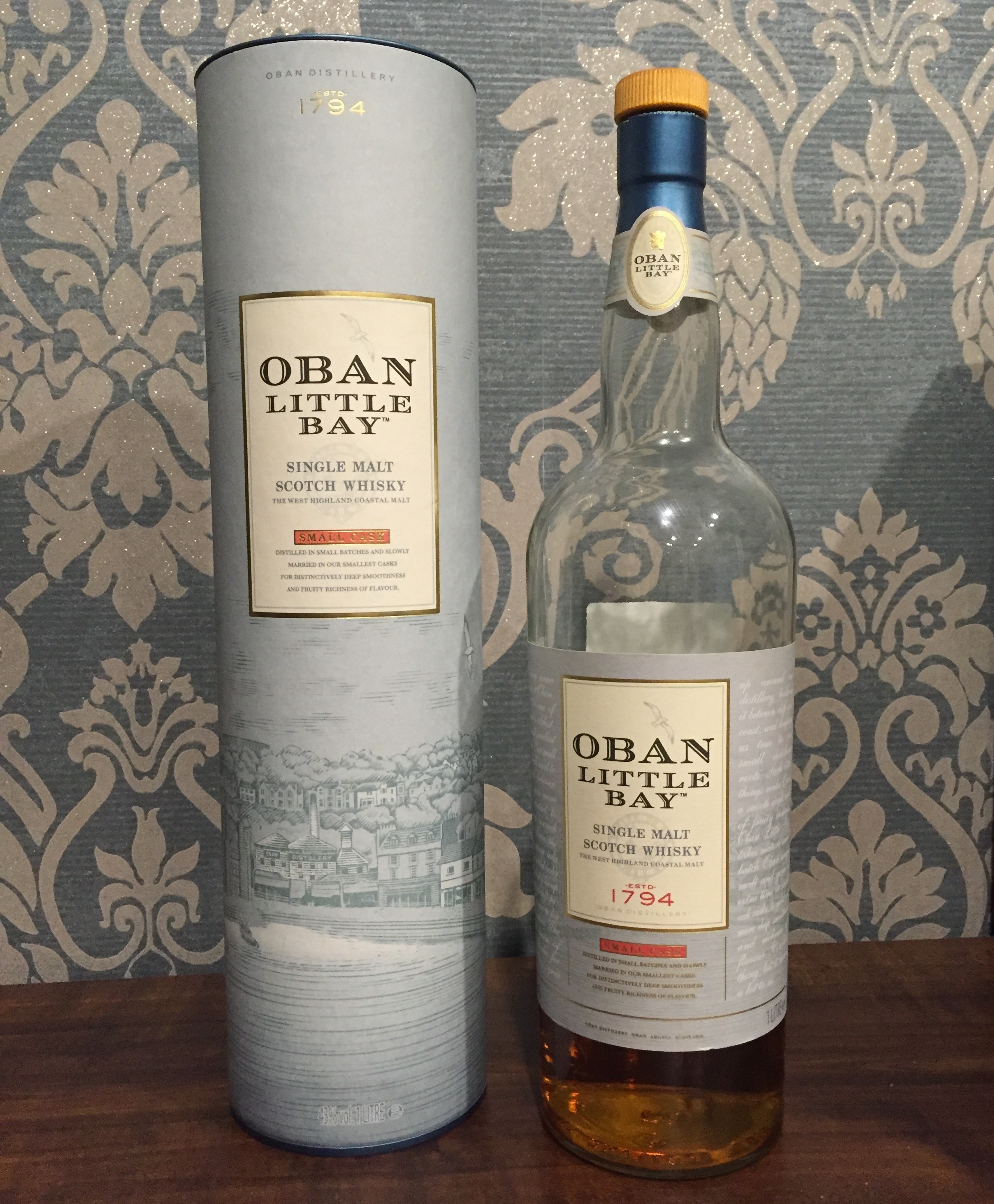
Oban Little Bay

Reviewed by: The Cynical Scot

Oban Little Bay WW

When you only have a little to say about a little dram, make sure the little says a lot. Oban Little Bay is a recent outpouring from a little town on the west coast of Scotland.

Oban claims its little spirit lives within the copper stills, where it rests between batches to help develop the experience. Little oak casks are the next little touch to smooth the draw and build the richness.

On the nose it spins and winks and jigs, while the taste is a warm clear heat; a dancing djinn on the warm moor. Though not smoky, it feels like fire.

This emissary from the little people doesn’t decide whether the spirit is of earth or fire or water, but being from Oban it dances between them all and lives in none. A real genie in a bottle.

★★★

How it compares:

The Little Bay has a youthful, flickery, salty warmth, whereas the 14yo is a sweeter, more complex and refined drop. Even though we would go for the 14yo, the Little Bay has its own magic touch.

Old Pulteney Navigator

Reviewed by: Ted

Old Pulteney Navigator

It is no great surprise that Old Pulteney distillery takes inspiration from the sea, seeing as it resides on the rugged north coast of Scotland. In fact, Pulteneytown, the area of Wick from which the distillery takes its name, was a major player in the 19th century herring boom and harboured (ahem) a bustling harbour.

Old Pulteney isn’t just happy to let their love of the sea infuse their whisky, oh no. You know it’s a serious passion when you sponsor a vessel in the world’s longest round-the-world yacht race. The Clipper round-the-world race tests teams across a lazy 40000NM, demanding great effort from its participants.

To celebrate its maiden voyage in the ’13-’14 race, the aptly named ‘Old Pulteney’ clipper carried a special cargo on board, the first barrel of a new limited edition NAS whisky named the ‘Navigator’, crafted from a marriage of younger aged bourbon and sherry casks.

On the nose the Navigator tacks against bursts of chocolate and salted bacon before having its sails filled with malty biscuits, while oak decking creaks underneath.

Sharp, salty waves break over the palate, prickling across the back of the tongue. A juicy citrus burst through the middle keeps away the scurvy, followed by a warm trade wind that soars down the throat.

The Old Pulteney Navigator is a dram worthy of its nautical namesake. Its youth helps enhance its maritime nature, evoking the tempestuous seas that govern life along the north coast of Scotland. If you are a maritime whisky fan then the Navigator will definitely float your boat.

★★★

Ted the Navigator

How it compares:

The Navigator is the wild, ever-changing sea, whereas the 12yo is the calm, smooth safety of the harbour, welcoming the weary sailor home. Both have their own allure, but you don’t necessarily want to be tossed about in the old briny every day.

Auchentoshan Classic

Reviewed by: Nick

Auchentoshan Classic

If you’re fortunate enough to visit Glasgow (like me) and are somewhat interested in the odd dram (like me) then you simply must pay a visit to Auchentoshan Distillery (like me). The triple distilling Lowlands champions have been producing some lovely drops for a while now and a tour of the establishment that creates them is well worth it. The tour concludes, as all the best do, with a tasting – sampling Auchentoshan’s core range. The 12 Year Old is among those offered, as is the fantastic Three Wood. Up first, however, is the Auchentoshan Classic – a Non Age Statement whisky.

Upon my visit I got the impression that the staff were keen to skip past this one and get stuck into the 12 Year Old – as if they were saying, “but enough of this folly, time for some real whisky”. I mean, admittedly our trusty guide was right – the 12 blows the Classic out of the water. But there’s still something to say for the lowly old (young?) NAS bottle.

The Auchentoshan Classic is lighter in colour than other releases from the distillery and demonstrates very clearly its bourbon maturation. On the nose it is sweet, grassy and with a touch of honey. It is pleasant and summery. The palate is similarly sweet with notes of fruit-based confectionery. I also got the faintest hints of peanut butter, cloves and marmalade. The finish is short but strangely rather fitting for this gentle dram.

This is a feather-light whisky.  A Pinot Noir rather than a Shiraz. But every now and again, that’s alright. Especially if you’re on the distillery tour and the 12 Year Old is up next!

★★

Classic Nick

How it compares:

The 12 Year old is so much more vibrant than the Classic. They are both light and sweet, but the 12 Year old has depths to explore – whereas with the Classic what you see is what you get. The finish is similarly short with both drams – and while this is a disappointment in the 12, the abrupt finish seems to suit the Classic. Still, though, I think I’d rather have the Three Wood.

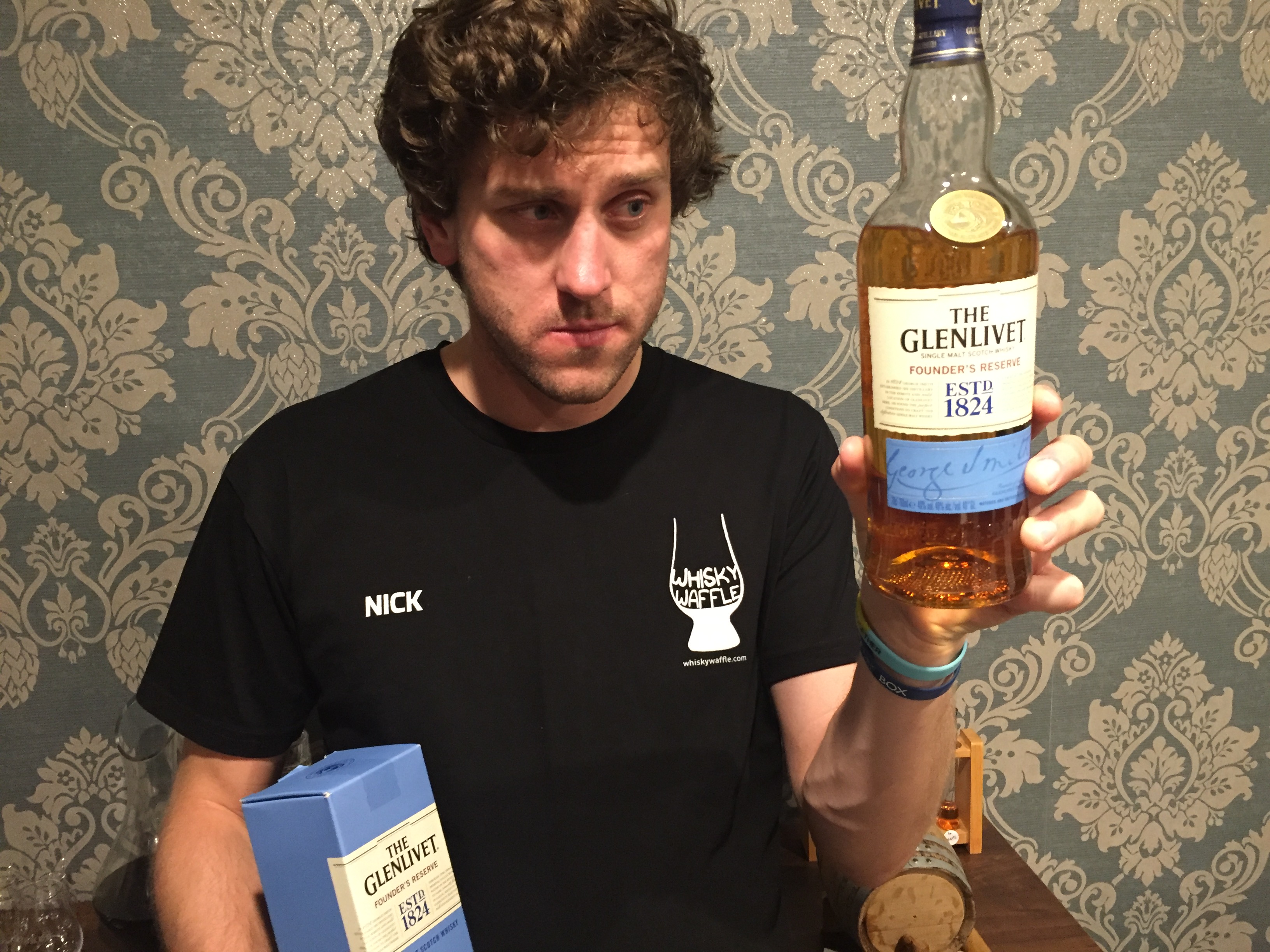
The Glenlivet Founders Reserve

Reviewed by: Nick

Founders Reserve n waffle

In 2015 we farewelled a Whisky Waffle favourite son, the Glenlivet 12. It was there to share the laughs when we held cards nights, to comfort us when we’d had a rough day at work and raised high when we rung in the New Year. Sadly Glenlivet, in their ultimate wisdom, have retired the 12 for the foreseeable future. But fear not – they have introduced a direct(ish) replacement! It comes in shiny blue packaging so it must be good, mustn’t it? Ladies and gentlemen, I present to you the Glenlivet Founders Reserve.

It would be so easy to do a straight comparison of the two whiskies, but I decided to sample the new kid on the block on its own to see how it stood up. It turns out ‘stood up’ was possibly the wrong analogy. Sat down maybe? Perhaps slouched…

On the nose, I found the Founders Reserve has plenty of caramel and some dry malty notes. An acceptable, if not auspicious start. So I took a sip. This turned out to be an error. There’s an unpleasant sweetness in there – a sugary, treacly flavour lacking in any complexity. It’s not bad per se, but there is a distinct manufactured, home-brand quality about it which is hard to enjoy. The finish is warm and spicy, almost tangy on the back of the tongue. Finally there is the merest hint of raisins, a cameo appearance that leaves you wishing there was more to be found.

I cannot say that the Founders Reserve is particularly offensive in its flavour. But I can (and do) claim that it is all a bit bland and inconsequential, bordering on boring, which disappoints me greatly. Glenlivet are truly great makers of Scottish whisky and it saddens me to think that a generation of whisky drinkers will discover the distillery via this disappointing bottle.

★★

Nick and the Glenlivet Founders Reserve

How it compares:

Without doubt there are similarities in flavour between the Founders Reserve and the 12 Year Old – they are both obvious Speysiders full of caramel and honey. But the 12 Year Old has so much more going on than the NAS bottle. There are subtle complexities to be found throughout the 12 which the Founders lacks. The Founders Reserve is the Coke Zero to the 12’s Coca-Cola.