Scottish Whisky

Springbank 10 Year Old

Reviewed by: Nick

Springbank 10 Year Old

Welcome to Campbeltown. I shall begin by clarifying to my fellow Tasmanians that I am referring to the town in Scotland, not the eternal toilet stop halfway between Hobart and Burnie.

Campbeltown is located at the tip of the suspiciously shaped Kintyre peninsula in the south of Scotland and was once known as the ‘whisky capital of the world’, being home to as many as twenty-eight distilleries. Sadly (at least for the sailors who make port there) this is comprehensively no longer the case. Several distilleries, however, are still going as strong as ever.

Springbank, Longrow and Hazelburn are all based in Campbeltown. In fact, they are all based at the same distillery. And despite being located at the same premises, all three make many varied and fascinating drams. Longrow whiskies are heavily peated, and often aged in unusual and quirky barrels. Hazelburn whiskies are triple distilled, and as smooth and creamy as their similarly produced Irish counterparts. Springbank, the biggest and most well known of the three, makes whisky with a maritime influence, harking back to drams made in the nineteenth century when the town was in its pomp.

Their entry level is the 10 Year Old and it is a perfect dram to demonstrate what they are about. The nose is oily and buttery with a sweet seaside edge. This is whisky doing salted caramel. There is also the faintest hint of smoke, of course nothing like the Islay peat monsters which linger only a small stretch of water away.

It is bottled at, in my opinion, the optimum level for whisky: 46%, and the slightly higher alcohol percentage gives this whisky a pleasantly light spice across the tongue. The flavour is slightly fishy, and I mean this literally, instead of labelling it ‘suspicious’ (although some people would take this claim to be very suspicious indeed).

The Springbank 10 Year Old has been matured in both ex-bourbon and sherry barrels, and the sherry in particular is notable on the finish where raspberry jam flavours mingle with the slightly smoky notes creating something memorable and completely unique to Campbelltown.

While the flavours in this dram are all fairly gentle and subtle they combine nicely to create a pleasant and easy drinking whisky. It therefore serves as a perfect introduction to the lost whisky region of Campbeltown and to the wonderful drops made there by Springbank and its two sister distilleries. Of course, if the 10 Year Old is a little light and inconsequential for your liking, you could always jump straight to the 15 Year Old – now there is a dram that means proper business…

★★★
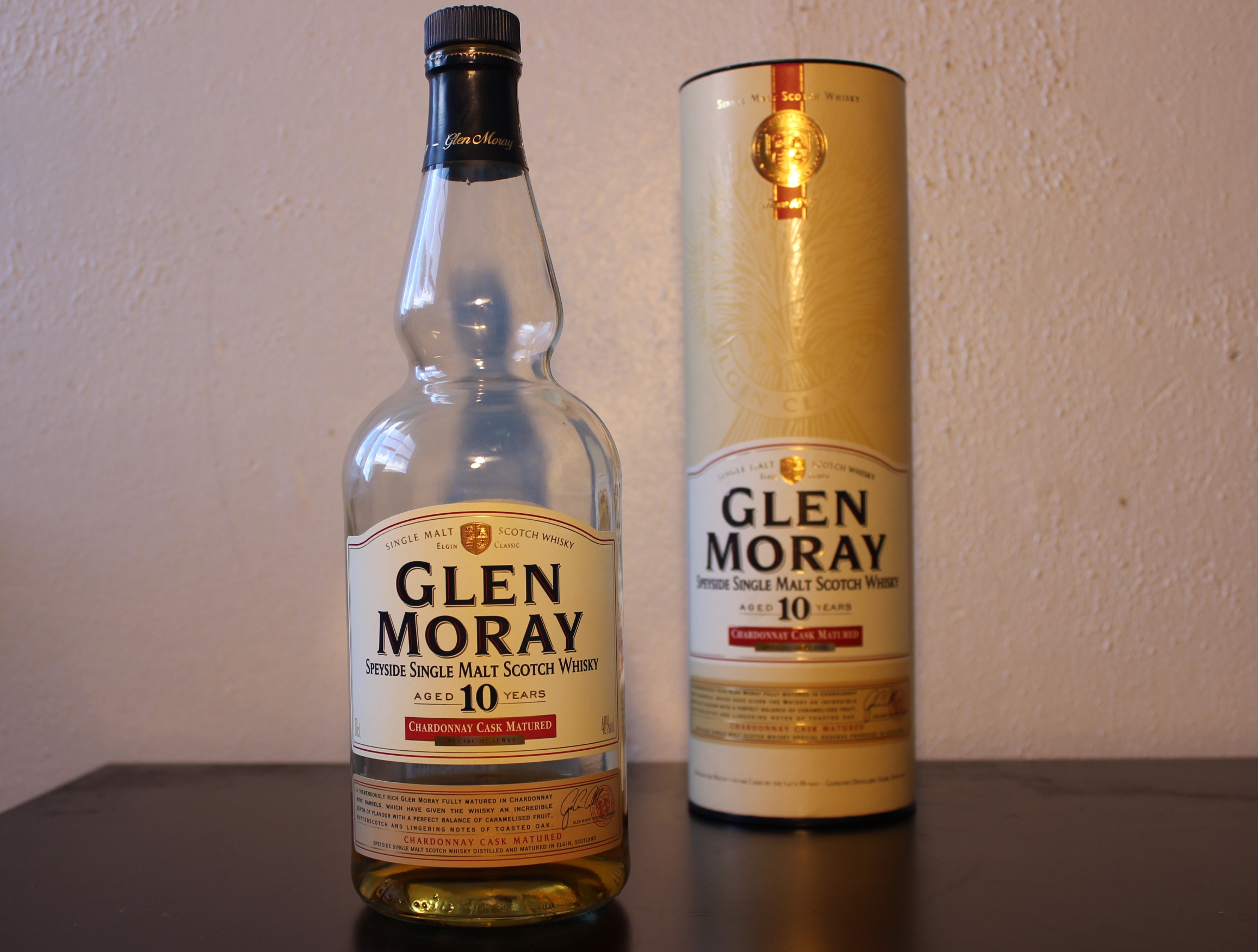
Glen Moray 10 Year Old Chardonnay Cask

Posted by: Nick

Glen Moray 10 Year Old Chardonnay Cask

Finished in ex-Château Rayas casks: sounds impressive. Six years in French Oak Bordeaux wine barrels: sounds fancy. Maturation spent in Margaret River Shiraz casks: ooh I’d like to try me some of that! Ten years in Chardonnay barrels: wow, that sounds… wait did he just say Chardonnay?

When you consider all the premium ex-wine casks left behind by wineries across the world, maturing whisky in humble Chardonnay barrels seems like an incongruous thought. But that’s exactly what Glen Moray have done, producing a dram with flavours which live up to the curious nature of its creation.

The Glen Moray 10 Year Old Chardonnay Cask (or as we Australians at Whisky Waffle chose to label it: ‘Cardy Cask’) spends its entire 10 years of maturation in white wine barrels. And the flavours imparted certainly sets it aside from other Glen Moray expressions.

The first and perhaps biggest clue is on the nose. It is creamy and sweet – more fudge than caramel – and contains a hint of vanilla, giving it the impression of creaming soda. There is also a strong hit of acidity, reminiscent of not so much pineapple, but pineapple cream desserts.

With many drams, it is easy to predict the whisky’s taste after smelling it, but this is not the case with the Chardonnay Cask. The palate is vastly different to the nose; it is darker, with nutty elements immediately present: hazelnuts, pecans, even marzipan. More can be detected when the spirit is swirled in the mouth including notes of honey and a certain degree of woodiness.

The finish packs a surprising punch: sour citrus notes linger well after the liquid is gone, leaving a tangy, spiciness to contemplate.

Glen Moray has long held a reputation for providing reasonable whisky at a more than reasonable price. The Chardonnay Cask is no exception, and while it is easy to drink, it comes with the added bonus of containing many intriguing flavours to muse over. And all of this from a humble ‘Cardy Cask’!

★★★

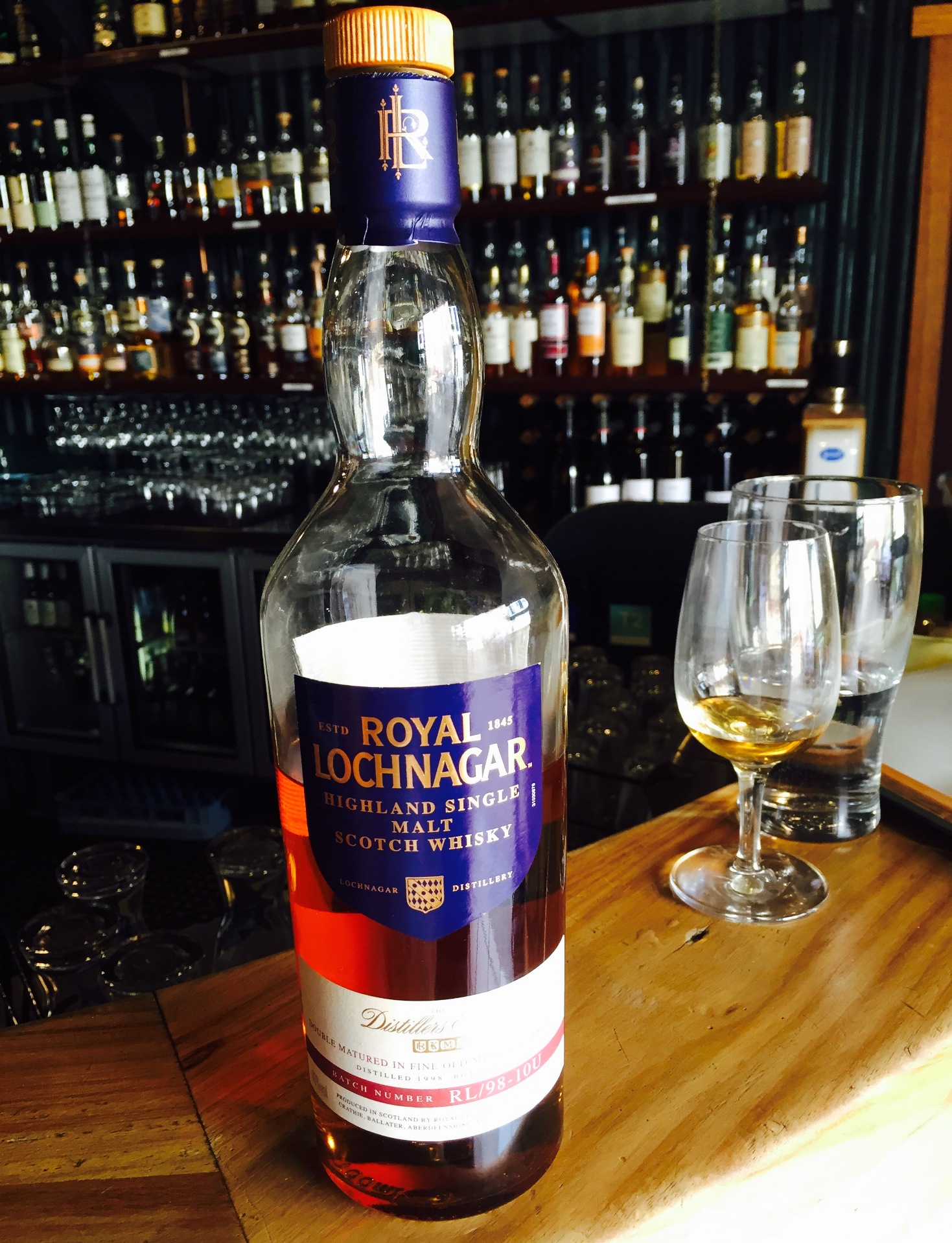
Royal Lochnagar Distillers Edition

Reviewed by: Nick

Royal Lochnagar Distillers Edition

Every now and then what you really look for in a whisky is one that you can drink. I realise that this may sound a ludicrous statement for something which is, undoubtedly, a liquid, but bear with me and I shall explain.

I’m always on the lookout for interesting and unusual new drops to challenge me and set me off waffling about the subtle complexities that can be discovered from dram to dram. However, if every dram I consumed affected me in such a way then, apart from having no friends, I would risk straying too far from the very essence of whisky; that is: it is made to be drunk (with the possible exception of the Macallan Cire Perdue).

With this in mind I believe there is no better candidate for the position of ‘drinkable whisky’ than the Royal Lochangar Distillers Edition. A rather underrated distillery, Lochnagar got it’s ‘Royal’ tag by impressing Queen Victoria on a visit, although the scale of this achievement is questionable as it was reportedly very easy to please Queen Victoria with whisky. Nevertheless the title stuck and it is now the smallest of Diageo’s 28 distilleries.

The Distillers Edition is aged for a period in ex-Muscat casks, adding a layer of silk and sweetness without making it overly-sugary or syrupy. The extra maturation seems to round off some of the sharper edges, making the whisky smoother and easier to drink, though this does not take away from the overall flavour; there are still many appealing elements to discover.

This is immediately apparent on the nose, which is heavy with alluring caramel. Citrus notes follow as well as a dash of rose essence. It has a smooth and creamy mouth feel, retaining the caramel elements and adding flavours of almonds coated in layers of honey and chocolate. There are also the faintest hints of berries to be discovered, lingering in the background. The finish is light and short but the butterscotch theme continues until the end. The overall effect is that of the sauce to sticky date pudding. And those who know me understand what a large compliment I am paying it.

The Royal Lochnagar Distillers Edition is certainly not the most complex or intriguing whisky going around. Nor is it in any way dull. It is a very easy drinking whisky, and this is in no way bad thing. In fact, I believe that it is this dram’s biggest strength.

★★★

Balvenie 14 Year Old Caribbean Cask

Reviewed by: Nick

Balvenie Caribbean Cask 14 Year Old

The Caribbean. What does it make you think of? Beaches? Palm trees? Sunshine? Johnny Depp movies?

The flavour of the Balvenie 14 Year Old Caribbean Cask certainly shows the power of suggestion because I can’t help but noticing this whisky tastes rather… tropical!

Balvenie are one of the leaders in Scotland for maturing their spirit in multiple barrels, often, as is the case with the Caribbean cask, for only the final few months of the aging process. This imparts another layer of flavour on the whisky without removing characteristics that are already present. Often this ‘finishing’ process is conducted in sherry or even port casks. In the case of this Balvenie however, it spends its final few months of aging in ex-West Indian rum barrels, hence the moniker: Caribbean Cask.

The rum influence certainly adds a new dimension to the whisky. The overriding flavour in the nose is, would you believe it, bananas; and I’m not just saying this because of the Caribbean image in my head. Honestly! There are also the vanilla and honey notes expected of a Speyside whisky, however these couple with fresh floral scents. It’s sweet and light, but pleasingly complex.

On the palate the mouth feel is thick and syrupy with malty, biscuity notes present. However, these rapidly give way to fruits such as pineapple, passionfruit, mango and yet more banana. Tropical fruits! The finish is gentle and sweet, with more traditional honeycomb and toffee.

Whether or not I would have picked out these tasting notes if this whisky had been given a less suggestive name is an interesting point. However, as far as this dram is concerned, the marketing and the flavour go hand in hand. The image that ‘Caribbean Cask’ conjures in my head is now inseparable from the whisky itself and I can only describe it in one way: this is the tropical punch of whisky!

★★★

Glenfarclas 105

Reviewed by: Nick

Glenfarclas 105

You never forget your first time. The insecurity as you take the plunge, the fire in your belly, the lasting satisfaction afterwards. I am of course referring to the first time you tried cask strength whisky.

Most whiskies sold commercially have been diluted down to an ABV deemed acceptable to public consumers of alcohol, usually 40-43%. This is undoubtedly a good thing, or us whisky drinkers would be permanently sloshed and unable to string multiple sentences together, let along write eloquently worded whisky blogs. However, there’s just something a bit special about trying a whisky as it can be found in the barrel.

These whiskies are called ‘cask strength’ and usually sit somewhere in the mid to high 50s percentage alcohol wise, although can rise as high as the low 70s. Trust me, when you are drinking one of these, you know about it.

Glenfarclas are a wonderful family-owned Speyside distillery who use mainly Sherry barrels to mature their spirit in. They release a range of (impressively affordable) age statements as well as the 105, their cask strength, which is bottled at a nice round 60%. And it’s an absolute monster. Although a monster in the vein of King Kong, in that it can be brought under control (at least temporarily, before storming off to climb the Empire State Building).

On the nose the sherry influence is prominent, notes of grapes, raisins and other dried fruits coming through along with several sweeter aromas of treacle and iced tea. It’s pleasant, although if your nose ventures too far into your Glencairn, you will receive an eye-watering whiff of the alcohol to come.

The palate is where you first notice the power of the whisky. Hot, spicy, tangy and sharp, it’s far from the smoothest drop you are likely to try. But once past the shock there are plenty of pleasing flavours to be found, such as oak, marmalade and stewed fruits, such as apricots and quinces. The finish of a cask strength whisky is often the highlight and the 105 is no exception. It is dry, long lasting and ever so warming. Not just in your mouth, but after you have swallowed it, within your entire chest. This whisky is a viable alternative to paying heating bills.

Many advocate the need to add water to cask strength whiskies. In a lot of ways they are right. With only a few drops of water, the Glenfarclas 105 becomes immediately smoother and presents new floral aromas and flavours of honey and cloves. But it also loses the fire contained within its 60% self. That wonderful warming sensation is gone, along with some of the magic of the drop.

The Glenfarclas 105 is a fantastic dram, and a great example of a cask strength whisky. It is certainly not for the faint hearted, but is well worth it if you can make it back for a second sip.

★★★★

Scapa 16 Year Old

Reviewed by: Mooresy

Whisky n Chocolate dram 1

There is something utterly unique about the Scapa 16. The distillery is one of two located on the Orkney Isles and doesn’t have a huge number of variants compared to its neighbour Highland Park or nearby north highland distillery Old Pulteney, but it is a rare event that someone deems Scapa a poor performer.

Usually classed as one region, the Islands group produces a very diverse range of whiskies. The Islands of Skye and Mull have the smokier sea-spray flavours typically associated with the Islands, due to their closeness to Islay and how most people think of the Islay big three when they think of any distillery off the Scottish mainland.

The Islands at the north of Scotland bring something different to the table. Without the peat and brine, flavours can be more subtle and well-defined. Scapa 16 is certainly no exception. This is even more true of Scapa which transports its water source to the distillery through pipelines to avoid it flowing through peaty soil.

The distillers at Scapa have played with its product for many years. The distillery only has one wash and one spirit still so the methodology is all about perfecting the flagship whisky. It began as a 12 Year but the distillery fell idle for a decade between 1994 and 2004. To kick-start its revival, the 14 Year was released but tinkered with five years later to create the 16 Year, which spent an additional two years in American oak casks.

To this day I have not had such a fresh and vibrant whisky. On the nose there is an instant fresh grass smell, like blades of green by a riverbank. There are wafts of other greenery like the blooming heather on the lochs. There may even be a touch of the lyrical wild mountain thyme. There is also a deliciously light note of strawberries.

On the palate the strawberries are evermore present and develop from a freshly picked smell into an artificial or candied strawberry taste. They take one back to the kind of strawberry in strawberry ‘liquorice’, which also may explain the slight aniseed taste that also comes through towards the finish.

On the Mooresy scale of quality, if I was to write a whisky bible, the Scapa 16 would sit at a 9.5/10 (nothing’s perfect, right). It will always be personal taste, but there is something about this one: a quality about the Scapa 16 that transports you to a relaxing day on a farm in spring, with a gentle breeze and babbling brook. Do yourself a favour and set up a chair in your backyard, grab a good book, pour yourself a bumper of Scapa 16 and find your place to which the dram will transport you.

★★★★

Auchentoshan 12 Year Old

Reviewed by: Nick

Auchentoshshan 12 Year Old

The Highlands. It sounds so impressive. Wild, rugged, windswept, untamed and undeniably Scottish. The Lowlands, on the other hand, does not sound nearly as awe-inspiring. Likewise, single malts from this region do not receive the same levels of celebration and esteem their more northerly counterparts enjoy. They lack a leader, a distillery to stand up and act as a champion for the area. Auchentoshan, just outside of Glasgow, could well be that champion.

Auchentoshan, Gaelic for ‘the corner of the field’, are unique among (nearly) all Scottish distilleries in the sense that they distil their spirit three times. Most Scottish distilleries perform this process only twice; triple distillation is actually the norm in Ireland. This method leads to, at least according to the Auchentoshan marketing team, a purer, smoother spirit.

The unique creation of this whisky certainly leads to a distinct flavour and this is immediately noticeable on the nose. It is pleasantly sweet with hints of vanilla and caramel combining to form the aromas of crème brûlée. There is also a zesty lemon scent, followed closely by pecans and walnuts. Once encountered it is never forgotten: it is simply the Auchentoshan nose.

The interesting flavours continue on the palate, which is medium bodied and spicy. There is a pleasant candied orange taste and the overall effect is very smooth and elegant, perhaps a legacy of the triple distillation process.

The finish is undoubtedly the most disappointing element of the dram. After the flavours initially combine so effectively they rapidly fade away to almost nothing. It is reminiscent of a movie with a disappointingly easy resolution (spoiler alert: I’m looking at you Indiana Jones and the Kingdom of the Crystal Skull). It’s smooth and enjoyable, just not long lasting and memorable. Perhaps another trait of the triple distillation? Or a quality you will have to buy the older expressions to discover?

Regardless, Auchentoshan is a must try for any whisky drinker – if only so they can say they have tasted something from the not so impressive-sounding Lowlands.

★★★

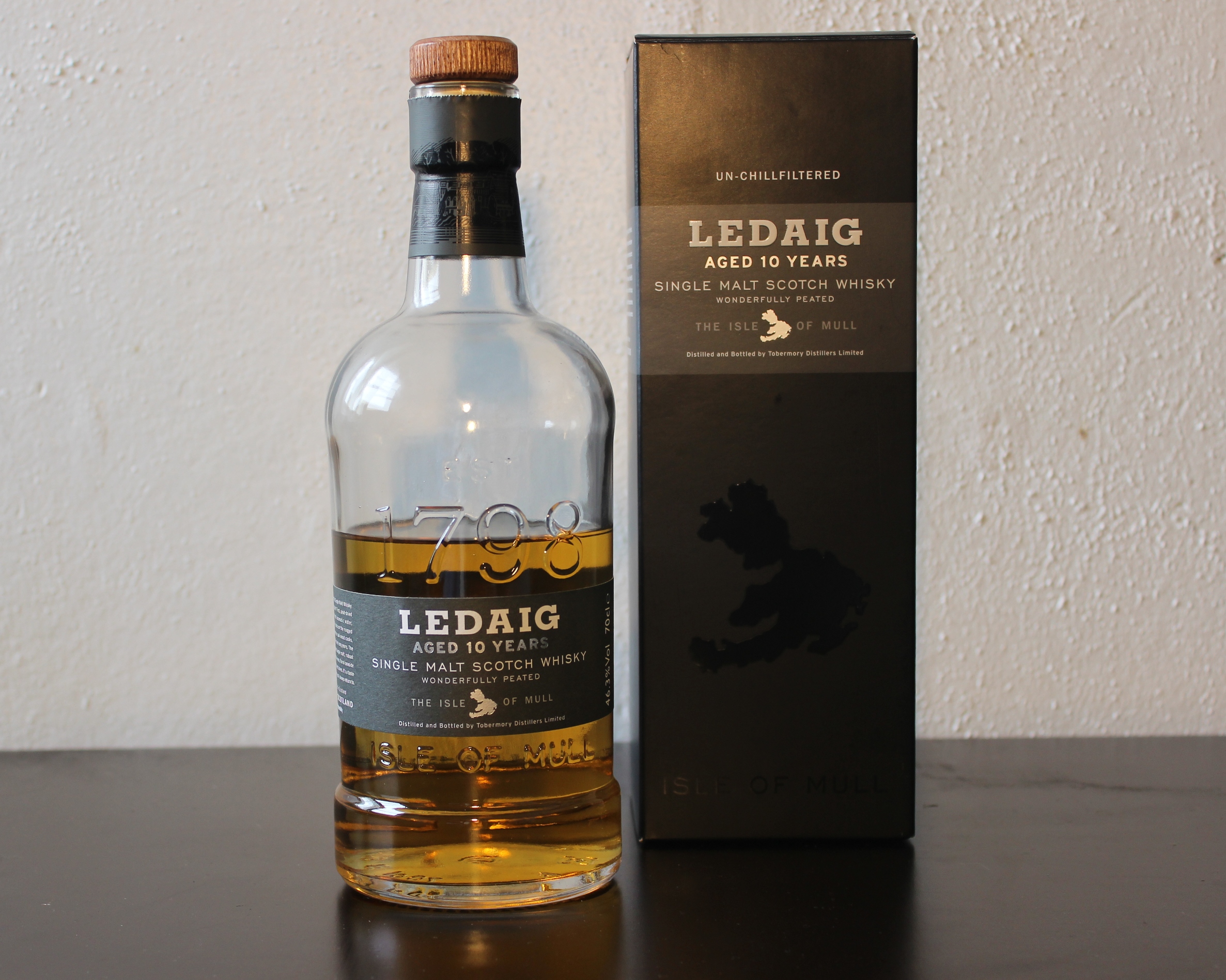
Ledaig 10 year Old

Reviewed by: Ted

Tobermory Ledaig whisky waffle

My Whisky Waffle co-conspirator and bestie Nick was kind enough to give me a bottle of the water of life for my birthday (what else?). We cracked it open that night and had a few cheeky drams. I’ve been mulling it over ever since, a rather appropriate course of action seeing as the bottle in question was a Ledaig 10 year old, which is produced by Tobermory Distillery on the Isle of Mull (Haha! Geddit? Isle of Mu… Why are you all groaning?… Ok, I’m just gonna sit quietly over here).

The Isle of Mull is part of the Scottish whisky zone known as the ‘Islands’, a bunch of distillery inhabited land masses surrounded by water and huddled off the Scottish coast, whose seemingly defining feature is that they aren’t Islay. Impressively, Tobermory Distillery is the chief abode for the islanders (or Mullets as they are known locally), a ramshackle stronghold built from driftwood, shipwrecked fishing boats, kelp and the occasional escaped haggis… Oh, wait, sorry, the distillery is actually named after the main town on the island, Tobermory, and is probably constructed of far more traditional materials (not sure about the Mullet thing either. I hope it’s true).

The Ledaig 10 year old takes its name from the original distillery built on the island in 1798. Contrary to popular belief (i.e. mine), it is not matured in the sporrans of the Mullets, but instead in the far more superior oak barrel. Typical of the drams from that part of the world, the Ledaig is peated, but it is a very different smoke to the Ileach drops (Remember, ‘Islands’ = ‘Not Islay’).

On the nose the Ledaig is dark and intense, with quite a distinctly meaty quality to it. It’s sort of like a combination of smoked ham and marinated meat sizzling over hot coals. That marinade has a great oozing sweetness combined with pepper, sea salt and perhaps… plum?

On the mouth you are hit straight up by a big swirl of smoke, followed by a robust spicyness from the 46.3% alcohol. After that a lovely butterscotchy sweetness slides over the back of the tongue, served up with caramelised pears and another dose of that woody smoke. Surprisingly the Ledaig is much smoother than you may expect from its 10 years, but the combination of the smoke and the higher alcohol means that there’s still heaps of craggy, earthy character to be had. It’s certainly not a beginners drink, and probably requires a bit more practise to enjoy the full effect.

Growing up in the only distillery on a windswept island off the Atlantic coast of Scotland has certainly given the Ledaig a character all of its own. Perhaps some of that black humour it displays comes from the dark waters of the mountain lochs on Mull used in its creation. If you’re looking to give someone a strong, rugged, sexy islander who’s been out fighting fires on mountains in only his kilt for their birthday, then the Ledaig’s your man (I’m sure that’s what Nick was aiming for). There’s no need to mull it over too long.

★★★

Balblair 2000

Reviewed by: Richard

Balblair 2000

Up until I had the bottle in my hands, I’d not heard a lot about Balblair Distillery, and as you do, did a bit of research in to it…

It’s a Scotch whisky distillery located in Edderton, Ross-shire, Scotland. Originally founded in 1790, the distillery was rebuilt in 1895 by Charles C Doig, and so good was its original water source that the rebuilt distillery chose to ignore a nearby burn in favour of the original Ault Dearg burn. To this day, the Balblair Distillery continues to use this original water source.

Balblair has one of the oldest archives in distilling, with the first ledger entry dated 25 January 1800. John Ross himself penned that first entry, which read: “Sale to David Kirkcaldy at Ardmore, one gallon of whisky at £1.8.0d”. Ahhhhh, the good old days when you could get a gallon of whisky for under 2 quid…

The distillery is owned by Inver House Distillers Limited, whose other distilleries include one of my favourites, the Old Pulteney Distillery as well as Balmenach Distillery.

The Balblair distillery is unusual in the use of vintage dates rather than age statements. This means that Master distiller Stuart Harvey has more flexibility with its offerings and it provides the drinker with a ‘snapshot’ of that moment in time rather than a stationary age statement.
So, enough rambling – on with the review – so, this one I have in my hand is:

Balblair 2000 (2nd Release) 43.0% in an ex-bourbon cask

Colour: rose gold

Nose: Sweet and creamy – almost custardy! Apples & Manuka honey, toasted bread…

Palate: Beautiful malty palate with straight up vanilla & coconut, hints of honey & toffee apple and coconut. Nicely balanced with a lovely mouthfeel. Let it sit for a while, you’ll get tinned pears, vanilla ice cream. This is a great whisky – super drinkable (just ask Mooresey!)

Finish: long! With vanilla and some dry oaky wood

I found it did not need water… (I tried adding some, and while the nose picks up some more floral notes, the body & character drops away, and the whisky becomes way too soft and mellow)

All in all, a delicious whisky… one that I have gone back to many times now! (perhaps too many times by the looks of the bottle!) Rumour has it they have made a similar whisky but used Sherry Barrels instead of Bourbon… perhaps I shall try and track it down, and see how it compares, but that’s a story for another day…

★★★★

Balvenie 12 Year Old DoubleWood

Reviewed by: Nick and Ted

Balvenie Doublewood 12 Year Old Whisky Waffle

Double the wood, double the fun! Just getting into whisky? Think you might like to give one of those new-fangled single malts a try? Can’t afford the Glenfiddich 50yo? Roll up and try the multi-barrelled, malty-talented whisky wizard, the one, the only: the Balvenie 12 Year Old DoubleWood! It’ll cure all your woes*!

* Side effects may include becoming compulsive about seeking out single malts, and mild discomfort in the presence of blends.

Balvenie is a member of the the William Grant & Sons stable, and is the less famous sister to Glenfiddich. Balvenie prides itself on continuing to use traditional hand malting methods, and is well respected for its high quality range of whiskies. Chief amongst these is the 12yo DoubleWood, a dram that has converted many a whisky novice.

There is a good reason for the DoubleWood moniker: while it spends the majority of its life in American oak, for the last few months of maturation the spirit is transferred to sherry butts. This technique imparts the range of flavour that makes this whisky special and means that there is something in it for everyone.

This variety of flavour is immediately evident on the nose with sweeter notes of caramel, fruit leather and vanilla pairing with a citrusy tang reminiscent of lemon drops, and aromatic spices such as nutmeg and cinnamon.

The flavour is very broad and rounded across the palate. There is an initial hit of oranges, followed by spicy ginger and buttery shortbread. The sherry influence is definitely present in the finish. Dried fruits such as figs, prunes and dates can be found, and a tasty flourish of old English toffee is left on the tongue at the end.

The Balvenie 12 Year Old DoubleWood is exceptionally smooth for its age, and is also excellent value for this level of quality. For experienced whisky drinkers there is so much to like here and it warrants repeated tastings (for research purposes, naturally). For those just beginning their journey, the DoubleWood provides an ideal gateway to the broader whisky world. So line up ladies and gents, there’s enough for everybody. You won’t be disappointed!

★★★★