alcohol

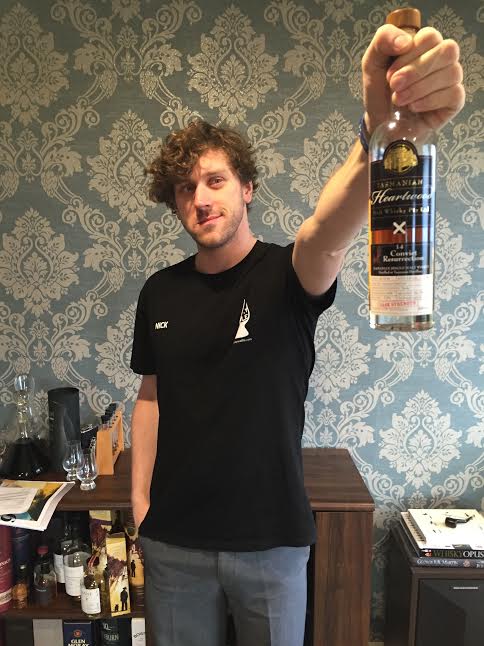
Heartwood Convict Resurrection

Reviewed by: Nick

Heartwood Convict Resurrection

In Scotland, independent bottling of whisky is commonplace. Companies such as Gordon & MacPhail, Berry Brothers & Rudd, Flora & Fauna – basically anything with an ‘&’ in it – run successful businesses and produce some fine drams. In Tassie, well, it’s a little rarer. While Trappers Hut and Tasmanian Independent Bottlers are coming along nicely, there’s one name leading the way: Heartwood.

Heartwood was created by Tasmania’s own mad scientist of whisky, Tim Duckett, whom I imagine spends his days bent over a steaming cauldron of luminous Tasmanian whisky, stirring it with a wooden oar and chanting “double double toil and trouble”.

If you’ve ever come across a bottle of Heartwood, you’ll attest that it was unquestionably a memorable drop. There’s certainly a lot to remember, from the wonderful designs on the labels to the distinctive names: ‘Vat Out of Hell’, ‘Release the beast’ and ‘Any Port in a Storm’ to name a few. However, the most memorable aspect of any Heartwood bottling – by far – is the strength. The ABV of all releases ranges from percentages in the mid 60s to percentages in the mid 70s. That’s right – mid 70s!!!

The bottle I decided to purchase sits at an eye watering 72% and is called the ‘Convict Resurrection’, part of a series of convict-inspired bottlings referring to Tasmania’s original function as a penal colony. The whisky comes from Sullivans Cove barrel HH0239, which was an American oak ex-port cask. And boy, is it something.

Every aspect of this whisky is massive. The nose hits you like a boxing glove wielded by Sugar Ray Leonard, teeming with creamy fruit flavours like plum jam spread on rich brie. As is to be expected, the palate also packs a punch – taking a sip is like wrestling a crocodile – and yet there are so many flavours to be found: raisins, nutmeg, pinecones and blackberries – perhaps with the thorns still attached!

The finish is the most surprising element of the whole dram as it is incredibly smooth. It seems to evaporate at the back of your throat, leaving the most glorious lingering warmth with notes of jam and honey.

If you ever see a nip of Heartwood available anywhere – don’t think – just buy it. Sure, it’ll be pricey, but only 200 or so of each bottle is made and once they’re gone, they’re actually gone. Heartwood fans don’t buy the stuff to leave it sitting on a shelf.

Seriously, try it if you can. I promise it will be memorable – in the best possible way.

★★★★★
Heartwood n Nick

Tasmanian whisky: One state. Three ingredients. Unlimited flavour.

#TasWhiskyWeek

Belgrove Brown Rye

Reviewed by: Ted

Belgrove Brown RyeEverybody knows by now that Tasmania is a hub of whisky revolution. Ever since the resurrection of the industry in the 90’s, things have been taking off quicker than an alka-seltzer bottle rocket. So how do you innovate in a young industry that’s already innovating its socks off? Rye thought you’d never ask…

Founded by Peter Bignell, a man often described as a Da Vinci of distilling (well, he definitely is now), Belgrove Distillery is located just outside Kempton in the southern Midlands of Tasmania. DIY, organic and hand-made sums up Belgrove’s vibe, with Pete quite literally crafting everything from the ground up, including the stills, barrels, biodiesel (made from left-over chip oil from the local take-away and used to power the stills) and of course the grain used in the whisky itself.

The grain is where Belgrove really makes its point of difference from all the other Tasmanian distillers. Why use boring old barley when you can use rye instead, organically grown on-site? After growing a bumper crop of the stuff on the farm in 2008 (a favourite grain of the Canadian distillers but not used in Tassie), Pete was apparently inspired to turn it into whisky. Being a extraordinarily talented and driven individual, one thing led to another and here we are today.

Belgrove now produces a number of different 100% rye drops, including white rye, black rye, peated rye and of course, the subject of this review, the brown rye.

The nose of the brown rye is dark and fruity, full of ripe apple, plum and apricot. It rather reminds me of the scent of the bowl of home-made preserved stewed fruit my grandma always used to keep in her kitchen cupboard, a very fond memory. Alongside the fruit is rose petals, custard and an undertone of dull metal, like drinking from a rough copper mug.

The taste is quite different to the flavour complex produced by the nose. Although its body initially starts off fruity, it immediately transmogrifies into deep earthy, ashy flavours, like smouldering rye stubble in a paddock or curling incense smoke in a gypsy tent. The finish is slightly bitter and astringent but very satisfying, like having a cup of black tea after a sweet dessert.

Everything you thought you knew about Tasmanian whisky goes out the window when you try the Belgrove brown rye. It’s like learning to drink whisky all over again, an exciting time full of power and emotion. It is a spirit that resonates powerfully with the creative, hands-on ethos of its maker. If you want to try something different, yet still uniquely Tasmanian, then the rye of Belgrove awaits you.

★★★

Belgrove Brown Rye

Tasmanian whisky: One state. Three ingredients. Unlimited flavour.

#TasWhiskyWeek

Nant Sherry Wood 43%

Reviewed by: Nick

Nant Sherry Wood 43%

I imagine the founding of Nant distillery by Brisbane businessman Keith Batt, went something like this:


“What do you want for your birthday this year, honey?” asked Mrs Keith. Keith thought for a moment.

“I’m torn between a Caribbean island, a bar-franchise and a horse,” he replied, not a drop of irony on his face.

“A horse?” replied Mrs Keith, “where on earth would you put one of those?”

“Well obviously I’ll need to invest in some property to store it in – preferably somewhere exotic and remote.”

“How about Peru? Then I can get a Llama!”

“Yeah, I’m not so keen on the ponchos or  folk music. Tell you what, how about we stick the horse in some old paddock in Tasmania and I’ll also get the bar-franchise?”

“Alright, fine. But you may need to think of something to do with the property down in Tassie.”

“Oh, don’t worry about that. I’ll just stick in a whisky distillery and sit around fixing an old water mill until Jim Murray arrives.”


Of course I unquestionably make light of the momentous decision to build Nant Distillery up in the highlands of Tasmania – an establishment which I can confidently state is the most scenic of all Tasmanian distilleries. And as much as I can mock Nant’s business-like set up, I cannot downplay the excellence of its whiskies.

One of my favourite Tassie drops is the Nant Port Wood, a fantastic representation of the Tasmanian flavour, and the cask strength version of the Bourbon Wood is one of Tasmania’s finest whisky accomplishments. They also release a Sherry Wood and it is this expression I review today.

The nose is drier and earthier than any other Nant release. There are elements of vanilla, figs and golden syrup, but this is matched by moss and spicy oak. The palate is equally contrasting with notes of toffee, raspberry jam and plenty more oak, while mingling in the medium long finish are herbs and you guess it: oak, It all combines to form an intriguing and challenging Tasmanian whisky.

While I couldn’t claim this to be my favourite Nant expression, it’s certainly an interesting drop and one that I would never describe as boring. It forms an integral part of an increasingly impressive Nant back-catalogue. I guess then, it was well worth Keith Batt getting that horse!

★★★

Nant n Nick

Tasmanian whisky: One state. Three ingredients. Unlimited flavour.

#TasWhiskyWeek

Hellyers Road Peated

Reviewed by: Ted

Hellyers Road Peated

So, you’re a big fan of peated Scottish single malts, but in order to save the world from certain destruction (just go with it, ok?) you have to buy a Tasmanian whisky. What are you going to do? Never fear, Hellyers Road has your peat needs covered with their appropriately named Peated expression

When it comes to peated whisky in Tasmania, the situation is a little more complex than first meets the eye. Tasmania actually has its own peat bogs, however the smoke is quite different to the Scottish stuff, being softer, gentler and more rounded. It is also restricted to a few distilleries that own leases to the bogs (the rest is locked up in national parks and the like).

In Hellyers Road’s case they don’t have access to a native bog, so instead they import peated barley all the way from maltings in Inverness, Scotland. The side-effect of this is that Hellyers Road Peated is much more closely aligned to Scottish drams than other Tasmanian malts (side note: Hellyers Road use local grown barley for their non-peated expressions).

Nosing the Peated expression is like standing in a grain storehouse, grabbing a big handful of peat-smoked barley and taking a deep sniff. Underneath the big, fat, bold, smoky cereal flavours can be found cocoa, black currants, pencil shavings and smouldering leaves.

The first layer of taste is what you would probably expect from a heavily peated whisky – strong, thick smoke that billows around the mouth, a bit like standing on the wrong side of the campfire. When you clear away the smoke however, you are left with a light, smooth and slightly sweet dram, without too much else going on. The finish is long and smoky, but gentle. In fact, the smoke probably rounds out the feel of the dram as a whole, smoothing out some of the harsher edges that can be found in a younger whisky such as this.

When compared to a traditional Islay single malt like Laphroaig or Ardbeg, the Hellyers Road Peated perhaps misses some of the strong coastal flavours that punch through from underneath, but makes it up in other areas. A light whisky, heavily peated, this Hellyers Road expression delivers a different experience to anything else available from Tasmania.

★★★

HR n Ted

Tasmanian whisky: One state. Three ingredients. Unlimited flavour.

#TasWhiskyWeek

Booker Noe’s Special Barrel Bourbon

Reviewed by: Ted

Booker Noe's

Ok people, tread carefully, we’re hunting a pretty dangerous lil’ beastie today and I wouldn’t like to see anyone lose a leg. It’s got a strong nose, a powerful kick and a bite worse than the biggest, meanest black bear you ever did see. What am I talking about? Why, Booker Noe’s Special Barrel Bourbon of course…. Look out! *crunch*

This big hitting bourbon takes it’s name from one of Kentucky’s most beloved sons, Booker Noe, grandson of the great Jim Beam himself. As master distiller at Jim Beam for many years, and a child of one of America’s greatest whiskey dynasties, Booker had an innate knowledge of the spirit he crafted. As a testament to his skill he selected barrels of special character to create an expression bearing his name and personal taste.

According to Booker’s note on the bottle label, his grandfather preferred his whiskey to be aged between 6-8yrs. My bottle, containing batch C04-A-28, hits that mark perfectly, being aged for 7yrs and 4months precisely. What really gives the Booker Noe its teeth is that fact that it’s bottled straight from the barrel. Therefore the bottle of dark, uncut Kentucky spirit sitting before me is a hefty 64.55% abv, or 129.1 proof in the American money.

I make no joke about the potency of this stuff, as it’s responsible for some of the few alcohol induced blank spots in my memory. Just to hammer the point home, our women folk are generally pretty indulgent and tolerant of our whisk(e)y drinking proclivities. Yet when the Booker comes out, or even if there’s vague hints of it, stern looks and muttering along the lines of ‘Oh God, you’re not drinking that stuff again are you? Remember what happened last time?’ occurs. Suffice to say, m’colleague and I have not been found in the best shape afterwards.

Yet, even after all that, there is something about the Booker Noe that keeps drawing us back. It’s the bold, gutsy, manly nature of it I think. Bourbon in the raw. The nose is solid, a big slab of dusty corn sweetness that drops down on you like a sack of, well, corn. Of course, because of the strength there’s an undertone of nail polish remover, but it blends well with the sweetness, only frying the occasional unsuspecting nose hair.

The taste is bold, taking a big, sharp, sweet, fruity swipe at your palate. The spirit fills the mouth, making your cheeks tingle and the blood rise. The finish is oaky and sour, and keeps you pinned down until it finishes punching you in the face.

Booker Noe’s Special Barrel bourbon is the American spirit at its brawniest. It’s creator was a larger-than-life figure and his bourbon certainly lives up to that legacy. Hunt the wild Kentucky beast if you dare, but be careful it doesn’t bite you too hard. But maybe it’s just like the note I stuck on the box says: “Because I like to live… dangerously.”

★★★

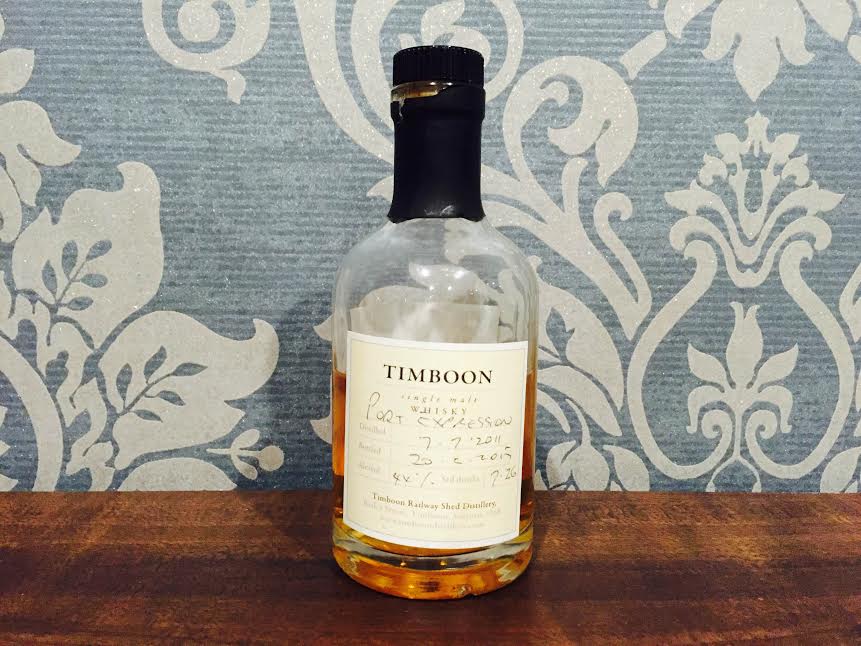
Timboon Single Malt Whisky

Reviewed by: Nick and Ted

Timboon port front

Back in the early 1800’s Scottish whisky was forced, kicking and screaming, to go straight. Distillers were required to become legal or shut down, formally founding many of the grand old distilleries we see today. In comparison, Australia had to wait another 150 years for legalisation to occur, resulting in many heroic folkloric moonshiners keeping local spirits up.

One such rapscallion was Tom Delaney, a notorious bootleg distiller of the Timboon region of Victoria, who made a dram locally known as ‘Mountain Dew’. Fast forward 100 years and small scale distilling in Australia is now legal, and Tom’s legend has not been forgotten.

Based in an old railway shed, Timboon Distillery draws inspiration from the whisky making heritage of the region, creating a range of distilled products, chief amongst them being their Single Malt Whisky. Matured in small ex-port barrels, this young whisky is a distinctive Aussie drop.

On the nose the Single Malt has notes of vanilla and caramel, mixed with the more unusual flavours of blue heaven and mint-chocolate. Perhaps this is not so surprising, seeing as Timboon was founded by the owners of an ice cream company.

The minty flavour continues on the palate, along with polished timber, red currant and spiced plums. The mid-palate is smooth and then suddenly goes missing for a moment, before revealing a spicy, slightly metallic finish.

While this may not the most balanced whisky Australia has to offer, there are definitely some intriguing flavours to be found. We are sure that Tom would be proud to know that his distilling legacy lives on and look forward to future releases from Timboon Distillery.

★★


Fiddlers: A (Loch Ness) monster of a whisky bar

Posted by: Ted

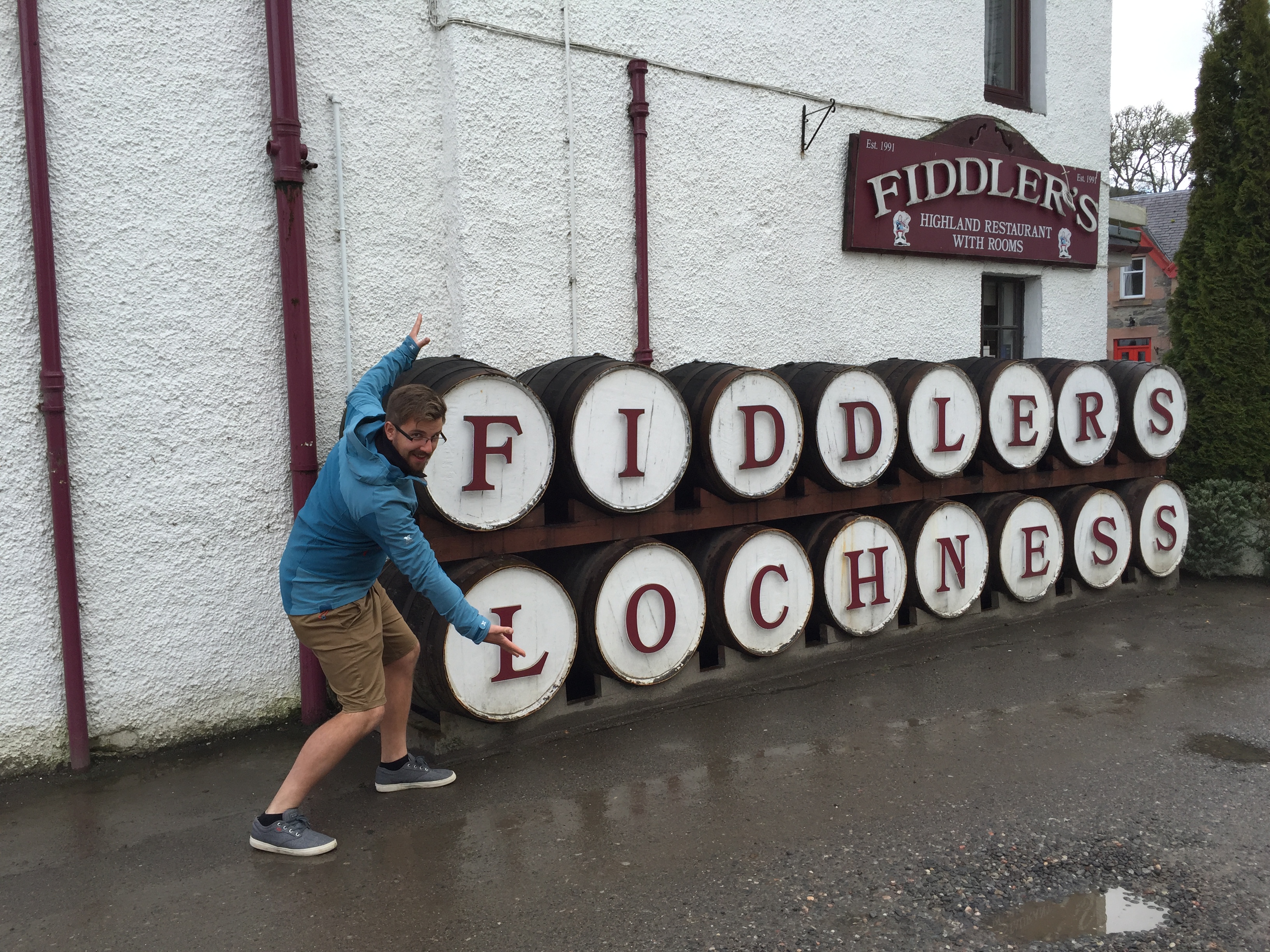
Fiddlers and Ted and barrels

The village of Drumnadrochit, nestled on the shores of Scotland’s Loch Ness, is more usually know for being the hub of all things Loch Ness Monster related (and home to Aidrian Shine’s beard).

For the wandering whisky fan however, there is a beast of another kind lurking in Drumnadrochit, one that is full of golden fire.

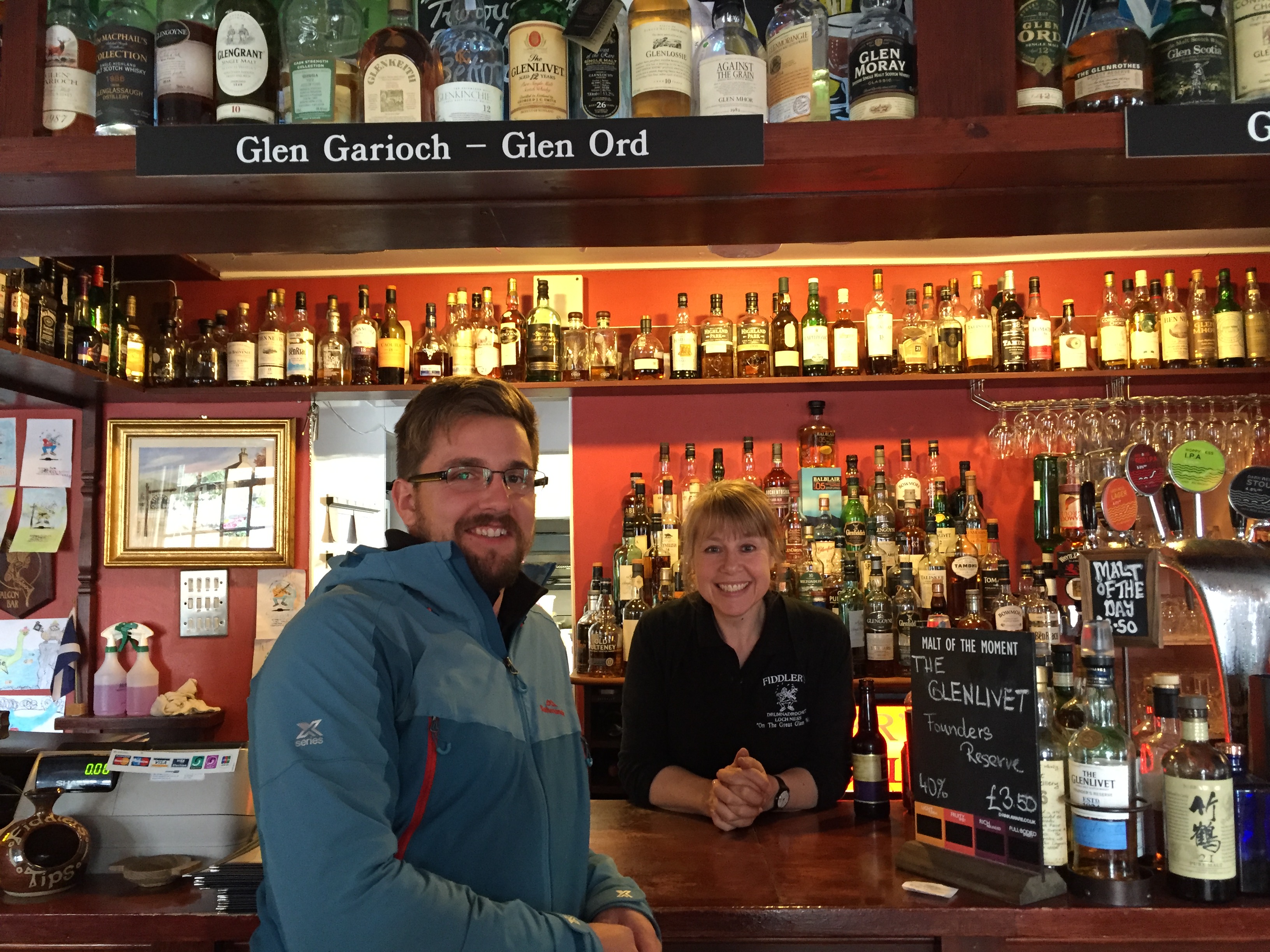
Fiddler’s Bar, owned by the delightful Jon and Karen Beach, is a wondrous whisky paradise. A hint is given by the row of maroon and white capped barrels resting outside to the the real treasure hiding within.

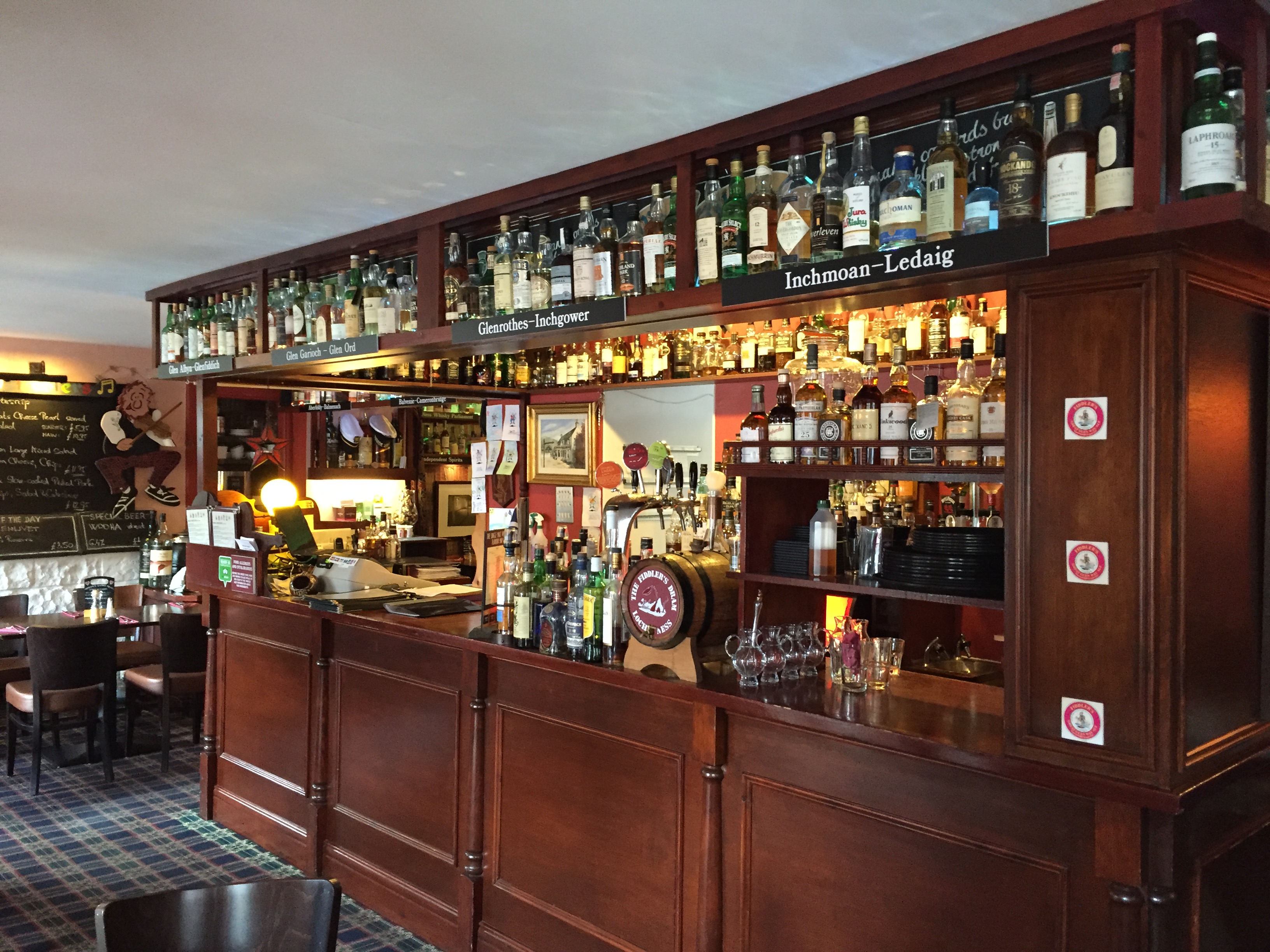
Fiddlers

Inside the cosy bar room are dark wood shelves lined with what seems to be every dram under the sun. Common malts rub shoulders with rare drams, and foreign drops mingle happily with the locals.

Scottish distilleries encircle the space above the bar, ordered very helpfully from A-Z (although this doesn’t necessarily make the choice any easier). I was lucky enough to sample a William Cadenhead that allegedly contained 40yo Glenfarclas, a very refined and elegant drop.

M’colleague will wholeheartedly endorse my opinion that Fiddlers is a truly fine place to be, having found comfort within its warmth during a time of need and restoration in what he tells me was a truly remarkable glass of Port Ellen.

If you ever find yourself passing through Drumnadrochit and want to discover an authentic experience among the tourist holy-poly drawn by Nessie, then Fiddler’s Bar is the place to be.

Fiddlers and Ted

(Try the Mighty Burger if you’re there at lunch. It really is!)

Speyburn 10 Year Old

Reviewed by: Nick

Speyburn 10 year Old

It’s the very end of harvest season here in Tasmania. Fresh produce abounds, from potatoes to pears, onions to oranges, and asparagus to apples: our family-friend farmers’ pickings filling my kitchen with an alluring bouquet. The fresh fruit combines to remind me strongly of the scent of a dram I have recently acquired: the Speyburn 10 Year Old.

“Delicious” I hear you cry “a whisky with all amazing the flavours of harvest time! It must be good.” And it is. But it also isn’t. This is a whisky full of contradictions.

The contradictions start with the distillery itself. Translating literally as “River Spey”, Speyburn identifies as a highland whisky despite being found within a mile of such Speyside giants such as Glen Grant and The Glenrothes. It has received many modern awards, though it’s greatest accomplishment still seems to be being built in the year of Queen Victoria’s Diamond Jubilee. It also, commendably, bucks the NAS trend by releasing a 10 Year Old, a 25 Year Old… and nothing in between.

The harvest fruits are prevalent on the nose. Overripe red apples, peaches and lemons dominate proceedings in a way entirely unsubtle. It’s enjoyable but certainly citrus-heavy. The palate is sweet and malty, like children’s breakfast cereal. There is more lemon here, causing the whisky to veer dangerously towards dish-cleaner territory, though is stopped short by a bitter cooking apple note on the finish.

There are undeniably many enjoyable flavours in the Speyburn 10 Year Old. It’s well worth a try and certainly wonderful value – just don’t expect subtlety to be among its virtues. Rather than a sweet bite of an apple, it is more like the entire orchard has been emptied into your kitchen.

★★

The day my head exploded in a cloud of smoke: a whisky memory

Posted by: Ted

Ted in armchair

As I sit here in a comfy wingback Chesterfield armchair in the lounge at Lagavulin distillery on Islay, I reflect that this represents the culmination of a very significant journey for me. My being here now was (in part) sparked by a moment in time a number of years ago that changed how I experienced the world.

When we were young, poor and tasteless uni students, we drank whisky without any art or depth of thought. Our main drinking decision was how cheap we could get away with without completely destroying ourselves.

However, one particular night we happened to be out on the town for a friend’s bucks night. Feeling in a generous mood and relatively flush, we stopped in at a bar and decided to order a couple of drams a bit above our usual weight.

Our decision this time was based purely on how cool the name was. Our first dram was the fun sounding Monkey Shoulder, which taught us about finding better blends and which we still enjoy to this day.

The other was a rather mystical sounding dram named the Lagavulin 16yo. Not thinking too much about it I took a decent hit of the dark amber liquid. Suddenly, time stood still and my mind exploded. I had never tasted anything like it.

Billows of hot, medicinal, coastal smoke filled my mouth and roared down my throat, leaving my senses reeling. The others around me were being gripped by a similar reaction. It was love at first dram.

Ted with fireplace

That one moment catalysed within me a yearning for good quality whisky, to try exciting and interesting drams. That feeling simmered away until the finish of uni and the gaining of a job and more importantly, money. Suddenly a whole world of exciting whisky was within grasp.

Eventually the path we had been set upon led to the founding of the number one whisky blog in Tasmania, something m’colleague and I are immensely proud of, and the discovery of a whole community of people just as excited about whisky as we are.

And so here I am on Islay, sitting at the very distillery that kickstarted the whole adventure. It feels slightly surreal to be honest (although if it was truly surreal there would probably be a couple of highland cows sitting on the other chairs smoking pipes and discussing the football results), but at the same time like wearing a favourite old tweed suit.

Ted at Lagavulin

It’s a significant time for both of us actually, as Lagavulin celebrates their 200th birthday this year, a feat to be congratulated. I will no doubt return here again, as will m’colleague and many others besides, hopefully for another 200 years and more, and revel in this glorious, extraordinary whisky.

Sláinte mhath, and keep on waffling.

Auchentoshan Classic

Reviewed by: Nick

Auchentoshan Classic

If you’re fortunate enough to visit Glasgow (like me) and are somewhat interested in the odd dram (like me) then you simply must pay a visit to Auchentoshan Distillery (like me). The triple distilling Lowlands champions have been producing some lovely drops for a while now and a tour of the establishment that creates them is well worth it. The tour concludes, as all the best do, with a tasting – sampling Auchentoshan’s core range. The 12 Year Old is among those offered, as is the fantastic Three Wood. Up first, however, is the Auchentoshan Classic – a Non Age Statement whisky.

Upon my visit I got the impression that the staff were keen to skip past this one and get stuck into the 12 Year Old – as if they were saying, “but enough of this folly, time for some real whisky”. I mean, admittedly our trusty guide was right – the 12 blows the Classic out of the water. But there’s still something to say for the lowly old (young?) NAS bottle.

The Auchentoshan Classic is lighter in colour than other releases from the distillery and demonstrates very clearly its bourbon maturation. On the nose it is sweet, grassy and with a touch of honey. It is pleasant and summery. The palate is similarly sweet with notes of fruit-based confectionery. I also got the faintest hints of peanut butter, cloves and marmalade. The finish is short but strangely rather fitting for this gentle dram.

This is a feather-light whisky.  A Pinot Noir rather than a Shiraz. But every now and again, that’s alright. Especially if you’re on the distillery tour and the 12 Year Old is up next!

★★

Classic Nick

How it compares:

The 12 Year old is so much more vibrant than the Classic. They are both light and sweet, but the 12 Year old has depths to explore – whereas with the Classic what you see is what you get. The finish is similarly short with both drams – and while this is a disappointment in the 12, the abrupt finish seems to suit the Classic. Still, though, I think I’d rather have the Three Wood.