barrel

Limeburners Infinity Solera Cask

Reviewed by: Nick

Limeburners Infinity Solera

The thing about the Australian Whisky scene is that we are unquestionably small-fry. It is a quantifiable fact that we produce less whisky per annum than Glenfiddich sloshes from its barrels. Size, or rather lack thereof, is the overriding factor in most Aussie distilleries’ tendencies to release single barrel expressions – they simply don’t produce enough product to have an alternative. This is great if you happened to own an unopened bottle of HH525 Sullivans Cove in 2014. If you did, I hope your new private yacht is treating you well.

Single barrels are not as good however, when the aim of your whisky game is consistency of flavour. You know, that old chestnut of getting one bottle of your standard release to mildly resemble the taste of another one. The best way to achieve this is to blend (or more romantically, ‘marry’) a range of casks together – thus ironing out any ‘bumps’ in flavour. Even better still, is if you can use a Solera vat, which are only ever half empty (or full. Not sure which is the most optimistic phrasing in this case.)

With this groundbreaking new technology (invented c.1790), distilleries are suddenly able to better define their flavour and ensure that a bottle you buy this year is (pretty much) the same as the one you purchase at a later date.

One of the first distilleries in Australia to adopt the Solera technique is the wonderfully-named Great Southern Distilling Company based in Albany, Western Australia. They market their wares under the label ‘Limeburners’ and in their short history, have released some stellar drams.

While director/distiller Cameron Syme is a huge fan of the variety found in single barrel releases, he acknowledges the need for a consistent product and an entry level into the Limeburners range, resulting in the creation of the Limeburners Infinity. Cameron says that his distillery’s key commitment is “to make Australian whisky which can compete and hold its own at the highest international levels. Infinity is certainly capable of that.”

This particular release contains 8 year old whisky matured in several 500L South Australian port puncheons. The infinity name is appropriate, as the Solera system will always leave at least a teeny tiny fraction of these original whiskies in the mix.

Eager to support the distillery, I stumbled upon this bottle’s first release on Dan Murphys and promptly blew my savings for the week. So what exactly is the Infinity Solera Reserve like?

On the nose there are immediate traces of the port influence – ripe oranges dominate alongside zesty citrus and vanilla, bringing to mind cupcakes with lemon icing. The palate is complex – certainly not smooth, but well balanced with flavours of strawberry jam, honey and malt biscuits. In the finish I spotted hints of the bitter soapiness I sometimes detect in wine-matured whisky (yes, I know, this is port matured and therefore I sound crazy). However, this vague disagreeable note dissipates quickly and is replaced by an intriguing dryness which contrasts pleasantly with the initial flavours.

Usually I find it pretty counterintuitive adding water to my whisky, but in the case of this one, it takes on a whole new character with a splash of H20. Suddenly, large dollops of gooey caramel dominate the palate and the flavours morph from undeniably Australian to slightly Speysidey.

This whisky is a significant step for Australian whisky. Lack of consistency is one argument the Cynical Scot has always held over me in our heated whisky-fuelled debates about the validity of non-Scottish drams. It seems that, at least in Limeburners’ case, I will be able to return to the bottle shop in a year, in two years, or even in ten and get this same drop. Or alternatively, I could save my pennies and buy one of their delicious cask strengths…

★★★

Landing at Launceston Distillery

Posted by: Nick and Ted

Hanagar 17 1

A great place to hang(ar) out

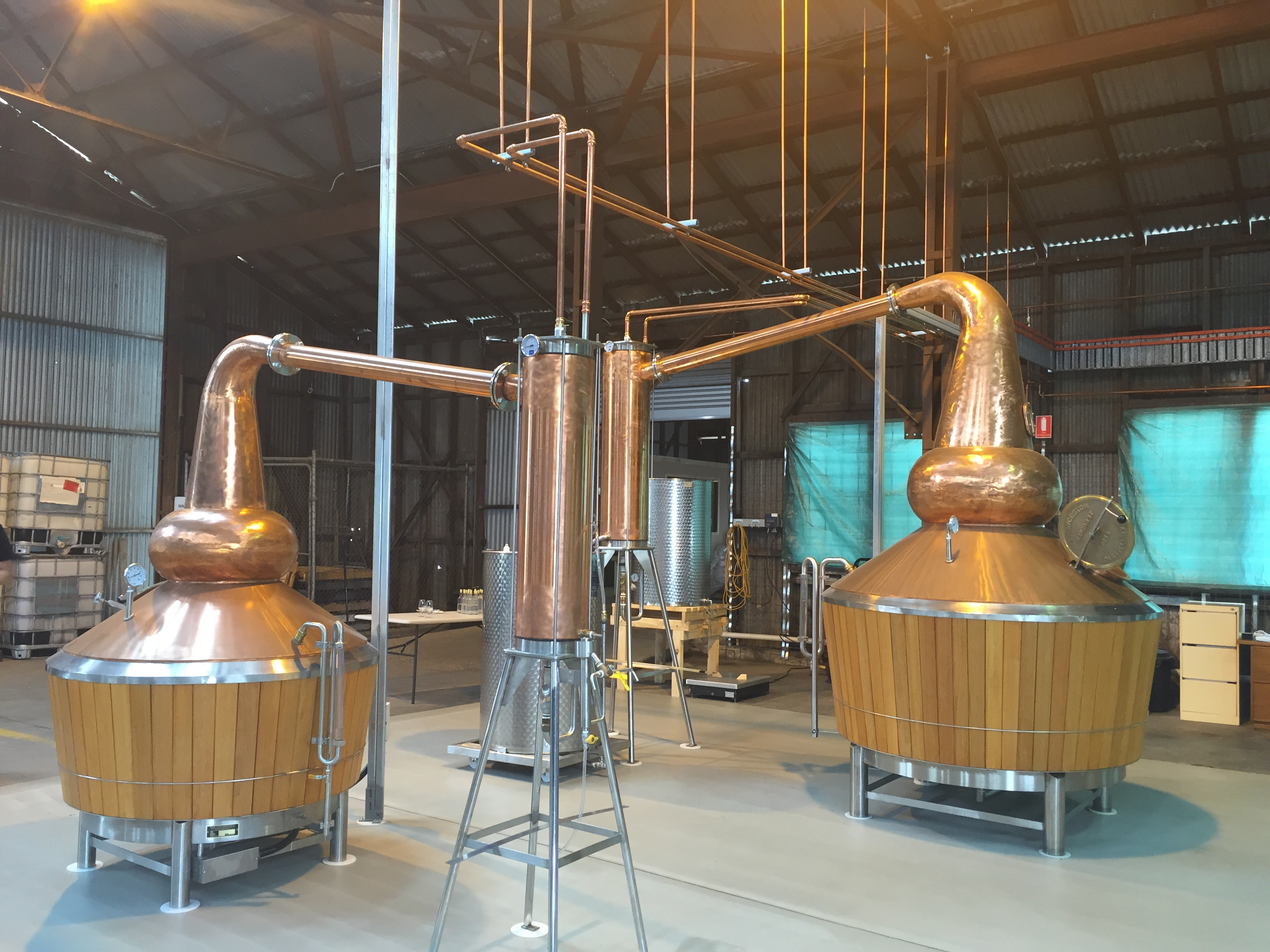
It’s certainly an awe-inspiring sight the first time you enter the great expanse of Hangar 17 at Launceston Airport and behold the gleaming distilling equipment laid out on the floor. It’s certainly not what you’d expect to find in Ansett Airlines’ long-neglected freight facility, until recently a lair for birds and dust. Thankfully the birds have been evicted and the dust laboriously scoured from the exposed metal girders to provide a home for Launceston’s first distillery in 175 years.

On a recent trip to Launceston the Whisky Waffle boys had the great pleasure of meeting Ilya, Peta and Chris, three members of the team, and checking out their state of the art distillery. Their set up is certainly impressive: the stunningly beautiful Tasmanian-built stills stand proudly in the centre of the gigantic room. This is no small-scale operation – you can tell these guys are serious about their whisky-making, in part evidenced by the fact that they have both a wash still and a spirit still, often not the norm for smaller-scale ventures.

Hanagar 17 3

Two stills. Count em!

“We wanted to make a premium product,” said distiller Chris “so after much debate we came to an agreement and decided to take the plunge and build both stills.” Premium is certainly the goal they have set themselves and we think that they are well on their way to achieving it. This was made abundantly clear when we tried their new make – an elegant and dangerously drinkable spirit.

As the team has only recently started filling barrels there was no whisky mature enough for us to try, though we did get to take a ‘flying visit’ through their bond store. Chris had three different casks on a table, an ex-bourbon, an ex-sherry and an ex-port and invited us to have a nose and see if we could guess which was which. We were unanimous about the bourbon but disagreed about the other two, with Nick’s nose reigning supreme on this occasion.

Hanagar 17 2

Two good-looking pieces of equipment. And some stills.

The Launceston Distillery crew are excited about being able to showcase their hometown and promote the northern part of the state. They are looking to capitalise on the success experienced by their southern counterparts and pave the way for a whisky trail in the north. Who knows, perhaps one day there will be a north-south rivalry develop in the whisky industry to mirror the Boags vs Cascade beer-battle.

While the name has yet to be confirmed, Launceston Distillery is looking to make the most of their aviation surroundings and release their whisky under the moniker of Hangar 17. While we’re not sure if our idea of a bar in an old aircraft will come to fruition, their location is definitely advantageous for luring in curious customers. As Peta told us: “1.5 million people pour through the airport every year, so it would be wonderful to capture just a portion of them.”

Hanagar 17 4

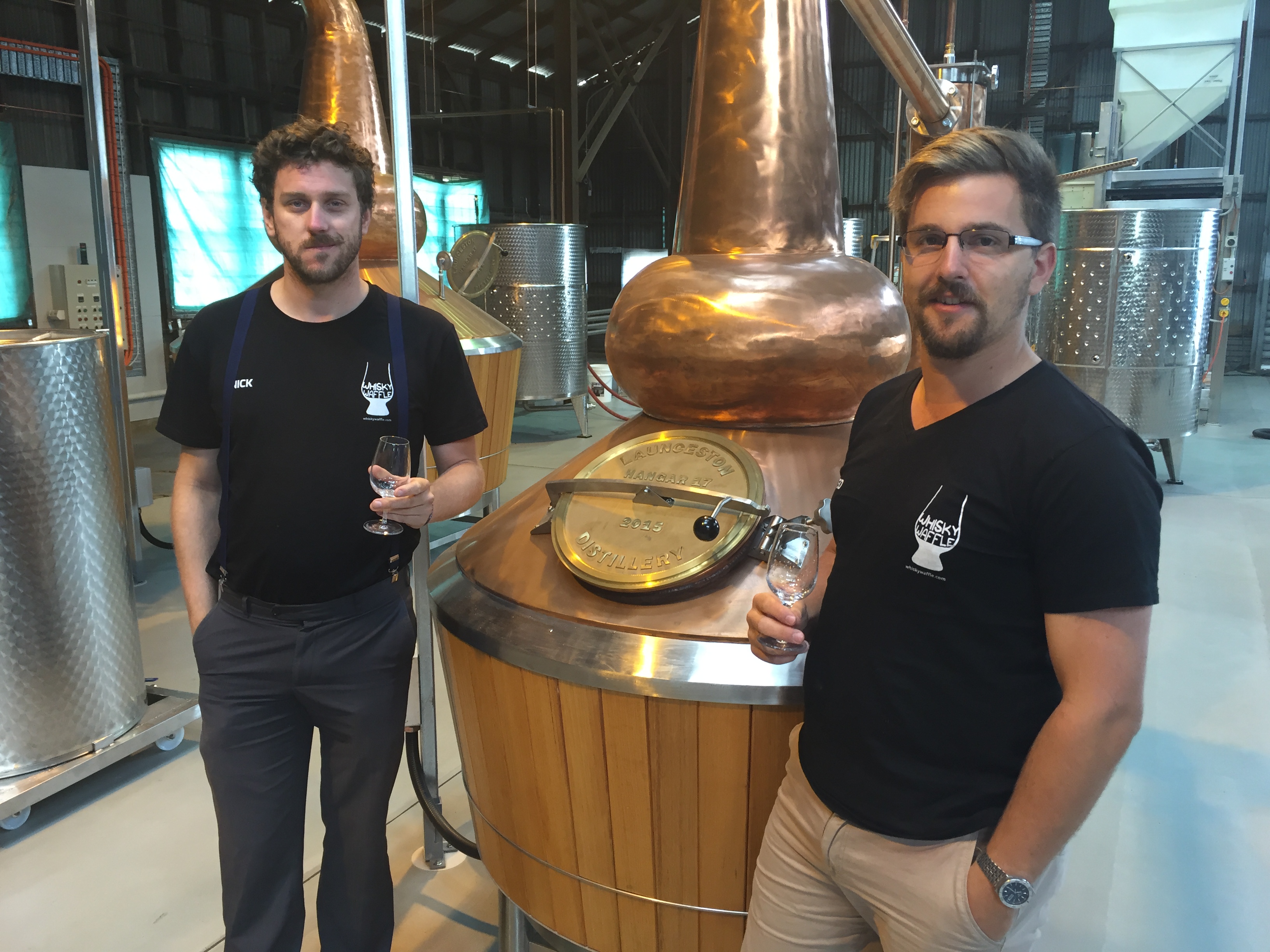
The dream team. Doing it for the North. L-R Chris, Peta, Ilya.

While at the moment the distillery is flying under the radar, and according to Ilya being consciously relaxed about publicity, they are certainly one to keep on the scanner in the future. We at Whisky Waffle are excited to discover the lofty heights they reach and will be booking our ticket when Hangar 17 is ready to lift off.

Find out more about Launceston Distillery at our links page. The distillery is not yet open to the public but appointments can be made to visit.

The Arran Malt Amarone Cask Finish

Reviewed by: Nick

Arran Amarone Cask

Traditionally, the world of Scottish whisky is very – well – traditional. When popping champagne for Ardbeg’s two hundredth year, we somewhat neglected the rather less impressive twentieth birthday of the Arran Distillery. But distilleries are only as good as the products they are currently creating, and there is a lot to like about the bottles presently leaving the Isle of Arran.

As well as a range of age statement whiskies they have a variety of cask finish expressions, and the one I happened to get my grubby little mitts on was finished in Amarone barrels. For the uneducated, which I will freely admit to being one of before buying the bottle, Amarone is a dry Italian red wine made from grapes such as Corvina, Rondinella and Molinara. Yup, me neither.

I’ve had an up and down relationship with wine-matured whiskies, though one aspect I universally love is their amazing colours. The Arran is no exception – this whisky is the coppery orange of traditional creaming soda. The nose is alluring, giving the impression of alcohol soaked fruits eaten at Christmas time. There are cherries and strawberries as well as honey and syrupy cola.

The palate is rich and spicy, aided immensely by the higher bottling strength of 50%. It is delightfully creamy with large dollops of toffee, oranges and Turkish delight. The finish is dry with notes of oak and dark chocolate, and is pleasingly long and warming.

While the Arran Malt does not boast the long history of many distilleries, this should not in any way be held against it. A glorious Scottish past does not always equal quality in the present. Just ask Rangers Football Club.

★★★★

Benromach Sassacaia Wood Finish

Reviewed by: Richard

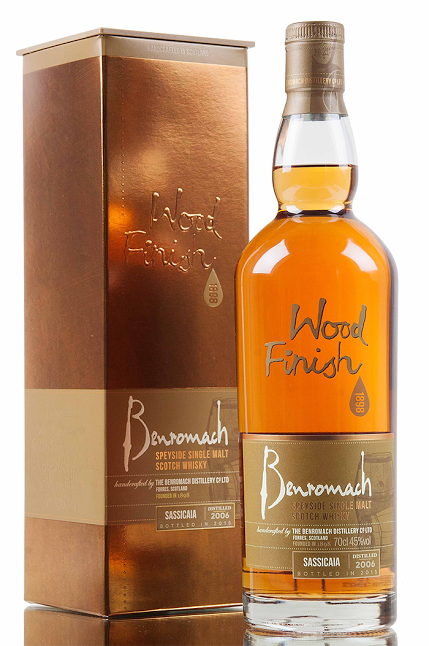
Benromach Sassacaia Wood FinishThis one was recommended to me by a friend who knows my fondness for sweeter whiskies… So first up – a little bit about the distillery:

Benromach is a Speyside distillery founded by Duncan McCallum and F.W. Brickman in 1898 and currently owned and run by Gordon and Macphail of Elgin. It is situated near Forres in Morayshire and is fed with spring water from the Chapelton Springs in the Romach Hills beside Forres.

And now – on with the review:

This has been matured in a Sassacaia barrel, so an introduction to the wood is in order!
Sassicaia is one of the most sought-after Cabernet Sauvignon wines in the world and made history recently, being the first single wine to be granted its own DOC (Denominazione di origine controllata – quality assurance label for Italian food products, especially Italian wine and cheese)
The Sassicaia estate is located at Bolgheri and lies in the Province of Livorno in Tuscany, Italy.

So, shut up, tell us about the whisky…

This is a 2006 distilled expression and bottled this year – there’s an older 2005 release, a 2004 release and a few older bottlings.
All I can find out is that it’s put in an ex bourbon barrel for around 7 years, and then put in a Sassacaia barrel for around 29 months – just over 2 years.
The colour is golden pink! Well lightly pink – if the sun hits it just right…

Nose: It’s got a real soft nose – dry toasted oak, vanilla, fruity, toffee, nutmeg, and that definitive wine note.
The nose is right up my alley – really sweet and bold, but not sickly…
Now to stick it in my mouth!

Palate: Cherries, raspberries & vanilla, spices, subtle smoke, malty toffee, and wine!
The palate is quite dry, which I find a lot with red wine finishes for some reason… tannic influence maybe? I find they make my mouth water a bit…

Finish: A medium-long finish with hints of fruit and another whiff of smoke.

This is a session whisky (if there’s such a thing) for sunny afternoon, sitting under a tree, in the shade, with some olives, sourdough, semidried tomatoes, cheese and some good friends…I’m amazed at the influence the wine has made, the light smoke and the fruit notes. I’ve tried the standard 10yo Benromach, which is one of my favourites – this is better, not by a lot, but still, better, and juicier…
A bloody fine whisky to add to any collection!

★★★

Longrow Cabernet Sauvignon Cask

Reviewed by: Nick

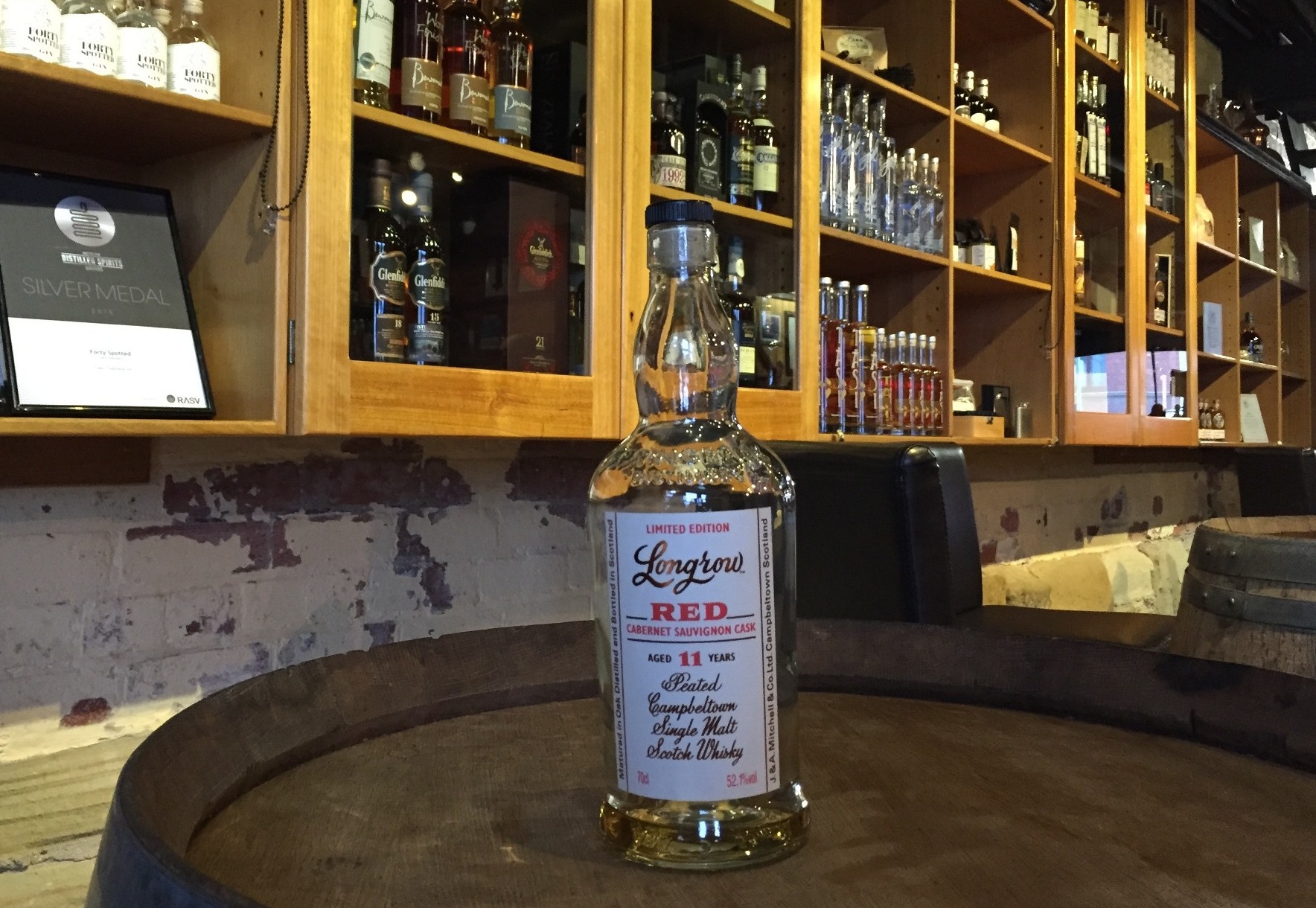
Longrow Cab Sav

As the abundance of sherry barrels diminishes, whisky makers are forced to look elsewhere for maturation options. The obvious solution, of course, is using the barrels of another grape flavoured product – no, not hubba bubba bubblegum – wine. Wine cask maturation is being used by distillers worldwide: some as a novelty but others as a serious addition to their main range.

The wonderful whisky makers of Longrow are no strangers to experimentation. One of their more intriguing bottles is the Cabernet Sauvignon Cask – aged for seven years in refill bourbon hogs heads and a further four years in Cab Sav barrels sourced from my very favourite wine region: South Australia’s McLaren Vale.

Warning: this is not a beginners whisky. Nor is it an easy drinking whisky. Nor, I believe, could I describe it as a ‘nice’ whisky. But it sure is a fascinating one. On the nose I detected, well, heaps. Initially a gentle smoke, reminding you that yes, Longrow do peat their barley. Once the smoke clears notes of grapes, banana and burnt orange rind flow through. Over all, it is complex and delicious.

The palate is a bit of a shock. Initially it is sweet with fizzy sherbet complimenting the peat. The red grapes make a return, along with other fruit such as melons and apricots. And then the spirit transforms. The finish is long, though not necessarily because of the slightly higher percentage of alcohol. It’s a little… soapy? This is a tasting note I (and seemingly I alone) seem to find in many wine-matured whiskies. There are other, nicer elements: smoked ham, salt, fish, bonfire ash, general seaside senses. This whisky is from Campbelltown, after all!

In no way do I regret buying this whisky. There’s a lot to like and a lot to discuss. But I didn’t love it. And that’s ok.

★★

Glen Moray 12 Year Old

Reviewed by: Nick

Glen Moray 12 Year Old

It is quite often the case in the whisky world that what you pay for is what you get. It is usually a safe assumption that a $40 bottle will be inferior to one costing three figures. However, there are so many exceptions to this rule that I begin to wonder why us whisky fanatics spend the money we do.

Case in point is the Glen Moray 12 Year Old, a bottle that first caught my eye when I was a uni student and therefore always on the lookout for an alcoholic bargain. The Glen Moray was, quite simply, the cheapest single malt I could find in Australian bottle shops. However I was quick to discover it held a certain charm that saw it rise above many of the blends I could also afford.

There is no denying that it is a simple dram, bearing all the hallmarks of Speyside. On the nose there are notes of sweet biscuits and honey. Predictably from a whisky matured entirely in bourbon casks, there are also elements of vanilla. The palate is sweet, almost syrupy, with toffee, banana and heathery floral notes. The finish contains more vanilla, spice and Werthers-esque caramel.

The Glen Moray 12 Year Old is never likely to rack up a high score at any whisky awards shows. But in my opinion there’s absolutely nothing wrong with that. It is simply a straightforward and inoffensive whisky that punches above its weight against the larger players.

★★

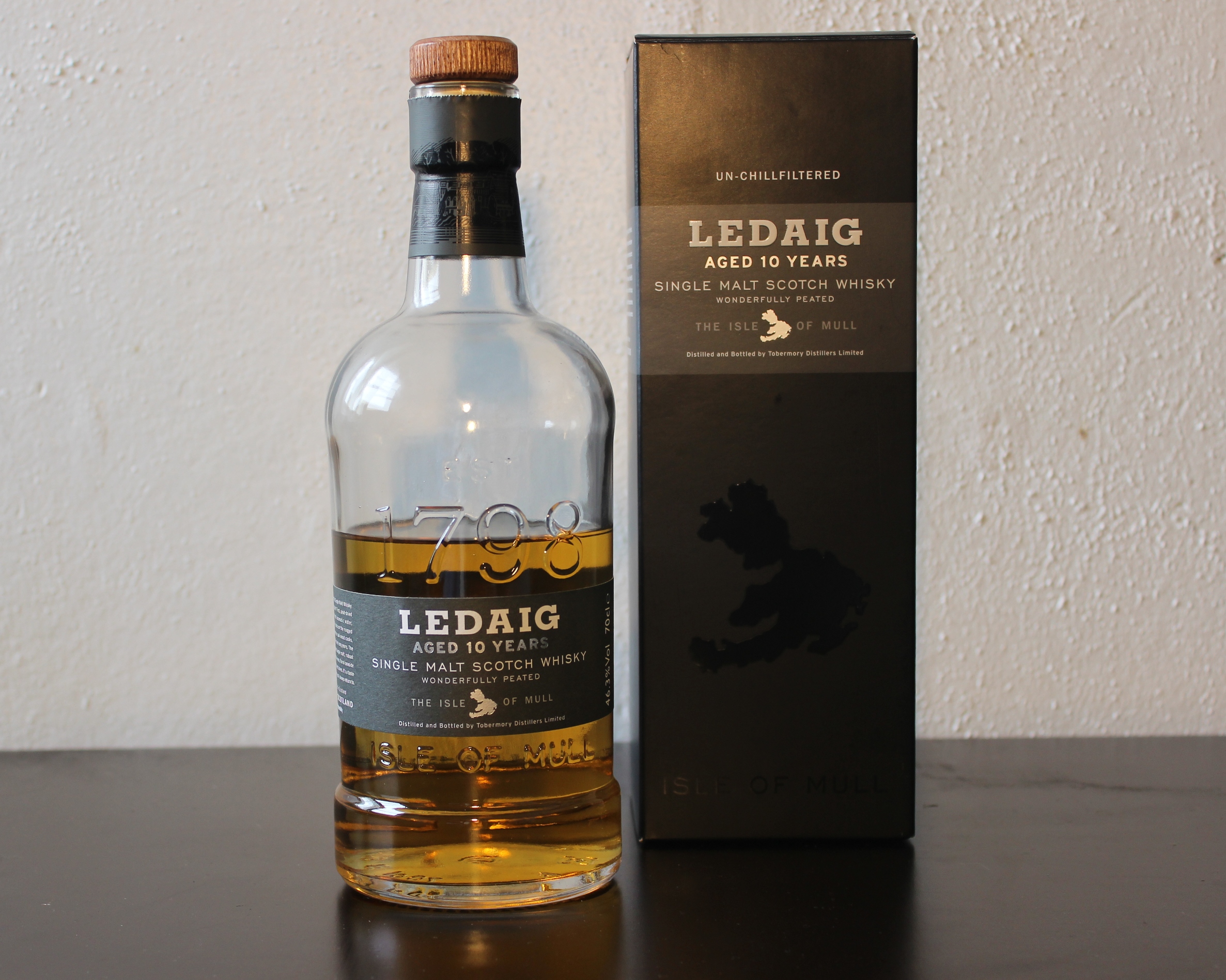
Ledaig 10 year Old

Reviewed by: Ted

Tobermory Ledaig whisky waffle

My Whisky Waffle co-conspirator and bestie Nick was kind enough to give me a bottle of the water of life for my birthday (what else?). We cracked it open that night and had a few cheeky drams. I’ve been mulling it over ever since, a rather appropriate course of action seeing as the bottle in question was a Ledaig 10 year old, which is produced by Tobermory Distillery on the Isle of Mull (Haha! Geddit? Isle of Mu… Why are you all groaning?… Ok, I’m just gonna sit quietly over here).

The Isle of Mull is part of the Scottish whisky zone known as the ‘Islands’, a bunch of distillery inhabited land masses surrounded by water and huddled off the Scottish coast, whose seemingly defining feature is that they aren’t Islay. Impressively, Tobermory Distillery is the chief abode for the islanders (or Mullets as they are known locally), a ramshackle stronghold built from driftwood, shipwrecked fishing boats, kelp and the occasional escaped haggis… Oh, wait, sorry, the distillery is actually named after the main town on the island, Tobermory, and is probably constructed of far more traditional materials (not sure about the Mullet thing either. I hope it’s true).

The Ledaig 10 year old takes its name from the original distillery built on the island in 1798. Contrary to popular belief (i.e. mine), it is not matured in the sporrans of the Mullets, but instead in the far more superior oak barrel. Typical of the drams from that part of the world, the Ledaig is peated, but it is a very different smoke to the Ileach drops (Remember, ‘Islands’ = ‘Not Islay’).

On the nose the Ledaig is dark and intense, with quite a distinctly meaty quality to it. It’s sort of like a combination of smoked ham and marinated meat sizzling over hot coals. That marinade has a great oozing sweetness combined with pepper, sea salt and perhaps… plum?

On the mouth you are hit straight up by a big swirl of smoke, followed by a robust spicyness from the 46.3% alcohol. After that a lovely butterscotchy sweetness slides over the back of the tongue, served up with caramelised pears and another dose of that woody smoke. Surprisingly the Ledaig is much smoother than you may expect from its 10 years, but the combination of the smoke and the higher alcohol means that there’s still heaps of craggy, earthy character to be had. It’s certainly not a beginners drink, and probably requires a bit more practise to enjoy the full effect.

Growing up in the only distillery on a windswept island off the Atlantic coast of Scotland has certainly given the Ledaig a character all of its own. Perhaps some of that black humour it displays comes from the dark waters of the mountain lochs on Mull used in its creation. If you’re looking to give someone a strong, rugged, sexy islander who’s been out fighting fires on mountains in only his kilt for their birthday, then the Ledaig’s your man (I’m sure that’s what Nick was aiming for). There’s no need to mull it over too long.

★★★