review

The Arran Malt Amarone Cask Finish

Reviewed by: Nick

Arran Amarone Cask

Traditionally, the world of Scottish whisky is very – well – traditional. When popping champagne for Ardbeg’s two hundredth year, we somewhat neglected the rather less impressive twentieth birthday of the Arran Distillery. But distilleries are only as good as the products they are currently creating, and there is a lot to like about the bottles presently leaving the Isle of Arran.

As well as a range of age statement whiskies they have a variety of cask finish expressions, and the one I happened to get my grubby little mitts on was finished in Amarone barrels. For the uneducated, which I will freely admit to being one of before buying the bottle, Amarone is a dry Italian red wine made from grapes such as Corvina, Rondinella and Molinara. Yup, me neither.

I’ve had an up and down relationship with wine-matured whiskies, though one aspect I universally love is their amazing colours. The Arran is no exception – this whisky is the coppery orange of traditional creaming soda. The nose is alluring, giving the impression of alcohol soaked fruits eaten at Christmas time. There are cherries and strawberries as well as honey and syrupy cola.

The palate is rich and spicy, aided immensely by the higher bottling strength of 50%. It is delightfully creamy with large dollops of toffee, oranges and Turkish delight. The finish is dry with notes of oak and dark chocolate, and is pleasingly long and warming.

While the Arran Malt does not boast the long history of many distilleries, this should not in any way be held against it. A glorious Scottish past does not always equal quality in the present. Just ask Rangers Football Club.

★★★★

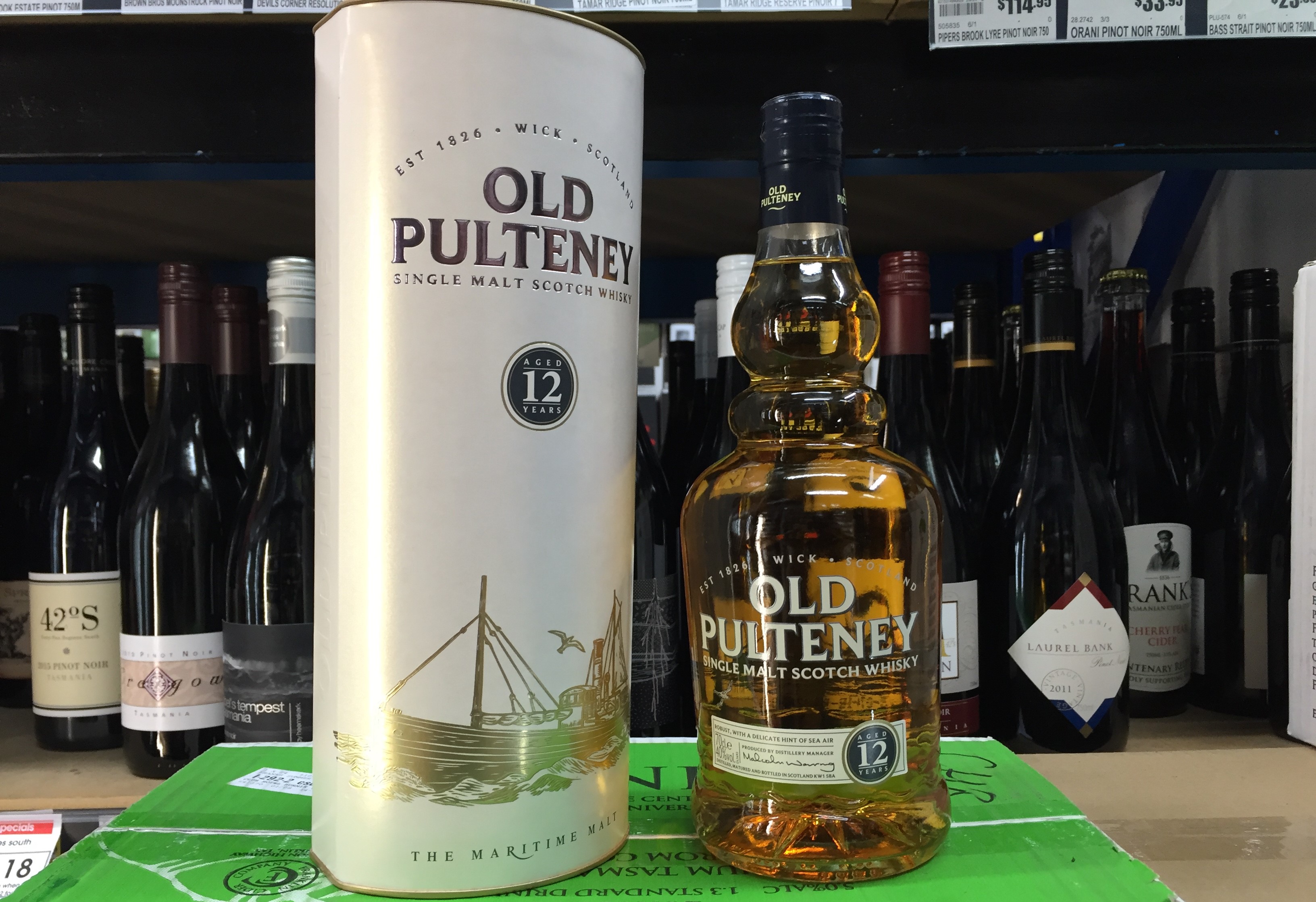
Old Pulteney 12 Year Old

Reviewed by: The Cynical Scot

Old Pultney 12 Year old Whisky Waffle

There are three places in the world where the merest mention of the name can take me back in heart and spirit. The first are the cliffs at Yesnaby on the mainland of Orkney. Here, the crash of the Atlantic is stalled by Earl Thorfinn’s walls and the salty air is scoured into the finest lines of the skin. The second is the Fairy Pools on the Isle of Skye, where I have swum in the ice clear waters and tasted the pure heart of the Cuillins. The third, and the subject of this review, is the bond store at the Old Pulteney distillery in Wick.

I found myself here on an overcast Saturday in 2013. It was the third distillery on a self-guided tour which was to take me around the best parts of Scotland. My true blue Australian friend (who insisted on referring to the drink as ‘OP’) and I didn’t know then that it would be one of only seven distilleries we would visit on that trip. By the time we arrived in Pulteney town, we already had the creeping realisation that most large scale whisky making operations are done along similar lines. Coupled to this, we had satisfied ourselves that whisky makers send their whisky all over the place. Since then we have regularly enjoyed our whisky without feeling the need to visit the place of origin.

The Old Pulteney distillery was built in 1826 in a town built to support the herring trade. With a lack of foresight uncommon in the Scottish, James Henderson’s lads built the roof too low for the still. When the brand new copper pot still arrived, the swan neck kept clanging off the rafters. Without any ado they applied a choice piece of Scottish logic to the problem and sliced off the top of it. Job done, the still was installed, the top sealed and a pipe bunged on the the side creating the unusual appearance you’ll see today. The bulge further down the giant copper kettle also gave them an idea of how to shape their bottles.

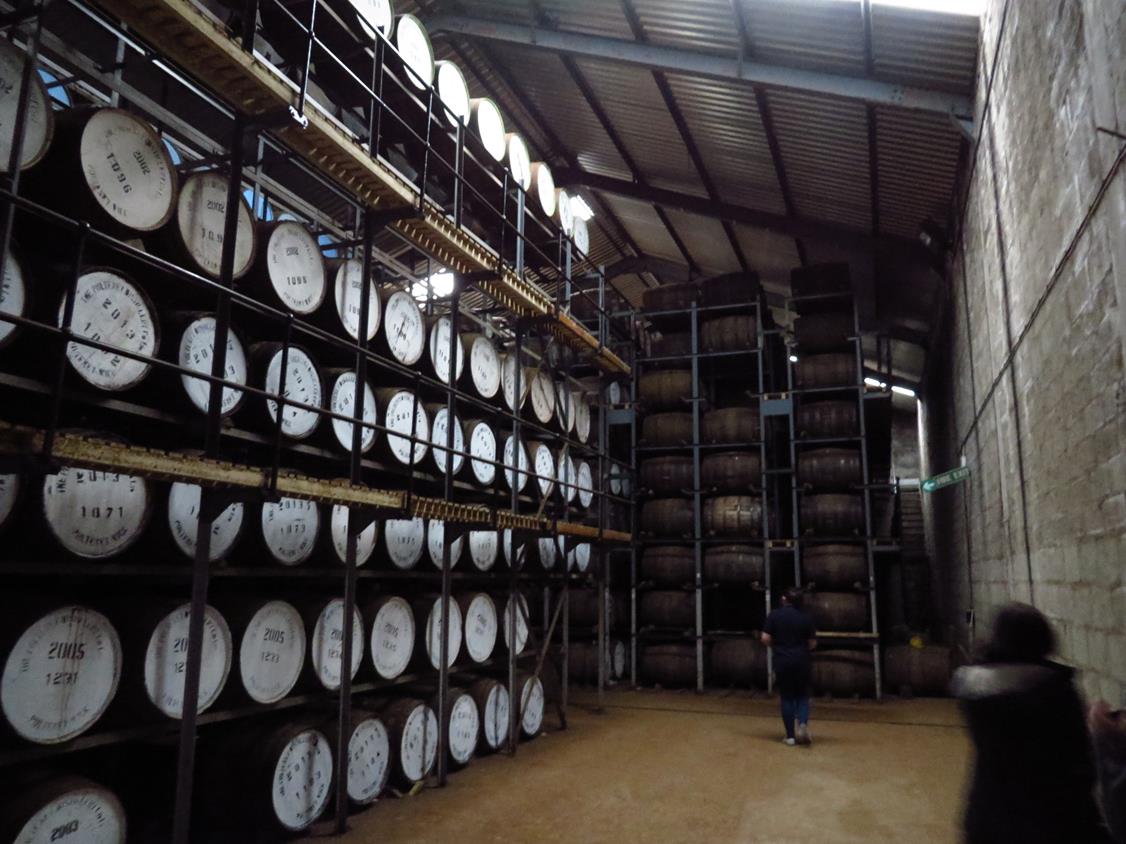
You’ll see all this and more on the tour, proving beyond doubt it is a whisky making process. After you’ve seen the unusual squat stills you’re taken out to the bond store. On the day we visited it started raining at this point. We made a dash towards the barrels, which in my mind were stacked six high (my photographic record shows only four), and the door was shut behind us. While we learned about the maturation process we avoided the tears of the angels and breathed in their share of the whisky; a fine ethereal vapour floating in the salty air. Yes, we all smelt that whisky, we all knew what we were doing and we yes, we all found questions to ask to keep us there longer.

IMG_0689 (Copy)

Old Pulteney has the taste of the sea in it too, they say. I can’t taste things like that, but Wick is not too far away from the places where the mighty Atlantic meets the moody North Sea and that can’t happen without seriously affecting a drink as emotional as whisky. The salt, they said, coats the barrels and works its way through the grain and into the final product. This may very well be the case. Salt for me is something I put on chips and any other food. It’s never been more complicated than that.

As for taste of Old Pulteney 12 year old, it’s a fine single malt, very fine. I find it harsh on the nose, easy on the draw and the burn is frank and satisfying. It has a rich stickling after taste like bronze coins falling over a weir and I’ll always like it because it’s the whisky I drink with my father.

I asked Dad why he drinks this particularly spirit. As a seasoned Famous Grouse drinker, it turned out his discernment was a result of him acquiring a bottle at no cost from an appreciative work colleague. His opinion of ‘Aye, it’s a nice one that’ is fair if not particularly detailed or nuanced. I confidently predict that he will continue to drink this brand so long as it remains at his personal initial price point.

For me it’s not what goes into a bond store it’s what comes out. That day in Wick an amateur whisky drinker went into the bond store. After delaying as long as I could, a happier, more philosophical and more content amateur whisky drinker came out. The OP lads do the same with their whisky. They wait and they wait and after twelve years a fine drink appears. I don’t know what makes this my homely stand-alone bottle of go-to, or why at times, when I can neither get to Yesnaby nor the Fairy pools of Skye, I can have a drop of Old Pulteney 12 year old and be at both at the same time. It’s a mystery I don’t want to think through too much and if I ever need to know, I can just ask my dad. He knows.

★★★★

The Fault in our Stars: an explanation of the whisky waffle rating system

Posted by: Nick and Ted

Waffle Selfie

Nick: Roll the dice, Ted! We need to come up with a score for the Glenfiddich 12!

Depending on what you’re after, whisky rankings can be a help or a hindrance. Some reviewers have highly thought out and complex ratings systems, whereas others tend towards simplistic and arbitrary methods, preferring to spend more time drinking the stuff than doing the maths.

Whisky Waffle fall squarely into the latter category, struggling to count any further than five after a couple of drams. Thus we award any whisky we review a rating of one to five stars. We don’t even bother with half stars, because, after all, that’s just a sneaky way of scoring out of ten isn’t it?

So keeping it simple is all well and good, but what does each score actually mean?

★ One star sounds bad… and that’s because it is. There are very few whiskies with zero redeeming qualities, but every now and then one rears its ugly head. Try it once and then never again.

★★ Two stars is in no way bad. But nor is it good, either. These are perfectly drinkable whiskies that for some reason have disappointed us, or left us underwhelmed. Try it once, and then try it again to be sure.

★★★ Three stars is our most complex category. Everything within this zone is good, however some just creep over the line whereas others are bordering on greatness. To work out which – well, you’ll just have to read the review! We would happily have a dram of one of these any day of the week (twice on Fridays!).

★★★★ Four stars are whiskies both literally and figuratively top shelf. These are the drops that have an x-factor, something that makes them stand out from the pack. They’d be a fine addition to anyone’s collection.

★★★★★ Five stars is probably the most subjective category for us. Obviously they’re all superlative whiskies in their own right, but often they might hold extra significance for us. These are whiskies that make all five stars align in the heavens.

For those who are interested, we created a page listing all our reviews by their score. You can check it out here.


Distilled Not Diluted: a rebuttal from a cynical Scotsman

This article is a response to our article: A Brave New World

Posted by: The Cynical Scot

Cynical Scotsman

So Ted. The big boys are coming to town are they? The fathers of Scotch are looking at the colonials and are coming over to gobble us up?

Come off it!  ‘Big Industry’, ‘sharks circling’, ‘crusty entrenched old world?’ Diageo buying into Starward? A chance to get some big bucks into the Australian whisky industry? You do know that Diageo owns far more distilleries than they care to slap a name on the front of. They have done a very clever job of maintaining the branding and character of individual distilleries as the industry recovered in the ’80s and ’90s. They have reopened distilleries that had been moth-balled after not having a legitimate business case.

Saying Scotch is ‘weighed down by centuries of tradition’ misses not only the importance of the tradition, but also the dynamic changes that have taken the industry to what it is today. This has also created quality recognisable products (have a look in every duty free in every international airport in the world). Whisky is something that if you put a cheap and an expensive dram into plain bottles and labelled them both ‘whisky’ it would be difficult for the layman to differentiate between them. Selling of whisky involves more than just touting a nice tasting beverage. It is the selling of an image, a lifestyle, a legend and sometimes a dream. I don’t buy Diageo whisky, I buy Talisker, Caol Ila, Lagavulin and when I have to, Johnnie Walker.  http://www.diageo.com/en-row/ourbrands/categories/spirits/Pages/Whiskey.aspx

So it seems Australia is selling out. Diageo have bought in, and as a minority shareholder in a single distillery at that. So what?….  What’s in it for them and what’s in it for Starward?

Well, for Diageo they can dip their foot in the water and get a first hand look at the Australian business environment. They can get a taste for a new market and they have a fresh brand to expand and work with.

For the distiller they have the knowhow of a company that has many very successful whisky brands under its belt and certainly knows how to flog the stuff. Having a big producer on board will probably make it easier for them to weather ups and downs in demand. Not only that, an individual distiller with higher production could also better standardize their product. Don’t get me started on ‘vintaged’ releases.

It’s one distillery. It’s a minority share. I don’t think Diageo is going to weaken the idea of Australian whisky, but they may change it in time. They may produce an affordable Australian brand. No more expensive bottles you may ask? Not at all. You’ll still see 500ml bottles priced at over $150. What you will have is diversification into the wider market. Imagine being able to taste something from Bothwell in Tasmania and say ‘Yup, that’s definitely Nant. That’s how it tastes’, and it only costs $85 (or whatever). Well, then you could buy a bottle for a friend. Two years after you tasted the stuff you’d still know what they were getting!

This would be a move in the opposite direction from the Scottish market, which traditionally seems to have existed in the mass-produced signature single malt or blend. More recently there has been a trend for creating a broader high-end range and raiding the history books for thought provoking names (I’m thinking of Highland Park in particular here: http://highlandpark.co.uk/taste/). But that’s how whisky works isn’t it? A single recognisable product becomes the poster boy for the new entrant and the budget conscious enthusiast. Then you have a few fancy, expensive types that allow the distiller to show off the finer points of their art and the consumer to have something extravagant to crack open when Grandpa has his 80th. No bad thing.

But where do you want the growth within the sector to come from? Do you want the Australian industry to grow from the inside as demand rises and production increases to meet it? Or do you want a big boy from out of town to buy it all up and franchise the lot? I would say that one aspect that sets Australian whisky apart is the fact it is a small craft industry. You sell out from that you’re like an IT Startup selling out to Google. Sure you’ve made your money, but did you really care about your product or was it just a means to an end?

So many questions. Fortunately, the Australian distilleries I know of don’t seem to be like this. They’ve been founded by distillers who have often made their money elsewhere and are using that to fund a business in something that matters to them – whisky. And good whisky at that.

So hello Diageo. Welcome to Australia, there’s work to be done but let Australian whisky speak for itself and find its own formula. It already has its own character. I’d hate to think that Australian whisky just became another branch of the Scotch map – Speyside, Lowlands, Highlands, Islay and Australia. If it ever gets to that I’ll find an island somewhere that Diageo hasn’t heard of and start growing some barley. Maybe Bill Lark will already be there.

A Very Waffly Christmas

A very waffly Christmas

And so we reach the end of another year. There have been many drams downed, drunken selfies taken, and outrageous tasting notes invented. But stick around, there is so much more in store for Whisky Waffle! Soon we’ll be revealing the winners of the coveted Waffle Awards for 2015. We are debuting a new guest reviewer: the Cynical Scotsman himself! And we have a new ‘event week’ lined up for 2016. Until then, have a merry as well as a “merry” Christmas. Stay safe and keep on waffling.

Nick and Ted

The Glenlivet 18 Year Old

Reviewed by: Nick

Glenlivet 18

The banks of the river Spey in Scotland’s north east are fertile ground indeed. Nearly half of the country’s distilleries are located in this region which has come to be known, rather appropriately, as ‘Speyside’. Upon my criminally short drive through the area my head continuously moved side to side reading road signs pointing towards yet another famous distillery. It must have looked like I was watching a grand-slam final between Nadal and Djokovic! This abundance of whisky excellence could be found nowhere else on earth.

Speyside whiskies are known for being the smoothest, the richest, and the most elegant drams that Scotland has to offer, a reputation well deserved. Perhaps the best example of a Speyside malt is the Glenlivet 18 Year Old. It is one of the classiest single malts going around – and at a price that practically every other 18 year old whisky cannot come close to.

The whisky’s colour alone is enticing: a golden amber which glints in the sunlight. The nose is better: full of caramel, vanilla and orchard fruits. It is a pleasantly balanced aroma, not favouring one flavour over another. The palate is rich – full of flavour without being heavy. There is honey, oranges and malty biscuits, along with the faintest hint of sherry. The finish is light and not as sweet as the initial flavours suggest, with plenty of oak imparted from its 18 years in barrels.

There are literally thousands of whiskies made within a few miles of the river Spey. But if you were only able to try just one – then you could make a pretty strong case for this one.

★★★★


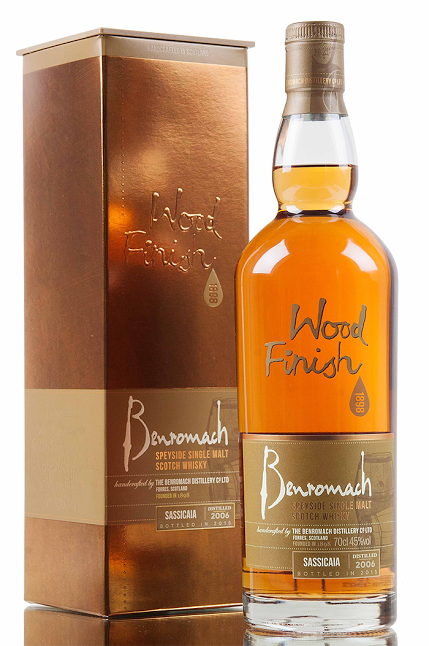
Benromach Sassacaia Wood Finish

Reviewed by: Richard

Benromach Sassacaia Wood FinishThis one was recommended to me by a friend who knows my fondness for sweeter whiskies… So first up – a little bit about the distillery:

Benromach is a Speyside distillery founded by Duncan McCallum and F.W. Brickman in 1898 and currently owned and run by Gordon and Macphail of Elgin. It is situated near Forres in Morayshire and is fed with spring water from the Chapelton Springs in the Romach Hills beside Forres.

And now – on with the review:

This has been matured in a Sassacaia barrel, so an introduction to the wood is in order!
Sassicaia is one of the most sought-after Cabernet Sauvignon wines in the world and made history recently, being the first single wine to be granted its own DOC (Denominazione di origine controllata – quality assurance label for Italian food products, especially Italian wine and cheese)
The Sassicaia estate is located at Bolgheri and lies in the Province of Livorno in Tuscany, Italy.

So, shut up, tell us about the whisky…

This is a 2006 distilled expression and bottled this year – there’s an older 2005 release, a 2004 release and a few older bottlings.
All I can find out is that it’s put in an ex bourbon barrel for around 7 years, and then put in a Sassacaia barrel for around 29 months – just over 2 years.
The colour is golden pink! Well lightly pink – if the sun hits it just right…

Nose: It’s got a real soft nose – dry toasted oak, vanilla, fruity, toffee, nutmeg, and that definitive wine note.
The nose is right up my alley – really sweet and bold, but not sickly…
Now to stick it in my mouth!

Palate: Cherries, raspberries & vanilla, spices, subtle smoke, malty toffee, and wine!
The palate is quite dry, which I find a lot with red wine finishes for some reason… tannic influence maybe? I find they make my mouth water a bit…

Finish: A medium-long finish with hints of fruit and another whiff of smoke.

This is a session whisky (if there’s such a thing) for sunny afternoon, sitting under a tree, in the shade, with some olives, sourdough, semidried tomatoes, cheese and some good friends…I’m amazed at the influence the wine has made, the light smoke and the fruit notes. I’ve tried the standard 10yo Benromach, which is one of my favourites – this is better, not by a lot, but still, better, and juicier…
A bloody fine whisky to add to any collection!

★★★

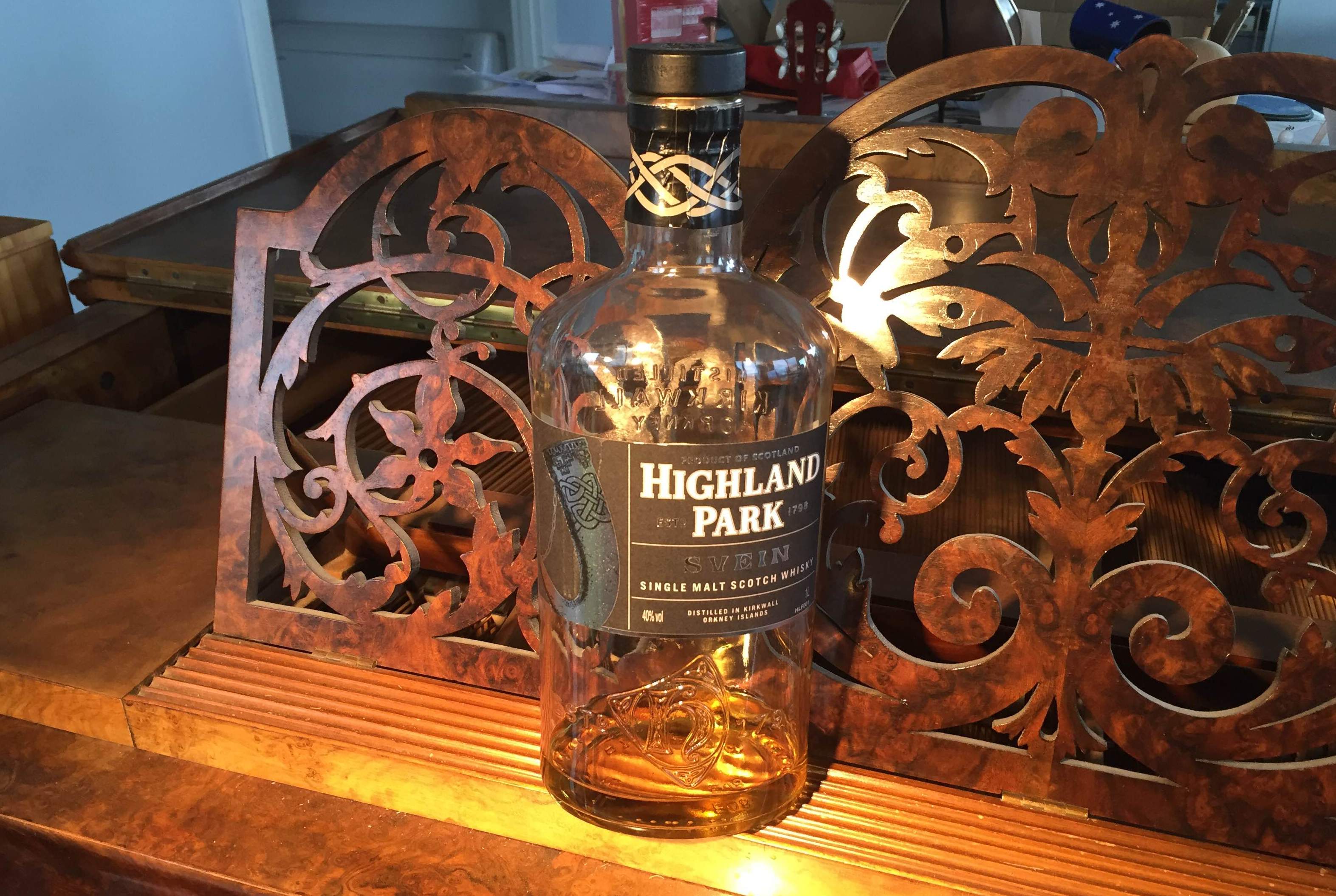
Highland Park Svein

Reviewed by: Nick

Highland Park Svein

Highland Park have one clear advantage when it comes to marketing their whisky: Vikings. Nothing can drum up some interest liked a horned hat on the front of your bottle! Of course, Highland Park can quite rightly look to the Norse raiders when branding their products, as the Orkney Islands where the distillery is located have a proud Viking heritage.

The details of their arrival in the ninth century are told in the Orkneyinga Saga, a historical narrative with more twists and family betrayals than the best soap opera. Among the characters were a series of ‘warriors’ immortalised forever in travel retail by Highland Park.

Svein Asleifsson is the legend behind the entry level of the range – which is perhaps unfair to a man dubbed the ‘Ultimate Viking’. Svein was a charismatic chieftain known for his generous and hospitable nature, and the folk at Highland Park have attempted to create a whisky that mirrors these traits. While I cannot claim this to be exactly the case (it doesn’t pour generous nips of itself into your glass!) it is certainly a very drinkable drop.

While there’s definitely some smoke in there, there’s less on the nose than you’d expect from a Highland Park dram. Instead there are ripe oranges, red apples and plenty of malt. The palate is lightly spicy, with oak, strawberries and… burnt toast? The finish is creamy, malty and slightly bitter. All up, it is a light whisky, threatening to be inconsequential but with just enough to enjoy.

Highland Park have created an interesting series here. While Svein doesn’t stand up when compared to the wonderful 12 Year Old expression, it certainly gives you a greater picture of the flavours captured by the Orcadian Distillery. Sadly I have not got to sample any of the other warriors to broaden my mind!

★★

Iwai

Reviewed by: Ted

Iwai

Japanese culture is intriguingly dichotomous in nature. On one hand you have a proud culture with ancient, beautiful and highly ritualised traditions such as the tea ceremony. On the other hand, as anyone who has had the confusing pleasure of watching a Japanese gameshow can attest, there is a definite kooky streak to the inhabitants of the Land of the Rising Sun.

This duality of nature can also extend to the whisky that the Japanese produce. Shinshu Mars Distillery, located in Nagano Prefecture, was built by the Hombo family in 1985 but was closed in 1992 due to a decline in the local whisky market. It reopened in 2011 and is apparently considered to be well respected in the Japanese market. So far so traditional; it’s the whisky that they produce that’s a bit weird.

Iwai, named after Kiichiro Iwai who designed the stills, is one of the base releases for Shinshu Mars. According to one of the few bits of information written in English on the packaging it is aged in small bourbon casks, which rather confused me when I first opened the box. Instead of the normal pale straw colour that you would expect from a bourbon barrel aged whisky, the Iwai is instead the deep, rich amber colour of a whisky aged in port or sherry casks… Or one that’s had E150 caramel colouring added to spruce it up a bit, which was a thought that crossed my mind until I stumbled across a rather curious nugget of information.

Turns out that mash bill for the Iwai is mostly corn, with malted barley making up the remainder. So for all intents and purposes, the Iwai is essentially a Japanese bourbon! How mad is that!? No wonder the colour is so dark. The flavours also make much more sense when considered in the context of an American whisky rather than the Scottish style that is predominantly produced in Japan.

The nose of the Iwai is dominated by sweet, buttery caramel which hangs fat and low. Underneath sits hints of rose petals, vanilla and almonds, with a touch of salt thrown in at the end. You occasionally hit a bit of a rough edge, but it doesn’t throw things out too much. On the palate the Iwai is thick and oily, with a dull spiciness that crawls over the front of the tongue. Sticky dried fruits, aromatic spices and a grating of fresh ginger stroll casually through the middle, while the finish is gentle and tingly, with a slight apple sign-off.

While the Iwai isn’t the best Japanese whisky you will ever taste, it’s certainly one of the most interesting. There definitely isn’t anything else like it kicking about in Japan (at least that I’ve encountered). To be honest, it’s probably better than quite a few cheap real Bourbons. But then, the Japanese have always been good at taking the ideas of the west, tinkering about with them a bit, and then adding their own quirky spin to make something that is all their own.

★★

Canada takes the Crown Royal of Whisky: Jim Murray’s Whisky Bible 2016

Posted by: Ted

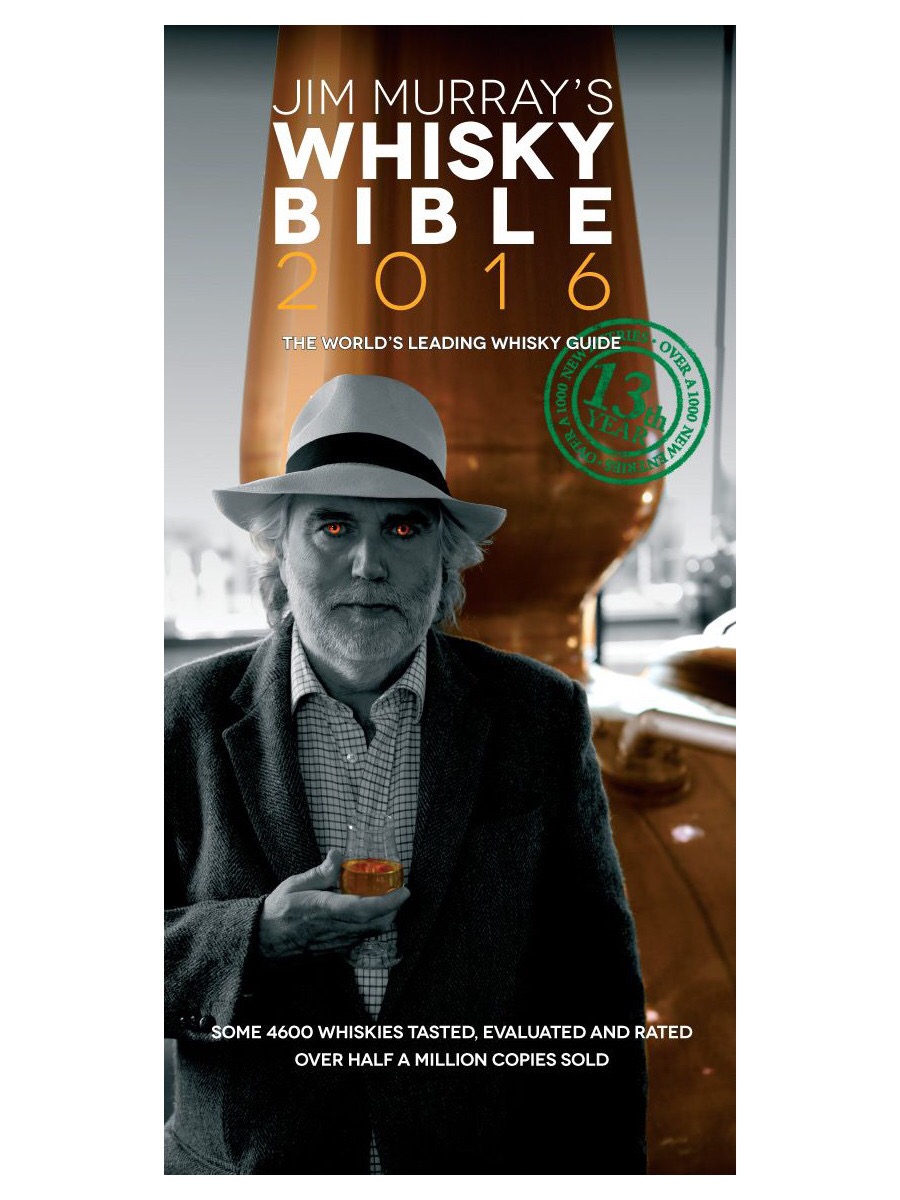
After a year of watching the earth from his secret moon base, built from the old Port Ellen spirit stills (and featuring a mash tun jacuzzi), the golden-eyed whisky-reviewing alien that is Jim Murray has returned to earth, and it seems that he comes bearing a message for Scotland. He must think that they’re a pretty rough, uncouth bunch, as not only has he snubbed them in his top five for a second year running, but he has decreed that the best whisky in the world comes from a country universally famed for its politeness… eh?

Golden eyed whisky alien

That’s right, Canadians rejoice, because according to His Murrayship you are now owners of the best whiskey on the face of the planet. The Crown Royal Northern Harvest Rye scored a cool 97.5/100 on the Murrayometer, the man himself noting that “Rye, that most eloquent of grains… reaches new heights of beauty and complexity.” The win marks the first time that Canada has taken out the top Whisky Bible gong, and already the internet is aflutter about the merits of the winning horse from Crown Royal, owned by global spirits giant Diageo. Even Jim thinks that the choice will raise eyebrows, but hopes that people will be ‘blown away’ by its ‘uncompromising and unique beauty’ when they taste it. Seeing that a nod from Jim tends to cause any available bottles to evaporate immediately afterwards, sampling the Northern Harvest may be no easy feat.
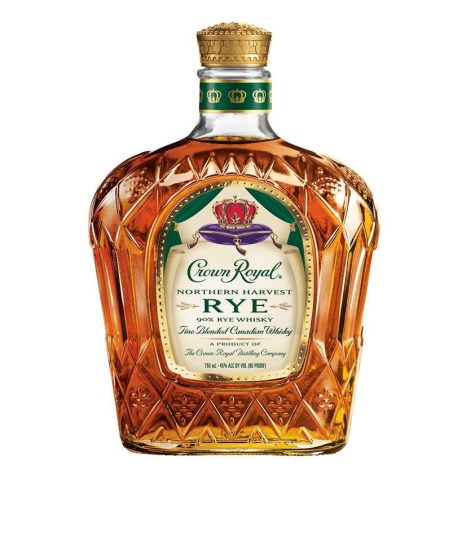
Canada takes the Crown

Once again North America was well represented in the top five, with Maryland distillery Pikesville taking second place with its Straight Rye, while Kentuckian distillery Buffalo Trace returned for a second year running, moseying into fourth place with the 2014 bourbon from its premium William Larue Weller line. Potentially causing yet more angst in Scotland was the bottle standing in third place on the podium, with Irish distillery Midleton claiming success with its cask strength Dair Ghaelach expression. Like Canada, this is the first time an Irish whiskey has found itself swinging from the top of the Whisky Bible tree and shows that modern palates (or at the very least, Jim’s) continue to extend beyond the traditional stronghold of Scotch.

Last year the Big M gave the top spot to Japan’s Yamazaki Sherry Cask 2013, creating ripples in Scotland’s zen, and rocketing the distillery into the limelight. Well, the sun has risen on Japan once again, with Yamazaki’s Mizunara Cask sliding into fifth place. If you want a bottle though, you’ll need to travel to Japan as it is only available on the local market. Whether Whisky Bible hype changes this situation is yet to be seen. Mizunara, the native Japanese oak, has been rising in popularity the last few years, and the Murray effect should help cement its place as a legitimate casking choice.

While absent from the top five, it wasn’t all doom and gloom for Scotland, with the (most definitely expensive) Glenfarclas Family Casks 1957 #2110 not only awarded Scotch Whisky of the Year, but also claiming the overall Single Cask Whisky of the Year. Other notables in the Scotch category include Single Malt of the Year Glen Grant 10yo and Scotch Blend of the Year The Last Drop 50yo (seriously, again, who has that kind of money!?). European Whisky of the Year (Multiple) returned to the English Whisky Co. for their Chapter 16 Peated Sherry Cask, while the (Single) category was awarded to the delightfully named Kornog Taouarc’h Chweec’hved 14BC from the ancient Celtic French region of Breton.

Closer to home (at least for me that is) Australia took the Southern Hemisphere Whisky of the Year crown back from the Kiwis, with Tasmania’s very own Heartwood distillery coming through strong with its Good Convict bottling. Strong is certainly the right word when it comes to Heartwood, with mad genius Tim Duckett mixing up an astounding array of cask strength creations in his laboratory. As Heartwood is an independent bottler, all of its releases are limited; once an expression has sold out it is consigned to the pages of history and fond memory. So if you happen to own a bottle of the 71.3% Good Convict, you are one of a lucky few.

The Convict was definitely Good

Of course, you are always welcome to take any Murrayitic pronouncements with a pinch of salt, but for a roundup of the who’s who of whisk(e)y in a given year the Whisky Bible is hard to beat.

A full run down of the winners can be found here.