Scotland

Distilled Not Diluted: a rebuttal from a cynical Scotsman

This article is a response to our article: A Brave New World

Posted by: The Cynical Scot
Cynical Scotsman

So Ted. The big boys are coming to town are they? The fathers of Scotch are looking at the colonials and are coming over to gobble us up?

Come off it!  ‘Big Industry’, ‘sharks circling’, ‘crusty entrenched old world?’ Diageo buying into Starward? A chance to get some big bucks into the Australian whisky industry? You do know that Diageo owns far more distilleries than they care to slap a name on the front of. They have done a very clever job of maintaining the branding and character of individual distilleries as the industry recovered in the ’80s and ’90s. They have reopened distilleries that had been moth-balled after not having a legitimate business case.

Saying Scotch is ‘weighed down by centuries of tradition’ misses not only the importance of the tradition, but also the dynamic changes that have taken the industry to what it is today. This has also created quality recognisable products (have a look in every duty free in every international airport in the world). Whisky is something that if you put a cheap and an expensive dram into plain bottles and labelled them both ‘whisky’ it would be difficult for the layman to differentiate between them. Selling of whisky involves more than just touting a nice tasting beverage. It is the selling of an image, a lifestyle, a legend and sometimes a dream. I don’t buy Diageo whisky, I buy Talisker, Caol Ila, Lagavulin and when I have to, Johnnie Walker.  http://www.diageo.com/en-row/ourbrands/categories/spirits/Pages/Whiskey.aspx

So it seems Australia is selling out. Diageo have bought in, and as a minority shareholder in a single distillery at that. So what?….  What’s in it for them and what’s in it for Starward?

Well, for Diageo they can dip their foot in the water and get a first hand look at the Australian business environment. They can get a taste for a new market and they have a fresh brand to expand and work with.

For the distiller they have the knowhow of a company that has many very successful whisky brands under its belt and certainly knows how to flog the stuff. Having a big producer on board will probably make it easier for them to weather ups and downs in demand. Not only that, an individual distiller with higher production could also better standardize their product. Don’t get me started on ‘vintaged’ releases.

It’s one distillery. It’s a minority share. I don’t think Diageo is going to weaken the idea of Australian whisky, but they may change it in time. They may produce an affordable Australian brand. No more expensive bottles you may ask? Not at all. You’ll still see 500ml bottles priced at over $150. What you will have is diversification into the wider market. Imagine being able to taste something from Bothwell in Tasmania and say ‘Yup, that’s definitely Nant. That’s how it tastes’, and it only costs $85 (or whatever). Well, then you could buy a bottle for a friend. Two years after you tasted the stuff you’d still know what they were getting!

This would be a move in the opposite direction from the Scottish market, which traditionally seems to have existed in the mass-produced signature single malt or blend. More recently there has been a trend for creating a broader high-end range and raiding the history books for thought provoking names (I’m thinking of Highland Park in particular here: http://highlandpark.co.uk/taste/). But that’s how whisky works isn’t it? A single recognisable product becomes the poster boy for the new entrant and the budget conscious enthusiast. Then you have a few fancy, expensive types that allow the distiller to show off the finer points of their art and the consumer to have something extravagant to crack open when Grandpa has his 80th. No bad thing.

But where do you want the growth within the sector to come from? Do you want the Australian industry to grow from the inside as demand rises and production increases to meet it? Or do you want a big boy from out of town to buy it all up and franchise the lot? I would say that one aspect that sets Australian whisky apart is the fact it is a small craft industry. You sell out from that you’re like an IT Startup selling out to Google. Sure you’ve made your money, but did you really care about your product or was it just a means to an end?

So many questions. Fortunately, the Australian distilleries I know of don’t seem to be like this. They’ve been founded by distillers who have often made their money elsewhere and are using that to fund a business in something that matters to them – whisky. And good whisky at that.

So hello Diageo. Welcome to Australia, there’s work to be done but let Australian whisky speak for itself and find its own formula. It already has its own character. I’d hate to think that Australian whisky just became another branch of the Scotch map – Speyside, Lowlands, Highlands, Islay and Australia. If it ever gets to that I’ll find an island somewhere that Diageo hasn’t heard of and start growing some barley. Maybe Bill Lark will already be there.

A Very Waffly Christmas

A very waffly Christmas

And so we reach the end of another year. There have been many drams downed, drunken selfies taken, and outrageous tasting notes invented. But stick around, there is so much more in store for Whisky Waffle! Soon we’ll be revealing the winners of the coveted Waffle Awards for 2015. We are debuting a new guest reviewer: the Cynical Scotsman himself! And we have a new ‘event week’ lined up for 2016. Until then, have a merry as well as a “merry” Christmas. Stay safe and keep on waffling.

Nick and Ted

A Brave New World: Diageo invest in Australian distillery

Posted by: Ted

The whisky scene in Australia, by its very nature as a young and emerging industry, has hitherto always been gloriously independent. Brave and adventurous souls carving out their own mark in this new frontier of whisky making, men and women free to pursue their own ideologies and dreams. Very different to the crusty, entrenched old world, where the multitudes of distilleries are weighed down by centuries of tradition and the idea of a truly independent producer is hard to come by in the face of hungry multinationals.

Diageo

It was always going to happen you know. Never a doubt. You can bet your bottom dollar that ever since Bill Lark emerged from the Tasmanian Highlands as an enlightened being, the big boys have been keeping a very close eye on developments in the antipodes. If the Australian whisky scene succeeded in its ambitions, and my word it most certainly has, the sharks were always going to be circling ready. There have been a few nibbles here and there over the years, but finally someone has taken a proper bite.

Diageo, global spirits bigwig and owner of globally renown brands such as Johnnie Walker, Smirnoff and Baileys, has decided to take a chance navigating by the southern constellations and bought a minority share in Victoria’s New World Whisky Distillery, makers of Starward whisky. Starward, with excellent releases such as the Apera cask single malt or the quirky ginger beer cask, has been making waves both at home and increasingly overseas, so it is no wonder that Diageo has considered it to be a worthy venture to invest in.

How this moment changes the landscape in Australia is yet to be seen. It is only logical that as the industry increases, the big boys will continue to invest in distilleries they consider to be appropriate extensions of their brand. To be honest this is actually a really good thing for Australia, as it will allow for much greater growth within the sector, solidify the local market, give better extension into new overseas markets and help whisky in this country mature and gain further acceptance as an world class product.

New World visit 5

But… at the same time we have to hope that this evolution doesn’t come at the cost of the attitude and culture that makes Australian whisky unique. It would be sad if that spark was lost through homogenisation and the finance-driven whims of corporate overlords. The whisky produced by Australian distillers is exceptional, a sentiment backed up by a slew of prestigious awards; if the quality of the spirit was diminished through bottom-dollar bean-counting it would be a slap in the face to the ideals of the men and women who have worked hard to bring this industry to life. Then again, even the hardest-boiled rager-against-the-machine has to admit somewhere along the line that these guys seem to have some vague idea about what they’re doing, so hopefully good stewardship and passion for the product will win the day.

Actually, come to think of it, something quite extraordinary may emerge out of all this. As we all know, Diageo’s flagship whisky is the Johnnie Walker, the highest profile blended whisky in the world. If Diageo keep adding Australian cup winners to its stable, who knows, maybe we’ll see the release of a true-blue Aussie blend! Strewth, prepare ya cakehole for the dinky-di Jonno Walkabout “MAAAAATE” travel-exclusive series, featuring the likes of the ‘Bronze Surfie’, the ‘Flamin’ Pink Galah’ and of course, the ‘Blue Bogan’.

The future is here and it’s a Brave New World. Watch this space.

The Glenlivet 18 Year Old

Reviewed by: Nick

Glenlivet 18

The banks of the river Spey in Scotland’s north east are fertile ground indeed. Nearly half of the country’s distilleries are located in this region which has come to be known, rather appropriately, as ‘Speyside’. Upon my criminally short drive through the area my head continuously moved side to side reading road signs pointing towards yet another famous distillery. It must have looked like I was watching a grand-slam final between Nadal and Djokovic! This abundance of whisky excellence could be found nowhere else on earth.

Speyside whiskies are known for being the smoothest, the richest, and the most elegant drams that Scotland has to offer, a reputation well deserved. Perhaps the best example of a Speyside malt is the Glenlivet 18 Year Old. It is one of the classiest single malts going around – and at a price that practically every other 18 year old whisky cannot come close to.

The whisky’s colour alone is enticing: a golden amber which glints in the sunlight. The nose is better: full of caramel, vanilla and orchard fruits. It is a pleasantly balanced aroma, not favouring one flavour over another. The palate is rich – full of flavour without being heavy. There is honey, oranges and malty biscuits, along with the faintest hint of sherry. The finish is light and not as sweet as the initial flavours suggest, with plenty of oak imparted from its 18 years in barrels.

There are literally thousands of whiskies made within a few miles of the river Spey. But if you were only able to try just one – then you could make a pretty strong case for this one.

★★★★


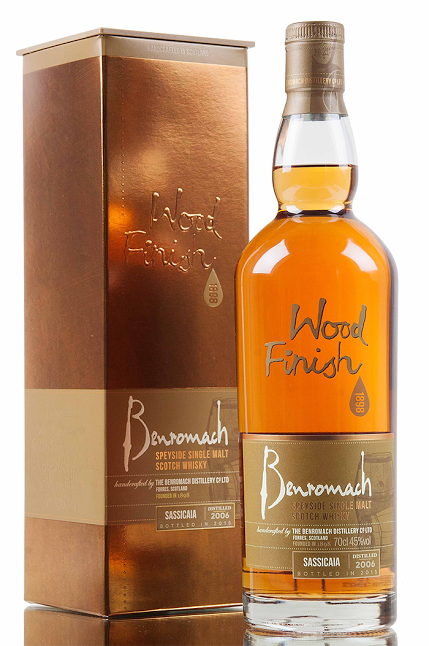
Benromach Sassacaia Wood Finish

Reviewed by: Richard

Benromach Sassacaia Wood FinishThis one was recommended to me by a friend who knows my fondness for sweeter whiskies… So first up – a little bit about the distillery:

Benromach is a Speyside distillery founded by Duncan McCallum and F.W. Brickman in 1898 and currently owned and run by Gordon and Macphail of Elgin. It is situated near Forres in Morayshire and is fed with spring water from the Chapelton Springs in the Romach Hills beside Forres.

And now – on with the review:

This has been matured in a Sassacaia barrel, so an introduction to the wood is in order!
Sassicaia is one of the most sought-after Cabernet Sauvignon wines in the world and made history recently, being the first single wine to be granted its own DOC (Denominazione di origine controllata – quality assurance label for Italian food products, especially Italian wine and cheese)
The Sassicaia estate is located at Bolgheri and lies in the Province of Livorno in Tuscany, Italy.

So, shut up, tell us about the whisky…

This is a 2006 distilled expression and bottled this year – there’s an older 2005 release, a 2004 release and a few older bottlings.
All I can find out is that it’s put in an ex bourbon barrel for around 7 years, and then put in a Sassacaia barrel for around 29 months – just over 2 years.
The colour is golden pink! Well lightly pink – if the sun hits it just right…

Nose: It’s got a real soft nose – dry toasted oak, vanilla, fruity, toffee, nutmeg, and that definitive wine note.
The nose is right up my alley – really sweet and bold, but not sickly…
Now to stick it in my mouth!

Palate: Cherries, raspberries & vanilla, spices, subtle smoke, malty toffee, and wine!
The palate is quite dry, which I find a lot with red wine finishes for some reason… tannic influence maybe? I find they make my mouth water a bit…

Finish: A medium-long finish with hints of fruit and another whiff of smoke.

This is a session whisky (if there’s such a thing) for sunny afternoon, sitting under a tree, in the shade, with some olives, sourdough, semidried tomatoes, cheese and some good friends…I’m amazed at the influence the wine has made, the light smoke and the fruit notes. I’ve tried the standard 10yo Benromach, which is one of my favourites – this is better, not by a lot, but still, better, and juicier…
A bloody fine whisky to add to any collection!

★★★

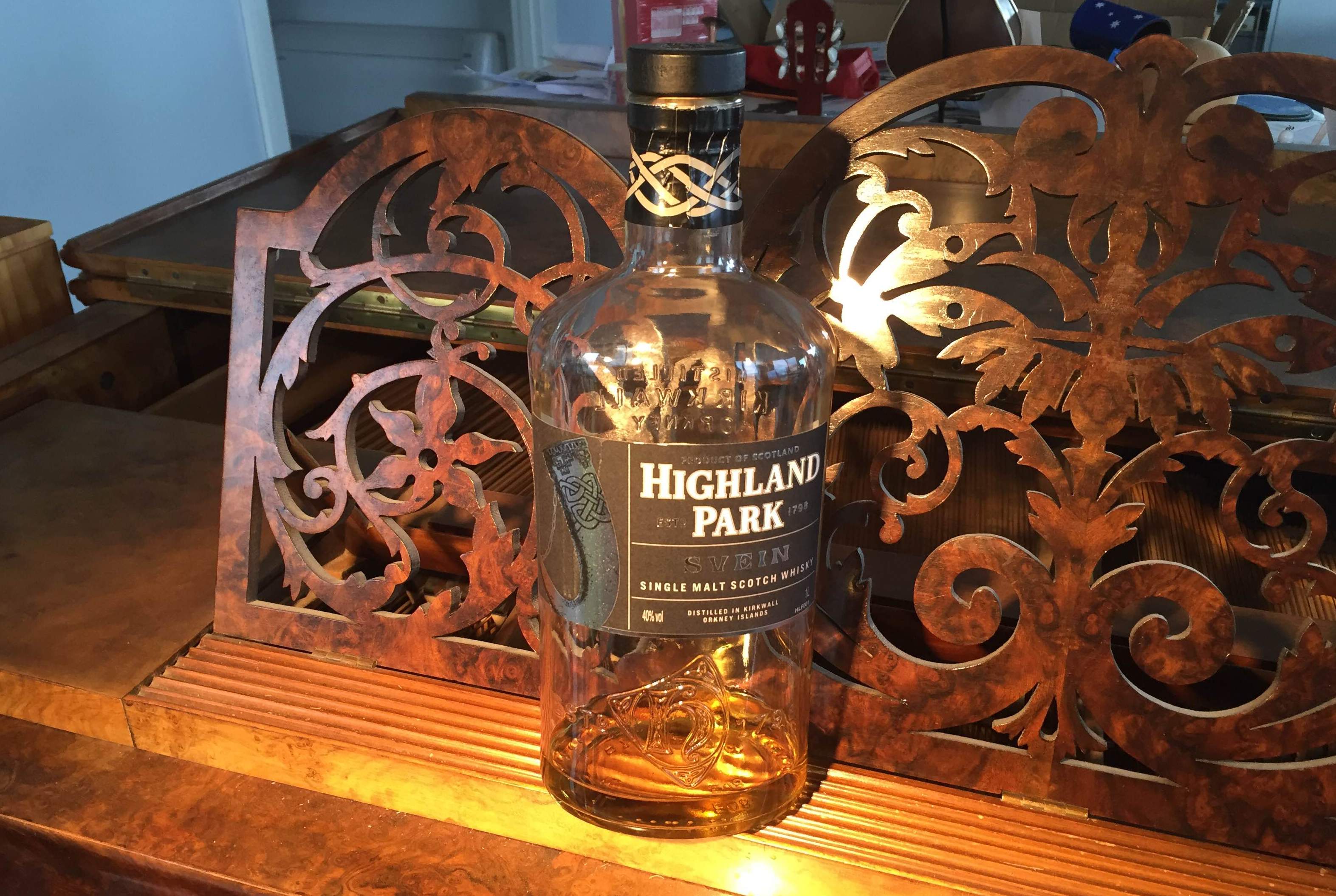
Highland Park Svein

Reviewed by: Nick

Highland Park Svein

Highland Park have one clear advantage when it comes to marketing their whisky: Vikings. Nothing can drum up some interest liked a horned hat on the front of your bottle! Of course, Highland Park can quite rightly look to the Norse raiders when branding their products, as the Orkney Islands where the distillery is located have a proud Viking heritage.

The details of their arrival in the ninth century are told in the Orkneyinga Saga, a historical narrative with more twists and family betrayals than the best soap opera. Among the characters were a series of ‘warriors’ immortalised forever in travel retail by Highland Park.

Svein Asleifsson is the legend behind the entry level of the range – which is perhaps unfair to a man dubbed the ‘Ultimate Viking’. Svein was a charismatic chieftain known for his generous and hospitable nature, and the folk at Highland Park have attempted to create a whisky that mirrors these traits. While I cannot claim this to be exactly the case (it doesn’t pour generous nips of itself into your glass!) it is certainly a very drinkable drop.

While there’s definitely some smoke in there, there’s less on the nose than you’d expect from a Highland Park dram. Instead there are ripe oranges, red apples and plenty of malt. The palate is lightly spicy, with oak, strawberries and… burnt toast? The finish is creamy, malty and slightly bitter. All up, it is a light whisky, threatening to be inconsequential but with just enough to enjoy.

Highland Park have created an interesting series here. While Svein doesn’t stand up when compared to the wonderful 12 Year Old expression, it certainly gives you a greater picture of the flavours captured by the Orcadian Distillery. Sadly I have not got to sample any of the other warriors to broaden my mind!

★★

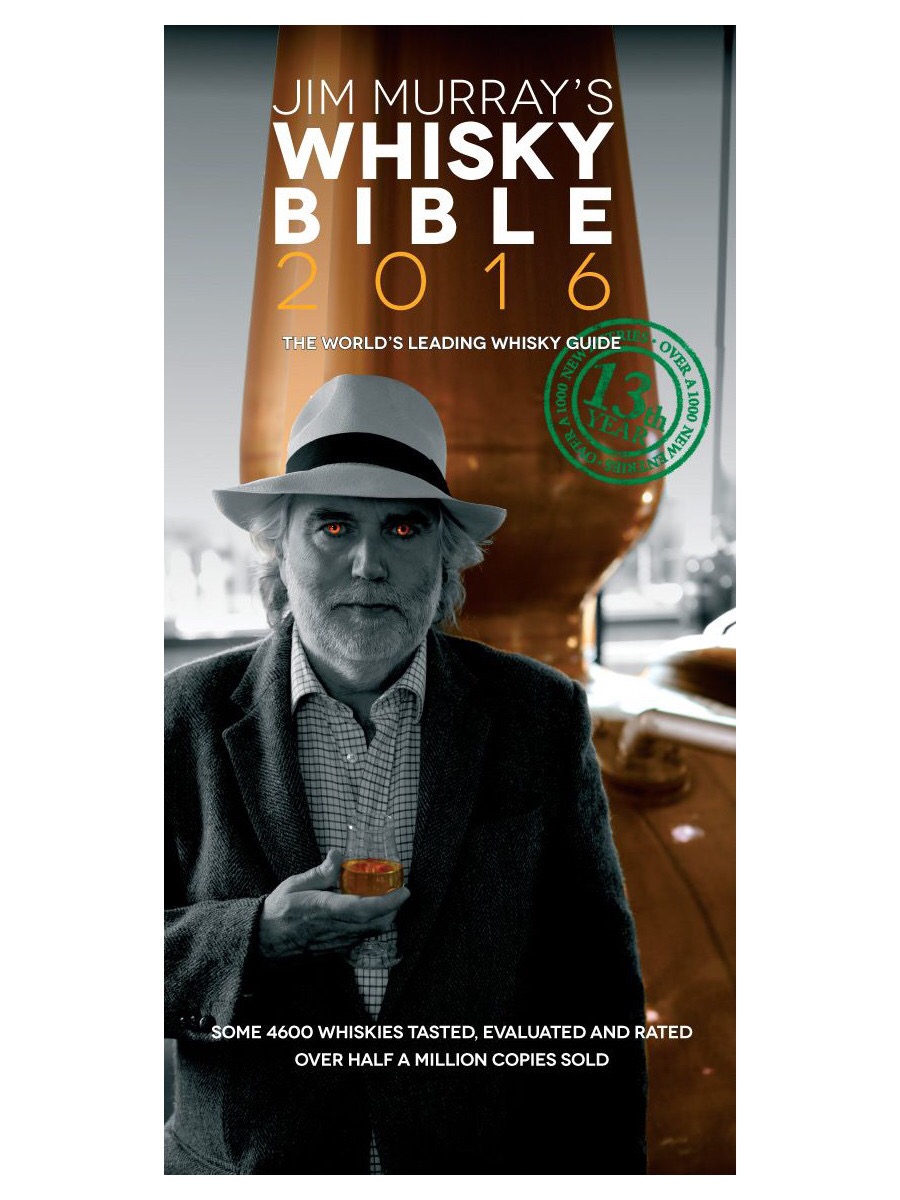
Canada takes the Crown Royal of Whisky: Jim Murray’s Whisky Bible 2016

Posted by: Ted

After a year of watching the earth from his secret moon base, built from the old Port Ellen spirit stills (and featuring a mash tun jacuzzi), the golden-eyed whisky-reviewing alien that is Jim Murray has returned to earth, and it seems that he comes bearing a message for Scotland. He must think that they’re a pretty rough, uncouth bunch, as not only has he snubbed them in his top five for a second year running, but he has decreed that the best whisky in the world comes from a country universally famed for its politeness… eh?

Golden eyed whisky alien

That’s right, Canadians rejoice, because according to His Murrayship you are now owners of the best whiskey on the face of the planet. The Crown Royal Northern Harvest Rye scored a cool 97.5/100 on the Murrayometer, the man himself noting that “Rye, that most eloquent of grains… reaches new heights of beauty and complexity.” The win marks the first time that Canada has taken out the top Whisky Bible gong, and already the internet is aflutter about the merits of the winning horse from Crown Royal, owned by global spirits giant Diageo. Even Jim thinks that the choice will raise eyebrows, but hopes that people will be ‘blown away’ by its ‘uncompromising and unique beauty’ when they taste it. Seeing that a nod from Jim tends to cause any available bottles to evaporate immediately afterwards, sampling the Northern Harvest may be no easy feat.

Canada takes the Crown

Once again North America was well represented in the top five, with Maryland distillery Pikesville taking second place with its Straight Rye, while Kentuckian distillery Buffalo Trace returned for a second year running, moseying into fourth place with the 2014 bourbon from its premium William Larue Weller line. Potentially causing yet more angst in Scotland was the bottle standing in third place on the podium, with Irish distillery Midleton claiming success with its cask strength Dair Ghaelach expression. Like Canada, this is the first time an Irish whiskey has found itself swinging from the top of the Whisky Bible tree and shows that modern palates (or at the very least, Jim’s) continue to extend beyond the traditional stronghold of Scotch.

Last year the Big M gave the top spot to Japan’s Yamazaki Sherry Cask 2013, creating ripples in Scotland’s zen, and rocketing the distillery into the limelight. Well, the sun has risen on Japan once again, with Yamazaki’s Mizunara Cask sliding into fifth place. If you want a bottle though, you’ll need to travel to Japan as it is only available on the local market. Whether Whisky Bible hype changes this situation is yet to be seen. Mizunara, the native Japanese oak, has been rising in popularity the last few years, and the Murray effect should help cement its place as a legitimate casking choice.

While absent from the top five, it wasn’t all doom and gloom for Scotland, with the (most definitely expensive) Glenfarclas Family Casks 1957 #2110 not only awarded Scotch Whisky of the Year, but also claiming the overall Single Cask Whisky of the Year. Other notables in the Scotch category include Single Malt of the Year Glen Grant 10yo and Scotch Blend of the Year The Last Drop 50yo (seriously, again, who has that kind of money!?). European Whisky of the Year (Multiple) returned to the English Whisky Co. for their Chapter 16 Peated Sherry Cask, while the (Single) category was awarded to the delightfully named Kornog Taouarc’h Chweec’hved 14BC from the ancient Celtic French region of Breton.

Closer to home (at least for me that is) Australia took the Southern Hemisphere Whisky of the Year crown back from the Kiwis, with Tasmania’s very own Heartwood distillery coming through strong with its Good Convict bottling. Strong is certainly the right word when it comes to Heartwood, with mad genius Tim Duckett mixing up an astounding array of cask strength creations in his laboratory. As Heartwood is an independent bottler, all of its releases are limited; once an expression has sold out it is consigned to the pages of history and fond memory. So if you happen to own a bottle of the 71.3% Good Convict, you are one of a lucky few.

The Convict was definitely Good

Of course, you are always welcome to take any Murrayitic pronouncements with a pinch of salt, but for a roundup of the who’s who of whisk(e)y in a given year the Whisky Bible is hard to beat.

A full run down of the winners can be found here.

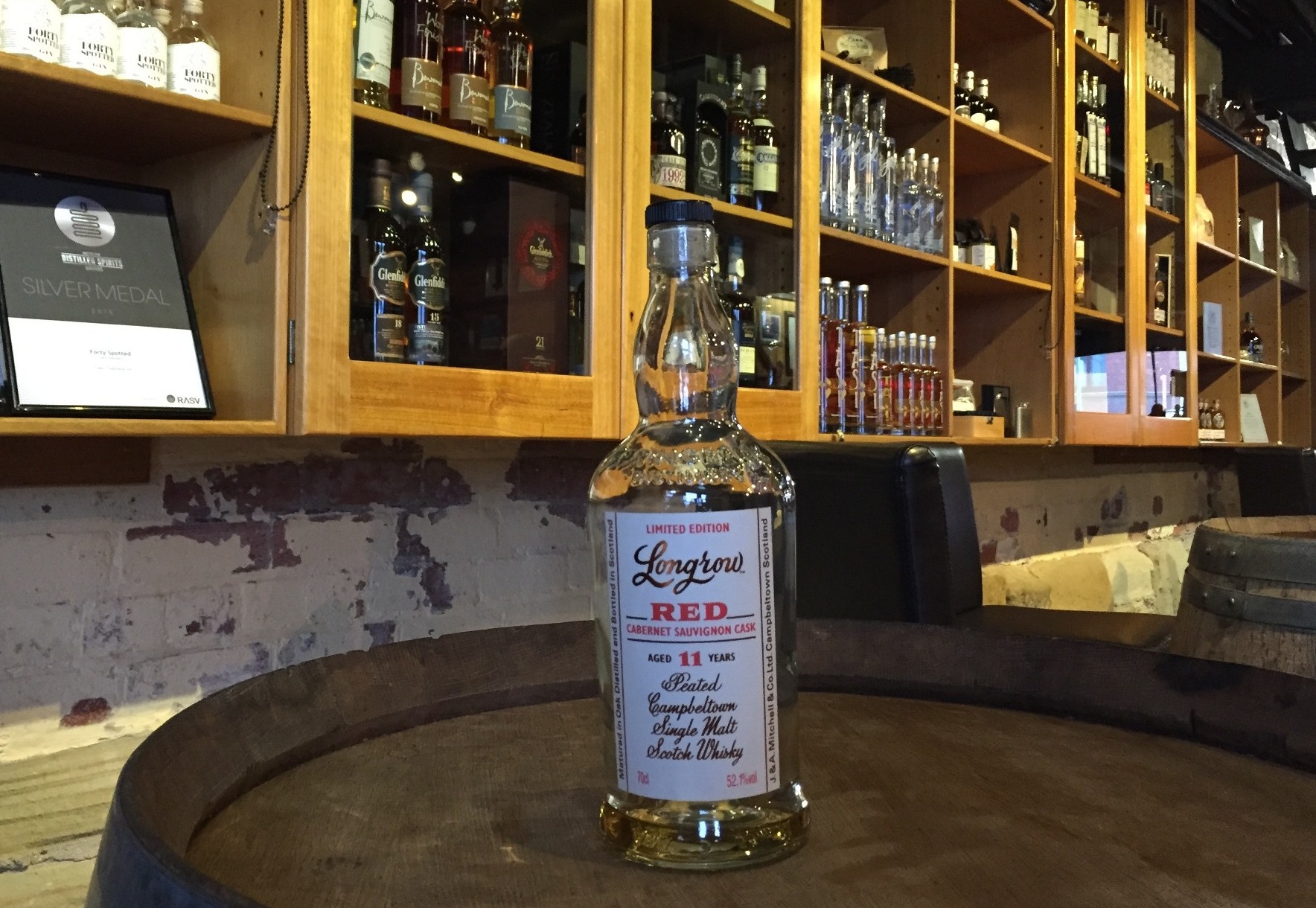
Longrow Cabernet Sauvignon Cask

Reviewed by: Nick

Longrow Cab Sav

As the abundance of sherry barrels diminishes, whisky makers are forced to look elsewhere for maturation options. The obvious solution, of course, is using the barrels of another grape flavoured product – no, not hubba bubba bubblegum – wine. Wine cask maturation is being used by distillers worldwide: some as a novelty but others as a serious addition to their main range.

The wonderful whisky makers of Longrow are no strangers to experimentation. One of their more intriguing bottles is the Cabernet Sauvignon Cask – aged for seven years in refill bourbon hogs heads and a further four years in Cab Sav barrels sourced from my very favourite wine region: South Australia’s McLaren Vale.

Warning: this is not a beginners whisky. Nor is it an easy drinking whisky. Nor, I believe, could I describe it as a ‘nice’ whisky. But it sure is a fascinating one. On the nose I detected, well, heaps. Initially a gentle smoke, reminding you that yes, Longrow do peat their barley. Once the smoke clears notes of grapes, banana and burnt orange rind flow through. Over all, it is complex and delicious.

The palate is a bit of a shock. Initially it is sweet with fizzy sherbet complimenting the peat. The red grapes make a return, along with other fruit such as melons and apricots. And then the spirit transforms. The finish is long, though not necessarily because of the slightly higher percentage of alcohol. It’s a little… soapy? This is a tasting note I (and seemingly I alone) seem to find in many wine-matured whiskies. There are other, nicer elements: smoked ham, salt, fish, bonfire ash, general seaside senses. This whisky is from Campbelltown, after all!

In no way do I regret buying this whisky. There’s a lot to like and a lot to discuss. But I didn’t love it. And that’s ok.

★★

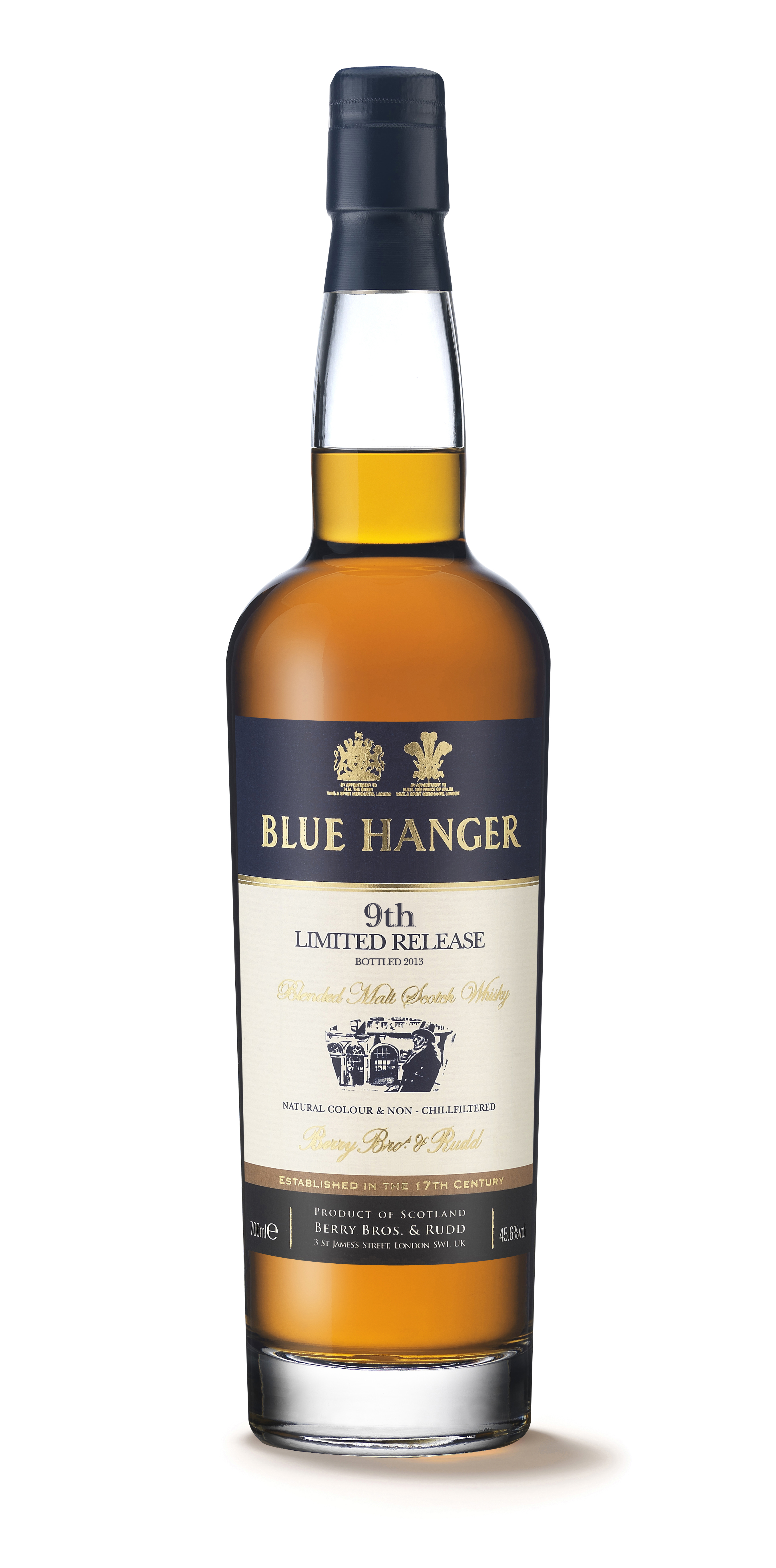
Blue Hanger 9th Release

Reviewed by: Nick and Ted

Blue Hanger 9th ReleaseAs a general rule we Whisky Waffle boys tend to be single malt snobs rather than blend bogans. As easy drinking as a blended Chivas 21yo is, we’d just as soon get to grips with a lively Balvenie 12yo single malt. However, one drop that we were lucky enough to try recently suggests that we just may not be drinking the right blends.

Berry Bros and Rudd, better known for their vintaged Glenrothes range, put out a yearly blended malt release called the Blue Hanger. The bottling is named after Lord William Hanger, who was famous for his habitual striking blue attire (just like the blue Power Ranger. Here’s to you Billy!). The original release was a blend of specially selected casks from the Glenlivet and Glengrant distilleries. Eventually stocks ran out (hence the emergence of the Founders Reserve…) and now in this, the 9th edition, Berry Bros and Rudd have combined (like Megazord) 17yo Clynelish and 18yo Glen Elgin with both 23yo and peated 7yo Bunnahabhain.

With such a pedigree it is no wonder the Blue Hanger claims to be the ‘collectors blended malt’. But is it worth adding to your own collection? Short answer: yes!

But of course, this is Whisky Waffle, and so we will also supply you with a long answer too. The nose is light and fruity, and we were able to find strawberry jam, dried apples, quince paste, cured meats and Chardonnay wine. It’s essentially happy hour in a bottle.

The taste is light but flavoursome. Under-ripe cherries, sherry and cola (NB: just a tasting note. No actual cola was brought anywhere near this baby. We’re not monsters you know) combine to sweetly dance across the tongue, followed by a gentle waft of cigar smoke. The finish is long, with the peat smoke slightly more prominent, and hints of pepper, burnt wood and gooey toffee apple.

If you served this to us blind (as in blindfolded, not blind drunk), we would be unlikely to pick it as a blend. The high quality aged single malt elements that make up the Blue Hanger work together with delicacy and harmony to make a very enjoyable dram; the smoky, salty Bunnahabhain giving depth to the high notes of the Clynelish and Glen Elgin. If you tend to think that blends are beneath you, then like us, you’ve probably just been drinking the wrong ones.

★★★★

Linkwood 20 Year Old Côte-Rôtie Finish

Reviewed by: Mooresy

Linkwood Cote Rotie

There are a lot of distilleries out there many people have never tried because all their wonderful product is being snapped up by the blenders. This is a remnant of a bygone era where single malt – especially single cask – was rough and dirty. Blenders swooped in to save the day by watering down the volatiles and mixing young and mature scotches together to smooth it all out. However single malt and single cask only taste bad if the distiller doesn’t know or care about what is going into the bottles at the end of the process. If it’s all about getting drunk, why would anyone go the extra distance for a fine product.

Fortunately, people are changing and the market is changing. Single malt is here to stay, and single cask releases are the bastion of exclusivity and discernibility. This has allowed some of the bigger whisky families to experiment every now and again with small amounts of their product and sometimes that creates a pretty special drop. The Linkwood Côte-Rôtie fits this bill for two reasons. First, it is a distillery owned by the global secret council of big whisky owners and is predominantly used in blends, including as a nice addition to Johnnie Walker’s vatted malt, which means there are specific flavours that are not usually separated and given their own podium. Second, it has been bottled independently by Gordon & MacPhail, so the final product has been selected by people whose primary expertise with whisky is casks and maturation. There is going to be something unique coming from that combination.

This one has also been finished in a very specific type of red wine cask giving it a rich and fruity smell with something very special coming from the grape influence. There are caramels and sugary honey but dominated by the smell of wine and vine mixed in with the actual wood itself, which I assume is European Oak unless the spice of the fruit is engaged in deception and subterfuge.

On drinking this whisky for the first time I thought this will be the one I tell everyone to try. And while I still will tell everyone to try it, on reflection I’m sure it’s not for everyone. Which brings me nicely to the point regarding the cask. The more whisky someone drinks, one of two things happens; either the person will get closer and closer to deciding the one whisky they want to drink at the expense of all the others – what I like to call “the wrong thing” – or they get more and more adventurous and inquisitive about different types and flavours. A batch of a well-known favourite finished in an unusual cask is a great way to see how important aging really is.

This one has spent two and a half years in its finishing cask, which is quite a long time in absolute terms. It is also well matured in general and you would expect a higher level of wood as a result. On the palate, the Côte-Rôtie has a lot of wood. I think that’s a good thing and that it really works for this particular drop. Those who like the simpler and sweeter whiskies will probably think this one has too much tannin, which is often the result of red wine finishes and long oak maturations. Surprisingly though it has not lost some of that underlying sweet complexity. The honey and caramel transfers through with some tart apple and cinnamon/nutmeg in the background.

A vino bomb is not for the immovable whisky drinker who has found the one flavour they want and doesn’t like anything else but, for the intrepid explorer who wants to backpack through the Rhone Valley and pop the bung on a nice red every couple of hours, sit back and quaff with a woody wonder.

★★★★