Author: Whisky Waffle

Two lads from North West Tasmania who drink way too much whisky and then use way too many words talking about it.

Landing at Launceston Distillery

Posted by: Nick and Ted

Hanagar 17 1

A great place to hang(ar) out

It’s certainly an awe-inspiring sight the first time you enter the great expanse of Hangar 17 at Launceston Airport and behold the gleaming distilling equipment laid out on the floor. It’s certainly not what you’d expect to find in Ansett Airlines’ long-neglected freight facility, until recently a lair for birds and dust. Thankfully the birds have been evicted and the dust laboriously scoured from the exposed metal girders to provide a home for Launceston’s first distillery in 175 years.

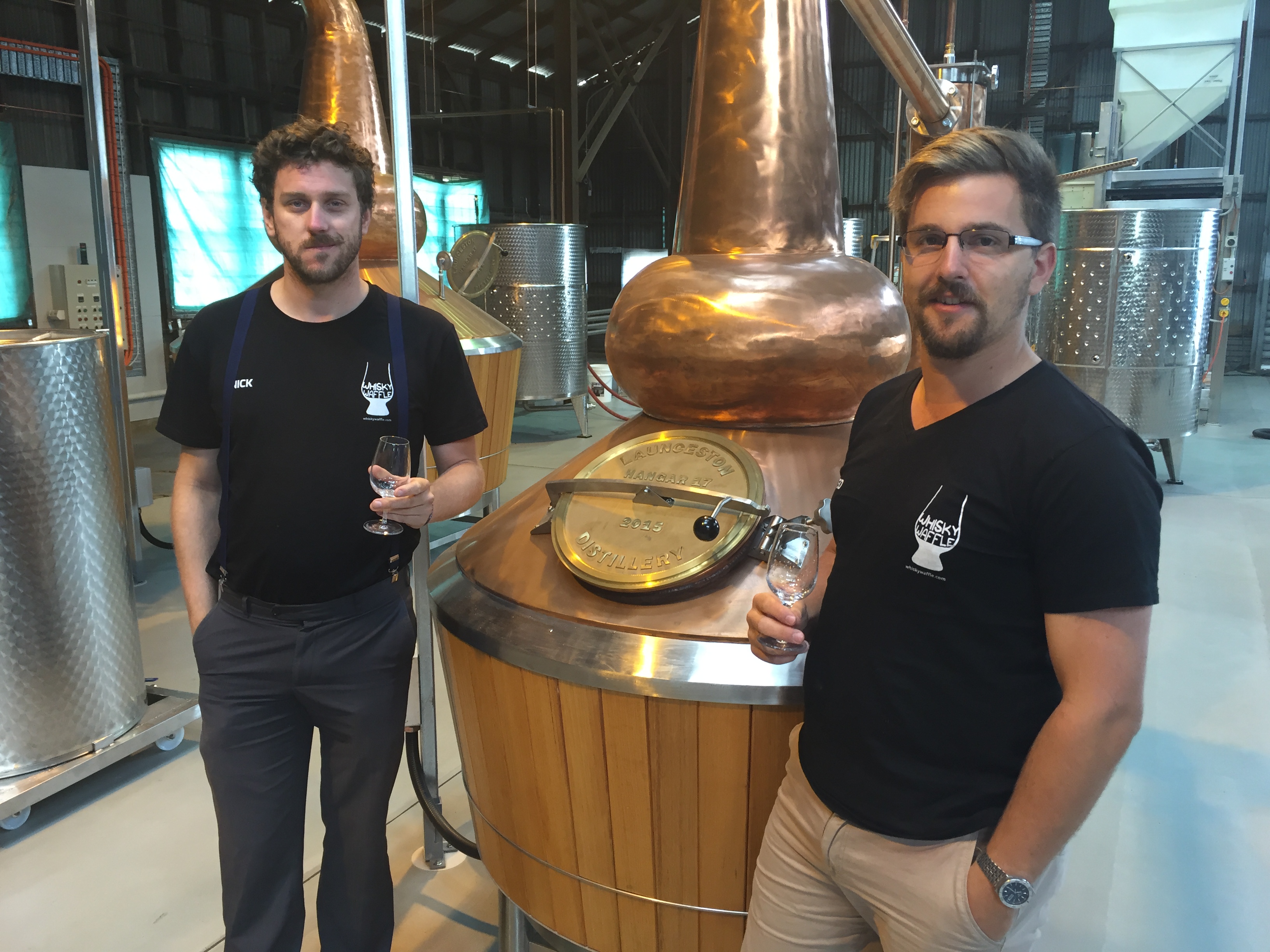
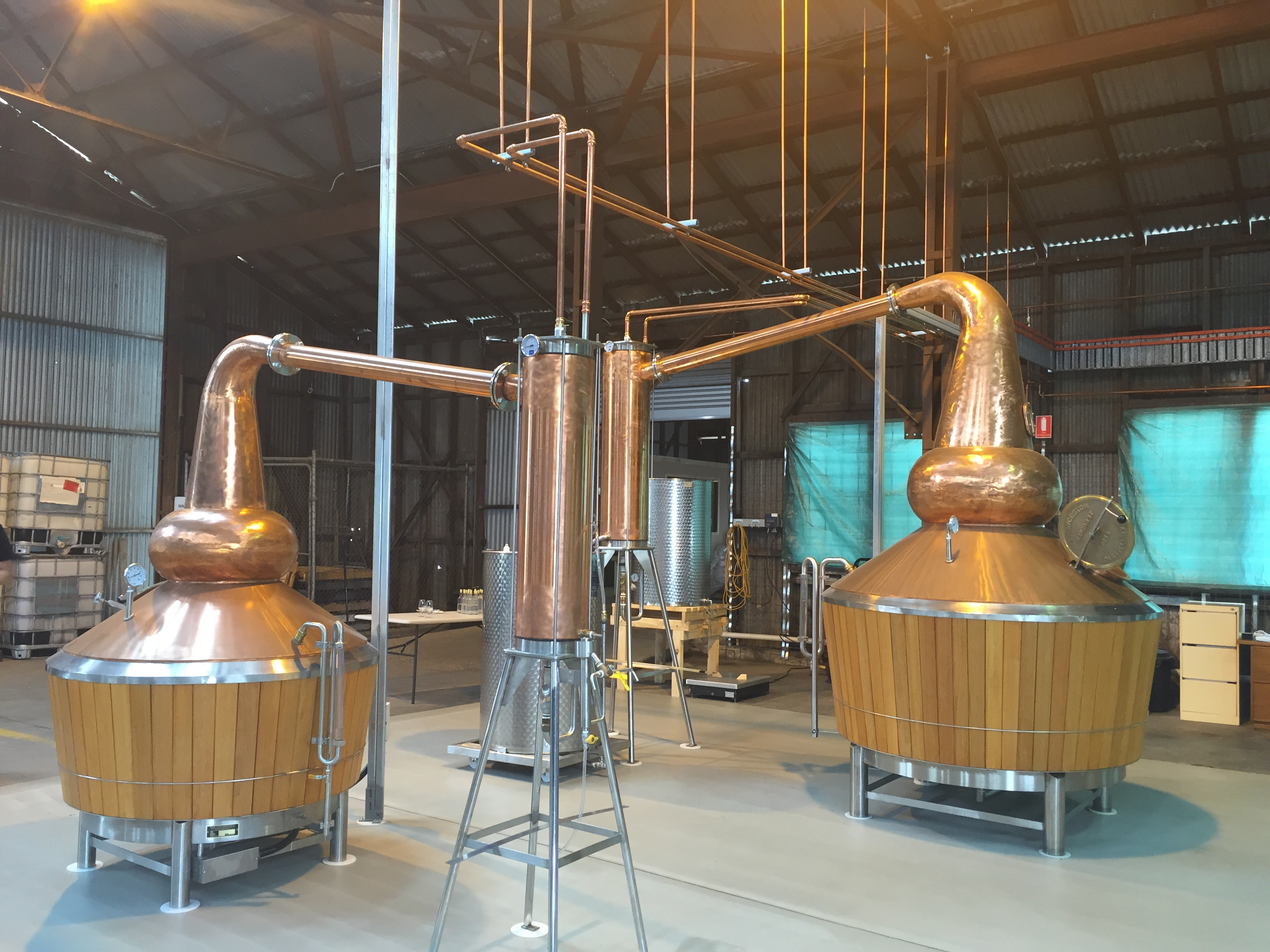
On a recent trip to Launceston the Whisky Waffle boys had the great pleasure of meeting Ilya, Peta and Chris, three members of the team, and checking out their state of the art distillery. Their set up is certainly impressive: the stunningly beautiful Tasmanian-built stills stand proudly in the centre of the gigantic room. This is no small-scale operation – you can tell these guys are serious about their whisky-making, in part evidenced by the fact that they have both a wash still and a spirit still, often not the norm for smaller-scale ventures.

Hanagar 17 3

Two stills. Count em!

“We wanted to make a premium product,” said distiller Chris “so after much debate we came to an agreement and decided to take the plunge and build both stills.” Premium is certainly the goal they have set themselves and we think that they are well on their way to achieving it. This was made abundantly clear when we tried their new make – an elegant and dangerously drinkable spirit.

As the team has only recently started filling barrels there was no whisky mature enough for us to try, though we did get to take a ‘flying visit’ through their bond store. Chris had three different casks on a table, an ex-bourbon, an ex-sherry and an ex-port and invited us to have a nose and see if we could guess which was which. We were unanimous about the bourbon but disagreed about the other two, with Nick’s nose reigning supreme on this occasion.

Hanagar 17 2

Two good-looking pieces of equipment. And some stills.

The Launceston Distillery crew are excited about being able to showcase their hometown and promote the northern part of the state. They are looking to capitalise on the success experienced by their southern counterparts and pave the way for a whisky trail in the north. Who knows, perhaps one day there will be a north-south rivalry develop in the whisky industry to mirror the Boags vs Cascade beer-battle.

While the name has yet to be confirmed, Launceston Distillery is looking to make the most of their aviation surroundings and release their whisky under the moniker of Hangar 17. While we’re not sure if our idea of a bar in an old aircraft will come to fruition, their location is definitely advantageous for luring in curious customers. As Peta told us: “1.5 million people pour through the airport every year, so it would be wonderful to capture just a portion of them.”

Hanagar 17 4

The dream team. Doing it for the North. L-R Chris, Peta, Ilya.

While at the moment the distillery is flying under the radar, and according to Ilya being consciously relaxed about publicity, they are certainly one to keep on the scanner in the future. We at Whisky Waffle are excited to discover the lofty heights they reach and will be booking our ticket when Hangar 17 is ready to lift off.

Find out more about Launceston Distillery at our links page. The distillery is not yet open to the public but appointments can be made to visit.

Great Outback Rare Old Australian Single Malt

Reviewed by: Mooresy

Great Outback Rare Old

This is weird story worthy of a waffle. Australian whisky has a generally agreed history, the modern chapter of which begins in the 1980s with the Lark family overturning a century and a half of legislative prohibition on distilling in Tasmania. This led to a resurgence of distillers and, as a very appropriate homage to whisky’s very beginnings, some people who had no doubt been fooling around as bootleggers went legitimate. The Great Outback Rare Old Australian Single Malt – a mouthful of descriptors, almost as if someone took all the best buzzwords that make whisky seem exclusive and put them all into the name – is a mystery in that history.

From what I can gather from my Poirot-esque deductions is that it was distilled somewhere between 1960 and 1985, that it is either from a now forgotten Tasmanian still (the bottle indicates it was produced at the Tasman Distillery, which no-one can find) or a Western Australian still pretending to be Tasmanian, and that it is pretty rare. Some rumours include that it is the reject stock of the closed Corio Distillery or that it is not Australian and was just labelled that way to hide an origin that would have been less palatable. It is a confirmed fact, however, that this single malt has a blended variety that can still be found so maybe these rumours of reject stock and foreign distillation are accurate for the blended version.

Something that is more than rumour is that this whisky is actually very good. With a label that looks like a knock-off product sold by some people who’ve refilled an empty bottle with some water and caramel colour, it is about as far from that as you can imagine. The colour is a nice pale gold suggesting there is a straight bourbon cask maturation and on the nose I think that is correct but there is also a vivid complexity I was not expecting. It’s fresh and grassy, with a little toffee and vanilla, but also a lovely tropical fruit and pineapple citrus alongside an orange smell that is actually reminiscent of Lark. Not only that, but there are some interesting botanicals with fresh thyme and something peppery thrown into the mix.

The other brilliant thing about it, which transfers over to the palate, is it is devoid of the ethanol kick that can permeate and drown out the subtleties. The relatively low alcohol content helps this, but it is also just a very clean and crisp spirit. There is certainly some tropical fruit – brilliant passion fruit – and the malty vanilla really comes out to balance against the toasted oak flavours. It is unsurprising that it is not peated, as this was presumably created before peat bogs were officially uncovered in Tasmania or peated barley was imported. Or before peat even existed anywhere in the world, who knows.

This is not a whisky for people who are looking for a heavy hitter, a peaty belter, or an oak punch. It is certainly not for anyone who wants to be able to sit down with book and look up the dram as they drink it. This one for those who like a crisp and complex confectioner’s creation with a side of Conan-Doyle intrigue to keep them guessing.

If you are the distiller of this fine drop, get in touch. Partly because there are several questions I have for you, but mainly because I am hoping you still have a few bottles of the stuff kicking around the attic you might be willing to offload.

★★★★

Trouble at Old Mill: Tasmanian distillery rocked by bankruptcy

Posted by: Nick

Angels Share Trip (6)

Over the duration of co-running this blog, I have waffled at length about the friendly and supportive whisky community in my home state of Tasmania. Well, forget all that – because a Tasmanian distillery is in trouble and no one seems to care.

It was recently revealed that the founder, figurehead and all-round head honcho of Nant Distillery, Keith Batt, has filed for bankruptcy. Batt, a Queensland businessman, built Nant distillery up from nothing, restoring the old water mill and establishing Nant whisky bars across the globe; not to mention claiming several liquid gold prizes along the way for his wares. He’s done amazing things for Tasmanian whisky – so why are people not more concerned for his distillery?

I’ll admit that I am exaggerating a touch in saying that no one cares – I for one certainly care. Over the years I’ve experienced many pleasant evenings sampling drams at the Nant Whisky Bar in Hobart, enhanced immeasurably by their wonderful staff members who are always happy to indulge my whisky curiosity. I have visited the picturesque distillery in Bothwell and enjoyed wandering their grounds on a near perfect summers day. I own a bottle of their port matured single malt and will be sad when the last drop disappears. I will forever stand by the product and the staff. But Nant Distillery itself is a hard one to like.

I love being part of this little whisky business here in Tassie so much so that I sometimes forget that it is exactly that – a business. Nant’s management have not lost sight of this. Keith Batt has not set out to make friends, but to create a whisky empire bent on global domination. Taking part in local Tasmanian tasting events is not part of this vision. Nor is pooling resources and sharing promotion. Other distilleries are not co-creators, but competitors. This outlook is both business savvy and totally opposite to the remainder of Tasmania’s close-knit distilling community. I agree with Batt’s motives, but not his means.

Nant by Whisky Waffle

Say what you will about the man – but he sure builds a pretty distillery

So how exactly will Keith Batt’s bankruptcy affect the distillery? According to the man himself, not at all. Batt is understandably keen to calm the waters, pointing out to The Mercury in Hobart last week that as of August last year he is “not a director, a shareholder or a beneficiary of that trust”. This role was recently (and conveniently) reappointed to his wife, Margaret Letizia. And yes, it does all sound rather dodgy, although it can be said that his financial problems were not in fact due to distillery-related debts, but issues for his property development business which is still experiencing a hangover from the global financial crisis of six years ago.

There are a number of people waiting with baited breath for the smoke to clear over Batt’s financial problems. For a start there are the thousands of investors who have pledged over 18 million dollars into barrels of whisky that they may never see. I caught up with one such investor who told me:

“As a whisky barrel owner, you start to wonder how much substance is contained within the creamy embossed paper of the share certificates. I don’t own the barrels, only what is in them and should the business go under I don’t know what I’m going to do with four hundred and fifty litres of half finished whisky or even how I’d get it home. Can you just turn up with a boot load of jerry cans? Guaranteed buy back? Nothing is guaranteed.”

While most seek only to see their money returned, others have attempted to claim their barrel with little success. However, for a man so protective of his brand, I can understand his hesitancy in seeing his product in other bottlers’ hands. Referring to them as “inferior brands” however is an unkind assumption and further evidence of why he is far from popular among the Tasmanian distillers community.

Chilling at Nant

Photographic evidence of a great afternoon at Nant. Yep, isn’t my beard awesome.

It’s hard to fully sympathise with the struggling Keith Batt and his business-first methodology. However, I prefer to make my best effort to differentiate the distillery from its management. For the sake of their investors, their staff and heck, let’s not forget their high-quality whisky, I hope that Nant Distillery is not adversely affected by their founder’s financial predicament.

Cragganmore 12 Year Old

Reviewed by: Nick

Cragganmore 12 Year Old

Summer is a time for barbeques and dreams; it is a time for long evenings spent irreverently with friends. And, of course, it is a time for summer romances.

I met the Cragganmore 12 Year Old shortly before Christmas and knew, without being able to define why, that this was to be my summertime dram. It glistened, a deep gold on the shelf, almost calling to me with promises of what was to come. How could I resist?

The following weeks I enjoyed the gloriously sunny evenings with the Cragganmore by my side. We were thick as thieves, spending time at post-Christmas drinks, New Years Eve – even on the annual camping trip. All my whisky-drinking friends approved. There was no doubt, the Cragganmore was a worthy addition to our summer festivities. And the flavours? Extraordinary.

The nose of honey and butterscotch. The palate of vanilla and lemons. And the finish… Oh that delicate and yet spicy linger I feel I will never truly forget.

Inevitably, the sun began to set on a glorious January, and the contents of the Cragganmore dwindled. As with all summer flings, it ended all too suddenly. It was time to say farewell to this golden bottle. While it was a friendship only recently acquired, it seemed the bonds we had formed would last a lifetime. As we said our goodbyes, I thanked it for its companionship over such a memorable time. I can now only leave it in the hands of fate as to whether we meet again on another, seemingly endless, summer afternoon.

★★★

Having fun at Fannys Bay

Posted by: Nick and Ted

Whisky Waffle at Fannys Bay

Our favourite kind of shed

As self-styled whisky adventurers we get to meet some really fantastic people in the whisky business – case-in-point are Mathew and Julie Cooper, founders of the rather fabulously named Fannys Bay Distillery. Residing on Tasmania’s North coast they have brought whisky making to a region hitherto bereft of locally produced drams. As far as we (and they) know, Fannys Bay is Tasmania’s smallest distillery, but all indications suggest they will be punching well above their weight.

The Whisky Waffle boys travelled to the remote community of Tam O’Shanter to visit the Coopers on a sunny Sunday afternoon – or at least it would have been sunny if it were not for the thick smoke haze left by the bushfires. Mathew and Julie invited us into the shed to see where the magic happens, a location they both hope to spend a bit more time in this year as they have both recently retired. Mathew used to be a coordinator at the TAFE, though he has not quite left his teaching roots behind – regularly receiving visits from wannabe distillers (and semi-amateur whisky writers!).

Julie told us that Mathew first had the idea to make his own whisky after trying some dodgy homemade stuff at a friend’s place. He woke up the next day with a sore head and thought “there must be a better way”. Being a very hands-on type of person Mathew built much of the distillery himself, including the gristmill and the still.

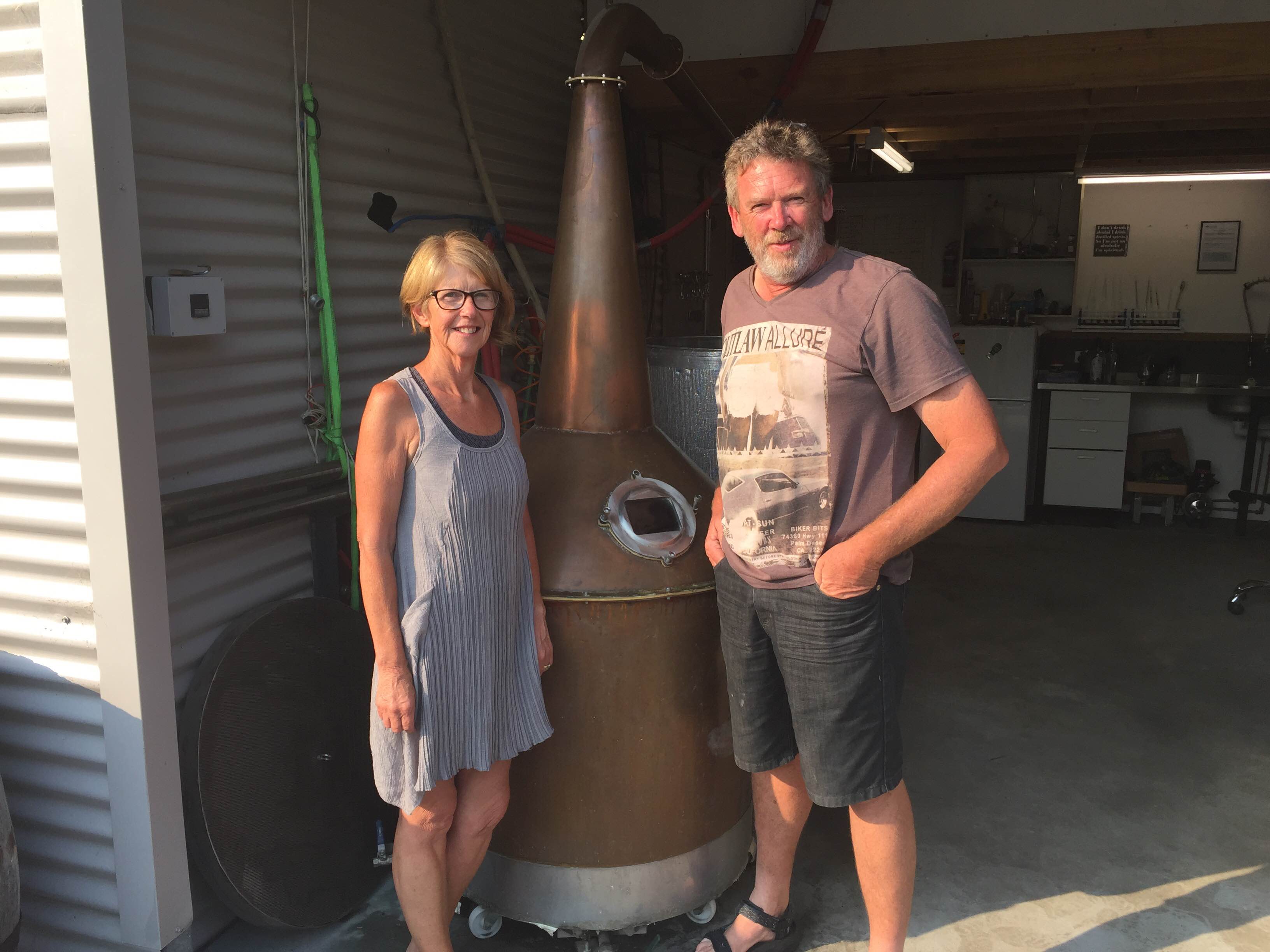
Matt and Juls Cooper of Fannys Bay Whisky Waffle

Today in metalwork… Matt built a still.

“To make a product how you want it, it starts with the basics,” Mathew told us as he enthusiastically filled a couple of glasses with new-make spirit – one made with Gairdener barley, the other with Westminster. The difference between the two was subtle but noticeable, with the former being richer and more floral, whereas the latter was lighter and more herbal. Both left us curious and excited about what Fannys Bay whisky would be like when mature. Unfortunately the oldest spirit had only been in barrels for 12 months and therefore cannot be called whisky for another year. Of course that didn’t stop us from having a small sample – for purely education purposes, naturally.

We were presented with a pinot cask, a possible sherry cask, and a definite port cask, and were hard pressed to choose our favourite. Their aim to create an easy-drinking malt that appeals to a range of people is certainly looking on track. Take note people – in 12 months time Fannys Bay will be one to look out for.

While Julie is slowly (but happily) being converted into a whisky drinker, Mathew is more than happy to sample the odd dram. He loses no sleep about the success of the product, happily stating: “If people want to buy it, we sell it. If they don’t – then I have a lovely room full of whisky!”

Find out more about Fannys Bay via our links page

The Arran Malt Amarone Cask Finish

Reviewed by: Nick

Arran Amarone Cask

Traditionally, the world of Scottish whisky is very – well – traditional. When popping champagne for Ardbeg’s two hundredth year, we somewhat neglected the rather less impressive twentieth birthday of the Arran Distillery. But distilleries are only as good as the products they are currently creating, and there is a lot to like about the bottles presently leaving the Isle of Arran.

As well as a range of age statement whiskies they have a variety of cask finish expressions, and the one I happened to get my grubby little mitts on was finished in Amarone barrels. For the uneducated, which I will freely admit to being one of before buying the bottle, Amarone is a dry Italian red wine made from grapes such as Corvina, Rondinella and Molinara. Yup, me neither.

I’ve had an up and down relationship with wine-matured whiskies, though one aspect I universally love is their amazing colours. The Arran is no exception – this whisky is the coppery orange of traditional creaming soda. The nose is alluring, giving the impression of alcohol soaked fruits eaten at Christmas time. There are cherries and strawberries as well as honey and syrupy cola.

The palate is rich and spicy, aided immensely by the higher bottling strength of 50%. It is delightfully creamy with large dollops of toffee, oranges and Turkish delight. The finish is dry with notes of oak and dark chocolate, and is pleasingly long and warming.

While the Arran Malt does not boast the long history of many distilleries, this should not in any way be held against it. A glorious Scottish past does not always equal quality in the present. Just ask Rangers Football Club.

★★★★

Flóki Icelandic Young Malt

Reviewed by: Ted

Floki

By all accounts Iceland is one of the most beautiful and beguiling places on earth, an ethereal land of glacial blue lakes, tumbling grasslands, rocky moonscapes, bubbling hot springs and ridiculously hard to pronounce volcanoes. Basically anywhere you look will create a feeling of awe and wonder at the raw majesty of it all. I myself once met an Inga from Iceland, which certainly left me with feelings of awe and wonder at the landscape…

Ahem… anyway, my Mum was in Iceland recently (lucky sod) so I convinced her to go on a mission for me. You see, apart from making you stumble over yet another lump of stunning wilderness with each step, Iceland also has another point of interest. Two of them in fact, as the island is home to two new whisky distilleries. The Scandiwegians are increasingly becoming known as avid makers (and drinkers) of whisky, with stills operating in Sweden, Norway, Denmark, Finland and now, with the opening of Thoran and Flóki, Iceland.

Fortunately, my Mum was able to locate a bottle of Flóki for me in the Iceland duty free. Eimverk Distillery, opened in just 2009, is currently the only Icelandic distillery with whisky available for purchase (Thoran has not yet entered full production at this point). It turns out that the team at Flóki are a crafty little bunch, hand making their own pot still. They also produce their whisky using 100% organic Icelandic-grown barley which, keeping with the craft approach, they malt by hand. Apparently, thanks to the Arctic climate, Icelandic barley is slow growing and low in sugars, meaning that the distillers have to use 50% more barley per bottle (compared more temperate climes I suppose), which they claim gives their product a unique taste.

Fortunately, thanks to my maternal benefactor, I have a bottle on hand to be able to verify said uniquity. The Flóki Young Malt, as its name hints at, is not their flagship release. The reason for this is a question of time rather than choice, as their spirit has not actually been under oak long enough for all systems go, with their Icelandic Single Malt to be unleashed later in 2016. Thankfully to get the ball rolling they released the Young Malt as a limited single barrel Iceland duty free exclusive.

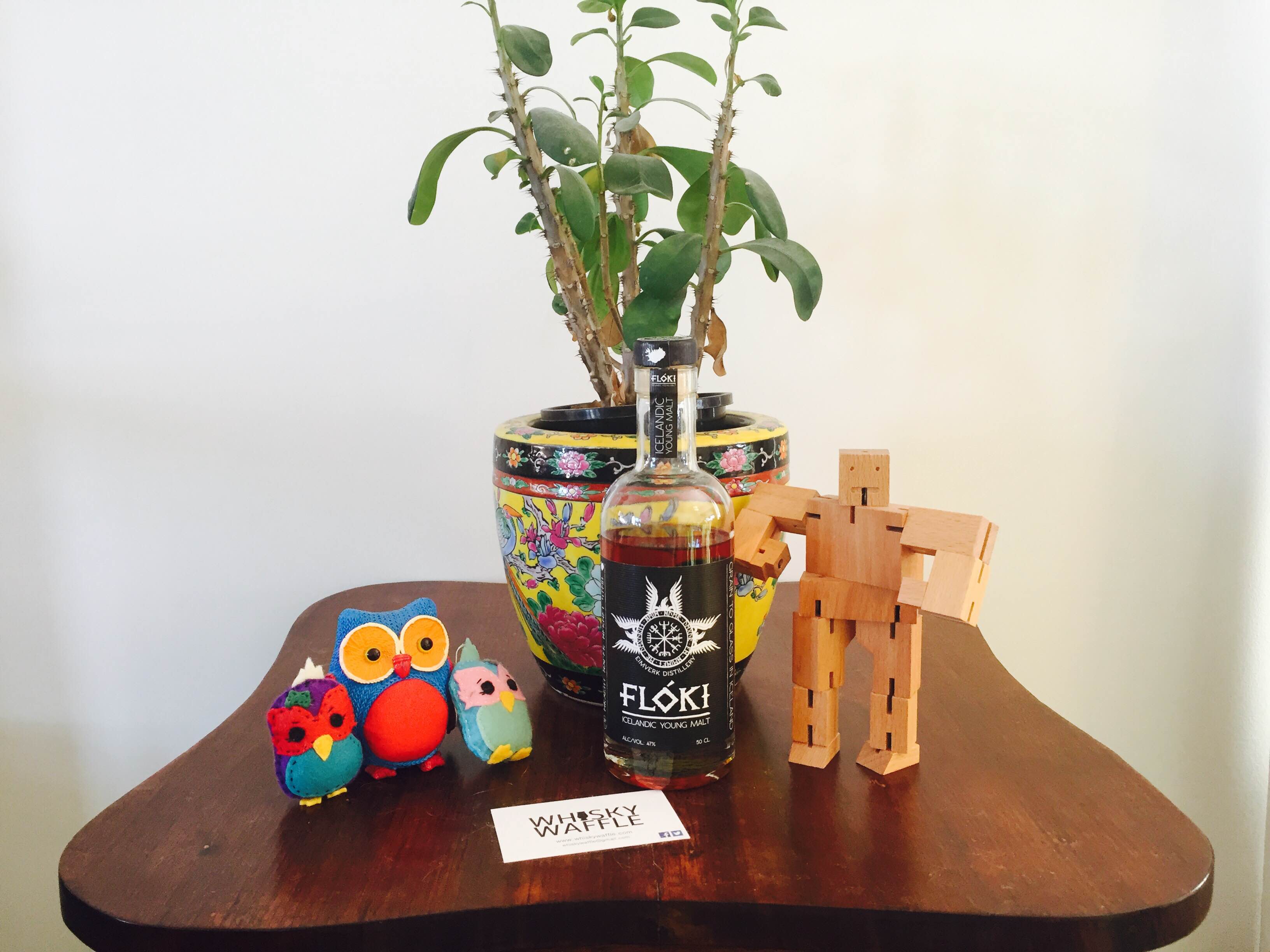
The bottle is awesome (if too small. Curse you limited release!), with a wicked Viking-inspired crest and angular lettering on a textured black label. The liquid contained within is a rich amber-brown that catches your attention straight away. So no worries on the eye, but what does Iceland’s first whisky taste like?

Pretty good for such a young whisky it must be said. The nose is really curious; it’s really, really floral and fruity (pineapple, mandarin, pear) with a slightly salted caramel edge that keeps you sniffing. You know what, if you’ve ever had the chance to try some new-make spirit, then you’ll know what this smells like.

On the mouth the Flóki is sharp, slightly bitter and prickly. It pretty much jumps off its longship and starts jabbing away with its spear, although part of the reason for that is probably the 47% strength. The finish coats the tongue with that raw, grassy, hay-like quality that seems common amongst very young whiskies, followed by a lick of spicy fruitiness.

It’s certainly an interesting experience to try, but you can tell that the Young Malt is only the first step down the road for Flóki. It’s kind of like a teenager whisky, full of all sorts of raw, bubbling emotions and ideas, unsure about its place in life. Given time though it will gain maturity and understand what it really wants to be. Then again, we can’t judge it too harshly as it was never meant to be the be-all and end-all. This is but a glimpse of a whisky that I think will one day stand shoulder-to-shoulder with all the majesty of the Icelandic landscape.

★★

Old Pulteney 12 Year Old

Reviewed by: The Cynical Scot

Old Pultney 12 Year old Whisky Waffle

There are three places in the world where the merest mention of the name can take me back in heart and spirit. The first are the cliffs at Yesnaby on the mainland of Orkney. Here, the crash of the Atlantic is stalled by Earl Thorfinn’s walls and the salty air is scoured into the finest lines of the skin. The second is the Fairy Pools on the Isle of Skye, where I have swum in the ice clear waters and tasted the pure heart of the Cuillins. The third, and the subject of this review, is the bond store at the Old Pulteney distillery in Wick.

I found myself here on an overcast Saturday in 2013. It was the third distillery on a self-guided tour which was to take me around the best parts of Scotland. My true blue Australian friend (who insisted on referring to the drink as ‘OP’) and I didn’t know then that it would be one of only seven distilleries we would visit on that trip. By the time we arrived in Pulteney town, we already had the creeping realisation that most large scale whisky making operations are done along similar lines. Coupled to this, we had satisfied ourselves that whisky makers send their whisky all over the place. Since then we have regularly enjoyed our whisky without feeling the need to visit the place of origin.

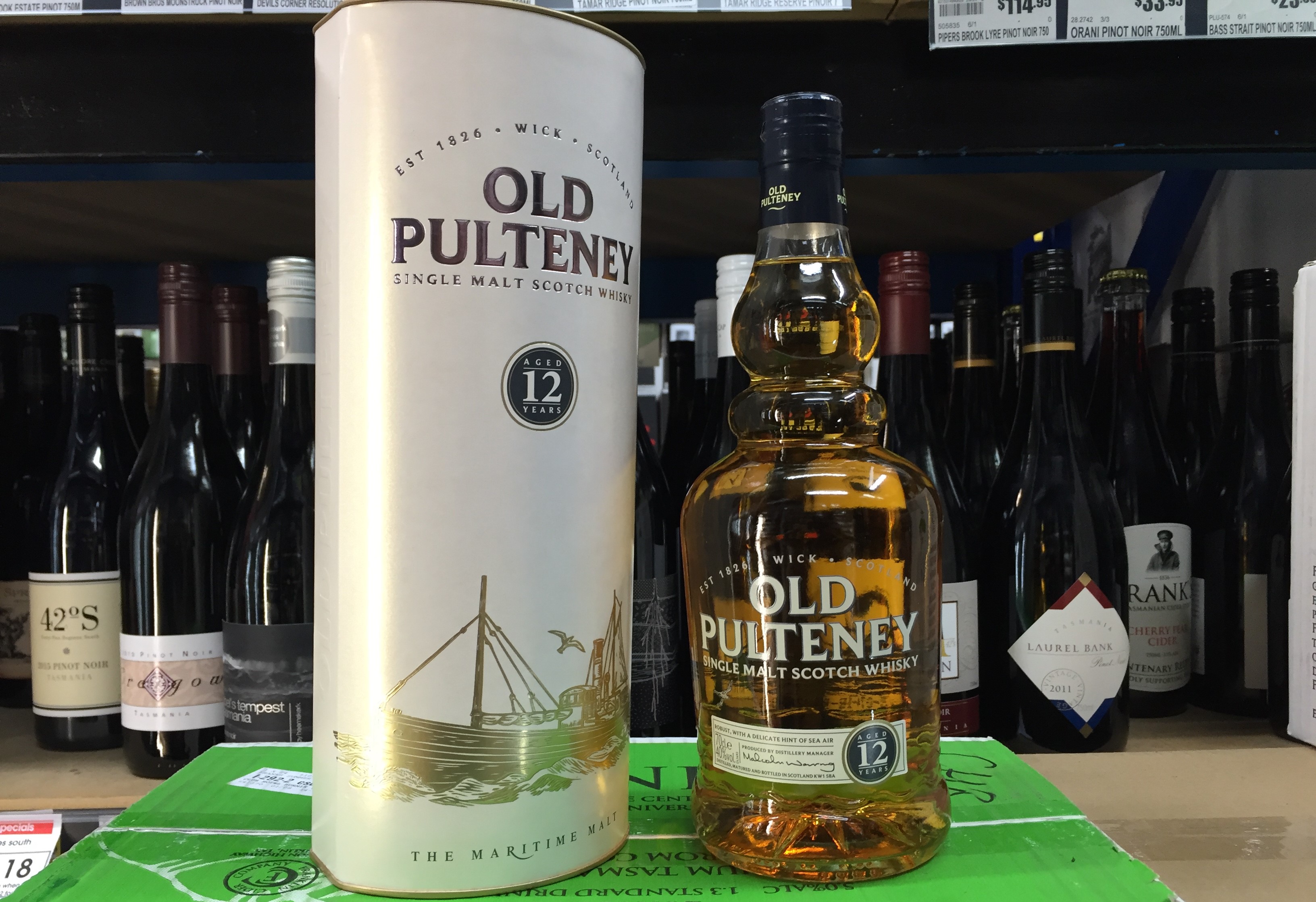
The Old Pulteney distillery was built in 1826 in a town built to support the herring trade. With a lack of foresight uncommon in the Scottish, James Henderson’s lads built the roof too low for the still. When the brand new copper pot still arrived, the swan neck kept clanging off the rafters. Without any ado they applied a choice piece of Scottish logic to the problem and sliced off the top of it. Job done, the still was installed, the top sealed and a pipe bunged on the the side creating the unusual appearance you’ll see today. The bulge further down the giant copper kettle also gave them an idea of how to shape their bottles.

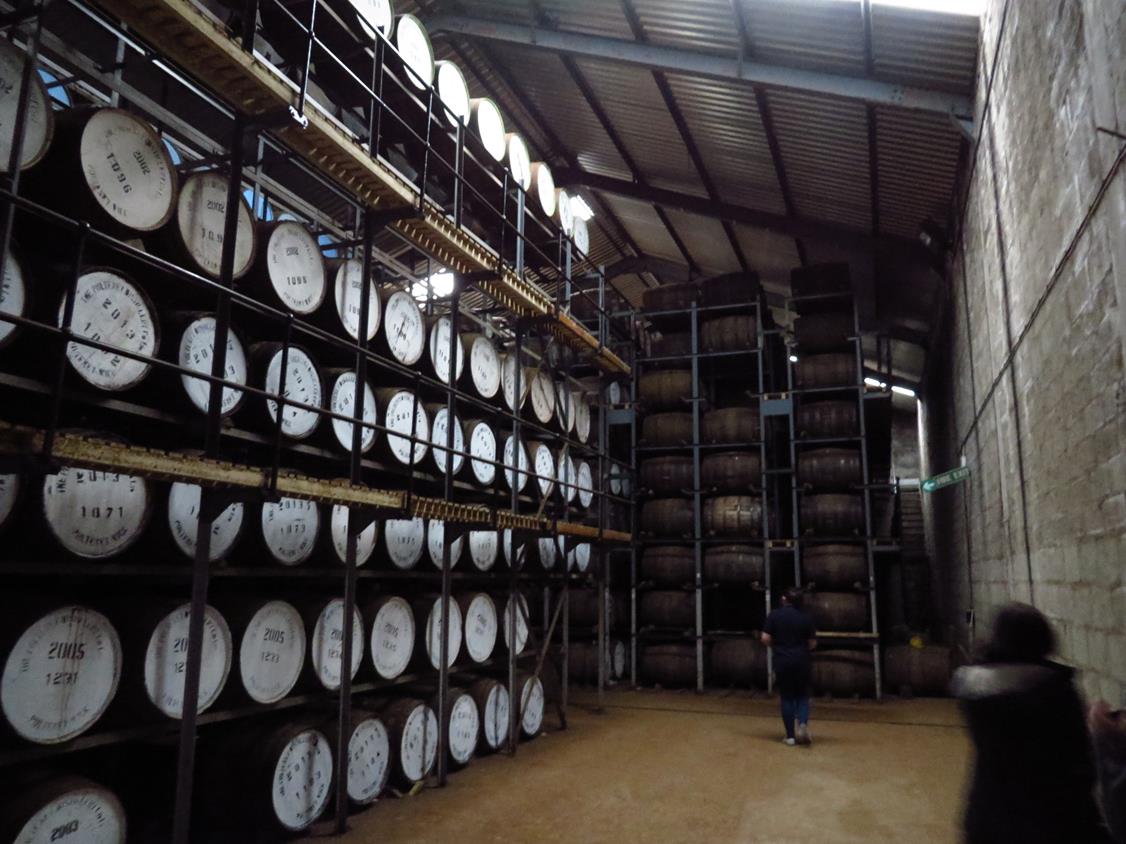
You’ll see all this and more on the tour, proving beyond doubt it is a whisky making process. After you’ve seen the unusual squat stills you’re taken out to the bond store. On the day we visited it started raining at this point. We made a dash towards the barrels, which in my mind were stacked six high (my photographic record shows only four), and the door was shut behind us. While we learned about the maturation process we avoided the tears of the angels and breathed in their share of the whisky; a fine ethereal vapour floating in the salty air. Yes, we all smelt that whisky, we all knew what we were doing and we yes, we all found questions to ask to keep us there longer.

IMG_0689 (Copy)

Old Pulteney has the taste of the sea in it too, they say. I can’t taste things like that, but Wick is not too far away from the places where the mighty Atlantic meets the moody North Sea and that can’t happen without seriously affecting a drink as emotional as whisky. The salt, they said, coats the barrels and works its way through the grain and into the final product. This may very well be the case. Salt for me is something I put on chips and any other food. It’s never been more complicated than that.

As for taste of Old Pulteney 12 year old, it’s a fine single malt, very fine. I find it harsh on the nose, easy on the draw and the burn is frank and satisfying. It has a rich stickling after taste like bronze coins falling over a weir and I’ll always like it because it’s the whisky I drink with my father.

I asked Dad why he drinks this particularly spirit. As a seasoned Famous Grouse drinker, it turned out his discernment was a result of him acquiring a bottle at no cost from an appreciative work colleague. His opinion of ‘Aye, it’s a nice one that’ is fair if not particularly detailed or nuanced. I confidently predict that he will continue to drink this brand so long as it remains at his personal initial price point.

For me it’s not what goes into a bond store it’s what comes out. That day in Wick an amateur whisky drinker went into the bond store. After delaying as long as I could, a happier, more philosophical and more content amateur whisky drinker came out. The OP lads do the same with their whisky. They wait and they wait and after twelve years a fine drink appears. I don’t know what makes this my homely stand-alone bottle of go-to, or why at times, when I can neither get to Yesnaby nor the Fairy pools of Skye, I can have a drop of Old Pulteney 12 year old and be at both at the same time. It’s a mystery I don’t want to think through too much and if I ever need to know, I can just ask my dad. He knows.

★★★★

The Top 5 Islay Distilleries

Posted by: Nick

Streets of Bowmore whisky waffle

If I were to take four flights, one lengthy bus ride and a ferry crossing, as well as being broke and jetlagged, I would also be in my favourite place in the world, the mythical Isle of Islay. While my own home state of Tasmania contains many fantastic distilleries, I know that this Hebridean island will forever be: The Whisky Isle.

Islay is currently home to eight distilleries, which is not bad for a tiny island with a population that would fit into the MCG thirty times over. I do of course only speak hypothetically, because in real life the people of Islay would not deign to leave this most wonderful island – not even to attend the Boxing Day Test Match.

All eight Ileach distilleries make fascinating, varied and outstanding whiskies. But today I count down my top five favourites, those establishments that have helped shape the Whisky Waffler I am today.

5 Kilchoman

Kilchoman is the relative new kid on the block, only in operation since 2005, however the standard of whisky they are creating is astonishing. They take an old familiar flavour and reinvent it, producing something refreshingly new, and yet at the same time distinctly Islay.

One sip reflects the traditional Islay flavours that so perfectly accompany winter storms as they roll in off the Atlantic, testing the water proofing of the local cottages, and yet their whiskies are also bright, young, and energetic. They are surprisingly complex, and, most importantly of all, they are improving all the time. Kilchoman is that annoying combination of athleticism and brains: it is the top football star with the chiselled good looks that goes on to become a neurosurgeon. So with this in mind there is no doubt that Kilchoman is a distillery to watch out for in the future.

4 Bruichladdich

4 bruichladdich

Jim McEwan took over the then derelict Bruichladdich Distillery in 2001 and, after initially being called crazy, has seen it go from strength to strength. Known for its innovation, the distillery creates not one, not two, but three different series of bottlings, all with their unique style. Firstly and foremost are the lightly peated drams produced under their own name, Bruichladdich. Secondly, the more traditional and heavier-peated Port Charlotte, named after the long-since shut distillery that was once based a few miles away. Finally the famous (or infamous) Octomore range, marketed, correctly, as the most heavily peated whiskies in the world.

If I were to work at a distillery on Islay, this would have to be it. It combines traditional methods (the may-as-well-be-antique mashtuns) with experimentation (I heard rumour of a tequila cask hidden away in the bond store somewhere). Most of all, Bruichladdich are a community-focused distillery. Jim McEwan has achieved many great things across his career, but he claims the number of Ileach people he employs is the one that fills him with the most pride.

3 Laphroaig
3 Laphroaig whisky waffle

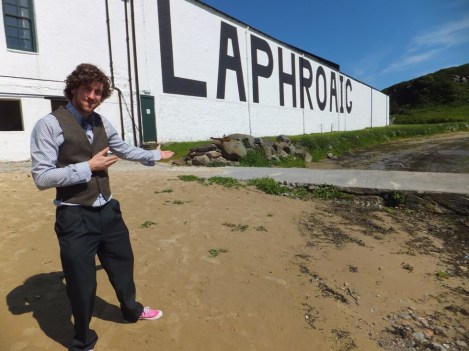
When you think Islay whiskies, you think peat – and no distillery on earth does peat like Laphroaig. The whisky produced here may not be to everyone’s taste, but it sure is to mine. One sniff transports me to bonfires, seaside camping trips and, as I discovered later, the sensation of getting out of the car on Islay and inhaling the peat-thick fresh air. The whisky made by Laphroaig is iconic and rightfully among the most famous made on the island.

Whiskies made at Laphroaig are unapologetic. If you don’t like your drams peated, run for the hills (if you can actually find any on Islay) as the manufacturers don’t care. I find this attitude appealing however. I know what I’m going to get from Laphroaig and I know that it will comfort me after a tough day at work or celebrate with me as I raise a toast with my friends.

While they have the second biggest output of any distillery on Islay, they still conduct traditional floor maltings and fire up their own peat kilns for a percentage of their product. I’ve been lucky enough to stand in the large kilns, and even luckier that this occurred while they were not operating! Laphroaig is Islay to a tee and an unmissable stop if you visit the island.

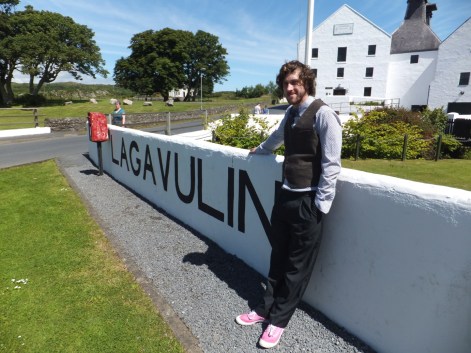
2 Lagavulin
2 Laga whisky waffle

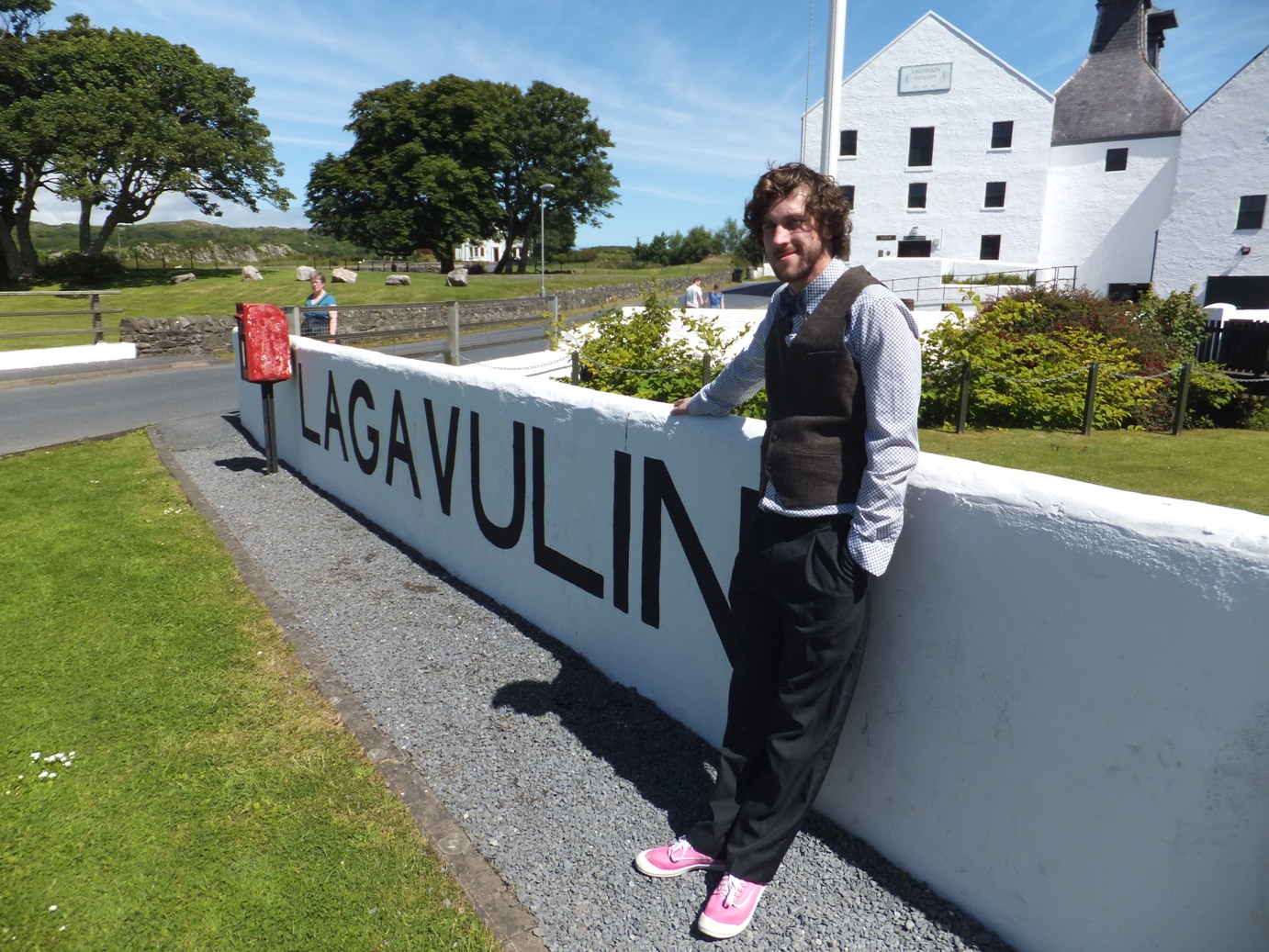
First trying the Lagavulin 16 Year Old was a revelation in my whisky-drinking life. What was this spirit that burned like a roaring bonfire in my mouth? What were these charred-fruit flavours that followed? I’d certainly never tasted anything like it and I’ve certainly never looked back.

Several years later I have tried a range of peated whiskies and loved most of them. But the Lagavulin 16 is still up there amongst the best.

What separates Lagavulin from the rest is a sense of class. While other distilleries, rightfully, let the wild peat-monster roam free, Lagavulin has it well trained, even walking to heel. With some of the Distillers’ Editions it will even sit and roll over! This allows a magnificent balance between peat and sherry flavours which really sets it up as the classiest of Islay’s whiskies.

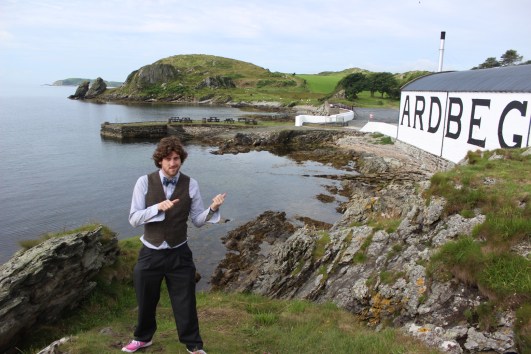
1 Ardbeg
1 Ardbeg whisky waffle

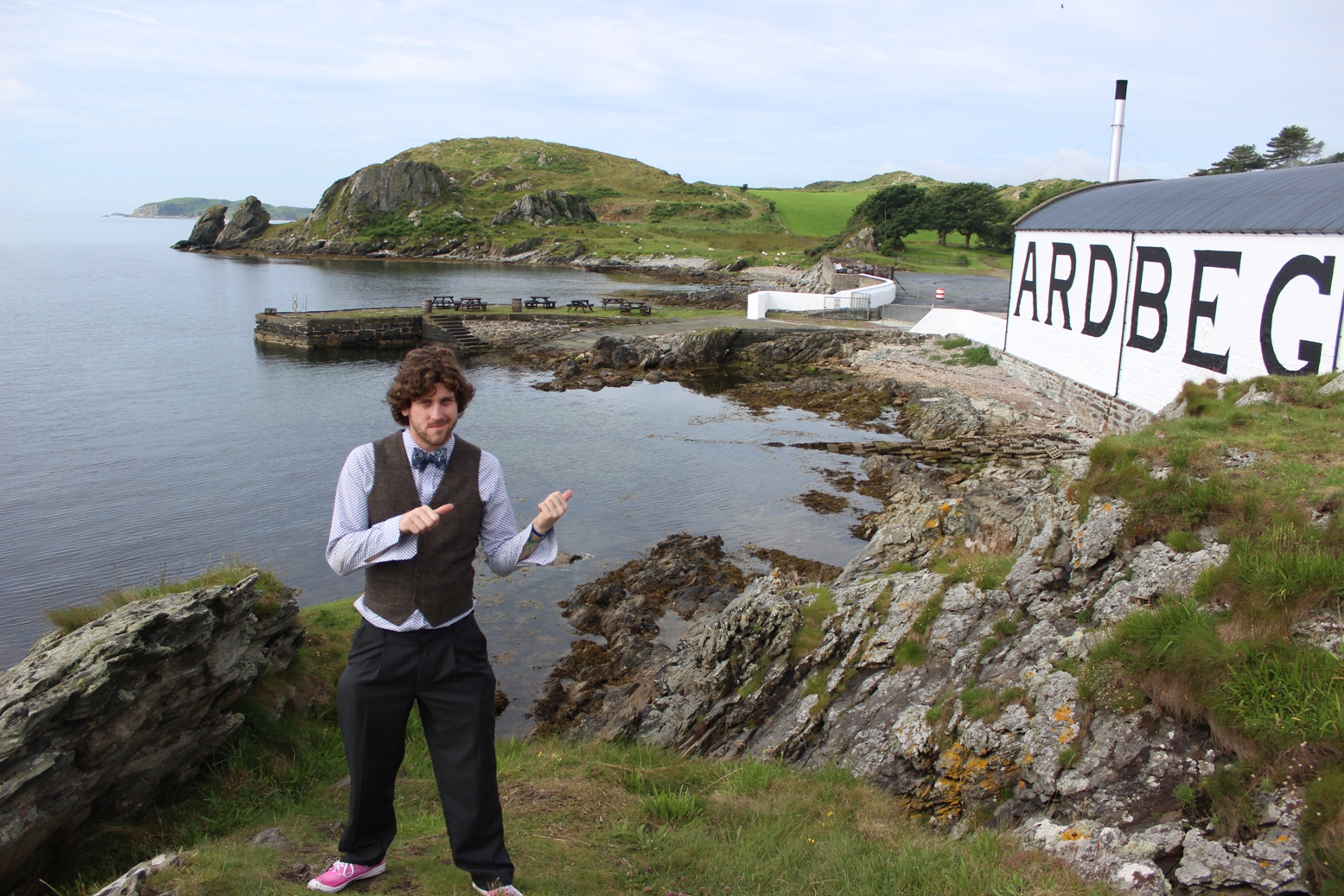
While all distilleries on Islay offer many brilliant and varied drams, it is Ardbeg that I believe captures the ‘spirit’ of the island the best. With a slab of peat, a splash of history and a smattering of actual magic, you cannot help but fall in love with the drams, the atmosphere and the portrait on the wall of Shortie the Dog, the Ardbeg mascot.

Ardbeg are famous for once a year releasing a frustratingly small amount of limited edition bottles which seem destined to sit unopened on wealthy collectors’ shelves. But on the rare occasion you get to try one, you will see what the hype is about: Alligator, Galileo and of course Supernova are all enticingly titled as well as deliciously flavoured.

Their regular bottles cannot be forgotten, either. In Uigeadail they have produced a strong candidate for worlds best peated whisky, the Coryvrekkan has one of the longest finishes going around (and around and around!) and as for their ‘entry level’ – is there a finer 10 year old bottle in world whisky? Possibly not.

Ardbeg is many people’s favourite distillery. And it is not hard to figure out why. Put simply, it is because it is among the best.

Nick at Port Ellen lighthouse whisky waffle

This list, of course, is only my (somewhat subjective) opinion. It is by no means definitive. What are your top five favourite Islay distilleries? Let us know in the comments and we will slam you for being wrong! Er… I mean, we will respect your opinion greatly! That’s the one!

The Fault in our Stars: an explanation of the whisky waffle rating system

Posted by: Nick and Ted

Waffle Selfie

Nick: Roll the dice, Ted! We need to come up with a score for the Glenfiddich 12!

Depending on what you’re after, whisky rankings can be a help or a hindrance. Some reviewers have highly thought out and complex ratings systems, whereas others tend towards simplistic and arbitrary methods, preferring to spend more time drinking the stuff than doing the maths.

Whisky Waffle fall squarely into the latter category, struggling to count any further than five after a couple of drams. Thus we award any whisky we review a rating of one to five stars. We don’t even bother with half stars, because, after all, that’s just a sneaky way of scoring out of ten isn’t it?

So keeping it simple is all well and good, but what does each score actually mean?

★ One star sounds bad… and that’s because it is. There are very few whiskies with zero redeeming qualities, but every now and then one rears its ugly head. Try it once and then never again.

★★ Two stars is in no way bad. But nor is it good, either. These are perfectly drinkable whiskies that for some reason have disappointed us, or left us underwhelmed. Try it once, and then try it again to be sure.

★★★ Three stars is our most complex category. Everything within this zone is good, however some just creep over the line whereas others are bordering on greatness. To work out which – well, you’ll just have to read the review! We would happily have a dram of one of these any day of the week (twice on Fridays!).

★★★★ Four stars are whiskies both literally and figuratively top shelf. These are the drops that have an x-factor, something that makes them stand out from the pack. They’d be a fine addition to anyone’s collection.

★★★★★ Five stars is probably the most subjective category for us. Obviously they’re all superlative whiskies in their own right, but often they might hold extra significance for us. These are whiskies that make all five stars align in the heavens.

For those who are interested, we created a page listing all our reviews by their score. You can check it out here.