Reviews

The Glenlivet Founders Reserve

Reviewed by: Nick

Founders Reserve n waffle

In 2015 we farewelled a Whisky Waffle favourite son, the Glenlivet 12. It was there to share the laughs when we held cards nights, to comfort us when we’d had a rough day at work and raised high when we rung in the New Year. Sadly Glenlivet, in their ultimate wisdom, have retired the 12 for the foreseeable future. But fear not – they have introduced a direct(ish) replacement! It comes in shiny blue packaging so it must be good, mustn’t it? Ladies and gentlemen, I present to you the Glenlivet Founders Reserve.

It would be so easy to do a straight comparison of the two whiskies, but I decided to sample the new kid on the block on its own to see how it stood up. It turns out ‘stood up’ was possibly the wrong analogy. Sat down maybe? Perhaps slouched…

On the nose, I found the Founders Reserve has plenty of caramel and some dry malty notes. An acceptable, if not auspicious start. So I took a sip. This turned out to be an error. There’s an unpleasant sweetness in there – a sugary, treacly flavour lacking in any complexity. It’s not bad per se, but there is a distinct manufactured, home-brand quality about it which is hard to enjoy. The finish is warm and spicy, almost tangy on the back of the tongue. Finally there is the merest hint of raisins, a cameo appearance that leaves you wishing there was more to be found.

I cannot say that the Founders Reserve is particularly offensive in its flavour. But I can (and do) claim that it is all a bit bland and inconsequential, bordering on boring, which disappoints me greatly. Glenlivet are truly great makers of Scottish whisky and it saddens me to think that a generation of whisky drinkers will discover the distillery via this disappointing bottle.

★★
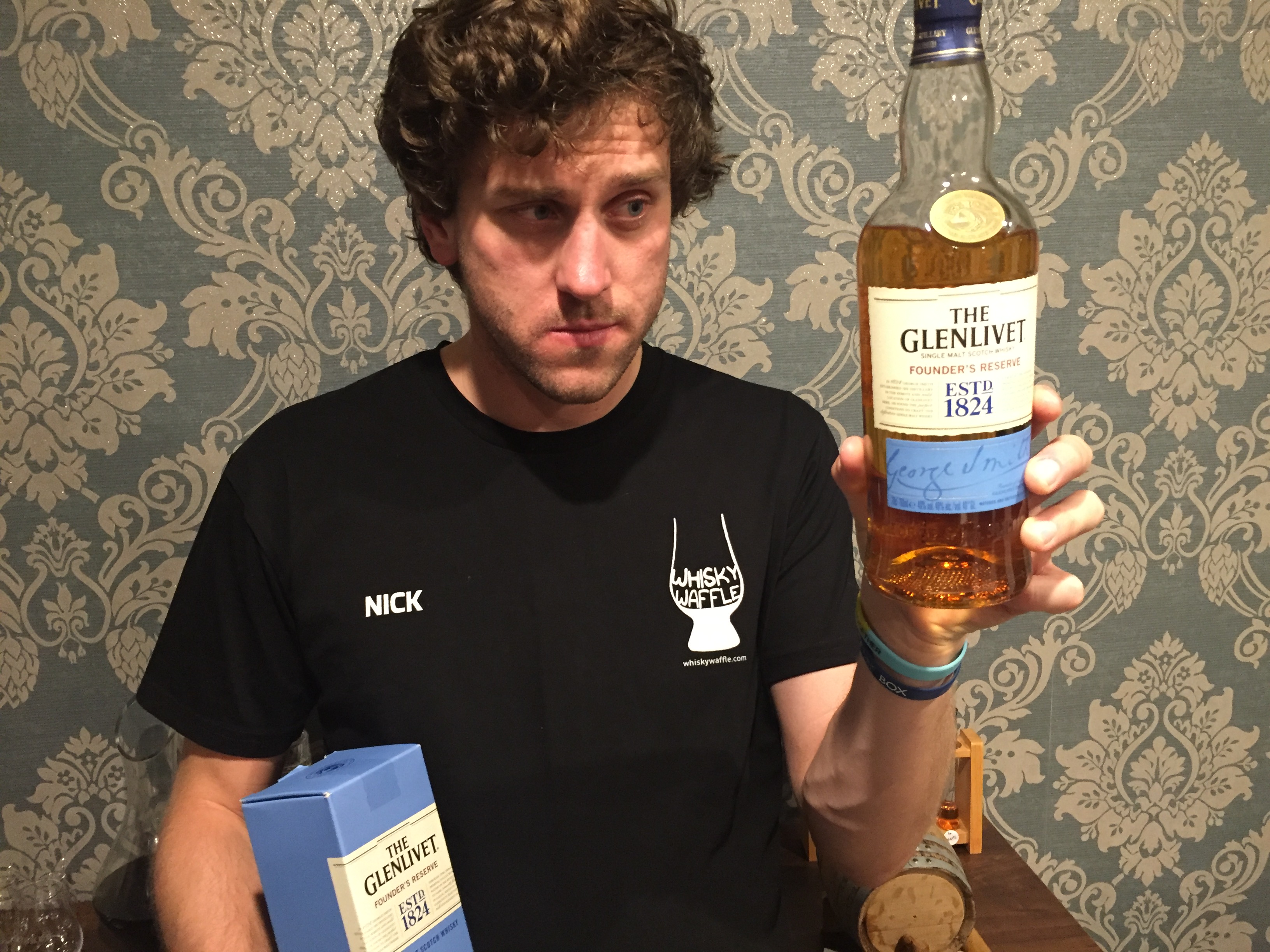
Nick and the Glenlivet Founders Reserve

How it compares:

Without doubt there are similarities in flavour between the Founders Reserve and the 12 Year Old – they are both obvious Speysiders full of caramel and honey. But the 12 Year Old has so much more going on than the NAS bottle. There are subtle complexities to be found throughout the 12 which the Founders lacks. The Founders Reserve is the Coke Zero to the 12’s Coca-Cola.

Oban 14 Year Old

Reviewed by: Ted

Oban 14

Rather like the wild haggis (Haggis scotticus), Oban distillery is a curious wee beastie. Located on the craggy west coast of Scotland in the town of the same name, Oban is one of the oldest distilleries in the country, founded in 1794 on the site of an old brewery by brothers John and Hugh Stevenson. Interestingly however, despite its lengthy existence it has remained one of the smallest distilleries around, with only two pot stills in residence to make the good stuff.

Understandably, the limited production capacity has focused the Oban distillers, choosing to craft a few expressions rather than the seemingly endless releases pedalled by larger producers. Luckily this means that the Obanites have had plenty of time to refine and tinker with their creations.

Oban’s flagship dram is one that should pique the curiosity of any whisky fiend looking for something a little different. Eschewing usual ageing lengths, the Oban 14yo, part of Diageo’s “Classic Malts Selection”, exploits an interesting niche between youth and maturity, and it must be noted, at a price on par (at least in Australia) with many 12yo whiskies.

The character of the 14yo walks a fine line, balanced as it is between the highlands to the east and the islands to the west. A careful nosing reveals a light, sweet, dusty spirit with suggestions of damsons and green apples, giving it a sense of kinship with other highland drops such as Dalwhinnie.

The taste on the other hand speaks of its seaside home, beginning with a bright, slightly salty burst on the front of the palate, lifted by the 43% strength, followed by a hint of seaweed and coastal air. The mid palate smooths out and becomes much more rounded, with dried fruits, zest, spices and perhaps just the lightest hint of smoke. The finish is clean and doesn’t linger for too long.

Once you’ve knocked back a few sips of the 14yo it’s worth holding the glass up to the light and contemplating the colour, which should be a dark amber. The reason I make mention of this is that the 14yo is not aged in the sherry casks that the colour suggests, but rather ex-bourbon hogsheads.

The answer to this conundrum will cause some to shrug their shoulders unconcernedly and others to foam at the mouth in righteous indignation: caramel e150a. Why Oban chooses to use artificial colouring, while other premium distilleries go to great pains to point out that they keep their own products au naturale, is a secret known only to the Obanites. Whether or not it’s presence affects the flavour of the 14yo I will leave up to your own distinguished palates, fellow wafflers.

The small size of Oban definitely works in its favour, allowing it time to lovingly craft a quirky and interesting product that does not hurt the wallet too much. The 14yo is certainly a delightful and evocative drop; and unlike the pesky wild haggis, is relatively easy to track down for those curious to discover the ‘west highland’ flavour.

★★★

Great Outback Rare Old Australian Single Malt

Reviewed by: Mooresy

Great Outback Rare Old

This is weird story worthy of a waffle. Australian whisky has a generally agreed history, the modern chapter of which begins in the 1980s with the Lark family overturning a century and a half of legislative prohibition on distilling in Tasmania. This led to a resurgence of distillers and, as a very appropriate homage to whisky’s very beginnings, some people who had no doubt been fooling around as bootleggers went legitimate. The Great Outback Rare Old Australian Single Malt – a mouthful of descriptors, almost as if someone took all the best buzzwords that make whisky seem exclusive and put them all into the name – is a mystery in that history.

From what I can gather from my Poirot-esque deductions is that it was distilled somewhere between 1960 and 1985, that it is either from a now forgotten Tasmanian still (the bottle indicates it was produced at the Tasman Distillery, which no-one can find) or a Western Australian still pretending to be Tasmanian, and that it is pretty rare. Some rumours include that it is the reject stock of the closed Corio Distillery or that it is not Australian and was just labelled that way to hide an origin that would have been less palatable. It is a confirmed fact, however, that this single malt has a blended variety that can still be found so maybe these rumours of reject stock and foreign distillation are accurate for the blended version.

Something that is more than rumour is that this whisky is actually very good. With a label that looks like a knock-off product sold by some people who’ve refilled an empty bottle with some water and caramel colour, it is about as far from that as you can imagine. The colour is a nice pale gold suggesting there is a straight bourbon cask maturation and on the nose I think that is correct but there is also a vivid complexity I was not expecting. It’s fresh and grassy, with a little toffee and vanilla, but also a lovely tropical fruit and pineapple citrus alongside an orange smell that is actually reminiscent of Lark. Not only that, but there are some interesting botanicals with fresh thyme and something peppery thrown into the mix.

The other brilliant thing about it, which transfers over to the palate, is it is devoid of the ethanol kick that can permeate and drown out the subtleties. The relatively low alcohol content helps this, but it is also just a very clean and crisp spirit. There is certainly some tropical fruit – brilliant passion fruit – and the malty vanilla really comes out to balance against the toasted oak flavours. It is unsurprising that it is not peated, as this was presumably created before peat bogs were officially uncovered in Tasmania or peated barley was imported. Or before peat even existed anywhere in the world, who knows.

This is not a whisky for people who are looking for a heavy hitter, a peaty belter, or an oak punch. It is certainly not for anyone who wants to be able to sit down with book and look up the dram as they drink it. This one for those who like a crisp and complex confectioner’s creation with a side of Conan-Doyle intrigue to keep them guessing.

If you are the distiller of this fine drop, get in touch. Partly because there are several questions I have for you, but mainly because I am hoping you still have a few bottles of the stuff kicking around the attic you might be willing to offload.

★★★★

Cragganmore 12 Year Old

Reviewed by: Nick

Cragganmore 12 Year Old

Summer is a time for barbeques and dreams; it is a time for long evenings spent irreverently with friends. And, of course, it is a time for summer romances.

I met the Cragganmore 12 Year Old shortly before Christmas and knew, without being able to define why, that this was to be my summertime dram. It glistened, a deep gold on the shelf, almost calling to me with promises of what was to come. How could I resist?

The following weeks I enjoyed the gloriously sunny evenings with the Cragganmore by my side. We were thick as thieves, spending time at post-Christmas drinks, New Years Eve – even on the annual camping trip. All my whisky-drinking friends approved. There was no doubt, the Cragganmore was a worthy addition to our summer festivities. And the flavours? Extraordinary.

The nose of honey and butterscotch. The palate of vanilla and lemons. And the finish… Oh that delicate and yet spicy linger I feel I will never truly forget.

Inevitably, the sun began to set on a glorious January, and the contents of the Cragganmore dwindled. As with all summer flings, it ended all too suddenly. It was time to say farewell to this golden bottle. While it was a friendship only recently acquired, it seemed the bonds we had formed would last a lifetime. As we said our goodbyes, I thanked it for its companionship over such a memorable time. I can now only leave it in the hands of fate as to whether we meet again on another, seemingly endless, summer afternoon.

★★★

The Arran Malt Amarone Cask Finish

Reviewed by: Nick

Arran Amarone Cask

Traditionally, the world of Scottish whisky is very – well – traditional. When popping champagne for Ardbeg’s two hundredth year, we somewhat neglected the rather less impressive twentieth birthday of the Arran Distillery. But distilleries are only as good as the products they are currently creating, and there is a lot to like about the bottles presently leaving the Isle of Arran.

As well as a range of age statement whiskies they have a variety of cask finish expressions, and the one I happened to get my grubby little mitts on was finished in Amarone barrels. For the uneducated, which I will freely admit to being one of before buying the bottle, Amarone is a dry Italian red wine made from grapes such as Corvina, Rondinella and Molinara. Yup, me neither.

I’ve had an up and down relationship with wine-matured whiskies, though one aspect I universally love is their amazing colours. The Arran is no exception – this whisky is the coppery orange of traditional creaming soda. The nose is alluring, giving the impression of alcohol soaked fruits eaten at Christmas time. There are cherries and strawberries as well as honey and syrupy cola.

The palate is rich and spicy, aided immensely by the higher bottling strength of 50%. It is delightfully creamy with large dollops of toffee, oranges and Turkish delight. The finish is dry with notes of oak and dark chocolate, and is pleasingly long and warming.

While the Arran Malt does not boast the long history of many distilleries, this should not in any way be held against it. A glorious Scottish past does not always equal quality in the present. Just ask Rangers Football Club.

★★★★

Flóki Icelandic Young Malt

Reviewed by: Ted

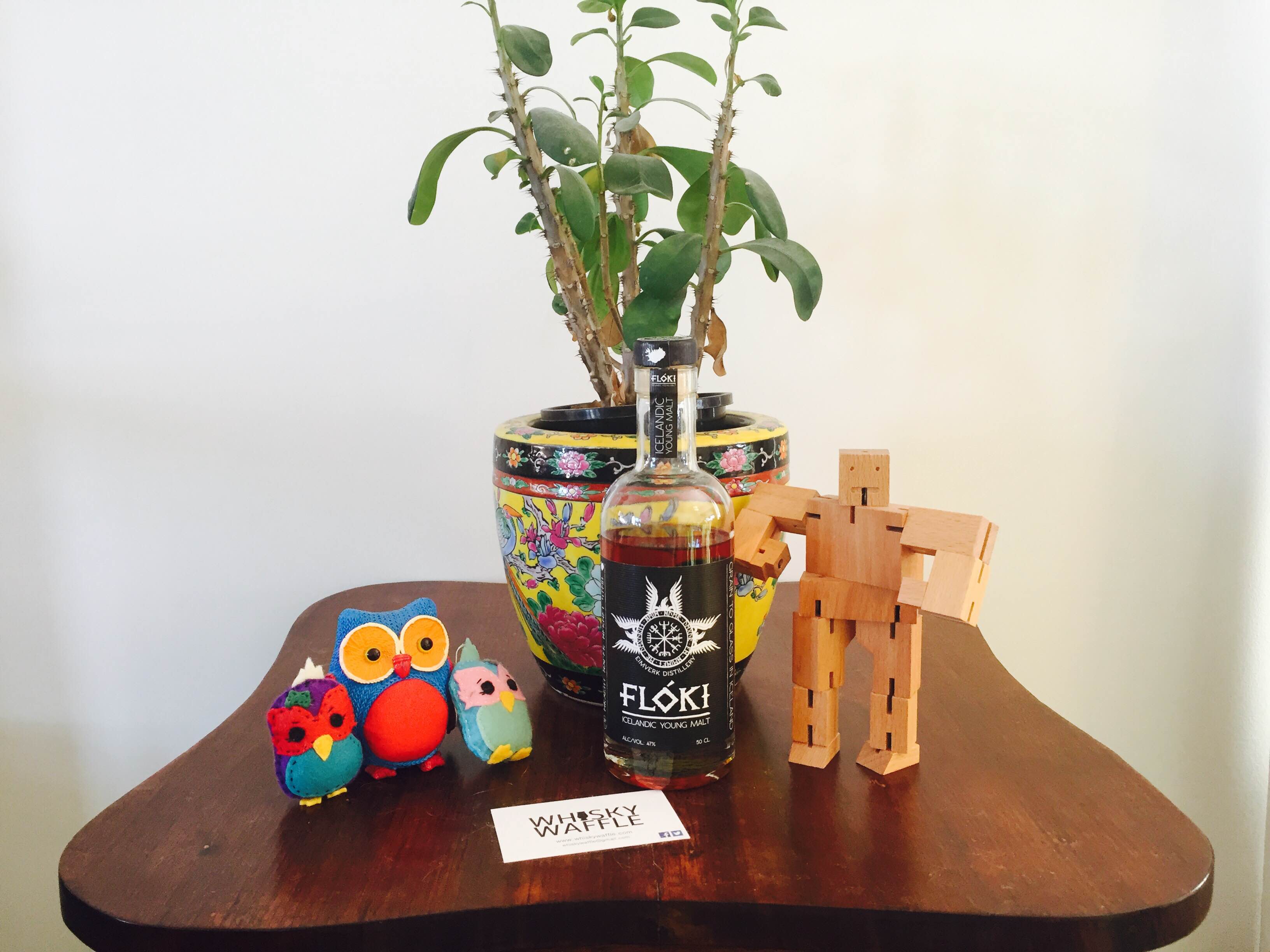
Floki

By all accounts Iceland is one of the most beautiful and beguiling places on earth, an ethereal land of glacial blue lakes, tumbling grasslands, rocky moonscapes, bubbling hot springs and ridiculously hard to pronounce volcanoes. Basically anywhere you look will create a feeling of awe and wonder at the raw majesty of it all. I myself once met an Inga from Iceland, which certainly left me with feelings of awe and wonder at the landscape…

Ahem… anyway, my Mum was in Iceland recently (lucky sod) so I convinced her to go on a mission for me. You see, apart from making you stumble over yet another lump of stunning wilderness with each step, Iceland also has another point of interest. Two of them in fact, as the island is home to two new whisky distilleries. The Scandiwegians are increasingly becoming known as avid makers (and drinkers) of whisky, with stills operating in Sweden, Norway, Denmark, Finland and now, with the opening of Thoran and Flóki, Iceland.

Fortunately, my Mum was able to locate a bottle of Flóki for me in the Iceland duty free. Eimverk Distillery, opened in just 2009, is currently the only Icelandic distillery with whisky available for purchase (Thoran has not yet entered full production at this point). It turns out that the team at Flóki are a crafty little bunch, hand making their own pot still. They also produce their whisky using 100% organic Icelandic-grown barley which, keeping with the craft approach, they malt by hand. Apparently, thanks to the Arctic climate, Icelandic barley is slow growing and low in sugars, meaning that the distillers have to use 50% more barley per bottle (compared more temperate climes I suppose), which they claim gives their product a unique taste.

Fortunately, thanks to my maternal benefactor, I have a bottle on hand to be able to verify said uniquity. The Flóki Young Malt, as its name hints at, is not their flagship release. The reason for this is a question of time rather than choice, as their spirit has not actually been under oak long enough for all systems go, with their Icelandic Single Malt to be unleashed later in 2016. Thankfully to get the ball rolling they released the Young Malt as a limited single barrel Iceland duty free exclusive.

The bottle is awesome (if too small. Curse you limited release!), with a wicked Viking-inspired crest and angular lettering on a textured black label. The liquid contained within is a rich amber-brown that catches your attention straight away. So no worries on the eye, but what does Iceland’s first whisky taste like?

Pretty good for such a young whisky it must be said. The nose is really curious; it’s really, really floral and fruity (pineapple, mandarin, pear) with a slightly salted caramel edge that keeps you sniffing. You know what, if you’ve ever had the chance to try some new-make spirit, then you’ll know what this smells like.

On the mouth the Flóki is sharp, slightly bitter and prickly. It pretty much jumps off its longship and starts jabbing away with its spear, although part of the reason for that is probably the 47% strength. The finish coats the tongue with that raw, grassy, hay-like quality that seems common amongst very young whiskies, followed by a lick of spicy fruitiness.

It’s certainly an interesting experience to try, but you can tell that the Young Malt is only the first step down the road for Flóki. It’s kind of like a teenager whisky, full of all sorts of raw, bubbling emotions and ideas, unsure about its place in life. Given time though it will gain maturity and understand what it really wants to be. Then again, we can’t judge it too harshly as it was never meant to be the be-all and end-all. This is but a glimpse of a whisky that I think will one day stand shoulder-to-shoulder with all the majesty of the Icelandic landscape.

★★

Old Pulteney 12 Year Old

Reviewed by: The Cynical Scot

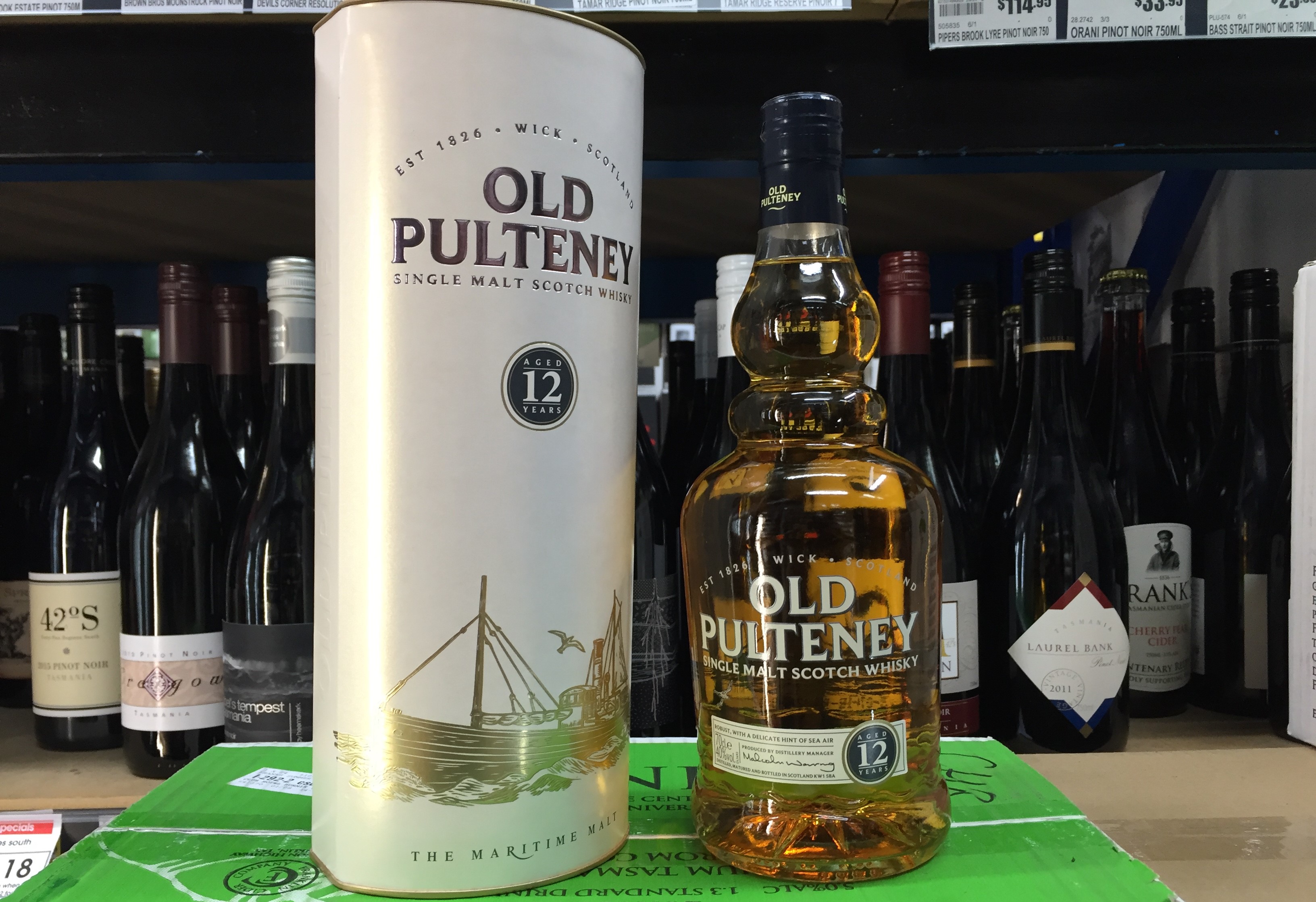
Old Pultney 12 Year old Whisky Waffle

There are three places in the world where the merest mention of the name can take me back in heart and spirit. The first are the cliffs at Yesnaby on the mainland of Orkney. Here, the crash of the Atlantic is stalled by Earl Thorfinn’s walls and the salty air is scoured into the finest lines of the skin. The second is the Fairy Pools on the Isle of Skye, where I have swum in the ice clear waters and tasted the pure heart of the Cuillins. The third, and the subject of this review, is the bond store at the Old Pulteney distillery in Wick.

I found myself here on an overcast Saturday in 2013. It was the third distillery on a self-guided tour which was to take me around the best parts of Scotland. My true blue Australian friend (who insisted on referring to the drink as ‘OP’) and I didn’t know then that it would be one of only seven distilleries we would visit on that trip. By the time we arrived in Pulteney town, we already had the creeping realisation that most large scale whisky making operations are done along similar lines. Coupled to this, we had satisfied ourselves that whisky makers send their whisky all over the place. Since then we have regularly enjoyed our whisky without feeling the need to visit the place of origin.

The Old Pulteney distillery was built in 1826 in a town built to support the herring trade. With a lack of foresight uncommon in the Scottish, James Henderson’s lads built the roof too low for the still. When the brand new copper pot still arrived, the swan neck kept clanging off the rafters. Without any ado they applied a choice piece of Scottish logic to the problem and sliced off the top of it. Job done, the still was installed, the top sealed and a pipe bunged on the the side creating the unusual appearance you’ll see today. The bulge further down the giant copper kettle also gave them an idea of how to shape their bottles.

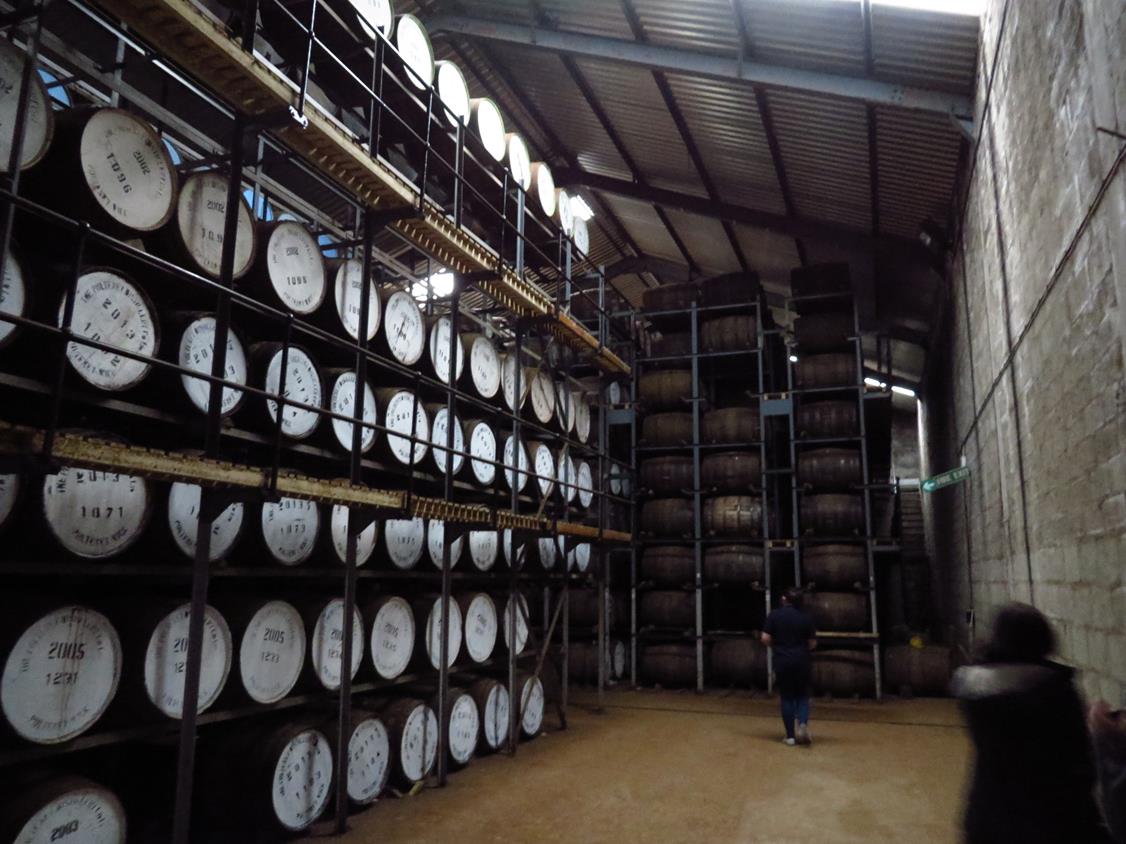
You’ll see all this and more on the tour, proving beyond doubt it is a whisky making process. After you’ve seen the unusual squat stills you’re taken out to the bond store. On the day we visited it started raining at this point. We made a dash towards the barrels, which in my mind were stacked six high (my photographic record shows only four), and the door was shut behind us. While we learned about the maturation process we avoided the tears of the angels and breathed in their share of the whisky; a fine ethereal vapour floating in the salty air. Yes, we all smelt that whisky, we all knew what we were doing and we yes, we all found questions to ask to keep us there longer.

IMG_0689 (Copy)

Old Pulteney has the taste of the sea in it too, they say. I can’t taste things like that, but Wick is not too far away from the places where the mighty Atlantic meets the moody North Sea and that can’t happen without seriously affecting a drink as emotional as whisky. The salt, they said, coats the barrels and works its way through the grain and into the final product. This may very well be the case. Salt for me is something I put on chips and any other food. It’s never been more complicated than that.

As for taste of Old Pulteney 12 year old, it’s a fine single malt, very fine. I find it harsh on the nose, easy on the draw and the burn is frank and satisfying. It has a rich stickling after taste like bronze coins falling over a weir and I’ll always like it because it’s the whisky I drink with my father.

I asked Dad why he drinks this particularly spirit. As a seasoned Famous Grouse drinker, it turned out his discernment was a result of him acquiring a bottle at no cost from an appreciative work colleague. His opinion of ‘Aye, it’s a nice one that’ is fair if not particularly detailed or nuanced. I confidently predict that he will continue to drink this brand so long as it remains at his personal initial price point.

For me it’s not what goes into a bond store it’s what comes out. That day in Wick an amateur whisky drinker went into the bond store. After delaying as long as I could, a happier, more philosophical and more content amateur whisky drinker came out. The OP lads do the same with their whisky. They wait and they wait and after twelve years a fine drink appears. I don’t know what makes this my homely stand-alone bottle of go-to, or why at times, when I can neither get to Yesnaby nor the Fairy pools of Skye, I can have a drop of Old Pulteney 12 year old and be at both at the same time. It’s a mystery I don’t want to think through too much and if I ever need to know, I can just ask my dad. He knows.

★★★★

The Glenlivet 18 Year Old

Reviewed by: Nick

Glenlivet 18

The banks of the river Spey in Scotland’s north east are fertile ground indeed. Nearly half of the country’s distilleries are located in this region which has come to be known, rather appropriately, as ‘Speyside’. Upon my criminally short drive through the area my head continuously moved side to side reading road signs pointing towards yet another famous distillery. It must have looked like I was watching a grand-slam final between Nadal and Djokovic! This abundance of whisky excellence could be found nowhere else on earth.

Speyside whiskies are known for being the smoothest, the richest, and the most elegant drams that Scotland has to offer, a reputation well deserved. Perhaps the best example of a Speyside malt is the Glenlivet 18 Year Old. It is one of the classiest single malts going around – and at a price that practically every other 18 year old whisky cannot come close to.

The whisky’s colour alone is enticing: a golden amber which glints in the sunlight. The nose is better: full of caramel, vanilla and orchard fruits. It is a pleasantly balanced aroma, not favouring one flavour over another. The palate is rich – full of flavour without being heavy. There is honey, oranges and malty biscuits, along with the faintest hint of sherry. The finish is light and not as sweet as the initial flavours suggest, with plenty of oak imparted from its 18 years in barrels.

There are literally thousands of whiskies made within a few miles of the river Spey. But if you were only able to try just one – then you could make a pretty strong case for this one.

★★★★


Benromach Sassacaia Wood Finish

Reviewed by: Richard

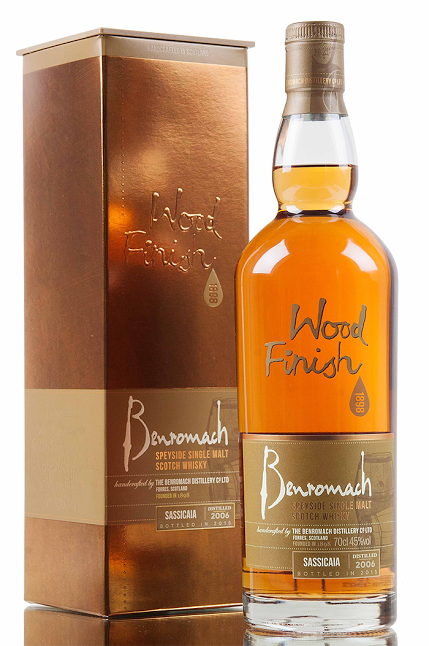
Benromach Sassacaia Wood FinishThis one was recommended to me by a friend who knows my fondness for sweeter whiskies… So first up – a little bit about the distillery:

Benromach is a Speyside distillery founded by Duncan McCallum and F.W. Brickman in 1898 and currently owned and run by Gordon and Macphail of Elgin. It is situated near Forres in Morayshire and is fed with spring water from the Chapelton Springs in the Romach Hills beside Forres.

And now – on with the review:

This has been matured in a Sassacaia barrel, so an introduction to the wood is in order!
Sassicaia is one of the most sought-after Cabernet Sauvignon wines in the world and made history recently, being the first single wine to be granted its own DOC (Denominazione di origine controllata – quality assurance label for Italian food products, especially Italian wine and cheese)
The Sassicaia estate is located at Bolgheri and lies in the Province of Livorno in Tuscany, Italy.

So, shut up, tell us about the whisky…

This is a 2006 distilled expression and bottled this year – there’s an older 2005 release, a 2004 release and a few older bottlings.
All I can find out is that it’s put in an ex bourbon barrel for around 7 years, and then put in a Sassacaia barrel for around 29 months – just over 2 years.
The colour is golden pink! Well lightly pink – if the sun hits it just right…

Nose: It’s got a real soft nose – dry toasted oak, vanilla, fruity, toffee, nutmeg, and that definitive wine note.
The nose is right up my alley – really sweet and bold, but not sickly…
Now to stick it in my mouth!

Palate: Cherries, raspberries & vanilla, spices, subtle smoke, malty toffee, and wine!
The palate is quite dry, which I find a lot with red wine finishes for some reason… tannic influence maybe? I find they make my mouth water a bit…

Finish: A medium-long finish with hints of fruit and another whiff of smoke.

This is a session whisky (if there’s such a thing) for sunny afternoon, sitting under a tree, in the shade, with some olives, sourdough, semidried tomatoes, cheese and some good friends…I’m amazed at the influence the wine has made, the light smoke and the fruit notes. I’ve tried the standard 10yo Benromach, which is one of my favourites – this is better, not by a lot, but still, better, and juicier…
A bloody fine whisky to add to any collection!

★★★

Highland Park Svein

Reviewed by: Nick

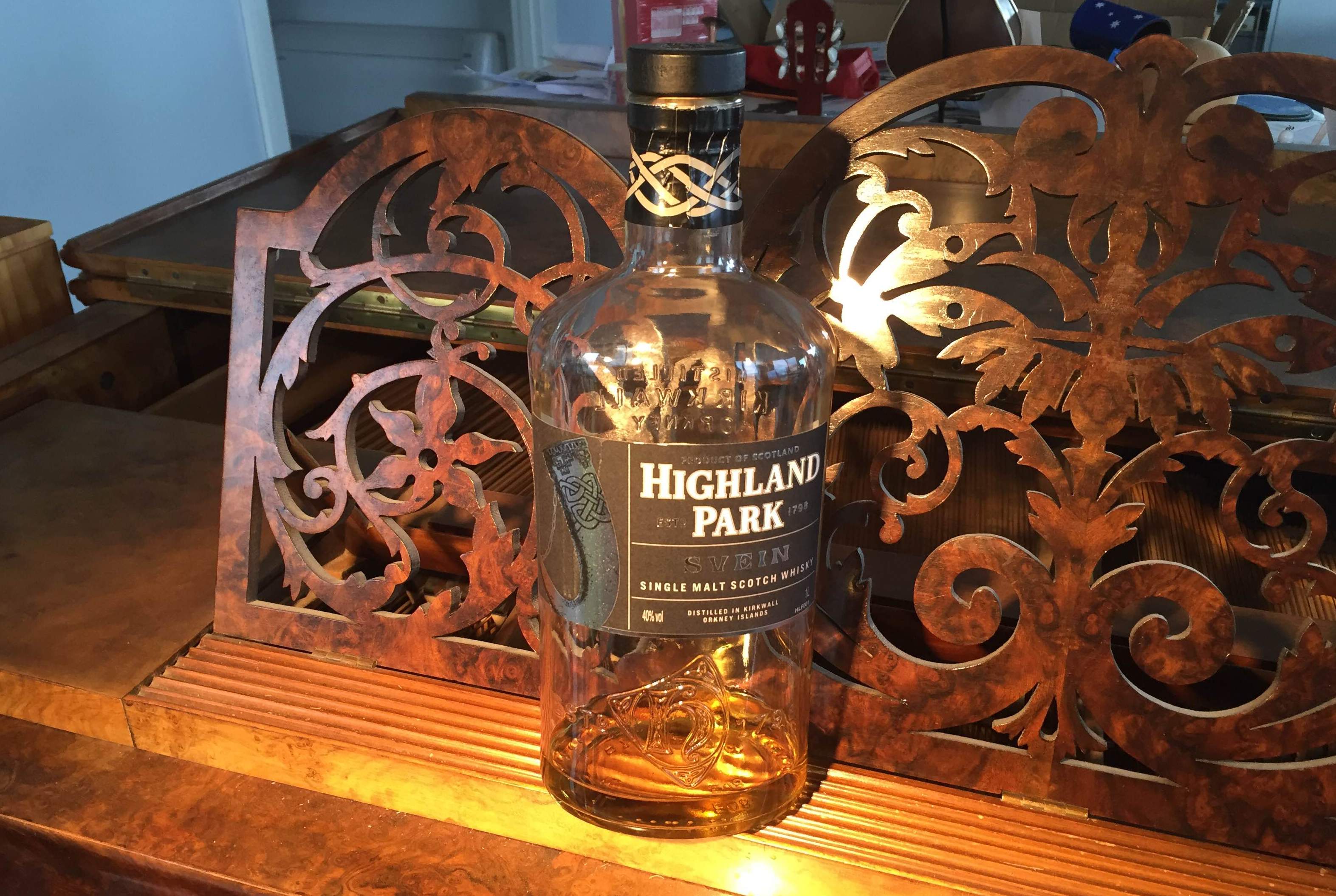
Highland Park Svein

Highland Park have one clear advantage when it comes to marketing their whisky: Vikings. Nothing can drum up some interest liked a horned hat on the front of your bottle! Of course, Highland Park can quite rightly look to the Norse raiders when branding their products, as the Orkney Islands where the distillery is located have a proud Viking heritage.

The details of their arrival in the ninth century are told in the Orkneyinga Saga, a historical narrative with more twists and family betrayals than the best soap opera. Among the characters were a series of ‘warriors’ immortalised forever in travel retail by Highland Park.

Svein Asleifsson is the legend behind the entry level of the range – which is perhaps unfair to a man dubbed the ‘Ultimate Viking’. Svein was a charismatic chieftain known for his generous and hospitable nature, and the folk at Highland Park have attempted to create a whisky that mirrors these traits. While I cannot claim this to be exactly the case (it doesn’t pour generous nips of itself into your glass!) it is certainly a very drinkable drop.

While there’s definitely some smoke in there, there’s less on the nose than you’d expect from a Highland Park dram. Instead there are ripe oranges, red apples and plenty of malt. The palate is lightly spicy, with oak, strawberries and… burnt toast? The finish is creamy, malty and slightly bitter. All up, it is a light whisky, threatening to be inconsequential but with just enough to enjoy.

Highland Park have created an interesting series here. While Svein doesn’t stand up when compared to the wonderful 12 Year Old expression, it certainly gives you a greater picture of the flavours captured by the Orcadian Distillery. Sadly I have not got to sample any of the other warriors to broaden my mind!

★★