Scottish Whisky

Lagavulin: 200 years of peated perfection

Posted by: Ted

lagavulin

Here at Whisky Waffle we understand the gravitas of celebrating a bicentennial birthday. When we sprang into existence in 1988, we arrived just in time to witness Australia’s 200th year as a nation (although one of us saw a few months more of it than the other). Now we are all grown up and are excited to be able to witness another bicentennial milestone, the anniversary of a distillery that is rather close to our hearts:

Happy 200th Birthday Lagavulin!

Founded in 1816 by John Jonston and Archibald Campbell, Lagavulin has now entered the prestigious Islay old-boys club, joining the company of fellow veterans Ardbeg, Bowmore, Bunnahabhain and Laphroaig.
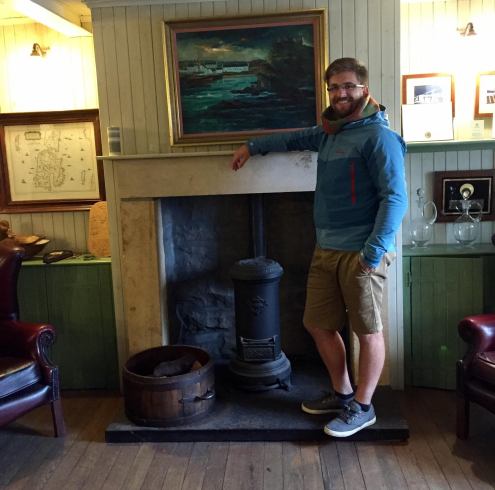
lagavulin-ted

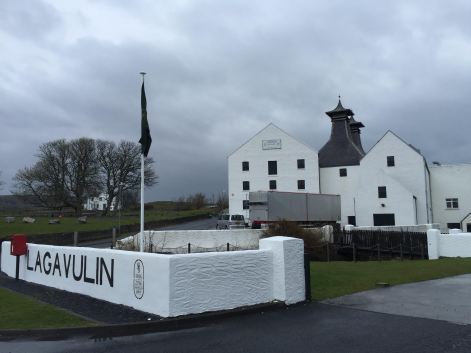
Nestled on the shoreline just a couple of miles East of Port Ellen, the Diageo-owned distillery is classic Islay, with whitewashed walls bearing the name of the distillery in giant black letters on the seaward side and elegant pagodas peeking above the roof line. Inside, guests are greeted by age polished timber and leather chairs, painting a romantic view of yesteryear. Not forgetting of course the glossy copper stills and the ever-present scent of peat and spirit rising to meet the angels…

lagavulin-chairs
To celebrate the big milestone Lagavulin has released a special edition 8 year old bottling, which aims to recreate a bottling sampled by historical Waffler Alfred Barnard in 1886. Now, bear in mind an 8 year old whisky was considered nigh-on ancient back in the day and Barnard described that one as as “exceptionally fine”.

With such high praise from the 19th century, Nick immediately decided to add it to his collection. However, seeing that 2016 marked a 200 year celebration he thought ‘why stop there’ and promptly bought the 2014 edition of the Lagavulin 12 Year Old Cask Strength. When Ted added his Whisky Waffle favourite the 16 Year Old into the mix, we had quite the ingredients for a special Lagavulin birthday bash! Or as we didn’t refer to it at the time but should have: a peat party!

lagavulin-all

On the nose the 16yo was straight up coastal, with a salty, iodiny, seaweedy hit. But then we found… bananas? Perhaps banana chips, as well as dry-aged meat, terracotta, copper and crushed grass. The flavour was all about the tangy peat, but there were earthy notes such as mossy paving stones and singed oak branches.

After the subtle, balanced nature of the 16yo, the 8yo stopped us dead in our tracks and then made us jump up and down with excitement. The colour for one thing was crazy, like the palest white wine, certainly no Diageo caramel in sight there. The nose was decidedly new-makey. Raw. Ashy. A good deep breath delivered a big hit of green fruit. The flavour was fresh, crisp and bright, with the fire still burning across the palate. Summer peat. The finish was rather excellent, being sharp like a tailored charcoal suit. Everything about the 8yo served to highlight the smoothness of the 16yo.

Finally it was the turn of the cask strength 12yo, probably the dark horse of the bunch. Phwoar, what a whisky. It was young, exciting and complex, like a teenage poet. It was Bond, Die Hard and Crank… on Speed. The finish provided a peaty punch that really scratched that itch. There’s something about young peated whisky that just works.
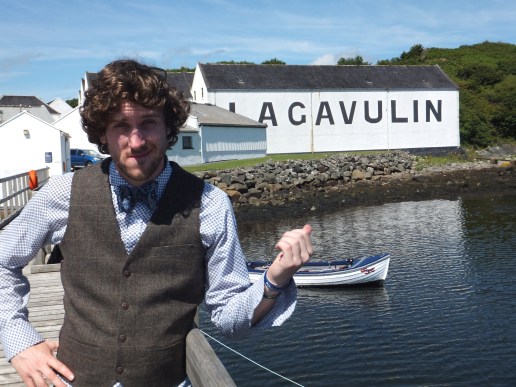
lagavulin-nick
We’ve always had a connection with Lagavulin, even before we started the whole Whisky Waffle malarkey. To be fair, the 16yo was the first whisky that ever blew our minds and made us think that whisky was something more than an additive to Coke. Hopefully this gem of Islay continues another 200 years and beyond, but who knows what the future may bring. Maybe one day in the far flung future a descendant of Howard Carter will be leading an expedition to explore the ruins on a lonely island off the old Scottish coast. Perhaps they will discover a door sealed with a dusty cartouche bearing the legend ‘Lagavulin Distillery Est. 1816 Isla’ and upon gaining entry to the chamber within, will stumble across a hoard of barrels containing the fabled peated gold of Islay…

Bunnahabhain 18 Year Old

Reviewed by: Ted

bunna-18

I would like to start out by saying that I am a big fan of Bunnahabhain (so this review is not going to be biased in the slightest). Yes, we all know that Islay is famous for its heavily peated drams, but I have a definite soft spot for this gentle islander.

I’ve actually been to the distillery, a few miles up the coast from Port Askaig, but to my eternal discontent I haven’t actually done the tour as we were pressed for time and had several other tours booked that day. The buildings may look rather grey and foreboding, but the people are so friendly and warm. Please pop by and say hello to them if you get a chance.

I really got a taste for Bunna on the ferry on the way over to Islay because it was the dram of the month and they were pouring doubles. Standing on deck in the blasting wind and watching the islands of Islay and Jura hove into view with a warming glass of Bunnahabhain in hand definitely leaves a lasting impression on a lad.

While I may have cut my teeth on the Bunna 12 Year Old, I recently acquired a bottle of the 18 Year Old and tell you what, it’s pretty exceptional. Bunnahabhain dials back the peat hit in favour of softer, earthier flavours. The nose is rather like tramping around the rolling interior of the island, bringing forth moss, springy peat-laden soil, wind-twisted woods and the occasional gust of salty sea breeze (plus the colour is like the dark waters of the lochs that stud the landscape).

Other flavours floating through the air include roasted chestnuts, dark chocolate, spit roasted lamb with salt and rosemary, stewed quinces and brandy-soaked raisins (sherry casking par excellence).

The mouth is quite salty, but strikes an elegant balance, like a high quality piece of salted caramel served with delicate slices of pear poached in butter and sprinkled with brown sugar. The finish is rounded, warm and comforting, like curling up on a squishy couch in front of a glowing fire on a cold night.

While I rather enjoy getting smacked in the face with a massive slab of Ileach peat, there’s something about the softer side of Islay that keeps drawing me back again and again. One day I will return to Bunnahabhain and explore it properly, but until then I will sit back with a glass of the 18 Year Old, close my eyes and be transported back to one of the most magical places in the world.

★★★★

#IslayWeek

#LetsGetPeaty

Kilchoman Machir Bay

Reviewed by: Nick

kilchoman-machir-bay

2012 edition

Kilchoman is (was?) the first new distillery built on Islay in 120 years. The drawback of this is that it comes without centuries of tradition. But the positive – it comes without centuries of tradition! Meaning it can do whatever the hell it likes! This perspective can’t help but bring to mind a few producers closer to home which claim to be slices of Scotland in Tasmania. Well, I’m going to make a big call: Kilchoman Distillery is a slice of Tasmania – in Scotland!

Like Tasmanian distilleries such as Redlands, it attempts to keep the entire whisky making process on the one site, paddock-to-bottle style. While this is hard to achieve across their whole range, their lightly peated ‘100% Islay’ expression is created exactly as it sounds: entirely on Rockside Farm, home of Kilchoman.

Also like Tassie, Kilchoman can’t be bothered waiting for 12 years to release their product, so bottles its range under titles of various landmarks: heavily sherried Sanaig, entirely sherried Loch Gorm and the subject of today’s review, the Machir Bay, which is a marriage of some oloroso matured whisky with a greater amount of ex-bourbon whisky.

Often drinking younger whisky from Scotland can be likened to snuggling with a Pitt Bull, but for peated whisky it just seems to work. The smoke tames the beast and compliments its occasional snarling. The Machir Bay is no exception.

The smoke is clearly apparent on the nose, however there are also sweeter creamier notes of hazelnut and coffee. On the palate the Machir Bay takes a while to get going – initially gentle before building into a fiery roar, a clear sign of its young age. Flavours of vanilla and green grapes can be found, shrouded in huge gusts of smoke.

While this is a tremendously exciting dram, I get the impression that it’s still a work in progress and that when I check back on a later release in a few years time that it will have come on in leaps and bounds. However, just like Tasmanian whisky, it is one step on a journey – and one I’m very happy to have checked out.

★★★

#IslayWeek

#LetsGetPeaty

Bowmore Darkest 15 Year Old

Reviewed by: Nick

bowmore-darkest-15

This is the whisky that restored my faith in Bowmore.

I always used to regard Bowmore as the poor cousin of Islay. Sure, they have the history and the location… but there was never any point buying a bottle of the 12 Year Old when you considered what was available down the road in Port Ellen.

However, it was a taste of the Bowmore Darkest 15 Year Old (offered to me at Auchentoshan Distillery of all places!) that turned my head. It took me one sip to realise that this dram took elements of the peat monsters and sherry bombs I loved so much and combined them into one satisfying package. It has after all spent 12 years in ex-bourbon barrels before being transferred into first fill ex-oloroso casks for a further three. All of which was spent on Islay, soaking up that iconic sea breeze. This is a process which could have gone horribly wrong – too much in either direction could have ruined the whisky. But you know what? They absolutely nailed it.

On the nose the peat hits you immediately, though it’s not as in-your-face as other Islay drops. This would potentially displease me if it were not for the joyous abundance candied fruitcake aromas that follow it! It is certainly a nose that begs you to take a sip. When you do, you discover a rich chocolately palate with elements of raisins and caramel. It all combines to form the impression of the chewy toffee-like remnants left at the bottom of a tin of freshly baked sticky date pudding. The finish is where most of the smoke can be found. There is plenty of it, although not enough to mask the sweeter Christmas pudding flavours of the palate. All up it is, at least in my opinion, a perfectly balanced drop.

This whisky is a good demonstration of the dangers of forming an opinion about a distillery without sampling a range of their products. I could have easily passed this one up without trying it, writing it off as another underwhelming Bowmore. But if I had I would be missing out on one of the most perfectly balanced whiskies Scotland has to offer.

★★★★

#IslayWeek

#LetsGetPeaty


Port Charlotte Scottish Barley Heavily Peated

Reviewed by: Nick

port-charlotte-sc-hp

It’s a fun bit of whisky trivia that Port Charlotte whisky is not actually made by the long-since-closed distillery of Port Charlotte. Instead, this particular drop is made by Bruichladdich Distillery as a tribute to their heavily peated ex-neighbours.

Jim McEwan, Bruichladdich’s head distiller at the time of this dram’s inception, wanted to recreate the flavour that the legendary old distillery was famous for. He tracked down a now 90 year-old former employee of Port Charlotte distillery and asked him what the whisky tasted like. “Aye,” said the old man, “aye, it tasted good.”

I for one certainly cannot deny that the product Jim has created to bear the Port Charlotte name tastes “good”. In fact, if I were to give my tasting notes in a solitary word, I would simply say: bacon. And everyone loves a bit of bacon, right?

Of course, this site is called ‘Whisky Waffle’, not ‘Whisky-we’ll-keep-it-brief-ok’. Apart from the latter sounding silly, we’ve found that we do rather like to bang on a bit with pretentious tasting notes. Speaking of which, this whisky has a nose like an Australian barbecue. Barley peated to 40 parts per million ensure smoke and cooked meat flavours waft oh-so-unsubtly over peppery notes and a dash of dark chocolate.

The palate is pleasantly spicy – no doubt an influence of the slightly higher bottling strength of 50%. The flavours on offer include salami, smoked salmon and of course, the aforementioned bacon. The meat theme lingers long after the whisky is gone, leaving the sensation of having polished off a particularly satisfactory scotch fillet (pun well and truly intended).

The release of the Port Charlotte range by Bruichladdich has rekindled an interest in the history of the grand old distillery and there have even been talks about building a new facility on the old site. However, this project seems to have stalled for the time being with no updates as to whether it might go ahead. Fortunately, thanks to this particular whisky, we have access to the next best thing: a dram that, seventy years from now, we can reflect on and happily label it as “good”.

★★★

#IslayWeek

#LetsGetPeaty

Ardbeg 10 Year Old

Reviewed by: Nick and Ted

ardbeg-10

There are certain whiskies that a blog should have in its pages and until now we have been found wanting for this particular dram. Its label rather audaciously claims that not only is it the best whisky on Islay, but is in fact among the best in the world. The funny thing is, we’re actually hard pressed to disagree with it.

The Ardbeg 10 Year Old makes an excellent case for the younger whisky. Generally we equate greater age with greater excellence, but this dram proves that this is not always the case. There is something about the raw, youthful energy in the 10 Year Old that allows the peat monster to really roar and we can’t help but feel that if it was left in the barrel for a few years longer then some of the magic would be lost.

We took it upon ourselves to sample the Ardbeg 10 quite extensively (read quite extensively) and came up with a comprehensive set of tasting notes. We didn’t quite comprehend how wonderful these notes were until we read them back the next day. Normally we don’t present tasting notes in isolation, but these are too good to intersperse with waffle.

Nose: South-east Asian mystery meat, peanuts, satay, bitumen road surface, earthy ashes, digging up a hangi, nashi pear, fizzy apple, melon, honeydew, honey and heavily perfumed plant.

Palate: Smoke (go figure), BBQ sauce, Worcestershire sauce, gingerbread, “there’s a pear in there”, oregano, home-made potato chips, cardamom, cloves and nutella fudge.

Finish: Fiery, spicy, hot, warm and lingering.

Subsequent tastings have not yet turned out quite as many creative thoughts about the 10 Year Old; however we unashamedly stand by what we said in the heat of the moment (mostly).

We have mentioned that the Ardbeg 10 Year Old compares impressively with much older drams, but what if the field was narrowed to only it’s 10 year old contemporaries. For us, the only possible contenders are cross-town rivals Laphroaig and fellow peat-pal Talisker. But if we’re honest, Ardbeg leaves them both in the shade: we truly believe you won’t find a better 10 Year Old whisky on the planet.

★★★★

#IsalyWeek

#LetsGetPeaty

Springbank 15 Year Old

Reviewed by: Nick

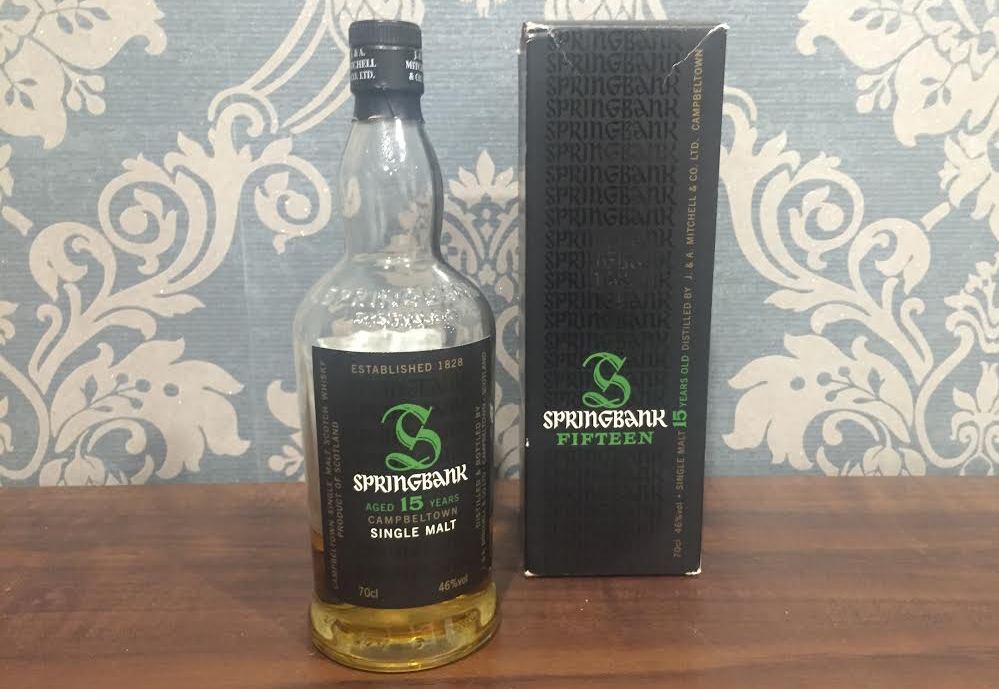
springbank-15-year-old

The best drams are those that come with a sense of place. The Islay peat monsters smell like the fresh peaty air of the island on which they were made and taste like the fires the locals use to keep warm in the winter (and the summer). The drops from Speyside are as luscious and floral as the green fields which line the roads in the sunny north east (at least it was sunny the day I was there. Maybe I used up Scotland’s sunshine quota that day…)

Equally, whisky made at Springbank distillery tastes like the town in which it is made. Campbeltown was once a thriving maritime city full of trade, shipbuilding, and of course, fishing. Now, hold your horses there Whisky Waffle. Surely I’m not implying that this dram… is the whisky equivalent of fishing? Crazily enough, that’s exactly what I’m suggesting! And it works. As in really, really works.

Unlike the 10 Year Old Springbank expression, the 15 has spent its extra maturation time in ex-oloroso sherry barrels and the added complexity is clear from start to finish.

On the nose, oily, briny characteristics are immediately noticeable. There is the faintest hint of smoke, perhaps blown in from nearby Islay. The palate is gently spicy, courtesy of its 46% nature. There are flavours of caramel and pineapple contrasting intriguingly with meaty and, dare I say it, fishy aspects. The finish is pleasingly long, really encapsulating the seafaring town with notes of salt and sea-spray.

On this blog, I do boast about a range of things, but even I can’t say I have ever been to 18th century Campbeltown (or even the current 21st century edition for that matter). However, by simply pouring myself a dram of Springbank 15 and closing my eyes (don’t try it the other way around – you’ll waste good whisky!), in my mind I am immediately transported there. I can smell and taste it for sure!

★★★★

The Macallan Fine Oak 12 Year Old

Reviewed by: Nick

macallan-fine-oak-12-year-old

I just can’t get my head around (The) Macallan. While I can very clearly visualise and appreciate the ranges of, say, Glenfiddich, Glen Moray or Glendronach, trying to form a coherent picture of what Macallan is about is as likely to give me a headache as drinking way too much of the stuff. And not just because it doesn’t start with the word Glen…

The contradictions are plentiful: many an old-time whisky drinker will cite Macallan as their go-to drop. Yet the distillery spent a fortune to get a bottle of 50 Year Old in a Bond film. And for some reason they recently ditched age statements in favour of… colours? And yet not too long ago there was also Macallan’s ‘Fine Oak’ range, one such bottle being the subject of today’s review.

I don’t get the point of the ‘Fine Oak’ series. As far as I can tell, it takes its name from the many “exceptional quality” oak casks the whisky was matured in. But… does that mean their older range was dumped into low quality barrels? Somehow I doubt it. It seems to be another rebranding dead-end left by the wayside by an impatient marketing team.

Despite all this, the whisky itself is great to drink. The nose is light, vibrant and contains finely balanced notes of vanilla and lime. The palate is sweet without being sickly and flavours of honey and malt take centre stage. The finish is short without being unsatisfying, with a creamy nuttiness that gently lingers: it’s Kellogg’s Crunchy Nut in whisky form! All up, it’s a brilliantly balanced dram, and one that you could confidently pour to a hesitant whisky drinker.

The biggest disappointment is that this bottle is no longer available – if I were to seek something similar I would have to try a different bottle in the Macallan range. As much as I enjoyed this particular drop, I’m wary to spend up on something else from the distillery. Macallan seems to be undergoing somewhat of an identity crisis and I’m probably unlikely to go and buy a bottle until they sort it out – that is unless I get some pretty convincing recommendations in the comments!

★★★

The Pot Still Exclusive Invergordon 26 Year Old Single Grain Whisky

Reviewed by: Ted

invergordon-26

It’s very rare that I come across a whisky distilled in the year of my birth; usually they seem to fall either side of it. While that’s probably just me not looking in the right places, it’s definitely rare that the dram in question is a single grain scotch whisky.

Lesson time: Single malt scotch whisky can be made using only malted barley, whereas grain whiskies (like it says on the tin) can be made using other grains, such as wheat, and can be malted or unmalted. You don’t generally tend to see single grain whiskies on their own in the wild because their normal purpose in life is to form the base of blended scotch whisky.

Alongside the prestigious single malt producers are a multitude of unsung distilleries pumping out grain whisky for use in your Johnnie Walkers and Dewars’ and the like. Case in point: Who’s heard of Invergordon? Nope, me neither, but turns out they’re a thing.

I actually came across this bottle while I was in an excellent Glaswegian bar called ‘The Pot Still’ (up the end of the mall if you want to find it). While chatting to the barman I challenged him to pour me something unusual, and so he did.

Produced at Invergordon as an exclusive bottling for the Pot Still (in celebration of something or other I think. I forget what) this particular bottle was distilled on the 3rd of March 1988 and aged for a rather astonishing 26 years in cask# 24975 (no idea what, but from the colour I’m guessing an ex-bourbon).

Bottled at a hearty 53.7%, the nose of the Invergordon is vibrant and zesty, zinging with lemon, pineapple, pine resin and wood polish. Underneath the initial sharpness sits a smoother, rounded layer of pear, plum, apricot, dates and nuttiness. Finally, gliding out underneath is a waft of vanilla.

The first mouthful hits hot and sharp, with more lemon and pineapple, and then slides down your throat with a burning coolness like you’ve just had a strong mint. A second attempt, giving more time to develop in the mouth, finds toffee, green wood and a bitter, grassy, herbal finish.

I am sorry (not sorry) to say that you are probably highly unlikely to find a bottle of this anywhere. I only happened to stumble across mine because I was in the right place at the right time and the barman still had a small stash behind the bar that he was willing to part with.

If you do have a bottle, or are in the Pot Still and they’ve got some left, well done you, you’re part of an exclusive club. As for the rest of you great and unwashed masses, I think that this serves as a reminder not to discount the humble grain whisky. While they don’t get the same love as their single malt cousins, with a bit of age they can hold their own any day.

★★★

Highland Park 18 Year Old

Reviewed by: Nick

Highland Park 18

As whisky fans, we regularly battle to be objective in our tastings to ensure our feelings don’t influence our perceptions of a whisky’s quality. And yet other times we simply say “screw it” and go with our hearts. The Highland Park 18 Year Old has a long list of awards to its name, but for me, it’s a little more special than that.

The distinctive (duck-egg) blue wallpaper gracing the background of our review photos is part of my recently built library (AKA whisky room) in my recently built house. And throughout the exciting building process the Highland Park 18 was there all the way. It was the first bottle cracked under my roof – before the walls were even finished! It was brought out again and shared with m’colleague on the night I moved in. Then at the house warming, surrounded by my best friends, it came out once more and toasted my new abode.

So with all these great feelings associated with the bottle how could I possibly write an objective review? Put simply, I can’t. But you know what? Screw it.

The nose is delightfully coastal and sherried. It is particularly dry, and bursts with raisins, prunes and smoked salmon. A dash of smoke hits you on the palate before quickly subsiding and giving way to grapes, cherries, peppermint and salami. The finish is long and contains an oakiness which calls to mind old wooden furniture.

If I was served this whisky blindly at a tasting then who knows if I would have the same sentiments towards it? What’s important for me is that now I’ve made these associations, I will continue to enjoy this whisky whole heartedly. And maybe you’ll love it too – especially if the happy memories you attach are your own.

★★★★