12 year old

No Age No Good? Whisky Waffle launch NAS Week

Posted by: Nick

Wafflers in smoking jackets

Some may argue that our attire is the greater controversy here…

A controversial topic? Surely we don’t do that here at Whisky Waffle! Well, just this once, we thought we’d take things seriously and leave our flippancy behind.

Sort of…

Today’s discussion is about non-age statement, or NAS, whisky. For non-whisky geeks, NAS whisky is a bottling that cannot be described as a 12 Year Old, or a 10 Year Old, or an anything-year old, because there is younger spirit mixed through like a very whisky-flavoured cocktail.

These NASes are borne out of necessity: since us Wafflers discovered the stuff, there just hasn’t been enough of it around! So rather than waiting the usual 12 years, distillers have been getting impatient and slapping 9 year old, 8 year old (3 year old?) spirit into the mix and coming up with impressive sounding Gaelic names to go on the label.

So how do we feel about this situation? Is the stuff as NASty as it sounds? Well, to be honest, I have no problem with the concept of NAS whisky. I mean, you just can’t deride the Talisker Storm as liquid Nickleback while simultaneously proclaiming the Ardbeg Uigeadail as the solution for world peace. So just like any supposedly ‘superior’ whisky with a number on the bottle, there are good ones and there are bad.

Founders Reserve n waffle

But seriously, the box IS rather pretty…

Which brings me neatly to Glenlivet – a prominent convert to the NAS fad. I wrote a glowing review about their ever-dependable 12 Year Old and described how its accessibility was its strength. That was, until it was no longer accessible. In its place, in a blue box (which is sadly not bigger on the inside) came the sophisticated-sounding ‘Founders Reserve’. I was slightly concerned – though this disquiet came from my affection towards the 12 rather than my automatic dismissal of anything ageless. I was perfectly fine so long as it tasted good. Which, I’ve recently discovered, it doesn’t.

It’s not that the dram is comparable to the toxic output of a nuclear reactor. It’s quite drinkable in a ‘at-least-it’s-not-red-label’ sorta way. But it doesn’t stand up to the depth and character of the previous entry-level incumbent. And this made me both sad and rush out to get a bottle of the 12 while I still could.

Non age statement whisky is not the scourge of the earth that many flat cap-wearing whisky reviewers may have you believe. There are some tasty drops out there that would please the most snobbiest of whisky snobs (if you told them it was an old bottle of Macallan). However, in the case of Glenlivet, where you can directly compare the old and the NASish new – it’s one nil to the age statements.

Of course, another way of looking at it is that after eight drams, it doesn’t really matter how long it’s been in a wooden barrel for…

The writing of this article prompted a lively debate among the Whisky Waffle boys – so much so, that they decided to spend a week looking at some prominent NAS releases to see if they are as derisory as their reputation suggests. So with great excitement – we present to you NAS-Week! Make sure you pay a few visits throughout the week and find out our thoughts – or post some juicy trolling comments! Tomorrow will kick off proceedings with a detailed review of this article’s nemesis: the Founders Reserve! But why start there? Leave us a comment telling us EXACTLY how you feel about non age statement whisky in the replies!

#NASweek

Oban 14 Year Old

Reviewed by: Ted

Oban 14

Rather like the wild haggis (Haggis scotticus), Oban distillery is a curious wee beastie. Located on the craggy west coast of Scotland in the town of the same name, Oban is one of the oldest distilleries in the country, founded in 1794 on the site of an old brewery by brothers John and Hugh Stevenson. Interestingly however, despite its lengthy existence it has remained one of the smallest distilleries around, with only two pot stills in residence to make the good stuff.

Understandably, the limited production capacity has focused the Oban distillers, choosing to craft a few expressions rather than the seemingly endless releases pedalled by larger producers. Luckily this means that the Obanites have had plenty of time to refine and tinker with their creations.

Oban’s flagship dram is one that should pique the curiosity of any whisky fiend looking for something a little different. Eschewing usual ageing lengths, the Oban 14yo, part of Diageo’s “Classic Malts Selection”, exploits an interesting niche between youth and maturity, and it must be noted, at a price on par (at least in Australia) with many 12yo whiskies.

The character of the 14yo walks a fine line, balanced as it is between the highlands to the east and the islands to the west. A careful nosing reveals a light, sweet, dusty spirit with suggestions of damsons and green apples, giving it a sense of kinship with other highland drops such as Dalwhinnie.

The taste on the other hand speaks of its seaside home, beginning with a bright, slightly salty burst on the front of the palate, lifted by the 43% strength, followed by a hint of seaweed and coastal air. The mid palate smooths out and becomes much more rounded, with dried fruits, zest, spices and perhaps just the lightest hint of smoke. The finish is clean and doesn’t linger for too long.

Once you’ve knocked back a few sips of the 14yo it’s worth holding the glass up to the light and contemplating the colour, which should be a dark amber. The reason I make mention of this is that the 14yo is not aged in the sherry casks that the colour suggests, but rather ex-bourbon hogsheads.

The answer to this conundrum will cause some to shrug their shoulders unconcernedly and others to foam at the mouth in righteous indignation: caramel e150a. Why Oban chooses to use artificial colouring, while other premium distilleries go to great pains to point out that they keep their own products au naturale, is a secret known only to the Obanites. Whether or not it’s presence affects the flavour of the 14yo I will leave up to your own distinguished palates, fellow wafflers.

The small size of Oban definitely works in its favour, allowing it time to lovingly craft a quirky and interesting product that does not hurt the wallet too much. The 14yo is certainly a delightful and evocative drop; and unlike the pesky wild haggis, is relatively easy to track down for those curious to discover the ‘west highland’ flavour.

★★★

Cragganmore 12 Year Old

Reviewed by: Nick

Cragganmore 12 Year Old

Summer is a time for barbeques and dreams; it is a time for long evenings spent irreverently with friends. And, of course, it is a time for summer romances.

I met the Cragganmore 12 Year Old shortly before Christmas and knew, without being able to define why, that this was to be my summertime dram. It glistened, a deep gold on the shelf, almost calling to me with promises of what was to come. How could I resist?

The following weeks I enjoyed the gloriously sunny evenings with the Cragganmore by my side. We were thick as thieves, spending time at post-Christmas drinks, New Years Eve – even on the annual camping trip. All my whisky-drinking friends approved. There was no doubt, the Cragganmore was a worthy addition to our summer festivities. And the flavours? Extraordinary.

The nose of honey and butterscotch. The palate of vanilla and lemons. And the finish… Oh that delicate and yet spicy linger I feel I will never truly forget.

Inevitably, the sun began to set on a glorious January, and the contents of the Cragganmore dwindled. As with all summer flings, it ended all too suddenly. It was time to say farewell to this golden bottle. While it was a friendship only recently acquired, it seemed the bonds we had formed would last a lifetime. As we said our goodbyes, I thanked it for its companionship over such a memorable time. I can now only leave it in the hands of fate as to whether we meet again on another, seemingly endless, summer afternoon.

★★★

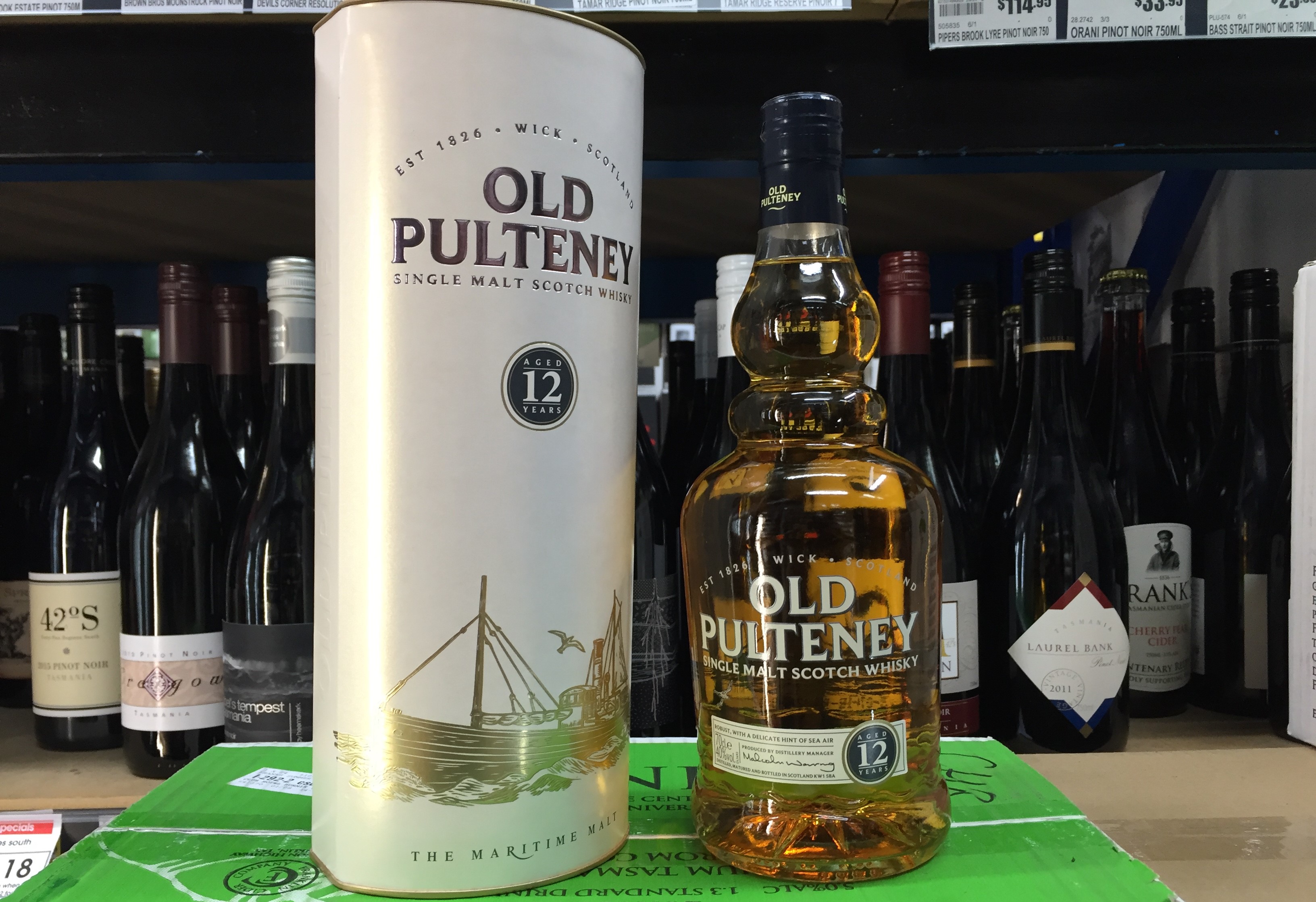
Old Pulteney 12 Year Old

Reviewed by: The Cynical Scot

Old Pultney 12 Year old Whisky Waffle

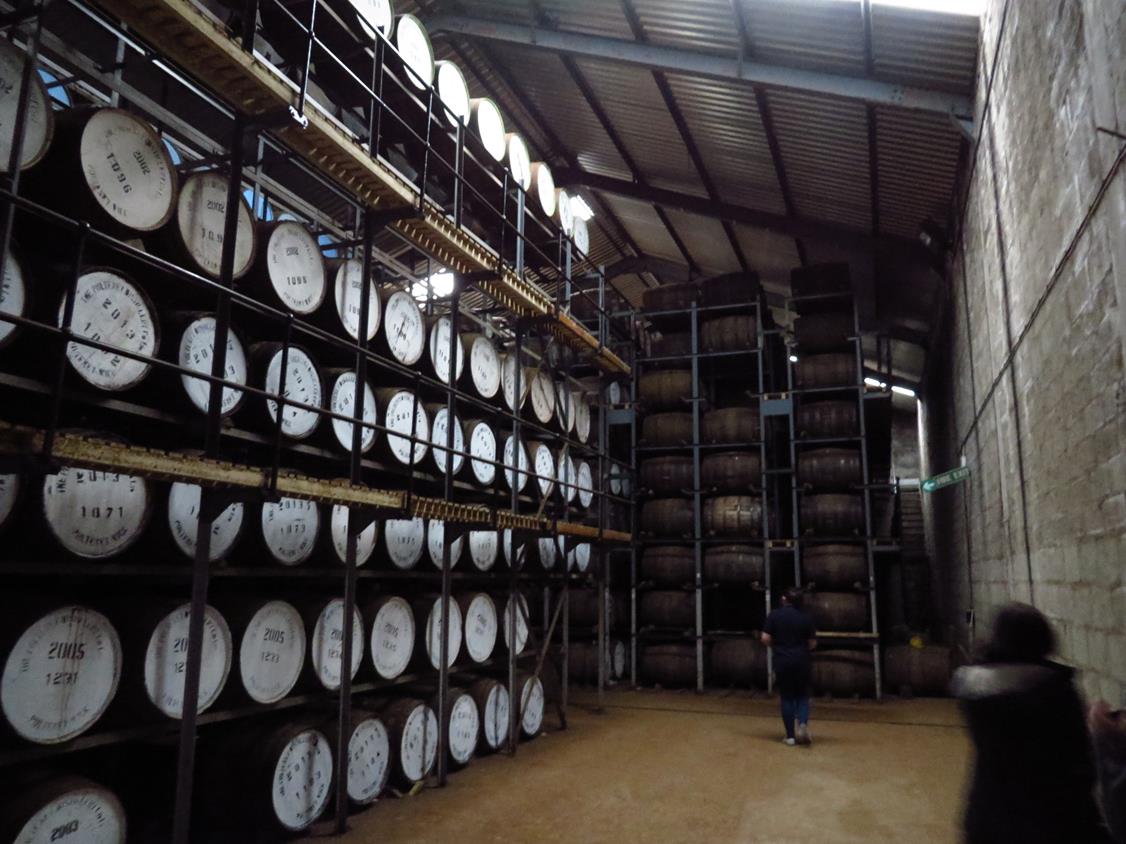
There are three places in the world where the merest mention of the name can take me back in heart and spirit. The first are the cliffs at Yesnaby on the mainland of Orkney. Here, the crash of the Atlantic is stalled by Earl Thorfinn’s walls and the salty air is scoured into the finest lines of the skin. The second is the Fairy Pools on the Isle of Skye, where I have swum in the ice clear waters and tasted the pure heart of the Cuillins. The third, and the subject of this review, is the bond store at the Old Pulteney distillery in Wick.

I found myself here on an overcast Saturday in 2013. It was the third distillery on a self-guided tour which was to take me around the best parts of Scotland. My true blue Australian friend (who insisted on referring to the drink as ‘OP’) and I didn’t know then that it would be one of only seven distilleries we would visit on that trip. By the time we arrived in Pulteney town, we already had the creeping realisation that most large scale whisky making operations are done along similar lines. Coupled to this, we had satisfied ourselves that whisky makers send their whisky all over the place. Since then we have regularly enjoyed our whisky without feeling the need to visit the place of origin.

The Old Pulteney distillery was built in 1826 in a town built to support the herring trade. With a lack of foresight uncommon in the Scottish, James Henderson’s lads built the roof too low for the still. When the brand new copper pot still arrived, the swan neck kept clanging off the rafters. Without any ado they applied a choice piece of Scottish logic to the problem and sliced off the top of it. Job done, the still was installed, the top sealed and a pipe bunged on the the side creating the unusual appearance you’ll see today. The bulge further down the giant copper kettle also gave them an idea of how to shape their bottles.

You’ll see all this and more on the tour, proving beyond doubt it is a whisky making process. After you’ve seen the unusual squat stills you’re taken out to the bond store. On the day we visited it started raining at this point. We made a dash towards the barrels, which in my mind were stacked six high (my photographic record shows only four), and the door was shut behind us. While we learned about the maturation process we avoided the tears of the angels and breathed in their share of the whisky; a fine ethereal vapour floating in the salty air. Yes, we all smelt that whisky, we all knew what we were doing and we yes, we all found questions to ask to keep us there longer.

IMG_0689 (Copy)

Old Pulteney has the taste of the sea in it too, they say. I can’t taste things like that, but Wick is not too far away from the places where the mighty Atlantic meets the moody North Sea and that can’t happen without seriously affecting a drink as emotional as whisky. The salt, they said, coats the barrels and works its way through the grain and into the final product. This may very well be the case. Salt for me is something I put on chips and any other food. It’s never been more complicated than that.

As for taste of Old Pulteney 12 year old, it’s a fine single malt, very fine. I find it harsh on the nose, easy on the draw and the burn is frank and satisfying. It has a rich stickling after taste like bronze coins falling over a weir and I’ll always like it because it’s the whisky I drink with my father.

I asked Dad why he drinks this particularly spirit. As a seasoned Famous Grouse drinker, it turned out his discernment was a result of him acquiring a bottle at no cost from an appreciative work colleague. His opinion of ‘Aye, it’s a nice one that’ is fair if not particularly detailed or nuanced. I confidently predict that he will continue to drink this brand so long as it remains at his personal initial price point.

For me it’s not what goes into a bond store it’s what comes out. That day in Wick an amateur whisky drinker went into the bond store. After delaying as long as I could, a happier, more philosophical and more content amateur whisky drinker came out. The OP lads do the same with their whisky. They wait and they wait and after twelve years a fine drink appears. I don’t know what makes this my homely stand-alone bottle of go-to, or why at times, when I can neither get to Yesnaby nor the Fairy pools of Skye, I can have a drop of Old Pulteney 12 year old and be at both at the same time. It’s a mystery I don’t want to think through too much and if I ever need to know, I can just ask my dad. He knows.

★★★★

Distilled Not Diluted: a rebuttal from a cynical Scotsman

This article is a response to our article: A Brave New World

Posted by: The Cynical Scot

Cynical Scotsman

So Ted. The big boys are coming to town are they? The fathers of Scotch are looking at the colonials and are coming over to gobble us up?

Come off it!  ‘Big Industry’, ‘sharks circling’, ‘crusty entrenched old world?’ Diageo buying into Starward? A chance to get some big bucks into the Australian whisky industry? You do know that Diageo owns far more distilleries than they care to slap a name on the front of. They have done a very clever job of maintaining the branding and character of individual distilleries as the industry recovered in the ’80s and ’90s. They have reopened distilleries that had been moth-balled after not having a legitimate business case.

Saying Scotch is ‘weighed down by centuries of tradition’ misses not only the importance of the tradition, but also the dynamic changes that have taken the industry to what it is today. This has also created quality recognisable products (have a look in every duty free in every international airport in the world). Whisky is something that if you put a cheap and an expensive dram into plain bottles and labelled them both ‘whisky’ it would be difficult for the layman to differentiate between them. Selling of whisky involves more than just touting a nice tasting beverage. It is the selling of an image, a lifestyle, a legend and sometimes a dream. I don’t buy Diageo whisky, I buy Talisker, Caol Ila, Lagavulin and when I have to, Johnnie Walker.  http://www.diageo.com/en-row/ourbrands/categories/spirits/Pages/Whiskey.aspx

So it seems Australia is selling out. Diageo have bought in, and as a minority shareholder in a single distillery at that. So what?….  What’s in it for them and what’s in it for Starward?

Well, for Diageo they can dip their foot in the water and get a first hand look at the Australian business environment. They can get a taste for a new market and they have a fresh brand to expand and work with.

For the distiller they have the knowhow of a company that has many very successful whisky brands under its belt and certainly knows how to flog the stuff. Having a big producer on board will probably make it easier for them to weather ups and downs in demand. Not only that, an individual distiller with higher production could also better standardize their product. Don’t get me started on ‘vintaged’ releases.

It’s one distillery. It’s a minority share. I don’t think Diageo is going to weaken the idea of Australian whisky, but they may change it in time. They may produce an affordable Australian brand. No more expensive bottles you may ask? Not at all. You’ll still see 500ml bottles priced at over $150. What you will have is diversification into the wider market. Imagine being able to taste something from Bothwell in Tasmania and say ‘Yup, that’s definitely Nant. That’s how it tastes’, and it only costs $85 (or whatever). Well, then you could buy a bottle for a friend. Two years after you tasted the stuff you’d still know what they were getting!

This would be a move in the opposite direction from the Scottish market, which traditionally seems to have existed in the mass-produced signature single malt or blend. More recently there has been a trend for creating a broader high-end range and raiding the history books for thought provoking names (I’m thinking of Highland Park in particular here: http://highlandpark.co.uk/taste/). But that’s how whisky works isn’t it? A single recognisable product becomes the poster boy for the new entrant and the budget conscious enthusiast. Then you have a few fancy, expensive types that allow the distiller to show off the finer points of their art and the consumer to have something extravagant to crack open when Grandpa has his 80th. No bad thing.

But where do you want the growth within the sector to come from? Do you want the Australian industry to grow from the inside as demand rises and production increases to meet it? Or do you want a big boy from out of town to buy it all up and franchise the lot? I would say that one aspect that sets Australian whisky apart is the fact it is a small craft industry. You sell out from that you’re like an IT Startup selling out to Google. Sure you’ve made your money, but did you really care about your product or was it just a means to an end?

So many questions. Fortunately, the Australian distilleries I know of don’t seem to be like this. They’ve been founded by distillers who have often made their money elsewhere and are using that to fund a business in something that matters to them – whisky. And good whisky at that.

So hello Diageo. Welcome to Australia, there’s work to be done but let Australian whisky speak for itself and find its own formula. It already has its own character. I’d hate to think that Australian whisky just became another branch of the Scotch map – Speyside, Lowlands, Highlands, Islay and Australia. If it ever gets to that I’ll find an island somewhere that Diageo hasn’t heard of and start growing some barley. Maybe Bill Lark will already be there.

A Very Waffly Christmas

A very waffly Christmas

And so we reach the end of another year. There have been many drams downed, drunken selfies taken, and outrageous tasting notes invented. But stick around, there is so much more in store for Whisky Waffle! Soon we’ll be revealing the winners of the coveted Waffle Awards for 2015. We are debuting a new guest reviewer: the Cynical Scotsman himself! And we have a new ‘event week’ lined up for 2016. Until then, have a merry as well as a “merry” Christmas. Stay safe and keep on waffling.

Nick and Ted

Happenings at Hellyers Road

Posted by: Nick and Ted

“Twelve months ago, we couldn’t have foreseen the growth that has occurred”.

Hellyers Road Distillery has always been a welcoming and friendly place to we Whisky Waffle boys, a fact that was abundantly apparent when we sat down to lunch with Master Distiller Mark Littler and media manager Don Jennings.

Whisky Waffle and Mark Littler

In 8 to 10 years these babies are gonna taste great!

2015 has been a busy year for the distillery with sales increasing by 50% in Australia, as well as expanding distribution throughout 30 European countries and tapping a new market in Japan. Due to demand, Mark has fired up the stills once more, originally planning a 30 week brewing program which has now been extended indefinitely. 

One of the new priorities of the distillery is exploring the connection to its namesake Henry Hellyer. With the limited release Henry’s Legacy range continuing to fly out the door, and future releases in the pipeline, Don envisages an interpretation centre telling Henry’s story and pointing out his discoveries.

New Henry’s Legacy bottlings are not the only future releases to look forward to, as Mark tells us his new sherry barrel stock, while young, tastes amazing. Within the core range consistency and value are the priority, although this has led to depletion of 12 Year Old stocks. The 12 will soon only be available at the cellar door and in travel retail, so if you see one in your local bottle shop snap it up fast!

Dave Warner and Mark Littler

Obligatory cricket reference: this whisky hit Dave Warner for 6! Photo courtesy of Hellyers Road

Whisky isn’t the only spirit being made by the Hellyers Road stills. In partnership with Dean Lucas, the distillery is producing 666 Pure Tasmanian Vodka, a premium spirit which is part owned by Australian cricket vice-captain David Warner. Dave apparently caused a stir recently when he dropped by in a helicopter to see how his investment is made.

What resonated the most with us was the humble and generous nature of our hosts. It is fascinating that despite their growing success and international awards, the biggest whisky distillery in the southern hemisphere still consider themselves to be small-town Burnie boys, just enjoying making a bit of good quality whisky.

WW shirts

Mark doesn’t have any writing on the back of his shirt

Glenlivet Nàdurra 16 Year Old

Reviewed by: Ted

Glenlivet Nadurra 2

We are quite fond of The Glenlivet. The 12yo is a dependable drop that hits straight down the middle, perfect for when you just want to sit back and have a dram (although the introduction of the Founders Reserve may change all that). So what happens if you knock things up a notch?

If you think that your glass of Glenlivet needs a bit more punch, then look no further than the Nàdurra. Gaelic for ‘natural’, the Nàdurra is a cask strength release from the Speyside distiller. Glenlivet claims that it is a traditional 19th century style dram, evoking the character of the whiskies originally created by founder George Smith.

Using first-fill American oak casks, the Nàdurra is aged for 16 years and then bottled between 54-55%. My particular example stands at 54.7% and was bottled 06/13 from batch 0613X. As you would expect from a bourbon-aged whisky, the colour is fairly light, although the strength keeps it at a weak amber rather than straw-like.

The nose is fat and rounded, with melted brown sugar, vanilla, cinnamon, cloves, cocoa, peach, malt biscuits and apricot jam. It’s fairly direct on the nostrils too thanks to the strength, but the sweet, gooey nature means that it oozes seductively, like the smell of pudding wafting from the kitchen on a cold night.

On the mouth the Nàdurra is hot and slightly dry, with a nice spiciness. When you take a sip it zooms straight to the roof of the mouth before plonking down onto the back of the tongue. A bitter caramel finish lingers around the mouth, although I suspect it would be rather shorter at a lower strength.

The Glenlivet Nàdurra is no everyday dram to knock back after work. Instead it’s perfect for snuggling down on the couch at the end of the evening, or, and I speak from personal experience, keeping warm while gazing up at the stars on a perfectly clear night. If you’re looking for a friendly companion cask-strength dram, then the Nàdurra is a natural choice.

★★★

Highland Park 12 Year Old

Reviewed by: NickHighland Park 12

Single malts. They’re a varied lot. Some people like peat monsters. Some like sherry bombs. Others enjoy their whisky light and floral. Others still prefer their drams sweet with hints of vanilla. Pleasing everyone with one drop, however, is a much harder task. Unless, of course, you happen to have a bottle of the Highland Park 12 Year Old on your shelf. This bottle truly is the great all rounder of Scottish whisky.

Highland Park also has the distinction of being Scotland’s northernmost distillery, located on the largest of the Orkney Islands, pipping its neighbour Scapa by under a mile. As the island group was settled long ago by Vikings, it should come as no surprise that the flavours on offer are a veritable smorgasbord.

Up first comes a nose with many varied elements: a whiff of grapes and malty biscuits. There is chocolate, so dark it is mostly cocoa, mingling with notes of pear and bubblegum. Finally is the smoke: far subtler than anything from Islay. It brings to mind smouldering vegetation, an attempt to create a fire from damp leaves on a drizzly day.

The palate is equally varied. It initially suggests a roast meal: beef, parsnips, even gravy, before giving way to mandarin, brown sugar and chocolate milk. The smoke lingers gently, now mostly burnt out and close to charcoal. Finally this all gives way to a long spicy finish with salt, tobacco and mint combining with flashes of caramel.

The Highland Park 12 Year Old is unlikely to be anyone’s number one whisky. It is not weighted in a particular direction to please one group of whisky fans over another. Instead, it sits squarely in the middle, a dram to be enjoyed by everyone no matter their preferences. This is a whisky that brings people together, and if that is not a glowing endorsement, I don’t know what is!

★★★

Bunnahabhain 12 Year Old

Reviewed by: Ted

Bunna 12

The world of whisky is a lexicological minefield, populated by distilleries and bottlings with all manner of weird and wonderful names. The birthplace of whisky in particular likes to play mind games with the innocent, wide-eyed bystander, the Scottish tongue bending words in ways you just wouldn’t expect.

A true prince of the pack is a distillery from Islay with a name that causes the unprepared mind to melt at the sight of it. Gather your wits dear reader and say hello to Bunnahabhain (phew!). Right, so just to be clear, that’s BOO-na-HAVen (but to really get it, here’s a helping hand from Brian Cox).

The Bunna, as it is more colloquially known, is one of the oldest distilleries on Islay, producing drams since 1881 in the village of the same name. Naturally, being from Islay means that Bunna drams are peated. Unlike other distilleries on the island, however, they aim for a far more subtle maritime nature, with the Bunna motto being ‘the gentle taste of Islay’.

Encased within a heavy black glass bottle emblazoned with the sailor logo and the Roman numerals XII (a numbering system used for their aged releases), the Bunnahabhain 12yo is the core release of the distillery. Made with water from the Margadale spring and bottled at that sweet spot of 46.3%, the 12yo brings forth a rich golden hue.

On the nose the 12yo is light, smooth, sweet and fruity, with ripe autumn apples, dates, plum jam, red grapes and raisins from the ex-sherry casking. Mixed in with the fruits are chestnuts, cashews, pistachios, dark chocolate, brine and rich oak. A veritable cornucopia indeed.

On the palate the liquid hits sharp, salty and dry, like taking a mouthful of seawater on a summertime dip. Underneath sits salted caramel, ginger, mixed peel, seaweed and a faint hint of driftwood smoke. The finish is again salty, and lingers on the tongue like the end of a day at the seaside, a mixture of brine, sweat and sunscreen.

Bunnahabhain is certainly not one of the Ileach peat monsters, choosing to keep that beast well chained in its cave. Instead it manages to sing an incredible song of its maritime environment, perfectly capturing the salt laden winds that blow in from the stormy Scottish coastal waters. The Bunnahabhain is indeed a whisky that is as complex in its nature as it is in its name.

★★★