Highlands

Glen Moray Port Cask Finish

Reviewed by: Nick

Glen Moray Port Cask

As an out and proud fan of Glen Moray distillery and a waffler known to be partial to a little port matured whisky, the Glen Moray Port Cask Finish sounded like the perfect dram for me. Combining the sweet elegant Speyside flavour with a rich wine-infused layer – what could possibly go wrong? As it turns out: quite a lot.

Upon its arrival at my door, I eagerly whipped the bottle out of its box and was greeted with the most peculiarly coloured whisky I had ever seen. I’ve observed variations of the (hilariously unintentionally poetic) “burnt crimson” theme before, but this whisky was – and there’s no more accurate description – orange. It was the kind of radioactive-peach hue normally reserved for fake tan. Alarm bells were ringing – but I didn’t want to fall into the trap of judging a book by its colour. There was only one thing to it – I had to try some.

After the first sniff it was clear that I was not trying a regular Speysider here. There was a lot of fruit – by which I mean a veritable orchard’s worth – and it was overripe, perhaps on the turn and ready for the compost heap. There were some bitter dark chocolate notes as well as equally bitter notes of wet grass. All in all, it was… shall we say memorable.

Surely the palate would be an improvement. And it was, albeit slightly. It was sweet and sticky with strong winey notes combining to form something reminiscent of strawberry jam. Don’t get me wrong, I love me some strawberry jam. Just this particular fruit spread was more Woolworths brand rather than homemade by my Grandma. The sweetness was more of a sugar syrup than a caramel and the vanilla more essence than extract. The finish started strongly with some nice blackberry flavours but descended into a rough spicy alcohol burn, surely a product of its youthful non-age statement nature.

Wow.

I did not love this whisky nearly as much as I expected. All things considered it was more than a little, well, rubbish. However, I can’t say I’m unhappy that I bought it. Scotland is hugely diverse in its drams and this is as far removed from an elegant Speyside drop as an Islay peat monster. Unfortunately in this case – the differences are not for the better.

Speyburn 10 Year Old

Reviewed by: Nick

Speyburn 10 year Old

It’s the very end of harvest season here in Tasmania. Fresh produce abounds, from potatoes to pears, onions to oranges, and asparagus to apples: our family-friend farmers’ pickings filling my kitchen with an alluring bouquet. The fresh fruit combines to remind me strongly of the scent of a dram I have recently acquired: the Speyburn 10 Year Old.

“Delicious” I hear you cry “a whisky with all amazing the flavours of harvest time! It must be good.” And it is. But it also isn’t. This is a whisky full of contradictions.

The contradictions start with the distillery itself. Translating literally as “River Spey”, Speyburn identifies as a highland whisky despite being found within a mile of such Speyside giants such as Glen Grant and The Glenrothes. It has received many modern awards, though it’s greatest accomplishment still seems to be being built in the year of Queen Victoria’s Diamond Jubilee. It also, commendably, bucks the NAS trend by releasing a 10 Year Old, a 25 Year Old… and nothing in between.

The harvest fruits are prevalent on the nose. Overripe red apples, peaches and lemons dominate proceedings in a way entirely unsubtle. It’s enjoyable but certainly citrus-heavy. The palate is sweet and malty, like children’s breakfast cereal. There is more lemon here, causing the whisky to veer dangerously towards dish-cleaner territory, though is stopped short by a bitter cooking apple note on the finish.

There are undeniably many enjoyable flavours in the Speyburn 10 Year Old. It’s well worth a try and certainly wonderful value – just don’t expect subtlety to be among its virtues. Rather than a sweet bite of an apple, it is more like the entire orchard has been emptied into your kitchen.

★★

NAS Week: A bad wrap

Non-age statement whisky rightly or wrongly gets a bad rap in the whisky community. So, naturally, we thought we would conclude our week of NAS whisky reviews in the form of a bad rap. Best read with some kind of beat in the background: https://www.youtube.com/watch?v=s9-doKcLwl8&nohtml5=False

Waffle Boys

Wafflers with swag

The lights go crazy as a “sick beat” echoes out across the arena. An announcer with a Glencairn shaped microphone cries out across the crowd:

“You said it couldn’t be done. An entire week of non-age statement whisky! And yet here they are: two rappers who will never use coke. Please give it up for the Wafflerz!!!!”


Yo whisky drinkers they got this infatuation

About sticking stuff in barrels for its maturation

But how long for? There’s a bit of debatement

So we thought we might try us some non-age statement


Glenlivet’s older spirit, they’ll try to preserve

So they’ve brought out a new drop called the Founders Reserve

I’m sure many bottles will keep getting sold

But it’ll never compare to the 12 year old


So I look for something else to fill my cup

Will the real Auchentoshan please stand up

Although the producers claim that its Classic

The 12 and the 3-wood are far more fantastic


When you pour some Old Pulteney down your throat

Try not to forget it’s been on a boat

The younger spirit gives it plenty of spice

This is a dram both nautical and nice


The Talisker NAS with the tastiest form

Is the one with the Dark before the Storm

But you know the saddest thing about this tale

You can only buy it in travel retail


Leaving behind the Isle of Skye

We found a dram of Oban well worth a try

Coming from a Little Bay on the west coast

Was this curious drop we found we liked the most


The moral of the story is while some taste rotten

Unworthy replacements that will soon be forgotten

Other NASes are without a doubt far less bleak

And thus concludes non-age statement week


#NASweek


Single available on itunes soon… =P

Oban Little Bay

Reviewed by: The Cynical Scot

Oban Little Bay WW

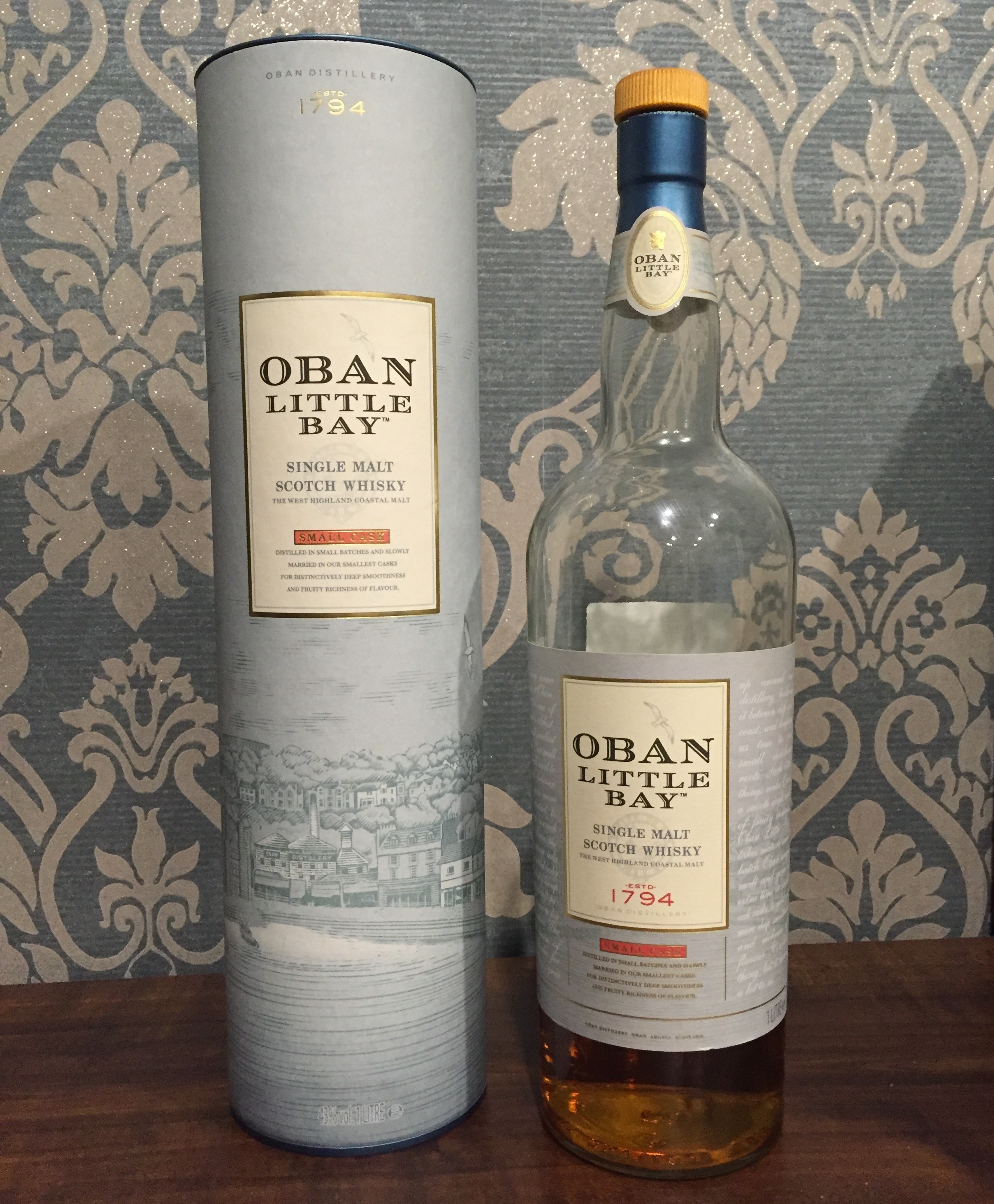
When you only have a little to say about a little dram, make sure the little says a lot. Oban Little Bay is a recent outpouring from a little town on the west coast of Scotland.

Oban claims its little spirit lives within the copper stills, where it rests between batches to help develop the experience. Little oak casks are the next little touch to smooth the draw and build the richness.

On the nose it spins and winks and jigs, while the taste is a warm clear heat; a dancing djinn on the warm moor. Though not smoky, it feels like fire.

This emissary from the little people doesn’t decide whether the spirit is of earth or fire or water, but being from Oban it dances between them all and lives in none. A real genie in a bottle.

★★★

How it compares:

The Little Bay has a youthful, flickery, salty warmth, whereas the 14yo is a sweeter, more complex and refined drop. Even though we would go for the 14yo, the Little Bay has its own magic touch.

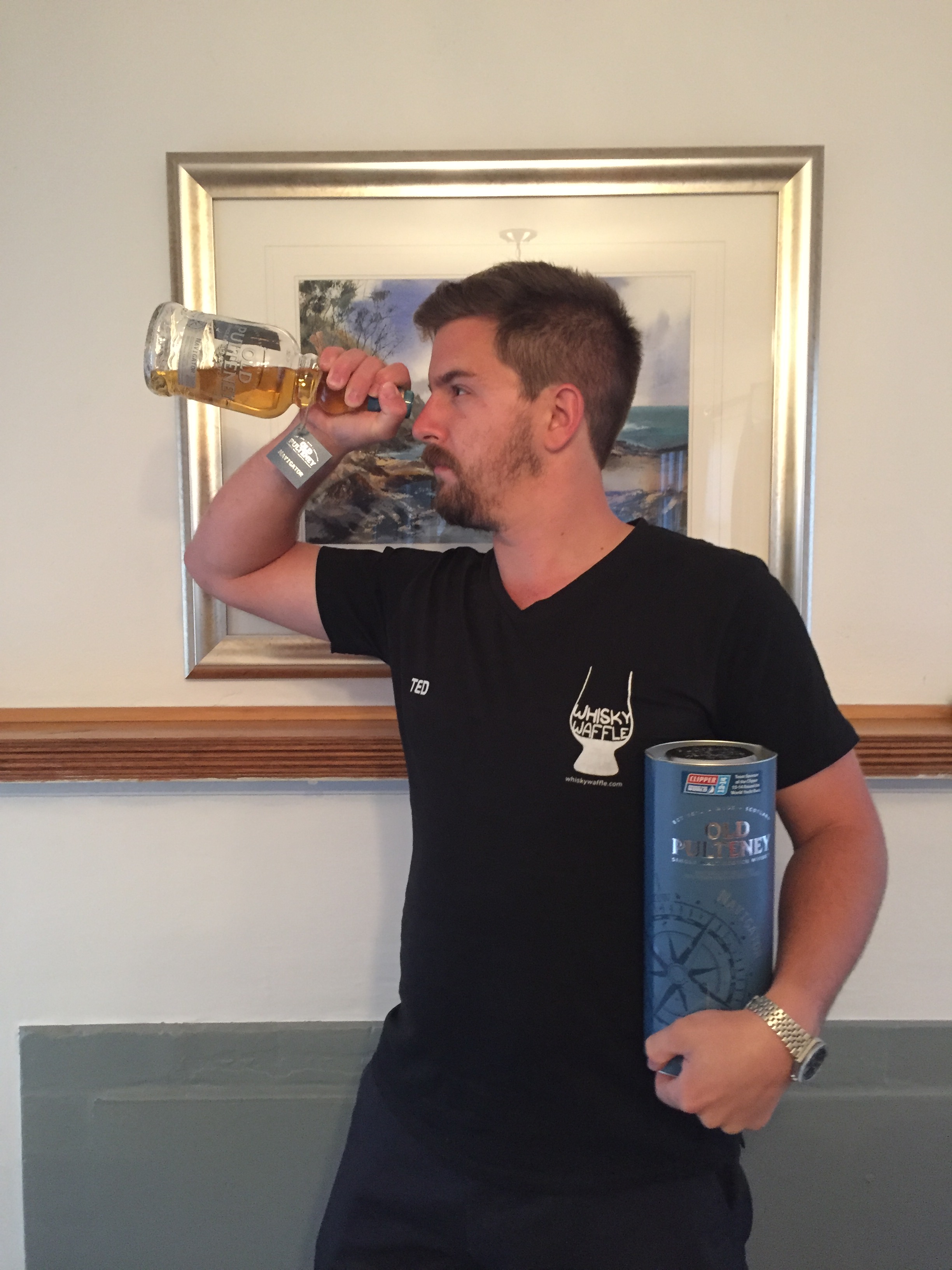
Old Pulteney Navigator

Reviewed by: Ted

Old Pulteney Navigator

It is no great surprise that Old Pulteney distillery takes inspiration from the sea, seeing as it resides on the rugged north coast of Scotland. In fact, Pulteneytown, the area of Wick from which the distillery takes its name, was a major player in the 19th century herring boom and harboured (ahem) a bustling harbour.

Old Pulteney isn’t just happy to let their love of the sea infuse their whisky, oh no. You know it’s a serious passion when you sponsor a vessel in the world’s longest round-the-world yacht race. The Clipper round-the-world race tests teams across a lazy 40000NM, demanding great effort from its participants.

To celebrate its maiden voyage in the ’13-’14 race, the aptly named ‘Old Pulteney’ clipper carried a special cargo on board, the first barrel of a new limited edition NAS whisky named the ‘Navigator’, crafted from a marriage of younger aged bourbon and sherry casks.

On the nose the Navigator tacks against bursts of chocolate and salted bacon before having its sails filled with malty biscuits, while oak decking creaks underneath.

Sharp, salty waves break over the palate, prickling across the back of the tongue. A juicy citrus burst through the middle keeps away the scurvy, followed by a warm trade wind that soars down the throat.

The Old Pulteney Navigator is a dram worthy of its nautical namesake. Its youth helps enhance its maritime nature, evoking the tempestuous seas that govern life along the north coast of Scotland. If you are a maritime whisky fan then the Navigator will definitely float your boat.

★★★

Ted the Navigator

How it compares:

The Navigator is the wild, ever-changing sea, whereas the 12yo is the calm, smooth safety of the harbour, welcoming the weary sailor home. Both have their own allure, but you don’t necessarily want to be tossed about in the old briny every day.

Oban 14 Year Old

Reviewed by: Ted

Oban 14

Rather like the wild haggis (Haggis scotticus), Oban distillery is a curious wee beastie. Located on the craggy west coast of Scotland in the town of the same name, Oban is one of the oldest distilleries in the country, founded in 1794 on the site of an old brewery by brothers John and Hugh Stevenson. Interestingly however, despite its lengthy existence it has remained one of the smallest distilleries around, with only two pot stills in residence to make the good stuff.

Understandably, the limited production capacity has focused the Oban distillers, choosing to craft a few expressions rather than the seemingly endless releases pedalled by larger producers. Luckily this means that the Obanites have had plenty of time to refine and tinker with their creations.

Oban’s flagship dram is one that should pique the curiosity of any whisky fiend looking for something a little different. Eschewing usual ageing lengths, the Oban 14yo, part of Diageo’s “Classic Malts Selection”, exploits an interesting niche between youth and maturity, and it must be noted, at a price on par (at least in Australia) with many 12yo whiskies.

The character of the 14yo walks a fine line, balanced as it is between the highlands to the east and the islands to the west. A careful nosing reveals a light, sweet, dusty spirit with suggestions of damsons and green apples, giving it a sense of kinship with other highland drops such as Dalwhinnie.

The taste on the other hand speaks of its seaside home, beginning with a bright, slightly salty burst on the front of the palate, lifted by the 43% strength, followed by a hint of seaweed and coastal air. The mid palate smooths out and becomes much more rounded, with dried fruits, zest, spices and perhaps just the lightest hint of smoke. The finish is clean and doesn’t linger for too long.

Once you’ve knocked back a few sips of the 14yo it’s worth holding the glass up to the light and contemplating the colour, which should be a dark amber. The reason I make mention of this is that the 14yo is not aged in the sherry casks that the colour suggests, but rather ex-bourbon hogsheads.

The answer to this conundrum will cause some to shrug their shoulders unconcernedly and others to foam at the mouth in righteous indignation: caramel e150a. Why Oban chooses to use artificial colouring, while other premium distilleries go to great pains to point out that they keep their own products au naturale, is a secret known only to the Obanites. Whether or not it’s presence affects the flavour of the 14yo I will leave up to your own distinguished palates, fellow wafflers.

The small size of Oban definitely works in its favour, allowing it time to lovingly craft a quirky and interesting product that does not hurt the wallet too much. The 14yo is certainly a delightful and evocative drop; and unlike the pesky wild haggis, is relatively easy to track down for those curious to discover the ‘west highland’ flavour.

★★★

Old Pulteney 12 Year Old

Reviewed by: The Cynical Scot

Old Pultney 12 Year old Whisky Waffle

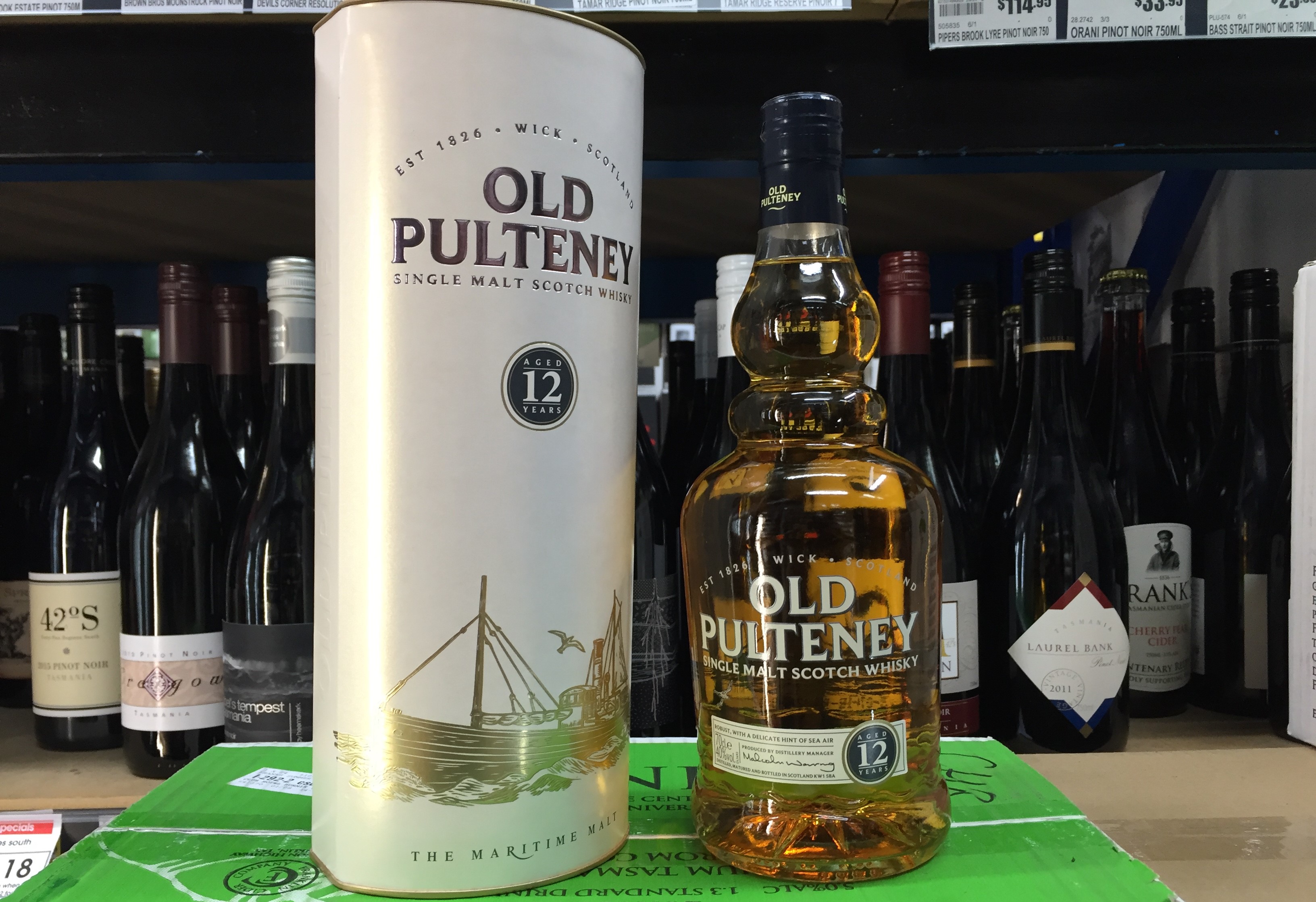
There are three places in the world where the merest mention of the name can take me back in heart and spirit. The first are the cliffs at Yesnaby on the mainland of Orkney. Here, the crash of the Atlantic is stalled by Earl Thorfinn’s walls and the salty air is scoured into the finest lines of the skin. The second is the Fairy Pools on the Isle of Skye, where I have swum in the ice clear waters and tasted the pure heart of the Cuillins. The third, and the subject of this review, is the bond store at the Old Pulteney distillery in Wick.

I found myself here on an overcast Saturday in 2013. It was the third distillery on a self-guided tour which was to take me around the best parts of Scotland. My true blue Australian friend (who insisted on referring to the drink as ‘OP’) and I didn’t know then that it would be one of only seven distilleries we would visit on that trip. By the time we arrived in Pulteney town, we already had the creeping realisation that most large scale whisky making operations are done along similar lines. Coupled to this, we had satisfied ourselves that whisky makers send their whisky all over the place. Since then we have regularly enjoyed our whisky without feeling the need to visit the place of origin.

The Old Pulteney distillery was built in 1826 in a town built to support the herring trade. With a lack of foresight uncommon in the Scottish, James Henderson’s lads built the roof too low for the still. When the brand new copper pot still arrived, the swan neck kept clanging off the rafters. Without any ado they applied a choice piece of Scottish logic to the problem and sliced off the top of it. Job done, the still was installed, the top sealed and a pipe bunged on the the side creating the unusual appearance you’ll see today. The bulge further down the giant copper kettle also gave them an idea of how to shape their bottles.

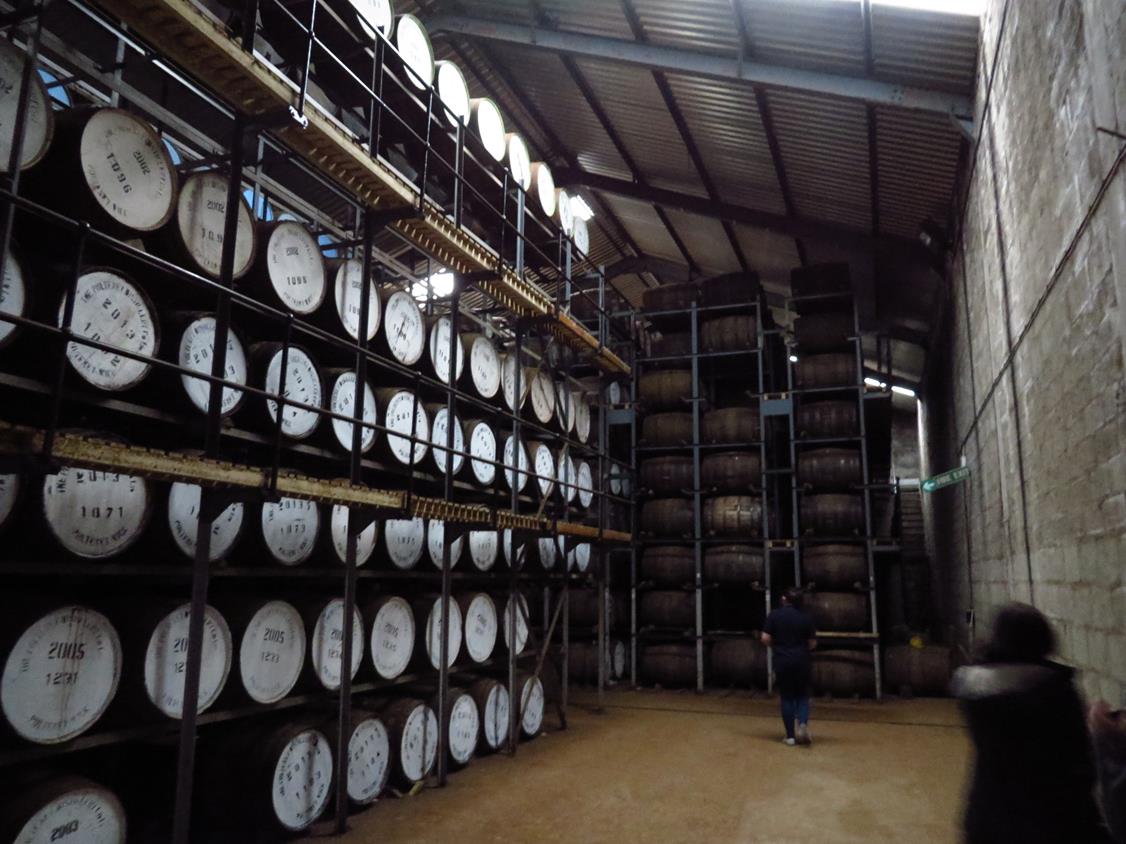
You’ll see all this and more on the tour, proving beyond doubt it is a whisky making process. After you’ve seen the unusual squat stills you’re taken out to the bond store. On the day we visited it started raining at this point. We made a dash towards the barrels, which in my mind were stacked six high (my photographic record shows only four), and the door was shut behind us. While we learned about the maturation process we avoided the tears of the angels and breathed in their share of the whisky; a fine ethereal vapour floating in the salty air. Yes, we all smelt that whisky, we all knew what we were doing and we yes, we all found questions to ask to keep us there longer.

IMG_0689 (Copy)

Old Pulteney has the taste of the sea in it too, they say. I can’t taste things like that, but Wick is not too far away from the places where the mighty Atlantic meets the moody North Sea and that can’t happen without seriously affecting a drink as emotional as whisky. The salt, they said, coats the barrels and works its way through the grain and into the final product. This may very well be the case. Salt for me is something I put on chips and any other food. It’s never been more complicated than that.

As for taste of Old Pulteney 12 year old, it’s a fine single malt, very fine. I find it harsh on the nose, easy on the draw and the burn is frank and satisfying. It has a rich stickling after taste like bronze coins falling over a weir and I’ll always like it because it’s the whisky I drink with my father.

I asked Dad why he drinks this particularly spirit. As a seasoned Famous Grouse drinker, it turned out his discernment was a result of him acquiring a bottle at no cost from an appreciative work colleague. His opinion of ‘Aye, it’s a nice one that’ is fair if not particularly detailed or nuanced. I confidently predict that he will continue to drink this brand so long as it remains at his personal initial price point.

For me it’s not what goes into a bond store it’s what comes out. That day in Wick an amateur whisky drinker went into the bond store. After delaying as long as I could, a happier, more philosophical and more content amateur whisky drinker came out. The OP lads do the same with their whisky. They wait and they wait and after twelve years a fine drink appears. I don’t know what makes this my homely stand-alone bottle of go-to, or why at times, when I can neither get to Yesnaby nor the Fairy pools of Skye, I can have a drop of Old Pulteney 12 year old and be at both at the same time. It’s a mystery I don’t want to think through too much and if I ever need to know, I can just ask my dad. He knows.

★★★★

2015 Waffle Awards

Posted by: Nick and Ted

Whisky Waffle Logo 1

Welcome one and all to the most prestigious imaginary awards ceremony in the world of whisky writing. The Waffle boys have ignored the Australian summer heat and donned their black tie to present a group of worthy winners with an assortment of atypical accolades. All winning whiskies have been sampled by the lads in 2015 for the first time – although surely (hopefully) not the last. So, ladies and gentlemen, please find your table, help yourself to the canapés and sit back and enjoy: the 2015 Waffle Awards.

1 The Isle of the Drammed Award Whisky Waffle

The Isle of the Drammed Award for the best Tasmanian Whisky

Yes, we are a Tasmanian-based whisky blog, so why not include an award to showcase drams made in our fine state? Especially when they are this good! So with no further ado, we are proud to announce that the Isle of the Drammed award goes to:

Heartwood: The Good Convict

2015 Heartwood The Good Convict whisky waffle

We don’t often see eye-to-eye with Jim Murray. But in the case of this cask-strength monster from the genius independent bottler Tim Duckett, both the Wafflers and the Whisky Bible writer are unanimous in our praise. I mean, what’s not to like about a 15 year old Sullivans Cove French-oak port barrel matured whisky at a humble 71.3%? It is stunning.
2 The Tartan Slipper Award Whisky Waffle

The Tartan Slipper Award for the best Scottish Whisky

Scotland is the spiritual home of whisky (see what I did there?). So it seems only fair to dedicate an award to it. Plus, then no cheeky English distilleries can take it away from them! The 2015 Tartan Slipper Award goes to:

Balvenie 21 Year Old Port Wood

2015 Balvenie 21 Port Wood whisky waffle

We make no bones here at Whisky Waffle Central that we love all things Balvenie, but they’ve really outdone themselves with the 21 Year Old Port Wood. Smooth, sensual and with a refined complexity that hits all the right buttons, this is definitely no every day drinker (unless you’re rich that is. Slosh down whatever takes your fancy m’lord.), but a perfect dram for celebrating that special occasion with the ones you love.

3 The Pocket Pleaser Award Whisky Waffle

The Pocket Pleaser Award The perfect pick for the parched penny pincher

Our bank accounts know all too well how expensive buying bottles of whisky can be. This award celebrates the bottles which we turn to time and time again because – well – we can afford to. It is not the best tasting whisky in the world. But likewise it is far from the worst. This year, The Pocket Pleaser Award goes to:

Glen Moray 12 Year Old

2015 Glen Moray 12YO whisky waffle

“Dear Whisky Waffle, I want to impress my friends by drinking single malts, but I am a poor uni student with only a blend budget to spare. What can I do?” Never fear, we are here to help. Meet your new best friend, the Glen Moray 12 Year Old, as far as we can tell the cheapest single malt Scotch going around. For less than the price of a bottle of JW Black Label you can have a bottle of bonafide Scottish single malt. Full of honey, butterscotch and gentle spices, it’s pleasant and easy to drink, perfect for the Scotch novice and budget-conscious drammer alike.

4 The Weirdsky Award Whisky Waffle

The Weirdsky Award for the most WTF whisky

The Weirdsky Award celebrates, unsurprisingly, weird whisky. The more bizarre the better. Trust us; we are always on the lookout for some unusual drams. But in 2015 the one that took the cake was:

New World Projects Ginger Beer Cask

2015 New World Projects Ginger Beer Cask whisky waffle

What on earth would whisky taste like if matured in ginger beer barrels? This was the question that we asked ourselves when purchasing this New World Projects creation on a whim. The answer, it transpires, was simple: ginger-whisky (gisky?). It is unlike anything we’ve ever tried, and we love it! We take our metaphorical hats off to the makers of Starward for their mad-scientist-like experimentation!

5 The Bill Lark Award Whisky Waffle

The Bill Lark Award for service to the Tasmanian whisky industry

Named after the godfather of Tasmanian whisky, The Bill Lark Award is not presented to a bottle but instead to a person who has worked tirelessly to make the whisky scene here in Tassie as special as it currently is. It gives us great pleasure to announce the 2015 winner of The Bill Lark Award is:

Peter Bignell

2015 Pete Bignell whisky waffle

“Renaissance man” seems to be the phrase that gets bandied about when talking about Peter Bignell, founder of Belgrove Distillery, but it’s well suited. A seriously talented individual, Pete has a true knack for innovation. “Hmm… who wants to make boring old barley based whisky, why not make it using rye? Or oats? May as well just grow it myself too, and dry it in this old tumble dryer I found. But instead of using electricity from the mains, I’ll power it using biodiesel that I’ll make myself out of cooking oil from the local takeaway shop. Should I build the stills myself too? Yeah, why not, and I can power them using the biodiesel. Coopering my own barrels, that doesn’t sound too hard, give it a crack eh? Simple. And just to keep things interesting, in my spare time I’ll be a world class sand sculptor.”

To be honest, Pete doesn’t just win the Bill Lark Award for the excellent whiskies he makes, his contribution to the Tasmanian industry or his stellar environmentally responsible ethos, but for just being a sterling example of a human being who we can all look up to. Good on ya mate!

6 The Golden Dram Whisky Waffle

The Golden Dram for the best dram whisky in the world

I don’t think anyone would be surprised to hear that we tasted a heck of a lot of whiskies in 2015. So choosing one that stands out as the best would surely be a nigh-on impossible task. Not so. There was little doubt in our minds as we sampled this dram that we had found the 2015 Golden Dram. Drum roll please. The winner of the Golden Dram in 2015 is:

Bruichladdich Aramone Cask 9 Year Old Micro-Provenance Series

2015 Bruichladdich Aramone whisky waffle

I (Ted) would like to start by quoting myself from the day we tried this epic dram: “This is one of the best things I have ever put in and around the vicinity of my face!” You just know instinctively when you meet one of those rare drams that make the stars align in the heavens. When sampling it we described it as a nose-masseuse, as wine-maturation as it should be done, and with an once-tried-never-forgotten finish – thanks in no small part to the 57% bottling strength. All credit to Bruichladdich for crafting such a well balanced, interesting and delicious whisky. It certainly made our year. Find a bottle (if you can track down one of the 500 that was made) and try it. Your face will thank you.

Honourable Mention: We couldn’t fit it into the awards but we have loved the Aussie port-monster that is the New World Projects Lui’s Bar release. Expect a review in 2016!

Dishonourable Mention: To keep things fair we included a dishonourable mention for a dram that deeply disappointed us throughout the year. And this year, unquestionably it was the Glenlivet Founders Reserve. Glenlivet – what were you thinking??? #SaveThe12

What did you think of our awards? Some good picks? Or are we totally full of it? And to what would you have awarded the Golden Dram? Let us know in the comments – it’s always a fun discussion!

2015 outtake 2 whisky waffle


Distilled Not Diluted: a rebuttal from a cynical Scotsman

This article is a response to our article: A Brave New World

Posted by: The Cynical Scot

Cynical Scotsman

So Ted. The big boys are coming to town are they? The fathers of Scotch are looking at the colonials and are coming over to gobble us up?

Come off it!  ‘Big Industry’, ‘sharks circling’, ‘crusty entrenched old world?’ Diageo buying into Starward? A chance to get some big bucks into the Australian whisky industry? You do know that Diageo owns far more distilleries than they care to slap a name on the front of. They have done a very clever job of maintaining the branding and character of individual distilleries as the industry recovered in the ’80s and ’90s. They have reopened distilleries that had been moth-balled after not having a legitimate business case.

Saying Scotch is ‘weighed down by centuries of tradition’ misses not only the importance of the tradition, but also the dynamic changes that have taken the industry to what it is today. This has also created quality recognisable products (have a look in every duty free in every international airport in the world). Whisky is something that if you put a cheap and an expensive dram into plain bottles and labelled them both ‘whisky’ it would be difficult for the layman to differentiate between them. Selling of whisky involves more than just touting a nice tasting beverage. It is the selling of an image, a lifestyle, a legend and sometimes a dream. I don’t buy Diageo whisky, I buy Talisker, Caol Ila, Lagavulin and when I have to, Johnnie Walker.  http://www.diageo.com/en-row/ourbrands/categories/spirits/Pages/Whiskey.aspx

So it seems Australia is selling out. Diageo have bought in, and as a minority shareholder in a single distillery at that. So what?….  What’s in it for them and what’s in it for Starward?

Well, for Diageo they can dip their foot in the water and get a first hand look at the Australian business environment. They can get a taste for a new market and they have a fresh brand to expand and work with.

For the distiller they have the knowhow of a company that has many very successful whisky brands under its belt and certainly knows how to flog the stuff. Having a big producer on board will probably make it easier for them to weather ups and downs in demand. Not only that, an individual distiller with higher production could also better standardize their product. Don’t get me started on ‘vintaged’ releases.

It’s one distillery. It’s a minority share. I don’t think Diageo is going to weaken the idea of Australian whisky, but they may change it in time. They may produce an affordable Australian brand. No more expensive bottles you may ask? Not at all. You’ll still see 500ml bottles priced at over $150. What you will have is diversification into the wider market. Imagine being able to taste something from Bothwell in Tasmania and say ‘Yup, that’s definitely Nant. That’s how it tastes’, and it only costs $85 (or whatever). Well, then you could buy a bottle for a friend. Two years after you tasted the stuff you’d still know what they were getting!

This would be a move in the opposite direction from the Scottish market, which traditionally seems to have existed in the mass-produced signature single malt or blend. More recently there has been a trend for creating a broader high-end range and raiding the history books for thought provoking names (I’m thinking of Highland Park in particular here: http://highlandpark.co.uk/taste/). But that’s how whisky works isn’t it? A single recognisable product becomes the poster boy for the new entrant and the budget conscious enthusiast. Then you have a few fancy, expensive types that allow the distiller to show off the finer points of their art and the consumer to have something extravagant to crack open when Grandpa has his 80th. No bad thing.

But where do you want the growth within the sector to come from? Do you want the Australian industry to grow from the inside as demand rises and production increases to meet it? Or do you want a big boy from out of town to buy it all up and franchise the lot? I would say that one aspect that sets Australian whisky apart is the fact it is a small craft industry. You sell out from that you’re like an IT Startup selling out to Google. Sure you’ve made your money, but did you really care about your product or was it just a means to an end?

So many questions. Fortunately, the Australian distilleries I know of don’t seem to be like this. They’ve been founded by distillers who have often made their money elsewhere and are using that to fund a business in something that matters to them – whisky. And good whisky at that.

So hello Diageo. Welcome to Australia, there’s work to be done but let Australian whisky speak for itself and find its own formula. It already has its own character. I’d hate to think that Australian whisky just became another branch of the Scotch map – Speyside, Lowlands, Highlands, Islay and Australia. If it ever gets to that I’ll find an island somewhere that Diageo hasn’t heard of and start growing some barley. Maybe Bill Lark will already be there.

The Glenlivet 18 Year Old

Reviewed by: Nick

Glenlivet 18

The banks of the river Spey in Scotland’s north east are fertile ground indeed. Nearly half of the country’s distilleries are located in this region which has come to be known, rather appropriately, as ‘Speyside’. Upon my criminally short drive through the area my head continuously moved side to side reading road signs pointing towards yet another famous distillery. It must have looked like I was watching a grand-slam final between Nadal and Djokovic! This abundance of whisky excellence could be found nowhere else on earth.

Speyside whiskies are known for being the smoothest, the richest, and the most elegant drams that Scotland has to offer, a reputation well deserved. Perhaps the best example of a Speyside malt is the Glenlivet 18 Year Old. It is one of the classiest single malts going around – and at a price that practically every other 18 year old whisky cannot come close to.

The whisky’s colour alone is enticing: a golden amber which glints in the sunlight. The nose is better: full of caramel, vanilla and orchard fruits. It is a pleasantly balanced aroma, not favouring one flavour over another. The palate is rich – full of flavour without being heavy. There is honey, oranges and malty biscuits, along with the faintest hint of sherry. The finish is light and not as sweet as the initial flavours suggest, with plenty of oak imparted from its 18 years in barrels.

There are literally thousands of whiskies made within a few miles of the river Spey. But if you were only able to try just one – then you could make a pretty strong case for this one.

★★★★