Highlands

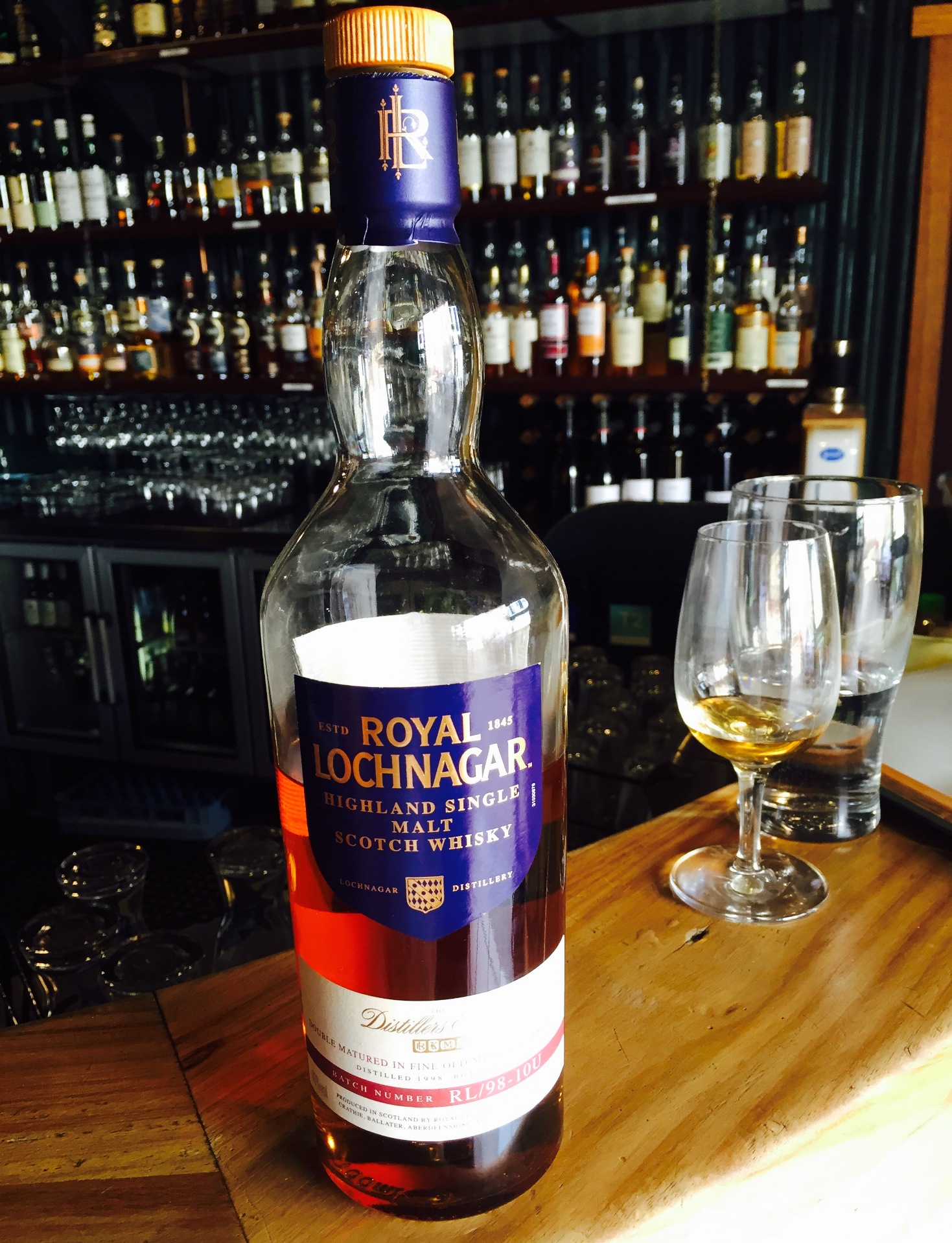
Royal Lochnagar Distillers Edition

Reviewed by: Nick

Royal Lochnagar Distillers Edition

Every now and then what you really look for in a whisky is one that you can drink. I realise that this may sound a ludicrous statement for something which is, undoubtedly, a liquid, but bear with me and I shall explain.

I’m always on the lookout for interesting and unusual new drops to challenge me and set me off waffling about the subtle complexities that can be discovered from dram to dram. However, if every dram I consumed affected me in such a way then, apart from having no friends, I would risk straying too far from the very essence of whisky; that is: it is made to be drunk (with the possible exception of the Macallan Cire Perdue).

With this in mind I believe there is no better candidate for the position of ‘drinkable whisky’ than the Royal Lochangar Distillers Edition. A rather underrated distillery, Lochnagar got it’s ‘Royal’ tag by impressing Queen Victoria on a visit, although the scale of this achievement is questionable as it was reportedly very easy to please Queen Victoria with whisky. Nevertheless the title stuck and it is now the smallest of Diageo’s 28 distilleries.

The Distillers Edition is aged for a period in ex-Muscat casks, adding a layer of silk and sweetness without making it overly-sugary or syrupy. The extra maturation seems to round off some of the sharper edges, making the whisky smoother and easier to drink, though this does not take away from the overall flavour; there are still many appealing elements to discover.

This is immediately apparent on the nose, which is heavy with alluring caramel. Citrus notes follow as well as a dash of rose essence. It has a smooth and creamy mouth feel, retaining the caramel elements and adding flavours of almonds coated in layers of honey and chocolate. There are also the faintest hints of berries to be discovered, lingering in the background. The finish is light and short but the butterscotch theme continues until the end. The overall effect is that of the sauce to sticky date pudding. And those who know me understand what a large compliment I am paying it.

The Royal Lochnagar Distillers Edition is certainly not the most complex or intriguing whisky going around. Nor is it in any way dull. It is a very easy drinking whisky, and this is in no way bad thing. In fact, I believe that it is this dram’s biggest strength.

★★★

Nikka from the Barrel

Reviewed by: Ted

Nikka from the Barrel

I’ve been at it again! For those who remember my Akashi review, I seem to have picked up a habit of reviewing Japanese whiskies at a particular bar that I occasionally habituate. Not a bad vice I must admit.

This visit’s subject is Nikka from the Barrel, which comes in an intriguingly plain, stubby little 500ml bottle. The labelling is sparse to say the least, and not particularly useful if, like me, you cannot read Japanese.

It’s not only the bottle that has limited information. The little that I could find out about this drop is that it is a blend (or as Nikka claims, a marriage) of matured malt and grain whiskies from re-casked barrels.

Bottled at 51.4%, the Nikka has a robust, gutsy nose. Dark honey, peach, apricot and orange jump on to the old scent receptors, although m’colleague swears blind that he could smell corned beef (odd man).

On the palate the Nikka is rich and syrupy, with notes of burnt sugar, oak, sultanas and honey, followed up by a pleasant herbal bitterness that reminds me of Speyside. I would take an educated guess that sherry barrels have played a part in the blend, as something of that quality seems to shine through.

The Nikka from the Barrel is a fantastic Japanese blend. It’s bold, gutsy, fun and will put a grin on your dial. Definitely give it some attention if you come across a bottle.

★★★

White Oak Akashi + 12yo

Reviwed by: Ted

White Oak Akashi vs White Oak 12 Year Old

Akashi White Oak

Just a quick review hastily scribbled down at the bar about two whiskies out of Japan. Founded in 1888, White Oak Distillery is one of the lesser known distilleries outside of its home country, only selling to the local market until 1984. Apparently though, White Oak was the first distillery in Japan to gain an official license, pre-dating Suntory and Nikka, the two major players in the Japanese whisky scene.

White Oak releases are less common in Australia, particularly aged releases. Luckily the bar that I am currently at had the presence of mind to have not one, but two of them hiding on the top shelf, prompting this on-the-spot review. The two White Oak examples perched on the bar before me are the Akashi Non Age Statement (NAS) and the 12 Year Old.

I cannot provide much more background to the two bottles as all the information is (unsurprisingly) written in Japanese, but I can reveal that the Akashi is much lighter in colour than the 12yo, which has a nice amber tone. On the nose the Akashi is fairly insubstantial, with only a light sweetness coming through. In comparison the 12yo has a strange sulphuric tang. It’s almost smoky at first, but quickly turns chemical.

The chemical vibe continues on the palate, with a smoky sulphuric quality that tastes like the water could have been drawn from a mineral-rich hot volcanic pool on the side of a Japanese mountain. Against this the Akashi tastes lightly bitter/sweet, not venturing too far in either direction.

In conclusion, the Akashi, while pleasant, is a bit of a non-event, showing a rather bland personality. In complete contrast the 12yo is full of character, but unfortunately the sort of unpleasant character that you might meet down a dodgy alley on a dark night. While curious to try, the 12yo definitely won’t be to everyone’s tastes, and the Akashi certainly won’t turn any heads down the street. It seems that White Oak is more miss than hit, but whether it’s older releases can redeem it will have to wait for another day.

Akashi: ★

12 Year Old: ★★


Balblair 2000

Reviewed by: Richard

Balblair 2000

Up until I had the bottle in my hands, I’d not heard a lot about Balblair Distillery, and as you do, did a bit of research in to it…

It’s a Scotch whisky distillery located in Edderton, Ross-shire, Scotland. Originally founded in 1790, the distillery was rebuilt in 1895 by Charles C Doig, and so good was its original water source that the rebuilt distillery chose to ignore a nearby burn in favour of the original Ault Dearg burn. To this day, the Balblair Distillery continues to use this original water source.

Balblair has one of the oldest archives in distilling, with the first ledger entry dated 25 January 1800. John Ross himself penned that first entry, which read: “Sale to David Kirkcaldy at Ardmore, one gallon of whisky at £1.8.0d”. Ahhhhh, the good old days when you could get a gallon of whisky for under 2 quid…

The distillery is owned by Inver House Distillers Limited, whose other distilleries include one of my favourites, the Old Pulteney Distillery as well as Balmenach Distillery.

The Balblair distillery is unusual in the use of vintage dates rather than age statements. This means that Master distiller Stuart Harvey has more flexibility with its offerings and it provides the drinker with a ‘snapshot’ of that moment in time rather than a stationary age statement.
So, enough rambling – on with the review – so, this one I have in my hand is:

Balblair 2000 (2nd Release) 43.0% in an ex-bourbon cask

Colour: rose gold

Nose: Sweet and creamy – almost custardy! Apples & Manuka honey, toasted bread…

Palate: Beautiful malty palate with straight up vanilla & coconut, hints of honey & toffee apple and coconut. Nicely balanced with a lovely mouthfeel. Let it sit for a while, you’ll get tinned pears, vanilla ice cream. This is a great whisky – super drinkable (just ask Mooresey!)

Finish: long! With vanilla and some dry oaky wood

I found it did not need water… (I tried adding some, and while the nose picks up some more floral notes, the body & character drops away, and the whisky becomes way too soft and mellow)

All in all, a delicious whisky… one that I have gone back to many times now! (perhaps too many times by the looks of the bottle!) Rumour has it they have made a similar whisky but used Sherry Barrels instead of Bourbon… perhaps I shall try and track it down, and see how it compares, but that’s a story for another day…

★★★★

Johnnie Walker: the verdict

Posted by: Nick and Ted

Hi Wafflers! Johnnie Walker Week is officially over and we have emerged unscathed and wiser from the other side. Throughout the week we’ve gained an appreciation for blended Scotch whisky – and even more of an appreciation for single malts.

All joking aside (and there were a few of them this week) Johnnie Walker has produced a formidable range of whiskies and we can understand why they are the most popular in the world, even if we respectfully disagree.

Happy Wafflers johnny walker week whisky waffle

So what have we learned throughout Johnnie Walker Week? Let’s pick through the shrapnel:

  • The Red Label is consumed throughout the world as a mixer. And after trying it neat – we understand why;
  • The Black Label likes to think of itself as a step up – and it is – but not nearly enough to consume neat;
  • The Double Black fixes the problems of the previous two with solid flavours and a generous dose of smoke, and in our opinion is the best value in the range;
  • The Gold Label Reserve balances its flavours well, although sadly there are not many of them to balance;
  • The Platinum Label 18 Year Old is beautifully smooth but lacking in soul;
  • The Blue Label is excellent – but very expensive. And when you could buy a Balvenie 21 Year Old for the same price – why would you go for the blend?

So there you have it. Whisky Waffle’s first ‘event week’ has concluded. Thanks for checking it out and we hope you appreciated our ramblings and perhaps you have also broadened your whisky drinking horizons. If anyone has their own opinions or rankings of the Johnnie Walker range, let us know in the comments!

Until next time, keep on waffling,

Nick and Ted

#johnniewalkerweek

Johnnie Walker Green Label

Posted by: Mooresy

Green label whisky waffle

Johnnie Walker Green Label is – or I should say was – a bit of an anomaly in the family. Unlike the others which are all blends including grain and non-malt whiskies, Green was a blended malt made up of only four whiskies, all single malts. This gave it the quality of arriving like a blend then developing on the palate more like a single malt. It’s nose complexity was also more akin to a single malt, and the better noses out there could probably pick the distilleries involved from the smell.

I happen to know what they were, but so as not to spoiler, you’ll have to ask me.


An elegy for Johnnie Green

Though caramel brown, your label was Green

With flavoured malt so crisp and clean

A complex coffee fruity smell

Vanilla and nuttiness went down well

The taste had cereals, chocolate and nuts

Not sharp or heavy but you sure had guts

A finish strong with walnuts and honey

Of Johnnie’s varieties you were worth the money

One day the factory shut you down

Scotch lovers everywhere gave a frown

No more would we have our favourite blend

A standout nip, a lifelong friend

Now we’re confined to Black and Red

That burns our nose and hurts our head

There’s lots of fine drams out there today

And where there’s a Walker there’s a will and a way

But for now we must simply say farewell

You were a classic, a legend and we think that you’re swell


Now a rare and hard to find malt, Green is consigned to the archive of Johnnie Walker’s bond store along with the Gold Label 18 (they’ve removed the age statement for the current variant) and the elusive Johnnie Walker White Label which I have never tasted. If you find a sealed bottle of Green, you may want to hold onto it for its value but I would strongly encourage you to pop the cork and taste a true exception to the rule. If you spot a half open bottle on a friend’s shelf or in a dark musty pub, encourage the friend to crack it at a party or buy it shot by shot from the wizened landlord.

If you are a single-malt snob who sees the word blended and runs a mile from the likes of Green and the very delicious Blue Hanger, thank you. More for the rest of us.

#johnniewalkerweek

Find out about the rest of our multi-coloured adventures:

Johnnie Walker Red Label

Johnnie Walker Black Label

Johnnie Walker Double Black

Johnnie Walker Gold Label Reserve

Johnnie Walker Platinum Label 18 Year Old

Johnnie Walker Blue Label

Johnnie Walker: which is best?

Johnnie Walker Blue Label

Reviewed by: Nick and Ted

Blue Label Whisky Waffle

One of the reasons we like single malts is the variability in character; all the little quirks and oddities that come together to create something exciting and different every time. The experiences they leave with you create a lasting impression, such as the first time Ted tried a 72% ABV Heartwood, all crazy and wild and exhilarating, or the time Nick tried an English single malt in a Scottish bar and nearly poured it down the sink, much to the amusement of the patrons.

In comparison, blends tend to be a lot less individual, which is hardly surprising given that the elements are painstakingly selected for their ability to meld seamlessly together. Very rarely does a blend give you something to talk about and really get your teeth into. Not so the Johnnie Walker Blue Label, the proclaimed pinnacle of the standard Johnnie Walker range. Discovering this came as somewhat of a surprise to we Johnnie Walker sceptics.

Blue Nick and Ted Whisky Waffle

Unlike any of the other previously reviewed releases, there is a great deal more complexity on the nose. There are delightfully interacting elements of oak, chocolate, and fruit such as oranges, pears and peaches, complimented by a light hint of smoke. The overall character is very warm and welcoming.

The mouth is actually relatively sweet, but so completely different to the overbearing, manufactured sickliness of the Red Label that it’s hard to believe that the two are made by the same company. It’s more like the pure sweetness of a really good light honey. The flavour develops through caramel, to sweet orange, and on to slightly bitter cocoa, all the while accompanied by a pleasing gentle smokiness which lingers on the tongue.

The Johnnie Walker Blue Label has certainly not committed the cardinal whisky sin of being boring. It is rare that a blend has this much complexity, and gives us so much pleasure debating its merits. After all, the best whiskies are the most memorable ones. We’re still not entirely convinced it’s worth the $200 price tag, but after a couple of drams we’re much closer to believing it.

★★★

#johnniewalkerweek

Find out about the rest of our multi-coloured adventures:

Johnnie Walker Red Label

Johnnie Walker Black Label

Johnnie Walker Double Black

Johnnie Walker Gold Label Reserve

Johnnie Walker Platinum Label 18 Year Old

Johnnie Walker Green Label

Johnnie Walker: which is best?

Johnnie Walker Platinum Label 18 Year Old

Posted by: Ted

WW Platinum Label

Let us picture a woman: she wears chic white designer clothes, and her platinum blonde hair is perfectly styled. She is beautiful, with flawless ivory skin and delicate features, and yet her pale grey eyes are cold and her face is blank of emotion. She is like an icy white marble statue come to life. Her house is filled with expensive minimalist designer furnishings, all in white, and the effect is striking and elegant. Yet somehow it leaves you feeling empty; it’s too clean, too clinical, lacking in any warmth that allows you to develop an emotional connection.

If you distilled the idea of the white lady and her house, and bottled it, then you would capture the essence of the Johnnie Walker Platinum Label. The Platinum is marketed as one of the top tier bottlings in the standard Johnnie Walker range. It is delicately assembled from a selection of minimum 18 year old single malt and grain whiskies, and was inspired by the private blends created as gifts for the upper echelons of the Johnnie Walker hierarchy.

Platinum extra Ted

On the nose the Platinum is very light and delicate, with hints of dusty oak floorboards, cereals such as bran, oats and barley, chocolate, and coffee. There is no sweetness or fruitiness here, and as such the scent is rather dry and wooden as a result. The mouth is extremely smooth, with subtle flavours of polished oak and walnuts. A flicker of sweetness is allowed, perfectly balanced by a dash of bitterness. The end is dry and provides a grind of black pepper followed later by a sprinkling of ash.

There is a sense that the Johnnie Walker Platinum Label is a stylish drink created for those with sophisticated tastes, and yet in trying to achieve this they somehow miss the point. Yes, the flavours all work together superbly, but as a whole it’s too refined, polished to the point where there is no spark left to bring it to life. The white lady is beautiful to behold, but be warned, her heart is cold and she will not give you the love and warmth you crave.

★★

#johnniewalkerweek

Find out about the rest of our multi-coloured adventures:

Johnnie Walker Red Label

Johnnie Walker Black Label

Johnnie Walker Double Black

Johnnie Walker Gold Label Reserve

Johnnie Walker Blue Label

Johnnie Walker Green Label

Johnnie Walker: which is best?


Johnnie Walker Double Black

Reviewed by: Ted

Double Black Whisky Waffle

Picture the scene: we are standing in the secret headquarters of Johnnie Walker, built cunningly into a mighty tor in the middle of a lonely Scottish loch. A meeting is being held between the head of whisky R&D (Codename: W) and his underlings…

W: “Gentlemen, I have created a new mid-range (but very reasonably priced) whisky. But what to call it?”

Underling: “Well sir, if it’s mid-range then it must be above the Black. If people associate the name Black as being a notch up, a bit more classy, that sort of thing, then surely they’ll think that ‘Double Black’ means twice the class?”

W: “Genius! Give that man a dram and a slice of haggis!”

Double Black extra Ted Whisky Waffle

Amazingly, Johnnie Walker has managed to deliver just that. Compared to the decidedly woeful Red, and the close-but-not-quite Black, the Double Black really is twice the drink. The boys in the back have managed to iron out the kinks that plagued the previous two iterations and produce a far more balanced and exciting drink.

The element that is really allowed to shine in the Double Black is peat smoke. Johnnie Walker likes to talk about how their whiskies have a smoky nature, but it is here that they open the door and let it out to play. Even the bottle suggests it, being coloured a very dark smoky blue-grey.

Gone are the harsher unbalanced notes from the Red and the Black. Instead the nose gently presents hints of smouldering charcoal, cigars and leather, over rich stewed plums and strawberries with spicy honey. The mouth brings an initial hit of lightly charred oak followed by nicely balanced sweetness and spice. The overall feel is pleasantly smooth and manages to introduce points of interest without capturing any unwanted notes.

While the Red and the Black are only really good for mixers, the Double Black is the first rung on the Johnnie Walker ladder worth enjoying neat. Thanks to the well balanced flavours and that sexy hit of smoke, combined with the very reasonable price tag, the Johnnie Walker Double Black has it in spades, and is a seriously good choice for anyone contemplating a blend.

★★★

#johnniewalkerweek

Find out about the rest of our multi-coloured adventures:

Johnnie Walker Red Label

Johnnie Walker Black Label

Johnnie Walker Gold Label Reserve

Johnnie Walker Platinum Label 18 Year Old

Johnnie Walker Blue Label

Johnnie Walker Green Label

Johnnie Walker: which is best?

Johnnie Walker Black Label

Posted by: Nick

WW Black Label

Johnnie Walker got one thing right when creating their original premium bottling: the name. Black Label subtly suggests quality. Conclude any mundane product title with it and witness the elevation in esteem it receives. For example, Kellogg’s cornflakes: Black Label. Colgate toothpaste: Black Label. Toyota Corolla: Black Label. Chartered accountancy: Black Label.

The name alone should be enough to convince most discerning whisky drinkers that in comparison to the Red Label, this drop is a step up. And it is – but only slightly.

Black extra Nick Whisky Waffle

Johnnie Walker Black is blended from over 40 whiskies all of which are at least 12 years of age. There is a nice range of flavour in this dram, and the supposedly ‘trademark’ smoky character is even vaguely noticeable! The key to this whisky is balance: balance between enjoyable flavours and downright unpleasant ones.

This principle is demonstrated in the nose, which presents a battleground where pleasing chocolate-orange notes and nasty chemical aromas compete for supremacy. There is a lot to like here, although, conversely many elements I’m not at all keen on. The palate continues in a similar vein – the sickly sweetness from the Red Label makes a return but is partially disguised by more agreeable flavours such as oak, nutmeg, and in particular, peat-smoke. It’s the sort of smoke which is only really noticeable if you’ve just polished off a decidedly unpeated malt, but when discovered, it really gives this whisky a lift.

There is a degree of complexity on the finish that is not found in the Red Label. Despite only being bottled at 40% ABV, it features a small amount of lasting spiciness. Sadly the unpleasant sweetness also makes a return and rather spoils the party.

Johnnie Walker Black Label is a mixed bag of a whisky. For every interesting and enjoyable flavour, there is another objectionable one dragging it down. It seems destined to forever be a mixer for those who prefer a slightly classier Scotch and coke. It is premium only in name, sadly not in nature.

★★

#johnniewalkerweek

Find out about the rest of our multi-coloured adventures:

Johnnie Walker Red Label

Johnnie Walker Double Black

Johnnie Walker Gold Label Reserve

Johnnie Walker Platinum Label 18 Year Old

Johnnie Walker Blue Label

Johnnie Walker Green Label

Johnnie Walker: which is best?