Islay

Distilled Not Diluted: a rebuttal from a cynical Scotsman

This article is a response to our article: A Brave New World

Posted by: The Cynical Scot
Cynical Scotsman

So Ted. The big boys are coming to town are they? The fathers of Scotch are looking at the colonials and are coming over to gobble us up?

Come off it!  ‘Big Industry’, ‘sharks circling’, ‘crusty entrenched old world?’ Diageo buying into Starward? A chance to get some big bucks into the Australian whisky industry? You do know that Diageo owns far more distilleries than they care to slap a name on the front of. They have done a very clever job of maintaining the branding and character of individual distilleries as the industry recovered in the ’80s and ’90s. They have reopened distilleries that had been moth-balled after not having a legitimate business case.

Saying Scotch is ‘weighed down by centuries of tradition’ misses not only the importance of the tradition, but also the dynamic changes that have taken the industry to what it is today. This has also created quality recognisable products (have a look in every duty free in every international airport in the world). Whisky is something that if you put a cheap and an expensive dram into plain bottles and labelled them both ‘whisky’ it would be difficult for the layman to differentiate between them. Selling of whisky involves more than just touting a nice tasting beverage. It is the selling of an image, a lifestyle, a legend and sometimes a dream. I don’t buy Diageo whisky, I buy Talisker, Caol Ila, Lagavulin and when I have to, Johnnie Walker.  http://www.diageo.com/en-row/ourbrands/categories/spirits/Pages/Whiskey.aspx

So it seems Australia is selling out. Diageo have bought in, and as a minority shareholder in a single distillery at that. So what?….  What’s in it for them and what’s in it for Starward?

Well, for Diageo they can dip their foot in the water and get a first hand look at the Australian business environment. They can get a taste for a new market and they have a fresh brand to expand and work with.

For the distiller they have the knowhow of a company that has many very successful whisky brands under its belt and certainly knows how to flog the stuff. Having a big producer on board will probably make it easier for them to weather ups and downs in demand. Not only that, an individual distiller with higher production could also better standardize their product. Don’t get me started on ‘vintaged’ releases.

It’s one distillery. It’s a minority share. I don’t think Diageo is going to weaken the idea of Australian whisky, but they may change it in time. They may produce an affordable Australian brand. No more expensive bottles you may ask? Not at all. You’ll still see 500ml bottles priced at over $150. What you will have is diversification into the wider market. Imagine being able to taste something from Bothwell in Tasmania and say ‘Yup, that’s definitely Nant. That’s how it tastes’, and it only costs $85 (or whatever). Well, then you could buy a bottle for a friend. Two years after you tasted the stuff you’d still know what they were getting!

This would be a move in the opposite direction from the Scottish market, which traditionally seems to have existed in the mass-produced signature single malt or blend. More recently there has been a trend for creating a broader high-end range and raiding the history books for thought provoking names (I’m thinking of Highland Park in particular here: http://highlandpark.co.uk/taste/). But that’s how whisky works isn’t it? A single recognisable product becomes the poster boy for the new entrant and the budget conscious enthusiast. Then you have a few fancy, expensive types that allow the distiller to show off the finer points of their art and the consumer to have something extravagant to crack open when Grandpa has his 80th. No bad thing.

But where do you want the growth within the sector to come from? Do you want the Australian industry to grow from the inside as demand rises and production increases to meet it? Or do you want a big boy from out of town to buy it all up and franchise the lot? I would say that one aspect that sets Australian whisky apart is the fact it is a small craft industry. You sell out from that you’re like an IT Startup selling out to Google. Sure you’ve made your money, but did you really care about your product or was it just a means to an end?

So many questions. Fortunately, the Australian distilleries I know of don’t seem to be like this. They’ve been founded by distillers who have often made their money elsewhere and are using that to fund a business in something that matters to them – whisky. And good whisky at that.

So hello Diageo. Welcome to Australia, there’s work to be done but let Australian whisky speak for itself and find its own formula. It already has its own character. I’d hate to think that Australian whisky just became another branch of the Scotch map – Speyside, Lowlands, Highlands, Islay and Australia. If it ever gets to that I’ll find an island somewhere that Diageo hasn’t heard of and start growing some barley. Maybe Bill Lark will already be there.
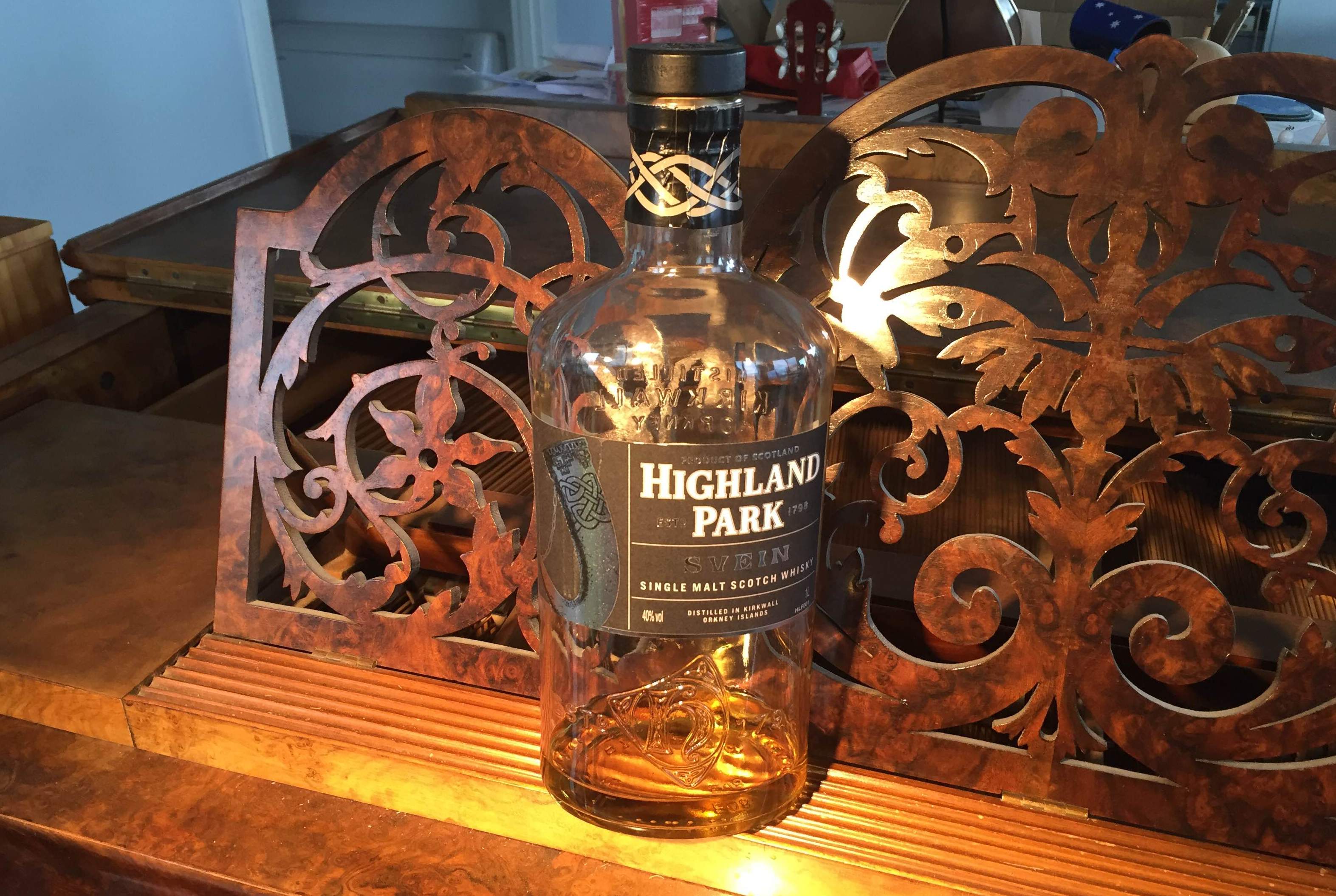
Highland Park Svein

Reviewed by: Nick

Highland Park Svein

Highland Park have one clear advantage when it comes to marketing their whisky: Vikings. Nothing can drum up some interest liked a horned hat on the front of your bottle! Of course, Highland Park can quite rightly look to the Norse raiders when branding their products, as the Orkney Islands where the distillery is located have a proud Viking heritage.

The details of their arrival in the ninth century are told in the Orkneyinga Saga, a historical narrative with more twists and family betrayals than the best soap opera. Among the characters were a series of ‘warriors’ immortalised forever in travel retail by Highland Park.

Svein Asleifsson is the legend behind the entry level of the range – which is perhaps unfair to a man dubbed the ‘Ultimate Viking’. Svein was a charismatic chieftain known for his generous and hospitable nature, and the folk at Highland Park have attempted to create a whisky that mirrors these traits. While I cannot claim this to be exactly the case (it doesn’t pour generous nips of itself into your glass!) it is certainly a very drinkable drop.

While there’s definitely some smoke in there, there’s less on the nose than you’d expect from a Highland Park dram. Instead there are ripe oranges, red apples and plenty of malt. The palate is lightly spicy, with oak, strawberries and… burnt toast? The finish is creamy, malty and slightly bitter. All up, it is a light whisky, threatening to be inconsequential but with just enough to enjoy.

Highland Park have created an interesting series here. While Svein doesn’t stand up when compared to the wonderful 12 Year Old expression, it certainly gives you a greater picture of the flavours captured by the Orcadian Distillery. Sadly I have not got to sample any of the other warriors to broaden my mind!

★★

New World Projects Ginger Beer Cask

Reviewed by: Mooresy

New World Projects Ginger Beer Cask

There are some interesting experimental drams in the market, often tucked behind the more famous and mainstream variant at a bar, or in old dusty collections held by people who bought a one off bottling at a garage sale. New World Distillery on the other hand is not tucking their experiments behind anything, and the operation is far from dusty being more akin to a well-resourced military installation. Housed in a disused aeroplane hangar is the cross between Willy Wonka’s factory and Area 51, although the focus is on whisky and not chocolate or alien secrets.

Being founded on the principle of showing the world what whisky can be, with a “sky’s the limit” attitude, it is no surprise that the team that brought us Starward would release something that stretches the concept of whisky to new heights.

On the nose, you’d be hard pressed to pick it as a whisky. But the same can be said for other expressions from many different distilleries that have played with different casks. It you’ve only ever drunk a bourbon cask Highland whisky, then putting the nose into a PX finished Islay might create the same level of confrontation and confusion when told that not only is it whisky but it is as single malt as the next dram. The information that can be beaten out of the loyal distillery workers reveals that it is a virgin cask that has been stained with fermented ginger beer that has its own secret recipe. Starward whisky is then aged for three months on top of its normal maturation to soak up the gingery goodness.

Ginger is really the buzz word here. So much ginger. It smells like ginger and when you stare at in your half empty glass it even starts to look like ginger. That might be the half empty element assisting with that. The classic tropical fruit that is a signature of the Starward is still present, however. Nice aromas of pineapple, banana and mango. A good amount of citrus that mixes will with the ginger smell to give it a spicy aroma. It also smells like ginger.

Once tasted it will continue to confuse and delight. The mouthfeel is particularly good and I’m sure the 47.7% alcohol by volume was very carefully chosen with the texture in mind. On the palate, you guessed it: cloves. Also ginger. There is a good combination of spice and fruit to create the feel of a cocktail and it may yet be a mixologist’s inspiration. It is naturally sweet with some light vanilla and the prickle from the spiciness brings that out even more, in the way that sweet and sour emphasise both rather than diminish either. The finish is nice and long, due to the intensity of a dominant flavour and also the not-insubstantial alcohol content.

It is probably plagiarism to sum up this whisky as weird and wonderful, as I am sure that many reviews would use the same phrase. It is something that I would look out for tucked away at a bar or nestled in among the fur stoles and incomplete jigsaws at a markets, but given that this modern and funky take on whisky is in such high demand – evidenced by the fact that this is the second batch – it is probably unlikely to be there. Better to head out to New World Distillery, bonk a cooper on the bonce, and run off with your own bottle.

P.S. Neither Mooresy nor the Whisky Waffle boys advocate violence towards people in the whisky industry. We love those guys. For obvious reasons.

★★★★

Highland Park 12 Year Old

Reviewed by: NickHighland Park 12

Single malts. They’re a varied lot. Some people like peat monsters. Some like sherry bombs. Others enjoy their whisky light and floral. Others still prefer their drams sweet with hints of vanilla. Pleasing everyone with one drop, however, is a much harder task. Unless, of course, you happen to have a bottle of the Highland Park 12 Year Old on your shelf. This bottle truly is the great all rounder of Scottish whisky.

Highland Park also has the distinction of being Scotland’s northernmost distillery, located on the largest of the Orkney Islands, pipping its neighbour Scapa by under a mile. As the island group was settled long ago by Vikings, it should come as no surprise that the flavours on offer are a veritable smorgasbord.

Up first comes a nose with many varied elements: a whiff of grapes and malty biscuits. There is chocolate, so dark it is mostly cocoa, mingling with notes of pear and bubblegum. Finally is the smoke: far subtler than anything from Islay. It brings to mind smouldering vegetation, an attempt to create a fire from damp leaves on a drizzly day.

The palate is equally varied. It initially suggests a roast meal: beef, parsnips, even gravy, before giving way to mandarin, brown sugar and chocolate milk. The smoke lingers gently, now mostly burnt out and close to charcoal. Finally this all gives way to a long spicy finish with salt, tobacco and mint combining with flashes of caramel.

The Highland Park 12 Year Old is unlikely to be anyone’s number one whisky. It is not weighted in a particular direction to please one group of whisky fans over another. Instead, it sits squarely in the middle, a dram to be enjoyed by everyone no matter their preferences. This is a whisky that brings people together, and if that is not a glowing endorsement, I don’t know what is!

★★★

Whisky Live to Hit Melbourne This Weekend!

Posted by Nick and Ted

Whisky Live promo pic

Scores of whiskies, two boys, one room… sounds like a decent weekend!

That’s right, the Whisky Waffle boys are making their way across the pond to the Melbourne leg of Australia’s premiere whisky festival. The session features whiskies from and home and and away, ranging from the Glenlivet Founders Reserve, the Hibiki 17yo and the new Laprohaig 15yo to the Starward Wine Cask Edition 1, the Dry Fly Straight Wheat Whisky, and the NZ Whisky Co 1987 27yo Single Malt. The boys are also very excited for the opportunity to meet Eddie Russell of the Wild Turkey distillery and Russells Reserve fame.

Stay tuned for increasingly creative tweets as the day wears on, and give us a shout out via Twitter or Facebook (or the blog) if you want a personalised on-the-spot review or musing about something on the day. We will be attending the (sold-out) Saturday (25/7) afternoon session starting at 1pm, although we believe there are still tickets left for Friday (24/7) and Saturday (25/7) evenings (don’t quote us on that).

For more information, including the full whisky list, you can visit the official event website here.

See you on the floor when the Whisky goes Live!

Ardbeg Perpetuum

Reviewed by: Ted

Ardbeg Perpetuum

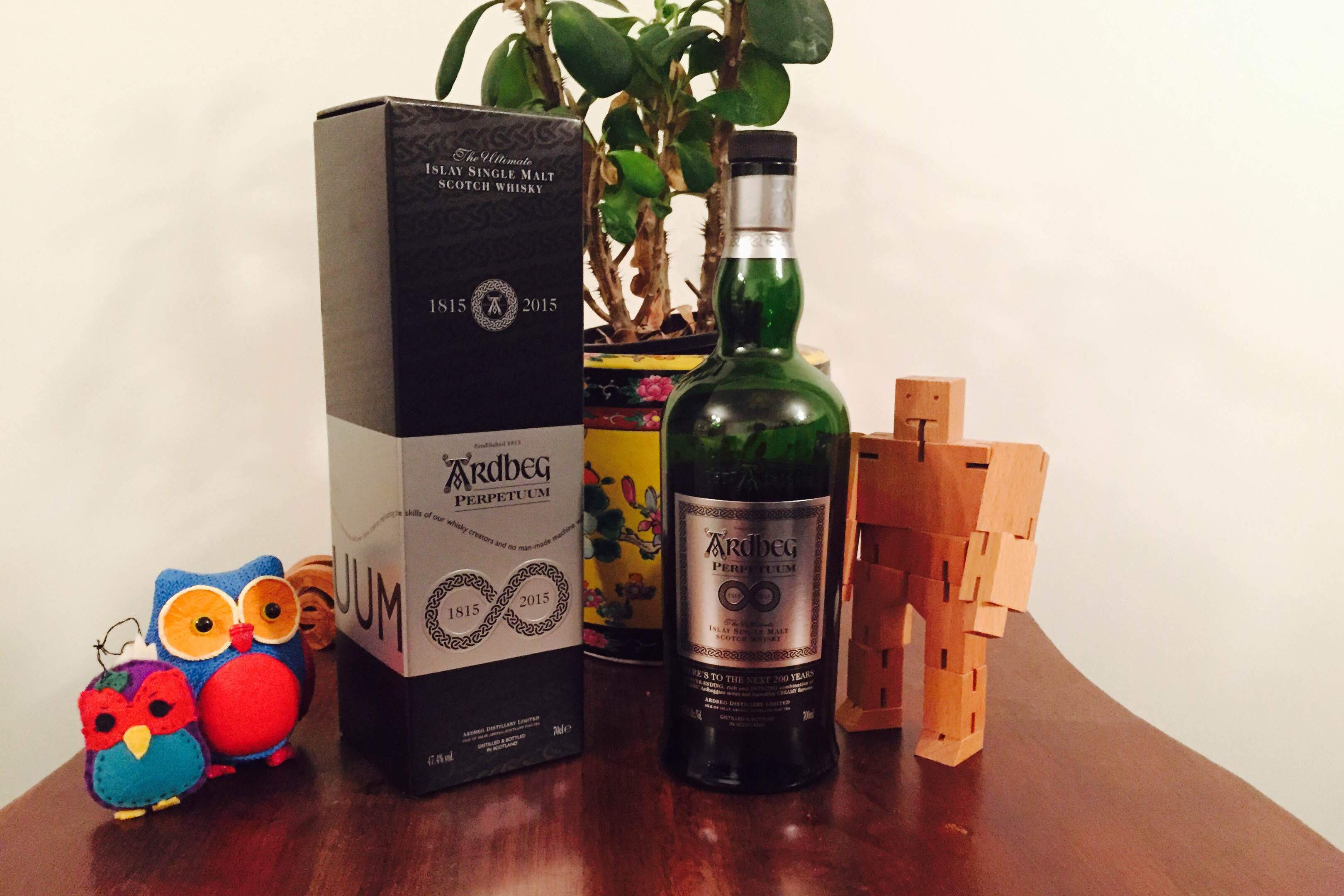
200 years might not be infinity, but it’s certainly a long time to be producing whisky. Ardbeg distillery, nestled on the coast of Islay, is to be heartily congratulated for reaching such a momentous milestone.

The distillers at Ardbeg love a good special edition release, and in celebration of their big birthday they have brought forth the Perpetuum. The whisky celebrates the love, dedication and skill of its creators, acknowledging that while times and technology change, no machine will ever be able to recreate the spark of the human touch.

It’s certainly a beautiful object to gaze upon, with shiny silver labels, a Celtic braid infinity symbol and PERPETUUM surrounding the box in monolithic black letters. Oh my goodness the 47.4% spirit inside is a worthy representative of Ardbeg’s art. Just to look at it’s a gorgeous pale, silky gold with a subtle peach tinge.

The nose is delicate and creamy, and has delicious buttery shortbread infused with a hint of sea salt. Twining through is a touch of fine smoked meats, smouldering driftwood and hot malt. The first sip delivers rich, woody smoke to float over the tongue. Underneath sits a pool of salty mineral-rich water with the occasional mandarine bobbing around in it, counterpointed by a sharp bittersweet herbal finish that lingers on. As the bottle says, it almost seems to be never ending.

The Perpetuum is a snapshot of the last 200 years of whisky making at Ardbeg, and hints at the way forward into the next 200 years. Like the infinity symbol the represents it, hopefully we will be coming back to the Perpetuum, and indeed all Ardbegs, again and again for many years to come.

★★★

‘Big Peat’ or ‘The Perks of Random Conversation at the Bar’

Reviewed by: Ted

Big Peat

This story begins, as so many great stories do: m’colleague and I were at the bar. Admittedly not an unusual state of affairs. On this particular night we were chatting to our barman mate, and a friend of his that he’d just introduced us to. For the purposes of this story, let’s call him Doug. Doug was feeling in a rather celebratory mood as he’d just scored himself a job working as a pharmacist in sunny (and I mean that in the most ball-of-thermonuclear-fire sense of the word) Alice Springs, which is pretty much smack bang in the centre of Australia. Quite a change from little old Burnie on the NW Coast of Tasmania, which can occasionally be sunny if it really makes the effort.

After the usual necessary social preamble was out of the way, the conversation happily turned to that most mysterious, complicated and variable of subjects… women! No, wait, I meant whisky! Doug, as it turned out, was quite the connoisseur (and not just of whisky. On a side note he very charitably bought us a glass of Cognac from the highest extremity of the top shelf, an interesting experience to say the least). We all shared a common passion for peated whiskies, particularly those from what is arguably the spiritual home of the smoky dram: Islay.

These days people mostly talk about Islay in terms of its single malts, but historically the island’s distilleries injected popular blends with some much needed character (and they still do!). However, there is a theory that history works in cycles, and what was once old becomes new again (which probably explains the questionable return of scrunchies and chokers). Interestingly enough, what was getting Doug excited that evening wasn’t the single malts from one of the hallowed Islay distilleries, but a blend. An all-Islay blend. “It’s fantastic! You should track it down”. Fateful words readers, because a few cheeky drams relaxing the mind and the heady world of internet shopping instantly at ones fingertips is a dangerous combination. Let’s just say that I didn’t take much convincing, and moments later I was the proud owner of a bottle of this curious beastie.

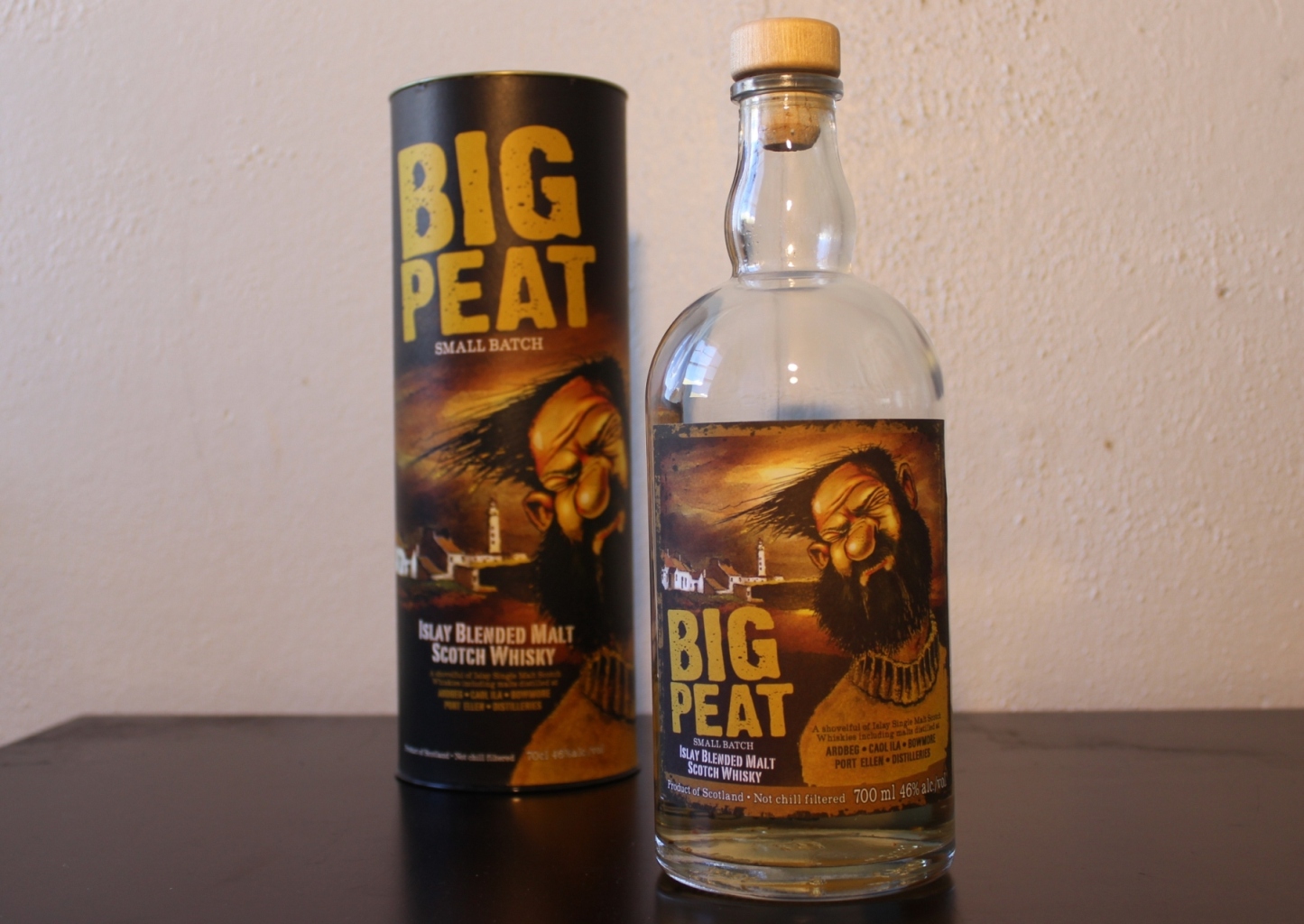
Cut to a few weeks later and m’colleague and I were staring with anticipation at a large post box that we had dubbed ‘The Bunker’. With no little ceremony (mostly involving the humming of the tune from the start of ‘2001: A Space Odyssey’) we cracked open the box, and were greeted by one of the coolest bits of tube artwork this side of Eilean Mhic Coinnich. Meet the Big Peat, an all-Islay blend purporting to contain ‘a shovelful’ of single malts from the distilleries of Ardbeg, Caol Ila, Bowmore, and Port Ellen. The aforementioned artwork is a brilliant graphic-style picture of a hirsute gentleman standing in front of what I can only assume is the Rhinns of Islay lighthouse on a beautiful island day (which is to say that the sky is the colour of tea, and our man has his face squinched up against the wind, which is trying its best to blow his hair away).

Chuckling with glee we popped the top and unsheathed our prize from its scabbard. Gasps of surprise met the sight before us (don’t worry, we hadn’t been ripped off and sent a bottle of JW Red instead). You see, normally we would picture the drams of Islay as being dark and brooding in hue, but the Big Peat was filled with bright spirit the colour of pale golden straw. Some people just like to mess with your mind. Of course, there was only one sensible recourse to meet the conundrum before us, and it wasn’t hiding under the table. Bust out the glasses and crack that sucker open good sir!

A generous splash of whisky later and we were ready to begin uncovering the secrets of the Big Peat. There was no denying that it lived up to its name. The smoke was there as soon as we poured it into the glasses, infused with plenty of dark chocolate, malt, rich earth and those medicinal notes that Ileach whisky is famous for. We were in no doubt about the heritage of the spirit sitting before us, whatever the colour. A closer snort revealed thick sweet notes and perhaps a bit of overripe fruit, like a squashy banana. We eyed each other off; curious, but not too bad a start.

Slurp! Hot, woody, ashy smoke poured into our mouths and then… not much else. Sure, there was a light, sweet after-taste, but it was gone in a flash, and all that was left was spicy, medicinal smoke coiling around the tongue. It was like being on the edge of a bush fire; plenty of smoke getting all up in your face, but no blazing heat to go with it. Hmmm…

We could see what Douglas Laing & Co, the makers, were trying to get at; surely crafting a vatted blend out of the great single malts of Islay should be as awesome a combo as haggis with tatties and neeps! Yet somehow they’d got a wee bit over excited with the whole BIG PEAT malarkey and forgotten that it isn’t just the smoke that makes an Islay dram exceptional, it’s the bricks and mortar and the shape of the fireplace too. The way that sweetness melts into savoury, medicinal tang challenges the tastebuds, dark flavours are shot through with light, seaside elements help wash everything across the palate, and then finally the smoke that sits over them all. It’s a complex ecosystem that requires careful balance to work well.

Sitting back we mused upon the Big Peat. By no means did we think that it was a bad dram, far from it, just that somehow it deserved to be better. Perhaps the mix wasn’t quite right, maybe a dash of Bruichladdich or Bunnahabhain could have rounded out the flavours working underneath the smoke. Who knows? What we did know though, was that the Big Peat had challenged us, and that a random discussion in a bar can lead to interesting and unexpected places. So go on, strike up that conversation, you might just find something new.

★★★


Ardbeg: a journey through time – the coming of age

Welcome back fellow Wafflers to the odyssey that is Ardbeg through the ages. We left our tale at a perilous standpoint, with our hero of a distillery surely doomed to closure and eternal obscurity. We resume the story in 1986 and Ardbeg has been shut for five long years. But the whisky community did not forget…

Ardbeg Day 2

Ardbeg: A journey through time – the coming of age…

Posted by: Nick

1987

Some hope emerges for our protagonist in the form of new owners, Allied Lyons. Could this be the salvation for the distillery and the wider community? Sadly, no. It is a false dawn, and Ardbeg is run merely to become one hundredth of a bottle in AL’s blends. No one has the foresight to recognise this was 99 parts too few…

1996

The distillery is neglected and once again it is unjustly left to dwindle to nothing. Surely this time, it really is the end for our hero.

1997

Finally, just when all seemed lost, someone sees the light! The folks at Glenmorangie realise that one day this quaint little establishment in Port Ellen could actually become one of the greatest distilleries in the world. It could even have a go at producing one of these new-fangled single malts! Or at least this is what Glenmorangie’s Dr Bill Lumsden, head of distilling and whisky creation believes. And when you have a title as impressive sounding as his, anything is possible.

The new owners open the creaky doors to the old bond store to reveal… barrels – housed there since the 1970s! We can only imagine the size of the grins on faces that day. This vintage product marks the beginning of many special one-off releases.

1998

The new owners begin work as if they want to make up for lost time. Progress is made remarkably quickly. Renovations to the visitor centre are duly carried out and the now famous Old Kiln Café is installed. More 1970s bottlings are released. And our hero is starting to get noticed. It doesn’t take long before there is a shiny award on the wall of the renewed visitor centre with the words ‘Distillery of the Year’ emblazoned on the plaque.

2000

One-off releases are doing their job. But what Ardbeg really needs was an identity; a main character. This arrives in the form of the 10 Year Old, young and fiery, peaty and heavy, and yet balancing seaside elements with oak and vanilla. It is quite unlike anything else on the market. And the world approves.

2001

With its standard bearer firmly realised in the form of the 10 Year Old, Ardbeg decides to push the boundaries further. The one-off bottlings have been very successful, so why not release one every year? This trend begins in 2001 and continues to this very day. First is the Lord of the Isles, followed by bottles such as the Airigh Nam Beist, Serendipity, Rollercoaster, Gallileo, and the much sought after (at least by us Wafflers) the Alligator.

2003

Another regular release joins the Ardbeg stable, this time an even more fascinating drop, the cask-strength Uigeadail (or Oogie as we Wafflers affectionately call it). Spending part of its maturation in sherry barrels adds another layer of complexity to this already multifaceted drop.

2007

The baton changes hands once again. From Duncan McDougall via fifteen others, Michael (Mickey) Heads becomes the latest distillery manager for Ardbeg.

2008

Worldwide recognition is only a matter of time for our hero. The famous Ardbeg 10 year old wins Jim Murray’s world whisky of the year award, and brings greater renown to the growing brand.

2009

Ardbeg makes it back-to-back when the Uigeadail follows in the footsteps of the 10 Year Old and reclaims the world whisky of the year award for the distillery!

Buoyed by this success, Ardbeg expand on their main range with the heavy and blazing Corryvreckan and the light and restrained Blasda.

The 2009 special release, even by Ardbeg standards, packs a peaty punch. It is appropriately titled the ‘Supernova’, and it goes on develop cult status among the ever-expanding legion of Ardbeg fans.

2014

Finally after years of yearning, this particular Waffler’s dreams come true, and Nick stumbles into Port Ellen, first stop: Ardbeg Distillery. He has a magnificent time, checking out the stills and the bond store before settling down in a comfortable chair to sample the wares and chat about the history of the great distillery. He could not be more pleased for the establishment that they near their 200th year as distillery and continue to make one remarkable drop after the other. He decides that Ardbeg truly is a hero and vows to one day chronicle the saga of its tumultuous, but ultimately highly successful life.

0182

2015

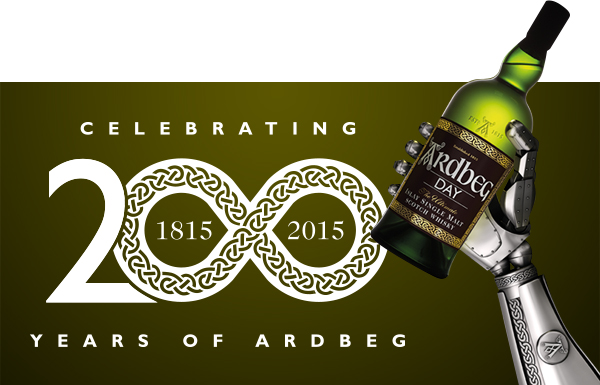
Ardbeg officially turns 200. The party begins.

Sláinte!

Click for part one

Ardbeg day 1

Ardbeg: a journey through time – the beginning

Ardbeg distillery, one of the true greats of Scottish whisky, is turning 200 – and may we add looking mighty good for its age! Whisky Waffle take this moment to celebrate by looking back at the history of this wonderful distillery in a new two-part adventure…

Ardbeg Day 2

Ardbeg: A journey through time – the beginning…

Posted by: Ted

1798
Fàilte traveller. You have been summoned here to witness the birth of a distillery, one that will become powerful and then dwindle to smoking peat embers, only to be stoked once again by the howling Ileach winds and rise even stronger than before. Look ye now to the peat bogs, for cometh the man, but perhaps not yet the moment. Duncan McDougall is his name, and he travels to rent the farmlands on the South East coast of Islay known as Ardbeg, Airigh nam Beist and Ardenistiel. Come; let us step forward in time to see what will be. I am sure one such as you knows the way of it.

1815

Now friend, the true moment. Here is Duncan, and with him his son John, and grandson Alexander. They have fashioned themselves as McDougall & Co. and raised a distillery on the land known as Ardbeg. Watch closely, ye silent observer, as they flicker across the years, crafting a dram with a heart of smoke.

1835

The fire that was Duncan burns no more, and John works the land in his place, while Alexander is tasked with tending the waters of life. Woe to the makers, insolvency falls, and Ardbeg changes hands. Let your gaze pierce across the sea to Glasgow, where the coffers of Thomas Buchanan Jr. now stoke the Ardbeg fires. But the McDougalls work on, leasing their creation from the new masters and tending to their amber child.

1853

Alexander is lost to time and the Ileach wind. Turn your gaze watcher, for new players walk the stage. Here is Flora and Margaret McDougall, sisters to the old wolf and distillers in their own right; Colin Hay, proprietor newly made; his son Collin Elliot Hay, distiller at the helm; and John Ramsay, great owner of not only Ardbeg, but Laphroaig, Lagavulin and Ardenistiel too. This small god of the Ileach tends his emerging villages and their vaunted distilleries well, ensuring that their leases endure long and the water flows unimpeded.

1887

Can ye feel the power in the air? The reek of the mash and the thrum of the industrious as they transform barley, water and yeast into more than a million litres of smokey whisky. These craftsmen are the kings of the island and their work a champion of the blend, although the true believers know to take strength from the untransmuted Ardbeg spirit. I see you watching me traveller, and seeking the nature of the fall. Step once again and we shall see.

1944

War. The venerable whisky makers of Scotland weep golden tears as their industry bleeds. On Islay, the once mighty Ardbeg is now only a shadow of itself. The distilling bans of this terrible world struggle are just another blow after the horrors of the Great War, and the harsh realities of economic depression. The old guard are no more, and a pall drifts from men who know how to be bankrupt or creative with bookkeeping.

1981
Here is the true nadir my friend. Ardbeg is closed and all but a few chosen gone. The village mournfully quiet and the air wrong, missing the tang of fermenting barley. The future uncertain. After the war life returned, but never recovered. The McDougalls passed their torch to the Ardbeg Distillery Ltd, and the distillery became a bauble for giants, a speck of smoked quartz tumbling in their collections. Your eyes betray you wanderer. What room is there in this bleak world for the distilleries of Islay they ask? Listen to the capricious Ileach wind my friend, for it blows from the east and whispers a name, Glenmorangie. I told you at the start of our journey that Ardbeg would rise once again, and here is its saviour. An amber crusader by the name of Bill Lumdsen will take Ardbeg and reforge it in smoke and fire into a legendary single malt famed across the world and even to the stars themselves.

But the how and why of that great transformation you must discover for yourself. Here our paths split and I must walk another road. I bid you farewell my friend, fellow watcher of the ages.

Sláinte

Click for part two

Ardbeg day 1

Whisky Waffle Present: Whisky World!

Posted by: Ted

WWWWD edit