review

Caol Ila 12 Year Old

Reviewed by: Mooresy
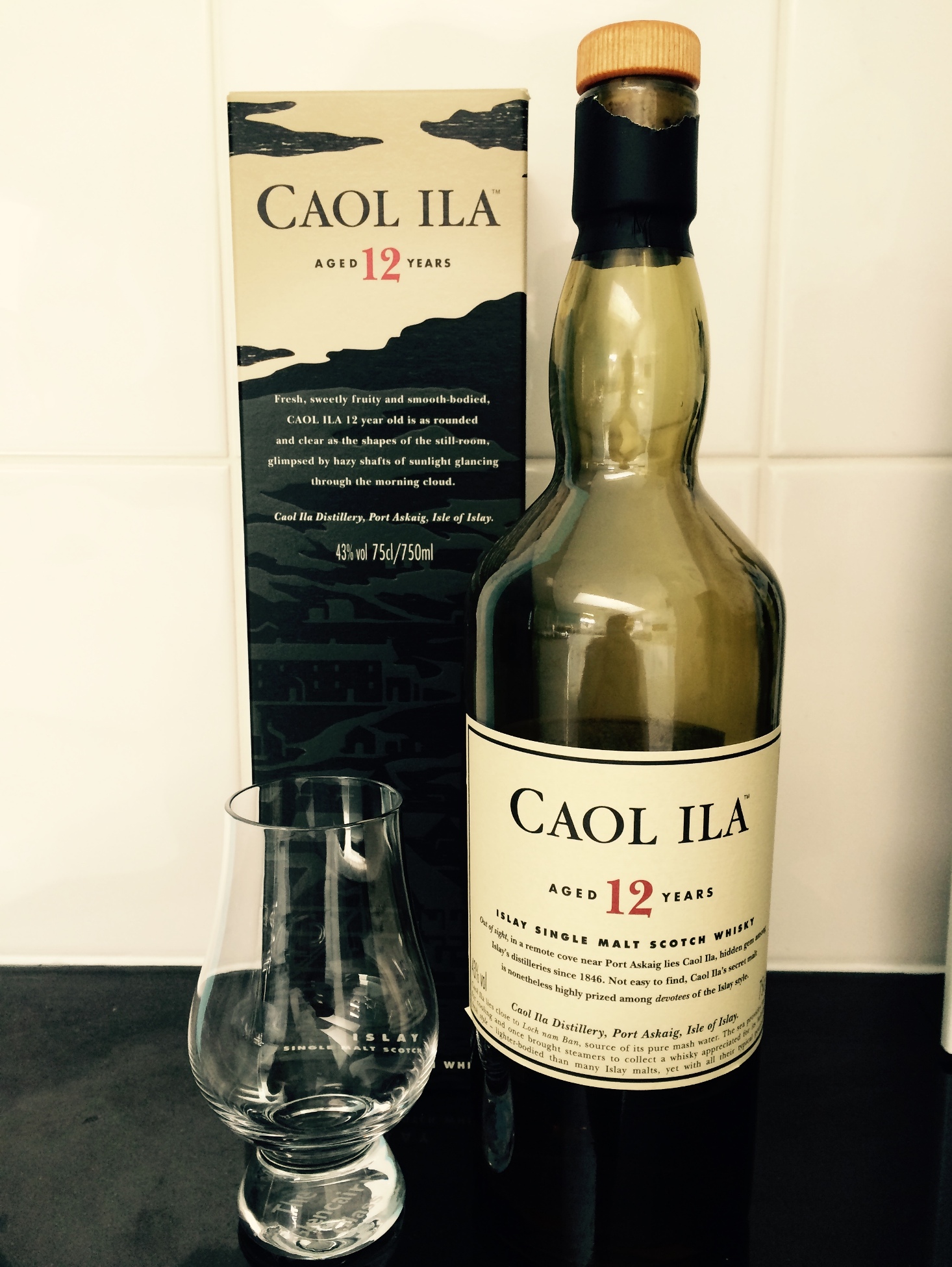
Caol Ila

Caol Ila is a deceptive drop, both in pronunciation and in presentation. The Scots will tell you, aggressively, that there is one way to pronounce Caol Ila and that is “Cull Eel-a” blurred into one word. You’ll be lucky if spellcheck doesn’t turn it into Coal Ikea, but stay well away from that and do not be fooled by your non-Gaelic upbringing.

It is also deceptive on appearance. The box is black, but in particular the bottle is darkened grey glass, as if the Islay smoke itself was swirling inside staining the bottle like the wind lashes coastal cliffs. But once the dram is poured, the liquid is pale as if pulled straight from a virgin oak barrel.

Caol Ila means Sound of Islay but is not one of the best well known of the Islay malts and, despite being the largest Islay distillery, it is not in the Islay triumvirate. I am leaving Bowmore out of the triumvirate if anyone is struggling to narrow it down to the big three.

On the nose, there is the smoky peat smell that makes it quintessentially Islay. There are hints of peppermint and the fresh fruit leaf smell coming through but most surprising is how the brine – more subtle than many an island whisky – adds an intensity without being overpowering.

This translates onto the palate where, combined with a caramelised sugar sweetness, the peak hit comes back for a second round. Despite the colour and viscosity on appearance, Caol Ila is quite an oily whisky and arrives like a malt older than its twelve years but without the punch of those elders. It is disappointingly only bottled at 43%.

The finish is long and the oily quality stays in the mouth for round three of peat hit. But don’t get me wrong, this in not the kind of peat that will clear a room from smell alone. Unlike the infamous (and exceptional) Octomore, you don’t wake up the morning after trying to remember when you smoked a cigar the night before. But it has just enough to be an excellent easy-drinking Islay malt.

Perhaps the most endearing element of the Caol Ila 12 is what, I suspect, it contributed to the now deceased blended malt Johnnie Walker Green Label, but that is a story for a future musing.

★★★

Storm in a Glencairn glass: Jim Murray’s Whisky Bible 2015

Posted by: Ted

The high priest of whisky tasting, Jim Murray, has just brought his newest amber gospel down from the mountain, Jim Murray’s Whisky Bible 2015. This year’s edition has created somewhat of a stir in the whisky world, as in a surprising turn of events there is nary a Scotch whisky to be found in Jim’s pick of the top five whiskies in the world!

Jim Murray: single handedly keeping Panama hat making companies in business since 2004

Jim Murray: single handedly keeping Panama hat companies in business since 2004

The number one spot in this edition goes to a Japanese whisky, The Yamazaki Sherry Cask 2013, a drop that has certainly proved popular since its release last year. Now that Jim has placed it on the top of the pile stocks will undoubtedly deplete faster than a packet of Tim Tams at a kids birthday party, so the discerning collector should act quickly to secure a bottle. Yamazaki is no stranger to high accolades, with the 18yo picking up a slew of gold medals at the prestigious San Francisco Spirits Competition in recent years and the 25yo placing first in the World Whisky Awards in 2012.

The winning whisky! Now being sold for extortionate prices everywhere!

The winning whisky! Now being sold for extortionate prices everywhere!

The number two and three rated whiskes come out of the Americas, with Jim selecting the William Larue Weller 2013 bourbon and the Sazerac Rye 18yo respectively. As with the Yamazaki, bottles of these are already quite hard to come by apparently, so you will be one of a lucky few if you do happen to locate them after this.

In the Scotch category the dram of the year goes to a blend, The Last Drop 1965, which as you can probably imagine based on the age is rather expensive. For the rest of us mere mortals the winners of the more reasonably priced sub-categories of blends, non-age statements, and ages up to 21 years included drops from well known distilleries such as Highland Park, Glen Grant, Glenmorangie, Ardbeg, anCnoc, Balvenie and Ballantines.

Something that is likely to bring a few pained tears to Scottish eyes is the fact that the winner of the Best European Whisky section was an English distiller! Yes, that’s right folks, The English Whisky Co.’s Chapter 14 Unpeated is rated by Jim as the current pinnacle of European whisky. This is a huge moment for English whisky and a turn of events that will likely have Scottish whisky boffins racing back to their drawing boards

In a category closer to home, the trans-Tasman war between the Aussies and the Kiwis will likely heat up, as a New Zealand drop has been named as the Southern Hemisphere Whisky of the Year: The New Zealand Willowbank 1988 25yo.  Fortunately for the Aussies, the Willowbank distillery in Dunedin closed down in 1997, meaning stocks of this champion dram will dwindle ever lower while the new Australian boom will continue to take the world by storm. In fact, Jim is rather fond of the whisky coming out of Australia and generally rates it quite highly .

The Whisky Bible is always worth a look if you want a great overview of the hundreds of whiskies available around the world, and can be ordered online at the official Whisky Bible website: here.

A full run down of the winners of each category can be found here.

Nant Port Wood 43%

Reviewed by: Nick

Nant Port Wood 43% whisky waffle

One day, Nant is going to take over the world.

It started out as a fairly innocuous venture. Queensland businessman buys small country estate in the tiny country town of Bothwell, Tasmania. But all is not what is seems.

Bothwell as a town is in fact a tribute to Scotland; it is built on the ‘Clyde’ River and, heart-warmingly, features tartan street signs. The Estate’s new owner is the business-savvy Keith Batt, and only ten years after purchasing the property, he has built a distillery, exponentially expanded its output, opened a successful chain of Whisky Bars around the world, and along the way, produced some truly wonderful whisky. This was never going to be a small-scale boutique distillery…

Fortunately for Nant, in this quest for success and recognition they have not compromised the quality of their product; instead producing batches of frequently excellent whisky. While they may not yet be a truly worldwide product, they can count among their fans one Jim Murray, author of the iconic (and egotistically titled) yearly publication: ‘The Whisky Bible’. Surely it is only a matter of time before Nant goes global.

Nant mature their whisky in various cask types, though there is something special about the ‘Port Wood 43%’ release. Lightly amber in colour, it is sweet on the nose with hints of raisins coated in white chocolate. It is gloriously rich on the palate, featuring cloves, nutmeg and other spices. It is still sweet, but also creamy, and has strong notes of citrus fruit; particularly oranges. The finish is warm, pleasant and creamy. The fruit cake characteristics remain, along with cherries and maple syrup. When you drink this whisky not only do you get flavours of Christmas pudding, but brandy butter, too.

While this whisky is complex and interesting, it is also smooth enough to be enjoyed by non-whisky drinkers. It is unique, memorable, and well worth seeking out.

Of course, it is also built upon the most successful business model seen within the Tasmanian Whisky industry. When trying a drop of Nant, you are not only drinking a whisky – you are drinking an empire.

★★★★

Strathisla 12 Year Old

Reviewed by: Ted

Strathisla 12

Some people say that nothing that comes out of a medicine bottle ever tastes good. Well, I would argue that is not always the case, especially when the bottle contains Strathisla 12 Year Old.

Now, I’m not saying that whisky is medicinal (although my dad always had a glass if he felt a cold coming on), but the Strathisla 12 captures the look of a Victorian medicine bottle, with beautiful dark green glass, embossed lettering, several fonts, and a lovely etching of the distillery.

Strathisla is owned by Chivas Brothers, makers of the well known range of Chivas Regal blends. According to the box the distillery itself is ‘The oldest distillery in the Highlands’, although we would debate this fact slightly. Not the age mind, but the location, because when you look on a map you would be forgiven for thinking that Strathisla is smack bang in Speyside.

A sly Speyside imp certainly dances into the character of the Strathisla 12. The nose is light and sharp, with notes of hard fruit, grain, and crushed grass. The taste is crisp and green, with strong bitter herbal flavours that cut across the tongue, leaving a lasting dryness. There’s a raw, untamed edge to this Strathisla that suggests a younger whisky than its 12 years. Perhaps a few more years in the barrel would coax it into bloom.

If you are one of those people that are of the opinion ‘It’s herbal, so it must be good for you’, then you will probably find a better bet in the Strathisla 12 than downing some concoction of random weeds pulled from the garden. The bitterness will definitely be a turnoff for some people, but sometimes that’s just what you want. In fact, come to think of it, the herbal qualities may even make it an excellent component for a cocktail. Take a walk into the leafy green garden of Strathisla and see if it’s just the tonic you’re looking for.

★★

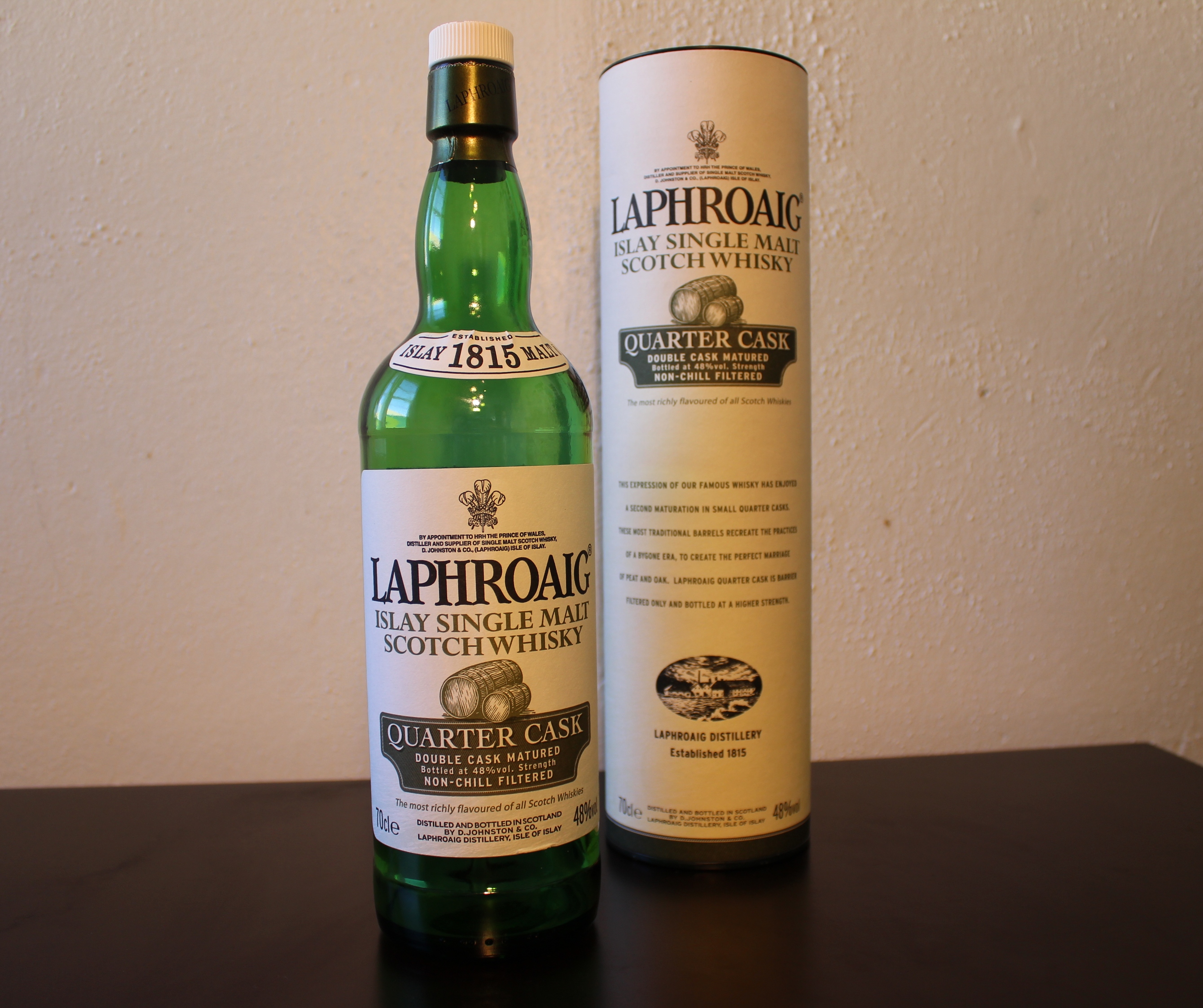
Laphroaig Quarter Cask

Reviewed by: Nick

Laphroaig Quarter Cask whisky waffle

At the time, this was the most expensive bottle of whisky I had ever bought. My best friend, co-writer and co-drinker Ted, had just bought a bottle of Lagavulin 16 and I convinced myself I needed to follow suit with something equally special. So I parted with more money than a uni student like me would normally spend in a month, and took the plunge into the world of Islay whiskies. I was not disappointed.

While this whisky may be younger than 10 years (no age statement is provided, so it’s hard to be sure) it has been matured in smaller ‘quarter’ casks, hence the name of the expression. The reduction in barrel size ensures the spirit has had more contact with the wood than it would usually be allowed (Laphroaig claim 30% more!) and suddenly a more complex, more dynamic whisky is born.

There is still plenty of peat on offer here. However, while the 10 Year Old is merely smouldering, the Quarter Cask is burning intensely: it is the whisky equivalent of a blazing bonfire.

Coastal elements are present on the nose; a sea breeze of salt, brine and seaweed. The fire transfers to the palate: the increased bottling level of 48% gives this whisky the kick and spice that the 10 Year Old lacks. Sweeter flavours come through: toffee, treacle, cocoa, even caramel. The finish is lengthy and memorable. Huge gusts of smoke roll across the palate, and linger for minutes afterwards.

Peated whisky is made by many distilleries. But rarely has one got it as right as this. There is without doubt still a sense of rawness about it. In no way can it be described as the smoothest, most elegant, or even the best whisky you will taste. But all these elements, remarkably, work in its favour. This is peated whisky. This is Islay.

★★★★

The Whisky Waffle community

Posted by: Nick

The more I discover about the Tasmanian whisky scene, the more I appreciate the close-knit little community that has developed. People are friendly, enthusiastic and willing to help out one another to ensure this thriving industry continues to boom. Our website is only a tiny part of the bigger picture but we would love to help foster this sense of community.

And on that note, we would like to announce the next writer upon Whisky Waffle: YOU! Well – it could be you! If anyone has a piece they are keen to share with the world, or a dram they are desperate to review, send us an email at whiskywaffle@gmail.com and let us know!

So with no further ado may I introduce our first guest contributor: Mr Alex ‘Mooresy’ Moores!

Mooresy and Nick are in 'good spirits' after meeting Jim McEwan. See what I did there?

Mooresy and Nick are in ‘good spirits’ after meeting Jim McEwan. See what I did there?

I met Mooresy while attending the Jim McEwan night last Thursday and was impressed by his enthusiasm and passion for the water of life. His first review will hit the site tomorrow and I assure you, it’s a cracker of a read. Make sure you stop by to check it out!

Until then, keep waffling!


Photo provided by the TWAS. Used with permission.

Yamazaki 12 Year Old

Reviewed by: Ted

Yamazaki 12 whisky waffle

If you stood at the top of Ben Nevis in the highlands of Scotland and turned your eyes eastwards, then you would probably just see quite a lot of Scotland to be honest. However, if you had truly exceptional eyesight, even better than the elf eyes of Legolas, then in the far East you may be able to see a mighty chain of islands under the rising sun (this is of course assuming that your amazing eyes can penetrate Scottish rain!).

The islands of course form the ancient nation of Japan, a place of legends and gods, samurais and ninjas, geisha girls, and very strict tea parties. A curious thing you may not have expected to find in Japan is a fully fledged whisky industry… and yet Japan is the third largest producer of the amber drop behind Scotland and America, and is home to some of the greatest whiskies in the world.

As a country, Japan has only a relatively short history of making whisky, and like Australia the modern scene has its origins in a conscious decision to start an industry. After the introduction of Scotch whisky to Japan in the late 1800’s, a primordial ooze of distillers formed, but it wasn’t until 1923 that the first serious attempt emerged with the founding of Yamazaki distillery by Shinjirro Torii.

Apparently the initial releases were not favourable and so Torii hired a fellow countryman by the name of Masataka Taketsuru. Taketsuru had studied in Scotland in the early 1910’s, and after marrying Kirkintilloch girl Jessie ‘Rita’ Cowan, worked at Hazelburn distillery for several years before returning to Japan. The in-depth knowledge of whisky making Taketsuru gained in Scotland provided the crucial spark that Torii needed to make a worthy dram.

Thanks to the work of Torii and Taketsuru, modern Japanese whisky shares much in common with Scotch whisky, helped by the fact that Japan has a similar climate and terrain to Scotland. Yamazaki distillery (owned by Suntory, one of the two major players in the Japanese whisky industry) is located in the outskirts of Kyoto on Japan’s main island of Honshu.

The Yamazaki 12yr old was the first Japanese whisky I ever tried, and it piqued my interest in the malts of those eastern isles. The colour is a burnished gold that would be at home in a Japanese shrine. The nose is sweet and intensely fruit driven, with a strong scent of red pears backed with a light hint of mandarins.

The flavour is bright, and bursts in a wave across the tongue and roof of the mouth. After an initial sweet hit, sharp tangy citrus flavours dominate the tastebuds and charge up to the back of the nose. The finish is lightly dry with a slight bittersweetness, and brings to mind the feeling left after eating a green chewy lolly.

Although the bright, sharp flavours may not be to everyone’s tastes, the Yamazaki 12 is a great starting point for anyone wanting to try Japanese whisky, and not only because it comes from the oldest commercial distillery in Japan. The Yamazaki 12 provides a glimpse into the mind of a new whisky culture, one forged out of the soul of an ancient civilisation. Kampai!

★★★

Laphroaig 10 Year Old

Reviewed by: Nick

Laphroaig 10 whisky waffle

Peat. One of the biggest, strongest and most divisive flavours found within a dram of whisky. The smoky, medicinal notes send some people running to the hills with just the merest of whiffs. But to others, there are no better flavours in the entire world of whisky. These flavours are most strongly associated with one place: Islay.

The early Ileach distillers did not set out with the intention of creating such iconically flavoured whisky. The use of peat to smoke the barley was born out of necessity rather than creativity. Islay is as remote as it is boggy, and getting coal to the island on a train was simply not an option. So the locals turned to a resource they had in abundance: peat. It kept them warm in their houses against the wild force of the Atlantic Ocean, so burning anything else in their kilns was never a consideration.

The most famous example of peated whisky is made by the Laphroaig Distillery. As far as standard releases go, nothing is on the same extreme level in terms of the peaty intensity of its flavour.

In their 10 Year Old expression it is immediately noticeable – before it has even come close to your nose. Smoke. Ash. Medicinal iodine notes, all there smouldering together. This is the scent of a bonfire at the beach.

The palate is legendarily akin to licking a burnt log. Maritime notes are present; briny, seaweed flavours ebbing through gently. Other, more obscure elements are there too, such as leather and sawdust. The bourbon cask imparts only small amounts of vanilla; and what comes through is particularly dry and slightly bitter.

The finish is disappointingly short and contains several soapy, chalky notes, before the smoke gently comes rolling back, leaving a warm, lingering ash-like flavour.

While it is not the best Islay, or even Laphroaig has to offer, there is no doubt this dram showcases some amazing peaty flavours. It is, however, something of a one card trick, let down by the flavours that accompany the smoke. This does not disappoint me too much. If this is merely the entry level, how good must their other expressions be?

★★★

Trappers Hut

Reviewed by Nick and Ted:

TH 1

While the Tasmanian whisky scene is still relatively unknown worldwide, there are some home grown drops that even locals won’t be able to tell you much about. Case in point is the Trappers Hut, a whisky that we hadn’t heard about until recently.

The legend goes that an earlier incarnation of Sullivans Cove produced a number of barrels that fell into the hands of their investors. The investors were left with two options: 1. Throw a massive whisky party for their friends (we may have made that up) or 2. Pay the excise and bottle it under their own label. They opted for number two and so Trappers Hut was born.

Light in colour and on the nose, the Trappers Hut has sweet bourbony characteristics. The initial taste is one of sweet citrus cordial, but it quickly gives way to bitter grassy notes. The finish leaves a strange lasting metallic tang, like sucking on an old spoon.

Whilst an oddity amongst Tasmanian whiskies is a fun thing to try, the result is more an exercise in whisky appreciation than an enjoyable dram. If you ever see it in a bar certainly give it a shot due to its rare nature and its provenance, just don’t set your expectations of the flavour too high.

★★

Hellyers Road Pinot Noir Finish

Reviewed by: Nick

Hellyers Road Pinot Finish whisky waffle

Tasmania is rapidly becoming known as the ‘Whisky Isle’ of Australia. Not only are distillers here in my home state creating award winning produce, they are also experimenting with new methods to create unique whisky. Hellyers Road Distillery is no exception to this, and perhaps their most interesting expression is their Pinot finish.

The Tasmanian wine industry is already thriving, with cool climate wines such as Pinot Noir being made exceptionally well, particularly in the Tamar Valley. It is from here that Hellyers road sources barrels to transfer previously bourbon-aged spirit into for the final six months of its maturation.

The difference this process makes is marked. One glance tells you that this is a very different whisky to the Original release. Its colour is no longer light and pale; instead it is enticingly golden. The nose is equally varied. There are still the typical buttery notes to be found, but now these are infused with fruits such as raisins and dates. The palate is rather light, but gone are some of the sharper, rougher flavours of the Original. Instead there are dry, almost sour notes, competing intriguingly with the more expected flavours of vanilla and toffee. The finish is spicy, the added kick from the alcohol percentage of 46.2% clearly apparent. Finally, you are left with the trademark Hellyers Road buttery notes that remind me of not so much a cake, but rather uncooked cake batter.

The Pinot Noir cask is a fascinating malt. Undoubtedly more interesting and complex than its cousin, the Original, it is also smoother and easier to drink. While not yet a perfect whisky, it certainly shows that experimentation has more than paid off for Mark Littler and Hellyers Road.

★★★