review

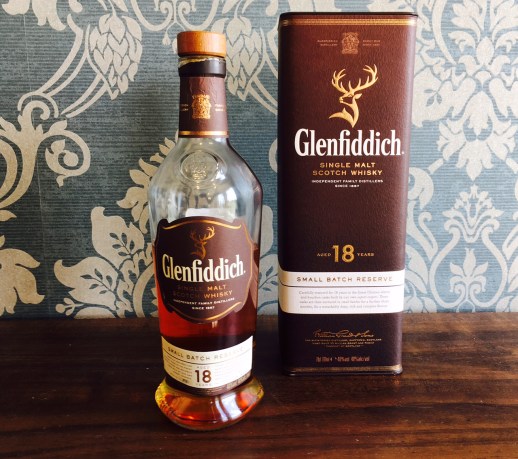
Glenfiddich 18 Year Old

Reviewed by: Nick

glenfiddich-18

If this website were not called Whisky Waffle, then I could sum up the Glenfiddich 18 Year Old in just three words:

Goes. Down. Nicely.

Of course, we all know that’s not how I roll and I’d like to expand on those three words just a little.

Goes: Of all 18 Year Old whiskies in the world, the Glenfid is probably the most accessible. I picked it up for 98 bucks here in Aus when it was on special – a pretty remarkable price for something that has been in ex-bourbon barrels (and a few ex-oloroso casks) long enough to be of drinking age.

Down: the 18 Year Old’s main drawcard is its drinkability. It is one smooth drop. For seasoned whisky fans this might even be a disadvantage – some might consider it a bit boring. Not me. My biggest challenge is looking down at my glass to find I’ve already polished it off.

Nicely: Yep – it tastes good. On the nose are apples, grapefruit and pears alongside a smidge of oak. The palate is soft with notes of honey, cinnamon and vanilla, while the finish is medium in length leaving lingering flavours of apple-based baked goods.

If you find it cheaply, this is worth getting – especially if you are looking for a whisky that, well, goes down nicely!

★★★★

Bunnahabhain 18 Year Old

Reviewed by: Ted

bunna-18

I would like to start out by saying that I am a big fan of Bunnahabhain (so this review is not going to be biased in the slightest). Yes, we all know that Islay is famous for its heavily peated drams, but I have a definite soft spot for this gentle islander.

I’ve actually been to the distillery, a few miles up the coast from Port Askaig, but to my eternal discontent I haven’t actually done the tour as we were pressed for time and had several other tours booked that day. The buildings may look rather grey and foreboding, but the people are so friendly and warm. Please pop by and say hello to them if you get a chance.

I really got a taste for Bunna on the ferry on the way over to Islay because it was the dram of the month and they were pouring doubles. Standing on deck in the blasting wind and watching the islands of Islay and Jura hove into view with a warming glass of Bunnahabhain in hand definitely leaves a lasting impression on a lad.

While I may have cut my teeth on the Bunna 12 Year Old, I recently acquired a bottle of the 18 Year Old and tell you what, it’s pretty exceptional. Bunnahabhain dials back the peat hit in favour of softer, earthier flavours. The nose is rather like tramping around the rolling interior of the island, bringing forth moss, springy peat-laden soil, wind-twisted woods and the occasional gust of salty sea breeze (plus the colour is like the dark waters of the lochs that stud the landscape).

Other flavours floating through the air include roasted chestnuts, dark chocolate, spit roasted lamb with salt and rosemary, stewed quinces and brandy-soaked raisins (sherry casking par excellence).

The mouth is quite salty, but strikes an elegant balance, like a high quality piece of salted caramel served with delicate slices of pear poached in butter and sprinkled with brown sugar. The finish is rounded, warm and comforting, like curling up on a squishy couch in front of a glowing fire on a cold night.

While I rather enjoy getting smacked in the face with a massive slab of Ileach peat, there’s something about the softer side of Islay that keeps drawing me back again and again. One day I will return to Bunnahabhain and explore it properly, but until then I will sit back with a glass of the 18 Year Old, close my eyes and be transported back to one of the most magical places in the world.

★★★★

#IslayWeek

#LetsGetPeaty

Kilchoman Machir Bay

Reviewed by: Nick

kilchoman-machir-bay

2012 edition

Kilchoman is (was?) the first new distillery built on Islay in 120 years. The drawback of this is that it comes without centuries of tradition. But the positive – it comes without centuries of tradition! Meaning it can do whatever the hell it likes! This perspective can’t help but bring to mind a few producers closer to home which claim to be slices of Scotland in Tasmania. Well, I’m going to make a big call: Kilchoman Distillery is a slice of Tasmania – in Scotland!

Like Tasmanian distilleries such as Redlands, it attempts to keep the entire whisky making process on the one site, paddock-to-bottle style. While this is hard to achieve across their whole range, their lightly peated ‘100% Islay’ expression is created exactly as it sounds: entirely on Rockside Farm, home of Kilchoman.

Also like Tassie, Kilchoman can’t be bothered waiting for 12 years to release their product, so bottles its range under titles of various landmarks: heavily sherried Sanaig, entirely sherried Loch Gorm and the subject of today’s review, the Machir Bay, which is a marriage of some oloroso matured whisky with a greater amount of ex-bourbon whisky.

Often drinking younger whisky from Scotland can be likened to snuggling with a Pitt Bull, but for peated whisky it just seems to work. The smoke tames the beast and compliments its occasional snarling. The Machir Bay is no exception.

The smoke is clearly apparent on the nose, however there are also sweeter creamier notes of hazelnut and coffee. On the palate the Machir Bay takes a while to get going – initially gentle before building into a fiery roar, a clear sign of its young age. Flavours of vanilla and green grapes can be found, shrouded in huge gusts of smoke.

While this is a tremendously exciting dram, I get the impression that it’s still a work in progress and that when I check back on a later release in a few years time that it will have come on in leaps and bounds. However, just like Tasmanian whisky, it is one step on a journey – and one I’m very happy to have checked out.

★★★

#IslayWeek

#LetsGetPeaty

Bowmore Darkest 15 Year Old

Reviewed by: Nick

bowmore-darkest-15

This is the whisky that restored my faith in Bowmore.

I always used to regard Bowmore as the poor cousin of Islay. Sure, they have the history and the location… but there was never any point buying a bottle of the 12 Year Old when you considered what was available down the road in Port Ellen.

However, it was a taste of the Bowmore Darkest 15 Year Old (offered to me at Auchentoshan Distillery of all places!) that turned my head. It took me one sip to realise that this dram took elements of the peat monsters and sherry bombs I loved so much and combined them into one satisfying package. It has after all spent 12 years in ex-bourbon barrels before being transferred into first fill ex-oloroso casks for a further three. All of which was spent on Islay, soaking up that iconic sea breeze. This is a process which could have gone horribly wrong – too much in either direction could have ruined the whisky. But you know what? They absolutely nailed it.

On the nose the peat hits you immediately, though it’s not as in-your-face as other Islay drops. This would potentially displease me if it were not for the joyous abundance candied fruitcake aromas that follow it! It is certainly a nose that begs you to take a sip. When you do, you discover a rich chocolately palate with elements of raisins and caramel. It all combines to form the impression of the chewy toffee-like remnants left at the bottom of a tin of freshly baked sticky date pudding. The finish is where most of the smoke can be found. There is plenty of it, although not enough to mask the sweeter Christmas pudding flavours of the palate. All up it is, at least in my opinion, a perfectly balanced drop.

This whisky is a good demonstration of the dangers of forming an opinion about a distillery without sampling a range of their products. I could have easily passed this one up without trying it, writing it off as another underwhelming Bowmore. But if I had I would be missing out on one of the most perfectly balanced whiskies Scotland has to offer.

★★★★

#IslayWeek

#LetsGetPeaty


Sheltering at Shene Estate

Posted by: Nick and Ted
shene-estate-whisky-waffle

Seeing that Christmas is nearly upon us, we thought we’d begin this review with a Christmas cracker joke: 

Q. What do you get if you cross a keen back-shed distiller with a passionate architectural restorationist?

A. Shene Estate Distillery. (Come on, it’s at least as funny as any other Christmas cracker joke!)

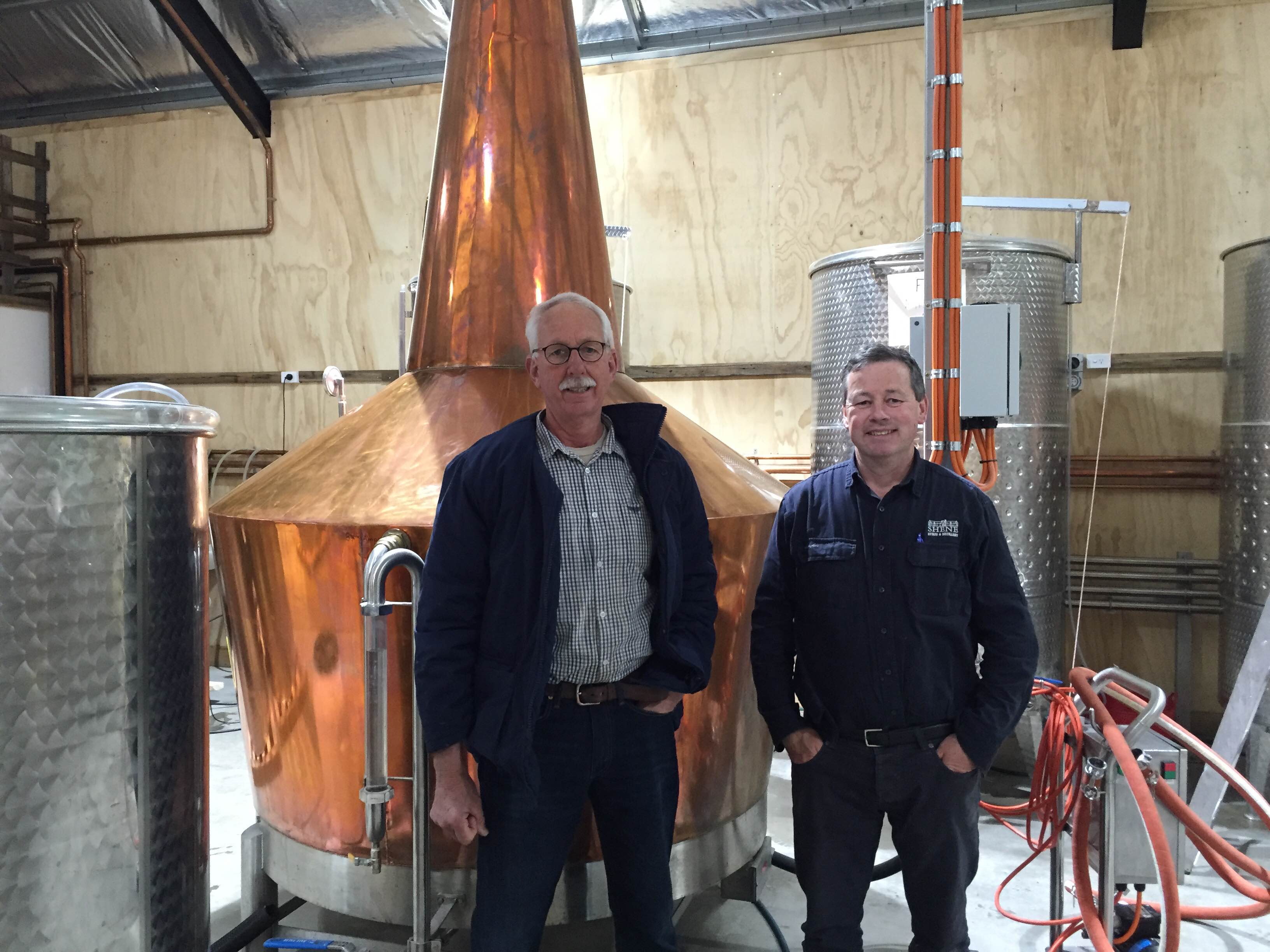
Whisky maker Damian Mackey met heritage building conservationist David Kernke nearly ten years ago – Damian was looking for a location to make his eponymous whisky, while David was looking for something to diversify his new acquisition, the 19th century property Shene Estate. It must have been fate which brought these two together because, along with their respective families, they have created one of the most stunning distilleries in the Southern Hemisphere, if not the world.

damian-and-david-whisky-waffle

Boys with their toys: L-R David Kernke and Damian Mackey

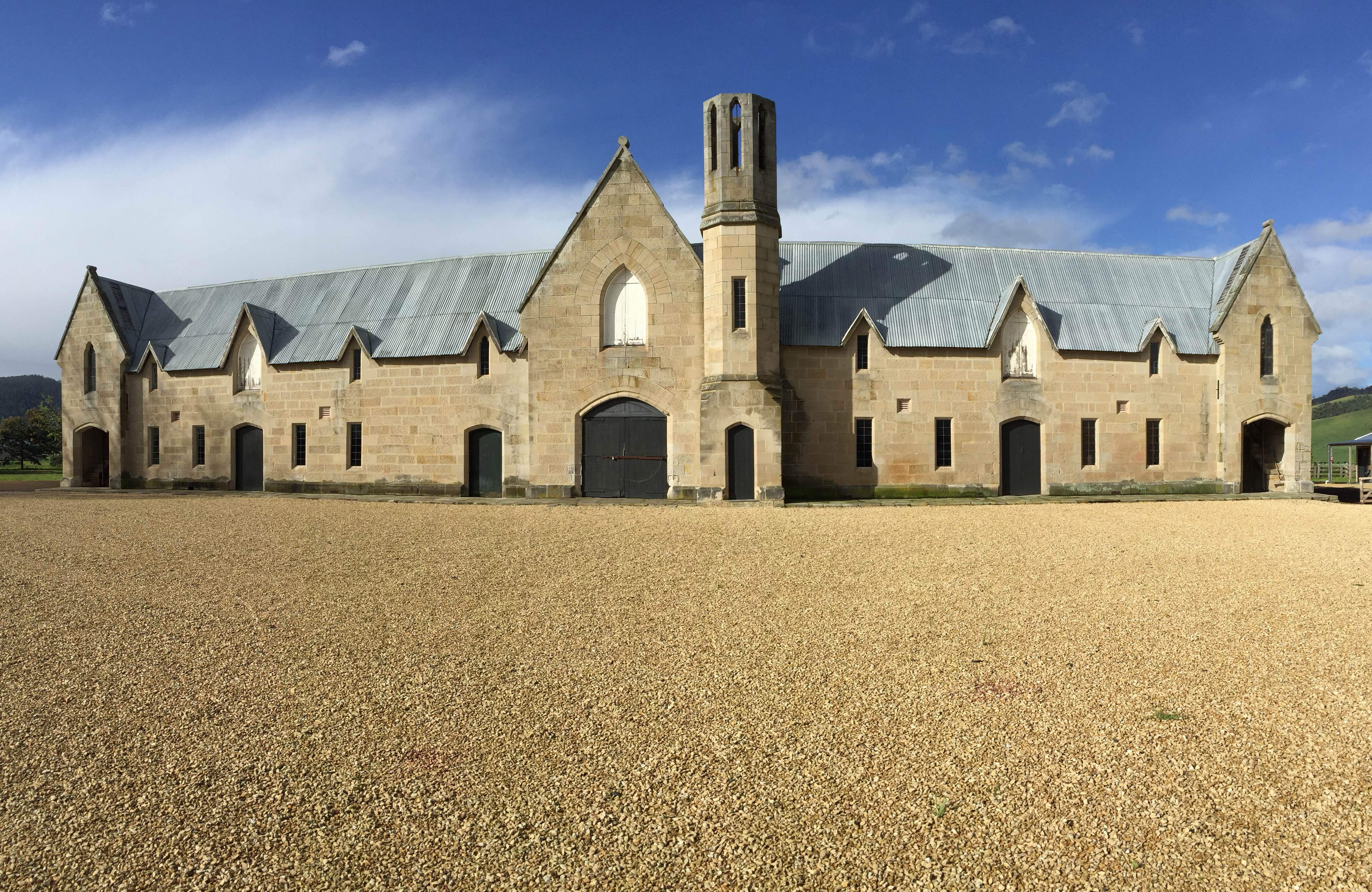
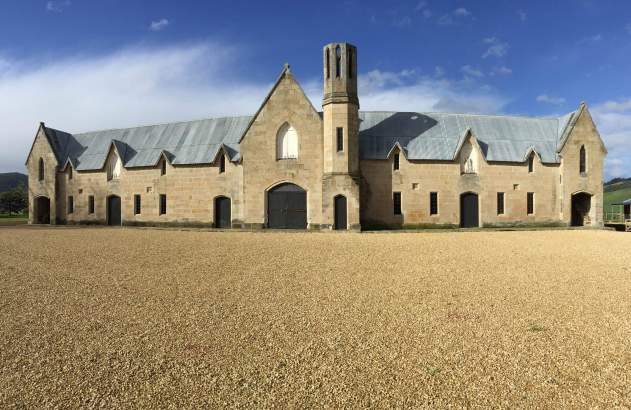
While the main building at Shene Estate looks like a grand mansion, it turns out that it was actually only built to keep horses in, making it one of the more expensive stables ever erected. It was constructed by English lawyer Gamaliel Butler who, as well as having an excellent name, also had a shrewd business sense. He used his wealth and social standing to begin work on a lavish country estate, but died before the main house was constructed, leaving only some outbuildings, including a Georgian Regency era homestead that David and Anne reside in, and the stables – and even that lacked the top of its central turret. Going by the grandiosity of the stables, one can only speculate as to what the main mansion would have looked like if it were ever finished.

shene-stables-whisky-waffle

Proof that that magnificent building is, indeed, a stables

Whisky Waffle was lucky enough to be invited to visit Shene Estate earlier this year and meet the friendly team, consisting of head-distiller Damian Mackey, his wife Madeleine and the Kernke family – David, his wife Anne and daughter Myfanwy. While the reception we received was warm, the weather certainly wasn’t and we were nearly blown off the face of the earth while walking between the stables, the beautiful old barn and the distillery.

Speaking of the distillery, it is housed in a new purpose-built timber-clad shed that was designed to perfectly blend in with the existing 19th century architecture. Despite a third of the room being taken up by a truly epic stack of ex-sherry barrels, we still managed to clap our eyes on some beautiful distilling gear. A run was on the go while we were there, with David manning the still, and it seemed as good a place as any to ride out the storm.
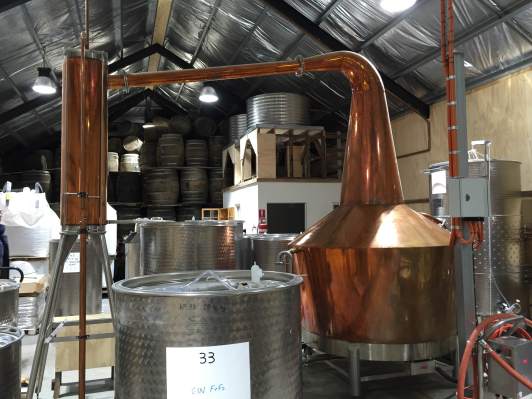
shene-still-whisky-waffle

The still is eager to fill up all those barrels in the background

What the wind couldn’t achieve, the whisky certainly could – upon trying a dram we were totally blown away. Technically, we can’t officially call it whisky yet; what we were lucky enough to sample came from the first ever barrel produced at Shene Estate and was only 18 months old. We are apparently among the first in the world to try the matured spirit, a great honour for two whisky nerds. While the whisky is not yet the finished product, it shows a lot of potential to become one of the greats within the Tassie scene.
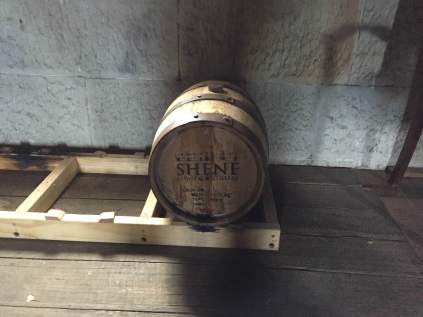
shene-barrel-1-whisky-waffle

Barrel number 1. The first of many.

The whisky is to be released under the name Mackey and its point of difference stems from Damian’s Irish heritage in that it is triple distilled. This produces a lighter and more refined spirit, although one certainly not lacking in depth; the style may be Irish, but the character is all Tasmanian. The new make is then transferred into ex-port barrels and stored in the loft of the stables. The solitary barrel currently looks rather lonely up there, but rest assured there are many more on the way.

In fact, the Shene Estate team revealed to us that there are big plans afoot for the future of the distillery. Things have been moving at an unexpectedly rapid pace and Damian told us with a mixture of pride and horror that they have skipped straight from year one to year five on their five year plan. The most exciting consequence of the expansion is the addition of two new stills to create a set of three – one for each distillation.

whisky-waffle-nick-at-shene

And this still will be the smallest of the three!

While the architecture was stunning and the whisky exciting, the real highlight of our visit was meeting the wonderful people who have dedicated countless hours to making a pipedream into a reality. From Damian’s distilling, to Anne’s delicious Poltergeist gin, to Myf’s community engagement, to David straightening each and every piece of gravel in the courtyard, the team has created a unique and fascinating distillery. And even after a long afternoon showing Wafflers around the estate, they still had the energy to deliver us back to our lodgings and deliver David his chicken sandwich to see him through to the end of the distillation run. It’s that level of hospitality that ensures Shene Estate will always have a special place in our hearts.

whisky-waffle-ted-at-shene

Selfies at Shene

Shene Estate Distillery has a road-side stall set up at the estate every Sunday between 10 and 4 which is staffed by friendly family members. Like to see more? You can also book a tour here.
Return to Redlands

Posted by: Nick and Ted

1-redlands-whisky-waffle

They grow up so fast, don’t they? When we last visited paddock-to-bottle distillery Redlands in 2014, their spirit was still too young to be released and head distiller Dean Jackson was only just filling barrel number 42.

Fast forward two years and the shelves are stocked with elegant (cuboid) bottles of Redlands paddock-to-bottle Tasmanian single malt and Dean is busy filling bottle number 271. Oh, and did we mention that the distillery has moved 50km up the road to a new site?

2-redlands-whisky-waffle

Knock knock! Wafflers at the door.

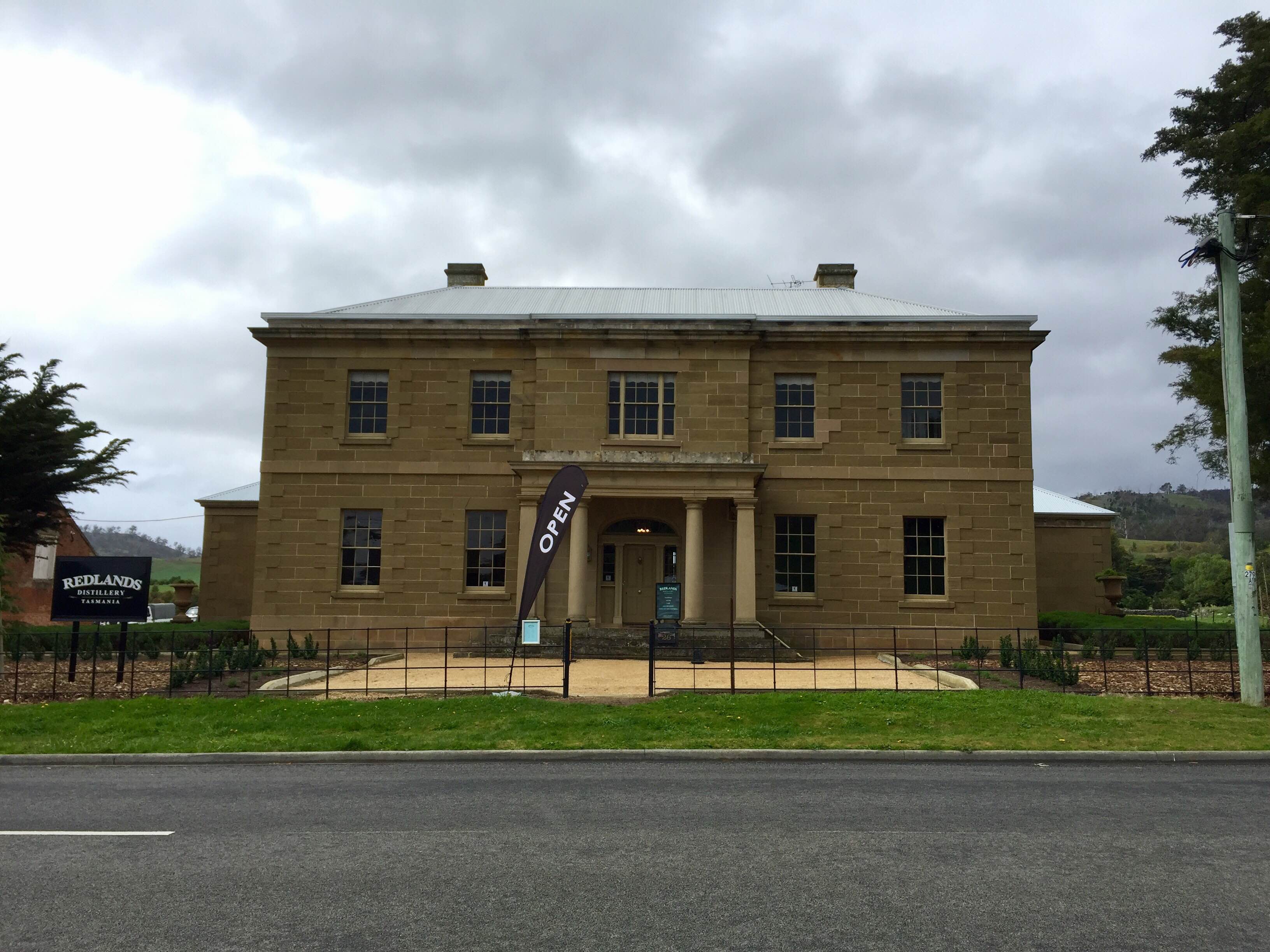
After the sale of the Redlands Estate property in late 2015, the distillery was faced with the challenge of finding a new home in just 21 days. After several weeks of stress-filled searching, they eventually settled on what they hoped would be the perfect venue: the heritage listed Dysart House in the small southern-midlands town of Kempton.

From the moment you push open the (heavy) front door you can tell that Redlands has fallen on its feet. The main house is built from beautiful sandstone blocks and the dark timbered interior houses the cellar door, kitchen, a sitting room with high backed leather chesterfields (careful not to slide off – Brigitte likes to keep them well polished) and a glorious blackwood table (which only made its way inside with help from Whisky Waffle’s muscle).

2a-redlands-whisky-waffle

The sitting (and drinking whisky) room

The distillery and bond store can be found in a red-bricked outbuilding off the side of the main house. Redlands’ continued growth is evidenced by the addition of a new still, with the (now) wash still, Heather, joined by new spirit still, affectionately known as the Mad Hatter. The bond store continues to expand, now housing hundreds of 20 and 100 litre barrels that once contained pinot noir, port, sherry and even Tokay.

3-redlands-whisky-waffle

Heather and the Hatter

These days if you visit Redlands, you will be able to try some of the most elegant, drinkable and delicious whisky Tasmania has to offer. Redlands’ signature release is aged in Tasmanian ex-pinot noir barrels and is like drinking apricot jam. The unusual ex-tokay barrel release is broad and full across the palate, oozing with dark berries, while the ex-port barrel, which we tried at cask strength, offers marmalade, honey and vanilla.

4-redlands-whisky-waffle

A wonderful room to drink wonderful whisky

Redlands has changed so much in the last two years, but they have even grander plans afoot for the near future. While the old brick outbuildings are charming and old-worldy, they simply don’t have any space for expansion as the distillery scales up production. The solution to this problem is the construction of a facility in the adjacent field, with work scheduled to begin in 2017. The new distillery will allow for a greater output, allowing the Redlands single malt to be enjoyed by a much larger audience.

The sale of the old Redlands estate could have easily spelled the doom of the distillery; instead it luckily seems to have made it stronger. Who knows what the future will bring, but you can be certain that Whisky Waffle will be back to find out.

6-redlands-whisky-waffle

…and next time we’ll bring Dean a box to stand on in the photo!

A Rye look at Belgrove

belgrove-1-whisky-waffle

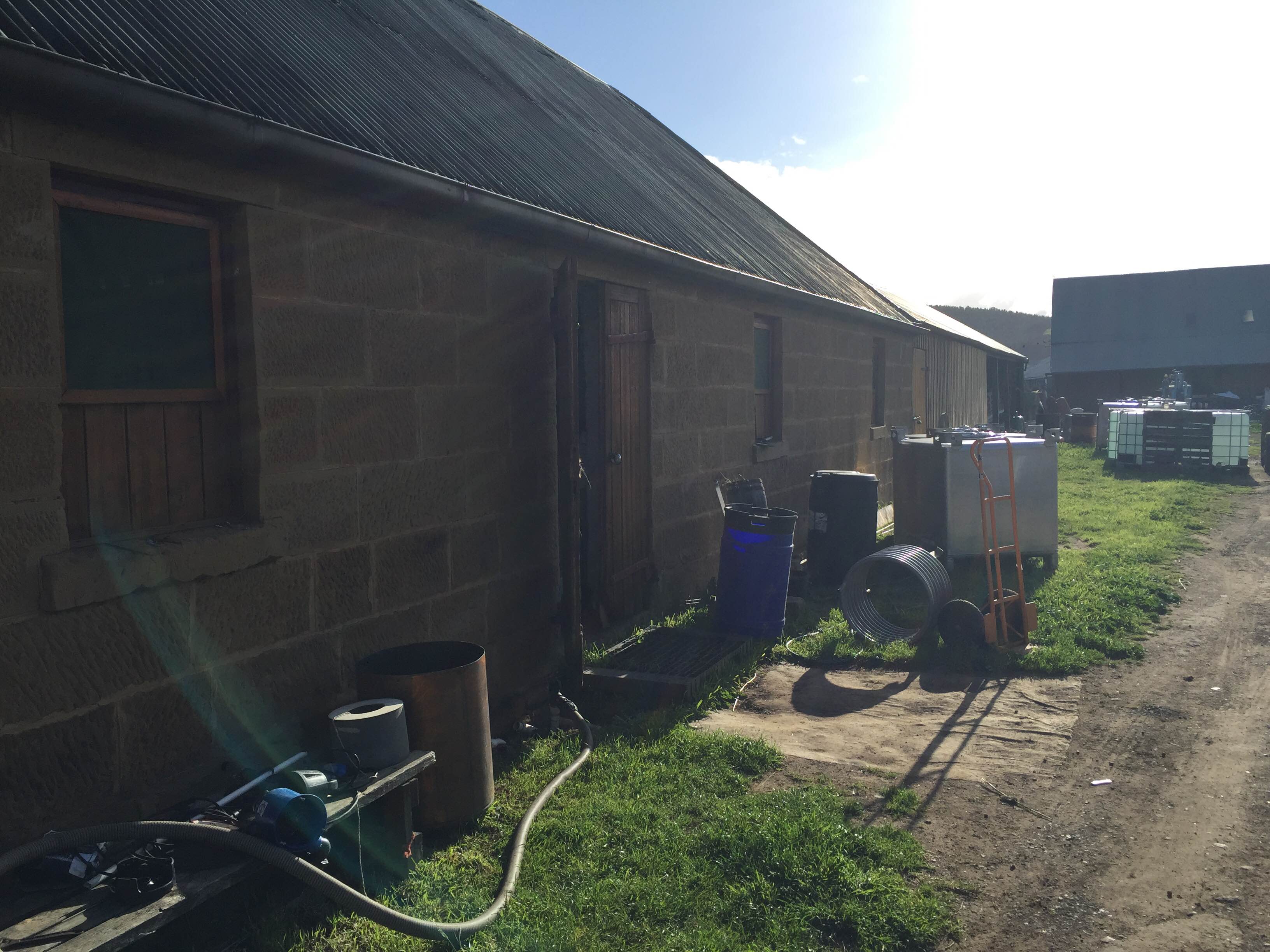
The much-extended old stables which house Belgrove Distillery

In our review we jokingly referred to Belgrove Distillery’s Peter Bignell as the da Vinci of distilling. When we visited him, we discovered that we were actually bang on the mark. Case in point was his method for powering the pump that injected homemade biofuel into the burner for the still: an old Sunbeam Mixmaster (usually on ‘Whipped Cream’ setting!).

belgrove-2-whisky-waffle

Apparently meringue-setting heated the still too much!

Our arrival at the distillery was actually rather hampered by some pesky road workers, who decided to dig up the highway in front of Peter’s driveway half an hour before we arrived. We had to call over a massive grader to flatten the surface enough to get the Alfa over (the troubles with low sports cars).

Belgrove distillery takes its name from the property, which is also a working farm. This was apparent as soon as we opened the gate and spied a flock of freshly shorn sheep, which we later discovered Peter had taught to eat leftover rye mash. Scattered around the old stables building that houses the distillery were various contraptions cannibalised from old washing machines, scrap metal and Russian Typhoon-class nuclear submarines.

belgrove-3

This one is made from the parts of Apollo 11 which fell to earth

The distillery, located just outside the southern midlands town of Kempton, is unique in Tasmania in that it predominantly produces its spirit using rye instead of barley. The story goes that Peter had a spare paddock full of rye that needed using and so decided to turn it into whisky. Rather than buy expensive new equipment, and prescribing to a reuse and recycle ethos, he instead decided to build everything himself.

belgrove-4-whisky-waffle

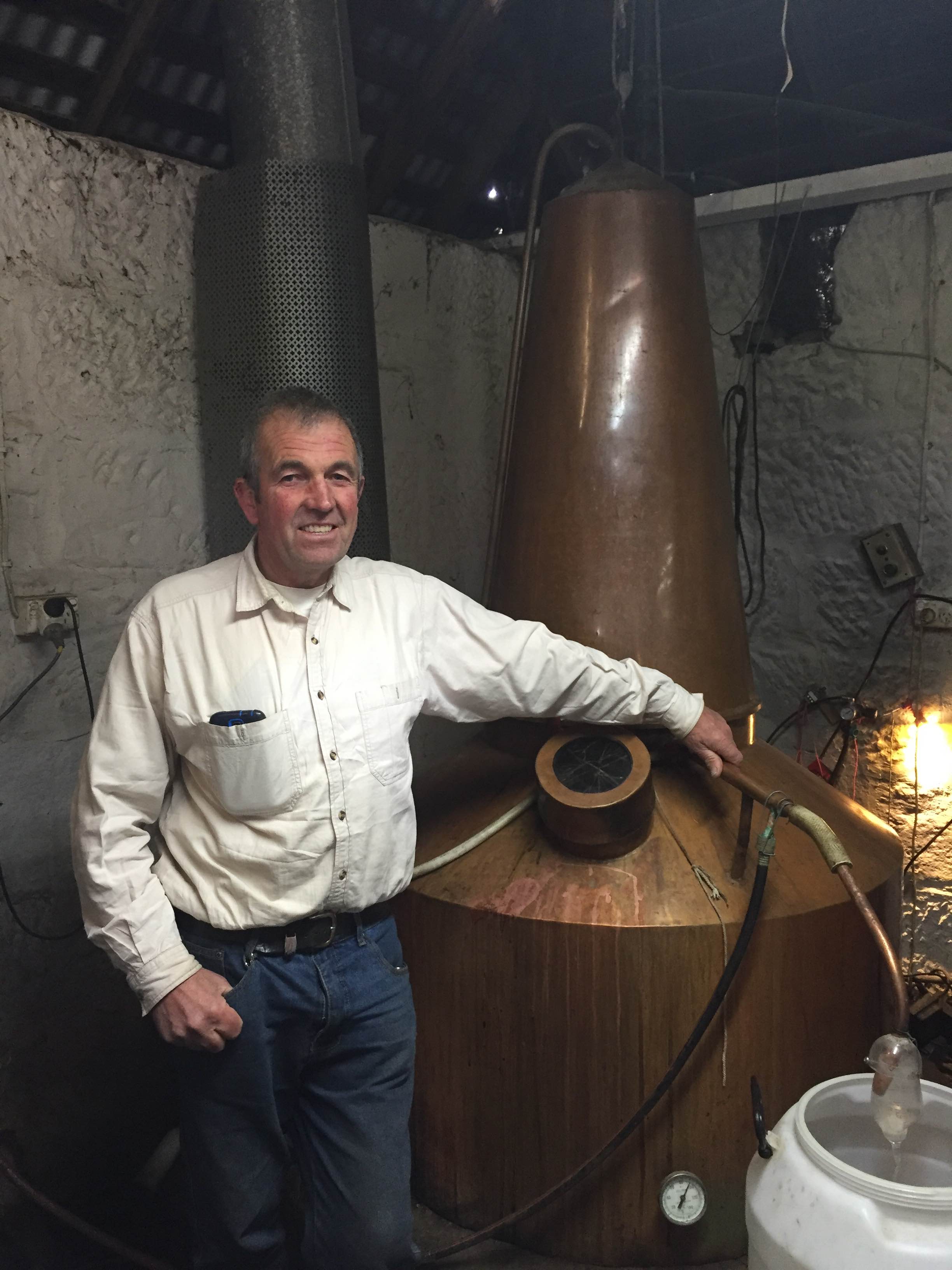
Including this glorious piece of copper!

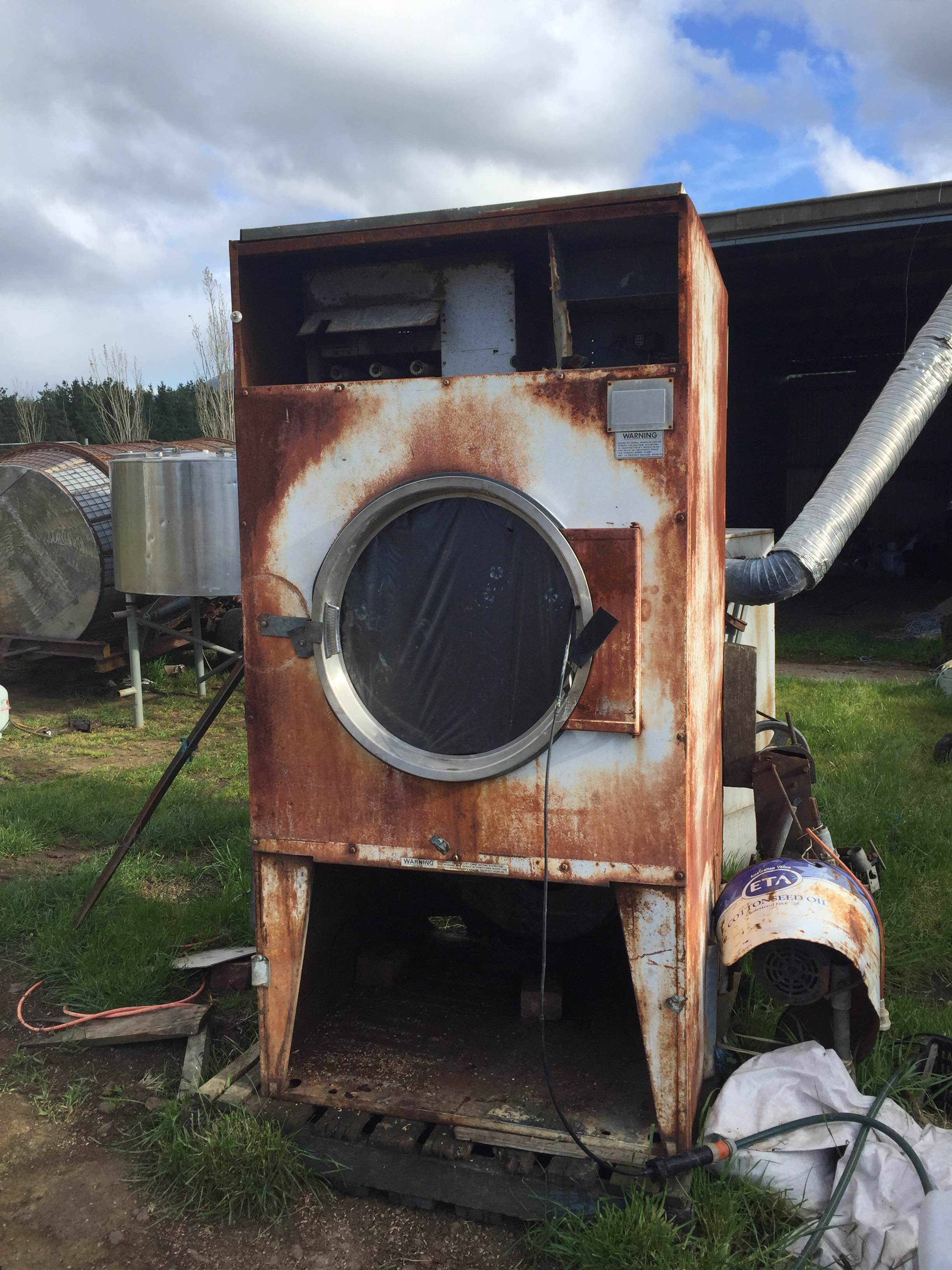
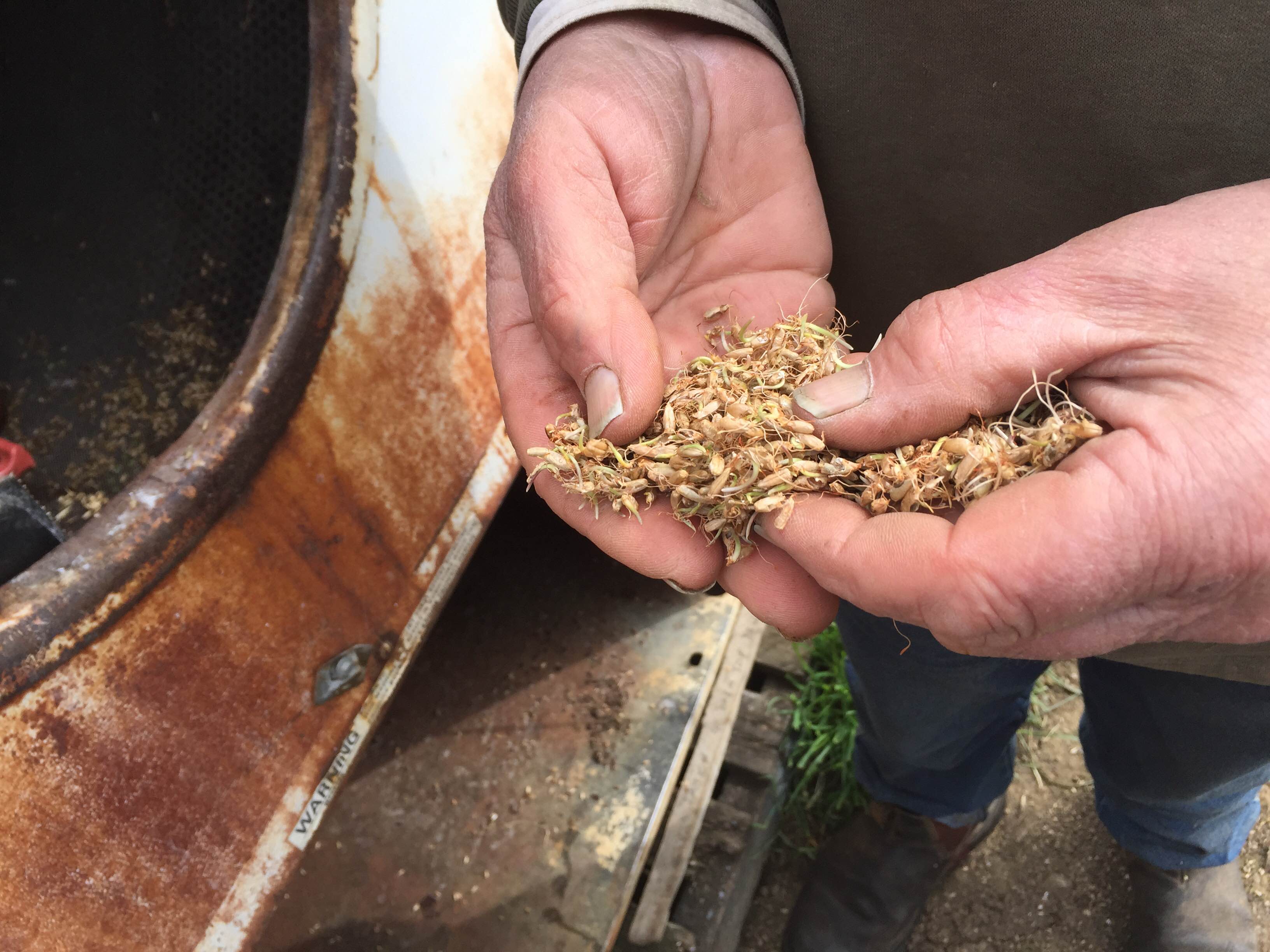
We need to stress that home-made doesn’t mean rubbish; the malter/peat smoker crafted out of an old tumble dryer is a work of genius, and the mash tun is perfectly functional – until it gets clogged up by the huskless rye that is. Peter quipped that when this happens he has to put the old wooden paddle appropriated from his kids’ dinghy to work to unclog it (he’s changed both the handle and the blade three times apiece, but maintains it’s still the same paddle).

Peter has been a farmer his whole life, only turning to distilling seven years ago. He said that his university degree in agricultural science has been invaluable, allowing him to exploit the science behind the art, although he doesn’t downplay the role of the natural yeasts and bacteria that inoculate the mash, which he refers to as Belgrove’s unique terroir. Peter is completely hands on with the whole process, from growing the grain, to the distilling, the bottling and especially the tasting.

belgrove-5

Peter is clearly a hands-on farmer

Luckily enough we were able to join him in tasting a variety of interesting spirits, including rye, barley, apple hatchet (distilled apple cider), ginger hammer (distilled ginger beer) and even an experimental batch of eau de vie that Peter was trialling for Tasmanian Cask Company’s master cooper Adam Bone, who dropped by to check on proceedings. The range was varied, exciting and specific to Belgrove, and it was inspiring to be able to taste such contrasting flavours produced in the one place.

We did however have our favourites; the rye at 47%, Pommeau (apple hatchet cut back with apple juice) and especially the Pinot Noir matured rye at cask strength, of which we took home bottles #1 and #2 of a new barrel. However, revelation of the day was the 100% malted barley smoked with peat from the previously untapped bogs in the north-east of the state. Good people of the world, are you ready for Tasmania’s answer to Scotland’s Islay? Well, it’s maturing in Peter Bignell’s bond store at this very moment.

img_5879

Nick filling bottle number one!

While Peter is expanding the old stables to house a new still and larger malting equipment, he still resolves to remain stubbornly small scale, championing the merits of a hands-on approach. He muses that “big distilleries only care about how much whisky per kilo of grain they can get. I’m trying to get the most flavour.” From our all too brief visit, it is clear that he is succeeding in that vision.

Tasmania is home to many distilleries, big and little, but perhaps none is more eclectic and fascinating to explore than Belgrove.

img_5885

Don’t worry, Ted. Someone has to have bottle number two!

The Macallan Fine Oak 12 Year Old

Reviewed by: Nick

macallan-fine-oak-12-year-old

I just can’t get my head around (The) Macallan. While I can very clearly visualise and appreciate the ranges of, say, Glenfiddich, Glen Moray or Glendronach, trying to form a coherent picture of what Macallan is about is as likely to give me a headache as drinking way too much of the stuff. And not just because it doesn’t start with the word Glen…

The contradictions are plentiful: many an old-time whisky drinker will cite Macallan as their go-to drop. Yet the distillery spent a fortune to get a bottle of 50 Year Old in a Bond film. And for some reason they recently ditched age statements in favour of… colours? And yet not too long ago there was also Macallan’s ‘Fine Oak’ range, one such bottle being the subject of today’s review.

I don’t get the point of the ‘Fine Oak’ series. As far as I can tell, it takes its name from the many “exceptional quality” oak casks the whisky was matured in. But… does that mean their older range was dumped into low quality barrels? Somehow I doubt it. It seems to be another rebranding dead-end left by the wayside by an impatient marketing team.

Despite all this, the whisky itself is great to drink. The nose is light, vibrant and contains finely balanced notes of vanilla and lime. The palate is sweet without being sickly and flavours of honey and malt take centre stage. The finish is short without being unsatisfying, with a creamy nuttiness that gently lingers: it’s Kellogg’s Crunchy Nut in whisky form! All up, it’s a brilliantly balanced dram, and one that you could confidently pour to a hesitant whisky drinker.

The biggest disappointment is that this bottle is no longer available – if I were to seek something similar I would have to try a different bottle in the Macallan range. As much as I enjoyed this particular drop, I’m wary to spend up on something else from the distillery. Macallan seems to be undergoing somewhat of an identity crisis and I’m probably unlikely to go and buy a bottle until they sort it out – that is unless I get some pretty convincing recommendations in the comments!

★★★

Heartwood Vat out of Hell

Reviewed by: Ted

heartwood-vat-out-of-hell

As I walked back through North Hobart to my hotel whilst on a work trip, I decided to stop into the Winston to rehydrate. Lo and behold, what did I find waiting on the shelf but a bottle of ‘Vat out of Hell’, one of Tim Duckett’s glorious cask-strength Heartwood creations.

Crafted from a delightful marriage of 10yo Lark sherry barrel and 13yo Tasmania Distillery bourbon barrel and bottled at a robust 67.4%, the Vat out of Hell, like most Heartwoods, is sadly no longer available for purchase. Therefore, stumbling across an open bottle constitutes a rare treat and a responsibility to try some for the betterment of humankind.

I gazed wistfully at the bottle on the shelf and thought ‘well… work’s covered the rest of my drinks tonight [I must admit that I had stopped for liquid sustenance at several other pubs along the way], so what the hell, I’ll treat myself.’

At this point I was feeling a little less analytical and in a bit more of a subjective frame of mind thanks to my nice warm beer coat, but I think that’s probably a good way to tackle a Heartwood. Ride the rush of emotions, don’t overthink it. So, without further ado, here’s what I thought (apparently. I’m glad I at least had the presence of mind to write this down):

The smell is… leathery, which is quite appropriate really… it’s like a box of sultanas left on the bench seat of an old Kingswood ute on a hot summer’s day… a walk through a meadow of spiked wildflowers… fruit leather made out of fruit cake… sun fermented orchard fruit… hot boat decking.

Tastes like timber should… if Easter eggs tasted like this, I’d probably eat them quicker… meat slow cooked for a looong time… dark brown as a flavour… attaches like a happy lamprey to your gums.

Yeah, so long story short, it was bloody good. Better than Meatloaf’s version… If you find some, think with your heart and not your wallet, and you’ll end up transcending to a higher plane of existence.

★★★★

Highland Park 18 Year Old

Reviewed by: Nick

Highland Park 18

As whisky fans, we regularly battle to be objective in our tastings to ensure our feelings don’t influence our perceptions of a whisky’s quality. And yet other times we simply say “screw it” and go with our hearts. The Highland Park 18 Year Old has a long list of awards to its name, but for me, it’s a little more special than that.

The distinctive (duck-egg) blue wallpaper gracing the background of our review photos is part of my recently built library (AKA whisky room) in my recently built house. And throughout the exciting building process the Highland Park 18 was there all the way. It was the first bottle cracked under my roof – before the walls were even finished! It was brought out again and shared with m’colleague on the night I moved in. Then at the house warming, surrounded by my best friends, it came out once more and toasted my new abode.

So with all these great feelings associated with the bottle how could I possibly write an objective review? Put simply, I can’t. But you know what? Screw it.

The nose is delightfully coastal and sherried. It is particularly dry, and bursts with raisins, prunes and smoked salmon. A dash of smoke hits you on the palate before quickly subsiding and giving way to grapes, cherries, peppermint and salami. The finish is long and contains an oakiness which calls to mind old wooden furniture.

If I was served this whisky blindly at a tasting then who knows if I would have the same sentiments towards it? What’s important for me is that now I’ve made these associations, I will continue to enjoy this whisky whole heartedly. And maybe you’ll love it too – especially if the happy memories you attach are your own.

★★★★