Single Malt

The coming of age of a non-whisky drinker

Posted by: our newest guest reviewer Stretch

Stretch whisky waffle

Growing up watching spy movies and idolising heroes like James Bond, I have always thought there was something quintessentially cool about asking for something from the ‘top shelf’. Suavely asking the bartender for just that satisfied the wide-eyed nine year old in me, even if I didn’t know what I was talking about! Such is the reverence that whisky has earned ever since we managed to distil that liquid nectar, and with a little help from popular culture, propel it into the pure essence of class.

As a lesser mortal who does not drink whisky, I have never quite grasped how much was involved with drinking it. Having tried it on a number of occasions over the years, I can say that drinking whisky has never been the most pleasurable of experiences for me. Being first introduced to it as a young lad on a fishing trip with my father, he told me that this was what kept him warm at night. “It’s like a fire in your belly,” he would say, and standing next to him freezing my toes off, it sounded like a pretty good thing he had going on. After burning my throat and recovering from the subsequent coughing fit, I quickly determined that I did not like whisky and would stick to my hot chocolates for keeping warm.

Years later, and after numerous attempts to drink whisky, I still couldn’t acquire the taste. Maturing my taste buds to the refined flavours of (good) coffee, beer, wine and accompanying foods, I had come to appreciate the finer side of life and all it had to offer. Except for whisky. As with everyone, there will always be a flavour to your palate that you will not enjoy. However, as is the case with many things in life, you need to grow accustomed to them and this is how I approached whisky. If I could come to like wine and beer, drinks I detested in the past, then I could like whisky too. With a push from the Whisky Waffle boys, my plan slowly became a reality.

The first step was to work out where I had gone wrong in the past. Drinking cheap run-of-the-mill blends was a likely culprit. Johnny Walker Red, Ballantine’s so-called ‘Finest’ Scotch Whisky or Chivas Regal 12 Year Old didn’t necessarily provide the best starting point for my whisky tastes. Nick and Ted soon solved this. With the two boys being proud Tasmanians, and myself an interstate import, we started with the island’s up-and-coming industry. If you’re going to do something, do it properly and start with the good stuff, something which Lark, Nant and Sullivans Cove offer in droves. The Tasmanian distilleries provided me with a taste I had not experienced before. It still burnt my throat, but it also had a nice after-taste to it. Whisky, which had for so long been terrible, became a little less than terrible. And it was at this point that I decided I no longer hated whisky, I just did not appreciate it enough. With some help from my whisky friends, who knows, in time I too may begin to waffle.

Star rating for whisky in general (★★ 1/2 stars)

Stretch the model

Find out more about Stretch at his bio.
Glen Moray 10 Year Old Chardonnay Cask

Posted by: Nick

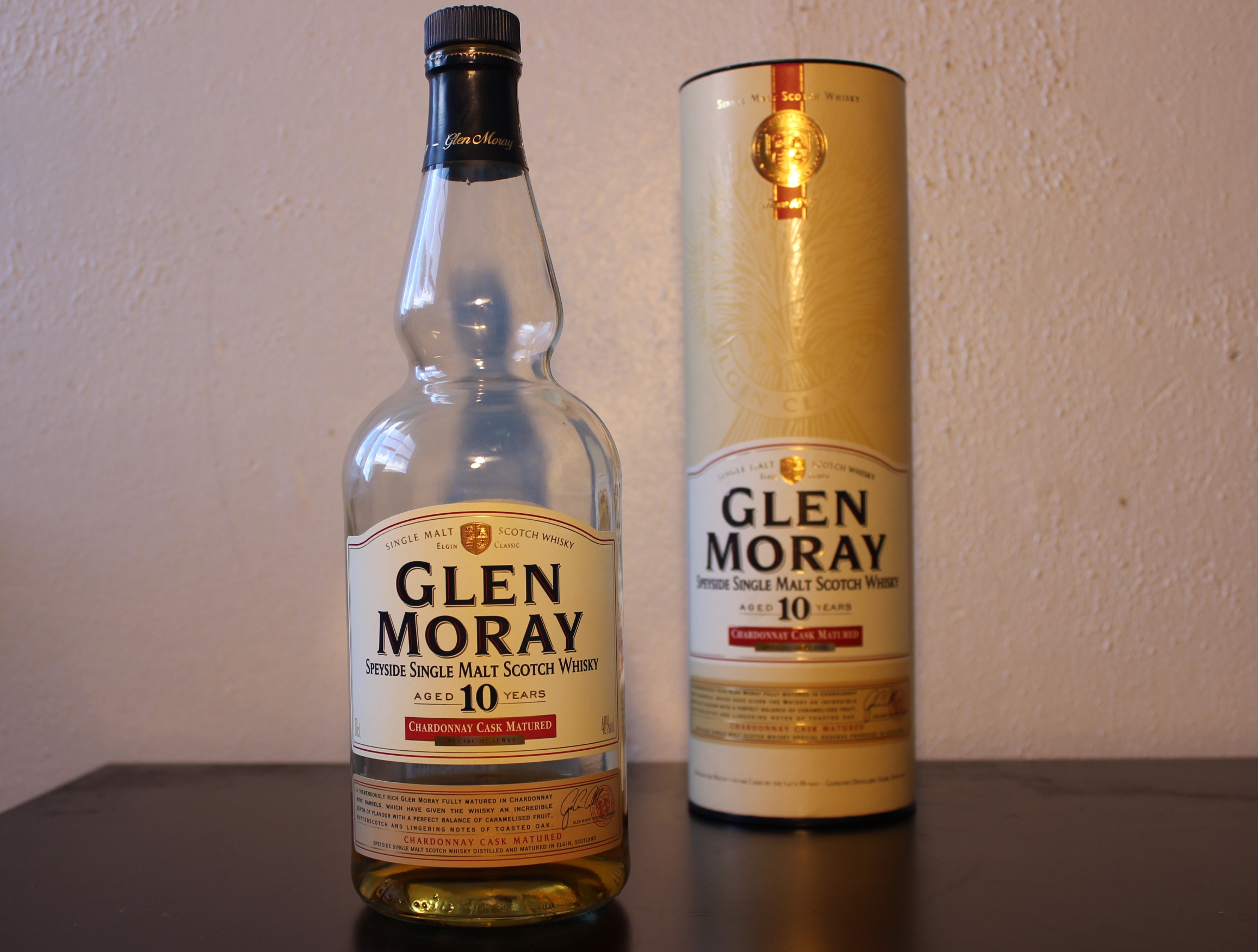
Glen Moray 10 Year Old Chardonnay Cask

Finished in ex-Château Rayas casks: sounds impressive. Six years in French Oak Bordeaux wine barrels: sounds fancy. Maturation spent in Margaret River Shiraz casks: ooh I’d like to try me some of that! Ten years in Chardonnay barrels: wow, that sounds… wait did he just say Chardonnay?

When you consider all the premium ex-wine casks left behind by wineries across the world, maturing whisky in humble Chardonnay barrels seems like an incongruous thought. But that’s exactly what Glen Moray have done, producing a dram with flavours which live up to the curious nature of its creation.

The Glen Moray 10 Year Old Chardonnay Cask (or as we Australians at Whisky Waffle chose to label it: ‘Cardy Cask’) spends its entire 10 years of maturation in white wine barrels. And the flavours imparted certainly sets it aside from other Glen Moray expressions.

The first and perhaps biggest clue is on the nose. It is creamy and sweet – more fudge than caramel – and contains a hint of vanilla, giving it the impression of creaming soda. There is also a strong hit of acidity, reminiscent of not so much pineapple, but pineapple cream desserts.

With many drams, it is easy to predict the whisky’s taste after smelling it, but this is not the case with the Chardonnay Cask. The palate is vastly different to the nose; it is darker, with nutty elements immediately present: hazelnuts, pecans, even marzipan. More can be detected when the spirit is swirled in the mouth including notes of honey and a certain degree of woodiness.

The finish packs a surprising punch: sour citrus notes linger well after the liquid is gone, leaving a tangy, spiciness to contemplate.

Glen Moray has long held a reputation for providing reasonable whisky at a more than reasonable price. The Chardonnay Cask is no exception, and while it is easy to drink, it comes with the added bonus of containing many intriguing flavours to muse over. And all of this from a humble ‘Cardy Cask’!

★★★

Tasmanians on top of the world at the London World Whiskies Awards

Posted by: Ted

Sullivans Cove

Dear Sullivans Cove, can you do anything wrong these days? It’s only a year since the plucky little distillery from Hobart proved that they make a seriously top notch dram, with their French Oak Cask HH525 taking out World’s Best Single Malt Whisky at the 2014 World Whiskies Awards in London. So just to prove it wasn’t a fluke and that lightning can strike twice, they’ve been at it again, casually picking up Craft Distiller of the Year at the 2015 London WWA’s. Bert Cason from Sullivans Cove told Whisky Waffle that “it’s fantastic to know that we’re doing the right thing and being recognised for it! It means that the message that Tasmanian whisky is great is being hammered home more and more and this is starting to be accepted in the mainstream.”

Bottles of Sullivans Cove, produced at Tasmania Distillery, have already been walking out the door following their earlier success, so this new victory is liable to make them as rare as hens’ teeth. What will this mean for Sullivans Cove stocks over the next few years? “Fortunately, or unfortunately, it won’t make any difference now that we’re selling literally everything that we can,” admitted Bert “[but] we are ramping up production… and there will certainly be enough to go around pretty soon.” So keep a sharp eye out if you want a piece of the action fellow wafflers.

The Sullivans Cove crew aren’t the only Tasmanians to be lauded on the international stage. Having already taken out the ultra-prestigious Bill Lark Award in the 2014 Waffle Awards, the big man of Tasmanian whisky himself, Bill Lark, has continued his ascent into whisky sainthood. What could possibly top winning an award named after him from two local Tassie whisky bloggers you may ask? Well to be honest, being inducted into the Whisky Hall of Fame for services to the industry, the first antipodean distiller to be accorded this honour, probably does the trick. And who more rightly deserves it than the man who catalysed the revival of the Australian whisky industry and holds a big claim in the grand successes our distillers are enjoying today.

Keep on waffling you good Tasmanian things you.

The Glenlivet 12yo faces a new kid on the block: the Founders Reserve

Posted by: Ted

Glenlivet-bottles whisky-waffleHere at Whisky Waffle we consider The Glenlivet 12yo to be a stalwart of our whisky cabinets, a solid, reliable drop that hits all the right spots when you want to wind down after a long day at work. So it was with surprise and a certain amount of dismay that we discovered that Chivas Brothers, owners of The Glenlivet distillery, intends to retire the 12yo.

The new kid on the block was in fact 200 years in the making, or so The Glenlivet claims. The Glenlivet Founders Reserve is a Non-Age Statement (NAS) drop that attempts to replicate the original smooth, fruity drams produced by The Glenlivet founder George Smith in the early 19th century. According to The Glenlivet, master distiller Alan Winchester selects the best traditional aged oak casks and first-fill American oak casks to marry together to create the Founders Reserve.

Chivas Brothers have revealed that the reason for the switch is continued growth in the age-stated whisky market coupled with limitations on the availability of aged stock. However, all is not lost, as Chivas Brothers have indicated that while they intend to use the Founders Reserve as a core product in certain markets, including the UK, it will not replace the 12yo on a global scale. What plans they have for the Australian whisky market we do not know at this stage, but to be honest we haven’t actually tried the Founders Reserve yet, so who knows, maybe the winds of change could turn out for the best? All I do know is that here at Whisky Waffle we will be waiting with bated breath.

Sources:

http://www.theglenlivet.com/blog/the-glenlivet-founders-reserve-a-taste-of-the-original-vision

http://www.thespiritsbusiness.com/2015/03/nas-scotch-to-replace-the-glenlivet-12yo/

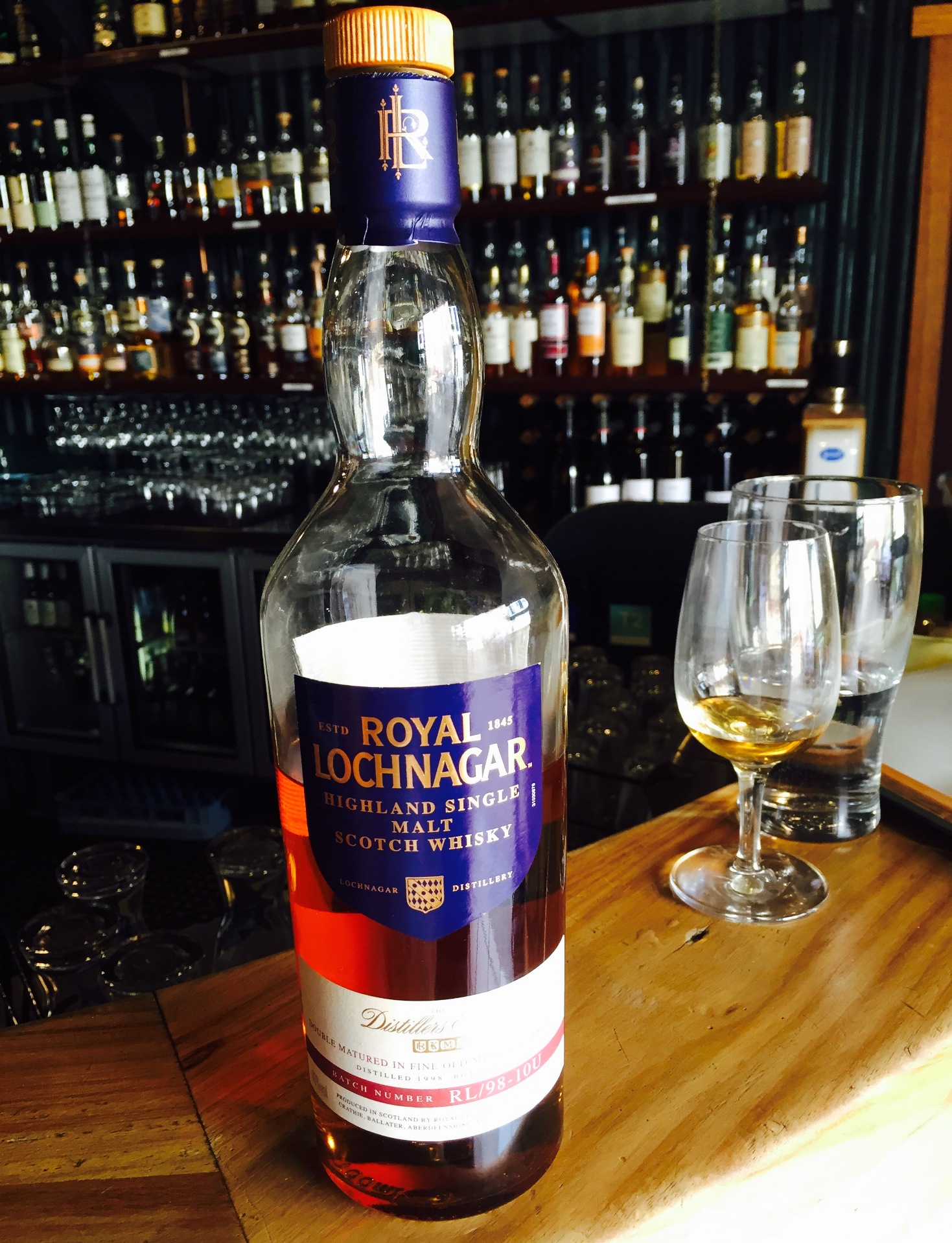
Royal Lochnagar Distillers Edition

Reviewed by: Nick

Royal Lochnagar Distillers Edition

Every now and then what you really look for in a whisky is one that you can drink. I realise that this may sound a ludicrous statement for something which is, undoubtedly, a liquid, but bear with me and I shall explain.

I’m always on the lookout for interesting and unusual new drops to challenge me and set me off waffling about the subtle complexities that can be discovered from dram to dram. However, if every dram I consumed affected me in such a way then, apart from having no friends, I would risk straying too far from the very essence of whisky; that is: it is made to be drunk (with the possible exception of the Macallan Cire Perdue).

With this in mind I believe there is no better candidate for the position of ‘drinkable whisky’ than the Royal Lochangar Distillers Edition. A rather underrated distillery, Lochnagar got it’s ‘Royal’ tag by impressing Queen Victoria on a visit, although the scale of this achievement is questionable as it was reportedly very easy to please Queen Victoria with whisky. Nevertheless the title stuck and it is now the smallest of Diageo’s 28 distilleries.

The Distillers Edition is aged for a period in ex-Muscat casks, adding a layer of silk and sweetness without making it overly-sugary or syrupy. The extra maturation seems to round off some of the sharper edges, making the whisky smoother and easier to drink, though this does not take away from the overall flavour; there are still many appealing elements to discover.

This is immediately apparent on the nose, which is heavy with alluring caramel. Citrus notes follow as well as a dash of rose essence. It has a smooth and creamy mouth feel, retaining the caramel elements and adding flavours of almonds coated in layers of honey and chocolate. There are also the faintest hints of berries to be discovered, lingering in the background. The finish is light and short but the butterscotch theme continues until the end. The overall effect is that of the sauce to sticky date pudding. And those who know me understand what a large compliment I am paying it.

The Royal Lochnagar Distillers Edition is certainly not the most complex or intriguing whisky going around. Nor is it in any way dull. It is a very easy drinking whisky, and this is in no way bad thing. In fact, I believe that it is this dram’s biggest strength.

★★★

William Grant & Sons Masterclass: in Hobart!

Posted by: Nick

William Grant & Sons logoLike some Glenfiddich? Let’s be honest, who wouldn’t?

How about some Balvenie? How could anyone possibly refuse?

Care to enjoy a dram with the people involved in making them? Uh, how does ABSOLUTELY sound?

Come along to the Waratah Hotel in Hobart on Friday the 17th of April and you will be able to do exactly that! The Tasmanian Whisky Appreciation Society (TWAS) is excited to welcome the crew from Grants to the state to conduct a tasting of no fewer than eight of their finest whiskies!

If you’re interested in attending, email Richard Steward at richard@rnsdata.com.au and tell him you love a bit of DoubleWood!

If you sadly live somewhere that is not Tasmania, then we at Whisky Waffle will just have to attend for you. Leave us any questions in the comments and we’ll ask on your behalf!

For more information, check out the TWAS website!

Balvenie 14 Year Old Caribbean Cask

Reviewed by: Nick

Balvenie Caribbean Cask 14 Year Old

The Caribbean. What does it make you think of? Beaches? Palm trees? Sunshine? Johnny Depp movies?

The flavour of the Balvenie 14 Year Old Caribbean Cask certainly shows the power of suggestion because I can’t help but noticing this whisky tastes rather… tropical!

Balvenie are one of the leaders in Scotland for maturing their spirit in multiple barrels, often, as is the case with the Caribbean cask, for only the final few months of the aging process. This imparts another layer of flavour on the whisky without removing characteristics that are already present. Often this ‘finishing’ process is conducted in sherry or even port casks. In the case of this Balvenie however, it spends its final few months of aging in ex-West Indian rum barrels, hence the moniker: Caribbean Cask.

The rum influence certainly adds a new dimension to the whisky. The overriding flavour in the nose is, would you believe it, bananas; and I’m not just saying this because of the Caribbean image in my head. Honestly! There are also the vanilla and honey notes expected of a Speyside whisky, however these couple with fresh floral scents. It’s sweet and light, but pleasingly complex.

On the palate the mouth feel is thick and syrupy with malty, biscuity notes present. However, these rapidly give way to fruits such as pineapple, passionfruit, mango and yet more banana. Tropical fruits! The finish is gentle and sweet, with more traditional honeycomb and toffee.

Whether or not I would have picked out these tasting notes if this whisky had been given a less suggestive name is an interesting point. However, as far as this dram is concerned, the marketing and the flavour go hand in hand. The image that ‘Caribbean Cask’ conjures in my head is now inseparable from the whisky itself and I can only describe it in one way: this is the tropical punch of whisky!

★★★

Lark Double Sherry Cask Limited Release

Reviewed by: Nick and Ted

Lark Double Sherry Cask Limited release

We make no bones about the fact that we are ardent lovers of Lark. We will go to our graves swearing blind that our superlative wafflings are not just a bunch of old guff (in fact, many top whisky critics agree with our views). For those willing to make the journey, proof of Lark’s greatness can be found at their cellar door.

If you are one of the lucky acolytes to enter Larks lair, you will be met with a sherry monster of epic proportions. The Lark Sherry Double Cask Limited Release is matured for most of its life in a first-fill barrel, and then transferred for the last six months into another first-fill barrel. Apparently the transfer process causes high amounts of evaporation, helping to intensify the flavours.

Our first impressions of this whisky were huge. This is, without a doubt, one of the biggest, boldest noses we have ever come across; something that makes the entire cast of Asterix look like Tintin. This is Pinocchio if he embarked on a career as a lawyer. As soon as the glass enters the vicinity of your nostrils you are enveloped by a huge, warm blanket woven from raisins, figs, chocolate, golden syrup, honey and oak.

The first sip instantly hits you with a warm lively glow. Thanks to the 59.2% alcohol the mouth rapidly dries, leaving a satisfying bitterness across the back of the palate. This is a complex and challenging dram to be sure. Each sip reveals more layers of flavours, both subtle and bold.

Sadly for those with no immediate plans or means to travel to Tasmania, the Sherry Double Cask Limited Relase is only available at the Lark cellar door. For those who are within reach (hooray!), make sure you have a taste before the very finite number of bottles evaporate like the angels share (or before the Whisky Waffle boys drink it all!) Sitting at Lark’s bar, sipping double sherry matured whisky can only be described as pure ‘Larksherry’!

(Cheers to Dave at Lark for coining that one after mishearing a comment)

★★★★

White Oak Akashi + 12yo

Reviwed by: Ted

White Oak Akashi vs White Oak 12 Year Old

Akashi White Oak

Just a quick review hastily scribbled down at the bar about two whiskies out of Japan. Founded in 1888, White Oak Distillery is one of the lesser known distilleries outside of its home country, only selling to the local market until 1984. Apparently though, White Oak was the first distillery in Japan to gain an official license, pre-dating Suntory and Nikka, the two major players in the Japanese whisky scene.

White Oak releases are less common in Australia, particularly aged releases. Luckily the bar that I am currently at had the presence of mind to have not one, but two of them hiding on the top shelf, prompting this on-the-spot review. The two White Oak examples perched on the bar before me are the Akashi Non Age Statement (NAS) and the 12 Year Old.

I cannot provide much more background to the two bottles as all the information is (unsurprisingly) written in Japanese, but I can reveal that the Akashi is much lighter in colour than the 12yo, which has a nice amber tone. On the nose the Akashi is fairly insubstantial, with only a light sweetness coming through. In comparison the 12yo has a strange sulphuric tang. It’s almost smoky at first, but quickly turns chemical.

The chemical vibe continues on the palate, with a smoky sulphuric quality that tastes like the water could have been drawn from a mineral-rich hot volcanic pool on the side of a Japanese mountain. Against this the Akashi tastes lightly bitter/sweet, not venturing too far in either direction.

In conclusion, the Akashi, while pleasant, is a bit of a non-event, showing a rather bland personality. In complete contrast the 12yo is full of character, but unfortunately the sort of unpleasant character that you might meet down a dodgy alley on a dark night. While curious to try, the 12yo definitely won’t be to everyone’s tastes, and the Akashi certainly won’t turn any heads down the street. It seems that White Oak is more miss than hit, but whether it’s older releases can redeem it will have to wait for another day.

Akashi: ★

12 Year Old: ★★


Glenfarclas 105

Reviewed by: Nick

Glenfarclas 105

You never forget your first time. The insecurity as you take the plunge, the fire in your belly, the lasting satisfaction afterwards. I am of course referring to the first time you tried cask strength whisky.

Most whiskies sold commercially have been diluted down to an ABV deemed acceptable to public consumers of alcohol, usually 40-43%. This is undoubtedly a good thing, or us whisky drinkers would be permanently sloshed and unable to string multiple sentences together, let along write eloquently worded whisky blogs. However, there’s just something a bit special about trying a whisky as it can be found in the barrel.

These whiskies are called ‘cask strength’ and usually sit somewhere in the mid to high 50s percentage alcohol wise, although can rise as high as the low 70s. Trust me, when you are drinking one of these, you know about it.

Glenfarclas are a wonderful family-owned Speyside distillery who use mainly Sherry barrels to mature their spirit in. They release a range of (impressively affordable) age statements as well as the 105, their cask strength, which is bottled at a nice round 60%. And it’s an absolute monster. Although a monster in the vein of King Kong, in that it can be brought under control (at least temporarily, before storming off to climb the Empire State Building).

On the nose the sherry influence is prominent, notes of grapes, raisins and other dried fruits coming through along with several sweeter aromas of treacle and iced tea. It’s pleasant, although if your nose ventures too far into your Glencairn, you will receive an eye-watering whiff of the alcohol to come.

The palate is where you first notice the power of the whisky. Hot, spicy, tangy and sharp, it’s far from the smoothest drop you are likely to try. But once past the shock there are plenty of pleasing flavours to be found, such as oak, marmalade and stewed fruits, such as apricots and quinces. The finish of a cask strength whisky is often the highlight and the 105 is no exception. It is dry, long lasting and ever so warming. Not just in your mouth, but after you have swallowed it, within your entire chest. This whisky is a viable alternative to paying heating bills.

Many advocate the need to add water to cask strength whiskies. In a lot of ways they are right. With only a few drops of water, the Glenfarclas 105 becomes immediately smoother and presents new floral aromas and flavours of honey and cloves. But it also loses the fire contained within its 60% self. That wonderful warming sensation is gone, along with some of the magic of the drop.

The Glenfarclas 105 is a fantastic dram, and a great example of a cask strength whisky. It is certainly not for the faint hearted, but is well worth it if you can make it back for a second sip.

★★★★