Speyside

Speyburn 10 Year Old

Reviewed by: Nick

Speyburn 10 year Old

It’s the very end of harvest season here in Tasmania. Fresh produce abounds, from potatoes to pears, onions to oranges, and asparagus to apples: our family-friend farmers’ pickings filling my kitchen with an alluring bouquet. The fresh fruit combines to remind me strongly of the scent of a dram I have recently acquired: the Speyburn 10 Year Old.

“Delicious” I hear you cry “a whisky with all amazing the flavours of harvest time! It must be good.” And it is. But it also isn’t. This is a whisky full of contradictions.

The contradictions start with the distillery itself. Translating literally as “River Spey”, Speyburn identifies as a highland whisky despite being found within a mile of such Speyside giants such as Glen Grant and The Glenrothes. It has received many modern awards, though it’s greatest accomplishment still seems to be being built in the year of Queen Victoria’s Diamond Jubilee. It also, commendably, bucks the NAS trend by releasing a 10 Year Old, a 25 Year Old… and nothing in between.

The harvest fruits are prevalent on the nose. Overripe red apples, peaches and lemons dominate proceedings in a way entirely unsubtle. It’s enjoyable but certainly citrus-heavy. The palate is sweet and malty, like children’s breakfast cereal. There is more lemon here, causing the whisky to veer dangerously towards dish-cleaner territory, though is stopped short by a bitter cooking apple note on the finish.

There are undeniably many enjoyable flavours in the Speyburn 10 Year Old. It’s well worth a try and certainly wonderful value – just don’t expect subtlety to be among its virtues. Rather than a sweet bite of an apple, it is more like the entire orchard has been emptied into your kitchen.

★★

The Glenlivet Founders Reserve

Reviewed by: Nick

Founders Reserve n waffle

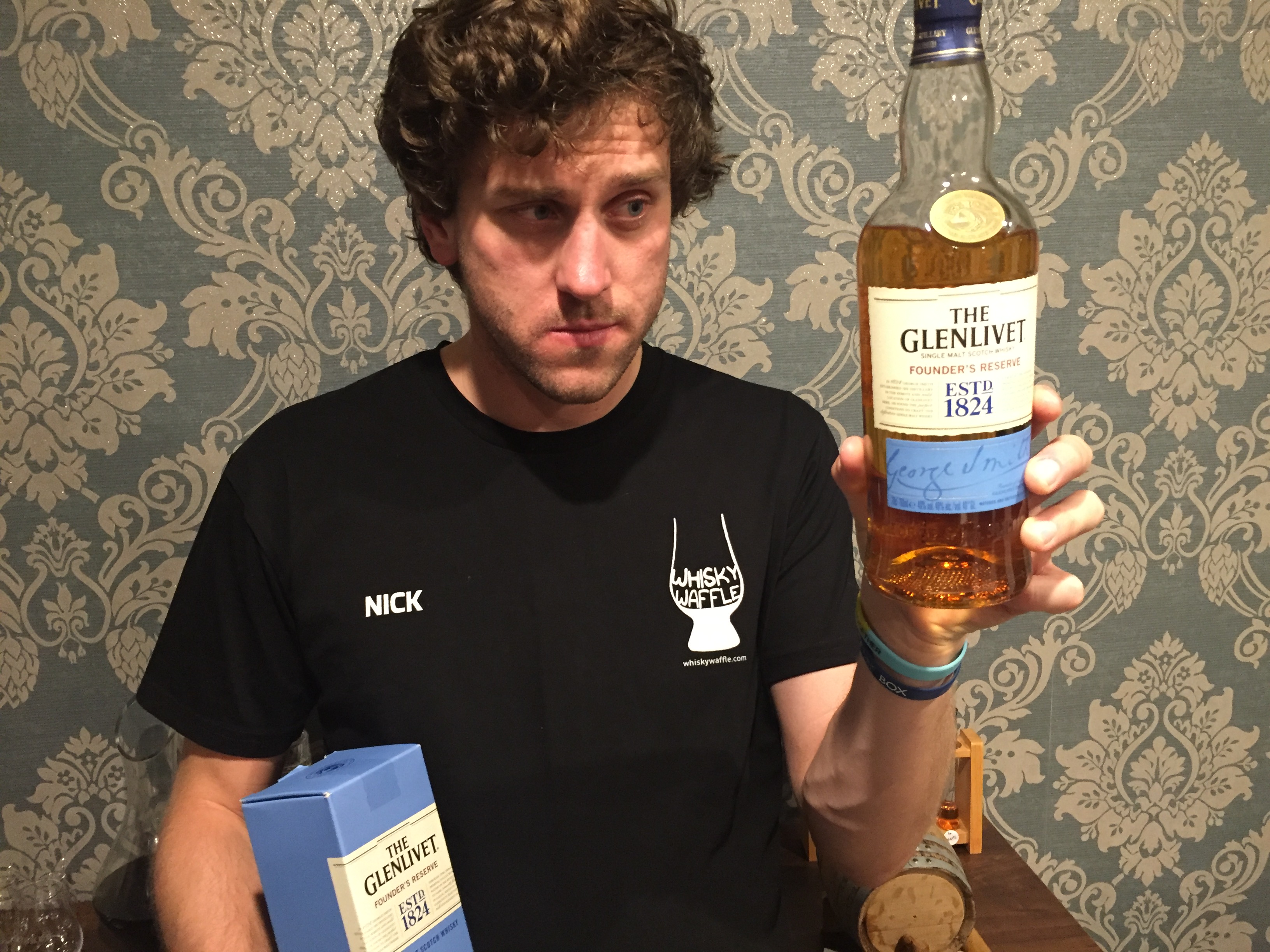
In 2015 we farewelled a Whisky Waffle favourite son, the Glenlivet 12. It was there to share the laughs when we held cards nights, to comfort us when we’d had a rough day at work and raised high when we rung in the New Year. Sadly Glenlivet, in their ultimate wisdom, have retired the 12 for the foreseeable future. But fear not – they have introduced a direct(ish) replacement! It comes in shiny blue packaging so it must be good, mustn’t it? Ladies and gentlemen, I present to you the Glenlivet Founders Reserve.

It would be so easy to do a straight comparison of the two whiskies, but I decided to sample the new kid on the block on its own to see how it stood up. It turns out ‘stood up’ was possibly the wrong analogy. Sat down maybe? Perhaps slouched…

On the nose, I found the Founders Reserve has plenty of caramel and some dry malty notes. An acceptable, if not auspicious start. So I took a sip. This turned out to be an error. There’s an unpleasant sweetness in there – a sugary, treacly flavour lacking in any complexity. It’s not bad per se, but there is a distinct manufactured, home-brand quality about it which is hard to enjoy. The finish is warm and spicy, almost tangy on the back of the tongue. Finally there is the merest hint of raisins, a cameo appearance that leaves you wishing there was more to be found.

I cannot say that the Founders Reserve is particularly offensive in its flavour. But I can (and do) claim that it is all a bit bland and inconsequential, bordering on boring, which disappoints me greatly. Glenlivet are truly great makers of Scottish whisky and it saddens me to think that a generation of whisky drinkers will discover the distillery via this disappointing bottle.

★★

Nick and the Glenlivet Founders Reserve

How it compares:

Without doubt there are similarities in flavour between the Founders Reserve and the 12 Year Old – they are both obvious Speysiders full of caramel and honey. But the 12 Year Old has so much more going on than the NAS bottle. There are subtle complexities to be found throughout the 12 which the Founders lacks. The Founders Reserve is the Coke Zero to the 12’s Coca-Cola.

No Age No Good? Whisky Waffle launch NAS Week

Posted by: Nick

Wafflers in smoking jackets

Some may argue that our attire is the greater controversy here…

A controversial topic? Surely we don’t do that here at Whisky Waffle! Well, just this once, we thought we’d take things seriously and leave our flippancy behind.

Sort of…

Today’s discussion is about non-age statement, or NAS, whisky. For non-whisky geeks, NAS whisky is a bottling that cannot be described as a 12 Year Old, or a 10 Year Old, or an anything-year old, because there is younger spirit mixed through like a very whisky-flavoured cocktail.

These NASes are borne out of necessity: since us Wafflers discovered the stuff, there just hasn’t been enough of it around! So rather than waiting the usual 12 years, distillers have been getting impatient and slapping 9 year old, 8 year old (3 year old?) spirit into the mix and coming up with impressive sounding Gaelic names to go on the label.

So how do we feel about this situation? Is the stuff as NASty as it sounds? Well, to be honest, I have no problem with the concept of NAS whisky. I mean, you just can’t deride the Talisker Storm as liquid Nickleback while simultaneously proclaiming the Ardbeg Uigeadail as the solution for world peace. So just like any supposedly ‘superior’ whisky with a number on the bottle, there are good ones and there are bad.

Founders Reserve n waffle

But seriously, the box IS rather pretty…

Which brings me neatly to Glenlivet – a prominent convert to the NAS fad. I wrote a glowing review about their ever-dependable 12 Year Old and described how its accessibility was its strength. That was, until it was no longer accessible. In its place, in a blue box (which is sadly not bigger on the inside) came the sophisticated-sounding ‘Founders Reserve’. I was slightly concerned – though this disquiet came from my affection towards the 12 rather than my automatic dismissal of anything ageless. I was perfectly fine so long as it tasted good. Which, I’ve recently discovered, it doesn’t.

It’s not that the dram is comparable to the toxic output of a nuclear reactor. It’s quite drinkable in a ‘at-least-it’s-not-red-label’ sorta way. But it doesn’t stand up to the depth and character of the previous entry-level incumbent. And this made me both sad and rush out to get a bottle of the 12 while I still could.

Non age statement whisky is not the scourge of the earth that many flat cap-wearing whisky reviewers may have you believe. There are some tasty drops out there that would please the most snobbiest of whisky snobs (if you told them it was an old bottle of Macallan). However, in the case of Glenlivet, where you can directly compare the old and the NASish new – it’s one nil to the age statements.

Of course, another way of looking at it is that after eight drams, it doesn’t really matter how long it’s been in a wooden barrel for…

The writing of this article prompted a lively debate among the Whisky Waffle boys – so much so, that they decided to spend a week looking at some prominent NAS releases to see if they are as derisory as their reputation suggests. So with great excitement – we present to you NAS-Week! Make sure you pay a few visits throughout the week and find out our thoughts – or post some juicy trolling comments! Tomorrow will kick off proceedings with a detailed review of this article’s nemesis: the Founders Reserve! But why start there? Leave us a comment telling us EXACTLY how you feel about non age statement whisky in the replies!

#NASweek

Trouble at Old Mill: Tasmanian distillery rocked by bankruptcy

Posted by: Nick

Angels Share Trip (6)

Over the duration of co-running this blog, I have waffled at length about the friendly and supportive whisky community in my home state of Tasmania. Well, forget all that – because a Tasmanian distillery is in trouble and no one seems to care.

It was recently revealed that the founder, figurehead and all-round head honcho of Nant Distillery, Keith Batt, has filed for bankruptcy. Batt, a Queensland businessman, built Nant distillery up from nothing, restoring the old water mill and establishing Nant whisky bars across the globe; not to mention claiming several liquid gold prizes along the way for his wares. He’s done amazing things for Tasmanian whisky – so why are people not more concerned for his distillery?

I’ll admit that I am exaggerating a touch in saying that no one cares – I for one certainly care. Over the years I’ve experienced many pleasant evenings sampling drams at the Nant Whisky Bar in Hobart, enhanced immeasurably by their wonderful staff members who are always happy to indulge my whisky curiosity. I have visited the picturesque distillery in Bothwell and enjoyed wandering their grounds on a near perfect summers day. I own a bottle of their port matured single malt and will be sad when the last drop disappears. I will forever stand by the product and the staff. But Nant Distillery itself is a hard one to like.

I love being part of this little whisky business here in Tassie so much so that I sometimes forget that it is exactly that – a business. Nant’s management have not lost sight of this. Keith Batt has not set out to make friends, but to create a whisky empire bent on global domination. Taking part in local Tasmanian tasting events is not part of this vision. Nor is pooling resources and sharing promotion. Other distilleries are not co-creators, but competitors. This outlook is both business savvy and totally opposite to the remainder of Tasmania’s close-knit distilling community. I agree with Batt’s motives, but not his means.

Nant by Whisky Waffle

Say what you will about the man – but he sure builds a pretty distillery

So how exactly will Keith Batt’s bankruptcy affect the distillery? According to the man himself, not at all. Batt is understandably keen to calm the waters, pointing out to The Mercury in Hobart last week that as of August last year he is “not a director, a shareholder or a beneficiary of that trust”. This role was recently (and conveniently) reappointed to his wife, Margaret Letizia. And yes, it does all sound rather dodgy, although it can be said that his financial problems were not in fact due to distillery-related debts, but issues for his property development business which is still experiencing a hangover from the global financial crisis of six years ago.

There are a number of people waiting with baited breath for the smoke to clear over Batt’s financial problems. For a start there are the thousands of investors who have pledged over 18 million dollars into barrels of whisky that they may never see. I caught up with one such investor who told me:

“As a whisky barrel owner, you start to wonder how much substance is contained within the creamy embossed paper of the share certificates. I don’t own the barrels, only what is in them and should the business go under I don’t know what I’m going to do with four hundred and fifty litres of half finished whisky or even how I’d get it home. Can you just turn up with a boot load of jerry cans? Guaranteed buy back? Nothing is guaranteed.”

While most seek only to see their money returned, others have attempted to claim their barrel with little success. However, for a man so protective of his brand, I can understand his hesitancy in seeing his product in other bottlers’ hands. Referring to them as “inferior brands” however is an unkind assumption and further evidence of why he is far from popular among the Tasmanian distillers community.

Chilling at Nant

Photographic evidence of a great afternoon at Nant. Yep, isn’t my beard awesome.

It’s hard to fully sympathise with the struggling Keith Batt and his business-first methodology. However, I prefer to make my best effort to differentiate the distillery from its management. For the sake of their investors, their staff and heck, let’s not forget their high-quality whisky, I hope that Nant Distillery is not adversely affected by their founder’s financial predicament.

Old Pulteney 12 Year Old

Reviewed by: The Cynical Scot

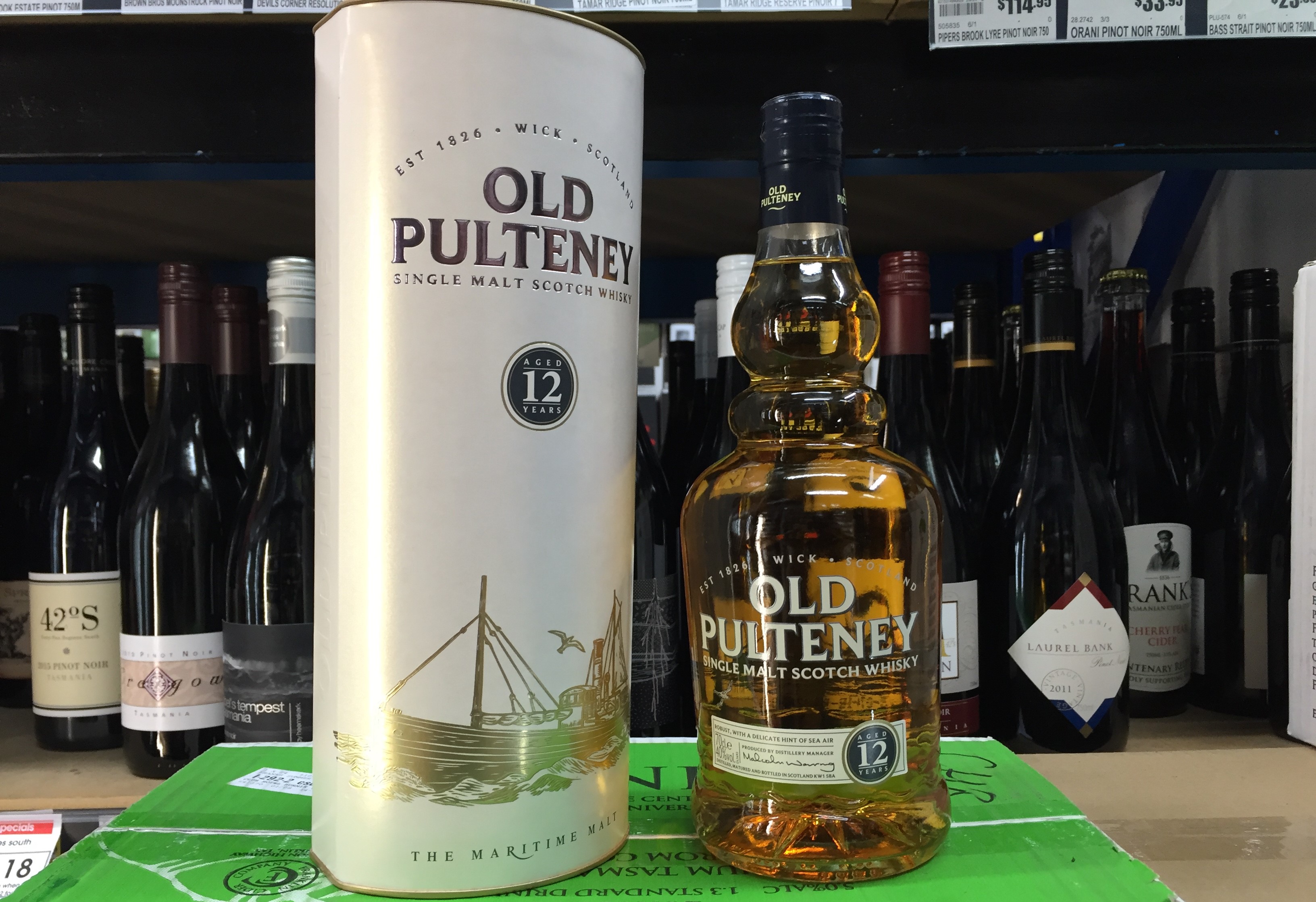
Old Pultney 12 Year old Whisky Waffle

There are three places in the world where the merest mention of the name can take me back in heart and spirit. The first are the cliffs at Yesnaby on the mainland of Orkney. Here, the crash of the Atlantic is stalled by Earl Thorfinn’s walls and the salty air is scoured into the finest lines of the skin. The second is the Fairy Pools on the Isle of Skye, where I have swum in the ice clear waters and tasted the pure heart of the Cuillins. The third, and the subject of this review, is the bond store at the Old Pulteney distillery in Wick.

I found myself here on an overcast Saturday in 2013. It was the third distillery on a self-guided tour which was to take me around the best parts of Scotland. My true blue Australian friend (who insisted on referring to the drink as ‘OP’) and I didn’t know then that it would be one of only seven distilleries we would visit on that trip. By the time we arrived in Pulteney town, we already had the creeping realisation that most large scale whisky making operations are done along similar lines. Coupled to this, we had satisfied ourselves that whisky makers send their whisky all over the place. Since then we have regularly enjoyed our whisky without feeling the need to visit the place of origin.

The Old Pulteney distillery was built in 1826 in a town built to support the herring trade. With a lack of foresight uncommon in the Scottish, James Henderson’s lads built the roof too low for the still. When the brand new copper pot still arrived, the swan neck kept clanging off the rafters. Without any ado they applied a choice piece of Scottish logic to the problem and sliced off the top of it. Job done, the still was installed, the top sealed and a pipe bunged on the the side creating the unusual appearance you’ll see today. The bulge further down the giant copper kettle also gave them an idea of how to shape their bottles.

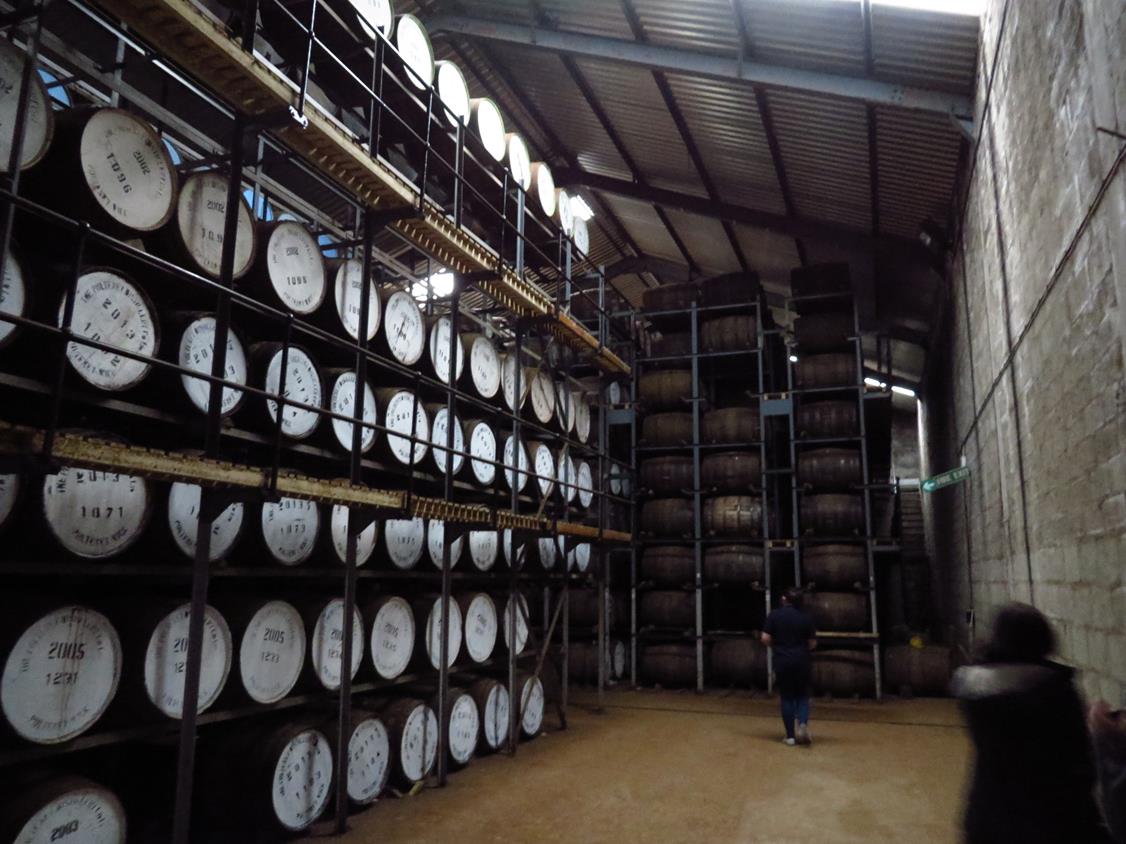
You’ll see all this and more on the tour, proving beyond doubt it is a whisky making process. After you’ve seen the unusual squat stills you’re taken out to the bond store. On the day we visited it started raining at this point. We made a dash towards the barrels, which in my mind were stacked six high (my photographic record shows only four), and the door was shut behind us. While we learned about the maturation process we avoided the tears of the angels and breathed in their share of the whisky; a fine ethereal vapour floating in the salty air. Yes, we all smelt that whisky, we all knew what we were doing and we yes, we all found questions to ask to keep us there longer.

IMG_0689 (Copy)

Old Pulteney has the taste of the sea in it too, they say. I can’t taste things like that, but Wick is not too far away from the places where the mighty Atlantic meets the moody North Sea and that can’t happen without seriously affecting a drink as emotional as whisky. The salt, they said, coats the barrels and works its way through the grain and into the final product. This may very well be the case. Salt for me is something I put on chips and any other food. It’s never been more complicated than that.

As for taste of Old Pulteney 12 year old, it’s a fine single malt, very fine. I find it harsh on the nose, easy on the draw and the burn is frank and satisfying. It has a rich stickling after taste like bronze coins falling over a weir and I’ll always like it because it’s the whisky I drink with my father.

I asked Dad why he drinks this particularly spirit. As a seasoned Famous Grouse drinker, it turned out his discernment was a result of him acquiring a bottle at no cost from an appreciative work colleague. His opinion of ‘Aye, it’s a nice one that’ is fair if not particularly detailed or nuanced. I confidently predict that he will continue to drink this brand so long as it remains at his personal initial price point.

For me it’s not what goes into a bond store it’s what comes out. That day in Wick an amateur whisky drinker went into the bond store. After delaying as long as I could, a happier, more philosophical and more content amateur whisky drinker came out. The OP lads do the same with their whisky. They wait and they wait and after twelve years a fine drink appears. I don’t know what makes this my homely stand-alone bottle of go-to, or why at times, when I can neither get to Yesnaby nor the Fairy pools of Skye, I can have a drop of Old Pulteney 12 year old and be at both at the same time. It’s a mystery I don’t want to think through too much and if I ever need to know, I can just ask my dad. He knows.

★★★★

2015 Waffle Awards

Posted by: Nick and Ted

Whisky Waffle Logo 1

Welcome one and all to the most prestigious imaginary awards ceremony in the world of whisky writing. The Waffle boys have ignored the Australian summer heat and donned their black tie to present a group of worthy winners with an assortment of atypical accolades. All winning whiskies have been sampled by the lads in 2015 for the first time – although surely (hopefully) not the last. So, ladies and gentlemen, please find your table, help yourself to the canapés and sit back and enjoy: the 2015 Waffle Awards.

1 The Isle of the Drammed Award Whisky Waffle

The Isle of the Drammed Award for the best Tasmanian Whisky

Yes, we are a Tasmanian-based whisky blog, so why not include an award to showcase drams made in our fine state? Especially when they are this good! So with no further ado, we are proud to announce that the Isle of the Drammed award goes to:

Heartwood: The Good Convict

2015 Heartwood The Good Convict whisky waffle

We don’t often see eye-to-eye with Jim Murray. But in the case of this cask-strength monster from the genius independent bottler Tim Duckett, both the Wafflers and the Whisky Bible writer are unanimous in our praise. I mean, what’s not to like about a 15 year old Sullivans Cove French-oak port barrel matured whisky at a humble 71.3%? It is stunning.

2 The Tartan Slipper Award Whisky Waffle

The Tartan Slipper Award for the best Scottish Whisky

Scotland is the spiritual home of whisky (see what I did there?). So it seems only fair to dedicate an award to it. Plus, then no cheeky English distilleries can take it away from them! The 2015 Tartan Slipper Award goes to:

Balvenie 21 Year Old Port Wood

2015 Balvenie 21 Port Wood whisky waffle

We make no bones here at Whisky Waffle Central that we love all things Balvenie, but they’ve really outdone themselves with the 21 Year Old Port Wood. Smooth, sensual and with a refined complexity that hits all the right buttons, this is definitely no every day drinker (unless you’re rich that is. Slosh down whatever takes your fancy m’lord.), but a perfect dram for celebrating that special occasion with the ones you love.

3 The Pocket Pleaser Award Whisky Waffle

The Pocket Pleaser Award The perfect pick for the parched penny pincher

Our bank accounts know all too well how expensive buying bottles of whisky can be. This award celebrates the bottles which we turn to time and time again because – well – we can afford to. It is not the best tasting whisky in the world. But likewise it is far from the worst. This year, The Pocket Pleaser Award goes to:

Glen Moray 12 Year Old

2015 Glen Moray 12YO whisky waffle

“Dear Whisky Waffle, I want to impress my friends by drinking single malts, but I am a poor uni student with only a blend budget to spare. What can I do?” Never fear, we are here to help. Meet your new best friend, the Glen Moray 12 Year Old, as far as we can tell the cheapest single malt Scotch going around. For less than the price of a bottle of JW Black Label you can have a bottle of bonafide Scottish single malt. Full of honey, butterscotch and gentle spices, it’s pleasant and easy to drink, perfect for the Scotch novice and budget-conscious drammer alike.

4 The Weirdsky Award Whisky Waffle

The Weirdsky Award for the most WTF whisky

The Weirdsky Award celebrates, unsurprisingly, weird whisky. The more bizarre the better. Trust us; we are always on the lookout for some unusual drams. But in 2015 the one that took the cake was:

New World Projects Ginger Beer Cask

2015 New World Projects Ginger Beer Cask whisky waffle

What on earth would whisky taste like if matured in ginger beer barrels? This was the question that we asked ourselves when purchasing this New World Projects creation on a whim. The answer, it transpires, was simple: ginger-whisky (gisky?). It is unlike anything we’ve ever tried, and we love it! We take our metaphorical hats off to the makers of Starward for their mad-scientist-like experimentation!

5 The Bill Lark Award Whisky Waffle

The Bill Lark Award for service to the Tasmanian whisky industry

Named after the godfather of Tasmanian whisky, The Bill Lark Award is not presented to a bottle but instead to a person who has worked tirelessly to make the whisky scene here in Tassie as special as it currently is. It gives us great pleasure to announce the 2015 winner of The Bill Lark Award is:

Peter Bignell

2015 Pete Bignell whisky waffle

“Renaissance man” seems to be the phrase that gets bandied about when talking about Peter Bignell, founder of Belgrove Distillery, but it’s well suited. A seriously talented individual, Pete has a true knack for innovation. “Hmm… who wants to make boring old barley based whisky, why not make it using rye? Or oats? May as well just grow it myself too, and dry it in this old tumble dryer I found. But instead of using electricity from the mains, I’ll power it using biodiesel that I’ll make myself out of cooking oil from the local takeaway shop. Should I build the stills myself too? Yeah, why not, and I can power them using the biodiesel. Coopering my own barrels, that doesn’t sound too hard, give it a crack eh? Simple. And just to keep things interesting, in my spare time I’ll be a world class sand sculptor.”

To be honest, Pete doesn’t just win the Bill Lark Award for the excellent whiskies he makes, his contribution to the Tasmanian industry or his stellar environmentally responsible ethos, but for just being a sterling example of a human being who we can all look up to. Good on ya mate!

6 The Golden Dram Whisky Waffle

The Golden Dram for the best dram whisky in the world

I don’t think anyone would be surprised to hear that we tasted a heck of a lot of whiskies in 2015. So choosing one that stands out as the best would surely be a nigh-on impossible task. Not so. There was little doubt in our minds as we sampled this dram that we had found the 2015 Golden Dram. Drum roll please. The winner of the Golden Dram in 2015 is:

Bruichladdich Aramone Cask 9 Year Old Micro-Provenance Series

2015 Bruichladdich Aramone whisky waffle

I (Ted) would like to start by quoting myself from the day we tried this epic dram: “This is one of the best things I have ever put in and around the vicinity of my face!” You just know instinctively when you meet one of those rare drams that make the stars align in the heavens. When sampling it we described it as a nose-masseuse, as wine-maturation as it should be done, and with an once-tried-never-forgotten finish – thanks in no small part to the 57% bottling strength. All credit to Bruichladdich for crafting such a well balanced, interesting and delicious whisky. It certainly made our year. Find a bottle (if you can track down one of the 500 that was made) and try it. Your face will thank you.

Honourable Mention: We couldn’t fit it into the awards but we have loved the Aussie port-monster that is the New World Projects Lui’s Bar release. Expect a review in 2016!

Dishonourable Mention: To keep things fair we included a dishonourable mention for a dram that deeply disappointed us throughout the year. And this year, unquestionably it was the Glenlivet Founders Reserve. Glenlivet – what were you thinking??? #SaveThe12

What did you think of our awards? Some good picks? Or are we totally full of it? And to what would you have awarded the Golden Dram? Let us know in the comments – it’s always a fun discussion!

2015 outtake 2 whisky waffle


The Glenlivet 18 Year Old

Reviewed by: Nick

Glenlivet 18

The banks of the river Spey in Scotland’s north east are fertile ground indeed. Nearly half of the country’s distilleries are located in this region which has come to be known, rather appropriately, as ‘Speyside’. Upon my criminally short drive through the area my head continuously moved side to side reading road signs pointing towards yet another famous distillery. It must have looked like I was watching a grand-slam final between Nadal and Djokovic! This abundance of whisky excellence could be found nowhere else on earth.

Speyside whiskies are known for being the smoothest, the richest, and the most elegant drams that Scotland has to offer, a reputation well deserved. Perhaps the best example of a Speyside malt is the Glenlivet 18 Year Old. It is one of the classiest single malts going around – and at a price that practically every other 18 year old whisky cannot come close to.

The whisky’s colour alone is enticing: a golden amber which glints in the sunlight. The nose is better: full of caramel, vanilla and orchard fruits. It is a pleasantly balanced aroma, not favouring one flavour over another. The palate is rich – full of flavour without being heavy. There is honey, oranges and malty biscuits, along with the faintest hint of sherry. The finish is light and not as sweet as the initial flavours suggest, with plenty of oak imparted from its 18 years in barrels.

There are literally thousands of whiskies made within a few miles of the river Spey. But if you were only able to try just one – then you could make a pretty strong case for this one.

★★★★


Benromach Sassacaia Wood Finish

Reviewed by: Richard

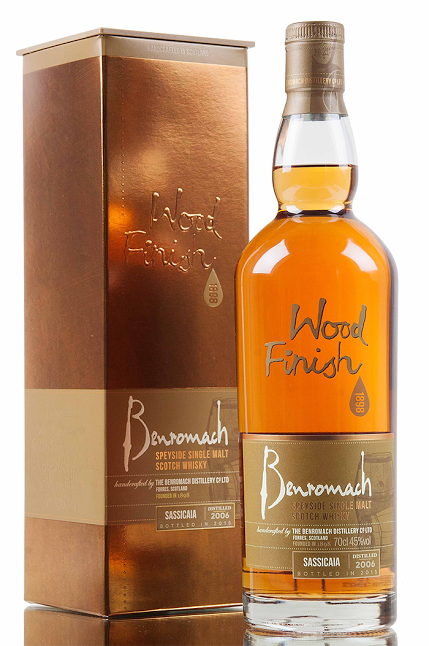
Benromach Sassacaia Wood FinishThis one was recommended to me by a friend who knows my fondness for sweeter whiskies… So first up – a little bit about the distillery:

Benromach is a Speyside distillery founded by Duncan McCallum and F.W. Brickman in 1898 and currently owned and run by Gordon and Macphail of Elgin. It is situated near Forres in Morayshire and is fed with spring water from the Chapelton Springs in the Romach Hills beside Forres.

And now – on with the review:

This has been matured in a Sassacaia barrel, so an introduction to the wood is in order!
Sassicaia is one of the most sought-after Cabernet Sauvignon wines in the world and made history recently, being the first single wine to be granted its own DOC (Denominazione di origine controllata – quality assurance label for Italian food products, especially Italian wine and cheese)
The Sassicaia estate is located at Bolgheri and lies in the Province of Livorno in Tuscany, Italy.

So, shut up, tell us about the whisky…

This is a 2006 distilled expression and bottled this year – there’s an older 2005 release, a 2004 release and a few older bottlings.
All I can find out is that it’s put in an ex bourbon barrel for around 7 years, and then put in a Sassacaia barrel for around 29 months – just over 2 years.
The colour is golden pink! Well lightly pink – if the sun hits it just right…

Nose: It’s got a real soft nose – dry toasted oak, vanilla, fruity, toffee, nutmeg, and that definitive wine note.
The nose is right up my alley – really sweet and bold, but not sickly…
Now to stick it in my mouth!

Palate: Cherries, raspberries & vanilla, spices, subtle smoke, malty toffee, and wine!
The palate is quite dry, which I find a lot with red wine finishes for some reason… tannic influence maybe? I find they make my mouth water a bit…

Finish: A medium-long finish with hints of fruit and another whiff of smoke.

This is a session whisky (if there’s such a thing) for sunny afternoon, sitting under a tree, in the shade, with some olives, sourdough, semidried tomatoes, cheese and some good friends…I’m amazed at the influence the wine has made, the light smoke and the fruit notes. I’ve tried the standard 10yo Benromach, which is one of my favourites – this is better, not by a lot, but still, better, and juicier…
A bloody fine whisky to add to any collection!

★★★

Canada takes the Crown Royal of Whisky: Jim Murray’s Whisky Bible 2016

Posted by: Ted

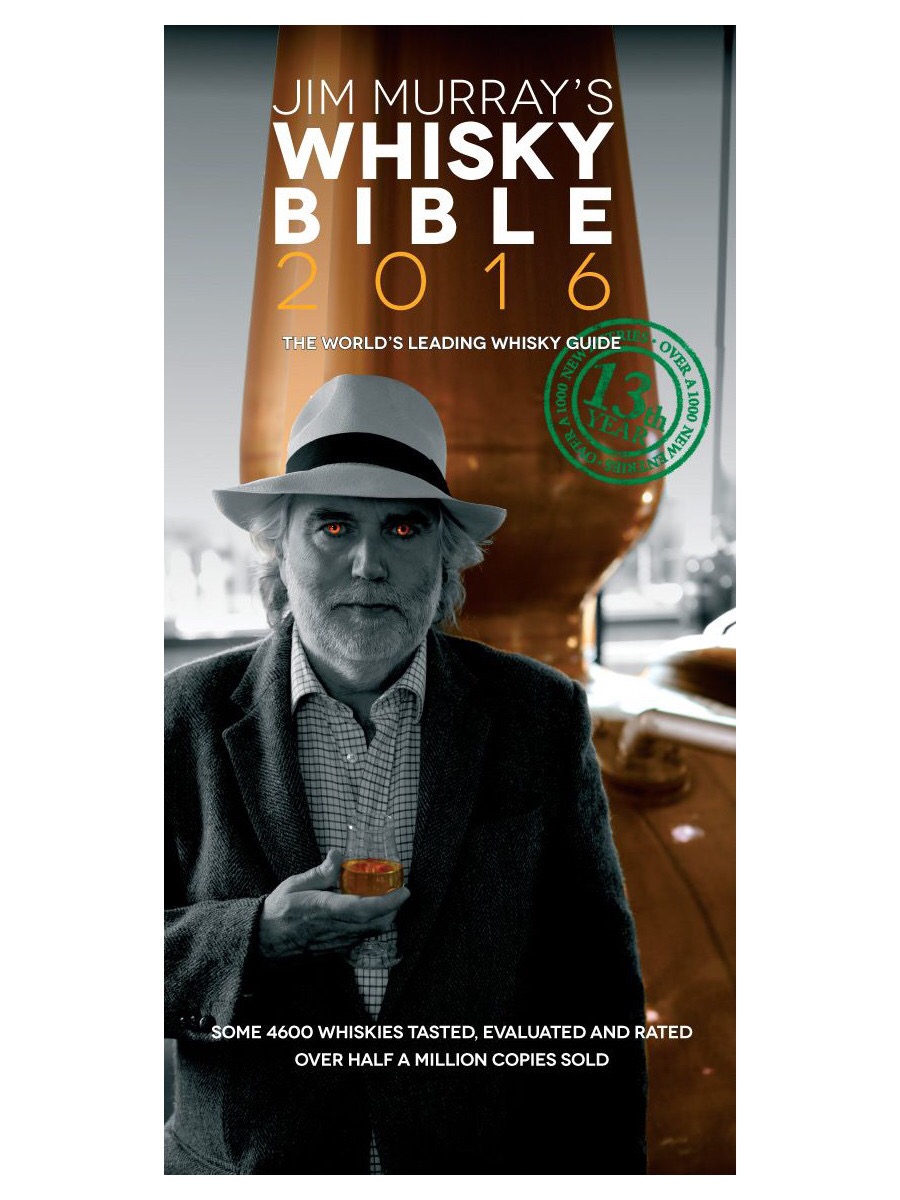
After a year of watching the earth from his secret moon base, built from the old Port Ellen spirit stills (and featuring a mash tun jacuzzi), the golden-eyed whisky-reviewing alien that is Jim Murray has returned to earth, and it seems that he comes bearing a message for Scotland. He must think that they’re a pretty rough, uncouth bunch, as not only has he snubbed them in his top five for a second year running, but he has decreed that the best whisky in the world comes from a country universally famed for its politeness… eh?

Golden eyed whisky alien

That’s right, Canadians rejoice, because according to His Murrayship you are now owners of the best whiskey on the face of the planet. The Crown Royal Northern Harvest Rye scored a cool 97.5/100 on the Murrayometer, the man himself noting that “Rye, that most eloquent of grains… reaches new heights of beauty and complexity.” The win marks the first time that Canada has taken out the top Whisky Bible gong, and already the internet is aflutter about the merits of the winning horse from Crown Royal, owned by global spirits giant Diageo. Even Jim thinks that the choice will raise eyebrows, but hopes that people will be ‘blown away’ by its ‘uncompromising and unique beauty’ when they taste it. Seeing that a nod from Jim tends to cause any available bottles to evaporate immediately afterwards, sampling the Northern Harvest may be no easy feat.

Canada takes the Crown

Once again North America was well represented in the top five, with Maryland distillery Pikesville taking second place with its Straight Rye, while Kentuckian distillery Buffalo Trace returned for a second year running, moseying into fourth place with the 2014 bourbon from its premium William Larue Weller line. Potentially causing yet more angst in Scotland was the bottle standing in third place on the podium, with Irish distillery Midleton claiming success with its cask strength Dair Ghaelach expression. Like Canada, this is the first time an Irish whiskey has found itself swinging from the top of the Whisky Bible tree and shows that modern palates (or at the very least, Jim’s) continue to extend beyond the traditional stronghold of Scotch.

Last year the Big M gave the top spot to Japan’s Yamazaki Sherry Cask 2013, creating ripples in Scotland’s zen, and rocketing the distillery into the limelight. Well, the sun has risen on Japan once again, with Yamazaki’s Mizunara Cask sliding into fifth place. If you want a bottle though, you’ll need to travel to Japan as it is only available on the local market. Whether Whisky Bible hype changes this situation is yet to be seen. Mizunara, the native Japanese oak, has been rising in popularity the last few years, and the Murray effect should help cement its place as a legitimate casking choice.

While absent from the top five, it wasn’t all doom and gloom for Scotland, with the (most definitely expensive) Glenfarclas Family Casks 1957 #2110 not only awarded Scotch Whisky of the Year, but also claiming the overall Single Cask Whisky of the Year. Other notables in the Scotch category include Single Malt of the Year Glen Grant 10yo and Scotch Blend of the Year The Last Drop 50yo (seriously, again, who has that kind of money!?). European Whisky of the Year (Multiple) returned to the English Whisky Co. for their Chapter 16 Peated Sherry Cask, while the (Single) category was awarded to the delightfully named Kornog Taouarc’h Chweec’hved 14BC from the ancient Celtic French region of Breton.

Closer to home (at least for me that is) Australia took the Southern Hemisphere Whisky of the Year crown back from the Kiwis, with Tasmania’s very own Heartwood distillery coming through strong with its Good Convict bottling. Strong is certainly the right word when it comes to Heartwood, with mad genius Tim Duckett mixing up an astounding array of cask strength creations in his laboratory. As Heartwood is an independent bottler, all of its releases are limited; once an expression has sold out it is consigned to the pages of history and fond memory. So if you happen to own a bottle of the 71.3% Good Convict, you are one of a lucky few.

The Convict was definitely Good

Of course, you are always welcome to take any Murrayitic pronouncements with a pinch of salt, but for a roundup of the who’s who of whisk(e)y in a given year the Whisky Bible is hard to beat.

A full run down of the winners can be found here.

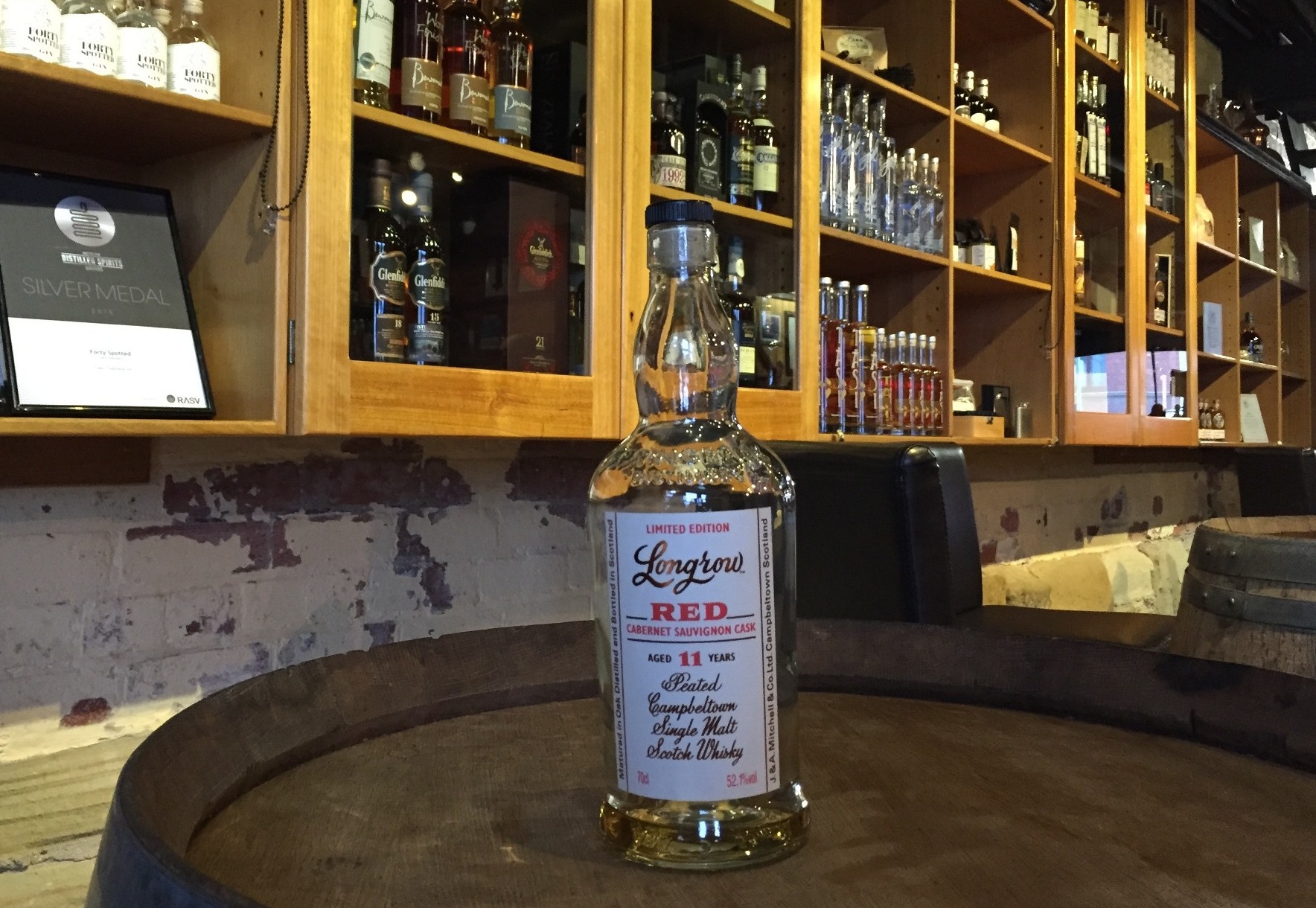
Longrow Cabernet Sauvignon Cask

Reviewed by: Nick

Longrow Cab Sav

As the abundance of sherry barrels diminishes, whisky makers are forced to look elsewhere for maturation options. The obvious solution, of course, is using the barrels of another grape flavoured product – no, not hubba bubba bubblegum – wine. Wine cask maturation is being used by distillers worldwide: some as a novelty but others as a serious addition to their main range.

The wonderful whisky makers of Longrow are no strangers to experimentation. One of their more intriguing bottles is the Cabernet Sauvignon Cask – aged for seven years in refill bourbon hogs heads and a further four years in Cab Sav barrels sourced from my very favourite wine region: South Australia’s McLaren Vale.

Warning: this is not a beginners whisky. Nor is it an easy drinking whisky. Nor, I believe, could I describe it as a ‘nice’ whisky. But it sure is a fascinating one. On the nose I detected, well, heaps. Initially a gentle smoke, reminding you that yes, Longrow do peat their barley. Once the smoke clears notes of grapes, banana and burnt orange rind flow through. Over all, it is complex and delicious.

The palate is a bit of a shock. Initially it is sweet with fizzy sherbet complimenting the peat. The red grapes make a return, along with other fruit such as melons and apricots. And then the spirit transforms. The finish is long, though not necessarily because of the slightly higher percentage of alcohol. It’s a little… soapy? This is a tasting note I (and seemingly I alone) seem to find in many wine-matured whiskies. There are other, nicer elements: smoked ham, salt, fish, bonfire ash, general seaside senses. This whisky is from Campbelltown, after all!

In no way do I regret buying this whisky. There’s a lot to like and a lot to discuss. But I didn’t love it. And that’s ok.

★★