Tasmania

A Rye look at Belgrove

belgrove-1-whisky-waffle

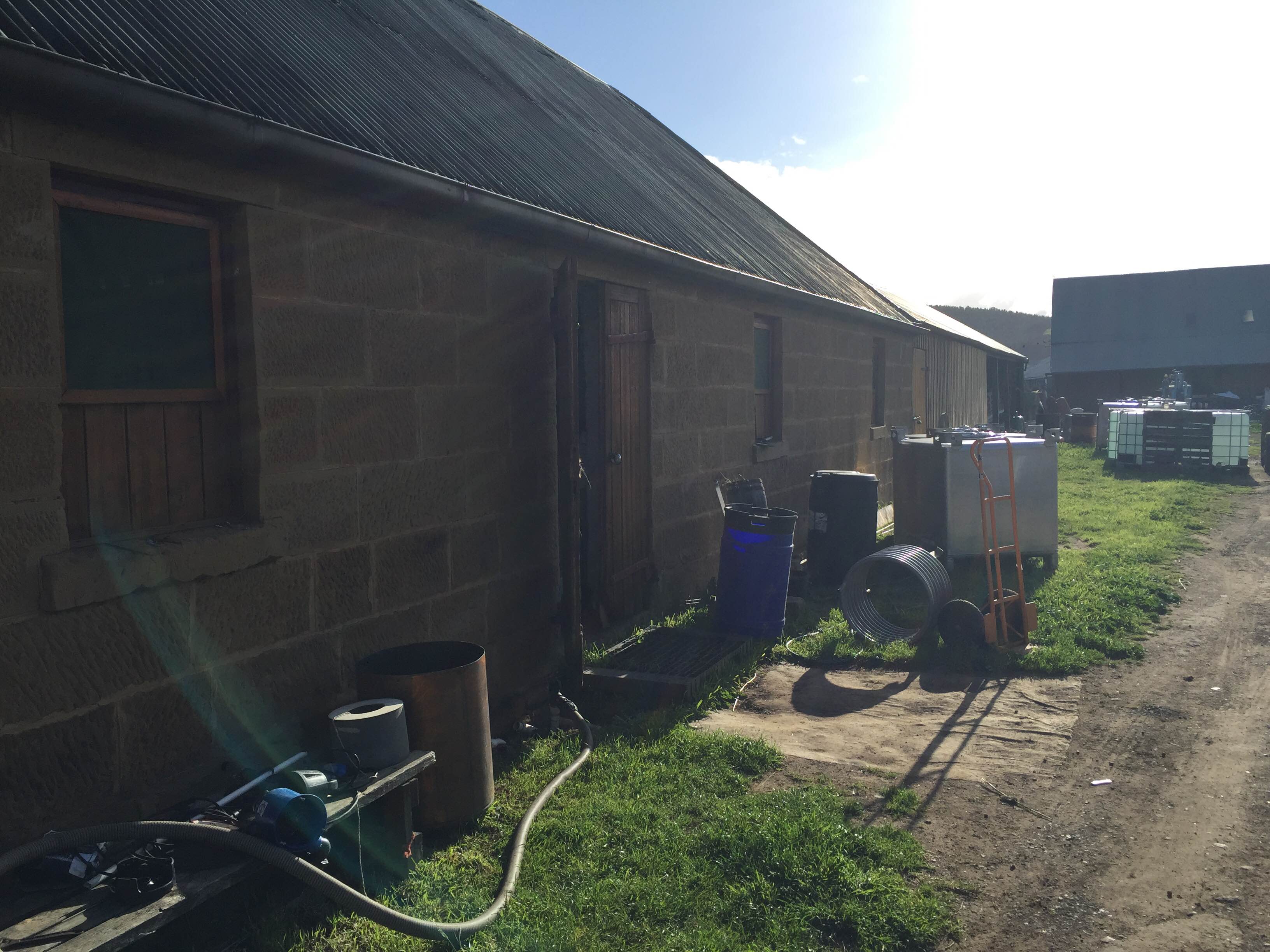
The much-extended old stables which house Belgrove Distillery

In our review we jokingly referred to Belgrove Distillery’s Peter Bignell as the da Vinci of distilling. When we visited him, we discovered that we were actually bang on the mark. Case in point was his method for powering the pump that injected homemade biofuel into the burner for the still: an old Sunbeam Mixmaster (usually on ‘Whipped Cream’ setting!).

belgrove-2-whisky-waffle

Apparently meringue-setting heated the still too much!

Our arrival at the distillery was actually rather hampered by some pesky road workers, who decided to dig up the highway in front of Peter’s driveway half an hour before we arrived. We had to call over a massive grader to flatten the surface enough to get the Alfa over (the troubles with low sports cars).

Belgrove distillery takes its name from the property, which is also a working farm. This was apparent as soon as we opened the gate and spied a flock of freshly shorn sheep, which we later discovered Peter had taught to eat leftover rye mash. Scattered around the old stables building that houses the distillery were various contraptions cannibalised from old washing machines, scrap metal and Russian Typhoon-class nuclear submarines.
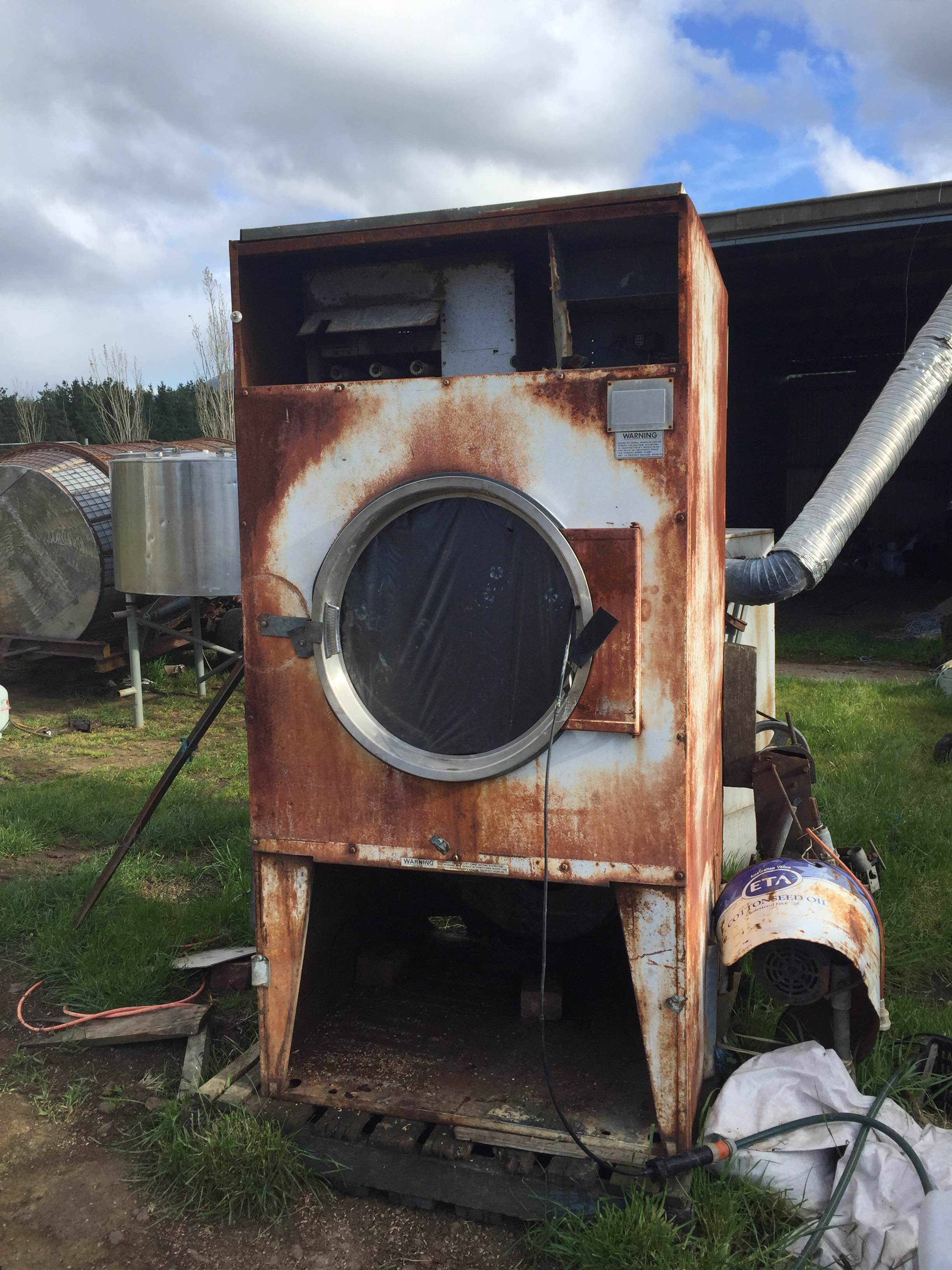
belgrove-3

This one is made from the parts of Apollo 11 which fell to earth

The distillery, located just outside the southern midlands town of Kempton, is unique in Tasmania in that it predominantly produces its spirit using rye instead of barley. The story goes that Peter had a spare paddock full of rye that needed using and so decided to turn it into whisky. Rather than buy expensive new equipment, and prescribing to a reuse and recycle ethos, he instead decided to build everything himself.
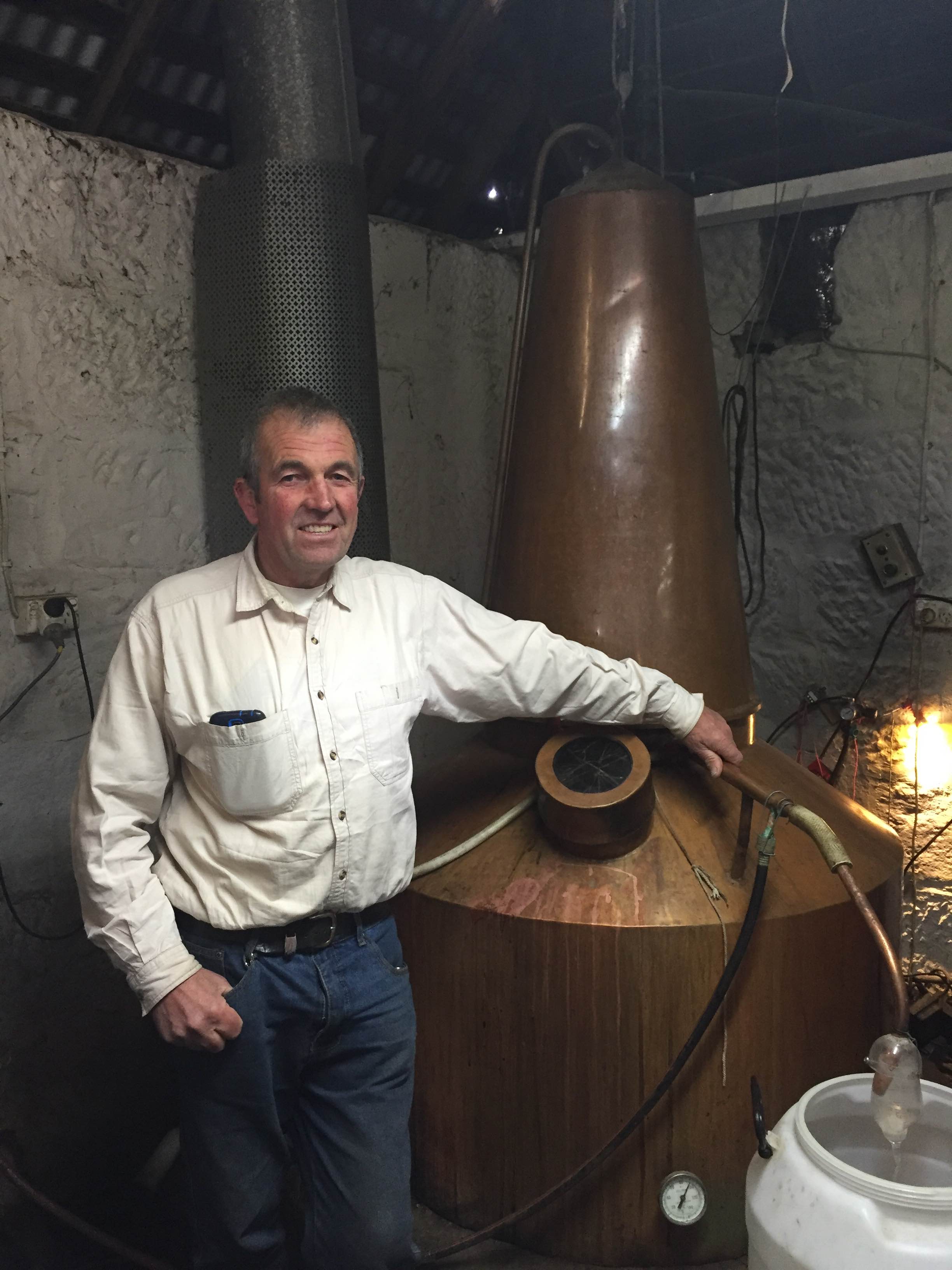
belgrove-4-whisky-waffle

Including this glorious piece of copper!

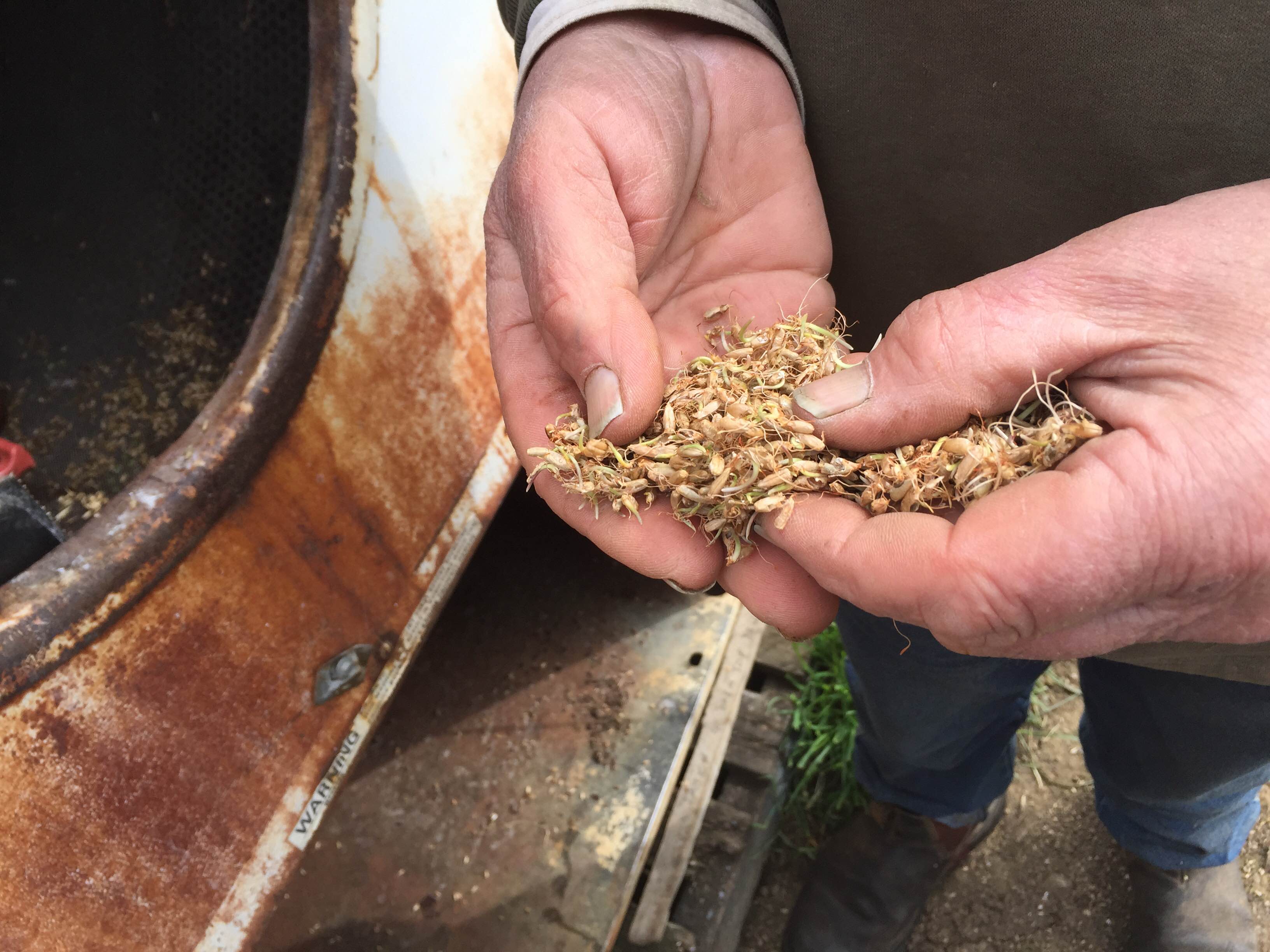
We need to stress that home-made doesn’t mean rubbish; the malter/peat smoker crafted out of an old tumble dryer is a work of genius, and the mash tun is perfectly functional – until it gets clogged up by the huskless rye that is. Peter quipped that when this happens he has to put the old wooden paddle appropriated from his kids’ dinghy to work to unclog it (he’s changed both the handle and the blade three times apiece, but maintains it’s still the same paddle).

Peter has been a farmer his whole life, only turning to distilling seven years ago. He said that his university degree in agricultural science has been invaluable, allowing him to exploit the science behind the art, although he doesn’t downplay the role of the natural yeasts and bacteria that inoculate the mash, which he refers to as Belgrove’s unique terroir. Peter is completely hands on with the whole process, from growing the grain, to the distilling, the bottling and especially the tasting.
belgrove-5

Peter is clearly a hands-on farmer

Luckily enough we were able to join him in tasting a variety of interesting spirits, including rye, barley, apple hatchet (distilled apple cider), ginger hammer (distilled ginger beer) and even an experimental batch of eau de vie that Peter was trialling for Tasmanian Cask Company’s master cooper Adam Bone, who dropped by to check on proceedings. The range was varied, exciting and specific to Belgrove, and it was inspiring to be able to taste such contrasting flavours produced in the one place.

We did however have our favourites; the rye at 47%, Pommeau (apple hatchet cut back with apple juice) and especially the Pinot Noir matured rye at cask strength, of which we took home bottles #1 and #2 of a new barrel. However, revelation of the day was the 100% malted barley smoked with peat from the previously untapped bogs in the north-east of the state. Good people of the world, are you ready for Tasmania’s answer to Scotland’s Islay? Well, it’s maturing in Peter Bignell’s bond store at this very moment.

img_5879

Nick filling bottle number one!

While Peter is expanding the old stables to house a new still and larger malting equipment, he still resolves to remain stubbornly small scale, championing the merits of a hands-on approach. He muses that “big distilleries only care about how much whisky per kilo of grain they can get. I’m trying to get the most flavour.” From our all too brief visit, it is clear that he is succeeding in that vision.

Tasmania is home to many distilleries, big and little, but perhaps none is more eclectic and fascinating to explore than Belgrove.

img_5885

Don’t worry, Ted. Someone has to have bottle number two!

The Macallan Fine Oak 12 Year Old

Reviewed by: Nick

macallan-fine-oak-12-year-old

I just can’t get my head around (The) Macallan. While I can very clearly visualise and appreciate the ranges of, say, Glenfiddich, Glen Moray or Glendronach, trying to form a coherent picture of what Macallan is about is as likely to give me a headache as drinking way too much of the stuff. And not just because it doesn’t start with the word Glen…

The contradictions are plentiful: many an old-time whisky drinker will cite Macallan as their go-to drop. Yet the distillery spent a fortune to get a bottle of 50 Year Old in a Bond film. And for some reason they recently ditched age statements in favour of… colours? And yet not too long ago there was also Macallan’s ‘Fine Oak’ range, one such bottle being the subject of today’s review.

I don’t get the point of the ‘Fine Oak’ series. As far as I can tell, it takes its name from the many “exceptional quality” oak casks the whisky was matured in. But… does that mean their older range was dumped into low quality barrels? Somehow I doubt it. It seems to be another rebranding dead-end left by the wayside by an impatient marketing team.

Despite all this, the whisky itself is great to drink. The nose is light, vibrant and contains finely balanced notes of vanilla and lime. The palate is sweet without being sickly and flavours of honey and malt take centre stage. The finish is short without being unsatisfying, with a creamy nuttiness that gently lingers: it’s Kellogg’s Crunchy Nut in whisky form! All up, it’s a brilliantly balanced dram, and one that you could confidently pour to a hesitant whisky drinker.

The biggest disappointment is that this bottle is no longer available – if I were to seek something similar I would have to try a different bottle in the Macallan range. As much as I enjoyed this particular drop, I’m wary to spend up on something else from the distillery. Macallan seems to be undergoing somewhat of an identity crisis and I’m probably unlikely to go and buy a bottle until they sort it out – that is unless I get some pretty convincing recommendations in the comments!

★★★

Heartwood Vat out of Hell

Reviewed by: Ted

heartwood-vat-out-of-hell

As I walked back through North Hobart to my hotel whilst on a work trip, I decided to stop into the Winston to rehydrate. Lo and behold, what did I find waiting on the shelf but a bottle of ‘Vat out of Hell’, one of Tim Duckett’s glorious cask-strength Heartwood creations.

Crafted from a delightful marriage of 10yo Lark sherry barrel and 13yo Tasmania Distillery bourbon barrel and bottled at a robust 67.4%, the Vat out of Hell, like most Heartwoods, is sadly no longer available for purchase. Therefore, stumbling across an open bottle constitutes a rare treat and a responsibility to try some for the betterment of humankind.

I gazed wistfully at the bottle on the shelf and thought ‘well… work’s covered the rest of my drinks tonight [I must admit that I had stopped for liquid sustenance at several other pubs along the way], so what the hell, I’ll treat myself.’

At this point I was feeling a little less analytical and in a bit more of a subjective frame of mind thanks to my nice warm beer coat, but I think that’s probably a good way to tackle a Heartwood. Ride the rush of emotions, don’t overthink it. So, without further ado, here’s what I thought (apparently. I’m glad I at least had the presence of mind to write this down):

The smell is… leathery, which is quite appropriate really… it’s like a box of sultanas left on the bench seat of an old Kingswood ute on a hot summer’s day… a walk through a meadow of spiked wildflowers… fruit leather made out of fruit cake… sun fermented orchard fruit… hot boat decking.

Tastes like timber should… if Easter eggs tasted like this, I’d probably eat them quicker… meat slow cooked for a looong time… dark brown as a flavour… attaches like a happy lamprey to your gums.

Yeah, so long story short, it was bloody good. Better than Meatloaf’s version… If you find some, think with your heart and not your wallet, and you’ll end up transcending to a higher plane of existence.

★★★★

The Pot Still Exclusive Invergordon 26 Year Old Single Grain Whisky

Reviewed by: Ted

invergordon-26

It’s very rare that I come across a whisky distilled in the year of my birth; usually they seem to fall either side of it. While that’s probably just me not looking in the right places, it’s definitely rare that the dram in question is a single grain scotch whisky.

Lesson time: Single malt scotch whisky can be made using only malted barley, whereas grain whiskies (like it says on the tin) can be made using other grains, such as wheat, and can be malted or unmalted. You don’t generally tend to see single grain whiskies on their own in the wild because their normal purpose in life is to form the base of blended scotch whisky.

Alongside the prestigious single malt producers are a multitude of unsung distilleries pumping out grain whisky for use in your Johnnie Walkers and Dewars’ and the like. Case in point: Who’s heard of Invergordon? Nope, me neither, but turns out they’re a thing.

I actually came across this bottle while I was in an excellent Glaswegian bar called ‘The Pot Still’ (up the end of the mall if you want to find it). While chatting to the barman I challenged him to pour me something unusual, and so he did.

Produced at Invergordon as an exclusive bottling for the Pot Still (in celebration of something or other I think. I forget what) this particular bottle was distilled on the 3rd of March 1988 and aged for a rather astonishing 26 years in cask# 24975 (no idea what, but from the colour I’m guessing an ex-bourbon).

Bottled at a hearty 53.7%, the nose of the Invergordon is vibrant and zesty, zinging with lemon, pineapple, pine resin and wood polish. Underneath the initial sharpness sits a smoother, rounded layer of pear, plum, apricot, dates and nuttiness. Finally, gliding out underneath is a waft of vanilla.

The first mouthful hits hot and sharp, with more lemon and pineapple, and then slides down your throat with a burning coolness like you’ve just had a strong mint. A second attempt, giving more time to develop in the mouth, finds toffee, green wood and a bitter, grassy, herbal finish.

I am sorry (not sorry) to say that you are probably highly unlikely to find a bottle of this anywhere. I only happened to stumble across mine because I was in the right place at the right time and the barman still had a small stash behind the bar that he was willing to part with.

If you do have a bottle, or are in the Pot Still and they’ve got some left, well done you, you’re part of an exclusive club. As for the rest of you great and unwashed masses, I think that this serves as a reminder not to discount the humble grain whisky. While they don’t get the same love as their single malt cousins, with a bit of age they can hold their own any day.

★★★

Four must-visit Scottish whisky distilleries

Posted by: Nick

Nick in Scotland

So you’ve travelled to Scotland. You’ve climbed to the top of Edinburgh Castle, eaten a plate of Haggis and failed to find the Loch Ness Monster. Your Scottish experience is complete but for one final destination. The country is synonymous with several things – including men in skirts and losing at football – but most famously of all, it is known for its whisky. Therefore on your travels it is compulsory to stop in at one or two distilleries and see exactly how the stuff is made. Of course, that means narrowing it down to one or two from the hundreds of options – not an easy task.

It was not long ago that I made a trip to whisky’s spiritual home (pun entirely intended) and thought I would share a few of my recommendations to check out after a hard day’s not-spotting Nessie.

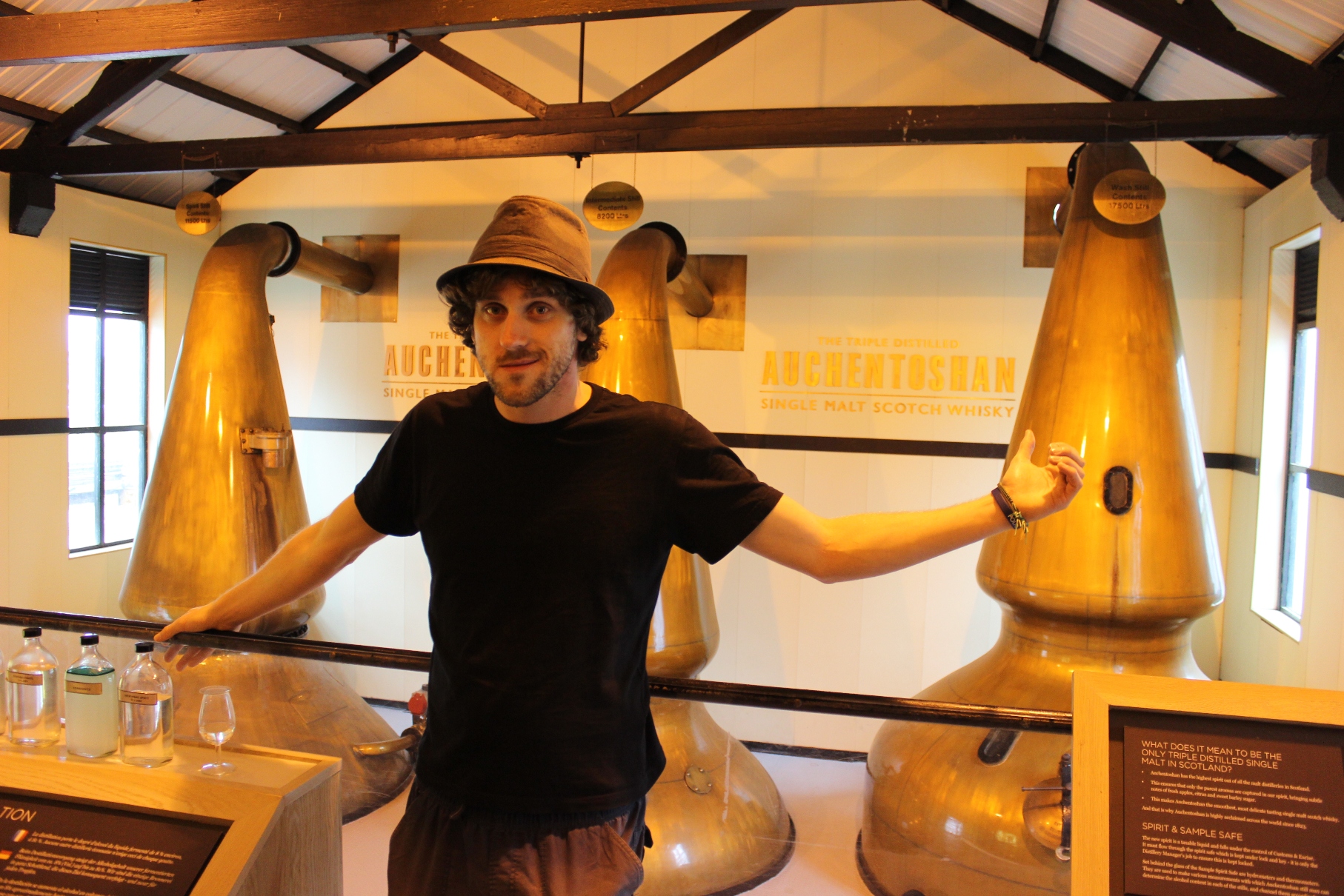
Auchentoshan:

Auchen

This distillery is as accessible to visit as the whisky is to drink. Located just outside of Glasgow, Auchentoshan is right on the way for tourists looking to explore Loch Lomond or venture into the highlands. The distillery itself is extremely pretty and the friendly staff run a slick tour. The tasting session at the end covers the core range, though if you’re lucky they may find you something special to try behind the bar. The drams themselves are easy drinking and perfect for those who are slightly hesitant about whisky!

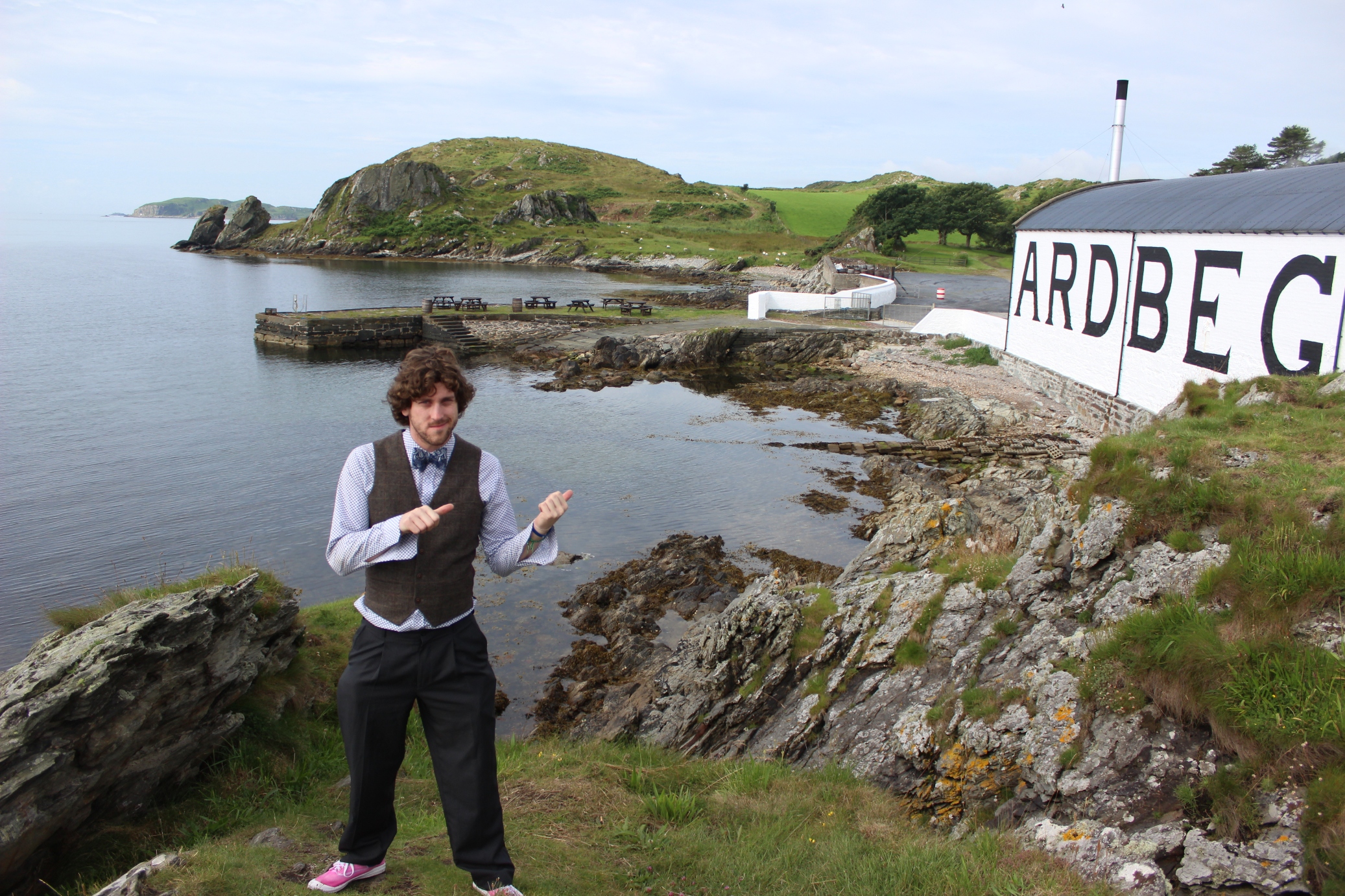
Ardbeg:

PE Ardb

The ultimate fanboy distillery. If you’re keen on your peated whisky then a trip to Ardbeg should be the number one priority. Granted, it is on a little island off Scotland’s west coast, but is the most magical place when you get there. Every corner of the distillery emanates old world charm, and if you select a premium tasting session, some of the drams they bring you in their little back room are mind-blowing. Ardbeg are famous for producing rare one-off bottlings which, unless you happen to be mates with the distiller, you are unlikely to get to try too many of. Do the tour, however, and who knows what you may find – Ardbog, Alligator, Supernova, Dark Cove… one dram of any of these makes the price of admission worthwhile.

Supernovas

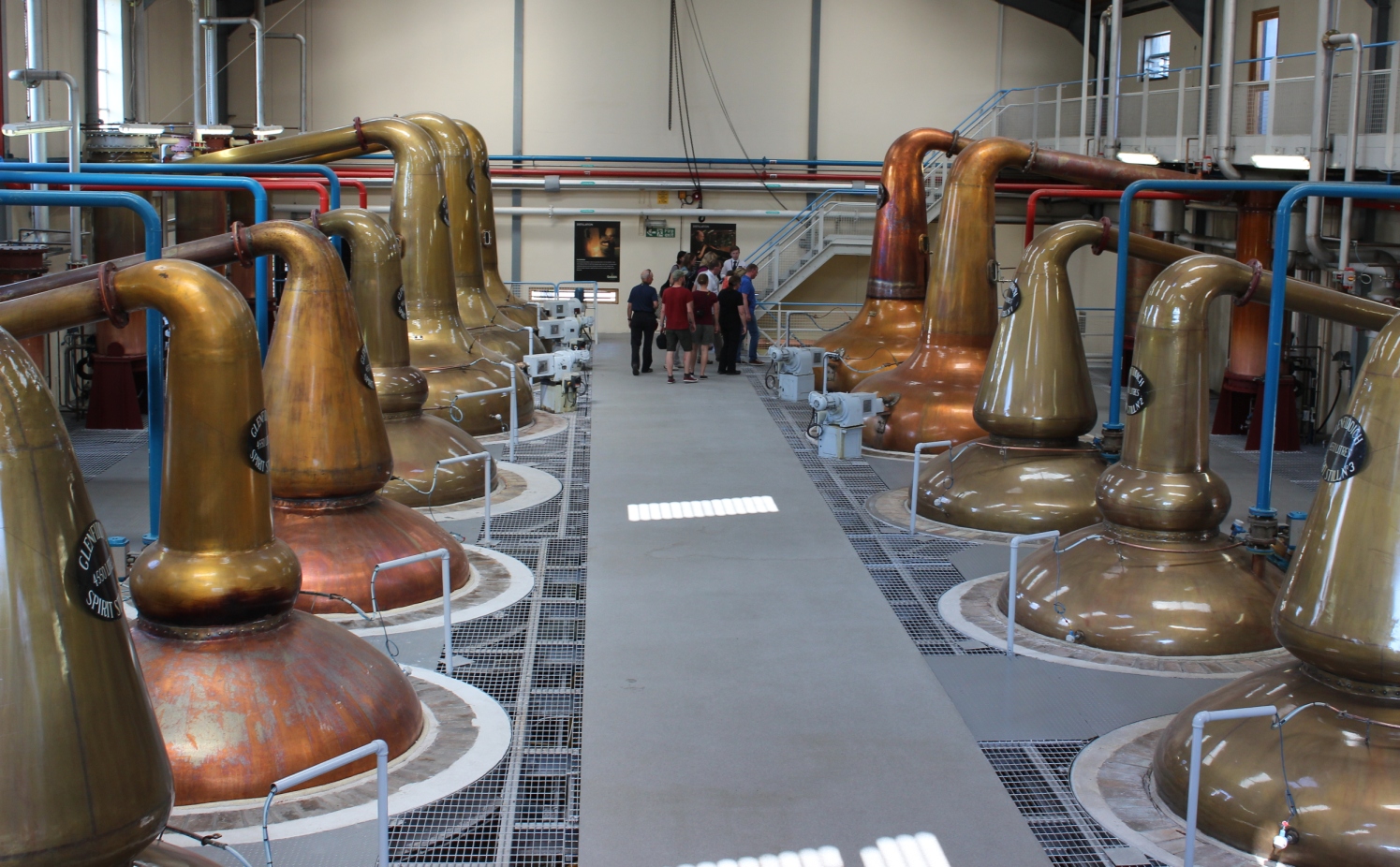
Glenfiddich:

To get an idea about the scale of the Scottish whisky industry, do the tour at Glenfiddich. They are the largest producer of single malt in the country and their distillery, therefore, is huge! Twenty-eight stills are in operation, each big enough to make Lark’s copper pot look like a key ring. There really is a sense of awe as you walk among the machinery and through the bondstores. It’s certainly a popular one, with thousands of tourists going through the establishment each day, however if you spend a couple of extra pounds they’ll put you in a smaller, more intimate group and give you the added bonus of checking out warehouse 8 – the Solera facility – where you can see them vatting vast amounts of whisky to create, among other bottles, their 15 year old. The tasting that follows walks you through the 12, 15, 18 and 21 Year Old expressions – yes, that’s right, 21 year old! Not all distilleries churn out a 21 year old regularly on a tour.

Glen Stills

Bruichladdich:

A trip to Bruichladdich is the perfect whisky experience. Firstly, the staff are some of the coolest and most entertaining people in the business. Secondly, their equipment, in particular their mash tun, is all beautifully ancient. It’s like an antique shop where the gear comes alive at night when the owners leave! Finally, and most importantly, there’s the tastings. Oh man. Bruichladdich are famous for innovation and experimentation, the result of which is a large number of fascinating whiskies to try. A rum matured whisky – can I try that? Sure! A new Octomore – do you mind if I… Go for it! How about that double matured… Get it down you! In short, a trip to Bruichladdich is compulsory if you ever find yourself in the area – and by the area, I mean in the Northern Hemisphere!

Bruich

These are, of course, just four of my picks based on one visit and I realise that as far as excellent distilleries go I am barely scratching the surface. So what places have you been to that you would recommend people make it along to? Let me know in the comments and I’ll see if I can hit them up on my next trip to the whisky motherland!

Warehouse 8


Sullivans Cove French Oak Cask

Reviewed by: Nick and Ted

IMG_5551-2

This is it ladies and gentlemen, the moment you’ve all been waiting for: Whisky Waffle review the greatest whisky in the world.

But wait. Hold your horses there, Whisky Waffle. Due to the unique nature of single barrel releases, the French Oak bottle we tasted was not drawn from barrel HH525, the release that won 2014 World’s Best Single Malt at the World Whiskies Awards. Our bottle came from barrel HH595 (noted in case it wins next year!).

So then, the whisky we are drinking is not the best in the world. But it’s pretty damn close.

Sullivans Cove is the creation of Tasmanian Whisky pioneer Tasmania Distillery. Among their releases is a bourbon-matured American Oak expression and a blended Double Cask, but it is this one, matured in ex-European oak port casks, which is the most revered.

The nose is intriguing, with elements of caramel, cinnamon, overripe apples and the salt spray you may receive when standing on the stretch of coastline which bears this bottle’s name. The palate is light, but complex, with burnt toffee and leatherwood honey delicately balanced against earthy terracotta outdoorsy notes. The finish evaporates off the back of the palate and yet leaves a gentle caramelised linger.

Despite not being the exact bottle which received a plethora of honours all over the world, in tasting this edition it is easy to see where the judges were coming from. This is a superbly balanced drop and showcases all that is great about Tasmanian whisky.

★★★★

IMG_5556

Tasmanian whisky: One state. Three ingredients. Unlimited flavour.

#TasWhiskyWeek

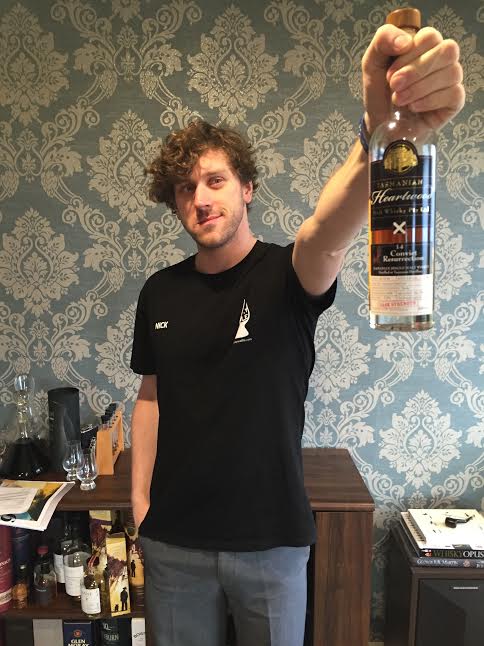
Heartwood Convict Resurrection

Reviewed by: Nick

Heartwood Convict Resurrection

In Scotland, independent bottling of whisky is commonplace. Companies such as Gordon & MacPhail, Berry Brothers & Rudd, Flora & Fauna – basically anything with an ‘&’ in it – run successful businesses and produce some fine drams. In Tassie, well, it’s a little rarer. While Trappers Hut and Tasmanian Independent Bottlers are coming along nicely, there’s one name leading the way: Heartwood.

Heartwood was created by Tasmania’s own mad scientist of whisky, Tim Duckett, whom I imagine spends his days bent over a steaming cauldron of luminous Tasmanian whisky, stirring it with a wooden oar and chanting “double double toil and trouble”.

If you’ve ever come across a bottle of Heartwood, you’ll attest that it was unquestionably a memorable drop. There’s certainly a lot to remember, from the wonderful designs on the labels to the distinctive names: ‘Vat Out of Hell’, ‘Release the beast’ and ‘Any Port in a Storm’ to name a few. However, the most memorable aspect of any Heartwood bottling – by far – is the strength. The ABV of all releases ranges from percentages in the mid 60s to percentages in the mid 70s. That’s right – mid 70s!!!

The bottle I decided to purchase sits at an eye watering 72% and is called the ‘Convict Resurrection’, part of a series of convict-inspired bottlings referring to Tasmania’s original function as a penal colony. The whisky comes from Sullivans Cove barrel HH0239, which was an American oak ex-port cask. And boy, is it something.

Every aspect of this whisky is massive. The nose hits you like a boxing glove wielded by Sugar Ray Leonard, teeming with creamy fruit flavours like plum jam spread on rich brie. As is to be expected, the palate also packs a punch – taking a sip is like wrestling a crocodile – and yet there are so many flavours to be found: raisins, nutmeg, pinecones and blackberries – perhaps with the thorns still attached!

The finish is the most surprising element of the whole dram as it is incredibly smooth. It seems to evaporate at the back of your throat, leaving the most glorious lingering warmth with notes of jam and honey.

If you ever see a nip of Heartwood available anywhere – don’t think – just buy it. Sure, it’ll be pricey, but only 200 or so of each bottle is made and once they’re gone, they’re actually gone. Heartwood fans don’t buy the stuff to leave it sitting on a shelf.

Seriously, try it if you can. I promise it will be memorable – in the best possible way.

★★★★★

Heartwood n Nick

Tasmanian whisky: One state. Three ingredients. Unlimited flavour.

#TasWhiskyWeek

Belgrove Brown Rye

Reviewed by: Ted

Belgrove Brown RyeEverybody knows by now that Tasmania is a hub of whisky revolution. Ever since the resurrection of the industry in the 90’s, things have been taking off quicker than an alka-seltzer bottle rocket. So how do you innovate in a young industry that’s already innovating its socks off? Rye thought you’d never ask…

Founded by Peter Bignell, a man often described as a Da Vinci of distilling (well, he definitely is now), Belgrove Distillery is located just outside Kempton in the southern Midlands of Tasmania. DIY, organic and hand-made sums up Belgrove’s vibe, with Pete quite literally crafting everything from the ground up, including the stills, barrels, biodiesel (made from left-over chip oil from the local take-away and used to power the stills) and of course the grain used in the whisky itself.

The grain is where Belgrove really makes its point of difference from all the other Tasmanian distillers. Why use boring old barley when you can use rye instead, organically grown on-site? After growing a bumper crop of the stuff on the farm in 2008 (a favourite grain of the Canadian distillers but not used in Tassie), Pete was apparently inspired to turn it into whisky. Being a extraordinarily talented and driven individual, one thing led to another and here we are today.

Belgrove now produces a number of different 100% rye drops, including white rye, black rye, peated rye and of course, the subject of this review, the brown rye.

The nose of the brown rye is dark and fruity, full of ripe apple, plum and apricot. It rather reminds me of the scent of the bowl of home-made preserved stewed fruit my grandma always used to keep in her kitchen cupboard, a very fond memory. Alongside the fruit is rose petals, custard and an undertone of dull metal, like drinking from a rough copper mug.

The taste is quite different to the flavour complex produced by the nose. Although its body initially starts off fruity, it immediately transmogrifies into deep earthy, ashy flavours, like smouldering rye stubble in a paddock or curling incense smoke in a gypsy tent. The finish is slightly bitter and astringent but very satisfying, like having a cup of black tea after a sweet dessert.

Everything you thought you knew about Tasmanian whisky goes out the window when you try the Belgrove brown rye. It’s like learning to drink whisky all over again, an exciting time full of power and emotion. It is a spirit that resonates powerfully with the creative, hands-on ethos of its maker. If you want to try something different, yet still uniquely Tasmanian, then the rye of Belgrove awaits you.

★★★

Belgrove Brown Rye

Tasmanian whisky: One state. Three ingredients. Unlimited flavour.

#TasWhiskyWeek

Nant Sherry Wood 43%

Reviewed by: Nick

Nant Sherry Wood 43%

I imagine the founding of Nant distillery by Brisbane businessman Keith Batt, went something like this:


“What do you want for your birthday this year, honey?” asked Mrs Keith. Keith thought for a moment.

“I’m torn between a Caribbean island, a bar-franchise and a horse,” he replied, not a drop of irony on his face.

“A horse?” replied Mrs Keith, “where on earth would you put one of those?”

“Well obviously I’ll need to invest in some property to store it in – preferably somewhere exotic and remote.”

“How about Peru? Then I can get a Llama!”

“Yeah, I’m not so keen on the ponchos or  folk music. Tell you what, how about we stick the horse in some old paddock in Tasmania and I’ll also get the bar-franchise?”

“Alright, fine. But you may need to think of something to do with the property down in Tassie.”

“Oh, don’t worry about that. I’ll just stick in a whisky distillery and sit around fixing an old water mill until Jim Murray arrives.”


Of course I unquestionably make light of the momentous decision to build Nant Distillery up in the highlands of Tasmania – an establishment which I can confidently state is the most scenic of all Tasmanian distilleries. And as much as I can mock Nant’s business-like set up, I cannot downplay the excellence of its whiskies.

One of my favourite Tassie drops is the Nant Port Wood, a fantastic representation of the Tasmanian flavour, and the cask strength version of the Bourbon Wood is one of Tasmania’s finest whisky accomplishments. They also release a Sherry Wood and it is this expression I review today.

The nose is drier and earthier than any other Nant release. There are elements of vanilla, figs and golden syrup, but this is matched by moss and spicy oak. The palate is equally contrasting with notes of toffee, raspberry jam and plenty more oak, while mingling in the medium long finish are herbs and you guess it: oak, It all combines to form an intriguing and challenging Tasmanian whisky.

While I couldn’t claim this to be my favourite Nant expression, it’s certainly an interesting drop and one that I would never describe as boring. It forms an integral part of an increasingly impressive Nant back-catalogue. I guess then, it was well worth Keith Batt getting that horse!

★★★

Nant n Nick

Tasmanian whisky: One state. Three ingredients. Unlimited flavour.

#TasWhiskyWeek

Hellyers Road Peated

Reviewed by: Ted

Hellyers Road Peated

So, you’re a big fan of peated Scottish single malts, but in order to save the world from certain destruction (just go with it, ok?) you have to buy a Tasmanian whisky. What are you going to do? Never fear, Hellyers Road has your peat needs covered with their appropriately named Peated expression

When it comes to peated whisky in Tasmania, the situation is a little more complex than first meets the eye. Tasmania actually has its own peat bogs, however the smoke is quite different to the Scottish stuff, being softer, gentler and more rounded. It is also restricted to a few distilleries that own leases to the bogs (the rest is locked up in national parks and the like).

In Hellyers Road’s case they don’t have access to a native bog, so instead they import peated barley all the way from maltings in Inverness, Scotland. The side-effect of this is that Hellyers Road Peated is much more closely aligned to Scottish drams than other Tasmanian malts (side note: Hellyers Road use local grown barley for their non-peated expressions).

Nosing the Peated expression is like standing in a grain storehouse, grabbing a big handful of peat-smoked barley and taking a deep sniff. Underneath the big, fat, bold, smoky cereal flavours can be found cocoa, black currants, pencil shavings and smouldering leaves.

The first layer of taste is what you would probably expect from a heavily peated whisky – strong, thick smoke that billows around the mouth, a bit like standing on the wrong side of the campfire. When you clear away the smoke however, you are left with a light, smooth and slightly sweet dram, without too much else going on. The finish is long and smoky, but gentle. In fact, the smoke probably rounds out the feel of the dram as a whole, smoothing out some of the harsher edges that can be found in a younger whisky such as this.

When compared to a traditional Islay single malt like Laphroaig or Ardbeg, the Hellyers Road Peated perhaps misses some of the strong coastal flavours that punch through from underneath, but makes it up in other areas. A light whisky, heavily peated, this Hellyers Road expression delivers a different experience to anything else available from Tasmania.

★★★

HR n Ted

Tasmanian whisky: One state. Three ingredients. Unlimited flavour.

#TasWhiskyWeek