Whisky

Trouble at Old Mill: Tasmanian distillery rocked by bankruptcy

Posted by: Nick

Angels Share Trip (6)

Over the duration of co-running this blog, I have waffled at length about the friendly and supportive whisky community in my home state of Tasmania. Well, forget all that – because a Tasmanian distillery is in trouble and no one seems to care.

It was recently revealed that the founder, figurehead and all-round head honcho of Nant Distillery, Keith Batt, has filed for bankruptcy. Batt, a Queensland businessman, built Nant distillery up from nothing, restoring the old water mill and establishing Nant whisky bars across the globe; not to mention claiming several liquid gold prizes along the way for his wares. He’s done amazing things for Tasmanian whisky – so why are people not more concerned for his distillery?

I’ll admit that I am exaggerating a touch in saying that no one cares – I for one certainly care. Over the years I’ve experienced many pleasant evenings sampling drams at the Nant Whisky Bar in Hobart, enhanced immeasurably by their wonderful staff members who are always happy to indulge my whisky curiosity. I have visited the picturesque distillery in Bothwell and enjoyed wandering their grounds on a near perfect summers day. I own a bottle of their port matured single malt and will be sad when the last drop disappears. I will forever stand by the product and the staff. But Nant Distillery itself is a hard one to like.

I love being part of this little whisky business here in Tassie so much so that I sometimes forget that it is exactly that – a business. Nant’s management have not lost sight of this. Keith Batt has not set out to make friends, but to create a whisky empire bent on global domination. Taking part in local Tasmanian tasting events is not part of this vision. Nor is pooling resources and sharing promotion. Other distilleries are not co-creators, but competitors. This outlook is both business savvy and totally opposite to the remainder of Tasmania’s close-knit distilling community. I agree with Batt’s motives, but not his means.

Nant by Whisky Waffle

Say what you will about the man – but he sure builds a pretty distillery

So how exactly will Keith Batt’s bankruptcy affect the distillery? According to the man himself, not at all. Batt is understandably keen to calm the waters, pointing out to The Mercury in Hobart last week that as of August last year he is “not a director, a shareholder or a beneficiary of that trust”. This role was recently (and conveniently) reappointed to his wife, Margaret Letizia. And yes, it does all sound rather dodgy, although it can be said that his financial problems were not in fact due to distillery-related debts, but issues for his property development business which is still experiencing a hangover from the global financial crisis of six years ago.

There are a number of people waiting with baited breath for the smoke to clear over Batt’s financial problems. For a start there are the thousands of investors who have pledged over 18 million dollars into barrels of whisky that they may never see. I caught up with one such investor who told me:

“As a whisky barrel owner, you start to wonder how much substance is contained within the creamy embossed paper of the share certificates. I don’t own the barrels, only what is in them and should the business go under I don’t know what I’m going to do with four hundred and fifty litres of half finished whisky or even how I’d get it home. Can you just turn up with a boot load of jerry cans? Guaranteed buy back? Nothing is guaranteed.”

While most seek only to see their money returned, others have attempted to claim their barrel with little success. However, for a man so protective of his brand, I can understand his hesitancy in seeing his product in other bottlers’ hands. Referring to them as “inferior brands” however is an unkind assumption and further evidence of why he is far from popular among the Tasmanian distillers community.

Chilling at Nant

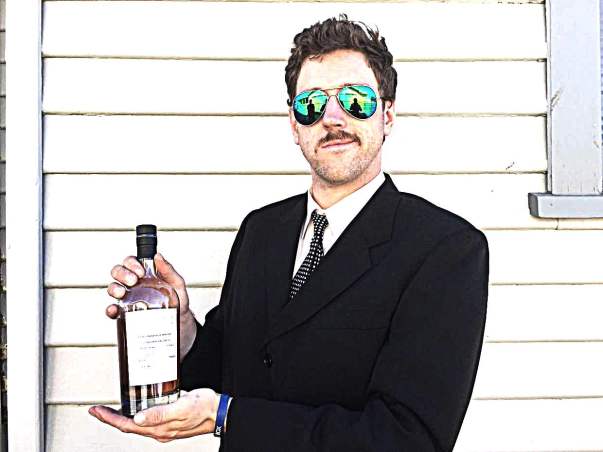
Photographic evidence of a great afternoon at Nant. Yep, isn’t my beard awesome.

It’s hard to fully sympathise with the struggling Keith Batt and his business-first methodology. However, I prefer to make my best effort to differentiate the distillery from its management. For the sake of their investors, their staff and heck, let’s not forget their high-quality whisky, I hope that Nant Distillery is not adversely affected by their founder’s financial predicament.

Cragganmore 12 Year Old

Reviewed by: Nick

Cragganmore 12 Year Old

Summer is a time for barbeques and dreams; it is a time for long evenings spent irreverently with friends. And, of course, it is a time for summer romances.

I met the Cragganmore 12 Year Old shortly before Christmas and knew, without being able to define why, that this was to be my summertime dram. It glistened, a deep gold on the shelf, almost calling to me with promises of what was to come. How could I resist?

The following weeks I enjoyed the gloriously sunny evenings with the Cragganmore by my side. We were thick as thieves, spending time at post-Christmas drinks, New Years Eve – even on the annual camping trip. All my whisky-drinking friends approved. There was no doubt, the Cragganmore was a worthy addition to our summer festivities. And the flavours? Extraordinary.

The nose of honey and butterscotch. The palate of vanilla and lemons. And the finish… Oh that delicate and yet spicy linger I feel I will never truly forget.

Inevitably, the sun began to set on a glorious January, and the contents of the Cragganmore dwindled. As with all summer flings, it ended all too suddenly. It was time to say farewell to this golden bottle. While it was a friendship only recently acquired, it seemed the bonds we had formed would last a lifetime. As we said our goodbyes, I thanked it for its companionship over such a memorable time. I can now only leave it in the hands of fate as to whether we meet again on another, seemingly endless, summer afternoon.

★★★

Having fun at Fannys Bay

Posted by: Nick and Ted

Whisky Waffle at Fannys Bay

Our favourite kind of shed

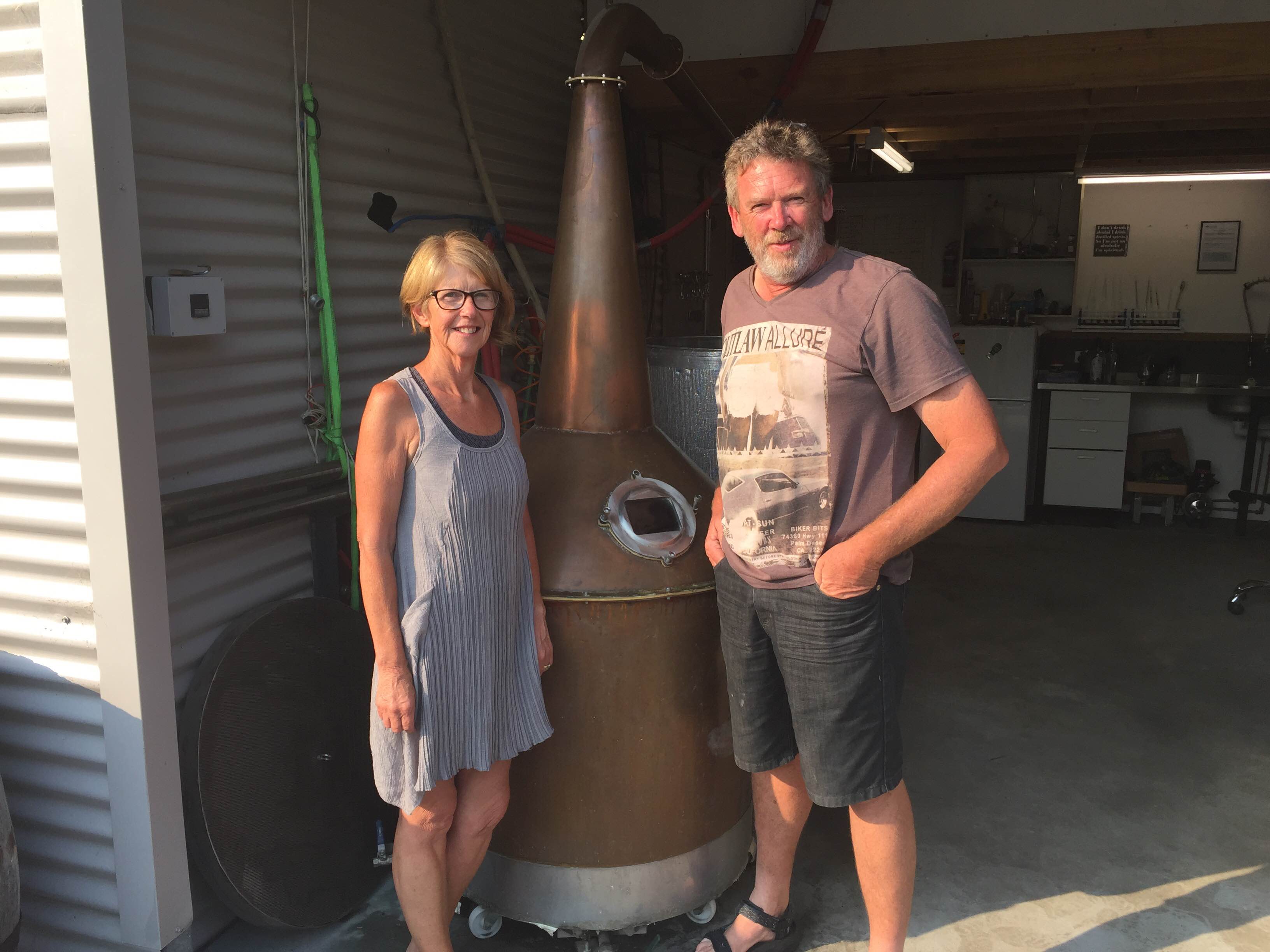
As self-styled whisky adventurers we get to meet some really fantastic people in the whisky business – case-in-point are Mathew and Julie Cooper, founders of the rather fabulously named Fannys Bay Distillery. Residing on Tasmania’s North coast they have brought whisky making to a region hitherto bereft of locally produced drams. As far as we (and they) know, Fannys Bay is Tasmania’s smallest distillery, but all indications suggest they will be punching well above their weight.

The Whisky Waffle boys travelled to the remote community of Tam O’Shanter to visit the Coopers on a sunny Sunday afternoon – or at least it would have been sunny if it were not for the thick smoke haze left by the bushfires. Mathew and Julie invited us into the shed to see where the magic happens, a location they both hope to spend a bit more time in this year as they have both recently retired. Mathew used to be a coordinator at the TAFE, though he has not quite left his teaching roots behind – regularly receiving visits from wannabe distillers (and semi-amateur whisky writers!).

Julie told us that Mathew first had the idea to make his own whisky after trying some dodgy homemade stuff at a friend’s place. He woke up the next day with a sore head and thought “there must be a better way”. Being a very hands-on type of person Mathew built much of the distillery himself, including the gristmill and the still.

Matt and Juls Cooper of Fannys Bay Whisky Waffle

Today in metalwork… Matt built a still.

“To make a product how you want it, it starts with the basics,” Mathew told us as he enthusiastically filled a couple of glasses with new-make spirit – one made with Gairdener barley, the other with Westminster. The difference between the two was subtle but noticeable, with the former being richer and more floral, whereas the latter was lighter and more herbal. Both left us curious and excited about what Fannys Bay whisky would be like when mature. Unfortunately the oldest spirit had only been in barrels for 12 months and therefore cannot be called whisky for another year. Of course that didn’t stop us from having a small sample – for purely education purposes, naturally.

We were presented with a pinot cask, a possible sherry cask, and a definite port cask, and were hard pressed to choose our favourite. Their aim to create an easy-drinking malt that appeals to a range of people is certainly looking on track. Take note people – in 12 months time Fannys Bay will be one to look out for.

While Julie is slowly (but happily) being converted into a whisky drinker, Mathew is more than happy to sample the odd dram. He loses no sleep about the success of the product, happily stating: “If people want to buy it, we sell it. If they don’t – then I have a lovely room full of whisky!”

Find out more about Fannys Bay via our links page

The Arran Malt Amarone Cask Finish

Reviewed by: Nick

Arran Amarone Cask

Traditionally, the world of Scottish whisky is very – well – traditional. When popping champagne for Ardbeg’s two hundredth year, we somewhat neglected the rather less impressive twentieth birthday of the Arran Distillery. But distilleries are only as good as the products they are currently creating, and there is a lot to like about the bottles presently leaving the Isle of Arran.

As well as a range of age statement whiskies they have a variety of cask finish expressions, and the one I happened to get my grubby little mitts on was finished in Amarone barrels. For the uneducated, which I will freely admit to being one of before buying the bottle, Amarone is a dry Italian red wine made from grapes such as Corvina, Rondinella and Molinara. Yup, me neither.

I’ve had an up and down relationship with wine-matured whiskies, though one aspect I universally love is their amazing colours. The Arran is no exception – this whisky is the coppery orange of traditional creaming soda. The nose is alluring, giving the impression of alcohol soaked fruits eaten at Christmas time. There are cherries and strawberries as well as honey and syrupy cola.

The palate is rich and spicy, aided immensely by the higher bottling strength of 50%. It is delightfully creamy with large dollops of toffee, oranges and Turkish delight. The finish is dry with notes of oak and dark chocolate, and is pleasingly long and warming.

While the Arran Malt does not boast the long history of many distilleries, this should not in any way be held against it. A glorious Scottish past does not always equal quality in the present. Just ask Rangers Football Club.

★★★★

Flóki Icelandic Young Malt

Reviewed by: Ted

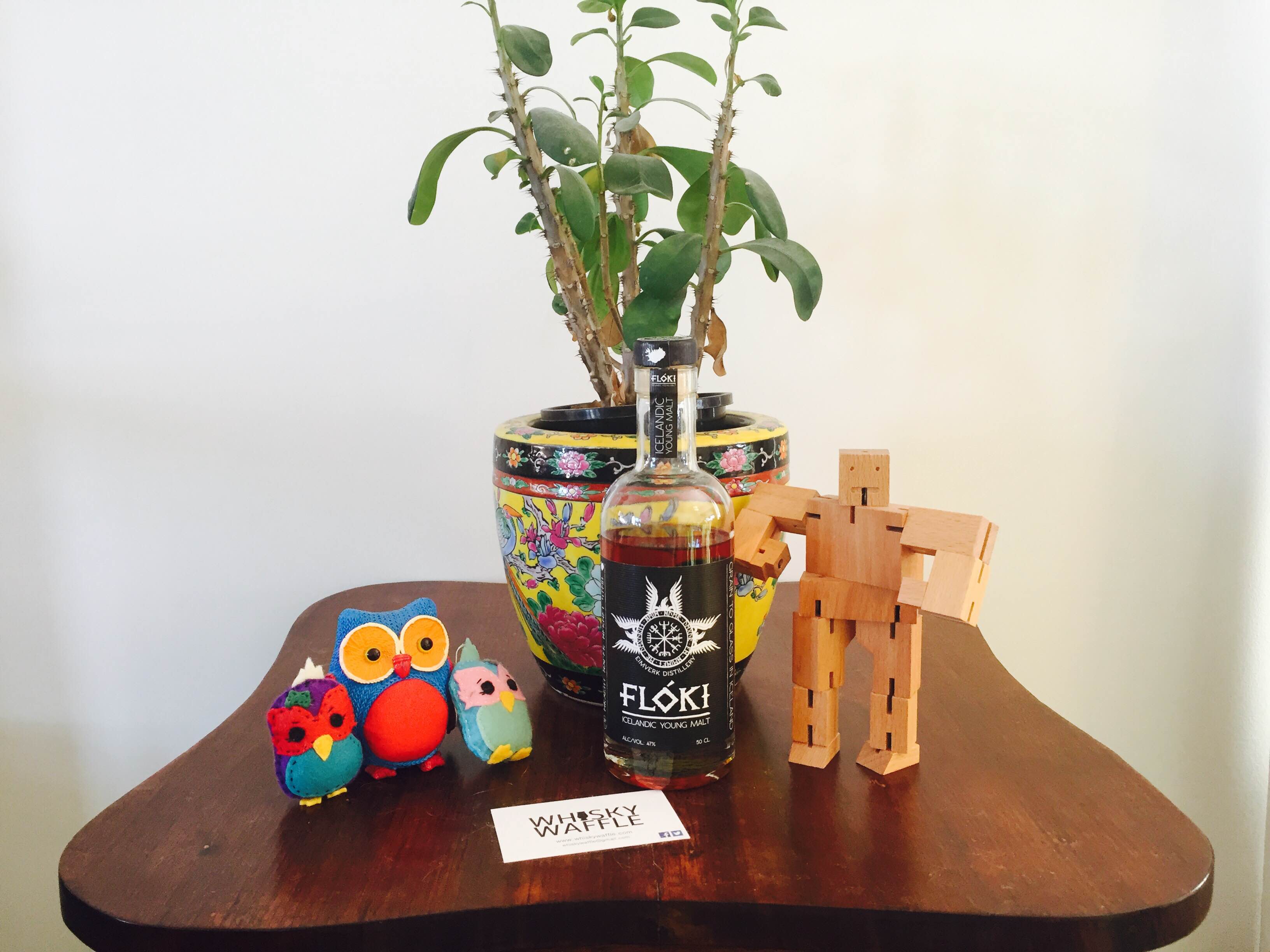
Floki

By all accounts Iceland is one of the most beautiful and beguiling places on earth, an ethereal land of glacial blue lakes, tumbling grasslands, rocky moonscapes, bubbling hot springs and ridiculously hard to pronounce volcanoes. Basically anywhere you look will create a feeling of awe and wonder at the raw majesty of it all. I myself once met an Inga from Iceland, which certainly left me with feelings of awe and wonder at the landscape…

Ahem… anyway, my Mum was in Iceland recently (lucky sod) so I convinced her to go on a mission for me. You see, apart from making you stumble over yet another lump of stunning wilderness with each step, Iceland also has another point of interest. Two of them in fact, as the island is home to two new whisky distilleries. The Scandiwegians are increasingly becoming known as avid makers (and drinkers) of whisky, with stills operating in Sweden, Norway, Denmark, Finland and now, with the opening of Thoran and Flóki, Iceland.

Fortunately, my Mum was able to locate a bottle of Flóki for me in the Iceland duty free. Eimverk Distillery, opened in just 2009, is currently the only Icelandic distillery with whisky available for purchase (Thoran has not yet entered full production at this point). It turns out that the team at Flóki are a crafty little bunch, hand making their own pot still. They also produce their whisky using 100% organic Icelandic-grown barley which, keeping with the craft approach, they malt by hand. Apparently, thanks to the Arctic climate, Icelandic barley is slow growing and low in sugars, meaning that the distillers have to use 50% more barley per bottle (compared more temperate climes I suppose), which they claim gives their product a unique taste.

Fortunately, thanks to my maternal benefactor, I have a bottle on hand to be able to verify said uniquity. The Flóki Young Malt, as its name hints at, is not their flagship release. The reason for this is a question of time rather than choice, as their spirit has not actually been under oak long enough for all systems go, with their Icelandic Single Malt to be unleashed later in 2016. Thankfully to get the ball rolling they released the Young Malt as a limited single barrel Iceland duty free exclusive.

The bottle is awesome (if too small. Curse you limited release!), with a wicked Viking-inspired crest and angular lettering on a textured black label. The liquid contained within is a rich amber-brown that catches your attention straight away. So no worries on the eye, but what does Iceland’s first whisky taste like?

Pretty good for such a young whisky it must be said. The nose is really curious; it’s really, really floral and fruity (pineapple, mandarin, pear) with a slightly salted caramel edge that keeps you sniffing. You know what, if you’ve ever had the chance to try some new-make spirit, then you’ll know what this smells like.

On the mouth the Flóki is sharp, slightly bitter and prickly. It pretty much jumps off its longship and starts jabbing away with its spear, although part of the reason for that is probably the 47% strength. The finish coats the tongue with that raw, grassy, hay-like quality that seems common amongst very young whiskies, followed by a lick of spicy fruitiness.

It’s certainly an interesting experience to try, but you can tell that the Young Malt is only the first step down the road for Flóki. It’s kind of like a teenager whisky, full of all sorts of raw, bubbling emotions and ideas, unsure about its place in life. Given time though it will gain maturity and understand what it really wants to be. Then again, we can’t judge it too harshly as it was never meant to be the be-all and end-all. This is but a glimpse of a whisky that I think will one day stand shoulder-to-shoulder with all the majesty of the Icelandic landscape.

★★

Old Pulteney 12 Year Old

Reviewed by: The Cynical Scot

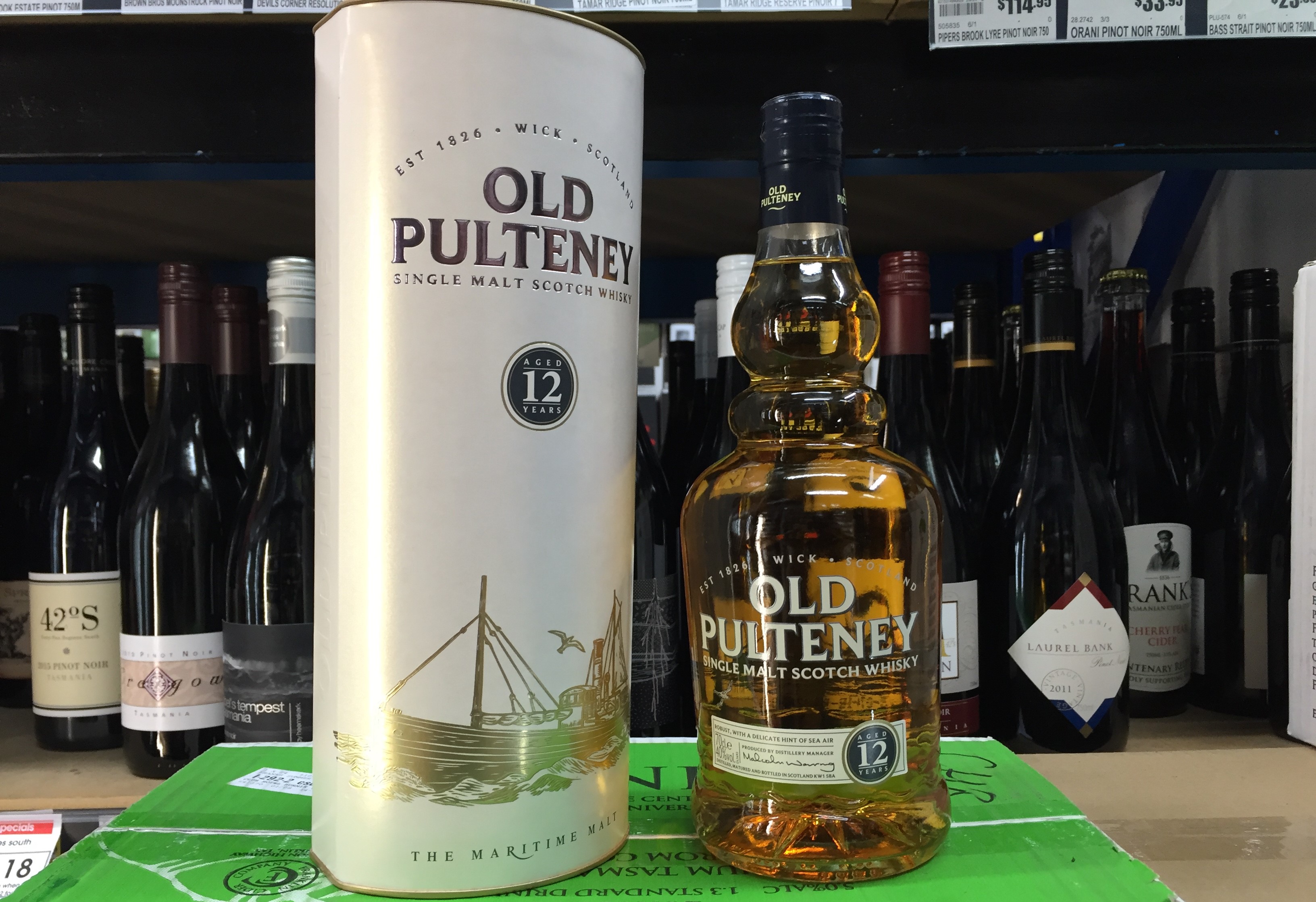
Old Pultney 12 Year old Whisky Waffle

There are three places in the world where the merest mention of the name can take me back in heart and spirit. The first are the cliffs at Yesnaby on the mainland of Orkney. Here, the crash of the Atlantic is stalled by Earl Thorfinn’s walls and the salty air is scoured into the finest lines of the skin. The second is the Fairy Pools on the Isle of Skye, where I have swum in the ice clear waters and tasted the pure heart of the Cuillins. The third, and the subject of this review, is the bond store at the Old Pulteney distillery in Wick.

I found myself here on an overcast Saturday in 2013. It was the third distillery on a self-guided tour which was to take me around the best parts of Scotland. My true blue Australian friend (who insisted on referring to the drink as ‘OP’) and I didn’t know then that it would be one of only seven distilleries we would visit on that trip. By the time we arrived in Pulteney town, we already had the creeping realisation that most large scale whisky making operations are done along similar lines. Coupled to this, we had satisfied ourselves that whisky makers send their whisky all over the place. Since then we have regularly enjoyed our whisky without feeling the need to visit the place of origin.

The Old Pulteney distillery was built in 1826 in a town built to support the herring trade. With a lack of foresight uncommon in the Scottish, James Henderson’s lads built the roof too low for the still. When the brand new copper pot still arrived, the swan neck kept clanging off the rafters. Without any ado they applied a choice piece of Scottish logic to the problem and sliced off the top of it. Job done, the still was installed, the top sealed and a pipe bunged on the the side creating the unusual appearance you’ll see today. The bulge further down the giant copper kettle also gave them an idea of how to shape their bottles.

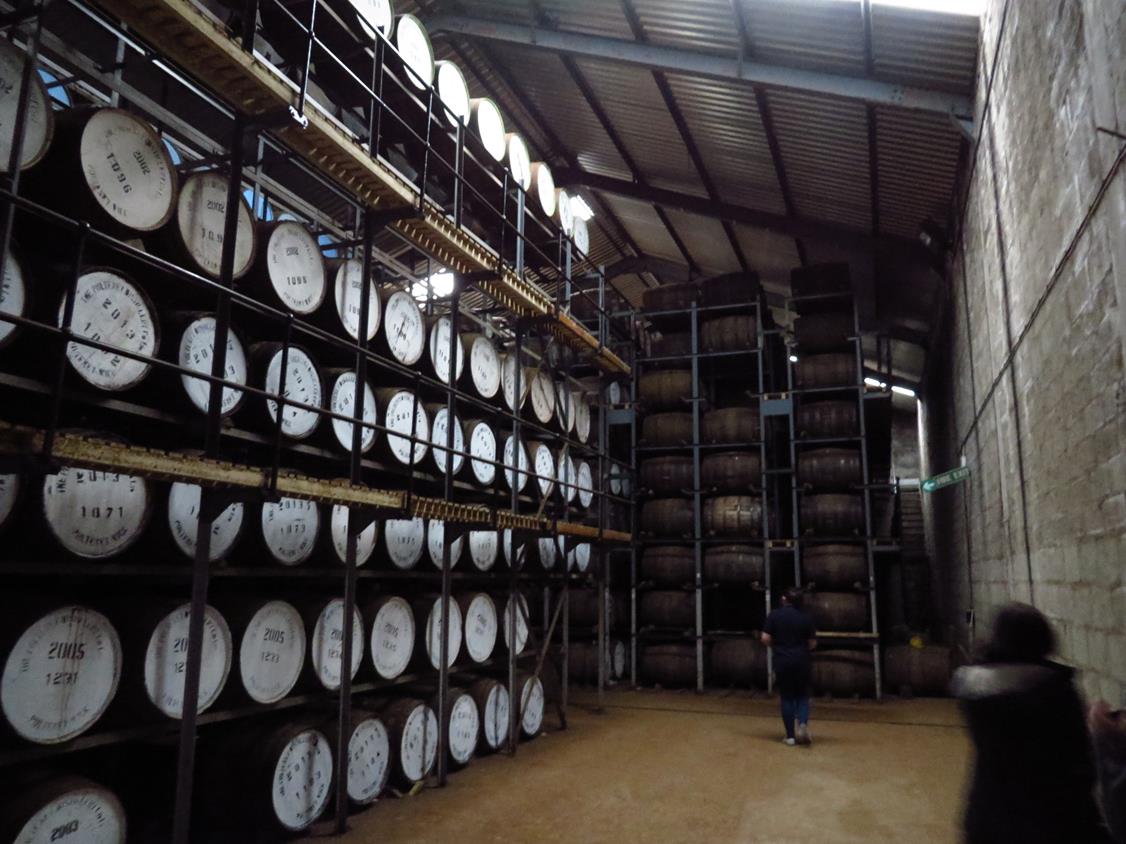
You’ll see all this and more on the tour, proving beyond doubt it is a whisky making process. After you’ve seen the unusual squat stills you’re taken out to the bond store. On the day we visited it started raining at this point. We made a dash towards the barrels, which in my mind were stacked six high (my photographic record shows only four), and the door was shut behind us. While we learned about the maturation process we avoided the tears of the angels and breathed in their share of the whisky; a fine ethereal vapour floating in the salty air. Yes, we all smelt that whisky, we all knew what we were doing and we yes, we all found questions to ask to keep us there longer.

IMG_0689 (Copy)

Old Pulteney has the taste of the sea in it too, they say. I can’t taste things like that, but Wick is not too far away from the places where the mighty Atlantic meets the moody North Sea and that can’t happen without seriously affecting a drink as emotional as whisky. The salt, they said, coats the barrels and works its way through the grain and into the final product. This may very well be the case. Salt for me is something I put on chips and any other food. It’s never been more complicated than that.

As for taste of Old Pulteney 12 year old, it’s a fine single malt, very fine. I find it harsh on the nose, easy on the draw and the burn is frank and satisfying. It has a rich stickling after taste like bronze coins falling over a weir and I’ll always like it because it’s the whisky I drink with my father.

I asked Dad why he drinks this particularly spirit. As a seasoned Famous Grouse drinker, it turned out his discernment was a result of him acquiring a bottle at no cost from an appreciative work colleague. His opinion of ‘Aye, it’s a nice one that’ is fair if not particularly detailed or nuanced. I confidently predict that he will continue to drink this brand so long as it remains at his personal initial price point.

For me it’s not what goes into a bond store it’s what comes out. That day in Wick an amateur whisky drinker went into the bond store. After delaying as long as I could, a happier, more philosophical and more content amateur whisky drinker came out. The OP lads do the same with their whisky. They wait and they wait and after twelve years a fine drink appears. I don’t know what makes this my homely stand-alone bottle of go-to, or why at times, when I can neither get to Yesnaby nor the Fairy pools of Skye, I can have a drop of Old Pulteney 12 year old and be at both at the same time. It’s a mystery I don’t want to think through too much and if I ever need to know, I can just ask my dad. He knows.

★★★★

The Top 5 Islay Distilleries

Posted by: Nick

Streets of Bowmore whisky waffle

If I were to take four flights, one lengthy bus ride and a ferry crossing, as well as being broke and jetlagged, I would also be in my favourite place in the world, the mythical Isle of Islay. While my own home state of Tasmania contains many fantastic distilleries, I know that this Hebridean island will forever be: The Whisky Isle.

Islay is currently home to eight distilleries, which is not bad for a tiny island with a population that would fit into the MCG thirty times over. I do of course only speak hypothetically, because in real life the people of Islay would not deign to leave this most wonderful island – not even to attend the Boxing Day Test Match.

All eight Ileach distilleries make fascinating, varied and outstanding whiskies. But today I count down my top five favourites, those establishments that have helped shape the Whisky Waffler I am today.

5 Kilchoman

Kilchoman is the relative new kid on the block, only in operation since 2005, however the standard of whisky they are creating is astonishing. They take an old familiar flavour and reinvent it, producing something refreshingly new, and yet at the same time distinctly Islay.

One sip reflects the traditional Islay flavours that so perfectly accompany winter storms as they roll in off the Atlantic, testing the water proofing of the local cottages, and yet their whiskies are also bright, young, and energetic. They are surprisingly complex, and, most importantly of all, they are improving all the time. Kilchoman is that annoying combination of athleticism and brains: it is the top football star with the chiselled good looks that goes on to become a neurosurgeon. So with this in mind there is no doubt that Kilchoman is a distillery to watch out for in the future.

4 Bruichladdich

4 bruichladdich

Jim McEwan took over the then derelict Bruichladdich Distillery in 2001 and, after initially being called crazy, has seen it go from strength to strength. Known for its innovation, the distillery creates not one, not two, but three different series of bottlings, all with their unique style. Firstly and foremost are the lightly peated drams produced under their own name, Bruichladdich. Secondly, the more traditional and heavier-peated Port Charlotte, named after the long-since shut distillery that was once based a few miles away. Finally the famous (or infamous) Octomore range, marketed, correctly, as the most heavily peated whiskies in the world.

If I were to work at a distillery on Islay, this would have to be it. It combines traditional methods (the may-as-well-be-antique mashtuns) with experimentation (I heard rumour of a tequila cask hidden away in the bond store somewhere). Most of all, Bruichladdich are a community-focused distillery. Jim McEwan has achieved many great things across his career, but he claims the number of Ileach people he employs is the one that fills him with the most pride.

3 Laphroaig

3 Laphroaig whisky waffle

When you think Islay whiskies, you think peat – and no distillery on earth does peat like Laphroaig. The whisky produced here may not be to everyone’s taste, but it sure is to mine. One sniff transports me to bonfires, seaside camping trips and, as I discovered later, the sensation of getting out of the car on Islay and inhaling the peat-thick fresh air. The whisky made by Laphroaig is iconic and rightfully among the most famous made on the island.

Whiskies made at Laphroaig are unapologetic. If you don’t like your drams peated, run for the hills (if you can actually find any on Islay) as the manufacturers don’t care. I find this attitude appealing however. I know what I’m going to get from Laphroaig and I know that it will comfort me after a tough day at work or celebrate with me as I raise a toast with my friends.

While they have the second biggest output of any distillery on Islay, they still conduct traditional floor maltings and fire up their own peat kilns for a percentage of their product. I’ve been lucky enough to stand in the large kilns, and even luckier that this occurred while they were not operating! Laphroaig is Islay to a tee and an unmissable stop if you visit the island.

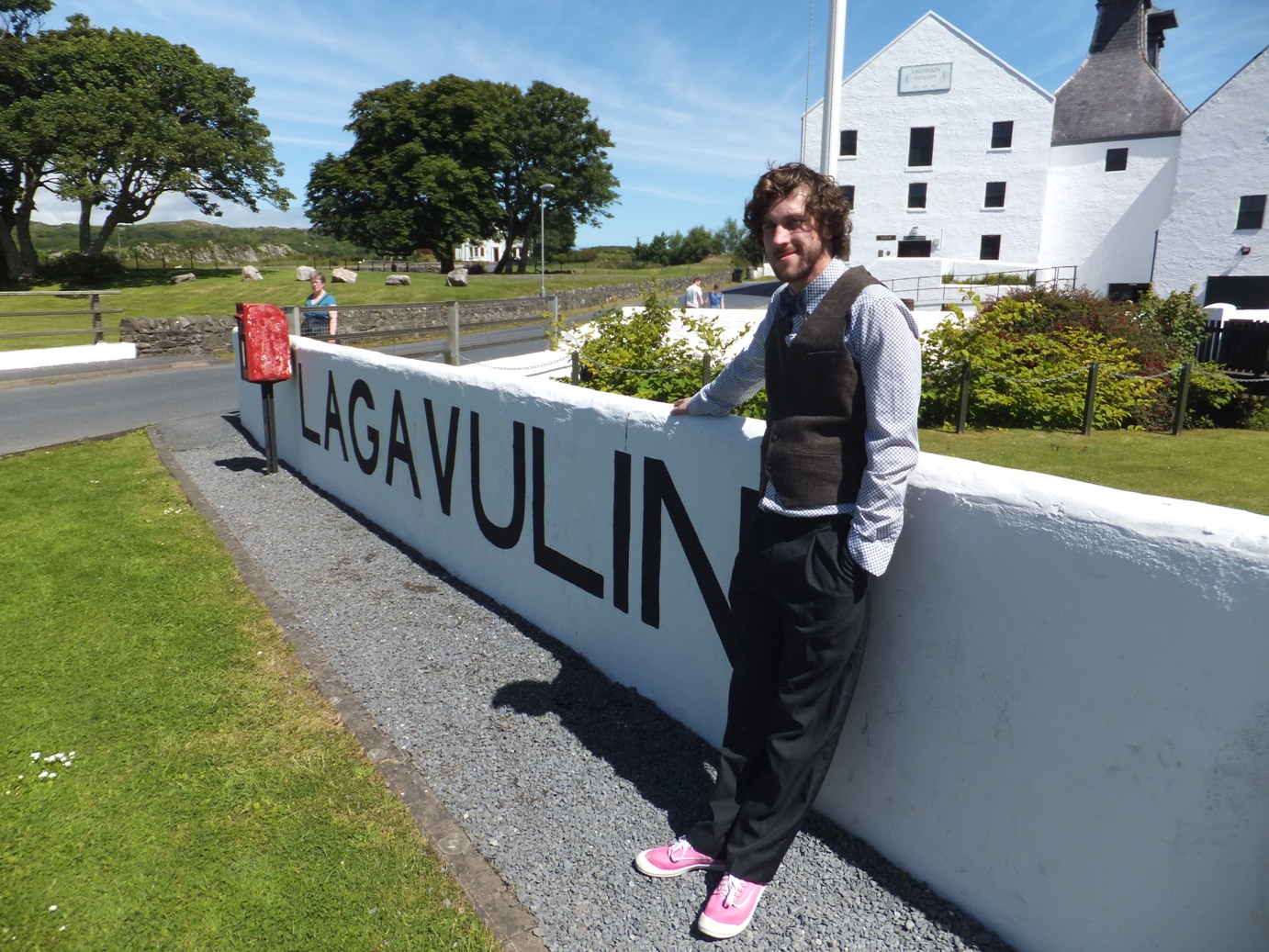
2 Lagavulin

2 Laga whisky waffle

First trying the Lagavulin 16 Year Old was a revelation in my whisky-drinking life. What was this spirit that burned like a roaring bonfire in my mouth? What were these charred-fruit flavours that followed? I’d certainly never tasted anything like it and I’ve certainly never looked back.

Several years later I have tried a range of peated whiskies and loved most of them. But the Lagavulin 16 is still up there amongst the best.

What separates Lagavulin from the rest is a sense of class. While other distilleries, rightfully, let the wild peat-monster roam free, Lagavulin has it well trained, even walking to heel. With some of the Distillers’ Editions it will even sit and roll over! This allows a magnificent balance between peat and sherry flavours which really sets it up as the classiest of Islay’s whiskies.

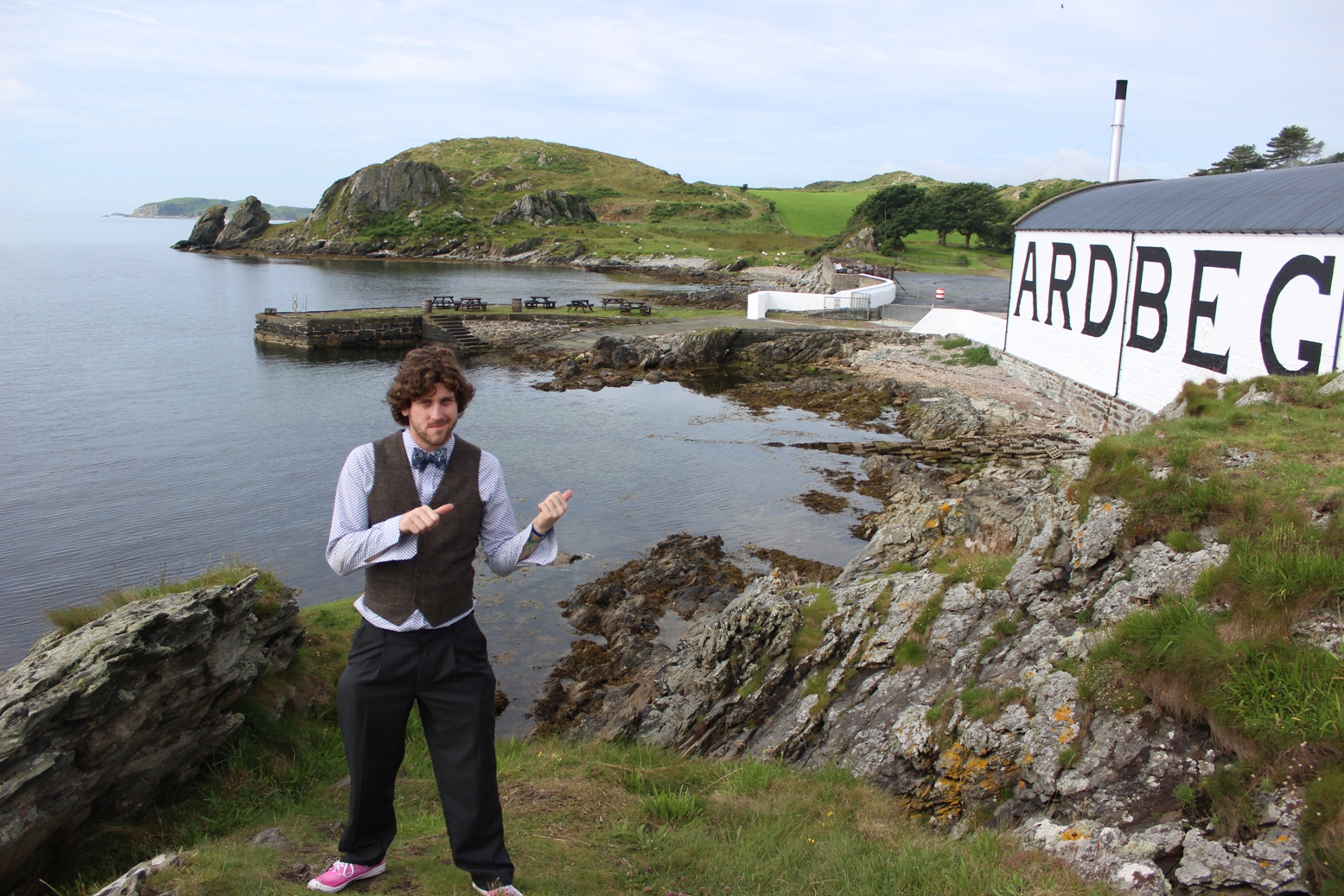
1 Ardbeg

1 Ardbeg whisky waffle

While all distilleries on Islay offer many brilliant and varied drams, it is Ardbeg that I believe captures the ‘spirit’ of the island the best. With a slab of peat, a splash of history and a smattering of actual magic, you cannot help but fall in love with the drams, the atmosphere and the portrait on the wall of Shortie the Dog, the Ardbeg mascot.

Ardbeg are famous for once a year releasing a frustratingly small amount of limited edition bottles which seem destined to sit unopened on wealthy collectors’ shelves. But on the rare occasion you get to try one, you will see what the hype is about: Alligator, Galileo and of course Supernova are all enticingly titled as well as deliciously flavoured.

Their regular bottles cannot be forgotten, either. In Uigeadail they have produced a strong candidate for worlds best peated whisky, the Coryvrekkan has one of the longest finishes going around (and around and around!) and as for their ‘entry level’ – is there a finer 10 year old bottle in world whisky? Possibly not.

Ardbeg is many people’s favourite distillery. And it is not hard to figure out why. Put simply, it is because it is among the best.

Nick at Port Ellen lighthouse whisky waffle

This list, of course, is only my (somewhat subjective) opinion. It is by no means definitive. What are your top five favourite Islay distilleries? Let us know in the comments and we will slam you for being wrong! Er… I mean, we will respect your opinion greatly! That’s the one!

The Fault in our Stars: an explanation of the whisky waffle rating system

Posted by: Nick and Ted

Waffle Selfie

Nick: Roll the dice, Ted! We need to come up with a score for the Glenfiddich 12!

Depending on what you’re after, whisky rankings can be a help or a hindrance. Some reviewers have highly thought out and complex ratings systems, whereas others tend towards simplistic and arbitrary methods, preferring to spend more time drinking the stuff than doing the maths.

Whisky Waffle fall squarely into the latter category, struggling to count any further than five after a couple of drams. Thus we award any whisky we review a rating of one to five stars. We don’t even bother with half stars, because, after all, that’s just a sneaky way of scoring out of ten isn’t it?

So keeping it simple is all well and good, but what does each score actually mean?

★ One star sounds bad… and that’s because it is. There are very few whiskies with zero redeeming qualities, but every now and then one rears its ugly head. Try it once and then never again.

★★ Two stars is in no way bad. But nor is it good, either. These are perfectly drinkable whiskies that for some reason have disappointed us, or left us underwhelmed. Try it once, and then try it again to be sure.

★★★ Three stars is our most complex category. Everything within this zone is good, however some just creep over the line whereas others are bordering on greatness. To work out which – well, you’ll just have to read the review! We would happily have a dram of one of these any day of the week (twice on Fridays!).

★★★★ Four stars are whiskies both literally and figuratively top shelf. These are the drops that have an x-factor, something that makes them stand out from the pack. They’d be a fine addition to anyone’s collection.

★★★★★ Five stars is probably the most subjective category for us. Obviously they’re all superlative whiskies in their own right, but often they might hold extra significance for us. These are whiskies that make all five stars align in the heavens.

For those who are interested, we created a page listing all our reviews by their score. You can check it out here.


2015 Waffle Awards

Posted by: Nick and Ted

Whisky Waffle Logo 1

Welcome one and all to the most prestigious imaginary awards ceremony in the world of whisky writing. The Waffle boys have ignored the Australian summer heat and donned their black tie to present a group of worthy winners with an assortment of atypical accolades. All winning whiskies have been sampled by the lads in 2015 for the first time – although surely (hopefully) not the last. So, ladies and gentlemen, please find your table, help yourself to the canapés and sit back and enjoy: the 2015 Waffle Awards.

1 The Isle of the Drammed Award Whisky Waffle

The Isle of the Drammed Award for the best Tasmanian Whisky

Yes, we are a Tasmanian-based whisky blog, so why not include an award to showcase drams made in our fine state? Especially when they are this good! So with no further ado, we are proud to announce that the Isle of the Drammed award goes to:

Heartwood: The Good Convict

2015 Heartwood The Good Convict whisky waffle

We don’t often see eye-to-eye with Jim Murray. But in the case of this cask-strength monster from the genius independent bottler Tim Duckett, both the Wafflers and the Whisky Bible writer are unanimous in our praise. I mean, what’s not to like about a 15 year old Sullivans Cove French-oak port barrel matured whisky at a humble 71.3%? It is stunning.
2 The Tartan Slipper Award Whisky Waffle

The Tartan Slipper Award for the best Scottish Whisky

Scotland is the spiritual home of whisky (see what I did there?). So it seems only fair to dedicate an award to it. Plus, then no cheeky English distilleries can take it away from them! The 2015 Tartan Slipper Award goes to:

Balvenie 21 Year Old Port Wood

2015 Balvenie 21 Port Wood whisky waffle

We make no bones here at Whisky Waffle Central that we love all things Balvenie, but they’ve really outdone themselves with the 21 Year Old Port Wood. Smooth, sensual and with a refined complexity that hits all the right buttons, this is definitely no every day drinker (unless you’re rich that is. Slosh down whatever takes your fancy m’lord.), but a perfect dram for celebrating that special occasion with the ones you love.

3 The Pocket Pleaser Award Whisky Waffle

The Pocket Pleaser Award The perfect pick for the parched penny pincher

Our bank accounts know all too well how expensive buying bottles of whisky can be. This award celebrates the bottles which we turn to time and time again because – well – we can afford to. It is not the best tasting whisky in the world. But likewise it is far from the worst. This year, The Pocket Pleaser Award goes to:

Glen Moray 12 Year Old

2015 Glen Moray 12YO whisky waffle

“Dear Whisky Waffle, I want to impress my friends by drinking single malts, but I am a poor uni student with only a blend budget to spare. What can I do?” Never fear, we are here to help. Meet your new best friend, the Glen Moray 12 Year Old, as far as we can tell the cheapest single malt Scotch going around. For less than the price of a bottle of JW Black Label you can have a bottle of bonafide Scottish single malt. Full of honey, butterscotch and gentle spices, it’s pleasant and easy to drink, perfect for the Scotch novice and budget-conscious drammer alike.

4 The Weirdsky Award Whisky Waffle

The Weirdsky Award for the most WTF whisky

The Weirdsky Award celebrates, unsurprisingly, weird whisky. The more bizarre the better. Trust us; we are always on the lookout for some unusual drams. But in 2015 the one that took the cake was:

New World Projects Ginger Beer Cask
2015 New World Projects Ginger Beer Cask whisky waffle

What on earth would whisky taste like if matured in ginger beer barrels? This was the question that we asked ourselves when purchasing this New World Projects creation on a whim. The answer, it transpires, was simple: ginger-whisky (gisky?). It is unlike anything we’ve ever tried, and we love it! We take our metaphorical hats off to the makers of Starward for their mad-scientist-like experimentation!

5 The Bill Lark Award Whisky Waffle

The Bill Lark Award for service to the Tasmanian whisky industry

Named after the godfather of Tasmanian whisky, The Bill Lark Award is not presented to a bottle but instead to a person who has worked tirelessly to make the whisky scene here in Tassie as special as it currently is. It gives us great pleasure to announce the 2015 winner of The Bill Lark Award is:

Peter Bignell

2015 Pete Bignell whisky waffle

“Renaissance man” seems to be the phrase that gets bandied about when talking about Peter Bignell, founder of Belgrove Distillery, but it’s well suited. A seriously talented individual, Pete has a true knack for innovation. “Hmm… who wants to make boring old barley based whisky, why not make it using rye? Or oats? May as well just grow it myself too, and dry it in this old tumble dryer I found. But instead of using electricity from the mains, I’ll power it using biodiesel that I’ll make myself out of cooking oil from the local takeaway shop. Should I build the stills myself too? Yeah, why not, and I can power them using the biodiesel. Coopering my own barrels, that doesn’t sound too hard, give it a crack eh? Simple. And just to keep things interesting, in my spare time I’ll be a world class sand sculptor.”

To be honest, Pete doesn’t just win the Bill Lark Award for the excellent whiskies he makes, his contribution to the Tasmanian industry or his stellar environmentally responsible ethos, but for just being a sterling example of a human being who we can all look up to. Good on ya mate!

6 The Golden Dram Whisky Waffle

The Golden Dram for the best dram whisky in the world

I don’t think anyone would be surprised to hear that we tasted a heck of a lot of whiskies in 2015. So choosing one that stands out as the best would surely be a nigh-on impossible task. Not so. There was little doubt in our minds as we sampled this dram that we had found the 2015 Golden Dram. Drum roll please. The winner of the Golden Dram in 2015 is:

Bruichladdich Aramone Cask 9 Year Old Micro-Provenance Series

2015 Bruichladdich Aramone whisky waffle

I (Ted) would like to start by quoting myself from the day we tried this epic dram: “This is one of the best things I have ever put in and around the vicinity of my face!” You just know instinctively when you meet one of those rare drams that make the stars align in the heavens. When sampling it we described it as a nose-masseuse, as wine-maturation as it should be done, and with an once-tried-never-forgotten finish – thanks in no small part to the 57% bottling strength. All credit to Bruichladdich for crafting such a well balanced, interesting and delicious whisky. It certainly made our year. Find a bottle (if you can track down one of the 500 that was made) and try it. Your face will thank you.

Honourable Mention: We couldn’t fit it into the awards but we have loved the Aussie port-monster that is the New World Projects Lui’s Bar release. Expect a review in 2016!

Dishonourable Mention: To keep things fair we included a dishonourable mention for a dram that deeply disappointed us throughout the year. And this year, unquestionably it was the Glenlivet Founders Reserve. Glenlivet – what were you thinking??? #SaveThe12

What did you think of our awards? Some good picks? Or are we totally full of it? And to what would you have awarded the Golden Dram? Let us know in the comments – it’s always a fun discussion!

2015 outtake 2 whisky waffle


Distilled Not Diluted: a rebuttal from a cynical Scotsman

This article is a response to our article: A Brave New World

Posted by: The Cynical Scot

Cynical Scotsman

So Ted. The big boys are coming to town are they? The fathers of Scotch are looking at the colonials and are coming over to gobble us up?

Come off it!  ‘Big Industry’, ‘sharks circling’, ‘crusty entrenched old world?’ Diageo buying into Starward? A chance to get some big bucks into the Australian whisky industry? You do know that Diageo owns far more distilleries than they care to slap a name on the front of. They have done a very clever job of maintaining the branding and character of individual distilleries as the industry recovered in the ’80s and ’90s. They have reopened distilleries that had been moth-balled after not having a legitimate business case.

Saying Scotch is ‘weighed down by centuries of tradition’ misses not only the importance of the tradition, but also the dynamic changes that have taken the industry to what it is today. This has also created quality recognisable products (have a look in every duty free in every international airport in the world). Whisky is something that if you put a cheap and an expensive dram into plain bottles and labelled them both ‘whisky’ it would be difficult for the layman to differentiate between them. Selling of whisky involves more than just touting a nice tasting beverage. It is the selling of an image, a lifestyle, a legend and sometimes a dream. I don’t buy Diageo whisky, I buy Talisker, Caol Ila, Lagavulin and when I have to, Johnnie Walker.  http://www.diageo.com/en-row/ourbrands/categories/spirits/Pages/Whiskey.aspx

So it seems Australia is selling out. Diageo have bought in, and as a minority shareholder in a single distillery at that. So what?….  What’s in it for them and what’s in it for Starward?

Well, for Diageo they can dip their foot in the water and get a first hand look at the Australian business environment. They can get a taste for a new market and they have a fresh brand to expand and work with.

For the distiller they have the knowhow of a company that has many very successful whisky brands under its belt and certainly knows how to flog the stuff. Having a big producer on board will probably make it easier for them to weather ups and downs in demand. Not only that, an individual distiller with higher production could also better standardize their product. Don’t get me started on ‘vintaged’ releases.

It’s one distillery. It’s a minority share. I don’t think Diageo is going to weaken the idea of Australian whisky, but they may change it in time. They may produce an affordable Australian brand. No more expensive bottles you may ask? Not at all. You’ll still see 500ml bottles priced at over $150. What you will have is diversification into the wider market. Imagine being able to taste something from Bothwell in Tasmania and say ‘Yup, that’s definitely Nant. That’s how it tastes’, and it only costs $85 (or whatever). Well, then you could buy a bottle for a friend. Two years after you tasted the stuff you’d still know what they were getting!

This would be a move in the opposite direction from the Scottish market, which traditionally seems to have existed in the mass-produced signature single malt or blend. More recently there has been a trend for creating a broader high-end range and raiding the history books for thought provoking names (I’m thinking of Highland Park in particular here: http://highlandpark.co.uk/taste/). But that’s how whisky works isn’t it? A single recognisable product becomes the poster boy for the new entrant and the budget conscious enthusiast. Then you have a few fancy, expensive types that allow the distiller to show off the finer points of their art and the consumer to have something extravagant to crack open when Grandpa has his 80th. No bad thing.

But where do you want the growth within the sector to come from? Do you want the Australian industry to grow from the inside as demand rises and production increases to meet it? Or do you want a big boy from out of town to buy it all up and franchise the lot? I would say that one aspect that sets Australian whisky apart is the fact it is a small craft industry. You sell out from that you’re like an IT Startup selling out to Google. Sure you’ve made your money, but did you really care about your product or was it just a means to an end?

So many questions. Fortunately, the Australian distilleries I know of don’t seem to be like this. They’ve been founded by distillers who have often made their money elsewhere and are using that to fund a business in something that matters to them – whisky. And good whisky at that.

So hello Diageo. Welcome to Australia, there’s work to be done but let Australian whisky speak for itself and find its own formula. It already has its own character. I’d hate to think that Australian whisky just became another branch of the Scotch map – Speyside, Lowlands, Highlands, Islay and Australia. If it ever gets to that I’ll find an island somewhere that Diageo hasn’t heard of and start growing some barley. Maybe Bill Lark will already be there.