Uncategorized

Larking about at Lark

Posted by: Nick and Ted

1a

Fact: the modern Tasmanian distilling scene was founded by Bill Lark.

Fact: the foundations for Whisky Waffle were laid down at the Lark bar.

Fact: it is rather shameful that we have never found the time to visit the Lark distillery

Recently the Whisky Waffle boys were down in Hobart with a rare free day to spend on whisky business, so we decided to take the opportunity to rectify an embarrassing gap in our Tasmanian distillery bucket list and tag along on an official Lark distillery tour.

1

We were about to run away with the barrels when we discovered they were empty.

Lark offers a two-hour daily guided tour of their distillery facility out at Cambridge, 15min east of Hobart. Our tour started at the Lark bar in Hobart where we met Guy, our guide, and the rest of the group. To work out in what order to hand out the complimentary Lark tasting glasses, Guy started off by asking how close everyone lived to the distillery. Surprisingly it turned out that we North West coasters were the only true locals, with the other guests ranging from Melbourne and Sydney to Alabama.

After introductions we all piled into the tour van, affectionately known as the ‘Drambulance’. On the way out to Cambridge Guy regaled us with tales of the history of the Australian whisky scene and the part Bill Lark played in its resurrection. The road into the distillery passes through the grounds of Frogmore Creek winery, the vines providing wild yeast that is encouraged into the Lark fermentation vats to help create the unique Lark flavour.

The distillery itself, in true Australian fashion, is in a large tin shed that overlooks the Coal River Valley. Upon arrival we donned fluoro vests and met Chris Thomson, the self-proclaimed ‘most experienced distiller in Australia’ (and who are we to argue with him).

3

Chris Thomson was also thrilled to meet the two most experienced Tasmanian whisky bloggers in Australia! (again self-proclaimed)

To lubricate our minds before starting the tour we were provided with a dram of the Lark Classic Cask, a perfect breakfast whisky (or at any other time of the day for that matter). Guy and Chris took us through the distilling process at Lark, from the Bill Lark-designed peat smoker, to the fermentation and the distillation.

Along the way the way we were able to try wort (aka sweet barley juice), wash (aka unhopped beer) and new-make spirit, which was fruity and soft. Chris gave us some handy nuggets of distilling advice such as “when going from the fores to the heart we smell and smell and smell and smell and smell and smell” and “using our amazing distillers skills we make the first cut,” *moves hose casually from one vat to another* “Very technical”.

7

Those are some niiiiice sparge arms!

The final part of the tour was spent in the bond store (also a large tin shed) where Guy told us about barrel making and aging. We were also able to try some Lark straight from the barrel, which Guy fished out with a spirit thief, as well as some whisky from sister-distillery Overeem. Also on offer were Lark’s whisky liqueur, Sláinte, and several variants of their Forty Spotted gin.

6

Every Lark tour is a barrel of laughs.
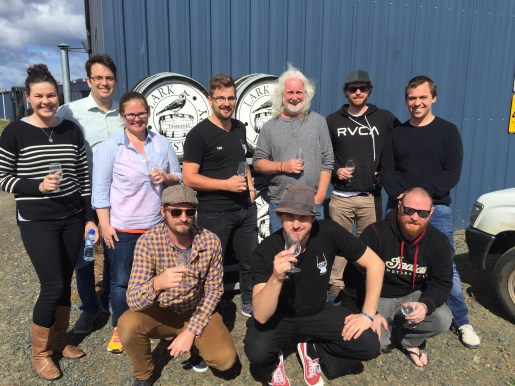
At the end of the sampling session our merry band of tourers re-embarked the Drambulance and headed back to the Lark bar. The tour had been a pleasant and informative mix of whisky stories, hands-on experience, technical information and waffling. Most importantly, we Waffle boys were finally able to show our faces in public again and proudly say that we had been to the distillery that started it all.

2

The best thing about whisky tour groups is that you all end up best mates at the end!

Inver House Green Plaid

Reviewed by: Ted

Inver House Green Plaid

Earlier this year I found myself hunting around for a passable quaffing Scotch to take away on our annual summer pilgrimage to Coles Bay (for those who are not familiar, Coles Bay, on the east coast of Tassie, is the town that sits on the edge of Freycinet National Park, home to the world famous Wineglass Bay. Check it out!).

M’colleague and I would define a quaffing Scotch as a whisky at the lower end of the price scale that manages not to taste like paint strippers and that you are more than happy splash around while in company. Like on a camping trip, for example.

After a bit of poking around I came across the Inver House Green Plaid Scotch whisky. On the face of it, the Inver House certainly looks like it fits into the sub-$40 (AUD) category (I think mine was about $35). Take four parts green tartan, add a crest, a couple of sprigs of Scotch thistle and a blurb about how Clan Donald is totally the bestiest evaaaa!!!, and there you have it.

But dig a little deeper and suddenly the Inver House starts to look a bit more interesting under the hood (apologies to my mother for this turn of phrase, but ‘under the bonnet’ just doesn’t seem to work as well somehow). Turns out Inver House Distillers Pty Ltd have quite a choice little stable of distilleries in their portfolio, namely – Pulteney, Balblair, Knockdhu, Speyburn and Balmenach.

Discovering that little nugget of information begs one the question: could this el-cheapo blend actually be a nugget of shining liquid gold??? Well… no. But it’s not too bad either.

As one might expect based on its (potential) components, the Inver House is fresh and bright, with a lick of grain, pear, apricot, grass and hazelnuts. Could that be a faint whiff of coastal air from Pulteney I detect… or just the result of my fervid imagination? It’s a tad rough, yeah, but not disastrously so.

The mouth is bright and pithy, with a generous hit of Lisbon lemons, butterscotch and wood polish. The finish makes your mouth pucker a bit like you’ve just taken a bite out of the aforementioned citrus fruits and then licked a metal spoon.

Look, the Inver House isn’t going to win any awards, regardless of its theoretical hidden pedigree. It’s kind of like when someone claims to be an Nth degree relation to the royal family. Cool, but there’s a lot of stronger contenders to get through before they get anywhere near the throne.

But for what it is, the Inver House is actually pretty good. You can happily drink it straight if that’s your groove, or if your mates want to mix it with coke then you’re not going to have to get your disapproving whisky-wanker face on. If you want a budget dram that you can share liberally with friends and have a good night of it, the Inver House has you covered.

★★

Sprinkbank Gaja Barolo Cask

Reviewed by: Nick

springbank-gaja-barolo

This unique little gem from Campbeltown’s Sprinkbank Distillery is a fascinating drop in that every time I sample it, it tastes different! No, I don’t think it is rapidly changing in the bottle, oxidising or degrading. I think it just messes with your head.

Let me just provide a bit of context. The Gaja Barolo Cask is part of the limited edition ‘Wood Expressions’ series which, as well as making me snigger immaturely, sounds rather interesting. The bottle in question takes the Springbank spirit and ages it for four years in refill ex-bourbon casks before being transferred into ‘fresh Gaja Barolo casks’ where it remains for a further five years in Campbeltown’s seaside atmosphere.

For the uninitiated (like me before I did my research), Gaja is an Italian wine producer and Barolo is a light red grape. Both aspects make this a very specific maturation for the whisky and one unlikely to be replicated any time soon.

Completing a list of tasting notes for this bottle is a tricky task due to the aforementioned chameleon nature of the dram. If I have just had a light Speyside number then I notice a whole heap of peat on the nose. If I’ve just had a highland dram then I discover raspberries and cream. The palate is sometimes spicy – it is bottled at 54.7% – but other times goes down smoothly and evenly. Occasionally I notice the oily maritime notes although often I find flavours of lemons and oranges. The finish usually lingers, with a wisp of smoke or hint of chocolate.

The bottom line is, no matter the flavours I get out of it, I’ve always enjoyed this dram. Sure, I haven’t been able to put my finger on its true nature, but that just adds to the fun. It is a mystery of a dram. I’ve still got a third of a bottle left – feel free to stop by and help me solve it.

***

(Although sometimes ****)

Southern Wild: open for business

Posted by: Nick

southern-wild-distillery-whisky-waffle

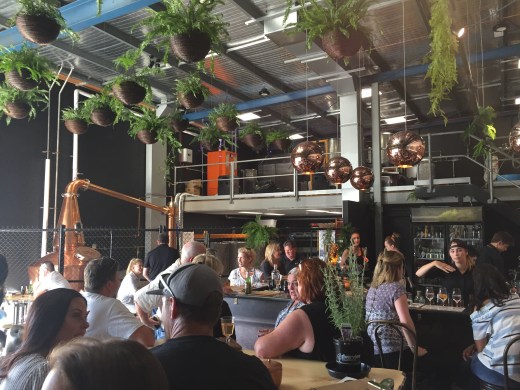
Devonport nightlife getting a little dull? Looking for a bar with a real connection to its location? Have a thing for ceiling-hung pot plants? Well good news folks: Southern Wild Distillery is open for business.

George Burgess, with support from the Devonport Council, has been very canny in its creation. By day, Southern Wild is a working distillery where visitors can drop by to taste the wares and even organise a tour with the man himself if they enquire beforehand (enquiries@southernwilddistillery.com).

By night, Southern Wild is a classy and welcoming bar, the likes of which Devonport has not seen before. Available are a number of exciting cocktails featuring George’s own Dasher and Fisher gin as well as a range of Tassie wine, beers and spirits. Hungry? You can also find a superb range of bar food designed by Masterchef’s own Ben Milbourne.

Southern Wild Distillery is another exciting chapter in the ongoing story that is Tasmanian spirits – and one that Devonport is privileged to be able to host. If you’re interested in locally produced spirits, or looking for an alternative to Tapas Lounge Bar on a Friday night, call into Southern Wild and say Whisky Waffle sent you.

Southern Wild is located at 17 Fenton Way Devonport and is open Monday to Wednesday 10 until 5 and Thursday to Sunday 10 until late!

Glenfiddich 18 Year Old

Reviewed by: Nick

glenfiddich-18

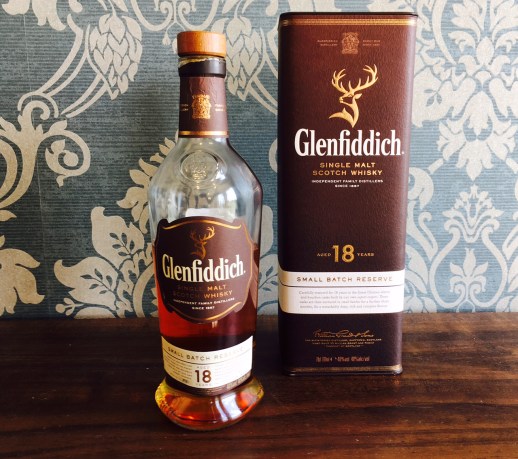
If this website were not called Whisky Waffle, then I could sum up the Glenfiddich 18 Year Old in just three words:

Goes. Down. Nicely.

Of course, we all know that’s not how I roll and I’d like to expand on those three words just a little.

Goes: Of all 18 Year Old whiskies in the world, the Glenfid is probably the most accessible. I picked it up for 98 bucks here in Aus when it was on special – a pretty remarkable price for something that has been in ex-bourbon barrels (and a few ex-oloroso casks) long enough to be of drinking age.

Down: the 18 Year Old’s main drawcard is its drinkability. It is one smooth drop. For seasoned whisky fans this might even be a disadvantage – some might consider it a bit boring. Not me. My biggest challenge is looking down at my glass to find I’ve already polished it off.

Nicely: Yep – it tastes good. On the nose are apples, grapefruit and pears alongside a smidge of oak. The palate is soft with notes of honey, cinnamon and vanilla, while the finish is medium in length leaving lingering flavours of apple-based baked goods.

If you find it cheaply, this is worth getting – especially if you are looking for a whisky that, well, goes down nicely!

★★★★

Delving into Dark Valley: the launch of Tassie’s latest dram

Posted by: Nick

nick-and-dark-valley

Independent bottling in Tasmania is a relatively rare thing. Sure, there’s the mighty Heartwood leading the way and a few others coming on board, but by and large, it’s an unexplored market. One person who realised this a long time ago is whisky fanatic and Whisky Waffle guest contributor, Alex ‘Moorsey’ Moores. Despite maintaining a fledgling full-time career in law, he has achieved what most whisky lovers can only dream about – he has created his own whisky: Dark Valley.

mooresy-and-dark-valley

Dark Valley was named after the area of Hobart in which Alex grew up, Glen Dhu. While the temptation was there to name his drams simply ‘Glen Dhu’, being a qualified solicitor he was aware of the legal dangers of such a Scottish sounding name. He instead opted to translate the Gaelic into English and name his bottles ‘Dark Valley’, setting the tone for the gothic labels and imagination-stirring individual release titles such as ‘Raven’s Roost’ and ‘Hunter’s Keep’. Importantly for Alex, he did not wish to tinker in any way with the whisky – he wanted to showcase it in as close to its natural form as possible. This meant no diluting, no blending, no finishing and no filtering. His aim was to create a whisky that was the next best thing to getting it straight from a barrel.

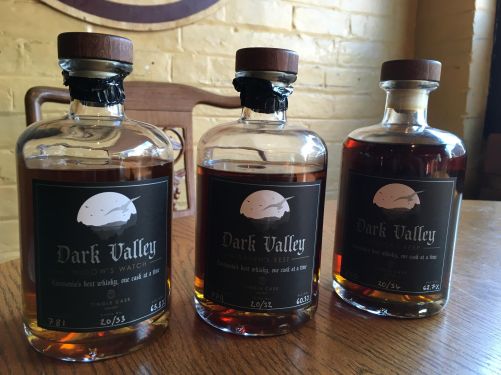
While the first releases from Dark Valley feature whisky distilled at Lark Distillery, it is Alex’s hope that one day all Tasmanian distilleries will contribute spirit for his range. He already has Redlands on board and northern-Tassie’s new boys Adams are next on the list. For now though, there are three different bottlings in existence, all of which I was lucky enough to try at Dark Valley’s Hobart launch.

dark-valley

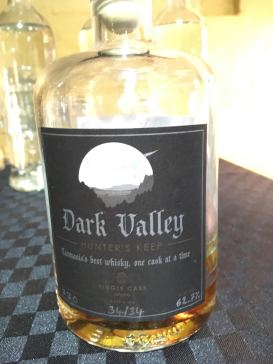
The first I tried was the 60.3% sherry matured ‘Raven’s Rest’. My initial reaction was “Yes. Yes yes yes. Yes. Yes.” It was like cooking raspberry jam – so warm and fruity. Next up was the ‘Widow’s Watch’ – bourbon matured and 65.8%, it was full of vanilla and baked goods. I decided on cupcakes, with orange icing and poppy seeds.  Finally was the port matured 62.7% ‘Hunter’s Keep’, and it was my favourite of the lot. It combined the flavours of the other two beautifully while adding hints of cinnamon and nutmeg, creating an effect I described as ‘mulled whisky’. It was superb.

The drawbacks of setting up a new whisky brand is, of course, the cost. Dark Valley will certainly not be going into mass-production any time soon. In fact, these releases came from tiny 20 litre casks, meaning just over 30 bottles of each were made. However, this doesn’t mean you’re unlikely ever to see sight nor sound or them. Alex’s very firm goal is to get Dark Valley into whisky bars – and not into the hands of collectors. He intends to get his product into various establishments in Melbourne and Tasmania, with a few in Hobart showing some interest after the successful launch. In the coming months, if you happen to be near a whisky bar in any of these locations, ask after Dark Valley, because once people discover how good it is it’s not going to last long.

dark-valley-bottle

Finally, on a more personal note, I’d just like to offer my sincerest congratulations to Alex for achieving the spectacular feat of getting his whisky to bottling stage. Moorsey is a genuinely top bloke and I know he’ll be another wonderful torchbearer for Tasmanian whisky.

An ode to Islay

Posted by: Nick

port-ellen

Our week exploring the peated wonders of Islay has sadly come to a close. We’ve loved every drop and had some proper crackers. And lastly, we’ve reminisced about Islay itself – the beautiful Hebridean island which we would both return to in a heartbeat. To conclude our celebrations I wanted to share a poem I composed while on the island a few years ago. I was so taken with the place (and under the influence of several peated drams) that I thought I could only express myself in rhyme. Merry Christmas fellow wafflers!

Out in the Atlantic Ocean lies

an island of my hearts desire.

With salty air and peat smoke rife

the spiritual home of the water of life.

Its sunny skies and rugged coast

but friendly locals I’ll miss the most.

I’ll always long for that familiar burn

and hope one day I shall return.

A very waffly Christmas

#IslayWeek

#LetsGetPeaty

Lagavulin: 200 years of peated perfection

Posted by: Ted

lagavulin

Here at Whisky Waffle we understand the gravitas of celebrating a bicentennial birthday. When we sprang into existence in 1988, we arrived just in time to witness Australia’s 200th year as a nation (although one of us saw a few months more of it than the other). Now we are all grown up and are excited to be able to witness another bicentennial milestone, the anniversary of a distillery that is rather close to our hearts:

Happy 200th Birthday Lagavulin!

Founded in 1816 by John Jonston and Archibald Campbell, Lagavulin has now entered the prestigious Islay old-boys club, joining the company of fellow veterans Ardbeg, Bowmore, Bunnahabhain and Laphroaig.

lagavulin-ted

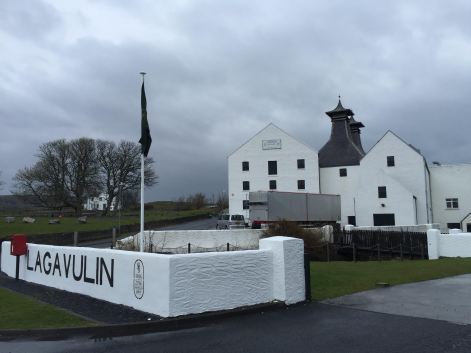
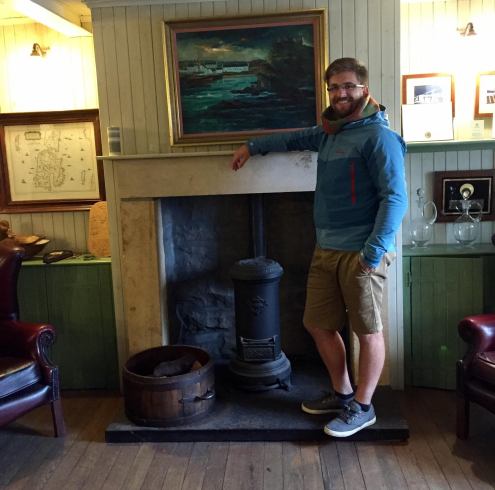
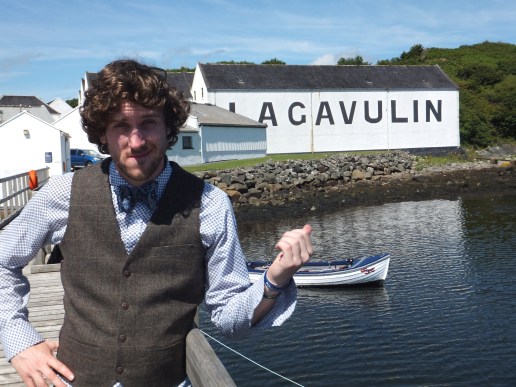
Nestled on the shoreline just a couple of miles East of Port Ellen, the Diageo-owned distillery is classic Islay, with whitewashed walls bearing the name of the distillery in giant black letters on the seaward side and elegant pagodas peeking above the roof line. Inside, guests are greeted by age polished timber and leather chairs, painting a romantic view of yesteryear. Not forgetting of course the glossy copper stills and the ever-present scent of peat and spirit rising to meet the angels…

lagavulin-chairs
To celebrate the big milestone Lagavulin has released a special edition 8 year old bottling, which aims to recreate a bottling sampled by historical Waffler Alfred Barnard in 1886. Now, bear in mind an 8 year old whisky was considered nigh-on ancient back in the day and Barnard described that one as as “exceptionally fine”.

With such high praise from the 19th century, Nick immediately decided to add it to his collection. However, seeing that 2016 marked a 200 year celebration he thought ‘why stop there’ and promptly bought the 2014 edition of the Lagavulin 12 Year Old Cask Strength. When Ted added his Whisky Waffle favourite the 16 Year Old into the mix, we had quite the ingredients for a special Lagavulin birthday bash! Or as we didn’t refer to it at the time but should have: a peat party!

lagavulin-all

On the nose the 16yo was straight up coastal, with a salty, iodiny, seaweedy hit. But then we found… bananas? Perhaps banana chips, as well as dry-aged meat, terracotta, copper and crushed grass. The flavour was all about the tangy peat, but there were earthy notes such as mossy paving stones and singed oak branches.

After the subtle, balanced nature of the 16yo, the 8yo stopped us dead in our tracks and then made us jump up and down with excitement. The colour for one thing was crazy, like the palest white wine, certainly no Diageo caramel in sight there. The nose was decidedly new-makey. Raw. Ashy. A good deep breath delivered a big hit of green fruit. The flavour was fresh, crisp and bright, with the fire still burning across the palate. Summer peat. The finish was rather excellent, being sharp like a tailored charcoal suit. Everything about the 8yo served to highlight the smoothness of the 16yo.

Finally it was the turn of the cask strength 12yo, probably the dark horse of the bunch. Phwoar, what a whisky. It was young, exciting and complex, like a teenage poet. It was Bond, Die Hard and Crank… on Speed. The finish provided a peaty punch that really scratched that itch. There’s something about young peated whisky that just works.

lagavulin-nick
We’ve always had a connection with Lagavulin, even before we started the whole Whisky Waffle malarkey. To be fair, the 16yo was the first whisky that ever blew our minds and made us think that whisky was something more than an additive to Coke. Hopefully this gem of Islay continues another 200 years and beyond, but who knows what the future may bring. Maybe one day in the far flung future a descendant of Howard Carter will be leading an expedition to explore the ruins on a lonely island off the old Scottish coast. Perhaps they will discover a door sealed with a dusty cartouche bearing the legend ‘Lagavulin Distillery Est. 1816 Isla’ and upon gaining entry to the chamber within, will stumble across a hoard of barrels containing the fabled peated gold of Islay…

Kilchoman Machir Bay

Reviewed by: Nick

kilchoman-machir-bay

2012 edition

Kilchoman is (was?) the first new distillery built on Islay in 120 years. The drawback of this is that it comes without centuries of tradition. But the positive – it comes without centuries of tradition! Meaning it can do whatever the hell it likes! This perspective can’t help but bring to mind a few producers closer to home which claim to be slices of Scotland in Tasmania. Well, I’m going to make a big call: Kilchoman Distillery is a slice of Tasmania – in Scotland!

Like Tasmanian distilleries such as Redlands, it attempts to keep the entire whisky making process on the one site, paddock-to-bottle style. While this is hard to achieve across their whole range, their lightly peated ‘100% Islay’ expression is created exactly as it sounds: entirely on Rockside Farm, home of Kilchoman.

Also like Tassie, Kilchoman can’t be bothered waiting for 12 years to release their product, so bottles its range under titles of various landmarks: heavily sherried Sanaig, entirely sherried Loch Gorm and the subject of today’s review, the Machir Bay, which is a marriage of some oloroso matured whisky with a greater amount of ex-bourbon whisky.

Often drinking younger whisky from Scotland can be likened to snuggling with a Pitt Bull, but for peated whisky it just seems to work. The smoke tames the beast and compliments its occasional snarling. The Machir Bay is no exception.

The smoke is clearly apparent on the nose, however there are also sweeter creamier notes of hazelnut and coffee. On the palate the Machir Bay takes a while to get going – initially gentle before building into a fiery roar, a clear sign of its young age. Flavours of vanilla and green grapes can be found, shrouded in huge gusts of smoke.

While this is a tremendously exciting dram, I get the impression that it’s still a work in progress and that when I check back on a later release in a few years time that it will have come on in leaps and bounds. However, just like Tasmanian whisky, it is one step on a journey – and one I’m very happy to have checked out.

★★★

#IslayWeek

#LetsGetPeaty

Ardbeg 10 Year Old

Reviewed by: Nick and Ted

ardbeg-10

There are certain whiskies that a blog should have in its pages and until now we have been found wanting for this particular dram. Its label rather audaciously claims that not only is it the best whisky on Islay, but is in fact among the best in the world. The funny thing is, we’re actually hard pressed to disagree with it.

The Ardbeg 10 Year Old makes an excellent case for the younger whisky. Generally we equate greater age with greater excellence, but this dram proves that this is not always the case. There is something about the raw, youthful energy in the 10 Year Old that allows the peat monster to really roar and we can’t help but feel that if it was left in the barrel for a few years longer then some of the magic would be lost.

We took it upon ourselves to sample the Ardbeg 10 quite extensively (read quite extensively) and came up with a comprehensive set of tasting notes. We didn’t quite comprehend how wonderful these notes were until we read them back the next day. Normally we don’t present tasting notes in isolation, but these are too good to intersperse with waffle.

Nose: South-east Asian mystery meat, peanuts, satay, bitumen road surface, earthy ashes, digging up a hangi, nashi pear, fizzy apple, melon, honeydew, honey and heavily perfumed plant.

Palate: Smoke (go figure), BBQ sauce, Worcestershire sauce, gingerbread, “there’s a pear in there”, oregano, home-made potato chips, cardamom, cloves and nutella fudge.

Finish: Fiery, spicy, hot, warm and lingering.

Subsequent tastings have not yet turned out quite as many creative thoughts about the 10 Year Old; however we unashamedly stand by what we said in the heat of the moment (mostly).

We have mentioned that the Ardbeg 10 Year Old compares impressively with much older drams, but what if the field was narrowed to only it’s 10 year old contemporaries. For us, the only possible contenders are cross-town rivals Laphroaig and fellow peat-pal Talisker. But if we’re honest, Ardbeg leaves them both in the shade: we truly believe you won’t find a better 10 Year Old whisky on the planet.

★★★★

#IsalyWeek

#LetsGetPeaty