Tasting notes

Jameson Irish Whiskey

Reviewed by: Ted

Jamesons

Like all countries, Ireland has certain things that it is known for. Old guys in flat caps sitting at the end of the bar, four-leafed clovers (5000:1 odds of finding one), improbably placed containers of gold, rocks that you have to kiss upside down, a lack of spuds, complicated socio-religious interplay (although granted that one is pretty common in most countries). In terms of beer it’s Guinness – of course there are other brands, but everyone associates Ireland with the famous ebony nectar, the black custard of Dublin. So what about whiskey? Well, like Guinness, there’s one brand that people associate with the Emerald Isle above all others:

Jameson Irish Whiskey (or Jamoes to its friends) is the best selling Irish whiskey in the world, with around 78 million bottles purchased across the globe in 2017. There’s something iconic about that bright green bottle – I mean, there are other green whisk(e)y bottles around of course (here’s looking at you Laphroaig), but when you walk into a bottle shop and see that bright emerald colour, you instantly associate it with Irish whiskey.

The bottle claims that Jameson has been established since 1780, however the truth is a little more convoluted. The Bow Street Distillery in Dublin was actually originally founded by a family called the Steins in 1780. John Jameson, a lawyer from Alloa in Clackmannanshire, married Margaret Haig (the Haigs were a notable distilling family) in 1786, before moving to Dublin to manage the Bow Street Distillery for the Steins (who were relatives of Margaret). In 1810 John and his son, also John, took over the company and officially renamed it to the John Jameson & Son Irish Whiskey Company.

In its heyday, the Bow Street Distillery was the second largest in the country and one of the largest in the world. However, during the 20th century the Irish whiskey industry went into sharp decline, thanks a combination of factors including a devastating trade war with the British Empire and the rise of prohibition in the USA, locking Irish distillers out of their major markets. In 1966, John Jameson & Son merged with John Power & Son and the Cork Distilleries Company to form the Irish Distillers Group, basing themselves out of a new purpose-built facility at Midleton.

The modern Jameson Irish Whiskey is made using a blend of grain spirit and triple distilled single pot still spirit, all produced in-house on New Midleton Distillery’s massive pot stills and column stills. The spirit is then allowed to age between 4 and 7 years in a combination of ex-bourbon and ex-oloroso sherry casks before being bottled at 40% ABV. The use of triple distillation, which is an iconic trait of Irish distilling (Scotland generally only distills twice), means that Jameson has a reputation for being incredibly smooth and easy drinking.

The nose is light and floral, with honey, beeswax, hazelnut, peach, apple, musk, mandarin and marmalade. There’s also a dash of sultanas lurking in the background from the Olorosso influence.

The mouth feel is extremely smooth for such a young whiskey, which can be attributed to the triple distillation ironing out some of the kinks as well as the neutral base provided by the grain spirit. The flavour is nutty through the mid palate before opening up to a spicy finish and a sweet aftertaste that lingers solidly at the back of the tongue.

The easy going flavours and smooth-as-a-baby’s-bum palate means that the Jamoes is not only an excellent introduction to Irish whiskey, but also to whisk(e)y drinking in general. Even the most novice of dram slayers should be able to find something pleasing to the senses in the contents of the green bottle. The voice of the great unwashed agrees too, with a pretty much universally high rating across online sellers. If you’re looking for an easy drinking whiskey that definitely won’t break the budget and tastes half decent to boot, then the Jameson Irish Whiskey has your back.

As the Jameson motto says, buy this one Sine Metu, or ‘Without Fear’.

★★★

#IrishWhiskeyWeek

Whisky Waffle Launch Irish Whiskey Week

Posted by: Nick

As proud as we are of the little slice of online whisky irreverency that we call Whisky Waffle, there is clearly one glaring gap in our catalogue. Whether or not Ireland actually invented the water of life is a debate for another day, however in the lead up to St Patrick’s day we thought we would celebrate the spirits made on the Emerald Isle and try a few of their wares.

The week concludes with a huge live event in Burnie at the Chapel on the evening of the 17th – the latest in our series of Waffle nights which have proved to be ever popular – this one sold out in under 24 hours!

Night 4 Irish Whiskey

However, upon planning the event we discovered that we were a trifle short in the knowledge department in regards to Irish whiskey. So our quest throughout the week will be to educate ourselves sufficiently for ample waffling on St Patrick’s Day.

We hope you enjoy the posts that we deliver over the next few days – and perhaps we’ll all be able to learn about the rise and fall… and rise again of the Irish whiskey industry.

Keep on waffling to be sure!

#IrishWhiskeyWeek
Tasmanian Independent Bottlers RD 001

Reviewed by: Nick

TIB Redlands 001

We’ve reached a point in the Tasmanian whisky industry where Tim Duckett can do whatever the hell he likes. Justifiably, too, having broken so many rules with his Heartwood series, resulting in the creation of whiskies so good and so bizarre you’d be forgiven for thinking they were taken straight out of a whisky nerd’s fantasies. However his latest project, under the innocuous sounding moniker Tasmanian Independent Bottlers (or TIB for short), seems to plant itself firmly in reality.

The first release was the product of only one distillery and only one barrel type and was originally intended to be released at 46%, before Tim caved and bumped it up to 48.4%. No poetic title is required – it is simply named after its cask number – and the label is classy and yet plain, lacking in the unique quirky artwork found on Heartwood bottles. Cosmetically this is the Beatles White album released directly after Sgt Peppers Lonely Heart Club Band.

However, Tim still holds the ace up his sleeve: a quality Tasmanian spirit and an intriguing barrel. The first TIB release is from midlands paddock-to-bottle-distiller Redlands, and it has been aged in a Muscat cask.

“That’s more like it Timmy baby!”

Sorry, I got a little carried away there. But you get me, right? Redlands spirit in Muscat barrels assembled by Tim Duckett? This bottle was a must have to me… and it doesn’t disappoint.

It has a big, broad nose full of toffee and oak. There are many tiny subtle aromas breaking through, including pepper, blackberry and spearmint leaves. The palate is quite sweet, loaded with sticky caramel, raspberry jam and dark chocolate. The finish is short and spicy – spicier than most Heartwoods ironically – with lingering raw sugar notes.

Inevitably anyone looking for the next Heartwood release in this bottle is going to go away disappointed – because that’s not what TIB is. This is a far subtler and gentler single malt which does not possess the x-factor of Tim’s other releases. This is not a bad thing, though – it’s a different thing, and a thing that will appeal to some people and not others. It is designed to be more accessible and perhaps easier drinking than Heartwood and every now and again this is exactly what I want. The Convict Resurrection, Vat Out of Hell and Calm Before the Storm are fantastic – but I’d also recommend getting to know their younger brother.

★★★★

A Tranquil Trip to Yamazaki Distillery

Posted by: Ted

1 Whisky Waffle Yamazaki Visit

If one distillery can be claimed as the home of the Japanese whisky scene, then Yamazaki Distillery is the natural heir to that crown. It was, after all, the first operating whisky distillery in Japan and progenitor of the thriving world-class industry that has blossomed in the 95 years since.

2a Whisky Waffle Yamazaki Visit

Founded in 1923 by Shinjiro Torii, the distillery is located in the town of Yamazaki, a sleepy place nestled halfway between Kyoto and Osaka. Once you alight at the station, the distillery is a short walk away through the quiet streets, passing by traditional houses and shrines.

IMG_20180114_133804

From the outside, the distillery is not that much to look at, large drab brown buildings that blend in well with the surrounding forested hills but do not inspire any particular romantic notions. The old stills dotted around the leafy grounds are a nice touch though. The location is important however, as the distillery draws its water from the confluence of three local rivers, the Katsura, Uji and Kojo, the soft waters of which Yamazaki claims helps them make a refined spirit.

2 Whisky Waffle Yamazaki Visit

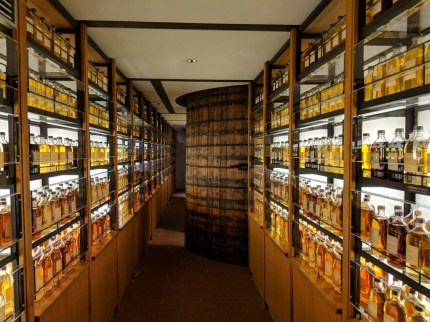
In comparison to the exterior, the inside of the visitors centre is a beautiful and interesting place to be, with timbered interiors, a cutaway still and washback, and shelving supporting row upon row of bottles with hand-typed labels containing various agings of spirit made by Yamazaki and other distilleries from around the world. There is also an interesting whisky walk with information about the distillery.

6 Whisky Waffle Yamazaki Visit

Guided tours can be booked online, with a standard and a slightly longer special tour available. If you want to do the special tour you need to book early (which we didn’t) as it only runs on weekends and has limited spots. The tours are conducted in Japanese, but an audio guide is available if, like us, your Japanese only extends to a few much-overused phrases.

7 Whisky Waffle Yamazaki Visit

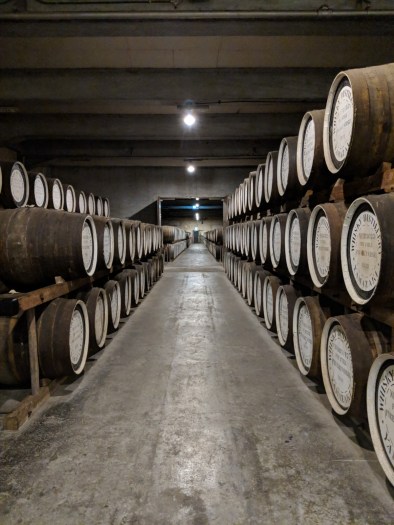
The standard tour, conducted on our visit by the youthful Nishiwaki and assisted by the older Tanaka, guides guests through the history and production processes at Yamazaki, taking in the mash room, the still house and the bond stores. A delicious smell of whisky permeates the facility, changing in nature depending on your location. For example, the still room with its 12 stills (there are another four somewhere else too) smells of fresh apples and lemons, while the bond store is dark and rich with the years of aging spirit.

4 Whisky Waffle Yamazaki Visit

As we walked back from the bond store we passed by a torii gate, which Tanaka amiably commented to me was over 1000 years old, which makes the distillery’s only 95 years look rather pale in comparison, a reminder that the Japanese whisky industry is still only a relatively young thing in an ancient culture.

IMG_20180114_140742

The tours conclude in the tasting room, an open, airy space where guests sit at wooden benches to be educated in the art of drinking Yamazaki. Four glasses of whisky were presented, a White Oak Cask, a Wine Cask and two glasses of the 12 Year Old, one for sampling and the other for doing as you pleased with (as part of the tasting you had the opportunity to make a whisky highball. I declined).

5 Whisky Waffle Yamazaki Visit

The White Oak Cask and Wine Cask were presented as examples of Yamazaki’s practice of crafting a base palate of different styles that are then married together to create a final release, such as the 12 Year Old. The distillery claims that this method allows them to create products that have a subtlety and nuance of flavour similar to a blended Scotch, but are comprised of whiskies that are made entirely on site at Yamazaki.

The two spirits were indeed quite different, with the light White Oak Cask evoking honey, lemon, green apple and rose on the nose, while the dark-gold Wine Cask gave notes of caramel, marshmallow, wine gums, oak, salt, red apple and apricot. On the palate the White Oak had leather, dark honey, polished oak, beeswax, malt and a sharp, herbal finish, while the Wine cask had a dark, rich, dry fruitiness, with red apples, brown pear, sour plum and salted caramel.

3 Whisky Waffle Yamazaki Visit

A small selection of nibblies are also provided with the tasting, my favourite being the smoked nuts, which are smoked over chips made from old barrels. There are a number of friendly attendants on hand to guide you through the tasting and make sure you know what’s what.

At the completion of the tasting you are led back to the visitor centre where you have the opportunity to visit the gift shop (which has a distinct lack of Japanese whisky apart from the Chita single grain) or indulge in some further tastings such as older bottlings or distillery exclusives (I may have lashed out on the 25 Year Old).

8 Whisky Waffle Yamazaki Visit

The atmosphere at Yamazaki was relaxed and Nishiwaki delivered a crisp and professional tour that was full of interesting and informative facts… at least I presume so seeing as I couldn’t understand a word of it. The audio guide was solid though and it was easy to keep up with the tour. If you want to get a grasp on the history and character of Japanese whisky, then Yamazaki is well worth your time to visit if you happen to be in the area.

9 Whisky Waffle Yamazaki Visit

Flóki Single Malt

Reviewed by: Ted

Floki Single Malt 1

Hrafna-Flóki Vilgerðarson, or Flóki as fans of the History Channel’s hit show Vikings would recognise him as, was a pretty interesting guy. Born around 830AD in Norway, he would later become an explorer, with his main claim to fame being that he was one of the first people to visit Iceland.

Acting on rumours of a land North-West of the Faroe Islands, Flóki set sail with his family and crew, taking with him three ravens. According to legend, Flóki released the ravens during the voyage; the first flew South-East back to the Faroes, the second landed back on the ship, but the third flew North-West and did not return, leading Flóki to the island and bestowing him with the nickname Hrafna, meaning raven.

The crew apparently spent an excellent, easy summer on the West coast, leaving them ill-prepared for the harsh winter that followed. When spring finally returned, Flóki climbed the highest mountain in the area and sighting ice flows still sitting heavy in the fjords even as the weather warmed, named the island ‘Ísland’, or Iceland as we now know it. On his return to Norway he gave a poor report of the place, although that did not stop him from returning and living there until his death in the early 9th Century.

It is therefore fitting that a modern day pioneer of Iceland takes its name from the spirit of this early explorer of the Northern seas. Flóki, made by Eimverk Distillery, is the first single malt whisky to come out of Iceland.

Based in Garðabaer (perhaps taking its name from another early explorer of Iceland, Garðar Svavarsson?), the whisky is billed as ‘Grain to Glass in Iceland’ (aka Paddock to Plate), using local barley and water distilled in Eimverk’s handcrafted pot still and, according to the blurb, “aged for three years… under the roots of Mount Hekla”.

The particular bottle in my possession is part of a limited edition single-barrel bottling released in November 2017; according to the label I possess Barrel #1 Bottle #307. I will admit that I experienced a brief moment of doubt about opening it, but in the spirit (geddit?) of science I have taken the plunge for you dear reader.

As mentioned before, the Single Malt is aged for three years in what the label curiously describes as ‘ex-Flóki Young Malt barrels’. I have previously reviewed the Young Malt, a special edition duty-free 1-2yo spirit released as a preview to the main event. I am assuming that after the first release of Young Malt in late 2014, which used virgin American oak, they refilled the now-seasoned barrels and left them for just a hair over three years for the Single Malt.

The packaging game has always been strong with the Flóki and this one ups the anti by including a box! The box artwork has a black gloss background with irregularly shaped matte black highlights, the effect of which I suspect is meant to look like the rock walls of a fjord. The cool viking crest makes a return and oh my Odin I have literally just realised it has three bird figures around it representing Hrafna-Floki’s ravens! Totally did not pick that up before.

Floki Single Malt

Bottled at 47%, the Single Malt is a natural copper colour. It’s actually lighter than the Young Malt, which has a redder hue that is probably an effect of the virgin oak compared to the second-fill used for the Single Malt.

On the nose the Single Malt is light and grassy, perhaps straw, with undertones of caramel, honey, pineapple, green plum, apple, orange, pine sap, juniper, rose, sandalwood, cereal and metal. In comparison the Young Malt is heavier and sweeter, with notes of banana, oatmeal and meat.

The palate is dry and textural, eschewing the heavy, sharp, sweet, alcoholy, bourbony feel of the Young Malt for a much lighter, zingier sensation. The undertone is of oaky wood dust, almonds, walnuts and burnt orange, while the finish is sharp, hot and bitter, coating right across the back of the tongue and lingering for some time.

The differences between the Young Malt and the Single Malt are intriguing as the latter is a definite evolution of the former. Compared to the heavy, ham-fisted virgin oak-driven flavours of the Young Malt, the Single Malt is a much lighter, zestier affair. It’s interesting how a second filling of the same barrel with the same spirit can produce such different results.

Still, the balance of the Single Malt is perhaps a little off, with the nose needing some extra depth and the mouth, particularly the finish, needing some rounding out. It’s definitely better than the Young Malt (and both are miles above the undrinkable Young Malt Sheep Dung Smoked edition), but as I have commented before and will reiterate now, I am curious to see what effect some extra aging time would have on the Flóki.

Floki Single malt 2

Nitpicking aside though, this is a worthy first attempt from Eimverk and I think Hrafna-Flóki himself would have had a much more favourable opinion of the place if he had had a few bottles of his namesake whisky to keep him company through that first winter.

★★


Whisky Waffle Podcast Episode 5

Posted by: Nick

Welcome to the Whisky Waffle Podcast: Christmas Special! Where we don our Christmas hats and Waffle about our favourite Christmas time drams! In this exciting episode we include:

– The Waffle, where we ramble about our Christmas whisky traditions
– The Whisky, where we taste a peated Bunnahabhain: the Toiteach and a proper Christmas dram: the Glenfarclas 105
– Shoutouts: where we wish a merry Christmas to a few of our supporters; and
– Whisky Would You Rather, where Ted delivers a low blow of a Christmas question to Nick

Talisker Port Ruighe

Reviewed by: Nick

Talisker Port Ruighe

Talisker does a lot of things consistently well. Being located on the Isle of Skye certainly helps – there is surely not a more spectacular cross section of scenery to be found anywhere in Scotland. Offering exclusively peated drams also comes in handy. There is nothing that guarantees dependable yumminess like a distinctive smoky swirl through all available products.

And then there are the little things. Talisker’s packaging is always beautiful, their individual bottling names are always evocative and their non-cask strength releases almost exclusively sit at a beautifully balanced 45.8%.

All of the above is true about the Talisker Port Ruighe. And yet… and yet… This one is more than a little different. The clue is in the name, Port Ruighe being somewhat of a non-sexual double entendre. Not only is it the Gaelic spelling of Skye’s largest (and candidate for Scotland’s prettiest) town, Portree, but it has also spent the last part of its barrelled life in ex-port casks. And it is this point of difference that makes the Port Ruighie stand out from the Talisker pack.

The nose is typical Talisker. Sweet. Peat. Chocolate. Salt. A bit of orange. Basically what you’d expect from the 10 Year Old. It’s on the palate that this diverges. It’s a little rough and pleasantly ashy but alongside the smoke is burnt fruit, sticky raspberry jam and hints of Turkish delight. The port influence is clear for all to see and really rounds out the peat hit. The finish is surprisingly long with a bitter, perhaps tanninic, dark chocolate linger.

While Talisker do many things consistently well, one gripe I do have with the distillery is the up and down nature of their copious NAS releases. I can take or leave the Storm and the Skye but this one really provides enough contrast to justify the release of a 7 or 8 year old whisky. It really is the sweetest peat on offer on the Isle of Skye.

★★★

GlenDronach Peated

Reviewed by: Ted

Glendronach Peated

You know when you take one thing that is really good (like heavily sherried whisky) and combine it with another really good thing (like peated whisky) and the result is a winner? Well, strap yourselves in then, because you’re going to love The GlenDronach Peated Single Malt Whisky.

The GlenDronach distillery, nestled in the NE highlands of Scotland, is famous for its heavily sherried style of whisky, utilising Pedro Ximenez and Olorosso casks in all of its core range. These whiskies are rich, fruity and sumptuous, but one element they do not usually feature is smokiness.

This lack of smoke was not always the case though. Like many other old highland distilleries, The GlenDronach (founded 1826) originally used peat to dry its malt, however over the years the practise fell out of favour through a succession of owners and the rise of cheap coal. Indeed, the distillery was one of the last in Scotland to use coal power for its stills, right up until 2005 when it converted to steam.

Bucking the current The GlenDronach flavour profile and harking back to its roots is the Peated expression. Unusually for The GlenDronach, the Peated actually starts its life in ex-bourbon barrels before being transferred into the usual ex-PX and ex-Olorosso casks for finishing.

As such, while still being full of the warm, rounded, fruity characteristics usually associated with The GlenDronach, the Peated is perhaps a touch lighter in feel than usual. The nose evokes burnt marmalade, stone fruit, leather, almond and walnut. The smoke is soft, toasty and earthy, with none of the strong coastal elements that drive Ileach and Island peated whiskies.

The mouth presents a mixture of juicy sweet yellow and white stone fruits, honey, Turkish delight and toffee. The lighter flavours likely derive from the bourbon casking while the heavier ones draw from the sherry casking. The smoke lingers gently at the back of the throat on the finish.

The GlenDronach is an excellent example of how well peating can complement the rich flavours of sherried whiskies, particularly because the smokiness is well balanced in the dram. Peat-heads and sherry-bombers alike will find something to entertain and interest them and will likely keep being drawn back to sup from this particular fruit’n’smoke chalice time and time again.

★★★

Glen Moray 16 Year Old

Reviewed by: Nick

Glen Moray 16

Different people look for different things in a whisky. Some people desire a smooth and easy drinking drop. Others want something to excite and challenge them. Others still want something to mix with their coke. There are many, many reasons, so naturally, there are people whose sole criterion when selecting a bottle is the desire for it to come in a shortbread tin. If that applies to you, look no further than the Glen Moray 16 Year Old!

glen-moray-16-tin-4.jpg

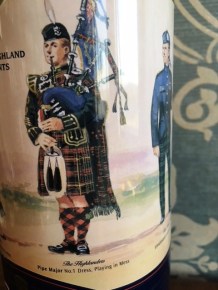
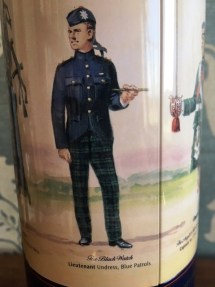
I know, I can hear you all now – I’ve made some ridiculous claims on Whisky Waffle but this one takes the biscuit! The biscuit! No? Well, I admit, I may be selling this drop a bit short(bread). There are, in fact, a number of reasons to pick this one up. Glen Moray is a reliable distillery if you’re after a decent bourbon-matured quaffing scotch. Their bottles are always good value: this one can be found for around $65 in Australia, which, believe me, is a great price for a 16 Year Old Whisky. And on top of all that – the tin features an endearing array of the uniforms worn by the Scottish Highland Regiments, including a man sporting ‘The Black Watch’, who, rather controversially, is not wearing a skirt!

glen-moray-16-tin-3.jpg

Ok, so while I can crap on about the tin all day, you guys really want to know if it tastes any good… in my opinion. And in my opinion, it does. It’s a considerable step up from the 12 Year Old and while it is still light and easy drinking, it contains a silky layer not found in younger Glen Moray releases.

On the nose are standard notes of honey and vanilla alongside sweet biscuits and pineapple. The palate is gentle with toffee and banana prominent. The finish is short but pleasant with a faint herbal linger.

Glen Moray 16 tin 2

Different people look for different things in a whisky. But everyone looks for one which they’ll enjoy. The Glen Moray 16 Year Old is as close as any out there to a dram that can be enjoyed by everyone – whether for the flavours on the inside – or the shortbread tin on the outside.

★★★

Whisky Waffle host Christmas drinks at the Chapel

Posted by: Nick and Ted

Night 3 Christmas Drinks

Tis the season to be ‘jolly’!

Christmas is coming up faster than Jim Murray to a Rye tasting… and there could be no better time to open a few bottles to keep our Christmas spirits up!

Whisky Waffle is holding a Christmas themed tasting session on Sunday the 17th of December at the Chapel in Burnie starting at 3.30. Guests will be treated to six Christmas-y Single Malt whiskies plus some delicious home-made boozy Christmas pud.

Tickets are available HERE! via Try Booking or at the venue. Get in fast or you may find nothing in your stocking but a lump of peat.

Our guests have seemed to love our previous waffle sessions and this one promises to be particularly ‘merry’! See you on the 17th!

What: Whisky Waffle’s Christmas Drinks at the Chapel

When: Sunday the 17th of December at 3.30

Where: The Chapel, Burnie

Why: because Christmas is as good an excuse as any for an afternoon tasting session!

Who: our very merry fellow Wafflers (you guys!)

How much: $35 for 6 drams and Christmas treats!

A very waffly Christmas