tasting

Heartwood Vat out of Hell

Reviewed by: Ted

heartwood-vat-out-of-hell

As I walked back through North Hobart to my hotel whilst on a work trip, I decided to stop into the Winston to rehydrate. Lo and behold, what did I find waiting on the shelf but a bottle of ‘Vat out of Hell’, one of Tim Duckett’s glorious cask-strength Heartwood creations.

Crafted from a delightful marriage of 10yo Lark sherry barrel and 13yo Tasmania Distillery bourbon barrel and bottled at a robust 67.4%, the Vat out of Hell, like most Heartwoods, is sadly no longer available for purchase. Therefore, stumbling across an open bottle constitutes a rare treat and a responsibility to try some for the betterment of humankind.

I gazed wistfully at the bottle on the shelf and thought ‘well… work’s covered the rest of my drinks tonight [I must admit that I had stopped for liquid sustenance at several other pubs along the way], so what the hell, I’ll treat myself.’

At this point I was feeling a little less analytical and in a bit more of a subjective frame of mind thanks to my nice warm beer coat, but I think that’s probably a good way to tackle a Heartwood. Ride the rush of emotions, don’t overthink it. So, without further ado, here’s what I thought (apparently. I’m glad I at least had the presence of mind to write this down):

The smell is… leathery, which is quite appropriate really… it’s like a box of sultanas left on the bench seat of an old Kingswood ute on a hot summer’s day… a walk through a meadow of spiked wildflowers… fruit leather made out of fruit cake… sun fermented orchard fruit… hot boat decking.

Tastes like timber should… if Easter eggs tasted like this, I’d probably eat them quicker… meat slow cooked for a looong time… dark brown as a flavour… attaches like a happy lamprey to your gums.

Yeah, so long story short, it was bloody good. Better than Meatloaf’s version… If you find some, think with your heart and not your wallet, and you’ll end up transcending to a higher plane of existence.

★★★★

The Pot Still Exclusive Invergordon 26 Year Old Single Grain Whisky

Reviewed by: Ted

invergordon-26

It’s very rare that I come across a whisky distilled in the year of my birth; usually they seem to fall either side of it. While that’s probably just me not looking in the right places, it’s definitely rare that the dram in question is a single grain scotch whisky.

Lesson time: Single malt scotch whisky can be made using only malted barley, whereas grain whiskies (like it says on the tin) can be made using other grains, such as wheat, and can be malted or unmalted. You don’t generally tend to see single grain whiskies on their own in the wild because their normal purpose in life is to form the base of blended scotch whisky.

Alongside the prestigious single malt producers are a multitude of unsung distilleries pumping out grain whisky for use in your Johnnie Walkers and Dewars’ and the like. Case in point: Who’s heard of Invergordon? Nope, me neither, but turns out they’re a thing.

I actually came across this bottle while I was in an excellent Glaswegian bar called ‘The Pot Still’ (up the end of the mall if you want to find it). While chatting to the barman I challenged him to pour me something unusual, and so he did.

Produced at Invergordon as an exclusive bottling for the Pot Still (in celebration of something or other I think. I forget what) this particular bottle was distilled on the 3rd of March 1988 and aged for a rather astonishing 26 years in cask# 24975 (no idea what, but from the colour I’m guessing an ex-bourbon).

Bottled at a hearty 53.7%, the nose of the Invergordon is vibrant and zesty, zinging with lemon, pineapple, pine resin and wood polish. Underneath the initial sharpness sits a smoother, rounded layer of pear, plum, apricot, dates and nuttiness. Finally, gliding out underneath is a waft of vanilla.

The first mouthful hits hot and sharp, with more lemon and pineapple, and then slides down your throat with a burning coolness like you’ve just had a strong mint. A second attempt, giving more time to develop in the mouth, finds toffee, green wood and a bitter, grassy, herbal finish.

I am sorry (not sorry) to say that you are probably highly unlikely to find a bottle of this anywhere. I only happened to stumble across mine because I was in the right place at the right time and the barman still had a small stash behind the bar that he was willing to part with.

If you do have a bottle, or are in the Pot Still and they’ve got some left, well done you, you’re part of an exclusive club. As for the rest of you great and unwashed masses, I think that this serves as a reminder not to discount the humble grain whisky. While they don’t get the same love as their single malt cousins, with a bit of age they can hold their own any day.

★★★

Four must-visit Scottish whisky distilleries

Posted by: Nick

Nick in Scotland

So you’ve travelled to Scotland. You’ve climbed to the top of Edinburgh Castle, eaten a plate of Haggis and failed to find the Loch Ness Monster. Your Scottish experience is complete but for one final destination. The country is synonymous with several things – including men in skirts and losing at football – but most famously of all, it is known for its whisky. Therefore on your travels it is compulsory to stop in at one or two distilleries and see exactly how the stuff is made. Of course, that means narrowing it down to one or two from the hundreds of options – not an easy task.

It was not long ago that I made a trip to whisky’s spiritual home (pun entirely intended) and thought I would share a few of my recommendations to check out after a hard day’s not-spotting Nessie.

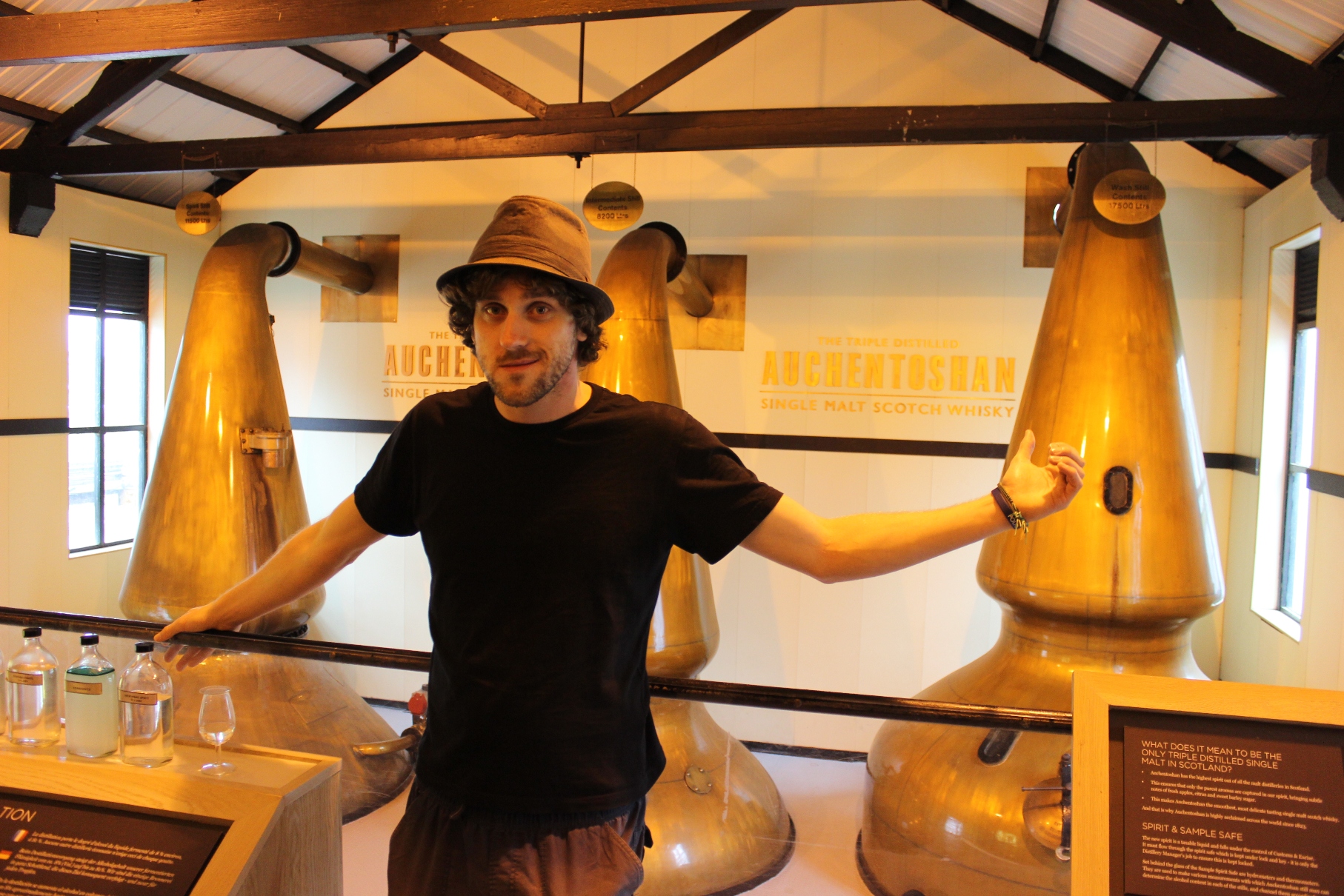
Auchentoshan:

Auchen

This distillery is as accessible to visit as the whisky is to drink. Located just outside of Glasgow, Auchentoshan is right on the way for tourists looking to explore Loch Lomond or venture into the highlands. The distillery itself is extremely pretty and the friendly staff run a slick tour. The tasting session at the end covers the core range, though if you’re lucky they may find you something special to try behind the bar. The drams themselves are easy drinking and perfect for those who are slightly hesitant about whisky!

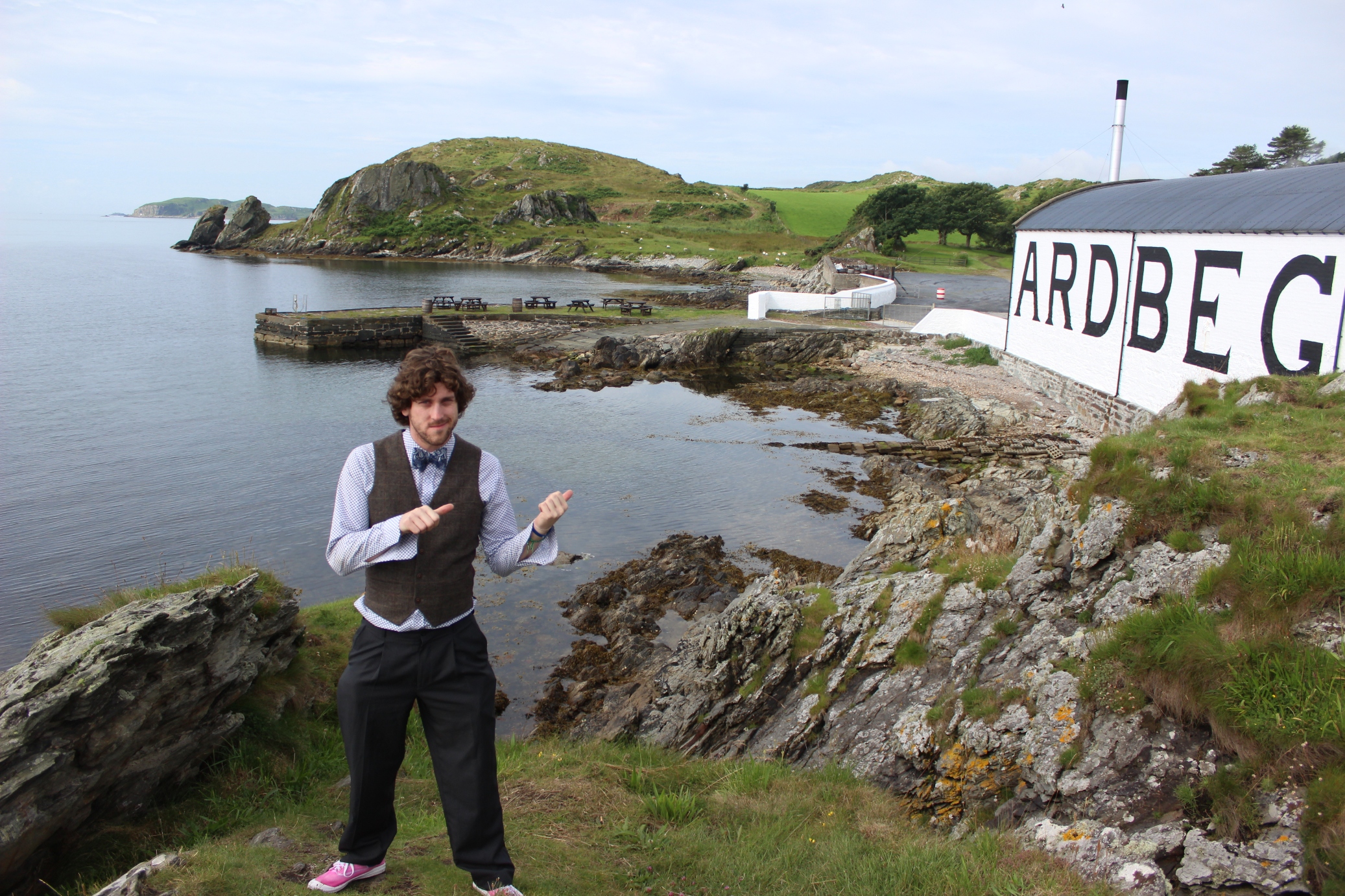
Ardbeg:

PE Ardb

The ultimate fanboy distillery. If you’re keen on your peated whisky then a trip to Ardbeg should be the number one priority. Granted, it is on a little island off Scotland’s west coast, but is the most magical place when you get there. Every corner of the distillery emanates old world charm, and if you select a premium tasting session, some of the drams they bring you in their little back room are mind-blowing. Ardbeg are famous for producing rare one-off bottlings which, unless you happen to be mates with the distiller, you are unlikely to get to try too many of. Do the tour, however, and who knows what you may find – Ardbog, Alligator, Supernova, Dark Cove… one dram of any of these makes the price of admission worthwhile.

Supernovas

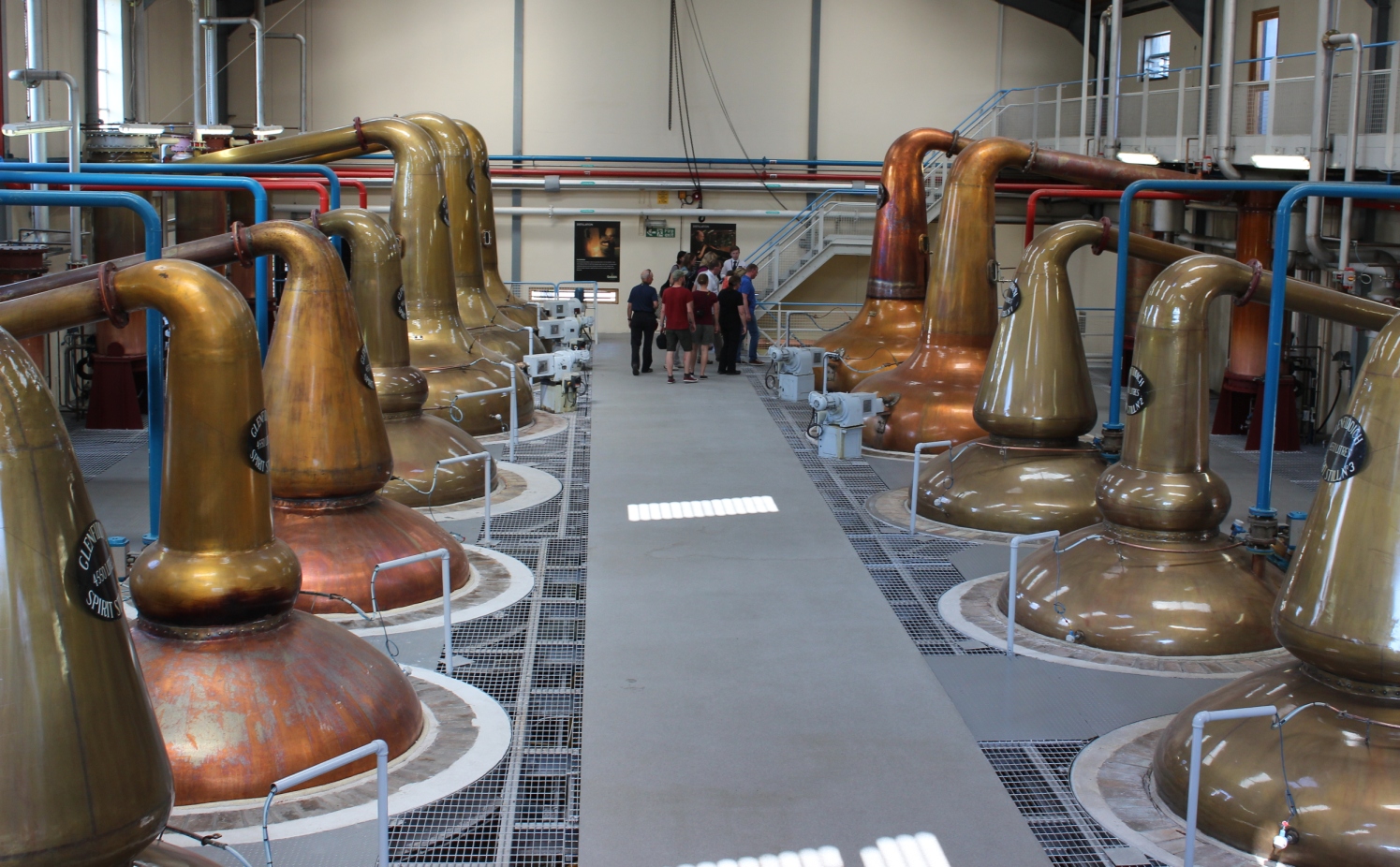
Glenfiddich:

To get an idea about the scale of the Scottish whisky industry, do the tour at Glenfiddich. They are the largest producer of single malt in the country and their distillery, therefore, is huge! Twenty-eight stills are in operation, each big enough to make Lark’s copper pot look like a key ring. There really is a sense of awe as you walk among the machinery and through the bondstores. It’s certainly a popular one, with thousands of tourists going through the establishment each day, however if you spend a couple of extra pounds they’ll put you in a smaller, more intimate group and give you the added bonus of checking out warehouse 8 – the Solera facility – where you can see them vatting vast amounts of whisky to create, among other bottles, their 15 year old. The tasting that follows walks you through the 12, 15, 18 and 21 Year Old expressions – yes, that’s right, 21 year old! Not all distilleries churn out a 21 year old regularly on a tour.

Glen Stills

Bruichladdich:

A trip to Bruichladdich is the perfect whisky experience. Firstly, the staff are some of the coolest and most entertaining people in the business. Secondly, their equipment, in particular their mash tun, is all beautifully ancient. It’s like an antique shop where the gear comes alive at night when the owners leave! Finally, and most importantly, there’s the tastings. Oh man. Bruichladdich are famous for innovation and experimentation, the result of which is a large number of fascinating whiskies to try. A rum matured whisky – can I try that? Sure! A new Octomore – do you mind if I… Go for it! How about that double matured… Get it down you! In short, a trip to Bruichladdich is compulsory if you ever find yourself in the area – and by the area, I mean in the Northern Hemisphere!

Bruich

These are, of course, just four of my picks based on one visit and I realise that as far as excellent distilleries go I am barely scratching the surface. So what places have you been to that you would recommend people make it along to? Let me know in the comments and I’ll see if I can hit them up on my next trip to the whisky motherland!

Warehouse 8


Nant Sherry Wood 43%

Reviewed by: Nick

Nant Sherry Wood 43%

I imagine the founding of Nant distillery by Brisbane businessman Keith Batt, went something like this:


“What do you want for your birthday this year, honey?” asked Mrs Keith. Keith thought for a moment.

“I’m torn between a Caribbean island, a bar-franchise and a horse,” he replied, not a drop of irony on his face.

“A horse?” replied Mrs Keith, “where on earth would you put one of those?”

“Well obviously I’ll need to invest in some property to store it in – preferably somewhere exotic and remote.”

“How about Peru? Then I can get a Llama!”

“Yeah, I’m not so keen on the ponchos or  folk music. Tell you what, how about we stick the horse in some old paddock in Tasmania and I’ll also get the bar-franchise?”

“Alright, fine. But you may need to think of something to do with the property down in Tassie.”

“Oh, don’t worry about that. I’ll just stick in a whisky distillery and sit around fixing an old water mill until Jim Murray arrives.”


Of course I unquestionably make light of the momentous decision to build Nant Distillery up in the highlands of Tasmania – an establishment which I can confidently state is the most scenic of all Tasmanian distilleries. And as much as I can mock Nant’s business-like set up, I cannot downplay the excellence of its whiskies.

One of my favourite Tassie drops is the Nant Port Wood, a fantastic representation of the Tasmanian flavour, and the cask strength version of the Bourbon Wood is one of Tasmania’s finest whisky accomplishments. They also release a Sherry Wood and it is this expression I review today.

The nose is drier and earthier than any other Nant release. There are elements of vanilla, figs and golden syrup, but this is matched by moss and spicy oak. The palate is equally contrasting with notes of toffee, raspberry jam and plenty more oak, while mingling in the medium long finish are herbs and you guess it: oak, It all combines to form an intriguing and challenging Tasmanian whisky.

While I couldn’t claim this to be my favourite Nant expression, it’s certainly an interesting drop and one that I would never describe as boring. It forms an integral part of an increasingly impressive Nant back-catalogue. I guess then, it was well worth Keith Batt getting that horse!

★★★

Nant n Nick

Tasmanian whisky: One state. Three ingredients. Unlimited flavour.

#TasWhiskyWeek

Hellyers Road Peated

Reviewed by: Ted

Hellyers Road Peated

So, you’re a big fan of peated Scottish single malts, but in order to save the world from certain destruction (just go with it, ok?) you have to buy a Tasmanian whisky. What are you going to do? Never fear, Hellyers Road has your peat needs covered with their appropriately named Peated expression

When it comes to peated whisky in Tasmania, the situation is a little more complex than first meets the eye. Tasmania actually has its own peat bogs, however the smoke is quite different to the Scottish stuff, being softer, gentler and more rounded. It is also restricted to a few distilleries that own leases to the bogs (the rest is locked up in national parks and the like).

In Hellyers Road’s case they don’t have access to a native bog, so instead they import peated barley all the way from maltings in Inverness, Scotland. The side-effect of this is that Hellyers Road Peated is much more closely aligned to Scottish drams than other Tasmanian malts (side note: Hellyers Road use local grown barley for their non-peated expressions).

Nosing the Peated expression is like standing in a grain storehouse, grabbing a big handful of peat-smoked barley and taking a deep sniff. Underneath the big, fat, bold, smoky cereal flavours can be found cocoa, black currants, pencil shavings and smouldering leaves.

The first layer of taste is what you would probably expect from a heavily peated whisky – strong, thick smoke that billows around the mouth, a bit like standing on the wrong side of the campfire. When you clear away the smoke however, you are left with a light, smooth and slightly sweet dram, without too much else going on. The finish is long and smoky, but gentle. In fact, the smoke probably rounds out the feel of the dram as a whole, smoothing out some of the harsher edges that can be found in a younger whisky such as this.

When compared to a traditional Islay single malt like Laphroaig or Ardbeg, the Hellyers Road Peated perhaps misses some of the strong coastal flavours that punch through from underneath, but makes it up in other areas. A light whisky, heavily peated, this Hellyers Road expression delivers a different experience to anything else available from Tasmania.

★★★

HR n Ted

Tasmanian whisky: One state. Three ingredients. Unlimited flavour.

#TasWhiskyWeek

Limeburners Infinity Solera Cask

Reviewed by: Nick

Limeburners Infinity Solera

The thing about the Australian Whisky scene is that we are unquestionably small-fry. It is a quantifiable fact that we produce less whisky per annum than Glenfiddich sloshes from its barrels. Size, or rather lack thereof, is the overriding factor in most Aussie distilleries’ tendencies to release single barrel expressions – they simply don’t produce enough product to have an alternative. This is great if you happened to own an unopened bottle of HH525 Sullivans Cove in 2014. If you did, I hope your new private yacht is treating you well.

Single barrels are not as good however, when the aim of your whisky game is consistency of flavour. You know, that old chestnut of getting one bottle of your standard release to mildly resemble the taste of another one. The best way to achieve this is to blend (or more romantically, ‘marry’) a range of casks together – thus ironing out any ‘bumps’ in flavour. Even better still, is if you can use a Solera vat, which are only ever half empty (or full. Not sure which is the most optimistic phrasing in this case.)

With this groundbreaking new technology (invented c.1790), distilleries are suddenly able to better define their flavour and ensure that a bottle you buy this year is (pretty much) the same as the one you purchase at a later date.

One of the first distilleries in Australia to adopt the Solera technique is the wonderfully-named Great Southern Distilling Company based in Albany, Western Australia. They market their wares under the label ‘Limeburners’ and in their short history, have released some stellar drams.

While director/distiller Cameron Syme is a huge fan of the variety found in single barrel releases, he acknowledges the need for a consistent product and an entry level into the Limeburners range, resulting in the creation of the Limeburners Infinity. Cameron says that his distillery’s key commitment is “to make Australian whisky which can compete and hold its own at the highest international levels. Infinity is certainly capable of that.”

This particular release contains 8 year old whisky matured in several 500L South Australian port puncheons. The infinity name is appropriate, as the Solera system will always leave at least a teeny tiny fraction of these original whiskies in the mix.

Eager to support the distillery, I stumbled upon this bottle’s first release on Dan Murphys and promptly blew my savings for the week. So what exactly is the Infinity Solera Reserve like?

On the nose there are immediate traces of the port influence – ripe oranges dominate alongside zesty citrus and vanilla, bringing to mind cupcakes with lemon icing. The palate is complex – certainly not smooth, but well balanced with flavours of strawberry jam, honey and malt biscuits. In the finish I spotted hints of the bitter soapiness I sometimes detect in wine-matured whisky (yes, I know, this is port matured and therefore I sound crazy). However, this vague disagreeable note dissipates quickly and is replaced by an intriguing dryness which contrasts pleasantly with the initial flavours.

Usually I find it pretty counterintuitive adding water to my whisky, but in the case of this one, it takes on a whole new character with a splash of H20. Suddenly, large dollops of gooey caramel dominate the palate and the flavours morph from undeniably Australian to slightly Speysidey.

This whisky is a significant step for Australian whisky. Lack of consistency is one argument the Cynical Scot has always held over me in our heated whisky-fuelled debates about the validity of non-Scottish drams. It seems that, at least in Limeburners’ case, I will be able to return to the bottle shop in a year, in two years, or even in ten and get this same drop. Or alternatively, I could save my pennies and buy one of their delicious cask strengths…

★★★

The Bruny Island House of Whisky

Posted by: Nick

Nick and neck

Nick at the Neck: obligatory photo when on Bruny

My home state of Tasmania is rather famous for its natural beauty. From untouched beaches to spectacular mountains, there are some incredible sights to see. Tasmania is also rather famous for being small – however, small is a relative term. It takes the best part of a day to drive from one end of the state to the other and then all you’d see is the boring Midlands Highway (no offence Tunbridge, but you are unquestionably dull).

If you want to see Tasmania in microcosm, the place to do so is Bruny Island in the State’s south. Spanning only 50-odd km north to south, most of the island can be explored in a well-organised long weekend. On such a weekend you will be able to see all that Tasmania is famous for: picturesque coastline, unspoiled wilderness, classy wineries, boutique cheese factories and amazing seafood restaurants. Most importantly however, you will also find a stunning range of locally produced whisky.

Scenic lighthouse

Which Tasmanian whiskies do I refer to? Simple. All of them.

Whisky Waffle at the House of Whisky

If you ever find yourself anywhere near the vicinity, a trip to the Bruny Island House of Whisky is a must. The range of Tassie drams, from the everyday to the ‘impossible-to-find-anywhere-ever’ is astonishing. The knowledge and passion of owner Lee, his family, and his staff is spellbinding. And the choice of just four drams to include in your personal flight is almost too hard. But not so hard I didn’t manage it.

I began with a rare Lark Distillers Edition. For those who haven’t picked up on it, I am of the belief that there is possibly not a more perfect whisky in the world than a Lark Distillers. Although I have to say, the others did their best to challenge this theory. Next was a dram of the Mackey Single Malt, one of Tassie’s new kids on the block in terms of recent releases. Trying this got me well and truly excited to see what is in store for the future of the distillery. Perhaps Whisky Waffle will have to call in there soon.

My Flight

My flight, and Lee’s hair

Next I returned to Lark for a cask strength: this one aged in ex-bourbon barrels, a maturation process I hadn’t tried from Lark before, and it was everything I hoped it would be. Finally, I finished it off with another strong contender for best Tasmanian whisky – heck – best whisky full stop: the Overeem Port Cask cask strength. I rarely get a chance to try this one and loved every morsel in the glass.

To conclude my tasting Lee allowed me a discounted price to try the mysterious ‘Exile’: a cask strength dynamo with a past connected to both Lark and Sullivans Cove, but mostly shrouded in secrecy. It also blew me away – another strong contender for best of the day.

Whisky Wall

This is the smallest of multiple whisky walls…

I left the House of Whisky buzzing – partly because of all the cask strength I’d just knocked back, but mostly because of the warm, welcoming and friendly atmosphere and the enjoyable conversation I had found inside. I was also tempted to march straight back in and try all the wonderful drops I had missed off my flight, such as the powerful Heartwood and the fascinating Trappers Hut. Sadly I had a ferry to catch and needed to leave the tiny model of Tasmania and return to the full-scale version. I think that it’s safe to say that I’ll be back sooner rather than later and once more enjoy the charms (and drams) of island life.

Cragganmore 12 Year Old

Reviewed by: Nick

Cragganmore 12 Year Old

Summer is a time for barbeques and dreams; it is a time for long evenings spent irreverently with friends. And, of course, it is a time for summer romances.

I met the Cragganmore 12 Year Old shortly before Christmas and knew, without being able to define why, that this was to be my summertime dram. It glistened, a deep gold on the shelf, almost calling to me with promises of what was to come. How could I resist?

The following weeks I enjoyed the gloriously sunny evenings with the Cragganmore by my side. We were thick as thieves, spending time at post-Christmas drinks, New Years Eve – even on the annual camping trip. All my whisky-drinking friends approved. There was no doubt, the Cragganmore was a worthy addition to our summer festivities. And the flavours? Extraordinary.

The nose of honey and butterscotch. The palate of vanilla and lemons. And the finish… Oh that delicate and yet spicy linger I feel I will never truly forget.

Inevitably, the sun began to set on a glorious January, and the contents of the Cragganmore dwindled. As with all summer flings, it ended all too suddenly. It was time to say farewell to this golden bottle. While it was a friendship only recently acquired, it seemed the bonds we had formed would last a lifetime. As we said our goodbyes, I thanked it for its companionship over such a memorable time. I can now only leave it in the hands of fate as to whether we meet again on another, seemingly endless, summer afternoon.

★★★

The Glenlivet 18 Year Old

Reviewed by: Nick

Glenlivet 18

The banks of the river Spey in Scotland’s north east are fertile ground indeed. Nearly half of the country’s distilleries are located in this region which has come to be known, rather appropriately, as ‘Speyside’. Upon my criminally short drive through the area my head continuously moved side to side reading road signs pointing towards yet another famous distillery. It must have looked like I was watching a grand-slam final between Nadal and Djokovic! This abundance of whisky excellence could be found nowhere else on earth.

Speyside whiskies are known for being the smoothest, the richest, and the most elegant drams that Scotland has to offer, a reputation well deserved. Perhaps the best example of a Speyside malt is the Glenlivet 18 Year Old. It is one of the classiest single malts going around – and at a price that practically every other 18 year old whisky cannot come close to.

The whisky’s colour alone is enticing: a golden amber which glints in the sunlight. The nose is better: full of caramel, vanilla and orchard fruits. It is a pleasantly balanced aroma, not favouring one flavour over another. The palate is rich – full of flavour without being heavy. There is honey, oranges and malty biscuits, along with the faintest hint of sherry. The finish is light and not as sweet as the initial flavours suggest, with plenty of oak imparted from its 18 years in barrels.

There are literally thousands of whiskies made within a few miles of the river Spey. But if you were only able to try just one – then you could make a pretty strong case for this one.

★★★★


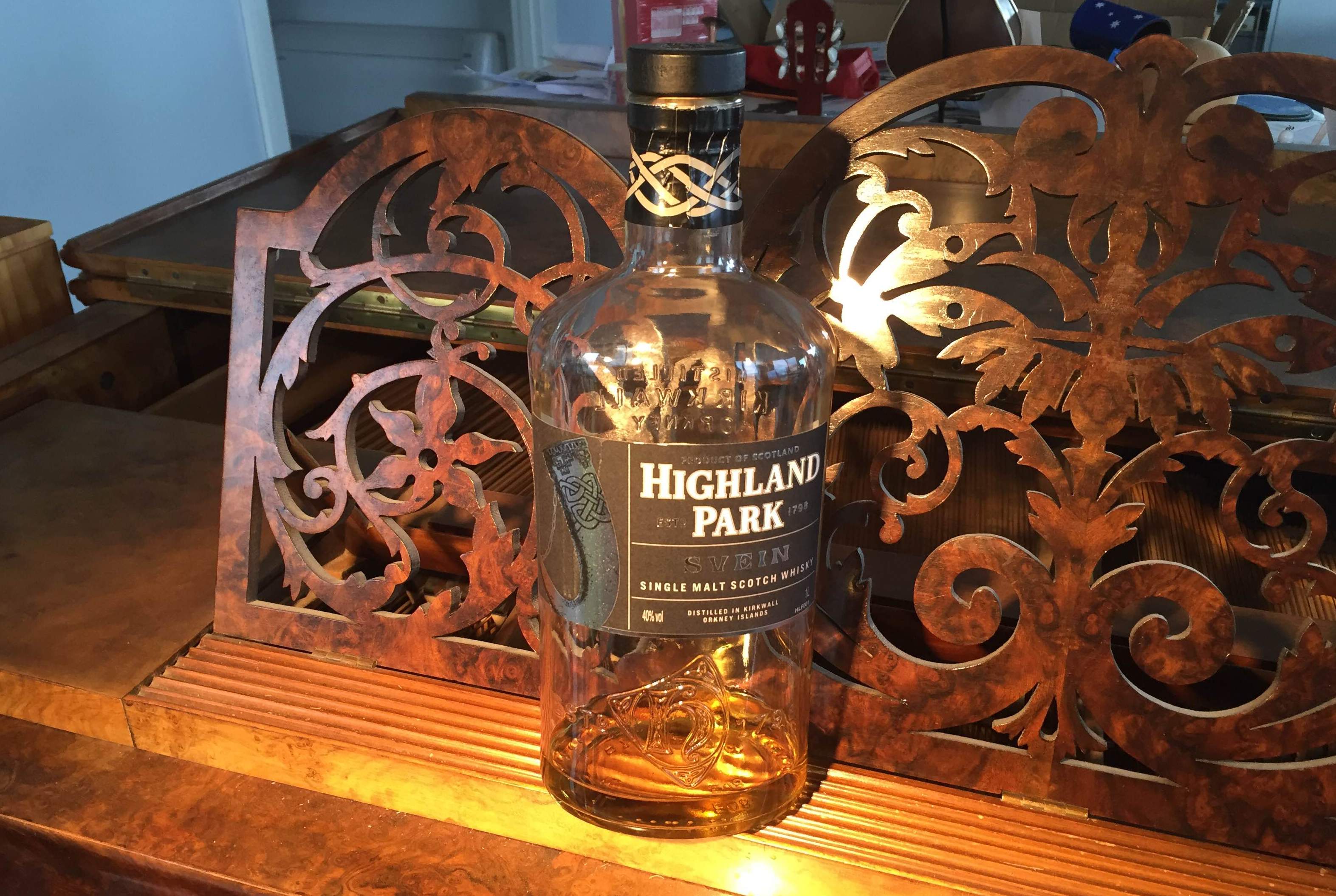
Highland Park Svein

Reviewed by: Nick

Highland Park Svein

Highland Park have one clear advantage when it comes to marketing their whisky: Vikings. Nothing can drum up some interest liked a horned hat on the front of your bottle! Of course, Highland Park can quite rightly look to the Norse raiders when branding their products, as the Orkney Islands where the distillery is located have a proud Viking heritage.

The details of their arrival in the ninth century are told in the Orkneyinga Saga, a historical narrative with more twists and family betrayals than the best soap opera. Among the characters were a series of ‘warriors’ immortalised forever in travel retail by Highland Park.

Svein Asleifsson is the legend behind the entry level of the range – which is perhaps unfair to a man dubbed the ‘Ultimate Viking’. Svein was a charismatic chieftain known for his generous and hospitable nature, and the folk at Highland Park have attempted to create a whisky that mirrors these traits. While I cannot claim this to be exactly the case (it doesn’t pour generous nips of itself into your glass!) it is certainly a very drinkable drop.

While there’s definitely some smoke in there, there’s less on the nose than you’d expect from a Highland Park dram. Instead there are ripe oranges, red apples and plenty of malt. The palate is lightly spicy, with oak, strawberries and… burnt toast? The finish is creamy, malty and slightly bitter. All up, it is a light whisky, threatening to be inconsequential but with just enough to enjoy.

Highland Park have created an interesting series here. While Svein doesn’t stand up when compared to the wonderful 12 Year Old expression, it certainly gives you a greater picture of the flavours captured by the Orcadian Distillery. Sadly I have not got to sample any of the other warriors to broaden my mind!

★★