bourbon

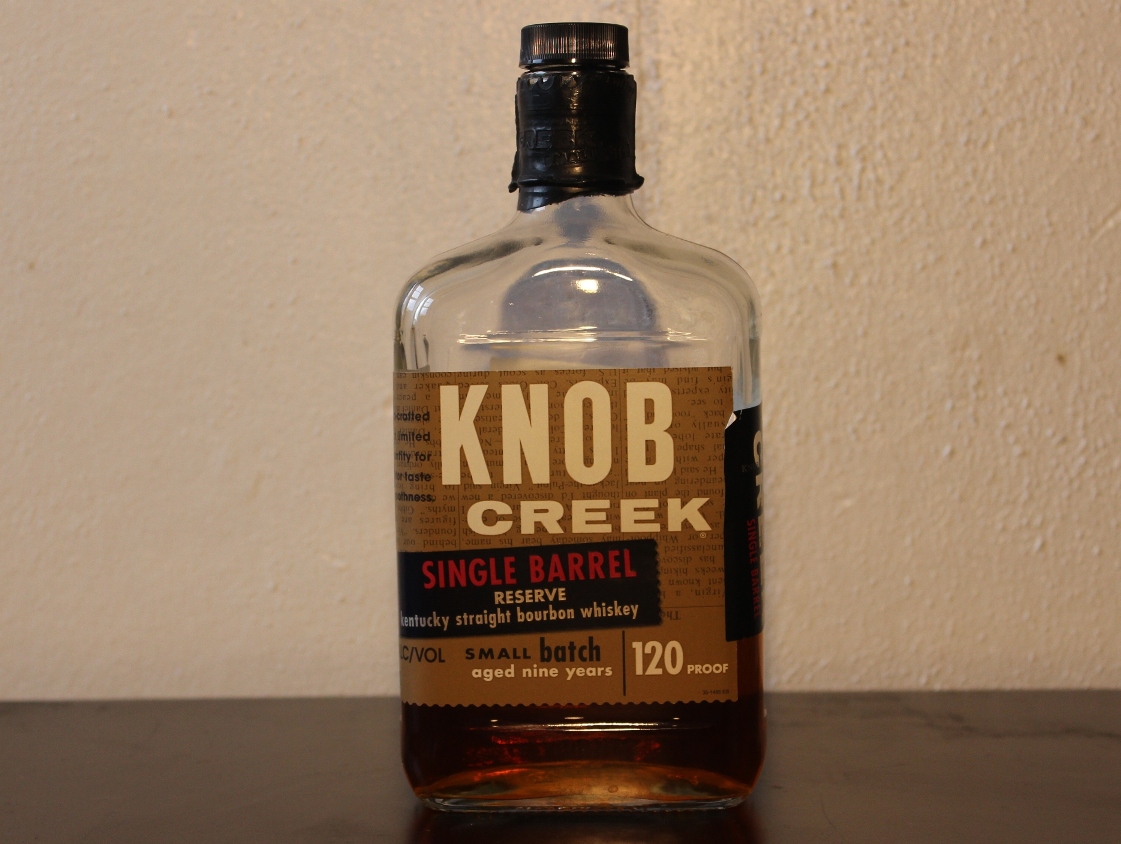
Knob Creek Single Barrel Reserve 120 Proof

Reviewed by: Nick

Knob Creek 110 Proof

We at Whisky Waffle pride ourselves on our light-hearted, satirical and occasionally even entertaining take on whisky. So when sitting down to review a bottle entitled ‘Knob Creek’… well, it’s almost a little too easy. So I did my best to refrain from the obvious jokes on this topic and tried to keep things above the belt. But this task proved to be a bit of a hard one…

Knob Creek comes in many varieties, but mine is clearly the biggest: 60% ABV, or as they say in America, 120 proof. They also make a 100 proof and a rye, but this is the one that really sticks out. It is named for the area of Kentucky where Abraham Lincoln (AKA guest reviewer Stretch) grew up. It is said that the creek nearly claimed his life as a boy while swimming (Lincoln that is, not Stretch), coining the phrase ‘dead as a doorknob creek’.

Knob Creek is part of the Jim Beam toolbox, and forms a quarter of their small batch range alongside Bakers, Bookers and Basil Hayden. Unlike the other three, Knob Creek doesn’t start with a B. It is also aged for a period of nine years, which as we have learned is a long time for American whiskey (though a blink of an eye for the Scottish stuff). Nine years seems to be a good decision from the Knob Creek crew, as the finished product is quite the package.

Nick and Knob 1

Alongside the usual bourbon notes of caramel, honey and vanilla the Knob Creek also contains scents of stewed apricot, cinnamon and candied pop-corn, although surprisingly there is no trace of banana. It’s a nose with some power, though the first sip is even stronger. The warmth from the alcohol is immediately noticeable: this is a whiskey that is seriously ballsy. Flavours of golden syrup, cashews, pepper and multigrain bread flood the palate and are followed by a bucket load of spice which truly throbs across the tongue. The finish is surprisingly easygoing, without being inconsequential or flaccid. It lingers gently with notes of vanilla, apple… and of course a whole lot of wood.

Nick and Knob 2

Knob Creek claim to be the ‘number one super-premium bourbon in the world’. While I am not entirely sure what the term ‘super-premium’ means, I am not unhappy with this claim. This is a bourbon to sip and to savour. It is not a whiskey I would always have in my pocket, but one that I would always be pleased to see.

★★★

Eagle Rare 10 Year Old

Reviewed by: Ted

Eagle Rare

On a scale of one to freedom, how symbolic is the Eagle of the might, majesty and democratic way of the US of A? Let’s just say that if you gave Captain America a nuclear powered cheeseburger and stood him on top of a NASCAR on the deck of an aircraft carrier while an Ivy League college marching band played Star Spangled Banner and F-15’s, Apaches and Chuck Norris with bear arms flew overhead, then you would probably come close. Therefore, calling your bourbon, that most patriotic of spirits, ‘Eagle Rare’ and slapping a bald eagle and some stars on the front probably isn’t the worst idea ever conceived.

Ted and Eagle 2

To tell the truth, while I have portrayed the Eagle Rare in a rather bombastic, gun totin’ fashion, it is actually a drink of some sophistication and refinement. Think Atticus Finch rather than Redneck Rambo. Eagle Rare is owned by Buffalo Trace, based in Frankfort, Kentucky, where it is part of their stable of sub-brands (or should that be aviary? Eyrie? I give up). Recently the distillery has courted some concerns by dropping the phrase “Single Barrel” from the Eagle Rare label (mine still has it) and moving the age statement to the back. Management has assured fans that the changes are the result of moving the production line to a different location and running on new bottling equipment, and that the ageing and barrelling methods will be the same as ever. Watch this space.

Unlike Scotch, which is usually aged for at least 10-12yrs, bourbons are for the most part not aged more than 6-8yrs, and quite often less than that. This difference in aging cultures can be attributed to the use of virgin oak barrels and generally warmer storage temperatures, allowing bourbons to mature faster, therefore meaning that they can be happily released at a younger age. Sometimes though, particularly good barrels are allowed to continue for a longer period, which is where premium expressions such as the Eagle Rare Single Barrel 10 Year Old come into play.

On the nose the Eagle Rare is unctuous, with a smooth feel that slides like a well oiled machine part. It’s body is as warm, fat and fuzzy as a newly hibernating bear, and filled with baked caramelised apples covered in buttery pastry. The first sip is light and sharp, like a sweet, crisp apple. The copper liquid sits on your tongue like a gentle warm thermal, allowing the eagle spirit to soar up to the roof of your mouth and down your throat. For a bourbon represented by such a big bird, it feels surprisingly delicate, especially considering the fact that it is bottled at 45%. Must be the hollow bones.

Ted and Eagle 1

The Eagle Rare Single Barrel 10yo claims to hold itself to the ideals of ‘Life, Liberty and the Pursuit of Happiness’. Not a bad mission really. This is the American Way at its best, not forceful and overpowering, but warm and welcoming, greeting you with grace and hospitality into the Land of the Free. As the great Steve Miller said: “I want to fly like an eagle, to the sea, fly like an eagle, let my spirit carry me, I want to fly like an eagle, till I’m free…”

★★★

Russell’s Reserve 10 Year Old

Reviewed by: Ted

Russell's Reserve

Amongst bourbon makers there seems to be an unwritten rule that as a mark of skill and dedication to the craft, a master distiller will fashion a unique spirit that reflects his own tastes and then slap his name on the front. Not that I’m complaining mind, as by and large this involves the distiller selecting the most exciting and tasty barrels to represent his eponym.

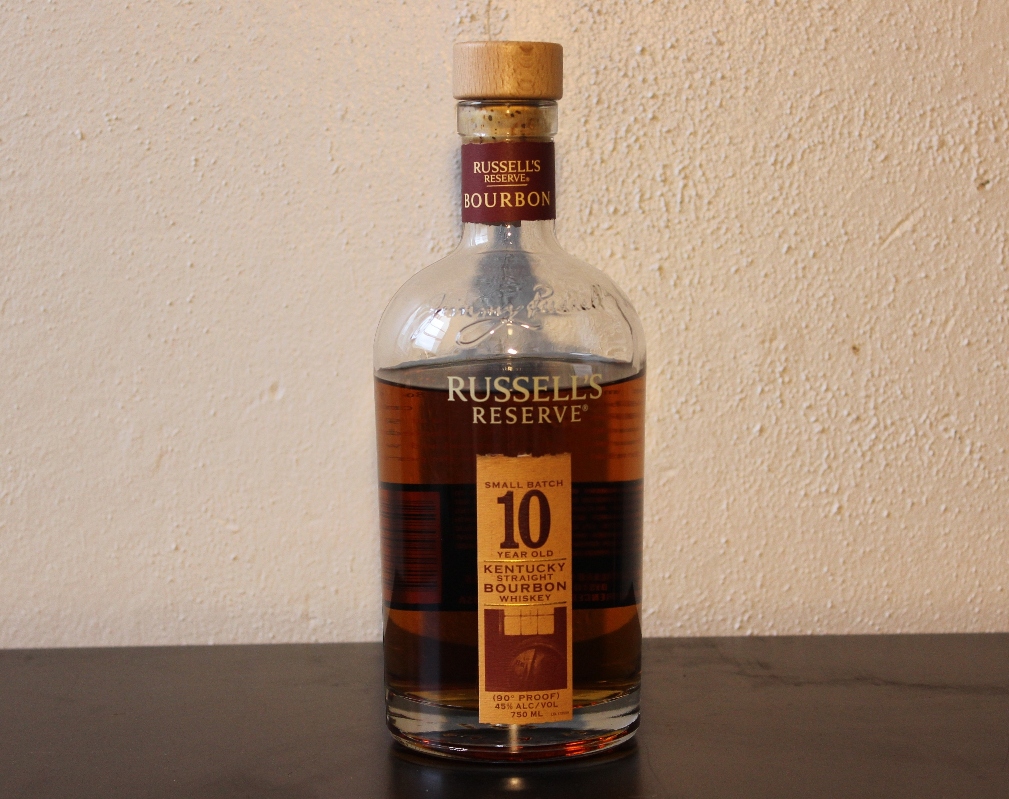
Case in point is the Russell’s Reserve. This premium small batch bourbon is a child of the well known Wild Turkey distillery, which in one form or another has been producing bourbon in Lawrenceburg, Kentucky, since 1869. The man that we have to give thanks to is Jimmy Russell, who has worked at Wild Turkey since 1954, apparently making him the longest tenured active master distiller in the world. Well and away enough time to earn the right to his own expression.

Russells and Ted 2

As its name suggests, the Russell’s Reserve 10yo small batch Kentucky straight bourbon whiskey is selected from older aged barrels of Wild Turkey spirit (standard bourbons generally using younger stock), and then reduced to 45%. Interestingly this big bird likes to fly south for winter, for in addition to smooth gooey caramel and hot spicy oak, there are notes of bananas, cashews, cantaloupe and feijoas swirling around on the nose.

Once introduced to the mouth the Russell’s is hot, spicy and complex, rather like a latin dance (probably not the rumba though. Wrong drink). The feel is thin and supple, rather than oily and thick, and the finish is sharp and astringent, lingering across the tongue.

Russells and Ted 1

Jimmy should be proud to lend his name to this expression of the Kentucky craft, as in his wisdom he has created a bourbon that tastes of more than just bourbon, an emergent system of flavours that as a whole are greater than the sum of their parts. Rather than a scrawny corn-fed pot boiler, the Russell’s Reserve 10yo is a magnificent tom turkey wearing a Tom Selleck mo, a sharp Hawaiian shirt, Miami shades, and playing dirty 80’s sax as the sun rises across the skyline.

★★★

Makers Mark

Reviewed by: Nick

Makers Mark

Wearily, the Whisky Waffle boys trudged onwards through the corn-fields of Kentucky. They were on a quest to find the Holy Grail of American whiskey: a bourbon which tasted of more than just bourbon! There were those that called them foolish, others that declared them mad, others still that claimed it was just an excuse to drink whiskey (fair cop), but unperturbed they soldiered on. Finally, they stumbled upon a hooded figure, beckoning them into a distillery.

The dark wooden building with red colonnades looked nothing like its fellow American distilleries. Fire engines and statues of the Virgin Mary in bathtubs lined the path. Our heroes turned to each other thinking: could this be it?

They were handed a dram of the golden liquid, shimmering in the moonlight and wondered what complex and unique flavours they would discover. They drank. And the flavour! It tasted… rather familiar. In fact it tasted… like bourbon. The Whisky Waffle boys’ shoulders slumped. This was not the Holy Grail. Their quest was not at an end.

Nick and Makers 2

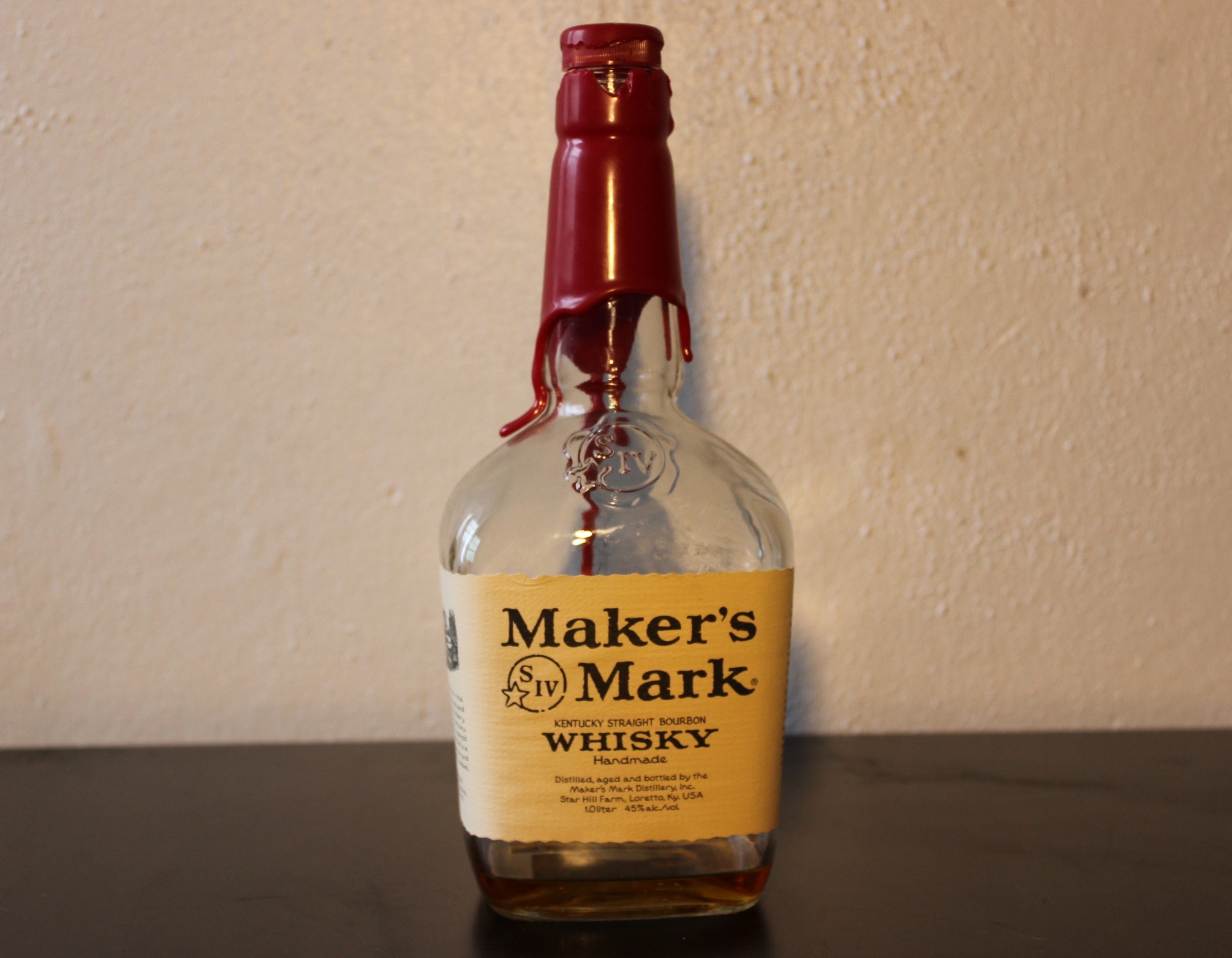
Makers Mark’s attempts at individuality – the wax dripping down the neck of the bottle, their use of wheat instead of rye alongside the corn and barley, even spelling their product ‘whisky’ despite American conventions – are all a cunning disguise to hide the fact that Makers Mark is, when it comes down to it, a Kentucky Straight Bourbon.

It’s by no means a bad one. The nose presents oak, cinnamon and vanilla which combine to suggest a nice dessert, perhaps a peach crumble – though possibly without the peach. Or the crumble…

The palate is even less like a peach crumble, instead elements of sweet caramel and cornflakes are present, combining to form something akin to Honey Joys. A less dessert-related tasting note is that this is actually a rather spicy drop; a much fuller bodied whisky than many of its fellow American whiskies, and being bottled at 45% surely helps this.

The finish is long and leaves a certain amount of lingering spice: like a half-hearted cinnamon challenge. There are also the more abstract and subjective notes of grass cuttings and saddle leather. You’ll have to take my word for this.

Nick and Makers 4

This bottle was intended by the makers of Makers Mark to be a whisky that appeals to people who don’t like bourbon. To that extent, it seems that they have failed. In fact, they have possibly achieved the exact opposite. This is a perfectly acceptable entry-level drop, and one that will keep bourbon drinkers perfectly content.

So if you see that hooded bartender beckoning you towards the Makers Mark on the top shelf, be warned. Look past the metaphorical wig and the fake moustache. Despite this wily disguise, the Makers Mark is not the Holy Grail – it is simply another bourbon.

★★

Jim Beam Kentucky Straight Bourbon

Reviewed by: Nick and Ted

Jim Beam

When Jacob Beam first distilled some corn along the banks of Dicks River in Kentucky circa 1795, he probably cranked out some pretty rough and ready stuff. Well, it seems that over the years not much has changed. Jim Beam has its origins as a small family business plying their trade in the newly formed state of Kentucky, but since then the family has grown just a tad. In 2014 Jim Beam was involved in a shotgun wedding which resulted in it picking up the double-barrel name (geddit?) Beam-Suntory. And all this multi-national success only came at the low, low price of its soul. Well, it seemed like a good deal at the time.

Not that the brand was particularly struggling it must be said, as Jim Beam Kentucky Straight Bourbon is one of the most recognisable and consumed spirits on the face of the planet. Most often you can observe it in its natural environment being mixed with coke, or being shotted by teens trying to be tough (and then regretting it later).

The boys from Whisky Waffle are even tougher than that. They sipped it. Neat.

Ted and Beam

On the nose the Beam is surprisingly smooth. And sweet… you could be forgiven for the thinking that it’s a liqueur. Honey, pear and confectionery notes of red frog and fairy floss (“cotton candy” in Beam’s motherland) slide across the ol’ olfactory bulbs. Overall it’s not too bad actually.

But then like a Disneyland water-slide, things go down the tubes. On the palate the analogy is rather appropriate as the Beam is about as watery as the pool at the bottom of the aforementioned slide. It also tastes like quite a few people have been swimming in it before you. The quality is thin, with a hint of sour white grapes coated in a film of dish liquid. Once you’ve emerged from the murky waters, your mouth is left with the not altogether pleasant taste of ethanol, cheap Sav Blanc and tourists in Mickey Mouse swimmers.

In fact, drinking bog standard Beam is a lot like a trip to Disneyland in general. It’s exciting at the start, but at the end of the day you are left feeling hot, weary, annoyed, and like your personal space has been violated by hordes of Japanese tourists (Suntory joke). Jim Beam Kentucky Straight Bourbon is not a whiskey we would turn to regularly, but then again we’re not really doing it right. Coke anyone?

Whisky Waffle Present: American Whiskey Week

Posted by Nick and Ted

Bourbon Week

Jim Beam: Hmm… Tastes like bourbon; Makers Mark: yup, that’s also bourbon; Woodfords Reserve: I’m detecting notes of… wait, what is that… bourbon?; Jack Daniels: technically they don’t even call it bourbon, but you know what, yeah it totally is.

In our admittedly (very) limited experience with the whiskies of the US, we both tend to agree that the overriding flavour is… well… bourbony. In Scotland a drive from one end of the town to the other can result in whiskies so different from each other that you would swear that they could not possibly be made with the same three ingredients. In contrast, across the 4500km from coast to coast in America, not much seems to change. Sure there are subtle nuances, but in the end it’s all just bourbon isn’t it?

Bourbon: The Facts You Probably Already Know But We’re Going To List Anyway: (Don’t Judge Us Ok?)

  1. Not all American whiskies are bourbon, but all bourbons are whiskies.
  2. Almost all bourbons are made in the state of Kentucky. Tennessee is too cool and narcissistic to use the term ‘bourbon’ and instead likes to go with the rather unoriginal ‘Tennessee Whiskey’.
  3. Bourbon is made using one of Nick’s favourite foods… Pizza!… no, wait, the other favourite… Corn! By law, bourbons must contain at least 51% corn, and no more than 80%. The remainder is usually made up of a mixture of rye, barley or wheat.
  4. By law, bourbon must be aged in brand new charred oak casks, thus keeping coopers in a job.
  5. They must all taste like bourbon.

Meme Ygritte

Ok, before you all go on the warpath, we fully admit that we don’t really have a leg to stand our lofty opinions on. We have inadequate, shall we say, ‘practical knowledge’ on the subject. Therefore, we will be embarking on a week long quest to explore the amber offerings of the U.S. of A and educate ourselves about the subtleties of Scotch’s redneck American cousin. And who knows, we may even discover a flavour in there that’s not bourbon.

#AmericanWhiskeyWeek

Springbank 10 Year Old

Reviewed by: Nick

Springbank 10 Year Old

Welcome to Campbeltown. I shall begin by clarifying to my fellow Tasmanians that I am referring to the town in Scotland, not the eternal toilet stop halfway between Hobart and Burnie.

Campbeltown is located at the tip of the suspiciously shaped Kintyre peninsula in the south of Scotland and was once known as the ‘whisky capital of the world’, being home to as many as twenty-eight distilleries. Sadly (at least for the sailors who make port there) this is comprehensively no longer the case. Several distilleries, however, are still going as strong as ever.

Springbank, Longrow and Hazelburn are all based in Campbeltown. In fact, they are all based at the same distillery. And despite being located at the same premises, all three make many varied and fascinating drams. Longrow whiskies are heavily peated, and often aged in unusual and quirky barrels. Hazelburn whiskies are triple distilled, and as smooth and creamy as their similarly produced Irish counterparts. Springbank, the biggest and most well known of the three, makes whisky with a maritime influence, harking back to drams made in the nineteenth century when the town was in its pomp.

Their entry level is the 10 Year Old and it is a perfect dram to demonstrate what they are about. The nose is oily and buttery with a sweet seaside edge. This is whisky doing salted caramel. There is also the faintest hint of smoke, of course nothing like the Islay peat monsters which linger only a small stretch of water away.

It is bottled at, in my opinion, the optimum level for whisky: 46%, and the slightly higher alcohol percentage gives this whisky a pleasantly light spice across the tongue. The flavour is slightly fishy, and I mean this literally, instead of labelling it ‘suspicious’ (although some people would take this claim to be very suspicious indeed).

The Springbank 10 Year Old has been matured in both ex-bourbon and sherry barrels, and the sherry in particular is notable on the finish where raspberry jam flavours mingle with the slightly smoky notes creating something memorable and completely unique to Campbelltown.

While the flavours in this dram are all fairly gentle and subtle they combine nicely to create a pleasant and easy drinking whisky. It therefore serves as a perfect introduction to the lost whisky region of Campbeltown and to the wonderful drops made there by Springbank and its two sister distilleries. Of course, if the 10 Year Old is a little light and inconsequential for your liking, you could always jump straight to the 15 Year Old – now there is a dram that means proper business…

★★★

Spirited Resolutions: 5 whiskies I would like to try in 2015

Posted by: Ted

The year is coming to a close dear friends, and while there have been good times and bad, one thing that I have consistently enjoyed is drinking whisky. The drams have been varied, and thankfully the overwhelming majority have been at least good, while quite a few have been interesting and some even down-right exciting. With a new year swiftly encroaching, it is time to cast the mind forward and ponder one of the big questions in life: what to drink next year? Well, after some cogitation, here are five whiskies that I would like to get to know a little more intimately in 2015:

  1. The Balvenie PortWood 21yo

balvenie whisky waffleI love the stuff that Balvenie puts out (the 12yo DoubleWood for example). They’ve always got great character that brings out the best of Speyside; smooth, sweet, oaky and a variety of spice and fruit from the different finishing methods they use. Quite frankly, the thought of a 21yo Balvenie finished in 30yo port pipes makes me twitch in a slightly manic way and want to use my outside voice indoors (such a rebel I know). I suspect it will be super smooth with an amazing depth of character for its age thanks to the port influence.

  1. Johnnie Walker Green Label

JW whisky waffleOK, I’ll make a small confession: I have actually tried the Green Label before. But in my defence it was quite a while ago when I wasn’t as educated about whisky and it was only really a sip, so I have no memory of it to speak of. Therefore I’m just going to pretend that the whole thing never happened and start anew. If you followed our Johnnie Walker Week event you’ll know that the Green is no longer produced, and that our tame writer Moorsey and plenty of other people around the traps rate it very highly, ranting about it in superlatives and even going so far as to commit poetry. So I’m really rather keen to see how it stacks up when I eventually stumble across a bottle.


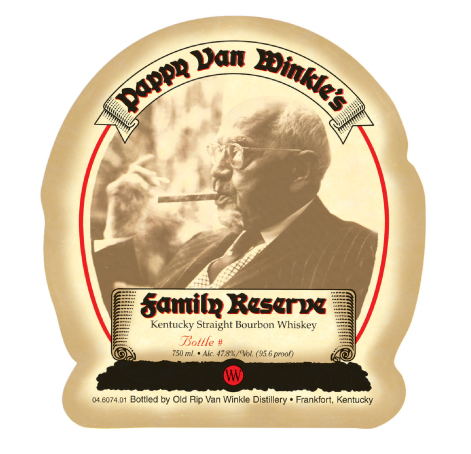
  1. Pappy Van Winkle’s Family Reserve 23yo

H7C00582.TIF.pdf

Here at Whisky Waffle we haven’t really delved into the world of bourbons yet. I’ve tried various bits and pieces here and there, but I’ve never had one of the older, super-handcrafted numbers. I’ll reserve judgement on the bourbon genre as a whole for the moment, but I will say that I have strong suspicions that the older, rarer drops are a much different kettle of fish to their younger kin. By all accounts the Pappy Van Winkle Family Reserve 23yo is a big deal, a man amongst the boys. Part of the reason for its inclusion on this list is that I’ve actually seen a bottle of it on a bar shelf in my area. A nip will cost me a pretty penny, but odds are that it’s worth it.


  1. Penderyn Madeira Finish

Penderyn whisky waffle

Wales. Not the first place you may think of for whisky (but certainly not the last. Who knew Liechtenstein makes the stuff, but there you go). Penderyn is the first and only Welsh distiller in over 100 years and uses a novel single-still method, so I’m quite curious. Madeira casking is never a bad thing, and you know what the best bit of all is? I actually own a bottle. Nick gave it to me after he returned from the UK, so it’s waiting ready on my top shelf for the perfect moment.


  1. Redlands Estate “…?”

Redlands Estate Distillery whisky waffleSo this one is probably a bit of a stretch, but I’d be so excited to try it. Redlands Estate is a new distillery in Southern Tasmania which we visited earlier this year. According to Dean Jackson, the head distiller, the first barrels are slated for release in 2015. I know chances are slim to none of me getting my hands on a bottle as they’ll all be snapped up in an instant, but I’ve tasted the new-make and smelled the delicious vapours rising from the Tasmanian ex-pinot noir barrels in the bond store, and they make me very excited. Plus a new release from a Tasmanian distillery is always something to look forward to.


So there you have it. How successful I will be in my quest I’m not sure, but it’ll be fun to try. Onwards into the future!

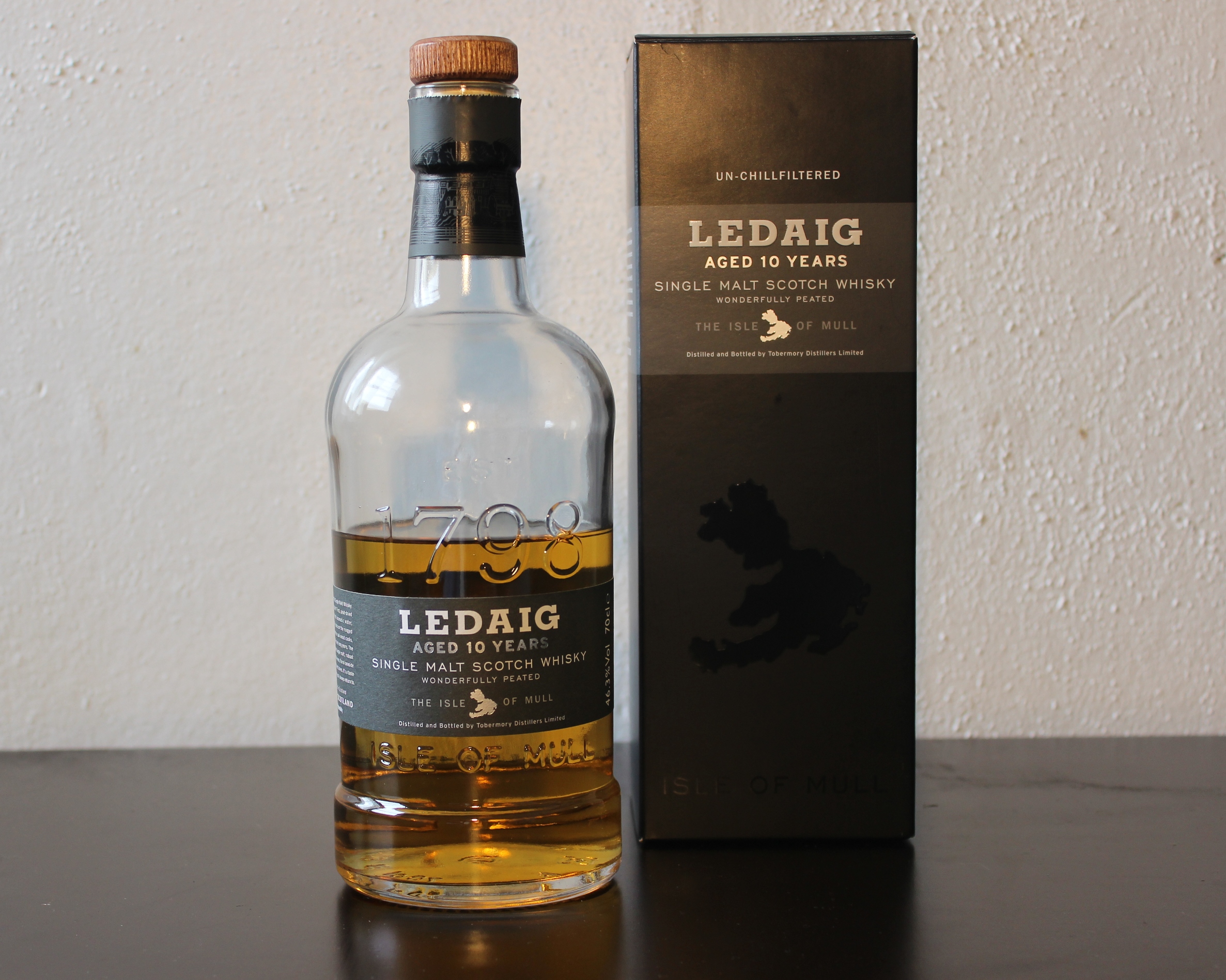
Ledaig 10 year Old

Reviewed by: Ted

Tobermory Ledaig whisky waffle

My Whisky Waffle co-conspirator and bestie Nick was kind enough to give me a bottle of the water of life for my birthday (what else?). We cracked it open that night and had a few cheeky drams. I’ve been mulling it over ever since, a rather appropriate course of action seeing as the bottle in question was a Ledaig 10 year old, which is produced by Tobermory Distillery on the Isle of Mull (Haha! Geddit? Isle of Mu… Why are you all groaning?… Ok, I’m just gonna sit quietly over here).

The Isle of Mull is part of the Scottish whisky zone known as the ‘Islands’, a bunch of distillery inhabited land masses surrounded by water and huddled off the Scottish coast, whose seemingly defining feature is that they aren’t Islay. Impressively, Tobermory Distillery is the chief abode for the islanders (or Mullets as they are known locally), a ramshackle stronghold built from driftwood, shipwrecked fishing boats, kelp and the occasional escaped haggis… Oh, wait, sorry, the distillery is actually named after the main town on the island, Tobermory, and is probably constructed of far more traditional materials (not sure about the Mullet thing either. I hope it’s true).

The Ledaig 10 year old takes its name from the original distillery built on the island in 1798. Contrary to popular belief (i.e. mine), it is not matured in the sporrans of the Mullets, but instead in the far more superior oak barrel. Typical of the drams from that part of the world, the Ledaig is peated, but it is a very different smoke to the Ileach drops (Remember, ‘Islands’ = ‘Not Islay’).

On the nose the Ledaig is dark and intense, with quite a distinctly meaty quality to it. It’s sort of like a combination of smoked ham and marinated meat sizzling over hot coals. That marinade has a great oozing sweetness combined with pepper, sea salt and perhaps… plum?

On the mouth you are hit straight up by a big swirl of smoke, followed by a robust spicyness from the 46.3% alcohol. After that a lovely butterscotchy sweetness slides over the back of the tongue, served up with caramelised pears and another dose of that woody smoke. Surprisingly the Ledaig is much smoother than you may expect from its 10 years, but the combination of the smoke and the higher alcohol means that there’s still heaps of craggy, earthy character to be had. It’s certainly not a beginners drink, and probably requires a bit more practise to enjoy the full effect.

Growing up in the only distillery on a windswept island off the Atlantic coast of Scotland has certainly given the Ledaig a character all of its own. Perhaps some of that black humour it displays comes from the dark waters of the mountain lochs on Mull used in its creation. If you’re looking to give someone a strong, rugged, sexy islander who’s been out fighting fires on mountains in only his kilt for their birthday, then the Ledaig’s your man (I’m sure that’s what Nick was aiming for). There’s no need to mull it over too long.

★★★

Balvenie 12 Year Old DoubleWood

Reviewed by: Nick and Ted

Balvenie Doublewood 12 Year Old Whisky Waffle

Double the wood, double the fun! Just getting into whisky? Think you might like to give one of those new-fangled single malts a try? Can’t afford the Glenfiddich 50yo? Roll up and try the multi-barrelled, malty-talented whisky wizard, the one, the only: the Balvenie 12 Year Old DoubleWood! It’ll cure all your woes*!

* Side effects may include becoming compulsive about seeking out single malts, and mild discomfort in the presence of blends.

Balvenie is a member of the the William Grant & Sons stable, and is the less famous sister to Glenfiddich. Balvenie prides itself on continuing to use traditional hand malting methods, and is well respected for its high quality range of whiskies. Chief amongst these is the 12yo DoubleWood, a dram that has converted many a whisky novice.

There is a good reason for the DoubleWood moniker: while it spends the majority of its life in American oak, for the last few months of maturation the spirit is transferred to sherry butts. This technique imparts the range of flavour that makes this whisky special and means that there is something in it for everyone.

This variety of flavour is immediately evident on the nose with sweeter notes of caramel, fruit leather and vanilla pairing with a citrusy tang reminiscent of lemon drops, and aromatic spices such as nutmeg and cinnamon.

The flavour is very broad and rounded across the palate. There is an initial hit of oranges, followed by spicy ginger and buttery shortbread. The sherry influence is definitely present in the finish. Dried fruits such as figs, prunes and dates can be found, and a tasty flourish of old English toffee is left on the tongue at the end.

The Balvenie 12 Year Old DoubleWood is exceptionally smooth for its age, and is also excellent value for this level of quality. For experienced whisky drinkers there is so much to like here and it warrants repeated tastings (for research purposes, naturally). For those just beginning their journey, the DoubleWood provides an ideal gateway to the broader whisky world. So line up ladies and gents, there’s enough for everybody. You won’t be disappointed!

★★★★