Scotland

Eriskay

Reviewed by: Ted

Eriskay

Charles Edward Louis John Casimir Sylvester Severino Maria Stuart. While you may think that I am just reeling off random names in some whisky fuelled musing, they in fact all belong to one particular person. A rather famous one in Scottish history at that. Loyalists to the throne scathingly called him the ‘Young Pretender’, but his followers, and indeed most people today, knew him thus: Bonnie Prince Charlie.

Although born in Italy, 1720, Charlie was actually descended from British royalty, grandson of the deposed Stuart King James II and VII. From a young age Charlie knew it was his mission and divine right to reclaim the throne. In 1745 he made his move, sailing from France and landing with his companions, known as the ‘Seven Men of Moidart’, on the small Outer Hebridean island of Eriskay to begin the ‘Jacobite Uprising’ and sweep through his ancestral home of Scotland to raise support.

‘What has this got to do with anything?’ you may be wondering. Well, it just so happens that the subject of this review takes its name from the island where Charlie and his men landed: Eriskay. Eriskay, or ‘Eric’s Isle’ in old Norse, is a blended Scotch whisky made from ‘quality Highland and Lowland Whiskies’. While the whisky is certainly Scottish, a closer inspection reveals that it is in fact bottled in Australia for the Ron Rico Distilling Company for sale on the local market.

Some cheap blends make no bones about the fact, often sporting rather woeful labelling. The Eriskay is indeed a cheap blend, purchased in this case for only AUD$37, however it’s certainly a cut above its companions in its dress sense. Superficially it looks rather like the label of the Talisker, with serifed lettering and a rather nice map in the background. However, bonnie looks alone do not make the man, there must be substance also.

History records that the Jacobite rebellion was doomed to failure, lost through poor battle strategy and politics. Unfortunately the Eriskay is rather similar in this regard. The nose is light and flat, consisting of mostly shortbread, malt and a bit of caramel slice, sweet but fairly unfulfilling.

Surprisingly, on the mouth there is an instant hit of smokiness, but it crawls low like the fug after a battle. Unfortunately this is followed up by the dull tang of metal, filling the back of the mouth like a round of musket shot. The finish is sharp, bitter and lingering, much like the remainder of Charlie’s life after his cause was crushed.

The Eriskay is definitely a whisky that sits squarely within its price range. While it may attract you with the promise of its Bonnie face, it seems that the Loyalists were right, and the Eriskay is indeed a ‘Young Pretender’.

★★

Moseying on over to Mt Uncle: a visit to North Queensland’s only distillery

Posted by: Nick, photos by Paul Moran

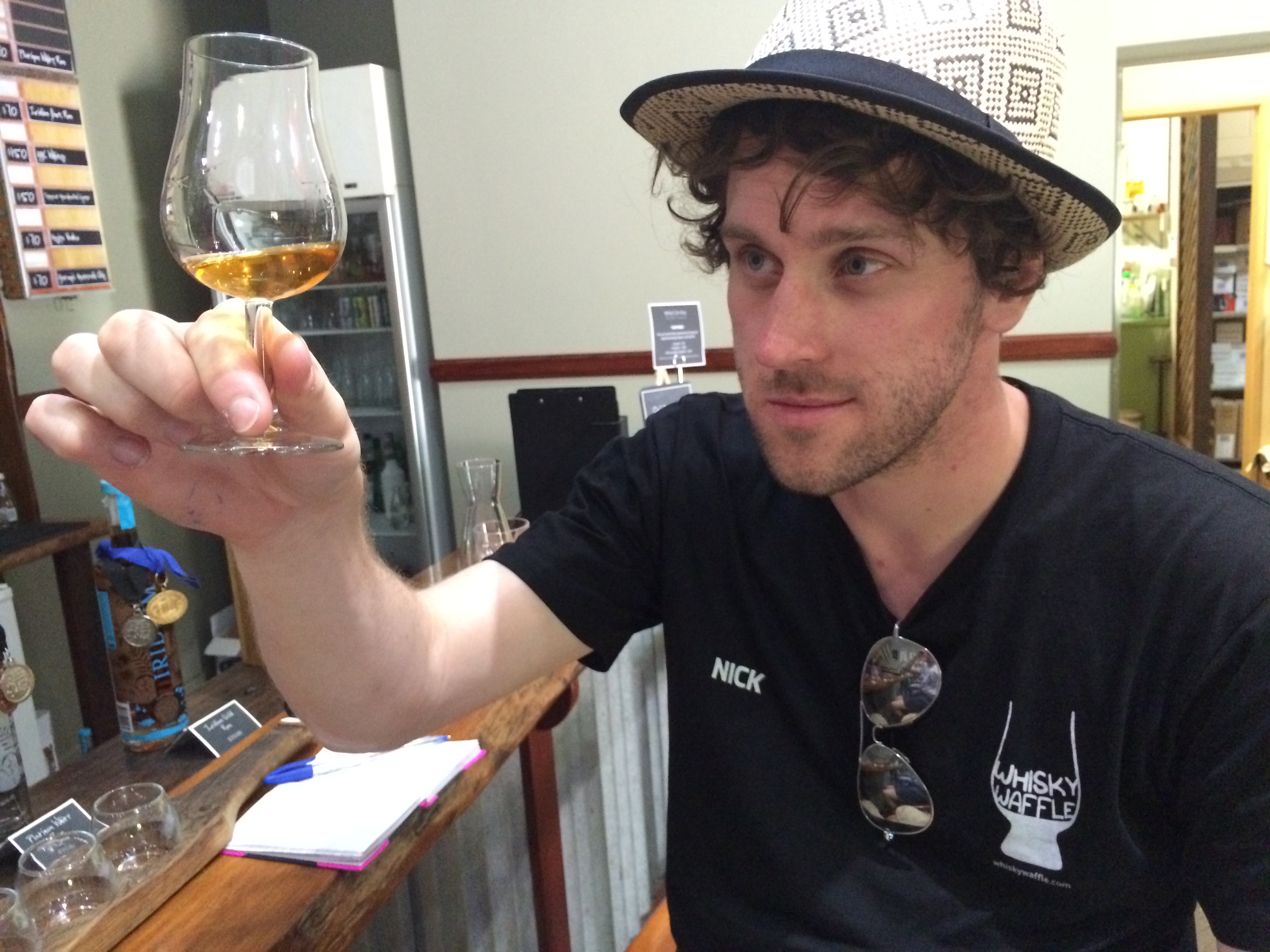
1 Nick at Mt uncle

Any excuse to wear the shirt.

I’m not sure what I expected from an outback distillery. Certainly not a wood and stone hut surrounded by a banana plantation with native animals roaming freely over the site. But it turns out that the outback distillery Mt Uncle is exactly that: a distillery in Australia’s outback.

Mt Uncle can be found half an hour from Cairns and is North Queensland’s only distillery. This means that it is the only whisky producer for a nearly 2000 kilometre radius – but I wasn’t going to let a small detail like that deter me!

2 BBC

I am prepared to travel for my whisky

The business was founded fifteen years ago by farmer Mark Watkins, and originally produced banana liqueur – a more conventional business in this part of the world. But in 2006, he bravely made the switch to distilling barley and is now reaping the rewards. Mark, however, is not big on tradition, preferring to do things his own way. This is in evidence with the name of his yellow-wax-dipped five year old single malt: The Big Black Cock. The large dark-feathered rooster on the front of the bottle clarifies the source of the controversial name.

3 BBC

Three big black cocks

And it’s a proper outback whisky. Buttery vanilla on the nose with dashes of various native vegetation. The palate is fruity and bitter, perhaps due to the ex-wine barrels it was matured in: American oak with French oak tops. The finish is long, and a little rough. Overall, an intriguing mix.

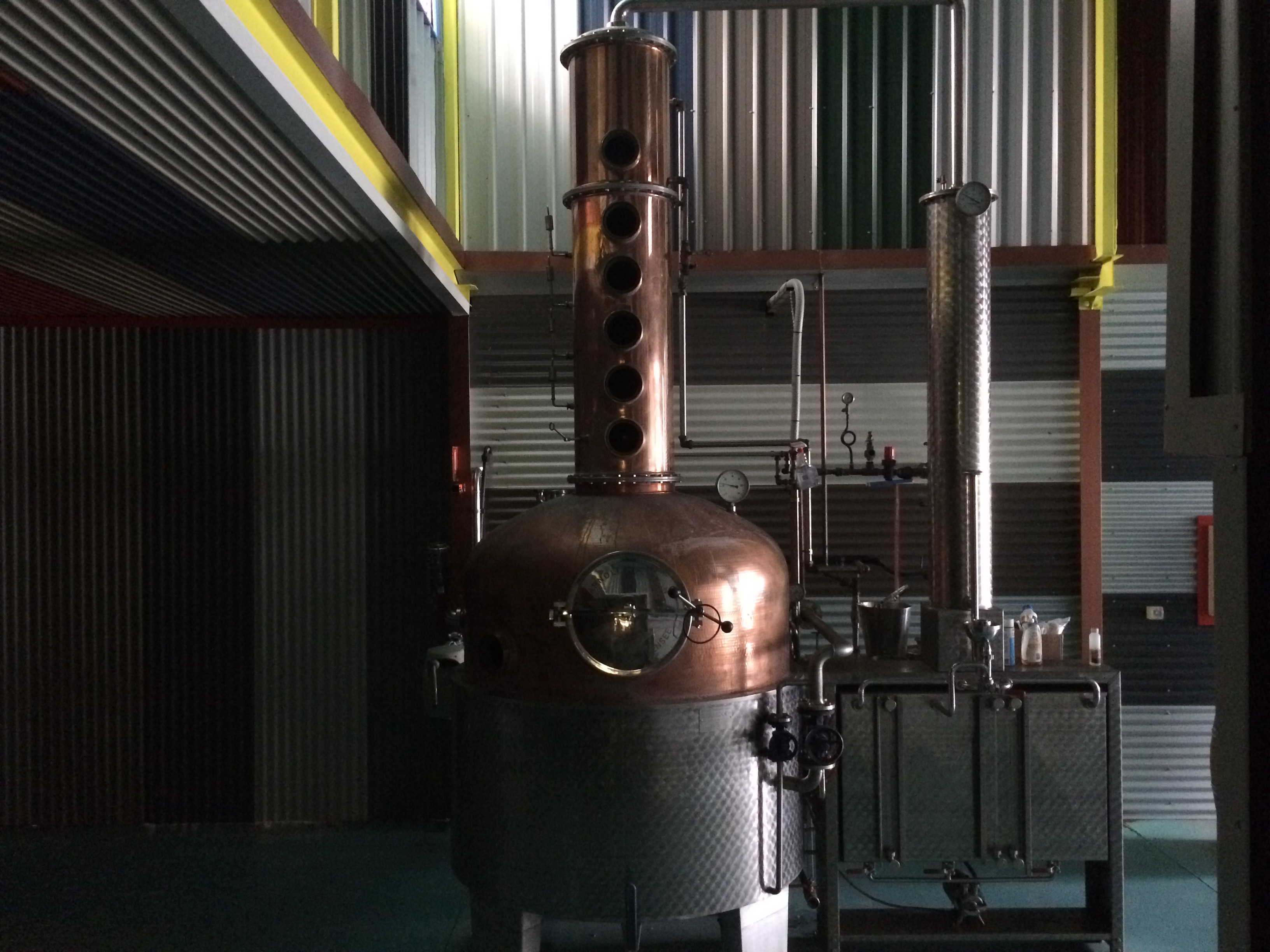
5 Still

Pot still, or column still? Or both?

The whisky was not the only product made at the distillery – Mt Uncle also produces a vast range of other spirits. This included an interesting vodka made from honey, and a light and a dark rum, both easy to drink. There was also a proper bush gin, made with botanicals such as wattle seed, peppermint gum, lemon myrtle and Lilly Pilly. Finally, a bright pink concoction claiming to be marshmallow liqueur, provocatively titled SexyCat. And it was delicious. Dangerously so. Perhaps also embarrassingly so. But certainly a memorable addition to the Mount Uncle range.

6 Sexy Cat trier

Perfectly acceptable for male drinkers everywhere… I’m telling myself…

Myself and my drinking-buddy-of-the-day Paul had a great time sampling the products, chatting with staff and wandering around the grounds. We kept remarking how nice the place was, though we had to keep reminding ourselves that it was a distillery. It was certainly not what we expected. But we were in tropical North Queensland surround by banana palms. How could we expect anything else?

4 the range

The range: and yes, the SexyCat is sitting in a high heel shoe!

Glenlivet Nàdurra 16 Year Old

Reviewed by: Ted

Glenlivet Nadurra 2

We are quite fond of The Glenlivet. The 12yo is a dependable drop that hits straight down the middle, perfect for when you just want to sit back and have a dram (although the introduction of the Founders Reserve may change all that). So what happens if you knock things up a notch?

If you think that your glass of Glenlivet needs a bit more punch, then look no further than the Nàdurra. Gaelic for ‘natural’, the Nàdurra is a cask strength release from the Speyside distiller. Glenlivet claims that it is a traditional 19th century style dram, evoking the character of the whiskies originally created by founder George Smith.

Using first-fill American oak casks, the Nàdurra is aged for 16 years and then bottled between 54-55%. My particular example stands at 54.7% and was bottled 06/13 from batch 0613X. As you would expect from a bourbon-aged whisky, the colour is fairly light, although the strength keeps it at a weak amber rather than straw-like.

The nose is fat and rounded, with melted brown sugar, vanilla, cinnamon, cloves, cocoa, peach, malt biscuits and apricot jam. It’s fairly direct on the nostrils too thanks to the strength, but the sweet, gooey nature means that it oozes seductively, like the smell of pudding wafting from the kitchen on a cold night.

On the mouth the Nàdurra is hot and slightly dry, with a nice spiciness. When you take a sip it zooms straight to the roof of the mouth before plonking down onto the back of the tongue. A bitter caramel finish lingers around the mouth, although I suspect it would be rather shorter at a lower strength.

The Glenlivet Nàdurra is no everyday dram to knock back after work. Instead it’s perfect for snuggling down on the couch at the end of the evening, or, and I speak from personal experience, keeping warm while gazing up at the stars on a perfectly clear night. If you’re looking for a friendly companion cask-strength dram, then the Nàdurra is a natural choice.

★★★

Whisky Tales: Stories to drink to

Posted by: Nick and Ted

We like drinking whisky. We also like writing about whisky. So when we heard that the Tasmanian Writers’ Centre was holding an event combining the two, we packed our bags and cruised off down the highway to hell Hobart to make an appearance.

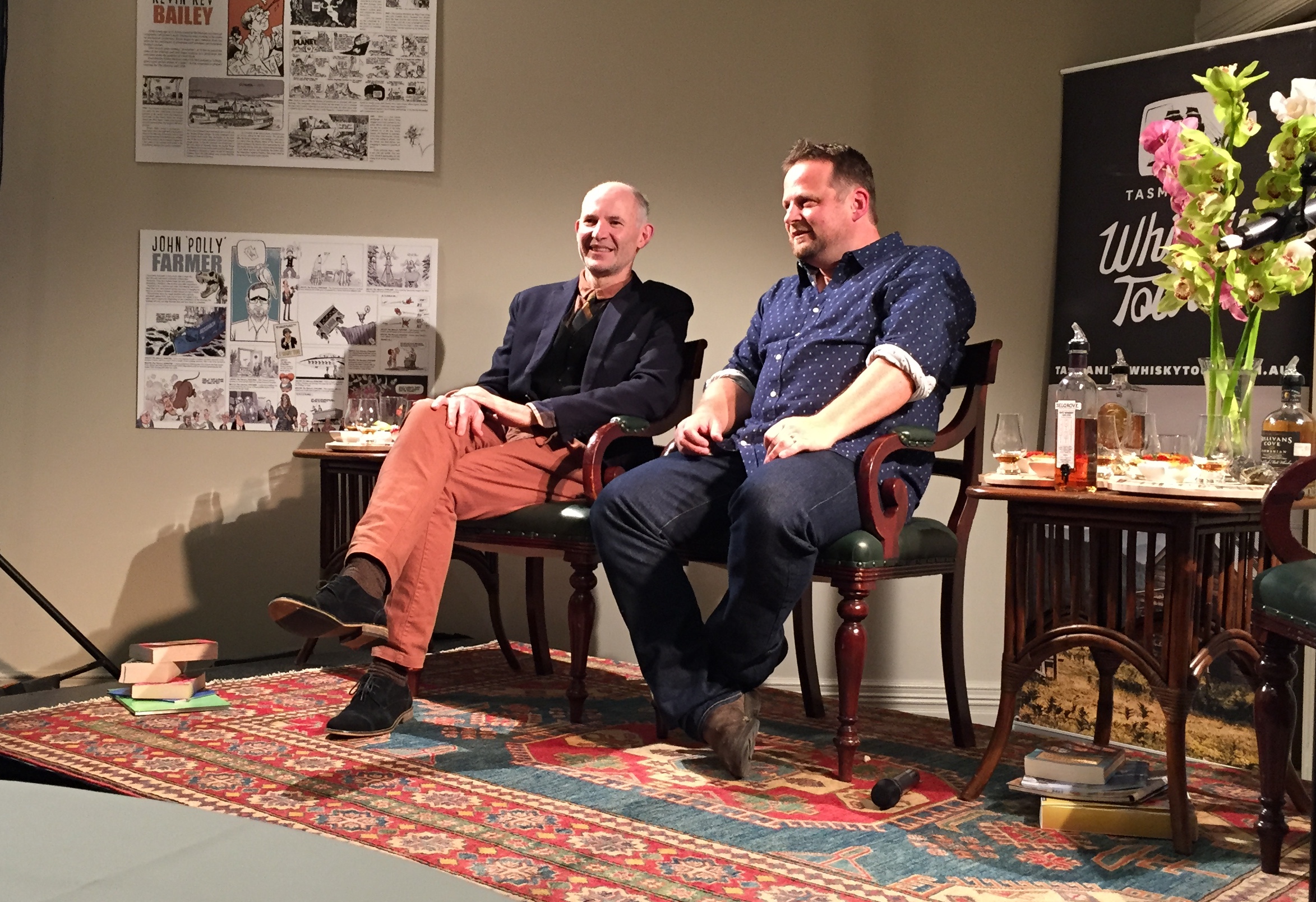
‘Whisky Tales: Stories You Can Drink To’ featured cartoonist-at-large Jon Kudelka, co-author of ‘Kudelka and First Dog’s Spiritual Journey’, and Bernard Lloyd, true waffler and author of the upcoming book ‘Tasmanian Whisky: The Devils Share’. The evening was hosted by Tasmanian Whisky Tours founder and quality beard grower Brett Steel.

1

Bernard and Jon: Whisky Writings answer to Statler and Waldorf

Of course, we must not forget the 50 strong audience, who bore witness to a night of sensational banter between the three protagonists as they discussed the history of Tasmanian whisky, the state of the State’s distilleries and just why Pete Bignell is such a good bloke.

Upon arriving we were disappointed to discover that our talk clashed with the intriguing sounding ‘Tasmania: A land of dregs, bogans and third generation morons’. It seemed that a bogans first policy was in swing too, as while patrons for the other talk waltzed straight in, we were forced to loiter in the lobby with Bob Brown. We came up with a number of theories as to the nature of the delay:

  1. A brawl had sparked up between whisky snobs and bogans, and all the bottles had been smashed to use as weapons.
  2. Jon Kudelka’s bicycle had got a puncture on top of Mt Wellington.
  3. Bernard Lloyd had offered to tell a staff member a brief anecdote.
  4. Brett Steel had tucked into a bottle of cask strength Lark to steady his nerves, and was found ‘napping’ under a table.
  5. There had been a rather bizarre incident involving an explosive pineapple and a Peruvian folk band who had wandered in from the market.

Finally we were permitted entry and made a rockstar’s entrance past the lone paparazzi lurking in the hall. We selected the closest table to the front and sat down to a platter of fine food and distilled beverages. We later discovered that the platters themselves were in fact barrel ends that had been specially made for the event that week.

2

Whisky Waffle and the Queen… Oh, and the wonderful Jon Kudelka!

Brett kicked off proceedings by announcing that the night would be filled with yarns, anecdotes and tall tales about the dirtier, grungier characters that make up the Tasmanian whisky industry (two of them being seated beside him). We learned about the beginnings of Tasmanian distilling from Bernard, when in the 1820s the Governor adopted an ‘if you can’t beat ’em, join ’em’ policy, allowing several land owners to start legally producing whisky.

Bear in mind that this was a similar sort of time to when famous Scottish distilleries such as Glenlivet, Laphroaig and Dalmore were being established, however the Tasmanians were shut down only several years later by decree of Governor Franklin. If they had been allowed to continue, who knows what they might have achieved.

3

Wafflers United

Jon discussed the Spiritual Journey, noting how Brett had bailed him out of what he described as a ‘massive cockup’ in the trips organisation. Turns out that Tasmanian distilleries like to have a well earned break on the weekends. Luckily, Brett was kind enough to provide an Audi and the offer to be designated driver on a week day.

Of course, the talk was only one highlight of the evening, the other being grain – of the distilled variety! There were three rare local drams on offer, and both of us were smugly able to identify each by smell alone. Each was paired with a delicious treat, although we debated whether the matchings might have worked better in a different order.

Stepping up to the crease as the opener was a cask strength Lark finished in the distillery’s own rum barrels, paired with a juicy oyster. Naturally there was plenty of vanilla, caramel and of course Lark’s signature orange, with a long warming finish.

Second drop was a Sullivans Cove bourbon wood single barrel paired with whisky soaked smoked salmon. In the Sullivans Cove we found lemon, toffee, salt and herbal notes, with a delicate zesty finish.

The last man standing was what Brett described as ‘fanboy whisky’. It was one of Belgrove’s mad creations, a 100% rye matured in Pinot Noir casks, paired with a hazelnut chocolate. It was a stark contrast to the other two, which pleasantly intrigued us. Lashings of plum jam, squashed strawberries, spice, wood and apparently a finish akin to sucking on a HB pencil (many thanks to our new friend Julian for that particular gem of a tasting note).

4 lads

Because all the cool people have slogans on the back of their t-shirts

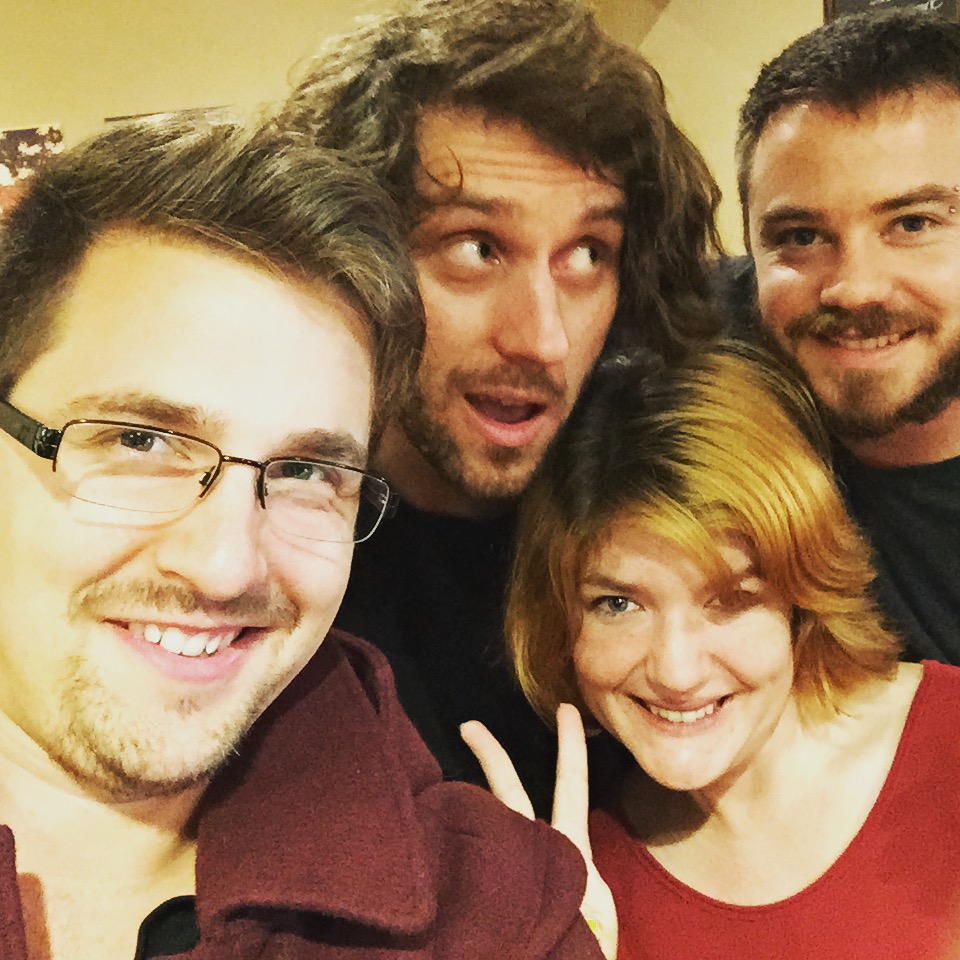
As much as we like to think we know about Tasmanian whisky, nights like this prove there’s an awful lot we don’t. We left feeling enlightened, inspired and grateful to be a part of the whisky scene in our home state. After the talk came to an end we filtered out to grab a signature with Jon, a pint with Bernard and a dram with Brett… and later, many drunken selfies with our new friends.

Tasmanian whisky, bringing people together since 1820.

5

Exhibit A

Glen Moray 12 Year Old

Reviewed by: Nick

Glen Moray 12 Year Old

It is quite often the case in the whisky world that what you pay for is what you get. It is usually a safe assumption that a $40 bottle will be inferior to one costing three figures. However, there are so many exceptions to this rule that I begin to wonder why us whisky fanatics spend the money we do.

Case in point is the Glen Moray 12 Year Old, a bottle that first caught my eye when I was a uni student and therefore always on the lookout for an alcoholic bargain. The Glen Moray was, quite simply, the cheapest single malt I could find in Australian bottle shops. However I was quick to discover it held a certain charm that saw it rise above many of the blends I could also afford.

There is no denying that it is a simple dram, bearing all the hallmarks of Speyside. On the nose there are notes of sweet biscuits and honey. Predictably from a whisky matured entirely in bourbon casks, there are also elements of vanilla. The palate is sweet, almost syrupy, with toffee, banana and heathery floral notes. The finish contains more vanilla, spice and Werthers-esque caramel.

The Glen Moray 12 Year Old is never likely to rack up a high score at any whisky awards shows. But in my opinion there’s absolutely nothing wrong with that. It is simply a straightforward and inoffensive whisky that punches above its weight against the larger players.

★★

A whisky book review: Kudelka and First Dog’s Spiritual Journey

Posted by: Nick and Ted

A day at the Whisky Waffle office usually involves drifting about sipping rare and expensive whiskies and confabulating to each other about them (that’s the story we’re sticking to at any rate). Well, for once we’ve actually sobered up and stopped rambling long enough to read a book. Not just a distillery booklet from out of a whisky tube either, but a whole volume on one of our most favourite subjects in the entire world. Luckily for us there were pictures too…

Bikie Book

“This is a ridiculous book,” Jon Kudelka firmly states with the opening sentence of the tome. He’s not wrong either. But when the story is about the odyssey undertaken by two cartoonists on electric pushbikes as they travel around Tasmania’s nine operating distilleries, what do you expect?

Kudelka and First Dog’s Spiritual Journey is a mad tale of discovery and comradeship, of long hill climbs and aching thighs, and of spotting local wildlife (or in Dog’s case, not spotting local wildlife). Firstly and foremostly however, it is a tale of whisky. The quest begins when two Walkley Award-winning cartoonists, Jon Kudelka and First Dog on the Moon decide they want to drink lots of Tasmanian whisky and get the internet to pay for it. One successful crowd-funding campaign later, the intrepid duo set off from Hobart on their electric bicycles, puncture repair kit at the ready.

Kudelka and First Dog’s chosen mode of transport turns out to be perfect for drinking in the beautiful Tasmanian scenery as the duo meander between distilleries, although they also learn the hard way about what happens when your electric bike runs out of juice (and we’re not talking about whisky – that stuff flows freely).

Over the course of two weeks they learn about whisky making from the horse’s mouth, spending quality time with industry greats such as Tim Duckett, Pete Bignell and Bill Lark, who personally cooks them a meal at his peat bog. As well as hanging out with the Tasmanian distilling pantheon, the boys also meet a lively cast of characters who variously offer them angry cheddar, yacht rides, stuffed foxes and advice on why you should always run over a Tasmanian Tiger if given the chance.

As well as being a rollicking yarn, the book is also highly educational. With the aid of informative cartoon infographics, Kudelka and First Dog give some valuable advice on how to drink whisky: “Step 1: put a bit of whisky in a glass. Step 2: Drink it. The end.” First Dog also offers a lengthy discourse on his theory about why all goat based products, or indeed anything to do with goats full stop, should be avoided at all costs. This is life changing stuff people; take heed fellow wafflers.

If you are interested in Tasmanian whisky, then this is the book for you. If you are interested in the drunken ramblings of two cartoonists, this is also the book for you. The hilarious anecdotes, friendly banter and whimsical illustrations are a truly laugh-out-loud combination.

Bike Waffle

We imagine the trip went a little like this…

We’d thoroughly recommend checking it out – the only real question is whether to buy it from Kudelka:  http://www.kudelka.com.au/kudelka-and-first-dogs-spiritual-journey/ or from First Dog: http://firstshoponthemoon.com/products/first-dog-and-kudelkas-spiritual-journey

Either way, you should look it up. After all, it’s recommended by two out of two cartoonists surveyed. And two out of two whisky bloggers as well.

anCnoc 16 Year Old

Reviewed by: Ted

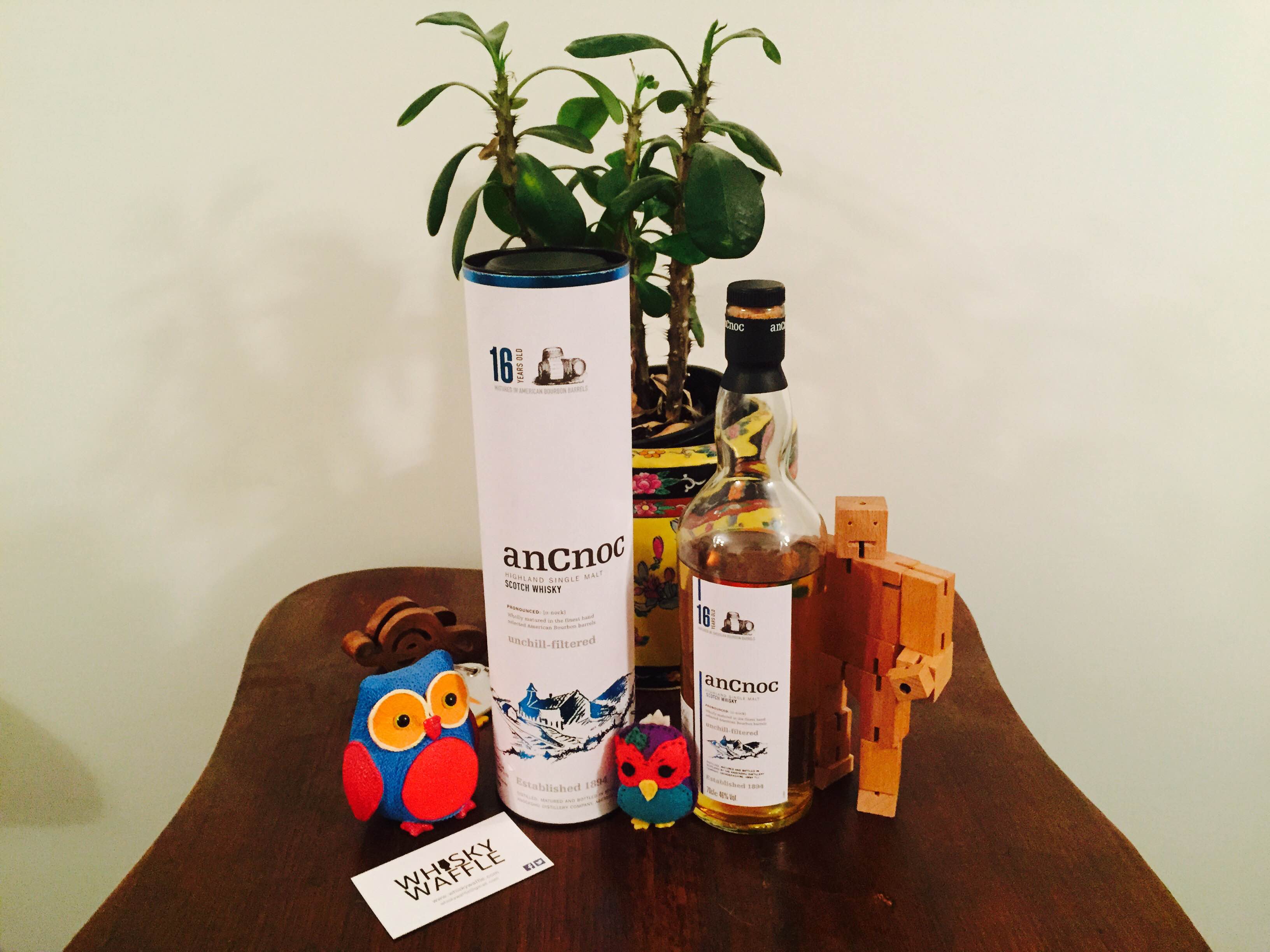
anCnoc 16

One of the fun things about whisky is that it can reveal to you a time and place as part of its character. If the anCnoc 12 Year Old is a summers day, then surely its older sibling, the 16 Year Old, is the evening.

Produced by Knockdhu Distillery, founded in 1894 and one of the smaller operating distilleries in the Scottish Highlands, the AnCnoc 16yo is a burnished gold in colour, darker than the straw-like 12yo.

On the nose the 16yo is smooth and sweet, with no hint at all of the occasional raw alcoholic jaggies lurking in the 12yo. Herbs, particularly mint, garnish a bowl of caramelised pears in syrup dolloped on Weetbix. The taste is sharp and bright, striking the upper palate. The finish is hot and bittersweet, drying the mouth and lingering for some time afterwards.

The AnCnoc 16yo is much better rounded than its younger kinsman, with maturity found through age. While the 12yo has the heat, dustiness and brashness of the day, the 16yo is the relaxing warmth of the evening. A perfect companion to watch the light fade on a clear summer night.

★★★

Highland Park 12 Year Old

Reviewed by: NickHighland Park 12

Single malts. They’re a varied lot. Some people like peat monsters. Some like sherry bombs. Others enjoy their whisky light and floral. Others still prefer their drams sweet with hints of vanilla. Pleasing everyone with one drop, however, is a much harder task. Unless, of course, you happen to have a bottle of the Highland Park 12 Year Old on your shelf. This bottle truly is the great all rounder of Scottish whisky.

Highland Park also has the distinction of being Scotland’s northernmost distillery, located on the largest of the Orkney Islands, pipping its neighbour Scapa by under a mile. As the island group was settled long ago by Vikings, it should come as no surprise that the flavours on offer are a veritable smorgasbord.

Up first comes a nose with many varied elements: a whiff of grapes and malty biscuits. There is chocolate, so dark it is mostly cocoa, mingling with notes of pear and bubblegum. Finally is the smoke: far subtler than anything from Islay. It brings to mind smouldering vegetation, an attempt to create a fire from damp leaves on a drizzly day.

The palate is equally varied. It initially suggests a roast meal: beef, parsnips, even gravy, before giving way to mandarin, brown sugar and chocolate milk. The smoke lingers gently, now mostly burnt out and close to charcoal. Finally this all gives way to a long spicy finish with salt, tobacco and mint combining with flashes of caramel.

The Highland Park 12 Year Old is unlikely to be anyone’s number one whisky. It is not weighted in a particular direction to please one group of whisky fans over another. Instead, it sits squarely in the middle, a dram to be enjoyed by everyone no matter their preferences. This is a whisky that brings people together, and if that is not a glowing endorsement, I don’t know what is!

★★★

Bunnahabhain 12 Year Old

Reviewed by: Ted

Bunna 12

The world of whisky is a lexicological minefield, populated by distilleries and bottlings with all manner of weird and wonderful names. The birthplace of whisky in particular likes to play mind games with the innocent, wide-eyed bystander, the Scottish tongue bending words in ways you just wouldn’t expect.

A true prince of the pack is a distillery from Islay with a name that causes the unprepared mind to melt at the sight of it. Gather your wits dear reader and say hello to Bunnahabhain (phew!). Right, so just to be clear, that’s BOO-na-HAVen (but to really get it, here’s a helping hand from Brian Cox).

The Bunna, as it is more colloquially known, is one of the oldest distilleries on Islay, producing drams since 1881 in the village of the same name. Naturally, being from Islay means that Bunna drams are peated. Unlike other distilleries on the island, however, they aim for a far more subtle maritime nature, with the Bunna motto being ‘the gentle taste of Islay’.

Encased within a heavy black glass bottle emblazoned with the sailor logo and the Roman numerals XII (a numbering system used for their aged releases), the Bunnahabhain 12yo is the core release of the distillery. Made with water from the Margadale spring and bottled at that sweet spot of 46.3%, the 12yo brings forth a rich golden hue.

On the nose the 12yo is light, smooth, sweet and fruity, with ripe autumn apples, dates, plum jam, red grapes and raisins from the ex-sherry casking. Mixed in with the fruits are chestnuts, cashews, pistachios, dark chocolate, brine and rich oak. A veritable cornucopia indeed.

On the palate the liquid hits sharp, salty and dry, like taking a mouthful of seawater on a summertime dip. Underneath sits salted caramel, ginger, mixed peel, seaweed and a faint hint of driftwood smoke. The finish is again salty, and lingers on the tongue like the end of a day at the seaside, a mixture of brine, sweat and sunscreen.

Bunnahabhain is certainly not one of the Ileach peat monsters, choosing to keep that beast well chained in its cave. Instead it manages to sing an incredible song of its maritime environment, perfectly capturing the salt laden winds that blow in from the stormy Scottish coastal waters. The Bunnahabhain is indeed a whisky that is as complex in its nature as it is in its name.

★★★

Ardbeg Perpetuum

Reviewed by: Ted

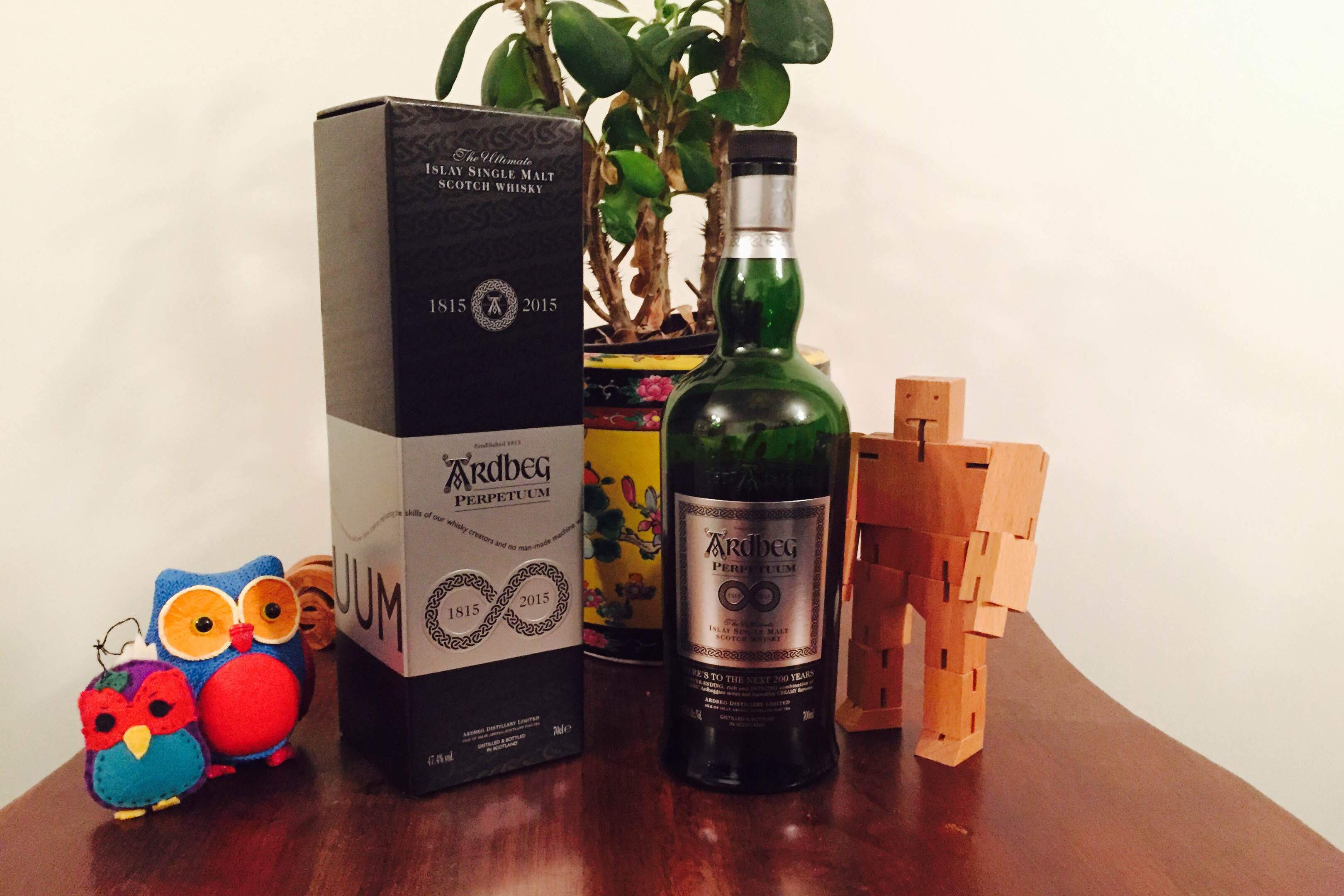
Ardbeg Perpetuum

200 years might not be infinity, but it’s certainly a long time to be producing whisky. Ardbeg distillery, nestled on the coast of Islay, is to be heartily congratulated for reaching such a momentous milestone.

The distillers at Ardbeg love a good special edition release, and in celebration of their big birthday they have brought forth the Perpetuum. The whisky celebrates the love, dedication and skill of its creators, acknowledging that while times and technology change, no machine will ever be able to recreate the spark of the human touch.

It’s certainly a beautiful object to gaze upon, with shiny silver labels, a Celtic braid infinity symbol and PERPETUUM surrounding the box in monolithic black letters. Oh my goodness the 47.4% spirit inside is a worthy representative of Ardbeg’s art. Just to look at it’s a gorgeous pale, silky gold with a subtle peach tinge.

The nose is delicate and creamy, and has delicious buttery shortbread infused with a hint of sea salt. Twining through is a touch of fine smoked meats, smouldering driftwood and hot malt. The first sip delivers rich, woody smoke to float over the tongue. Underneath sits a pool of salty mineral-rich water with the occasional mandarine bobbing around in it, counterpointed by a sharp bittersweet herbal finish that lingers on. As the bottle says, it almost seems to be never ending.

The Perpetuum is a snapshot of the last 200 years of whisky making at Ardbeg, and hints at the way forward into the next 200 years. Like the infinity symbol the represents it, hopefully we will be coming back to the Perpetuum, and indeed all Ardbegs, again and again for many years to come.

★★★