Tasting notes

Longrow Cabernet Sauvignon Cask

Reviewed by: Nick

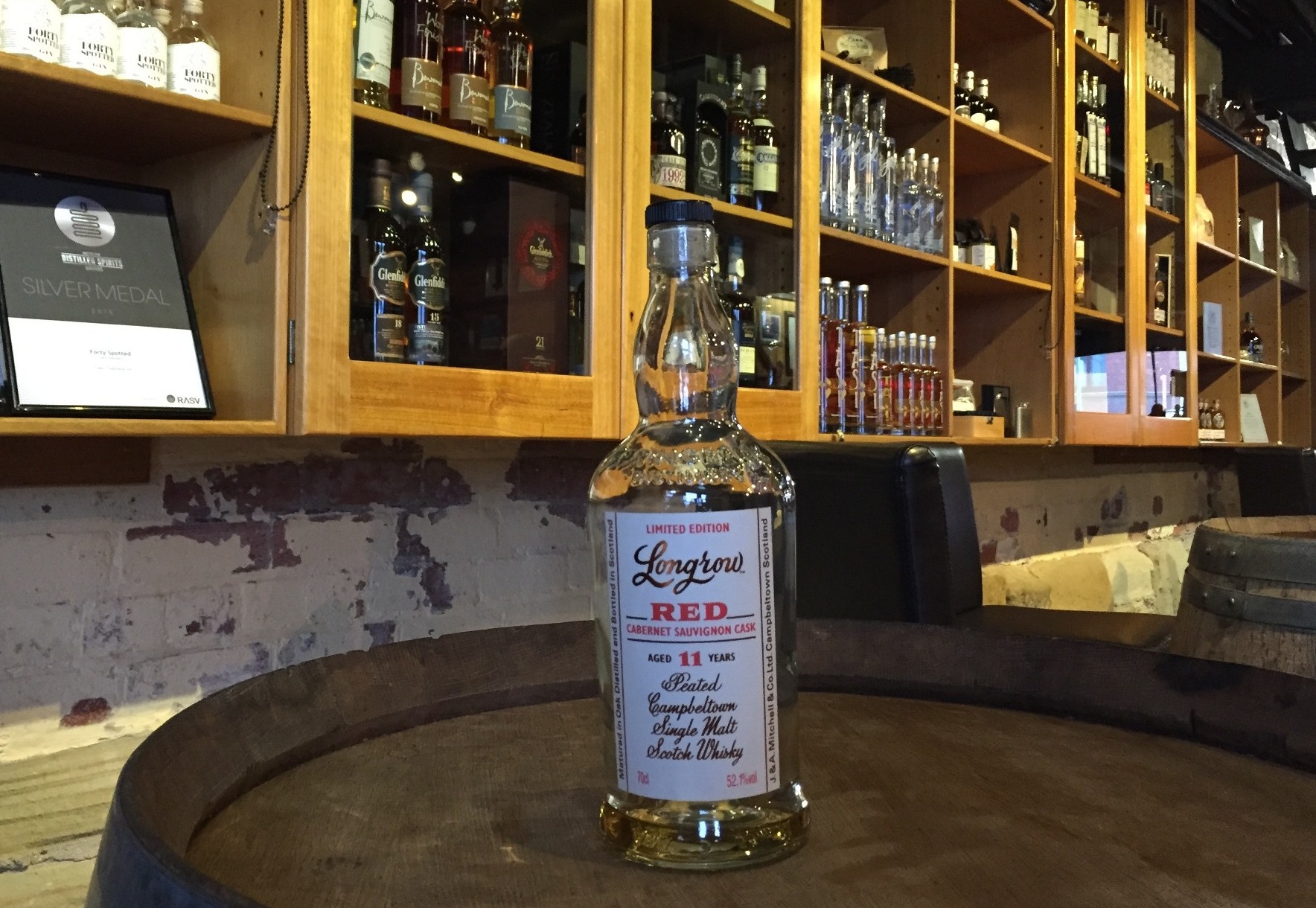
Longrow Cab Sav

As the abundance of sherry barrels diminishes, whisky makers are forced to look elsewhere for maturation options. The obvious solution, of course, is using the barrels of another grape flavoured product – no, not hubba bubba bubblegum – wine. Wine cask maturation is being used by distillers worldwide: some as a novelty but others as a serious addition to their main range.

The wonderful whisky makers of Longrow are no strangers to experimentation. One of their more intriguing bottles is the Cabernet Sauvignon Cask – aged for seven years in refill bourbon hogs heads and a further four years in Cab Sav barrels sourced from my very favourite wine region: South Australia’s McLaren Vale.

Warning: this is not a beginners whisky. Nor is it an easy drinking whisky. Nor, I believe, could I describe it as a ‘nice’ whisky. But it sure is a fascinating one. On the nose I detected, well, heaps. Initially a gentle smoke, reminding you that yes, Longrow do peat their barley. Once the smoke clears notes of grapes, banana and burnt orange rind flow through. Over all, it is complex and delicious.

The palate is a bit of a shock. Initially it is sweet with fizzy sherbet complimenting the peat. The red grapes make a return, along with other fruit such as melons and apricots. And then the spirit transforms. The finish is long, though not necessarily because of the slightly higher percentage of alcohol. It’s a little… soapy? This is a tasting note I (and seemingly I alone) seem to find in many wine-matured whiskies. There are other, nicer elements: smoked ham, salt, fish, bonfire ash, general seaside senses. This whisky is from Campbelltown, after all!

In no way do I regret buying this whisky. There’s a lot to like and a lot to discuss. But I didn’t love it. And that’s ok.

★★
Blue Hanger 9th Release

Reviewed by: Nick and Ted

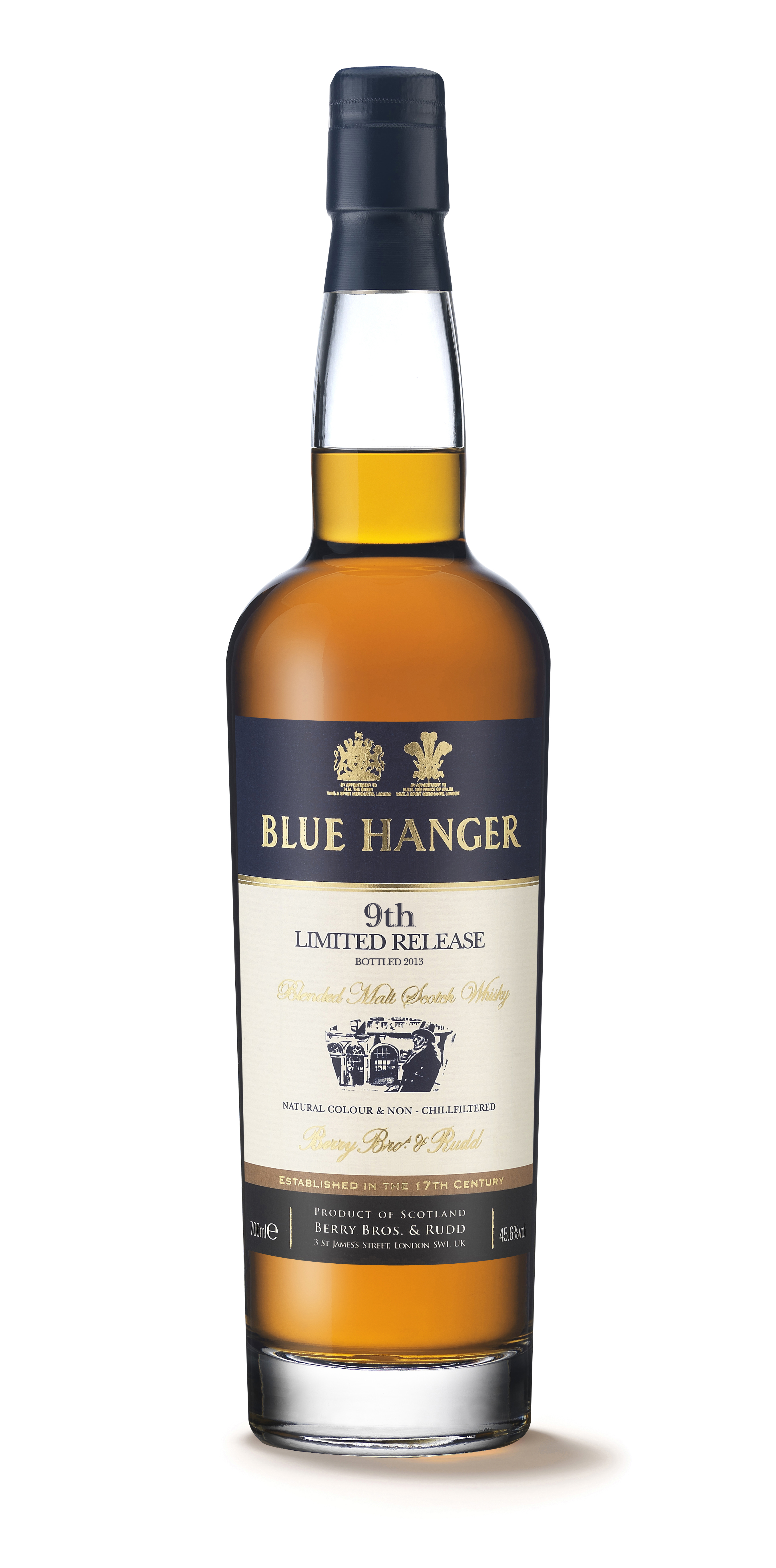
Blue Hanger 9th ReleaseAs a general rule we Whisky Waffle boys tend to be single malt snobs rather than blend bogans. As easy drinking as a blended Chivas 21yo is, we’d just as soon get to grips with a lively Balvenie 12yo single malt. However, one drop that we were lucky enough to try recently suggests that we just may not be drinking the right blends.

Berry Bros and Rudd, better known for their vintaged Glenrothes range, put out a yearly blended malt release called the Blue Hanger. The bottling is named after Lord William Hanger, who was famous for his habitual striking blue attire (just like the blue Power Ranger. Here’s to you Billy!). The original release was a blend of specially selected casks from the Glenlivet and Glengrant distilleries. Eventually stocks ran out (hence the emergence of the Founders Reserve…) and now in this, the 9th edition, Berry Bros and Rudd have combined (like Megazord) 17yo Clynelish and 18yo Glen Elgin with both 23yo and peated 7yo Bunnahabhain.

With such a pedigree it is no wonder the Blue Hanger claims to be the ‘collectors blended malt’. But is it worth adding to your own collection? Short answer: yes!

But of course, this is Whisky Waffle, and so we will also supply you with a long answer too. The nose is light and fruity, and we were able to find strawberry jam, dried apples, quince paste, cured meats and Chardonnay wine. It’s essentially happy hour in a bottle.

The taste is light but flavoursome. Under-ripe cherries, sherry and cola (NB: just a tasting note. No actual cola was brought anywhere near this baby. We’re not monsters you know) combine to sweetly dance across the tongue, followed by a gentle waft of cigar smoke. The finish is long, with the peat smoke slightly more prominent, and hints of pepper, burnt wood and gooey toffee apple.

If you served this to us blind (as in blindfolded, not blind drunk), we would be unlikely to pick it as a blend. The high quality aged single malt elements that make up the Blue Hanger work together with delicacy and harmony to make a very enjoyable dram; the smoky, salty Bunnahabhain giving depth to the high notes of the Clynelish and Glen Elgin. If you tend to think that blends are beneath you, then like us, you’ve probably just been drinking the wrong ones.

★★★★

Linkwood 20 Year Old Côte-Rôtie Finish

Reviewed by: Mooresy

Linkwood Cote Rotie

There are a lot of distilleries out there many people have never tried because all their wonderful product is being snapped up by the blenders. This is a remnant of a bygone era where single malt – especially single cask – was rough and dirty. Blenders swooped in to save the day by watering down the volatiles and mixing young and mature scotches together to smooth it all out. However single malt and single cask only taste bad if the distiller doesn’t know or care about what is going into the bottles at the end of the process. If it’s all about getting drunk, why would anyone go the extra distance for a fine product.

Fortunately, people are changing and the market is changing. Single malt is here to stay, and single cask releases are the bastion of exclusivity and discernibility. This has allowed some of the bigger whisky families to experiment every now and again with small amounts of their product and sometimes that creates a pretty special drop. The Linkwood Côte-Rôtie fits this bill for two reasons. First, it is a distillery owned by the global secret council of big whisky owners and is predominantly used in blends, including as a nice addition to Johnnie Walker’s vatted malt, which means there are specific flavours that are not usually separated and given their own podium. Second, it has been bottled independently by Gordon & MacPhail, so the final product has been selected by people whose primary expertise with whisky is casks and maturation. There is going to be something unique coming from that combination.

This one has also been finished in a very specific type of red wine cask giving it a rich and fruity smell with something very special coming from the grape influence. There are caramels and sugary honey but dominated by the smell of wine and vine mixed in with the actual wood itself, which I assume is European Oak unless the spice of the fruit is engaged in deception and subterfuge.

On drinking this whisky for the first time I thought this will be the one I tell everyone to try. And while I still will tell everyone to try it, on reflection I’m sure it’s not for everyone. Which brings me nicely to the point regarding the cask. The more whisky someone drinks, one of two things happens; either the person will get closer and closer to deciding the one whisky they want to drink at the expense of all the others – what I like to call “the wrong thing” – or they get more and more adventurous and inquisitive about different types and flavours. A batch of a well-known favourite finished in an unusual cask is a great way to see how important aging really is.

This one has spent two and a half years in its finishing cask, which is quite a long time in absolute terms. It is also well matured in general and you would expect a higher level of wood as a result. On the palate, the Côte-Rôtie has a lot of wood. I think that’s a good thing and that it really works for this particular drop. Those who like the simpler and sweeter whiskies will probably think this one has too much tannin, which is often the result of red wine finishes and long oak maturations. Surprisingly though it has not lost some of that underlying sweet complexity. The honey and caramel transfers through with some tart apple and cinnamon/nutmeg in the background.

A vino bomb is not for the immovable whisky drinker who has found the one flavour they want and doesn’t like anything else but, for the intrepid explorer who wants to backpack through the Rhone Valley and pop the bung on a nice red every couple of hours, sit back and quaff with a woody wonder.

★★★★

The Big Black Cock Single Malt

Reviewed by: Nick

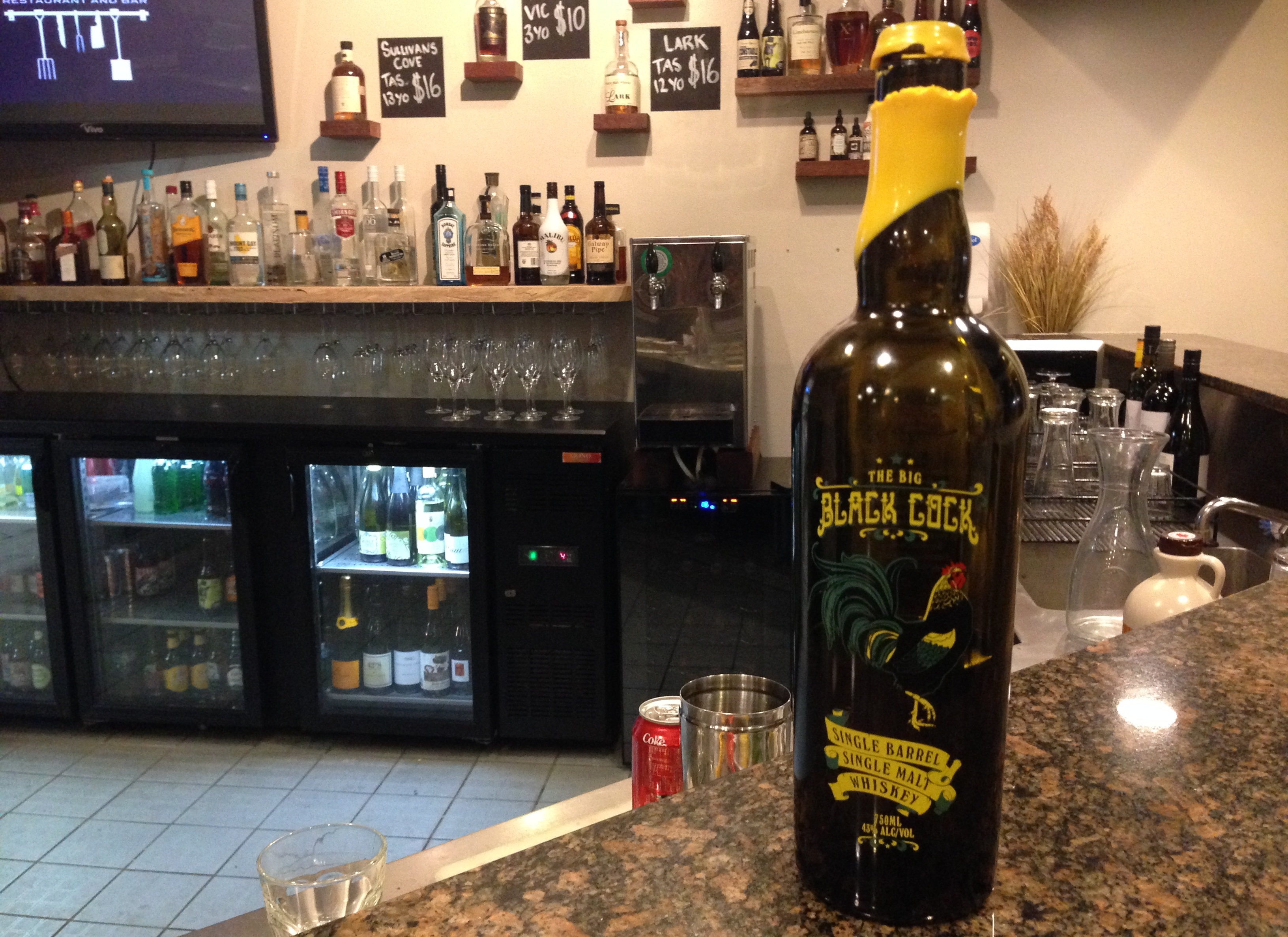
BBC

Crikey! Now I know whisky is made in some pretty far out places but leaning towards the more radical end of the scale would have to be Mt Uncle Distillery in North Queensland. Despite the immense heat and being located on the outskirts of woop-woop, they have managed to produce a grouse little drop.

The 5 Year Old single malt has one of the more dinky-di whisky names going around. The drinks menu I had a gander at when first sampling it read BBC. However, the large rooster on the front of the bottle makes it clear: this whisky is called the Big Black Cock. It is fair dinkum outback whisky. And strewth: it tastes the part.

On the nose there are faint hints of malty Arnotts biscuits – quickly drowned by whiffs of recently slashed sugar cane and double coat tim tams. On the palate there is vanilla – perhaps a little too much – accompanied by Anzac biscuits and cherry ripe. There are also some bitter fruit elements – possibly created by the ex-red wine barrels they were matured in: American oak staves with French oak lids. The finish is warm and a little rough with spicy meaty notes, like snags on a barbie.

If you ever come across the BBC in a whisky bar down under it is certainly worth ordering – if only to be forced to say the name out loud – but also because of the beaut, uniquely Australian flavours to be found. This is true blue outback whisky. It’s unrefined. But a ripper.

★★★

Nant Homestead Reserve

Reviewed by: Nick

Nant Homestead Reserve

It’s no secret that Jim Murray, whisky writing’s answer to Simon Cowell, is a fan of Tasmania’s Nant Distillery. And that’s fine, he’s allowed to have favourite distilleries. Although, rarely does he offer to fly to the home country of said distillery to create an all-new product for them. But in the case of the Nant Homestead Reserve, a marriage of Nant’s bourbon, sherry and port matured whisky, that’s exactly what he has done.

Nant are makers of some fantastic drams, and Jim has praised their power, their full-bodied flavour and their uniquely memorable Tasmanian nature. But for some reason when offered the chance to create his own, he has failed to include any of the above characteristics. Instead he has created a whisky that proves it is possible to be too smooth.

The nose is familiar if you have ever had a Nant whisky before. It is fruity and candied with touches of vanilla. But it is understated and almost feels like it is missing an element. The palate displays subtle notes of orange, toffee and leafy vegetation. The finish dies away rapidly as if instead of drinking whisky you were simply sipping a glass of water. All together the final impression is that of dissatisfaction.

Of course, this is only one whisky drinker’s opinion. This may be an elegant easy drinking whisky to some. It may also be a viable starting point for non-whisky drinkers. Though for me it lacks the magic of some of Nant’s other releases such as the port, sherry and bourbon matured bottlings. They are all, without a doubt, more complex, interesting and flavoursome than the Homestead Reserve. This whisky is a case where the sum of the parts is greater than the whole.

★★

Glen Moray 12 Year Old

Reviewed by: Nick

Glen Moray 12 Year Old

It is quite often the case in the whisky world that what you pay for is what you get. It is usually a safe assumption that a $40 bottle will be inferior to one costing three figures. However, there are so many exceptions to this rule that I begin to wonder why us whisky fanatics spend the money we do.

Case in point is the Glen Moray 12 Year Old, a bottle that first caught my eye when I was a uni student and therefore always on the lookout for an alcoholic bargain. The Glen Moray was, quite simply, the cheapest single malt I could find in Australian bottle shops. However I was quick to discover it held a certain charm that saw it rise above many of the blends I could also afford.

There is no denying that it is a simple dram, bearing all the hallmarks of Speyside. On the nose there are notes of sweet biscuits and honey. Predictably from a whisky matured entirely in bourbon casks, there are also elements of vanilla. The palate is sweet, almost syrupy, with toffee, banana and heathery floral notes. The finish contains more vanilla, spice and Werthers-esque caramel.

The Glen Moray 12 Year Old is never likely to rack up a high score at any whisky awards shows. But in my opinion there’s absolutely nothing wrong with that. It is simply a straightforward and inoffensive whisky that punches above its weight against the larger players.

★★

A whisky book review: Kudelka and First Dog’s Spiritual Journey

Posted by: Nick and Ted

A day at the Whisky Waffle office usually involves drifting about sipping rare and expensive whiskies and confabulating to each other about them (that’s the story we’re sticking to at any rate). Well, for once we’ve actually sobered up and stopped rambling long enough to read a book. Not just a distillery booklet from out of a whisky tube either, but a whole volume on one of our most favourite subjects in the entire world. Luckily for us there were pictures too…

Bikie Book

“This is a ridiculous book,” Jon Kudelka firmly states with the opening sentence of the tome. He’s not wrong either. But when the story is about the odyssey undertaken by two cartoonists on electric pushbikes as they travel around Tasmania’s nine operating distilleries, what do you expect?

Kudelka and First Dog’s Spiritual Journey is a mad tale of discovery and comradeship, of long hill climbs and aching thighs, and of spotting local wildlife (or in Dog’s case, not spotting local wildlife). Firstly and foremostly however, it is a tale of whisky. The quest begins when two Walkley Award-winning cartoonists, Jon Kudelka and First Dog on the Moon decide they want to drink lots of Tasmanian whisky and get the internet to pay for it. One successful crowd-funding campaign later, the intrepid duo set off from Hobart on their electric bicycles, puncture repair kit at the ready.

Kudelka and First Dog’s chosen mode of transport turns out to be perfect for drinking in the beautiful Tasmanian scenery as the duo meander between distilleries, although they also learn the hard way about what happens when your electric bike runs out of juice (and we’re not talking about whisky – that stuff flows freely).

Over the course of two weeks they learn about whisky making from the horse’s mouth, spending quality time with industry greats such as Tim Duckett, Pete Bignell and Bill Lark, who personally cooks them a meal at his peat bog. As well as hanging out with the Tasmanian distilling pantheon, the boys also meet a lively cast of characters who variously offer them angry cheddar, yacht rides, stuffed foxes and advice on why you should always run over a Tasmanian Tiger if given the chance.

As well as being a rollicking yarn, the book is also highly educational. With the aid of informative cartoon infographics, Kudelka and First Dog give some valuable advice on how to drink whisky: “Step 1: put a bit of whisky in a glass. Step 2: Drink it. The end.” First Dog also offers a lengthy discourse on his theory about why all goat based products, or indeed anything to do with goats full stop, should be avoided at all costs. This is life changing stuff people; take heed fellow wafflers.

If you are interested in Tasmanian whisky, then this is the book for you. If you are interested in the drunken ramblings of two cartoonists, this is also the book for you. The hilarious anecdotes, friendly banter and whimsical illustrations are a truly laugh-out-loud combination.

Bike Waffle

We imagine the trip went a little like this…

We’d thoroughly recommend checking it out – the only real question is whether to buy it from Kudelka:  http://www.kudelka.com.au/kudelka-and-first-dogs-spiritual-journey/ or from First Dog: http://firstshoponthemoon.com/products/first-dog-and-kudelkas-spiritual-journey

Either way, you should look it up. After all, it’s recommended by two out of two cartoonists surveyed. And two out of two whisky bloggers as well.

anCnoc 16 Year Old

Reviewed by: Ted

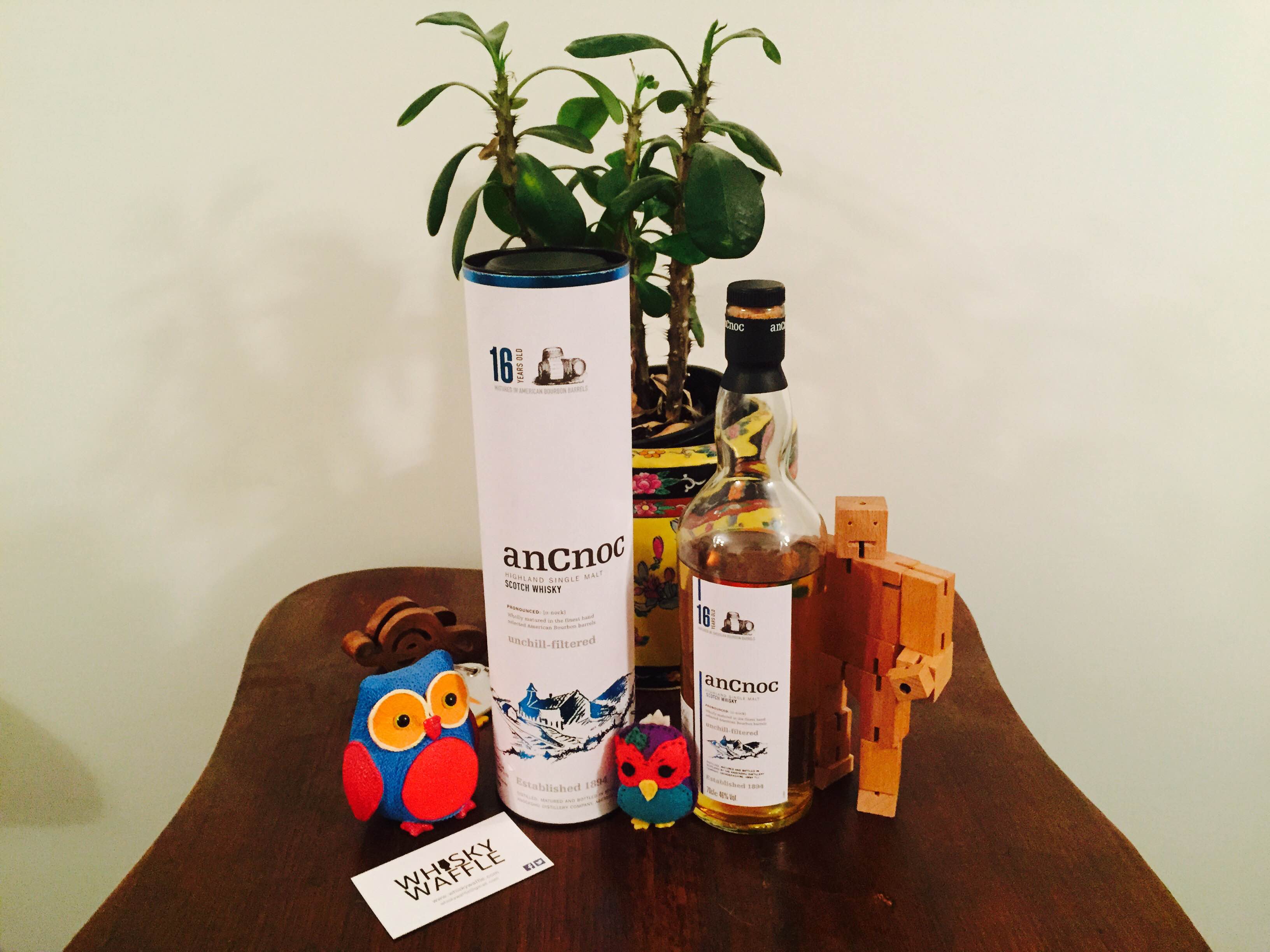
anCnoc 16

One of the fun things about whisky is that it can reveal to you a time and place as part of its character. If the anCnoc 12 Year Old is a summers day, then surely its older sibling, the 16 Year Old, is the evening.

Produced by Knockdhu Distillery, founded in 1894 and one of the smaller operating distilleries in the Scottish Highlands, the AnCnoc 16yo is a burnished gold in colour, darker than the straw-like 12yo.

On the nose the 16yo is smooth and sweet, with no hint at all of the occasional raw alcoholic jaggies lurking in the 12yo. Herbs, particularly mint, garnish a bowl of caramelised pears in syrup dolloped on Weetbix. The taste is sharp and bright, striking the upper palate. The finish is hot and bittersweet, drying the mouth and lingering for some time afterwards.

The AnCnoc 16yo is much better rounded than its younger kinsman, with maturity found through age. While the 12yo has the heat, dustiness and brashness of the day, the 16yo is the relaxing warmth of the evening. A perfect companion to watch the light fade on a clear summer night.

★★★

Pappy Van Winkle Family Reserve 20 Year Old

Reviewed by: Ted

Pappy Van Winkle 20YO

Its pretty common for distillers to lay down Scotch for long periods of time, with age statements in the range of 18-25 years in relative abundance. Bourbons on the other hand are a whole different kettle of fish. Warmer storage temperatures and the use of virgin oak casks means that bourbon reaches maturity and develops character far more quickly than its Scottish counterparts. Therefore, if you come across a bourbon that says it’s 20 years old, you know you’re looking at something pretty special.

The Pappy Van Winkle Family Reserve 20 Year Old is an experience unto itself, a man amongst the boys. Now into its 4th generation, the dynasty began in the 1870s when Julian P ‘Pappy’ Van Winkle entered into the proud Kentuckian tradition of bourbon making. These days the Van Winkles make their spirit at the Buffalo Trace distillery, but they have not lost their dedication to crafting spirit of an exceptionally high standard.

Apart from the age, what makes Van Winkle bourbon special is that they use corn, barley and wheat instead of the more usual corn, barley and rye in their mash bill. They claim that the use of wheat creates a much softer, smoother spirit and helps with the aging process.

Compared to your standard ‘ol bourbon, the PvW Family Reserve 20yo is a far more delicate creature. You can still tell it’s bourbon when you take a sniff, but it doesn’t wave the fact in your face. Instead it gently strokes your nostrils with vanilla, ginger and Grand Marnier.

As you would expect for a spirit this age, it is superbly smooth with no alcoholic kick at all, which is interesting as it is still bottled at 45.2%. It feels very light and silky in the mouth, and if you draw some air through it goes all tingly, sending shivers down your tongue. Floral notes, particularly rose, mingle with sweet white grapes, maraschino cherries and alcohol-soaked cake. The finish is quite short and as smooth as a baby’s proverbial.

The PvW Family Reserve is the thinking man’s bourbon; gulping it down is simply not an option as it needs some time to respond in the mouth. At first glance it seems deceptively simple, however with some gentle probing it reveals more and more character. There are definitely interesting things going on, but you have to chase them down, work for the full flavour. The dedicated and thoughtful approach is worth it in the end though, as the reward is a spirit of epically elegant proportions.

★★★★

Bakery Hill: the final frontier

Posted by: Nick

Bakery Hill Tasting 5

Many bakers. Many hills.

Lark? Check.

Nant? Yep.

Limeburners? Sure have!

Hellyers Road? Of course.

Starward? Been there, done that.

Bakery Hill? Ah.

There it was: the one black mark on my record of Australian whisky tasting. I had never tried anything from Victoria’s acclaimed Bakery Hill Distillery. This had to be rectified. But how?

I decided to employ the tactic used by whisky drinkers throughout the ages: I would go to a bar.

The bar in question was the Woodlands Hotel in Coburg. And despite not being near any trees, let alone woods, it was an excellent establishment. As well as providing me with multiple pints of locally produced cider and one of the best burgers I’ve had in my life, they also stocked not one, not two, not even three, but four (I know, FOUR!) different bottles of Bakery Hill.

I glanced across the table at my friend and drinking-buddy-of-the-moment Viv, and nodded. Either by telepathy or the fact that we had previously discussed doing a tasting, we both knew: tonight was the night.

Bakery Hill Tasting 2

My drinking buddy Viv (sadly Ted was in the wrong state)

The four varieties were each as tempting as the next. There was the classically titled Classic Malt. Next to it was the doubly exciting Double Wood. I had a strong urge to try the Cask Strength. And finally, how could we resist the Peated Malt. One of each, we demanded.

One sip into the Classic Malt, I knew that I was onto something. It was an enormous revelation: an elation! Which was also my reaction upon trying it. Raisins, condensed milk, limes, dates. Deliciousness. Viv concurred, labelling it simply: “tasty” and admitting he could drink an entire bottle.

The Classic Malt smelt amazing, but the Double Wood smelt better with notes of vanilla, even dark rum! It was longer, more complex and nuanced. Viv decided it was “tastier”, and “what whisky should be like”.

The Cask Strength was next. And boy was the finish long. It was warm with caramel, spicy cinnamon – even garlic. Viv decreed it “tasty” and claimed that it was so smooth you would not think it 60%.

Finally came the Peated Malt. We possibly had saved the best til last. There was smoke and there was vanilla. There was smoke and there was fruit salad. There was smoke and there was… plenty. This was no Islay peat monster. It was subtle, without compromising on the smoke. Viv agreed: “tasty smoke”.

Bakery Hill Tasting 3

This is the one. Equal best. With three others…

We left the bar oblivious to the cold, kept warm by our whisky coats. It had been a fascinating night, tasting the range of Bakery Hill products vertically while not ending up horizontally. If you are ever near the Woodlands Hotel in Coburg, nip in for a nip. It is well worth it. I already had a huge level of respect for Australian whisky when I entered the bar. And I left it with even more.

Bakery Hill Tasting 1

Mmm… tasty…